1995 Half Dollar Error List with Pictures

A 1995-P half dollar stamped on a quarter blank sold for $1,680 in July 2022. That documented mistake offers a useful comparison for other claims about the wrong metal blank.
The 1995 half dollar errors below have estimated values from $5 to $3,000. They include raised lines, missing layers, and three different coins struck twice.
Read on to separate those mistakes, especially copper showing inside a coin from copper fragments trapped on its surface.
1. 1995 Half Dollar Die Cracks and Small Chips (Estimated Up to $20)
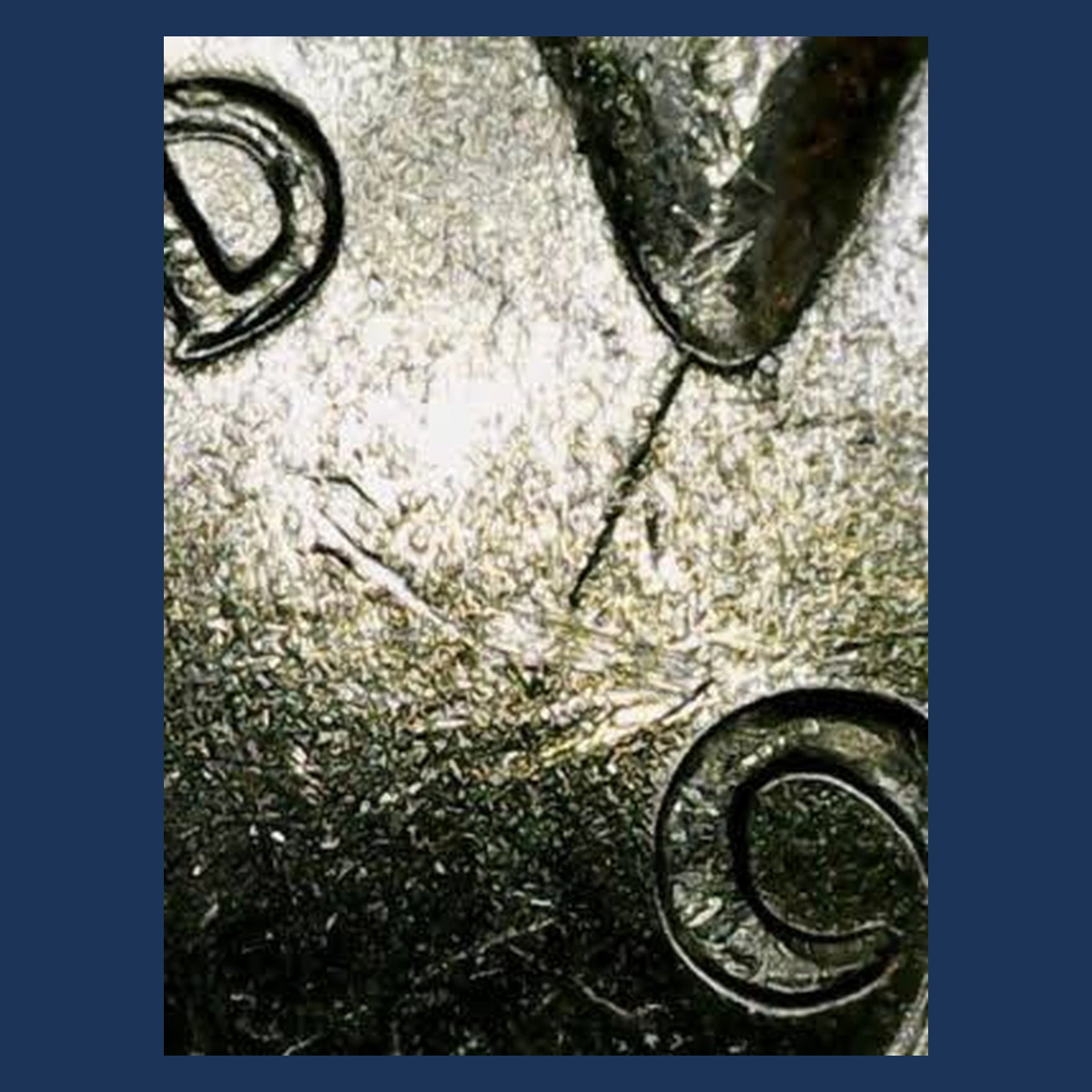
A thin raised line can come from a crack in a die, the steel tool that stamps coins. Metal fills the crack during stamping and forms a ridge.
A small piece breaking out of the tool can instead leave a compact raised lump. Both features may repeat on later coins made with that tool.
The 1995 reports do not name an exact mint, finish, or crack path. The location must be checked on the actual coin.
Some lines already belong to the picture. Compare the eagle’s feathers with a normal half before treating a raised line there as an error.
Estimated Value
The year guide puts small crack premiums around $5–$15. An estimated $5–$20 covers a readily visible example on an ordinary layered-metal half.
A clear ridge or small lump is more appealing than a faint flaw among many contact marks. These amounts concern minor damage to the stamping tool.
They do not price an exceptionally preserved coin or a large break connected to the rim. Those need different comparisons.
How to Identify
Compare a normal coin with the same finish before judging an unfamiliar line. Use a 10× magnifier and low light to see whether extra metal rises above the design.
An ordinary layered-metal half weighs 11.34 grams. A 1995-S silver Proof, specially made for collectors, weighs 12.50 grams instead.
Use a scale and calipers when safely accessible, comparing the width with about 30.61 millimeters. Check the edge grooves for crushing.
A small chip leaves a compact bump within the face. Look for a raised addition missing from the normal picture, without a cut or nearby dent that pushed the metal upward.
2. 1995 Half Dollar Reported Doubled Die (Estimated Up to $100)
An extra outline can be built into the stamping tool itself. Coins made with that tool may then repeat the same doubled feature.
This is called a doubled die. It does not mean the individual coin went through the press twice.
The 1995 year list reports the error without identifying a named variety on either face. It also does not establish a particular mint or collector finish.
Look for a separate raised piece of the picture that matches another example. A thick-looking letter by itself is not enough, because reflections and movement during striking can also change its apparent outline.
Estimated Value
Estimate $20–$100 for a minor, clearly matched variety on an ordinary layered-metal example. This uses modest modern Kennedy varieties as a comparison.
It is not a recorded sale for a newly identified 1995 variety. The upper end needs visible extra relief and a reliable matching pattern.
Good condition can make that pattern easier to see. Glare, flat shelves from striking movement, and worn-looking lettering do not justify the same variety price.
How to Identify
Through a 10× magnifier, check the shape of the extra image rather than just its width. A raised second contour differs from a flat shelf cut into the normal letter.
Identify the mintmark and finish before choosing comparison photographs. Do not assume the feature must appear in the date or on the front.
When safely accessible, compare scale readings with 11.34 grams for ordinary layered metal or 12.50 grams for a silver S Proof. Calipers should show about 30.61 millimeters, with normal edge grooves.
Look for the same raised extra shape on another matching coin. Repeated shape and position are more useful than one letter that merely looks thick.
3. 1995 Half Dollar Rim-Connected Cud (Estimated Up to $150)
A thick raised patch touching the rim is called a cud. Part of the steel stamping tool broke away at its edge, leaving space for coin metal to rise.
The lump replaces some intended detail near the border. It is different from a small raised chip isolated within the picture.
One 1995 report shows an example near 8 o’clock without establishing its mint or finish. Another describes two raised breaks on a Philadelphia coin’s back.
These are separate examples. The first coin’s clock position should not be assigned to either patch on the Philadelphia half dollar.
Estimated Value
Estimate $25–$150 for modest to obvious rim-connected breaks on ordinary layered-metal halves. The guide’s $25–$75 discussion helps set the smaller end.
The higher estimate allows for a larger patch or a clearly visible pair of raised breaks. It is not a completed sale for either reported coin.
Raised metal replacing part of the picture is more meaningful than a small rim dent. Confirm the shape before using the error range.
How to Identify
Look from the edge first. The raised patch must connect to the rim rather than sit as an isolated bump farther inside the picture.
Follow its boundary with a 10× magnifier. Check whether it replaces intended detail, rather than simply covering that detail with a bent piece of rim.
A normal layered-metal half weighs 11.34 grams and measures about 30.61 millimeters. Use a scale and calipers when safely accessible, and inspect nearby edge grooves for bending or crushing.
On the Philadelphia report, inspect the two patches separately. Look for a solid raised area joined to the rim where part of the original picture could not form.
4. 1995-D Half Dollar Double Clipped Planchet (Estimated Up to $200)
Two parts of a metal blank can be missing before it receives a coin’s picture. The result is called a double clip.
A seller listed a 1995-D layered-metal half with this error. The report names the year and mint, but gives no fixed gap positions, shapes, or missing-metal percentages.
Each gap needs its own close examination. The silver-colored outer metal should show how it spread beside the incomplete blank during stamping.
Two notches cut into a finished coin can look similar from a distance. Counting the openings does not show whether either one existed before the design was made.
Estimated Value
Estimate $40–$200 for genuine double clips in ordinary collector condition. A dealer offers a different 1971-D with one 10% clip for $90.
That coin is graded PCGS MS64, meaning unworn with some marks. The $90 is an asking price, not a sale of the reported 1995-D.
Two clear original boundaries and an attractive readable coin can support the upper estimate. Two tiny gaps or damaged surfaces may be less appealing, despite the double-clip name.
How to Identify
One gap cannot authenticate the other. Inspect both through a 10× magnifier, following the design toward each missing section.
A scale should be compared with the original 11.34 grams. Measure an intact span with calipers against about 30.61 millimeters when safely accessible.
Trace the surviving edge grooves into each gap. File marks, sharp cutting lines, or compressed metal suggest later alteration.
The opposite rim may be weak, but the second gap can make that clue harder to read. Both gaps need to have formed before stamping.
Look for naturally stamped borders beside both openings, rather than two sharp cuts across already finished details.
5. 1995 Half Dollar Struck Through or Filled Die (Estimated Up to $250)
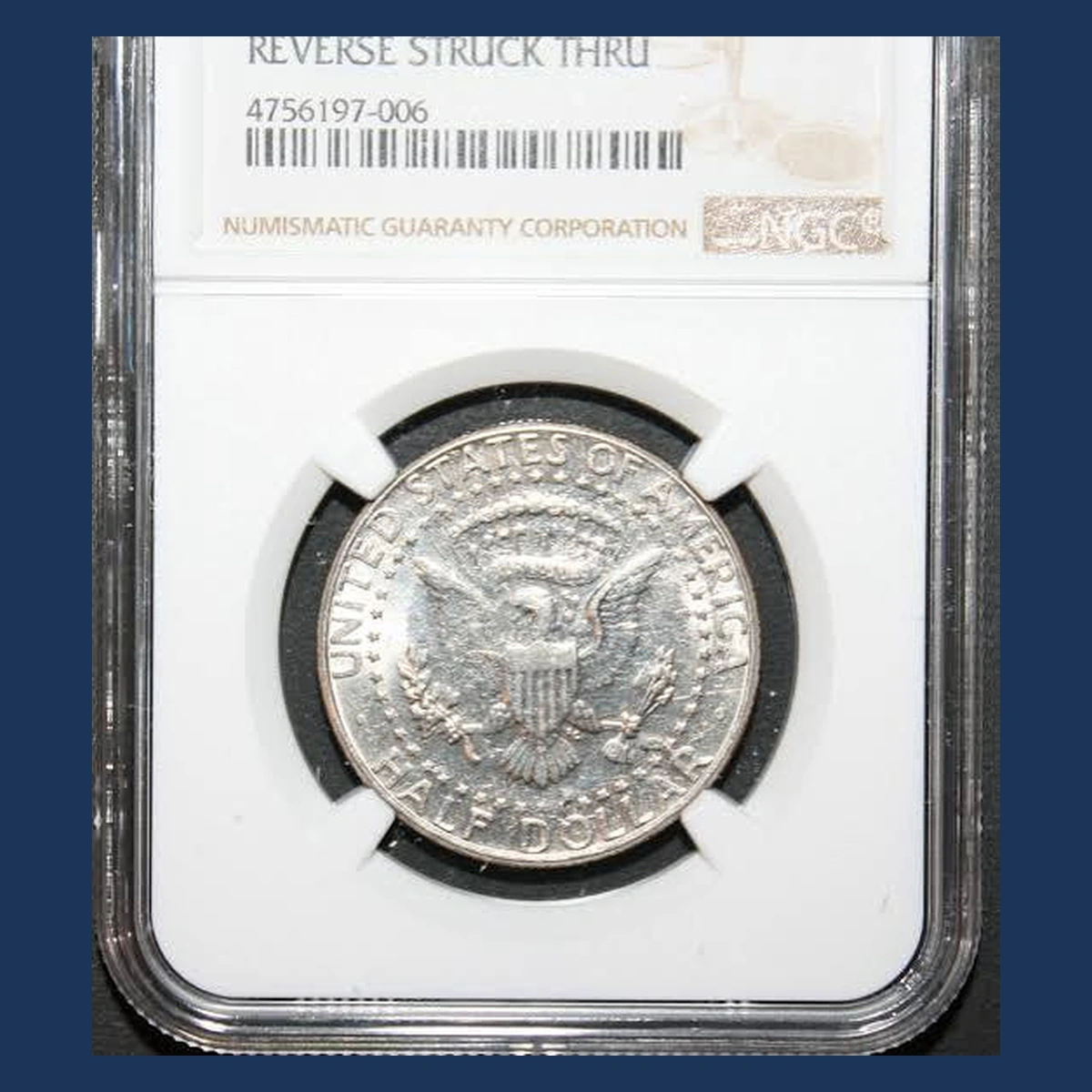
Part of a word may fade while the surrounding picture stays sharp. Material packed into the stamping tool can block the recess that should make a letter.
The 1995 reports suggest checking LIBERTY and the motto. These areas can show local missing detail.
A solid object may leave its own outline pressed into the coin. Grease or loose debris can instead prevent part of the design from forming.
Weak letters do not identify the material by themselves. Wear and a generally weak strike can also soften words, so compare the surrounding picture before calling it a strike-through.
Estimated Value
Estimate $10–$50 for modest blocked-letter weakness and $50–$250 for a clearer object impression. A dealer asks $125 for an undated Kennedy half with strike-throughs on both faces.
That coin is graded PCGS AU58, meaning nearly unworn. The offer helps compare a recognizable impression with slight missing lettering.
It is not a 1995 sale. The separate coin with trapped copper fragments below has more features and should not set the price for every weak word.
How to Identify
Compare the weak letters with nearby high parts of Kennedy’s picture through a 10× magnifier. Wear tends to rub exposed details, while a blockage may affect one small patch beside sharp lettering.
Check for scraping lines that cross the finished picture. Move the lamp to see whether the missing area has an object-shaped hollow or simply weak detail.
Use a scale and calipers when safely accessible against 11.34 grams and about 30.61 millimeters for the ordinary issue. A silver S Proof normally weighs 12.50 grams; both have edge grooves.
Look for intact nearby detail and original surface texture surrounding the interruption, without rubbed-down high spots or abrasion trails.
6. 1995 Half Dollar Layer Separation (Estimated Up to $400)
A silver-colored layer can peel away from an ordinary 1995 half dollar. Its copper-nickel outer metal is bonded to a copper middle.
If that bond fails, a flap may lift or a larger section may fall away. The exposed copper can look very different from the remaining surface.
The year reports do not give measurements that establish how much metal was lost or when. A loose flap does not prove the blank split into two pieces.
The silver S Proof is different. It uses a silver-copper alloy rather than this layered copper-core construction, so its peeling needs another material explanation.
Estimated Value
Estimate $50–$400 for genuine separation on ordinary layered-metal coins. A small lifted patch usually attracts less than a clearly missing outer layer.
A documented 1967 missing-layer MS63 had a $250 dealer asking price. That earlier half uses a different layered construction containing 40% silver.
The offer provides a related comparison, not a 1995 sale. The estimate allows for the material difference and for how much original outer metal remains attached.
How to Identify
Do not lift a loose flap. Use a 10× magnifier to see where it remains joined to the coin and where the copper middle is exposed.
A scrape usually cuts across completed details and may leave repeated tool tracks. Color alone cannot distinguish that damage from a missing layer.
Weigh the coin against the normal 11.34 grams, remembering that attached metal still contributes to the reading. Calipers should be compared with about 30.61 millimeters; inspect the edge grooves and layer junction.
A silver S Proof normally weighs 12.50 grams and needs a different explanation. Look for an actual separated layer meeting original stamped detail, rather than a brown stain.
7. 1995-P Half Dollar Off-Center Strike (Estimated Up to $450)
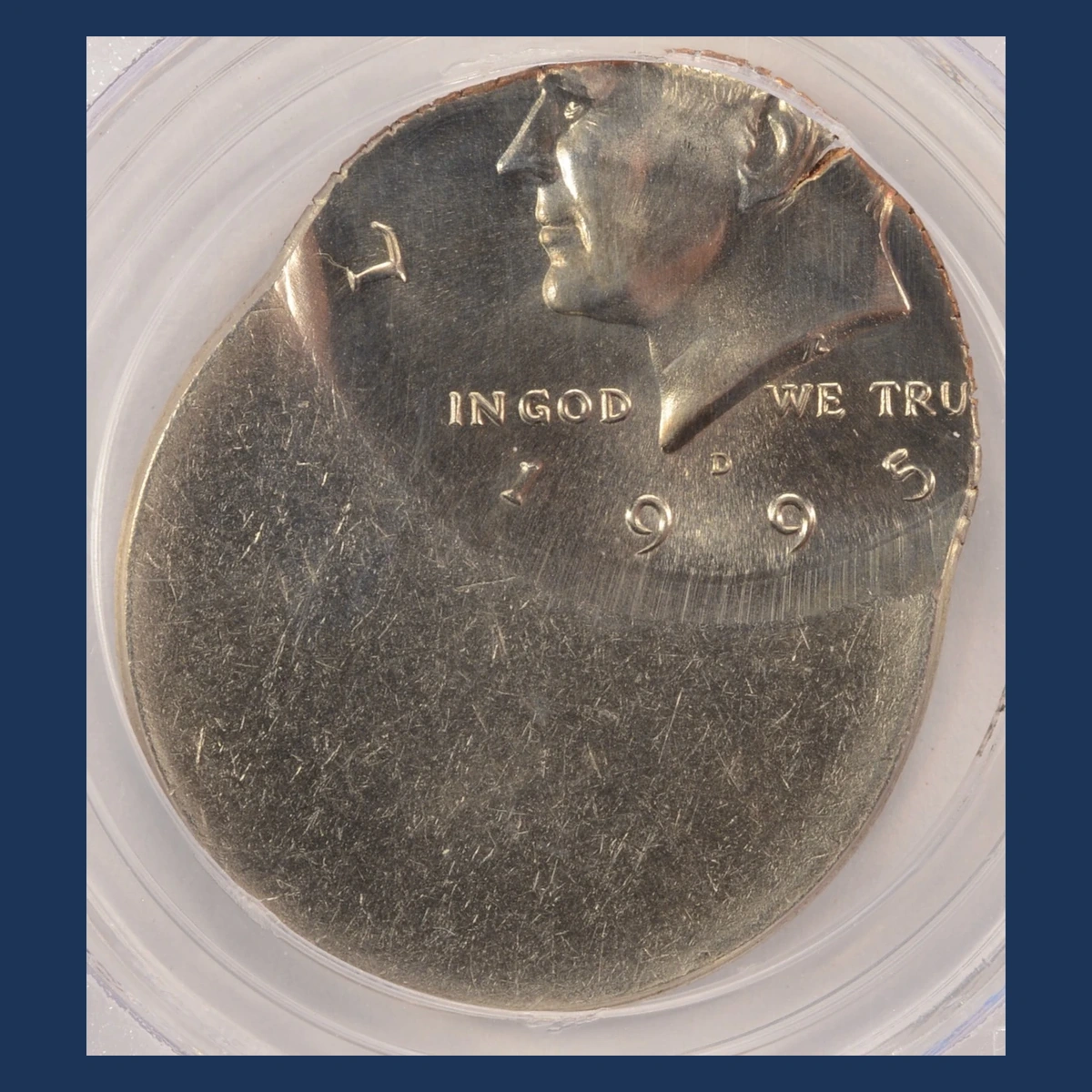
An NGC MS64 Philadelphia half provides a known 1995 example struck about 10% off-center. The blank sat partly outside the correct position when the stamping tools closed.
Part of the picture missed the metal. Elsewhere, an untouched crescent remained beside the shifted design.
The percentage describes the displacement, not how much metal fell away. The error does not require any piece of the blank to be missing.
This coin received one off-center strike. Another 1995 example below kept parts of its first picture beneath a second, much more displaced blow; those are different striking events.
Estimated Value
The 10% off-center MS64 is indexed at about $94 from a December 2009 Heritage sale. Estimate $75–$450 for comparable to more obvious examples with readable dates.
Dealer comparisons include $225 for a 1983-P 10% off-center MS64 and $350 for a 1976 MS65. These are asking prices for other years.
They help compare current retail offers with the older sale. They do not create a new auction record for the 1995 coin.
How to Identify
The crescent should be untouched metal, not an area filed flat after stamping. View it through a 10× magnifier and compare where the pictures shifted on both faces.
A moved stamping tool can shift only one face. A displaced blank should affect both faces together.
Use a scale against the original 11.34 grams and calipers against the normal width of about 30.61 millimeters. Inspect the edge for any partial grooves and later cuts.
The date and P mintmark must belong to the actual coin being priced. Look for one shifted picture on each face beside a real blank crescent, without parts of a second strike.
8. 1995-P Half Dollar Broadstrike (Estimated Up to $600)
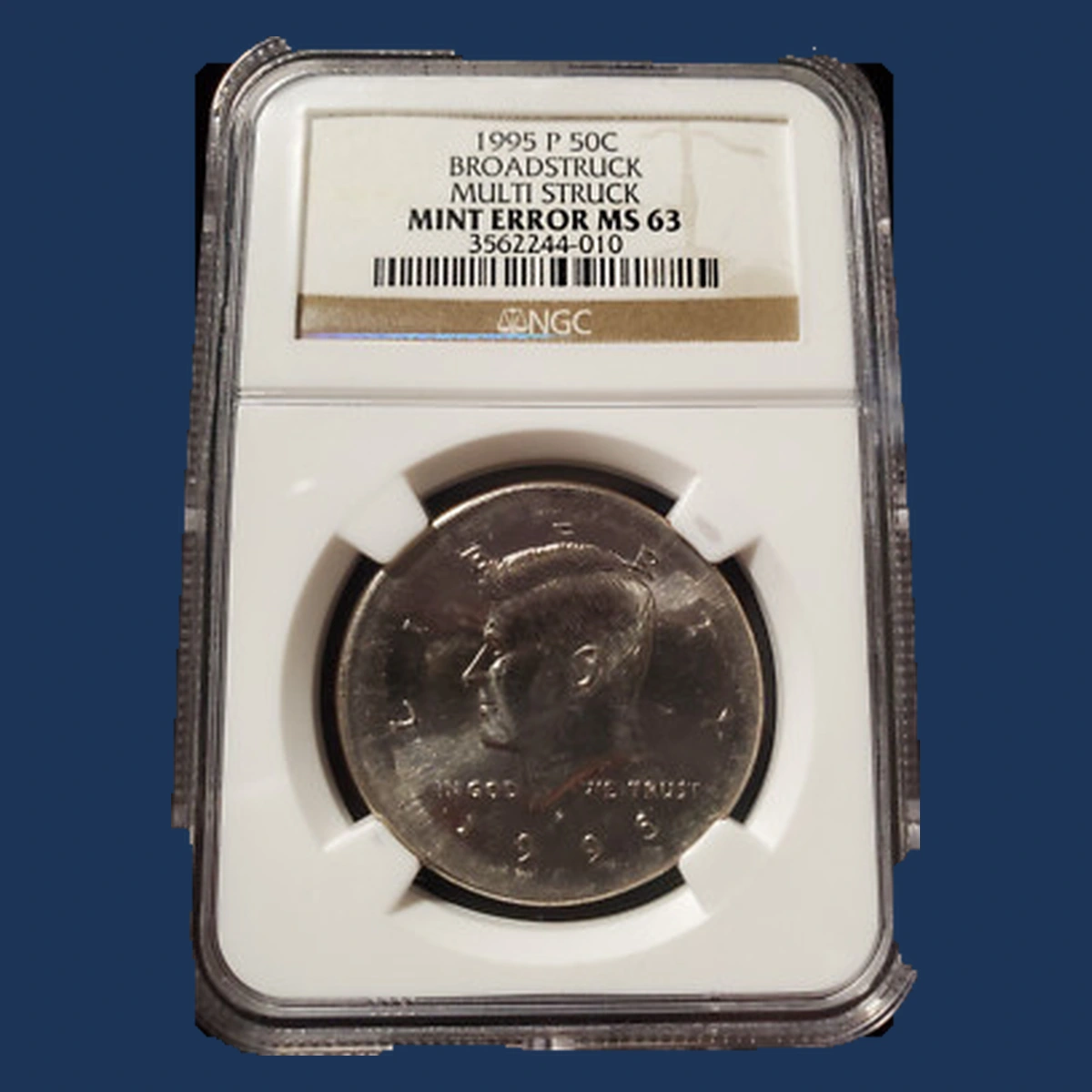
The coin spread wider, but its picture remained complete. This is the main clue to the known 1995-P PCGS MS64 broadstrike.
A collar is the ring that normally controls the coin’s width during stamping. On this example it failed to hold the metal in place.
The blank could spread outward while receiving the design. The expanded border may be uneven without losing part of the intended picture.
No second strike is specified for this coin. Its extra width should not be explained by borrowing another 1995 specimen’s repeated portrait or second date; spreading alone accounts for the reported error.
Estimated Value
Greysheet’s auction index records $312 for the large PCGS MS64 broadstrike in July 2021. A separate ANACS MS64 broadstrike brought $432 in January 2023.
These support an estimated $150–$600 range. The two prices belong to separate coins.
More obvious spreading, clear pictures, and attractive surfaces can bring a stronger price. A less dramatic ordinary example usually fits nearer the lower part of the range.
How to Identify
With calipers, measure the width in several directions and compare with about 30.61 millimeters. A scale should be compared with the intact coin’s starting weight of 11.34 grams.
Now follow the full picture around both faces. The design should remain complete inside the expanded border.
Through a 10× magnifier, inspect how the stamped surface flows into the wider margin. Edge grooves may be absent or interrupted where the ring failed to hold the blank.
Flattening a finished coin later can also enlarge it, but often crushes details. Look for a full, uncrushed picture on naturally spread metal; a second portrait is not required for this error.
9. 1995 Half Dollar Double Struck, Including Compound Errors (Estimated Up to $1,500)
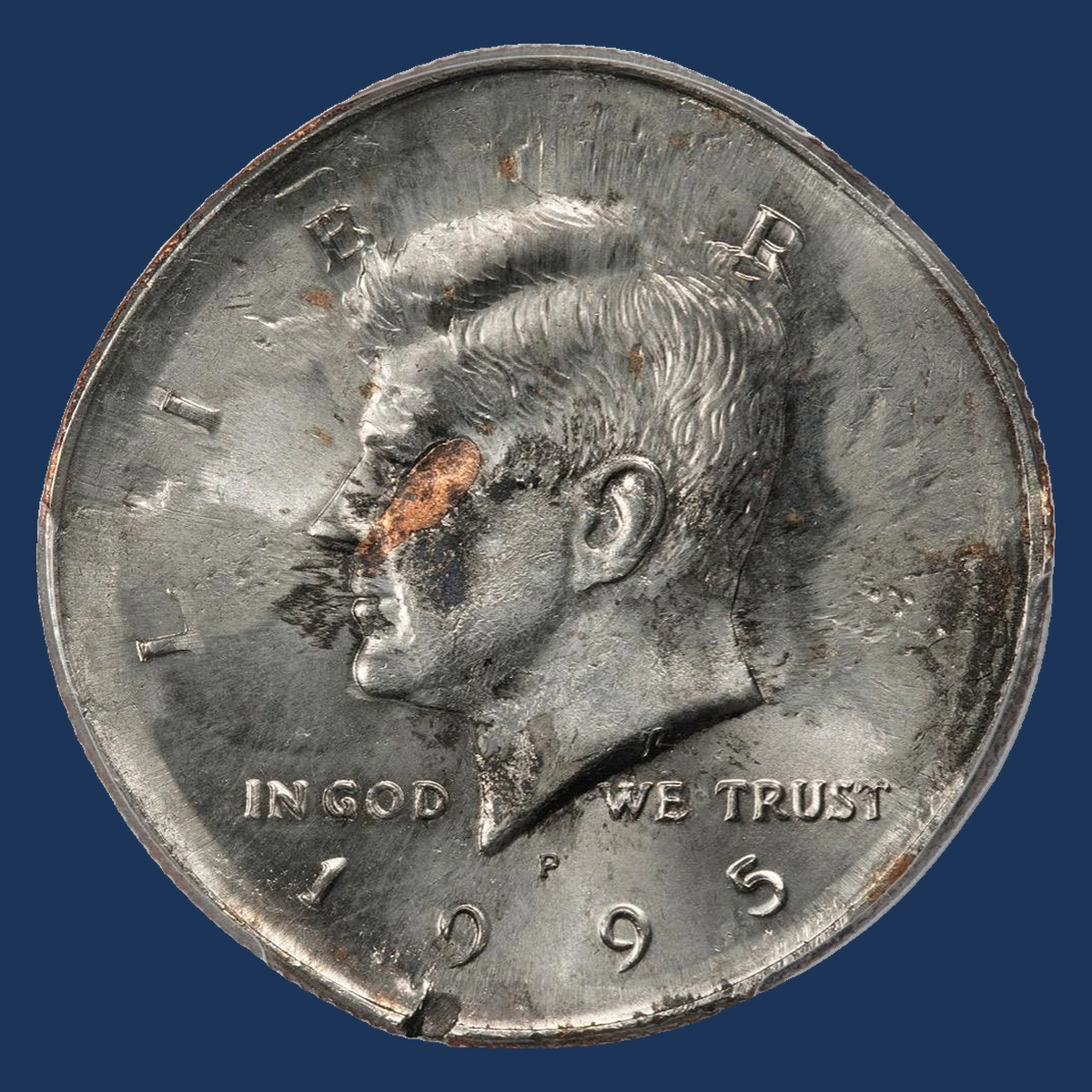
Two blows can leave nearly overlapping pictures or a second picture far from the first. One Philadelphia MS67 combines double striking with outward spreading.
A separate MS64 has its second strike 80% off-center. Its widely displaced impression belongs to that coin alone.
Christopher Frank describes a third, graded PCGS MS64, with two strikes, spreading, and trapped copper fragments. The account does not identify its mint.
The fragments do not make the whole blank copper. The author also suggests a possible extra strike-through on the back, rather than establishing it as another confirmed feature.
Estimated Value
The second strike 80% off-center brought $660 in July 2022. PCGS indexes the separate MS67 double broadstrike near $127 in December 2009.
Estimate $150–$1,500 for present collectible examples, including the more complex trapped-fragment coin. No sale price for that third specimen is quoted here.
Widely separated pictures and attached material can increase visual interest. The upper estimate is comparative, and the three coins must not be treated as one specimen with all these results.
How to Identify
Find parts of both pictures in the date, portrait, letters, and back design through a 10× magnifier. A second blow can flatten earlier details while adding a separate image.
Fine doubling along one letter alone does not establish two strikes. Compare how several surviving design pieces moved together.
Use calipers to record spreading beyond the normal 30.61 millimeters and a scale against the usual 11.34 grams. Inspect the edge grooves for later damage.
Leave the copper fragments undisturbed on the combined-error example. They show an additional event, not the metal of the entire blank.
Look first for two separate picture placements, then for fragments trapped among original struck details.
10. 1995-P Half Dollar Copper-Planchet Candidate (Estimated Up to $3,000)
An entirely copper blank is different from small copper pieces trapped on a normal coin. The published 1995-P candidate claims the first situation.
The specialist double-strike example above documents the second. It cannot prove that a different half dollar was made from an all-copper blank.
Brown color leaves other possibilities. Missing outer layers, added plating, or a coating can change the appearance of normal metal.
A wrong-blank identification needs measured weight and tested composition. The legitimate silver S Proof is another normal product from 1995, not evidence that the copper candidate is genuine.
Estimated Value
For a confirmed copper wrong-blank error, estimate $500–$3,000. A general wrong-blank guide supports this comparative range.
A different 1995-P stamped on a quarter blank graded NGC MS67 sold for $1,680 in July 2022. That is a same-year sale, but its layered quarter metal differs from an all-copper blank.
The result helps compare the broader error type. It does not authenticate the candidate or make every brown half dollar worth this amount.
How to Identify
Have the metal tested and record the actual weight before drawing conclusions from color. A normal layered half is 11.34 grams; the silver S Proof is 12.50 grams.
Use calipers against about 30.61 millimeters and inspect the edge grooves through a 10× magnifier. Look for intact outer layers, stripping, added plating, or trimming.
Compare how the picture formed on both faces. Small copper pieces embedded in selected spots do not establish copper throughout the blank.
The candidate needs an original 1995-P strike and measurements that explain its own metal disc. A consistent copper composition throughout the blank, with a compatible weight, is the useful test—not brown surface color alone.
Conclusion
Copper color has several explanations on a 1995 half dollar. A missing layer, trapped fragments, and a claimed copper blank are different situations that need different checks.
Estimated values run from $5 to $3,000. Keep the three double-struck coins separate when comparing prices, and leave attached material untouched.
The picture, edge, and metal should explain the same error before you choose a price comparison.