2024 Half Dollar Error List with Pictures

A 1974-D Kennedy half dollar with doubled details sold for $49 in May 2026. That older sale is one comparison for the 2024 half dollar errors below, whose estimated values run from $1 to $1,000.
The standout 2024-D has a star pressed into Kennedy’s cheek. Read on to separate that documented error from ordinary scratches, faint letters, extra design shapes, and shifted strikes.
1. 2024 Kennedy Half Dollar Feeder-Finger Die Scrapes (Estimated Up to $5)
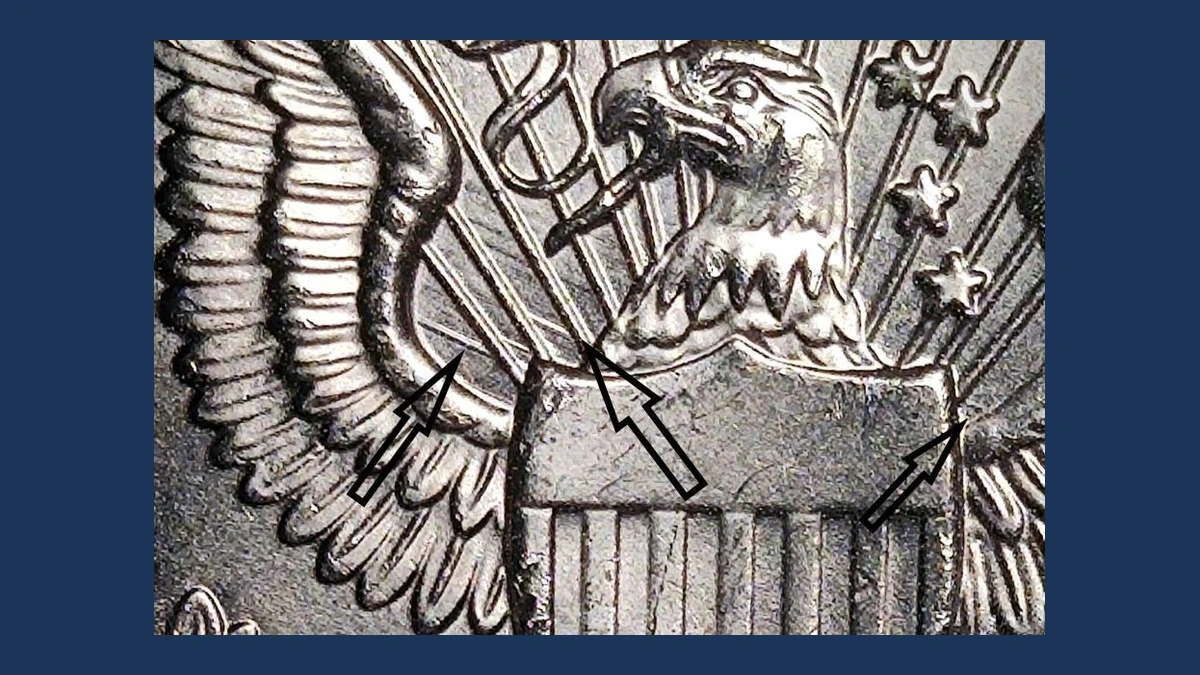
Parallel lines beside the eagle may stand above the surface instead of cutting into it. That difference can separate marks made during minting from later scratches.
The 2024-D report describes a moving feed part scraping the steel tool that stamps the back of the coin. This tool is called a die.
Later strikes can force metal into those scraped grooves, leaving raised lines on the coins. The report does not provide one pattern for every Denver half dollar, so each suspected example needs a close look at the height and position of its lines.
Estimated Value
The year guide estimates $3–$5 for small, recognizable feeding-part marks on unworn coins. This is a modest retail range rather than a major auction result.
An ordinary 2024-D can already sell slightly above face value when well preserved. Heavy marks can reduce that appeal, and a group of scratches cut directly into the coin does not qualify for this estimate simply because all the lines run in the same direction.
How to Identify
Start with the D mintmark and 2024 date, since the reported feeding-part marks belong to Denver. Check the edge grooves for ordinary damage before studying the lines.
A scale and calipers can compare the regular 11.34 grams and 30.61 millimeters, although these measurements cannot identify a scrape in the stamping tool. That requires close inspection of the original struck surface itself.
Hold a light low across the back and use a magnifier to follow several parallel lines beside the eagle. Raised ridges shared by the original surface provide the immediate distinction from later scratches, which cut down into the coin.
2. 2024 Kennedy Half Dollar Doubled Die Reverse (Estimated Up to $35)
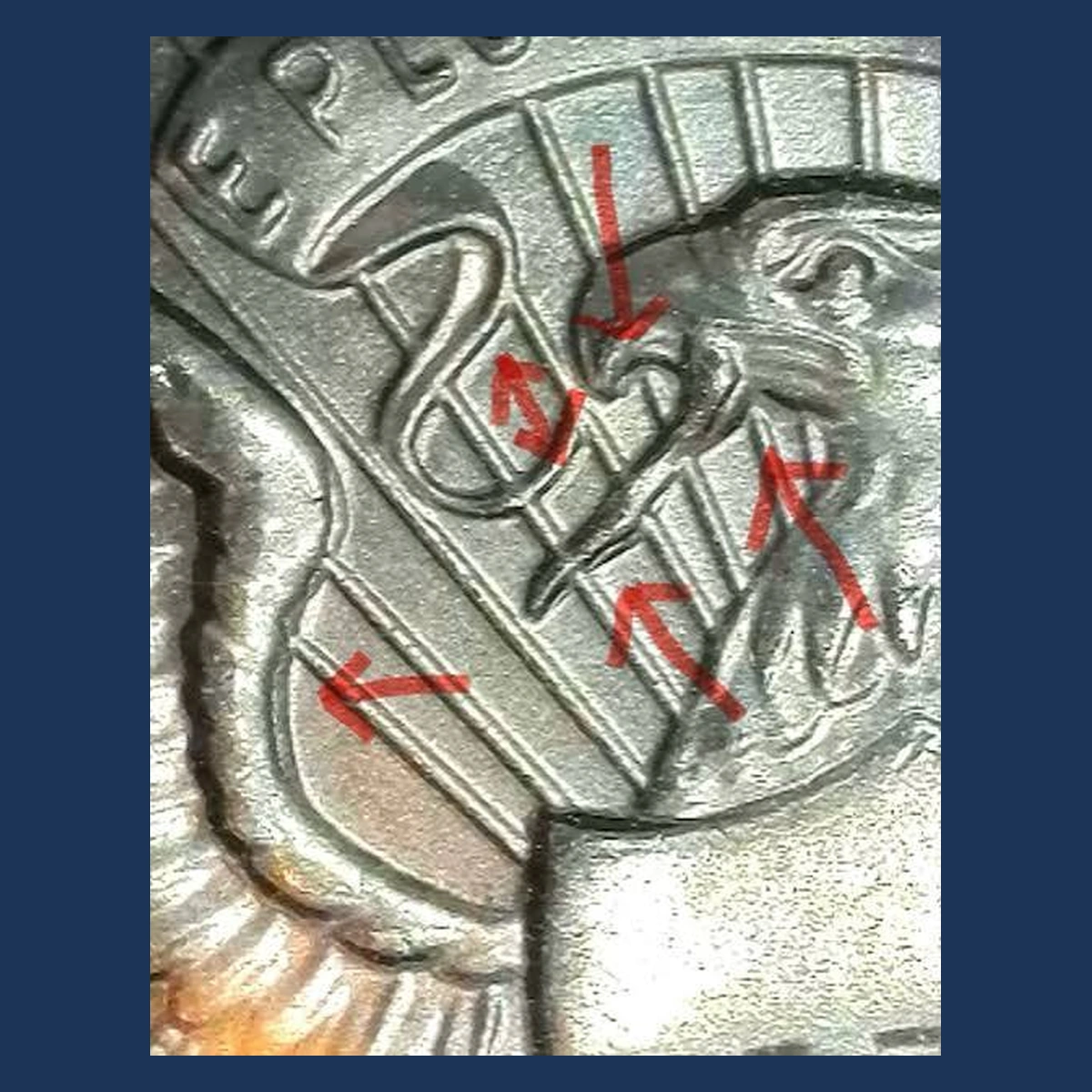
Small extra shapes can appear where the eagle’s inner feathers meet or near the ribbon in its beak. Reports for 2024-P point to both areas, but they describe different examples.
Do not combine the two locations into one assumed pattern. A candidate should match the exact extra shape on an identified coin.
A doubled die already has repeated details in its design before it stamps coins. This differs from movement during a single strike, which often leaves a low, flat shelf beside a letter or feather instead of a rounded second shape.
Estimated Value
Estimated value is $8–$35 for modest reported doubling on unworn coins outside grading holders. This combines the 2024 guide’s two back-doubling ranges, rather than using an individual auction result.
The price assumes a convincing match to an identified example. Clear extra shapes and good surfaces help, while a broadly thick-looking wing or a flat shelf caused by movement during striking does not establish the same kind of variety.
How to Identify
Put a normal 2024 back beside the suspect coin before increasing magnification. Natural feather intersections can otherwise look like extra strokes.
Choose either the wing detail or ribbon area and compare its exact shape under light from two directions. A rounded second outline differs from a flat step.
Confirm the P mintmark on the front. Inspect the edge grooves and use a scale and calipers to compare 11.34 grams and 30.61 millimeters.
Those normal measurements do not identify a doubled die by themselves. The decisive first match is the same extra outline at the same wing or ribbon location on an identified example.
3. 2024 Kennedy Half Dollar Reported Die Clash (Estimated Up to $75)
A faint shape where no normal design belongs may be a piece of the picture from the opposite side. Collectors call these extra shapes clash marks.
The steel stamping tools can mark each other when they meet without a blank, the round metal disc used to make a coin. Later coins can receive fragments of those transferred designs.
The annual 2024 overview reports clashing without naming a mint or exact location. The separate cheek star does not automatically prove a clash, since any suspected trace needs a clear connection to the opposing design.
Estimated Value
An estimated $10–$75 suits a genuine minor clash on a regular-metal 2024 half dollar in collectible condition. This places a recognizable transferred shape above the guide’s $3–$5 comparison for minor tool-scrape marks.
The two errors have different causes, and this range is not a recorded sale of an identified 2024 clash. Clear detail and clean surrounding surfaces matter more than a collection of unexplained scratches, dents, or marks that only vaguely resemble a design.
How to Identify
Photographs of both sides are more useful than one greatly enlarged mark. Find a feature on the opposite side that could explain the strange shape, keeping nearby letters or portrait details visible.
Use a magnifier to inspect whether the trace belongs to the original surface. Another coin pressed against it later can also leave a design-shaped dent.
Record the date and mintmark, and check the edge grooves for damage. A scale and calipers should show about 11.34 grams and 30.61 millimeters on a regular-metal coin.
A recognizable piece of the opposite design in the original surface is the strongest first clue to a genuine clash.
4. 2024 Kennedy Half Dollar Reported Doubled Die Obverse (Estimated Up to $200)
A second-looking edge beside Kennedy’s hair can draw attention before its cause is clear. The 2024 reports also suggest checking the date and nearby words.
They do not provide an exact identifying pattern tied to a particular mint. Each suspected feature therefore needs comparison with a normal coin and an identified doubled example.
True die doubling starts in the steel stamping tool before the coin is made. It differs from striking the same coin twice, and reflections or flat shelves caused by movement can imitate an extra outline without a doubled design in the tool.
Estimated Value
Estimated value is $25–$200 for genuine, identified front doubling, depending on its clarity and the coin’s condition. A 1974-D doubled die graded ANACS MS64 brought $49 at Heritage in May 2026.
MS64 means no wear but some marks. That older variety offers a market comparison rather than a 2024 sale, and a high grade cannot turn a flat shelf from movement during striking into a true doubled-die feature.
How to Identify
Identify the metal first. Silver Proofs are specially made collector coins weighing about 12.685 grams; regular layered-metal coins weigh 11.34 grams.
Use a scale and calipers to check the weight and usual 30.61-millimeter width. Both types have grooves around the edge.
Choose a normal coin of the same type and mint for a fair visual comparison. Look at the same letter, number, or hair detail under similar light and magnification.
Follow the suspected extra outline with a magnifier as you move the light. A stable raised duplicate provides the most useful first evidence, while a reflection changes and a low, flat ledge suggests movement during striking.
5. 2024 Kennedy Half Dollar Reported Off-Center Strike (Estimated Up to $300)
A blank crescent beside the design can show where the stamping tools missed the metal. On the opposite edge, some of the intended picture should be missing.
The round metal disc sat too far to one side when the press struck it. This differs from a clip, where a piece of metal is missing.
The year guide reports off-center 2024 halves without giving an original certification record, a mint, or an exact amount of shift. The date must remain readable on the actual coin before an off-center Kennedy can be assigned to 2024.
Estimated Value
Use an estimated $50–$300 for a genuine regular-metal example with a readable 2024 date and a clear shift. This follows comparisons for modest Kennedy off-center errors in recent year guides.
It is not a recorded sale of a particular 2024 coin. A complete date, original blank surface, and good condition strengthen the comparison, while an undated coin or an uneven rim affecting only one side needs a different identification before pricing.
How to Identify
Put photographs of the front and back together and compare where the stamped design ends. Both sides should fit the same shift of the round metal disc.
Next, check whether the metal itself is complete. A scale reading near 11.34 grams helps, while calipers record any change from the normal 30.61-millimeter outline.
With a magnifier, inspect the blank crescent and edge for grinding or filing that removed a finished design. Keep the whole date in view.
An intact 2024 date beside original blank metal, with matching design loss on both sides, gives a direct first confirmation of the off-center pattern.
6. 2024 Kennedy Half Dollar Strike-Through and Dropped Star (Estimated Up to $1,000)
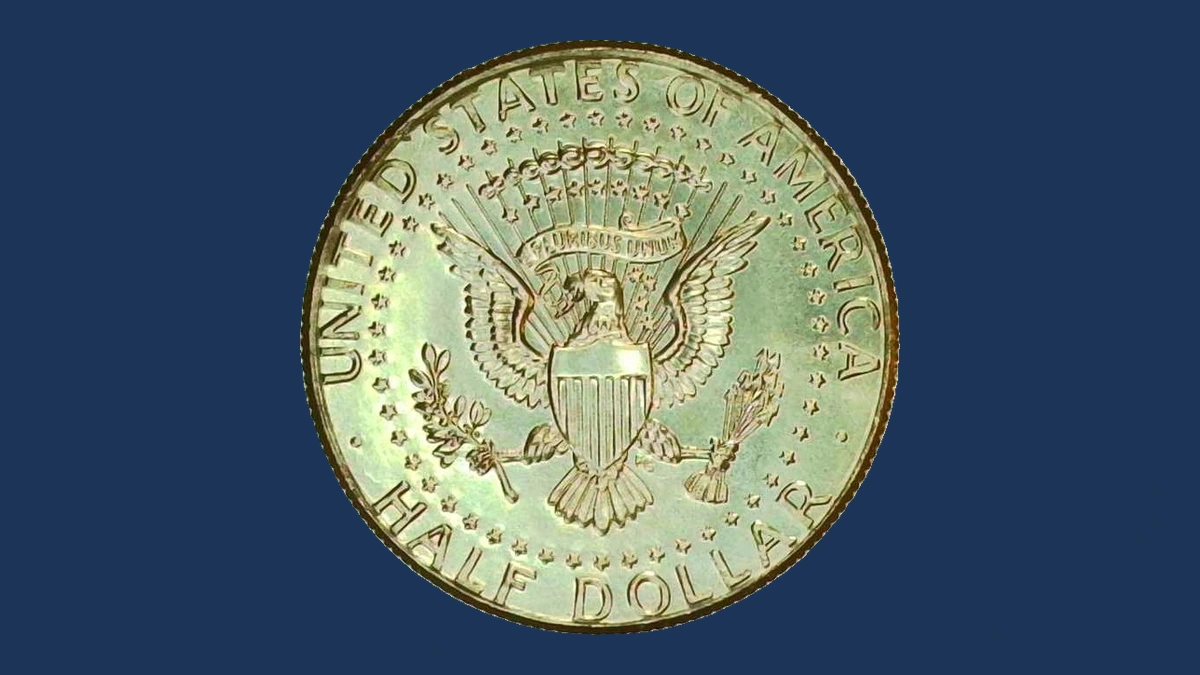
The unusual Denver coin has a star pressed into Kennedy’s cheek. PCGS identified it as a Dropped Star and graded it MS65, meaning no wear and relatively few marks.
Discoverer Jeffrey Flynt describes the coin in the ANA Reading Room. Packed material can fill a recessed star in a stamping tool, fall out, and leave that shape when pressed into another coin.
This belongs to the broader strike-through category, where material interferes with the strike. Simpler 2024 reports include weak letters or a faint P, which should not receive the star coin’s identity or value.
Estimated Value
Minor blocked-detail examples have an estimated $1–$5 range. The distinct, identified Dropped Star has an estimated $100–$1,000 range because its cheek impression is much easier to recognize.
The guide refers to an asking price around $1,000 for an identified star, not a completed sale. Neither that offer nor the MS65 grade proves an auction result, and a faint mintmark does not receive the same estimate as the documented star-shaped impression.
How to Identify
A weak letter and the cheek star require different comparisons. For a weak letter, examine the normal design and look for deliberate rubbing, ordinary wear, or a poor strike.
For the star, compare photographs of the Denver example certified by PCGS before deciding that any five-pointed dent qualifies. Its location and outline both matter.
A scale and calipers can check the regular 11.34 grams and 30.61 millimeters. Inspect the edge grooves too.
Use a magnifier with changing light without disturbing the impression. An untouched surface closely matching the certified cheek star gives the essential first check against a star-shaped punch mark added later.
Conclusion
Estimated values run from $1 to $1,000, with the upper figure tied to the distinctive Dropped Star rather than every weak letter. The approximately $1,000 figure is an asking-price comparison, not a confirmed auction sale.
Look at whether a feature rises above the surface, sinks into it, or leaves metal untouched. Those simple observations help separate raised tool marks, an impressed star, and a shifted strike before you choose a price comparison.