1815 Quarter Error List with Pictures

An altered letter, a faint borrowed outline, and a streak in the silver tell different stories on an 1815 quarter. They need different checks even though all examples share one basic pair of stamping tools.
A clashed example graded NGC MS66 with a Star designation sold for $28,800 in August 2025. That high preservation level helped determine its whole-coin price.
The 1815 quarter errors below have estimated whole-coin values of $200–$35,000. Read on to separate these original features from scratches and added letter stamps.
1. 1815 Capped Bust Quarter Reworked T in STATES
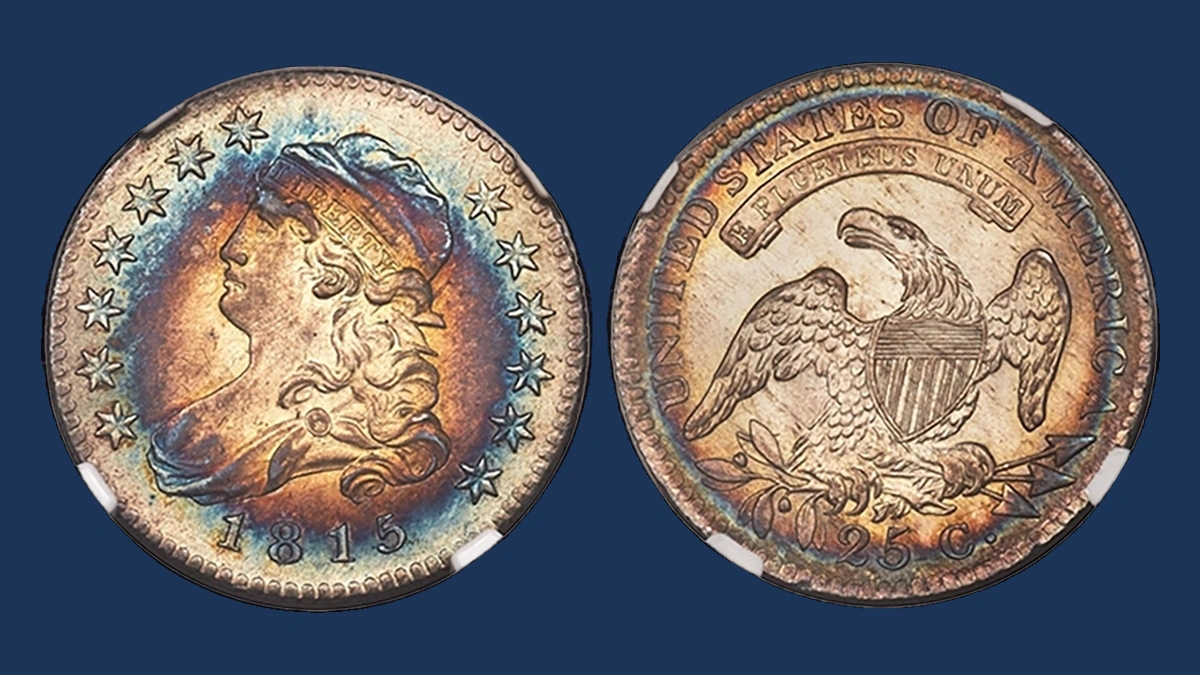
The second T in STATES can show a changed outline on later 1815 quarters. PCGS describes this feature as repunching associated with a later stage of the stamping tool.
The tool had been polished after contact with the opposing tool left clash marks. Polishing removes a little steel and can change nearby details.
A repunched letter normally refers to a letter impressed again into the tool. This reported T needs comparison with the correct earlier and later examples.
It does not mean the complete back design was doubled, or that someone punched another T into each finished coin.
Estimated Value
For circulated through modestly graded unworn examples with a convincing match, estimate $200–$5,000 for the whole coin. The small letter feature does not have a price separate from the quarter.
The clashed MS66 example discussed below represents a much higher preservation level. Its sale should not be transferred to a worn coin merely because that coin shows an unusual T.
Clear letter detail, original surfaces, and the overall grade guide a more useful comparison.
How to Identify
Find STATES on the back and select the second T, the one after A. Compare it with an identified later example and an earlier example at equal image size.
Examine the outline under changing light before calling a bright edge an extra stroke. Wear, polishing, and scratches can alter how a small letter looks in a photograph.
Check the surrounding lettering as well. A true match should fit the tool’s other surviving details, rather than depend on one unexplained line.
Have a specialist compare the coin if the letter is worn or the photographs conflict. The changed outline of that specific T, matched to a known example, provides the most direct check.
2. 1815 Capped Bust Quarter Original Metal Streaks
Faint streaks can blend into the silver’s color until the viewing angle changes. On a recorded 1815 quarter, they lie above and in front of Liberty’s portrait.
The auctioneer described them as original features of the blank, the metal disc used to make the coin. They are not identified as a peeling layer.
The same coin carries an L stamped above the head. That separate letter has an unresolved history and does not explain the streaks.
When examining a similar coin, distinguish a change in the metal’s surface from a simple band of color.
Estimated Value
The PCGS MS63 example sold for $10,200 at Stack’s Bowers in March 2023. Both its preservation and collectible L stamp belong in that whole-coin comparison.
An estimated $300–$15,000 range covers circulated through well-preserved examples, including similar letter-stamped coins. It does not assign the entire auction result to faint metal streaks.
A streak on an ordinary worn quarter can have little added value. Unrelated scratches or cleaning can lower the overall price.
How to Identify
Tilt the coin under a small light and watch the areas above and in front of Liberty. Take photographs from different angles to see whether a streak reflects surface texture or only color.
Compare the original auction photographs before assigning a cause. A faint line alone does not establish that silver separated into layers.
Look for repeated parallel scratches that cross finished details, or a groove with displaced metal beside it. Those signs suggest later treatment rather than the documented original streaks.
Keep the L stamp separate from this examination. Its presence neither proves a metal defect nor dates the formation of every nearby mark.
The useful match is the original streaked surface in the pictured locations, with surrounding details left intact.
3. 1815 Capped Bust Quarter Clashed Dies
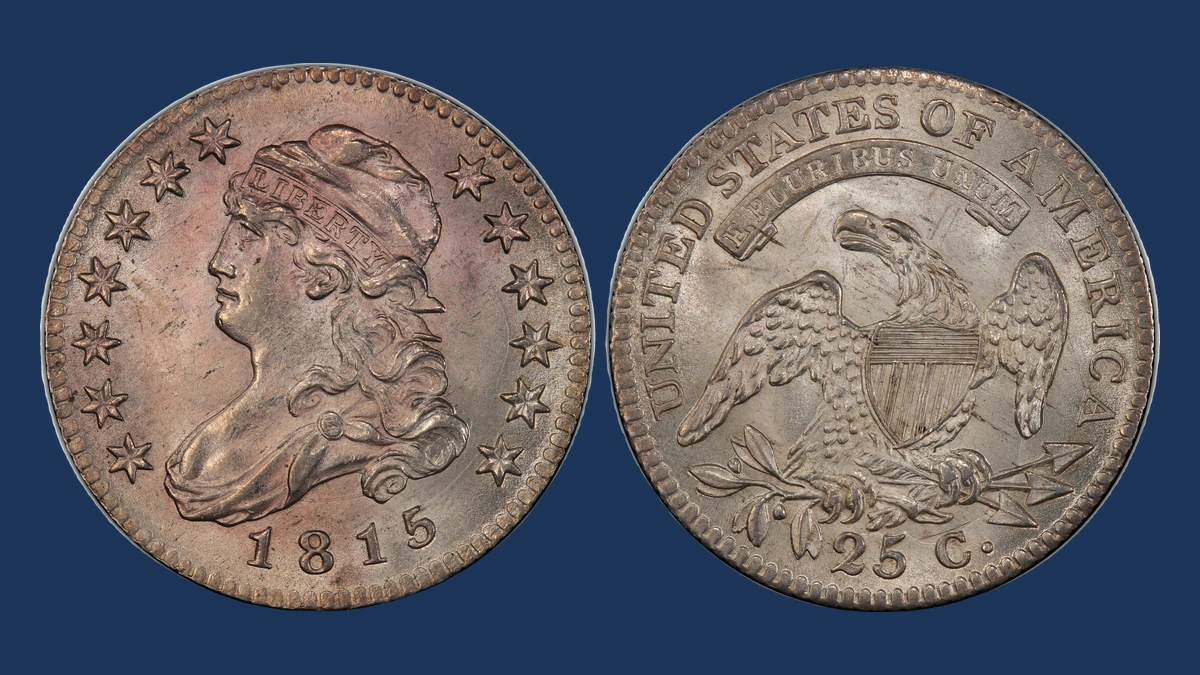
A trace of the opposite design can appear in an otherwise open area of a quarter. That transferred shape is the clue to a die clash.
Dies are the steel tools that strike the two sides. If they contact each other without a blank between them, parts of one design can mark the opposing tool.
Subsequent coins can carry those marks along with the intended design. Clashing occurred during production of the 1815 B-1 quarter, the year’s single tool pairing.
A separately stamped E or L is a different feature and should not be mistaken for transferred design detail.
Estimated Value
Heritage sold an NGC MS66 Star example for $28,800 in August 2025. The catalog identifies clashing on this exceptionally preserved coin.
Use an estimated whole-coin range of $250–$35,000 across circulated examples and coins approaching that quality. The Star designation recognizes attractive appearance; it does not measure the strength of the clash.
Clear transferred detail can add interest, but a faint clash does not make every worn 1815 quarter comparable to this sale.
How to Identify
Look for recognizable fragments of the opposite design before trying to name a clash. Compare both faces in photographs at the same scale, with the features aligned to their opposing positions.
Turn or mirror the comparison image as needed, then trace more than one matching outline. A single straight line might be a scratch or a mark left by tool polishing instead.
Examine faint details under several light angles without rubbing the surface. Do not substitute the strong, separately stamped E or L for the subtler transferred shapes.
An identified clashed example provides the final comparison. The shape and placement of the borrowed design, not an assumed location from another date, should complete the match.
Conclusion
The second T, original silver streaks, and transferred designs are worth examining for different reasons. A clear comparison photograph helps keep altered lettering, blank defects, and tool contact separate.
Estimated whole-coin values run from $200–$35,000. Condition and collectible letter stamps can influence the price strongly, so compare the complete coin rather than treating every unusual mark as a large independent premium.