1821 Quarter Error List with Pictures

Look below Liberty’s ear and you may find a faint trace borrowed from the eagle’s shield. This clash mark appears on an 1821 quarter that sold for $1,898 in August 2011.
Other examples reveal flawed letters, tiny raised dots, or lines from cracked stamping tools. The 1821 quarter errors below have estimated whole-coin values of $150–$6,000 for circulated examples.
Explore their different shapes and locations before deciding what you have found.
1. 1821 Capped Bust Quarter Defective T Letters
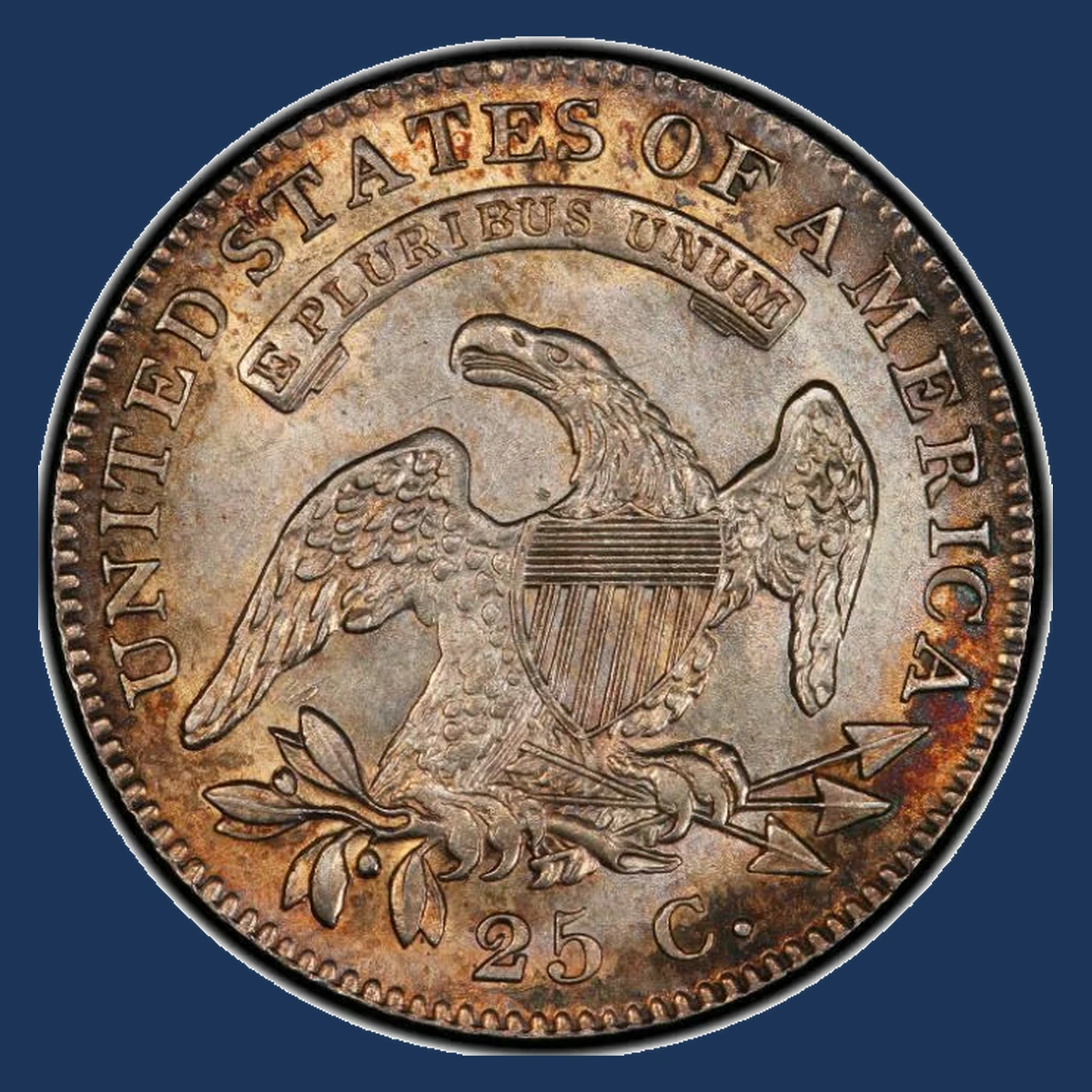
The T letters around the back of a B-1 quarter have an irregular area at the lower right of their bases. Repetition is the important clue.
A letter-making tool with an imperfect shape can carry that flaw into more than one letter on a stamping tool. The coins then repeat the same unusual letter form.
This is different from a random hit that damages one letter after circulation. It is a small feature used to recognize the B-1 variety.
Wear may soften the bases, so compare several letters instead of relying on one.
Estimated Value
A practical estimated whole-coin range is $150–$3,000 for worn through lightly worn B-1 quarters with recognizable letter defects. It is not a separate payment for each T.
A B-1 graded PCGS VG10 sold for $204 at Heritage in July 2025, providing an ordinary circulated comparison. That result does not isolate the value of the letter shape.
Clearer detail and attractive original surfaces generally matter more than the number of flawed letters.
How to Identify
Compare the T in UNITED with the two T letters in STATES. Concentrate on the lower-right base of each letter, where the repeated irregularity should occur.
Use close photographs at the same size so the shapes can be compared directly. Check whether nearby letters are equally worn before deciding that a missing-looking edge is unusual.
A single gouged T with fresh cuts around it points toward damage rather than a repeated tool defect.
Confirm the full B-1 variety from both faces, then match the base shapes against an identified example. Matching letters provide a stronger check than one isolated notch.
2. 1821 Capped Bust Quarter Marks from Rusted Dies
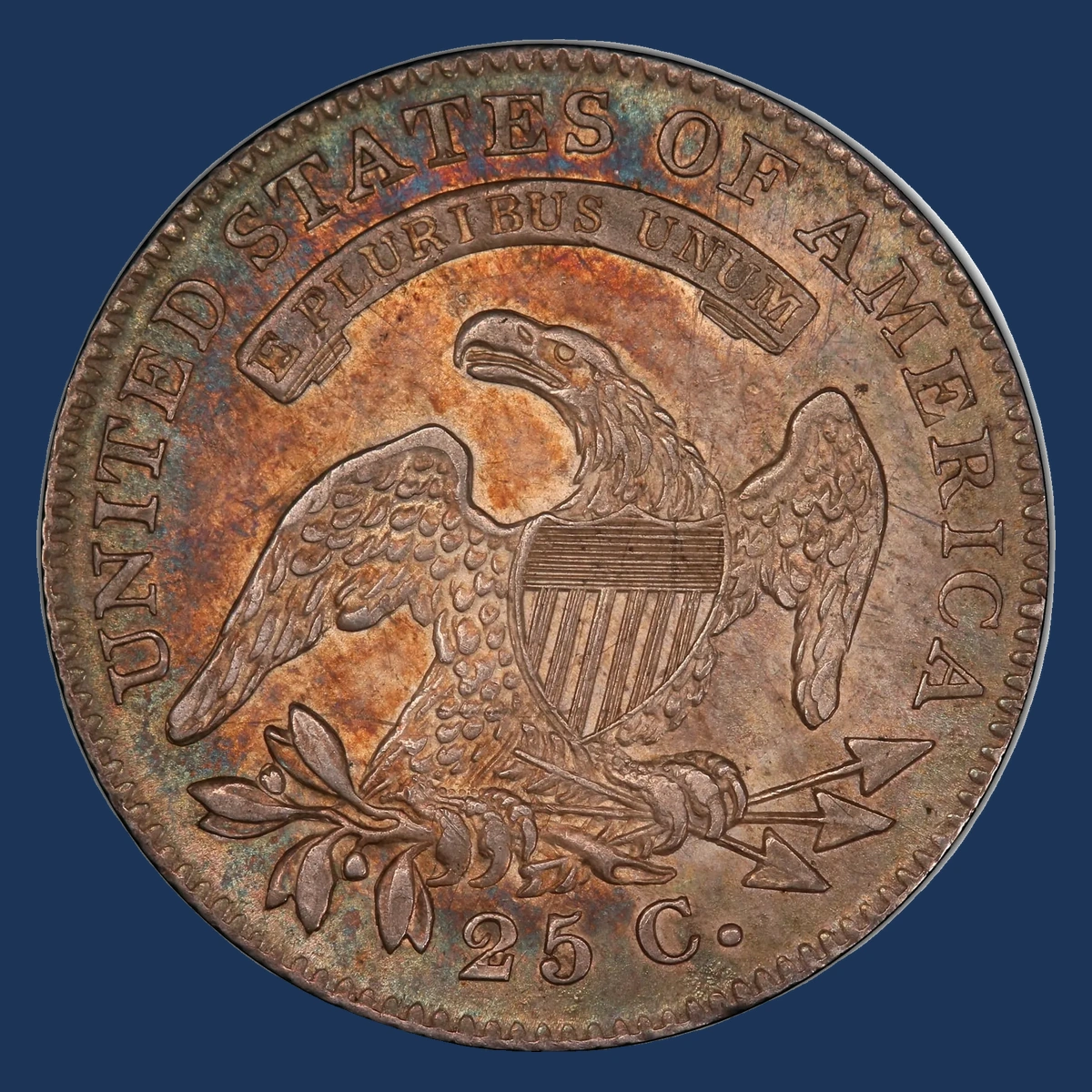
Tiny raised dots can preserve the texture of a rusted stamping tool. Rust eats pits into steel, and silver entering those pits leaves bumps on the coin.
The B-1 variety has this texture between the olive leaves and the denomination’s 2. B-2 examples have reported patches below the 5 and above AME in AMERICA.
These are separate patterns on different tools. A coin need not show all those patches together.
The phrase “die rust” describes the tool’s condition, not rust growing on the silver quarter itself. Later surface damage must be judged separately.
Estimated Value
For circulated B-1 or B-2 quarters with these original raised textures, an estimated whole-coin range is $200–$4,000. Variety and preservation should lead the comparison.
The ordinary B-1 VG10 sale noted above offers a low-grade reference, while B-2 examples require their own variety comparison. A sharper, cleaner coin can be worth much more without having a larger rust patch.
Corrosion affecting the coin after striking can reduce its value and should not be priced as original tool texture.
How to Identify
Choose the correct location first: the olive-leaf area for B-1, or the patches around 5 and AME for B-2. Enlarged photographs of identified examples will keep these patterns separate.
Inspect the dots from several lighting angles. Marks copied from rust pits should rise from the surrounding surface.
Look beyond the patch for signs of general surface damage. Random pits, rough cavities, or deposits spread across unrelated areas need a different explanation.
Do not scrape a suspect dot to test it. Compare the cluster’s position and shape with a known coin from the same tool.
A repeated cluster in the expected location is far more useful than an isolated bump anywhere on the back.
3. 1821 Capped Bust Quarter Die Cracks and Chips
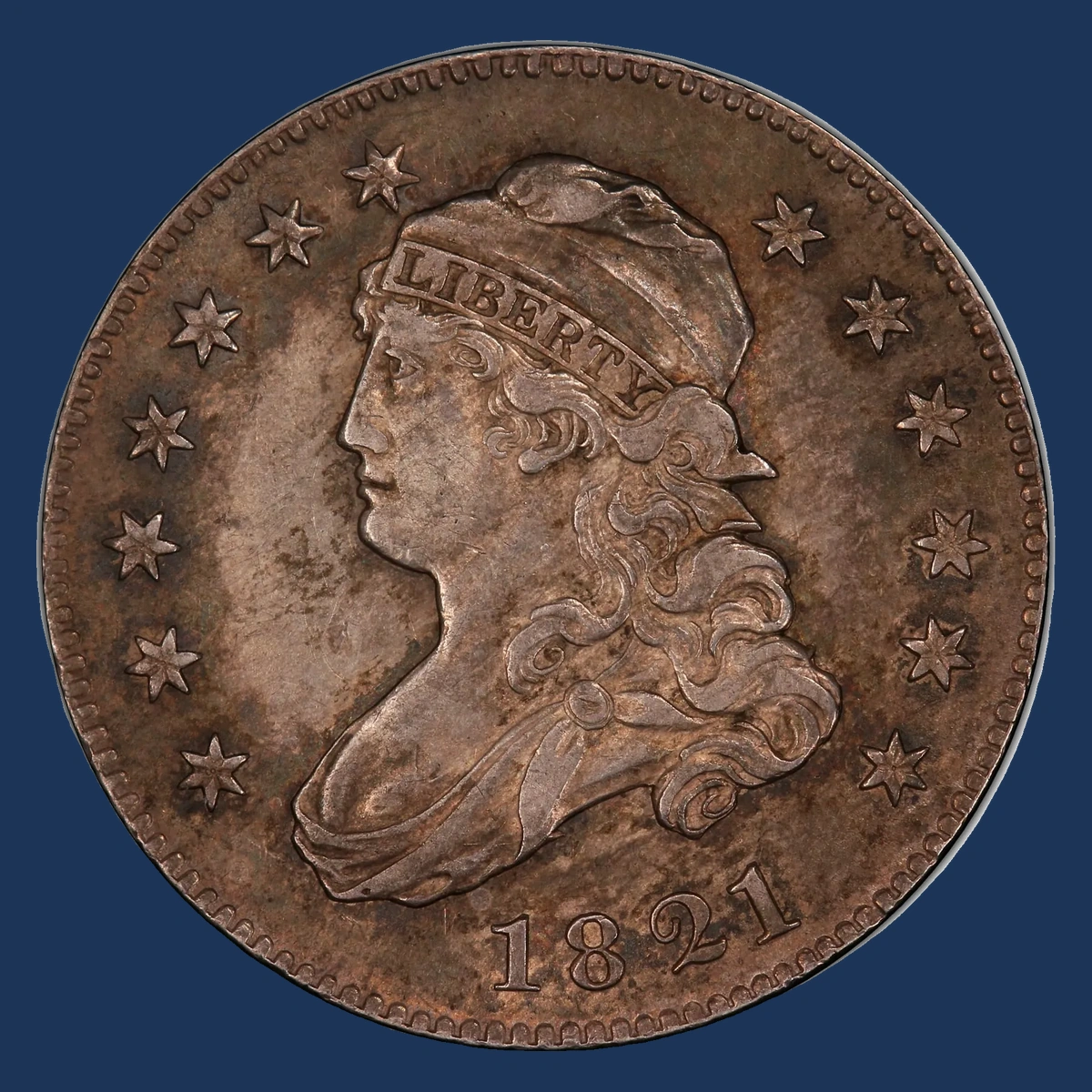
A line across the face or a small lump inside a number can come from broken steel. A crack in the stamping tool leaves a raised line, while a small missing piece leaves a raised chip.
On some B-1 and B-2 quarters, a crack runs from the cheek through LIBERTY’s L. It can extend toward the rim beside the upper-left star.
B-2 also has a chip in the lower part of the denomination’s 2. A separate B-3 example has a crack through the second-lowest star on the right.
Keep those different coins separate.
Estimated Value
Estimated whole-coin values of $200–$5,000 cover circulated examples with these features. The variety, remaining detail, and surface condition are usually more important than a tiny raised lump.
The B-3 auction coin discussed under clashing carried both a star crack and a clash mark. Its price cannot be divided into independent amounts for those two features.
Compare similar grades and varieties, and allow less for heavy scratches or cleaning even when the raised feature remains visible.
How to Identify
Read the date and identify which variety you are comparing before tracing a crack. A B-1 or B-2 cheek-to-L line does not identify the separate B-3 star pattern.
For the chip, turn to the large 25 below the eagle and inspect the lower part of 2. The added metal should blend into the numeral rather than look like a loose deposit.
Tilt the coin to examine the height of a suspected line. A cut in the coin can push metal up at its edges, so check its center as well.
Match the exact route or chip outline with a photographed example of that variety. A shared shape at the same landmark is the quickest useful comparison.
4. 1821 Capped Bust Quarter Clashed Dies
The shield belongs on the eagle side, yet faint traces can appear below Liberty’s ear on this B-3 quarter. They came from contact between the two stamping tools.
When the tools struck together without a coin between them, portions of one design marked the opposing tool. Later coins carried those transferred outlines.
This is called a die clash. It does not mean the finished quarter was struck twice.
The recorded example also has a star crack, but the two marks have different causes. Recognizing the shield-like shape is the key to identifying the clash.
Estimated Value
The B-3 graded NGC AU50 sold for $1,898 at Stack’s Bowers in August 2011. The catalog describes both the clash and a star crack on that same coin.
For circulated B-3 examples showing comparable clashing, an estimated whole-coin range is $250–$6,000. The auction coin had minor marks, so its price should be weighed alongside condition.
A cleaner, more detailed example can attract stronger interest.
How to Identify
Begin directly below Liberty’s ear, where the shield traces are reported. Photograph that area with soft light from more than one direction before increasing magnification.
Compare the faint lines with the shield on the back. The outlines should form a recognizable part of that design, rather than a random scratch or strand of hair.
If a line appears only in one lighting angle, inspect it again in hand. Reflections and marks on a plastic holder can create misleading shapes.
Check the nearby surface for cuts or scraping without rubbing the coin. A transferred design should be part of the struck surface.
The deciding feature is a shield-shaped trace in the documented area below the ear.
Conclusion
Letter defects repeat a shape, rusted tools leave raised texture, and cracks or chips add lines and lumps. Clashing instead transfers a recognizable piece of the opposite design.
These differences help you examine an 1821 quarter without confusing every mark with the same error. Estimated whole-coin values range from $150–$6,000 for circulated examples, with variety, wear, and original surfaces guiding the final comparison.