1836 Quarter Error List with Pictures

The tools used to make some 1836 quarters changed shape as cracks spread through them. Their failing surfaces left raised lines and distorted areas on the coins.
An exceptionally preserved Newman collection example with numerous cracks sold for $99,875 in November 2013. That was a whole-coin price, far above ordinary circulated examples.
Estimated values for the 1836 quarter errors below span $100–$100,000, including that exceptional quality level. Explore the two types to see how narrow cracks differ from wider surface distortion.
1836 Capped Bust Quarter Die Buckling
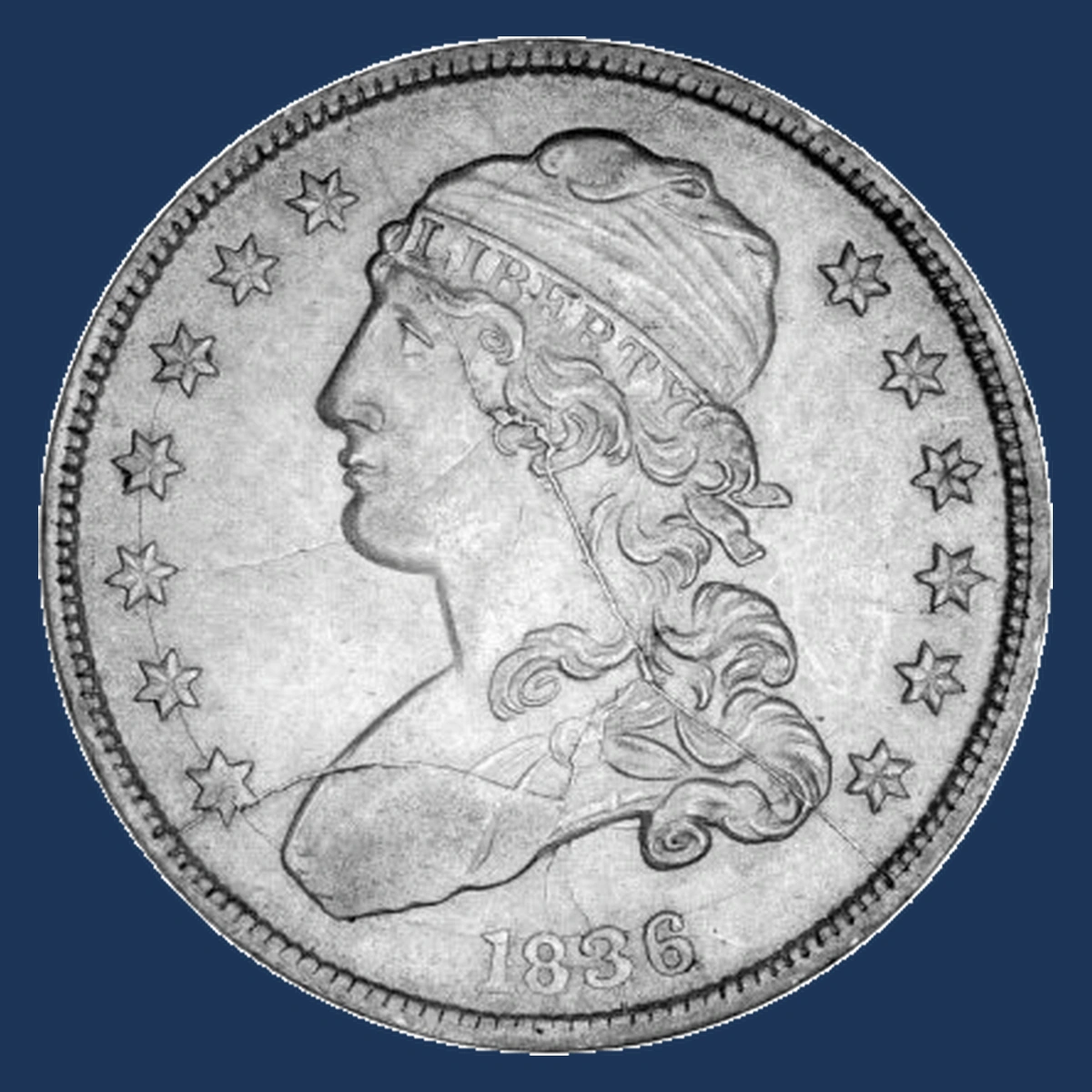
The lower folds of Liberty’s clothing can look distorted rather than simply worn flat. On the B-3 quarter featured by the John Reich Collectors Society, this area reflects die buckling.
A die is a steel tool that stamps the coin. Buckling means its surface has bent or changed shape under repeated stress.
That changed surface produces wider uneven areas, rather than only the thin raised line made by a crack. The pictured coin also has cracks on both faces.
The clothing’s normal curved folds should remain the comparison point when judging this effect.
Estimated Value
A working whole-coin estimate is $150–$3,500 for circulated through modestly graded unworn examples showing this distortion. Clear deformation and appealing original surfaces can interest specialists.
For condition context, a B-3 quarter graded AU53 brought $960 at Stack’s Bowers in September 2025. That result does not identify it as the society’s illustrated buckled coin.
Assess the clothing area separately before paying extra for a particular stage of tool damage.
How to Identify
Place a normal 1836 quarter photograph beside your coin and compare the lower clothing folds first. Follow their shapes into the surrounding surface rather than judging one bright patch in isolation.
Tilt the coin slowly under a small, movable light source to reveal broader changes in height. Then compare the shape with the society’s illustrated B-3 example, including its associated cracks.
Wear reduces exposed detail, while a hard impact can leave an abrupt dent or displaced metal. Matching the wider distorted area and its neighboring cracks to the same known tool is more useful than calling every weak fold “buckling.”
1836 Capped Bust Quarter Die Cracks and Breaks
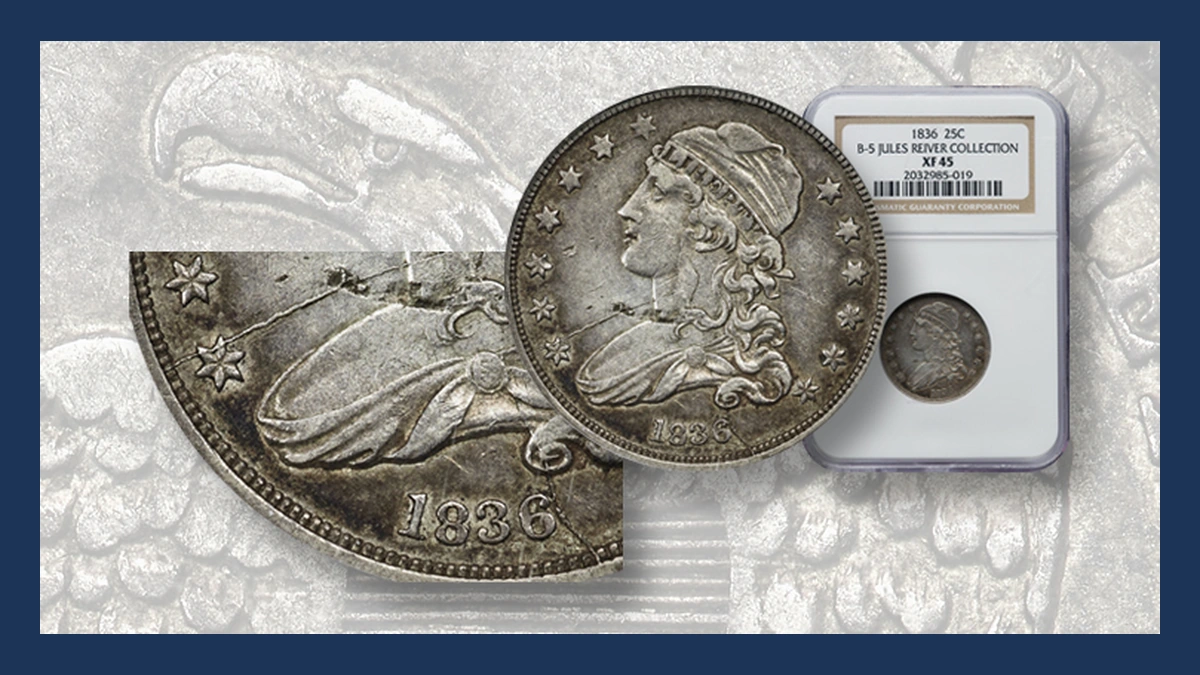
Thin raised lines can cross Liberty’s cap, stars, or the eagle side of an 1836 quarter. They formed when silver entered cracks in the stamping tools.
Different tools left different maps of lines. On B-2 examples, front cracks involve the cap and right-hand stars, while back cracks pass through OF’s F and UNITED’s U.
The B-3 variety also develops extensive cracks on both faces. Its later examples can show a much more broken-looking pattern.
These lines record damage to the tools, not cuts added to the finished coin by a later owner.
Estimated Value
Cracked examples have an estimated whole-coin range of $100–$100,000, with preservation explaining much of that unusually wide spread. The top end applies to exceptional coins.
Heritage sold a B-3 graded NGC MS61 for $1,880 in April 2013. The much finer Newman example brought $99,875 that November.
Neither amount isolates the price of a crack. Ordinary worn examples should be compared with similarly worn quarters, not the finest survivors.
How to Identify
Choose a matching variety photograph before tracing the lines. The catalog numbers B-2 and B-3 identify different pairs of stamping tools.
For B-2, inspect the cap and stars on the right, then turn to the back’s F and U. Do not expect a B-3 coin to reproduce that entire pattern.
Examine the line edges with a 10× magnifier. A genuine tool crack produces raised metal joined naturally to the surrounding coin.
A scratch usually sinks into the surface and may leave pushed-up metal alongside it. Dirt can also hide or imitate a narrow line.
The most useful check is the line’s complete route across letters and design details, matched to a known example of the same variety.
Conclusion
A thin raised line and a broad distorted fold reveal different kinds of wear in the Mint’s tools. Compare each with its own reference photographs, because one 1836 quarter need not show every known feature.
The estimated $100–$100,000 whole-coin range reaches exceptional preserved specimens at its upper end. For an ordinary circulated coin, condition and a convincing pattern match matter more than a dramatic label.