1853 Quarter Error List with Pictures

How much difference can a small mark beneath a date make? PCGS records $37,200 in May 2025 for an MS65 example of the variety called 1853/4.
This 1853 quarter error list covers that date feature, two different unusual O mintmarks, and an off-center strike. Estimated whole-coin ranges span $120–$40,000, depending on the variety and condition.
All four sections concern the Arrows and Rays design. Follow the close-up checks below to separate these features.
1. 1853-O Liberty Seated Quarter Filled O Mintmark
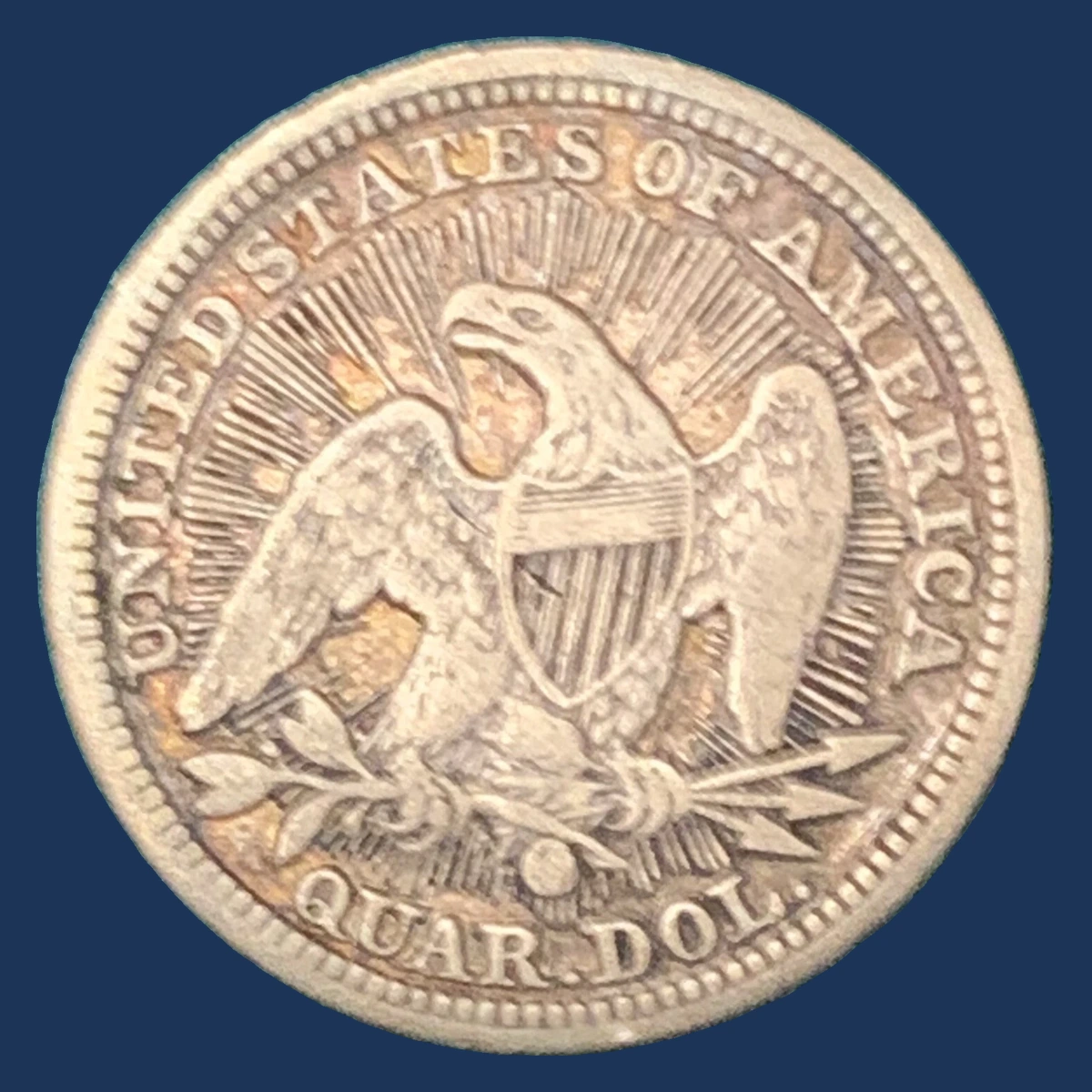
The center of the O becomes raised and partly or fully filled on this New Orleans variety. An ordinary mintmark has an open center, so the solid appearance stands out under magnification.
The change developed as the die, the steel stamping tool, deteriorated. Damage to the small part of the tool forming the O’s center let extra silver rise there during striking.
Collectors follow several stages of this filling on the same variety. The specialist catalog identifies it as Briggs 3-E.
Dirt inside a normal O can imitate the appearance, but it is material sitting on the coin.
Estimated Value
For worn through lightly worn examples with the correct filled O, estimate $120–$3,000. A recognizable filled center and original surfaces make stronger comparisons than a dark, clogged-looking mintmark.
The specialist Top 25 guide lists $500 in VF20, $1,000 in EF40, and $2,400 in AU50. These are whole-coin guide figures, not realized auction prices.
The amount of visible wear still matters even when the mintmark filling is bold.
How to Identify
Light the O from the side before deciding whether its center is truly raised. Dirt may be dark or uneven, while a Mint-made filled center is part of the coin’s silver surface.
Do not scrape it. Use a magnifier and compare the center with a documented Briggs 3-E example at a similar stage of filling.
Check the outline around the O as well. Wear can blur that boundary, and a flattened letter may appear solid without matching this variety.
Photograph the full reverse and the date with its arrows, keeping those views together.
The meaningful feature is the matching raised center within the original mintmark, not simply a dark spot inside an O.
2. 1853-O Liberty Seated Quarter O Over Horizontal O
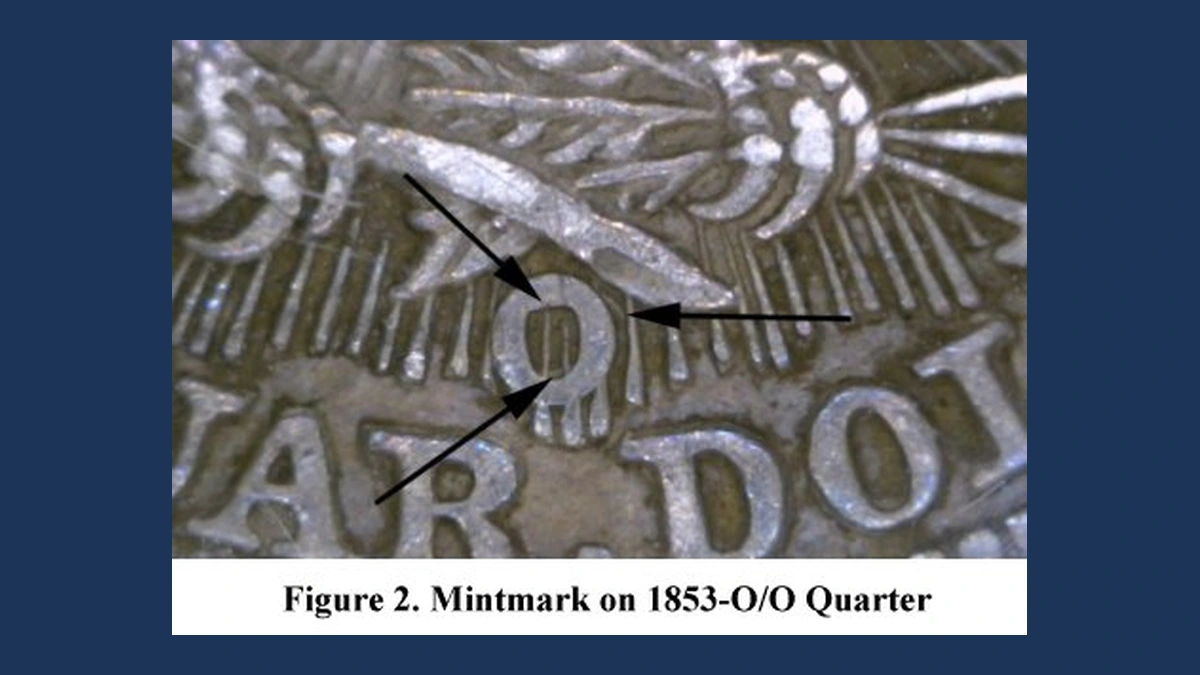
A sideways O was entered before the final upright mintmark on this New Orleans quarter variety. Parts of that earlier letter remain inside the upper and lower curves of the finished O.
The mintmark was punched into the stamping tool during preparation. Re-entering it upright did not completely remove the first impression.
This is the O over Horizontal O variety, also called FS-501. It belongs to the Arrows and Rays quarters, with arrows beside the date and rays behind the eagle.
A raised lump on Liberty’s rock provides another identifying feature on examples that preserve enough detail.
Estimated Value
The specialist study of the horizontal O notes that better-preserved examples are especially difficult to find. The small inner remnants become harder to recognize as wear increases.
An estimated $120–$3,500 covers heavily worn through lightly worn examples. The related Top 25 guide gives $400 at VF20 and $2,400 at AU50.
A clear inner-letter match supports a premium more convincingly than mintmark position alone on a heavily worn coin.
How to Identify
Inspect the inside top and bottom of the O with a 10× magnifier. Look for curved remnants of a sideways letter, rather than one solid lump filling the opening.
Follow each extra piece far enough to see whether it belongs to an oval. The two remnants should fit the same earlier horizontal O within the final upright letter.
Then turn to Liberty’s rock and compare the small raised lump with the specialist illustration. This extra check is most useful when wear has left the rock detail intact.
If dirt hides the mintmark, leave it in place and seek better photographs or a specialist’s opinion. The paired inner curves are a clearer starting point than guessing from the O’s general thickness.
3. 1853-O Liberty Seated Quarter Ten Percent Off-Center Strike
Part of the quarter’s design fell beyond the edge when the blank entered the press out of position. The opposite side kept a crescent of metal that the stamping tools did not reach.
NGC describes an 1853-O Arrows and Rays quarter struck ten percent off center. It was graded VG8, meaning heavily worn but still identifiable.
The off-center strike remains a separate feature from the ordinary arrows and rays of this year. Those design additions marked the adoption of a lighter silver coin.
The shifted design appears on both faces, unlike a strike displaced on just one side.
Estimated Value
NGC records a Heritage result of $3,120 in February 2022 for the ten-percent off-center VG8 quarter. This is an actual sale of the worn New Orleans example.
Estimate $1,500–$8,000 for identifiable 1853-O off-center quarters across heavily worn through better-preserved circulated condition. The range allows for changes in displacement and surface quality.
A readable date and mintmark are valuable because they establish exactly which early silver issue is being offered.
How to Identify
First find the O beneath the eagle and the arrows flanking 1853. Check that the rays remain part of the reverse design wherever the strike reaches the blank.
Photograph both faces squarely, then compare the missing design with the unstruck crescent. The same off-center placement should explain the displacement on both sides, not just an uneven border on one face.
For a loose candidate, a scale and calipers can check the normal Arrows and Rays standard of 6.22 grams and 24.3 millimeters. The earlier No Arrows quarter normally weighed 6.68 grams, so identify the design before comparing weights.
Look for original detail ending at the shifted edge rather than a border cut away after striking.
4. 1853/4 Liberty Seated Quarter Overdate and Repunched Arrow
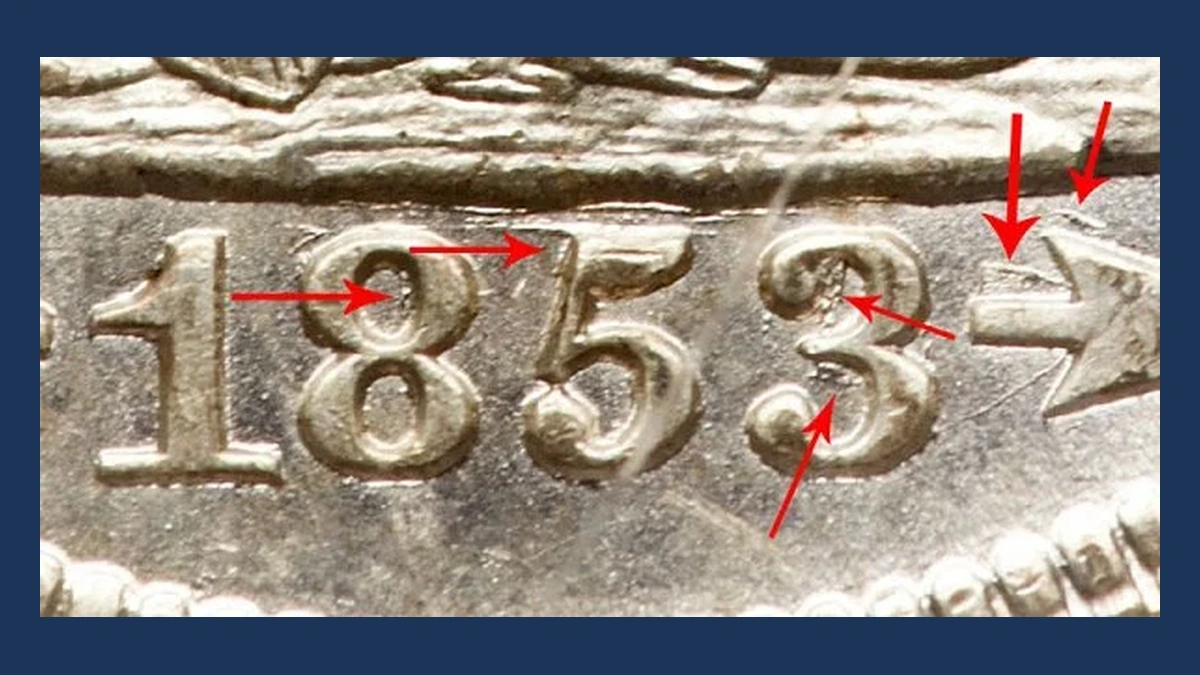
An extra bar beneath the final 3 gives this Philadelphia variety its familiar 1853/4 name. Specialist references describe the underlying shape as part of a 4 beneath the final numeral.
The right arrow beside the date also shows a repeated impression. Both features arose while the date and arrow details were entered into the stamping tool.
The resulting coins still read 1853. The variety name does not mean that a finished 1854 coin was struck again or that two different dates appear side by side.
Collectors catalog this Arrows and Rays variety as FS-301, also known as Briggs 1-A.
Estimated Value
PCGS records $37,200 in May 2025 for an MS65 example, an unworn coin with relatively few marks. At the other end, its auction database lists a cleaned VF Details example at $222 in October 2020.
The estimated $130–$40,000 range reflects that enormous difference in preservation. Most worn examples belong far below the upper end.
Clear date remnants, an identifiable repeated arrow, and undamaged surfaces strengthen the comparison.
How to Identify
Place an ordinary 1853 Arrows and Rays quarter beside the candidate, or use a clear photograph for comparison. Focus first on the bottom of the final 3 and locate the extra bar.
Turn the light until the edges are clear, then use a magnifier to follow the remnant. A cut into the surface or a random scratch below the date will not follow the documented numeral shape.
Next compare the right arrow for its repeated impression, keeping the nearby date in the same view. Confirm the arrow and the extra bar together, while checking that the coin also has rays behind the eagle.
Conclusion
An extra outline, a solid mintmark center, and a shifted design tell different stories on 1853 quarters. Estimated whole-coin values range from $120–$40,000 across the examples and conditions discussed.
Keep the Arrows and Rays design in view when comparing coins. A clear date or mintmark match matters, and the expensive MS65 overdate is a very different purchase from a worn example.