1891 Quarter Error List with Pictures

Two readable dates make one 1891 quarter especially striking. After a normal first blow, the coin turned and received another image far off center; an NGC MS62 example brought $31,200 in August 2020.
Not all 1891 quarter errors are so dramatic. Extra digit tops hide in the border on another variety, while a broken back tool leaves a raised patch.
Estimated whole-coin values below run from $35–$35,000. Follow the visible clues to identify each type.
1. 1891 Liberty Seated Quarter Raised Patch from a Broken Back Tool
A missing piece of the back stamping tool can leave extra raised metal on the coin. Metal fills the empty space where the tool would normally form part of the eagle or surrounding design.
GreatCollections cataloged an 1891 quarter with a broken back tool and an ICG F12 grade. F12 indicates substantial circulation wear but remaining major details.
The exact position and connection to the rim need to be checked on that example. A patch entirely within the design differs from a cud, the usual name for a tool break that reaches the outer rim.
Estimated Value
For a comparable worn 1891 quarter with genuine back-tool damage, estimate $35–$750. The size and visibility of the raised patch can matter more than its description as a broken tool.
The whole coin’s wear, mint, and surfaces also contribute to value. A clear original boundary is easier to display than a rough area mixed with corrosion or scratches.
This estimate does not assign a premium to added metal or impact damage that merely resembles a tool break.
How to Identify
Inspect the entire back before choosing a name for the raised patch. Use a normal quarter to see what eagle or lettering detail should occupy that area.
Under light from the side, follow the boundary and see whether extra metal replaces the normal image. A dent can push up a nearby ridge without a stamping tool having broken.
Trace any claimed connection to the rim rather than assuming every large blob is a cud. Keep the mint-letter area below the eagle visible in a separate photograph, and leave the mint unnamed if wear or the holder prevents a reliable reading of that part of the coin.
2. 1891 Liberty Seated Quarter Extra 8 and 9 Tops in the Border
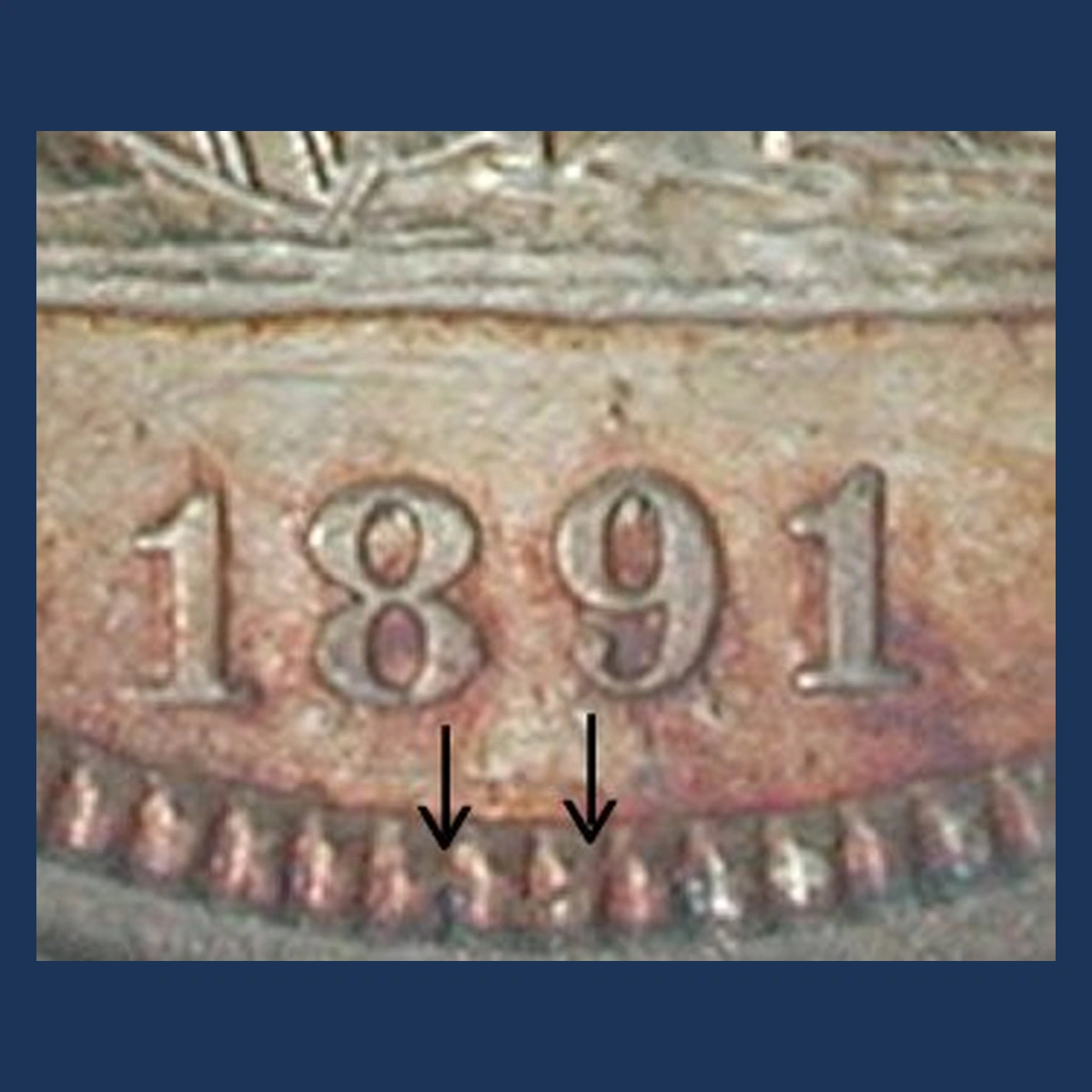
Tiny numeral tops appear where only the lower border should be. On the Philadelphia variety known as FS-301 or Briggs 7-G, parts of 8 and 9 lie among the teeth below the normal date.
Those teeth are called dentils. The extra digit traces come from a misplaced date-punch impression on the stamping tool, not from another date added to the finished coin.
The normal 1891 remains above the misplaced traces. This is a local mistake in preparing the tool, unlike a second strike that moves the whole portrait, stars, and lettering across the metal.
Estimated Value
A PCGS MS64 example sold for $1,057.50 in August 2017. Comparable identified FS-301 quarters have an estimated range of $100–$1,500, depending on wear and preservation.
The tiny numeral tops are easier to compare when the lower border remains clear. Wear or damage can hide them even when the main date is readable.
The quoted sale concerns a well-preserved unworn coin. A worn example with faint traces should not automatically receive the same price.
How to Identify
Place the normal date upright and locate 89 in the main row of digits. Move straight down into the small toothlike border and inspect the tops of the extra 8 and 9.
A 10× magnifier and light from different directions can help separate those raised traces from ordinary border shapes. Keep the normal digits in the same photograph so their relative positions stay clear.
Compare with an identified FS-301 quarter rather than a Seated dime of the same year. Both denominations have date varieties, but their details are not interchangeable.
Look for original raised numeral portions instead of fresh cuts. Do not scrape between the border teeth to expose a shape hidden by dirt.
3. 1891 Liberty Seated Quarter Thirty-Five- and Forty-Percent Off-Center Strikes
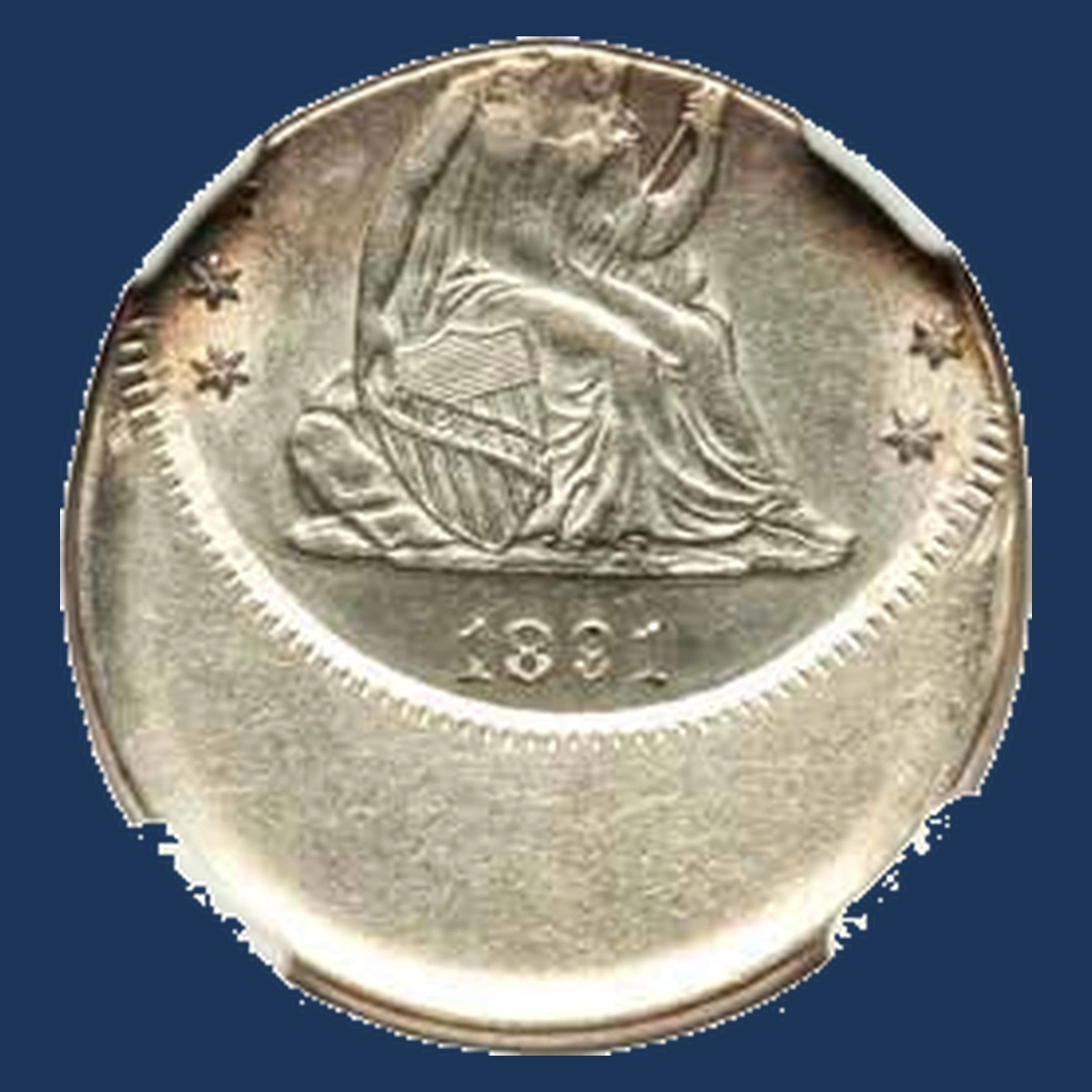
A blank metal disk sitting away from the center of the press receives only part of the intended design. An unstruck crescent remains opposite the side where the image runs beyond the metal.
One 1891 Philadelphia example is described as thirty-five percent off center and graded NGC MS61. Another is described as forty percent off center and graded PCGS AU58.
MS61 indicates an unworn coin with noticeable marks, while AU58 indicates only slight wear. Those labels and percentages belong to separate examples, not two ways of describing one coin’s appearance.
Estimated Value
Published auction summaries list $10,200 for the thirty-five-percent NGC MS61 example and $8,625 for the forty-percent PCGS AU58 coin. Comparable genuine 1891 off-center quarters have an estimated range of $3,000–$15,000.
The two results show why a larger percentage does not guarantee a higher price. Surface quality, readable identity, and the overall appearance of the shifted design matter too.
Keep each coin’s grade and amount of displacement together when comparing an offered example.
How to Identify
Find the date before judging the empty crescent. A strong shift can leave less of the original image available, so a readable year is especially helpful.
View both faces in full and trace where their designs end at the metal boundary. The plain areas should fit the same misplaced disk.
Check the unused surface for grinding or erased detail. Original blank metal differs from a finished area that was flattened later.
A centered back behind an uneven front suggests a tool-position problem rather than the same off-center event.
Compare the actual outline with the appropriate thirty-five- or forty-percent example, keeping their grades separate. Do not assign a mint from a section of design that never reached the blank.
4. 1891 Liberty Seated Quarter Second Strike Halfway Off Center
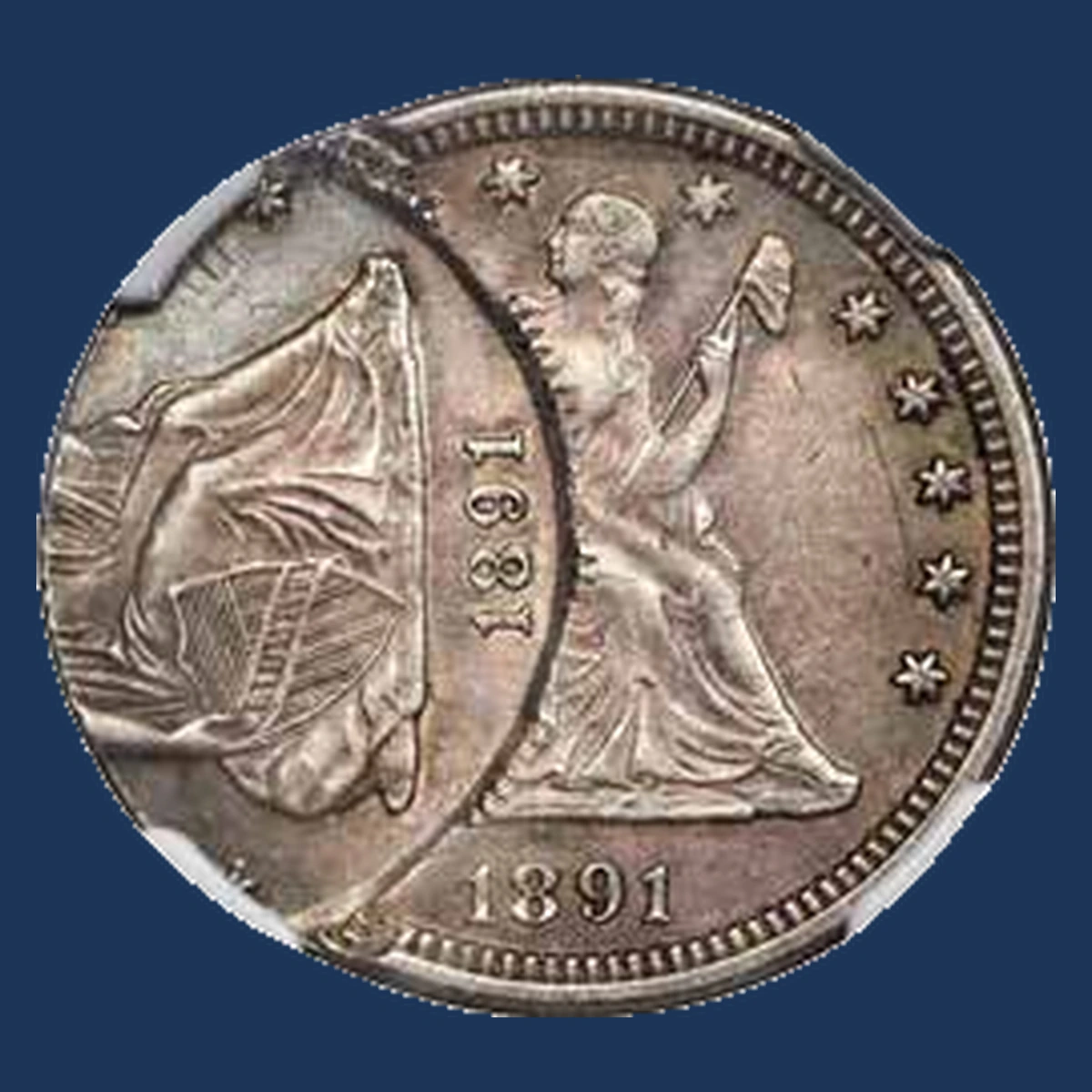
A normally struck quarter remained in the press long enough to receive another blow after moving. On the cataloged NGC MS62 example, that second strike landed about halfway off center.
The coin also turned ninety degrees clockwise between blows, leaving widely separated design positions and two visible dates. Both faces received the second image because no extra blank blocked either side.
This is a double strike, not just an extra outline on one digit. The relationship between the two whole designs records the coin’s movement after its first image was already complete.
Estimated Value
The NGC MS62 double strike brought $31,200 in August 2020. A November 2022 auction record with the same grade and description lists $20,400.
For a comparable clear, well-preserved 1891 double strike, estimate $15,000–$35,000. Those auction results show that a dramatic error does not command one fixed price.
Readable dates and connected design details help explain the sequence. Damage or a poorly visible earlier image can change the comparison.
How to Identify
Trace the first portrait, date, and surrounding stars as one complete image. Then find their counterparts in the displaced second image without mixing details from the two positions.
Compare the dates and check that the later design is turned a quarter-turn clockwise relative to the earlier one. Turning the whole photograph does not change that relationship between the two impressions.
Examine the back for the corresponding pair of eagle designs. Both faces should support the same movement and second blow, rather than one face showing an unexplained unrelated mark.
Photograph the overlaps under low light to see which details cover earlier ones. A specialist can then compare the complete sequence with the cataloged double strike.
Conclusion
These 1891 quarter errors have estimated whole-coin values of $35–$35,000. A misplaced numeral in the border and a second complete strike tell very different stories about how the coin was made.
Keep the two off-center examples separate and compare the entire coin before enlarging a small detail. Original surfaces, readable dates, and a clear relationship between the unusual feature and normal design make the strongest starting points.