1999 Penny Error List with Pictures

AM can be wide or nearly touching on a normal 1999 penny—the correct spacing depends on how the coin was made. Learning that distinction is a useful start to checking 1999 penny errors.
The year also produced a remarkable mismatch: Lincoln on the front and a dime’s torch on the back. That coin sold for $138,000 in April 2006.
Estimated values below span $2–$200,000, from small surface defects to that exceptional wrong-design pairing. Continue through the eighteen groups for visible clues, price examples, and simple checks.
1. 1999 Lincoln Memorial Penny Plating Blisters (Estimated Up to $50)
A smooth little dome can rise above the coin’s surface without following any letter or part of Lincoln’s portrait. The thin copper coat may have lifted from its zinc center.
This appearance is reported on 1999 pennies. It differs from a solid lump created when a piece breaks from a stamping tool.
A blister can leave the design visible across the raised coating. Its outline and the nearby surface help explain what happened.
Corrosion and later heating can also raise the metal. A bubble should not receive a mint-error label until those other causes are excluded.
Estimated Value
An estimated $2–$50 suits small, confirmed mint-made coating blisters. Most minor examples belong toward the lower end.
The estimate compares similar plated cents rather than a recorded sale for a particular 1999 bubble. Good surface preservation makes the feature easier to study.
A larger blister is not automatically more valuable if corrosion caused it. Buyers need an original production defect, and professional grading may cost more than the small premium of an ordinary example.
How to Identify
Leave the raised area untouched. Pressing or puncturing the copper could destroy both the feature and useful evidence about its origin.
Examine its rounded outline with a 10× magnifier, then compare the surrounding metal. White residue, rough pits, or flaking can suggest corrosion.
Check the plain edge and the opposite face for related surface changes. A solid raised piece that follows a tool-break pattern needs a different identification.
A loose normal cent is 2.50 g and 19.05 mm; compare with a scale and calipers. Tiny blisters may leave both readings essentially unchanged.
Find a thin, rounded copper dome without corrosion or later heat damage explaining the lifted surface.
2. 1999 Lincoln Memorial Penny Doubled Dies (Estimated Up to $200)
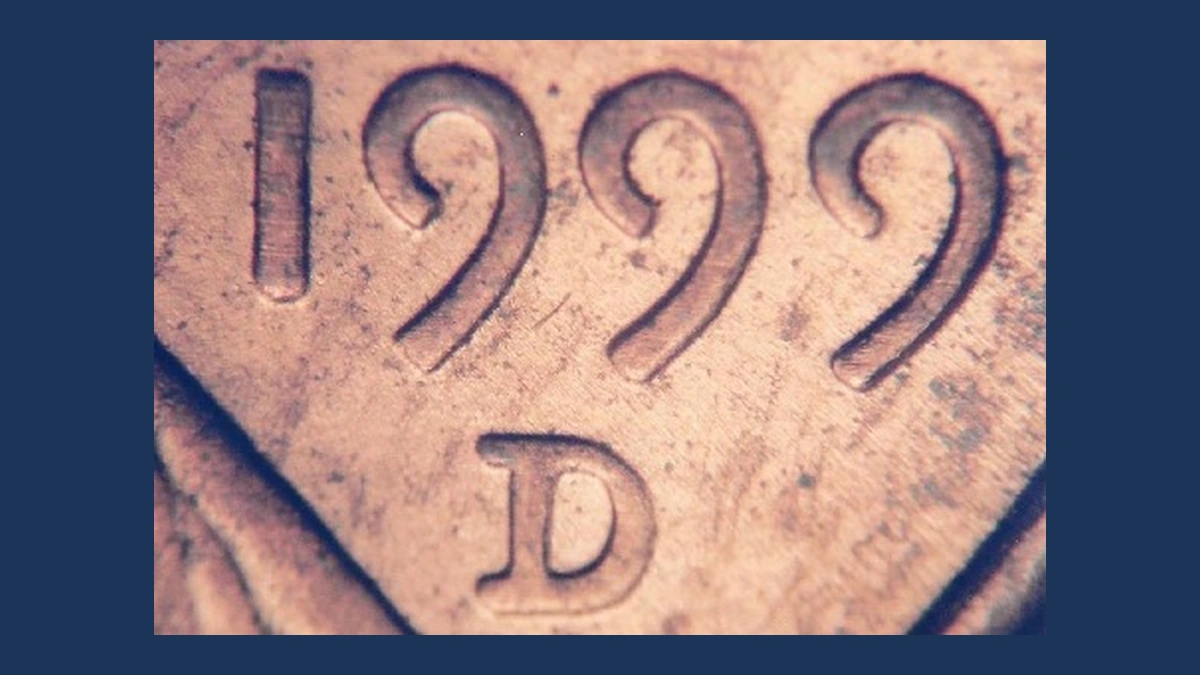
A second edge can appear beside the date, lettering, or another part of the design. In a doubled die, the extra shape was already in the steel stamping tool.
Front-side examples are reported for Philadelphia and Denver 1999 cents. Denver also has a report of back-side lettering doubling.
Those reports describe different patterns. A thick front letter and an unrelated back mark should not be combined into one imagined variety.
Tool wear, reflections, and movement during striking can imitate repeated edges. A match to a specific confirmed coin matters more than the amount of apparent thickness.
Estimated Value
For correctly identified minor doubled dies, use an estimated $5–$200. Strong, repeatable detail on an attractive coin supports the upper part of the range.
This compares modest modern cent varieties, not the famous older doubled dies with much larger features. No specific 1999 sale is assigned to the reported front and back patterns.
A photograph should make the match understandable. Flat strike doubling or cracked plating should not receive the same premium from a doubled-die label.
How to Identify
Choose a comparison that matches both the mint and the affected face. Philadelphia cents have no mint letter; Denver cents show D below the date.
Use a 10× magnifier to compare the reported date or lettering feature in detail. Do not assume that every letter on a genuine example must be doubled.
Change the light to reveal a flat shelf or a split in the copper coating. Both can resemble an extra edge in one photograph.
Check a loose coin with a scale and calipers against 2.50 g and 19.05 mm, then inspect its plain edge. These measurements do not establish a variety.
Match the same extra shape at the same position on a confirmed coin from the correct mint.
3. 1999 Lincoln Memorial Penny Clipped Planchet (Estimated Up to $250)
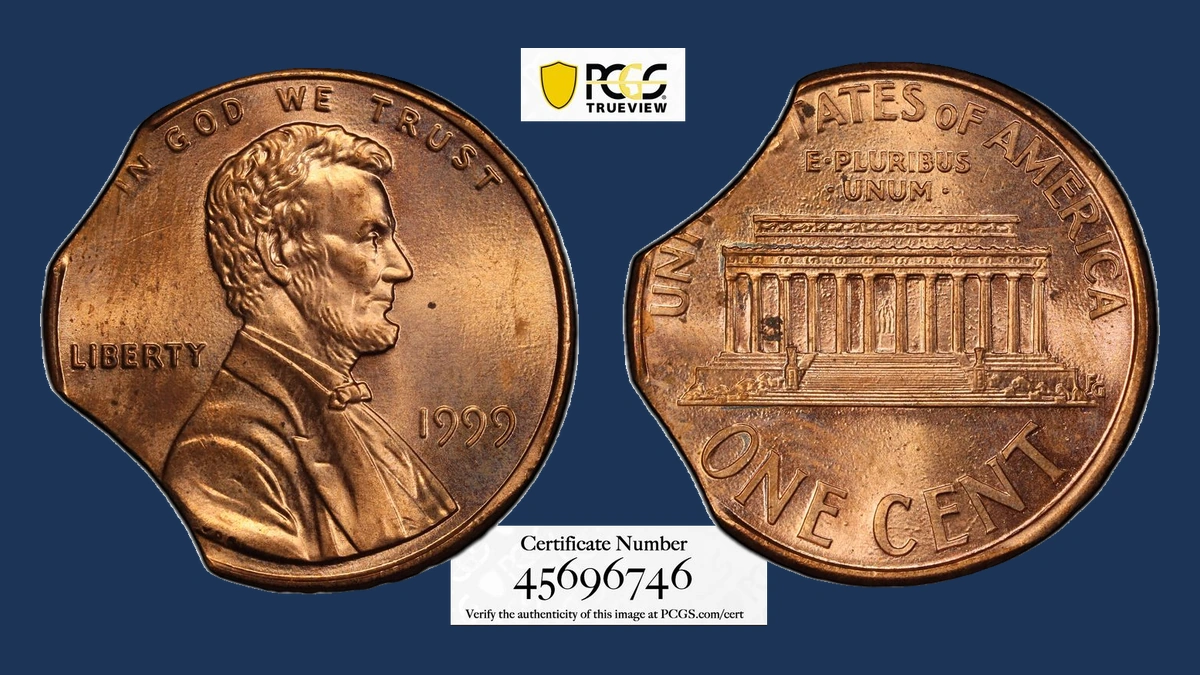
Two curved bites appear to be missing from the coin’s outline. The metal disc was incomplete before the design was struck.
A planchet is the prepared disc that becomes a coin. If the blank-cutting process overlaps an earlier hole, part of the new disc can be missing.
A 1999 example in a PCGS collector showcase is described as a seven-percent double curved clip. The two gaps belong to one coin, not two separate errors to price individually.
The boundary can remain copper-coated. A weak border opposite a gap may help, but it is not compulsory on every genuine clip.
Estimated Value
Estimate $20–$250 for authenticated clips, depending on the size, shape, and preservation of the missing areas. Two small gaps do not automatically double the value.
A 2021 Shield cent with a five-percent straight clip sold for $114 in September 2025. That is a later design and a different clip shape, used only as price context.
The recorded seven-percent 1999 example has its own appearance. Later cutting or filing does not earn the mint-error premium.
How to Identify
Inspect both gaps with a 10× magnifier before judging the coin’s color. Look at where each curved boundary joins the normal round edge.
A scale should show less than the normal 2.50 g when metal is genuinely missing. Small differences need a scale fine enough to record them.
Use calipers on the surviving round section for comparison with 19.05 mm. The rest of the edge is normally plain.
Look for saw marks, filing, and fresh metal that would indicate later removal. A weak opposite border can support the identification but need not be obvious.
Check that both missing curves have natural boundaries and reduced weight, without cutting marks accounting for the gaps.
4. 1999 Lincoln Memorial Penny Cuds and Retained Die Breaks (Estimated Up to $300)
A raised lump can connect to the rim and replace part of the normal design. Collectors call this a cud.
A piece of the stamping tool broke away, leaving a space that filled with coin metal. Philadelphia 1999 examples are recorded in a dedicated cud catalog.
Other recorded examples involve a broken section that stayed in place. They can show a boundary and a step while retaining some of the design inside.
Fine cracks are smaller features. A line reaching the edge is not automatically a cud, and retained breaks differ from completely missing tool sections.
Estimated Value
An estimated $5–$300 covers small cracks through conspicuous rim-connected breaks. The strongest features usually command more than faint lines.
The range compares modern cent tool-break errors. A retained section with sharp surviving detail can interest collectors even though it looks different from a solid lump.
Condition and the amount of disrupted design matter. Neither a catalog nickname nor a later stage of the same break guarantees a fixed price increase over every other example.
How to Identify
Look where the abnormal area meets the border. For a cud, a solid raised mass should join the rim and replace some normal detail.
Under a 10× magnifier, check whether lettering or design survives inside a stepped, bounded area. That can fit a retained broken tool section instead.
Match the exact outline to the appropriate 1999 photograph; avoid joining features from different specimens. Check for attached debris or round coating bubbles.
On a loose penny, compare 2.50 g with a scale and 19.05 mm with calipers. Examine the plain edge for crushing or added metal.
Distinguish a solid rim-connected lump from a bounded step retaining design, then match that shape to its confirmed example.
5. 1999 Lincoln Memorial Penny Cupped Strike (Estimated Up to $300)
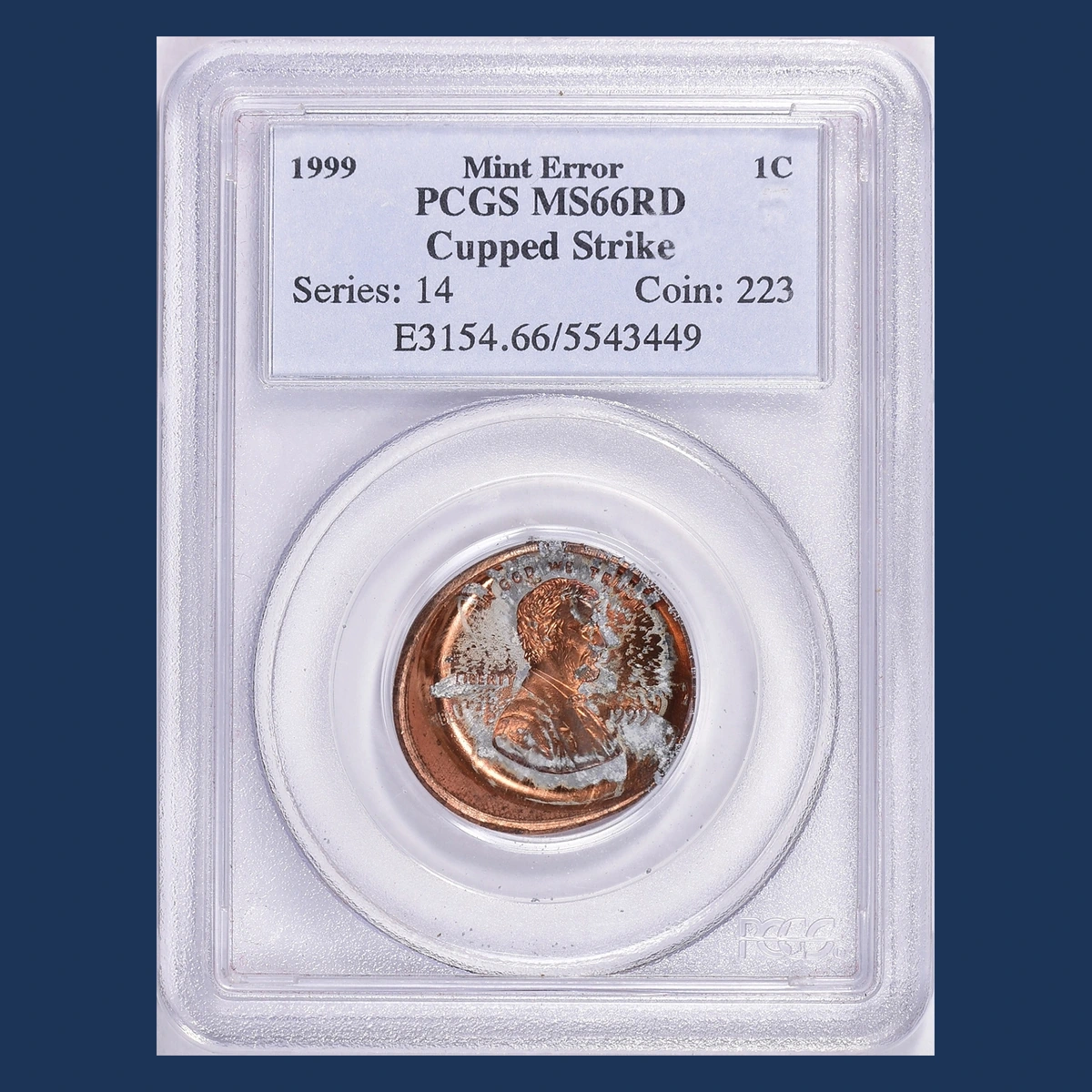
The coin curves like a shallow dish instead of lying flat. One face is concave and the other is convex.
A 1999 example is listed in a PCGS collector showcase as a cupped strike, graded MS66 Red. The appearance concerns the overall profile of the coin.
A curved shape alone does not establish the full sequence of events in the press. It should not automatically be called a deep die cap stuck around a stamping tool.
Later bending can make an ordinary penny bowl-shaped. The design and edge must show that the curvature belongs to the mint-made piece.
Estimated Value
For a confirmed cupped strike, an estimated $25–$300 compares similar unusual shapes on modern cents. Depth, surface quality, and clear authentication influence the amount.
The showcase’s MS66 Red example supplies a documented type, not a realized sale price. That grade indicates an unworn coin with few marks and original copper color.
A bent ordinary coin falls outside this estimate. Smooth curvature alone is not a reason to pay a premium without examining the struck surface.
How to Identify
Place the coin where its side profile can be seen without forcing it flat. Record how the curvature runs across the whole piece.
Use a 10× magnifier around the change in slope and the plain edge. Sharp folds, squeezed letters, or tool marks point toward later bending.
Calipers can record width and height gently; compare the width with the normal 19.05 mm diameter. Weigh a loose coin on a scale against 2.50 g.
Keep any certified example in its holder and use the recorded measurements. Matching its profile is more useful than guessing how many times it was struck.
Look for consistent mint-made curvature with undamaged design, rather than a fold imposed on a finished flat penny.
6. 1999 Lincoln Memorial Penny Struck-Through Errors (Estimated Up to $400)
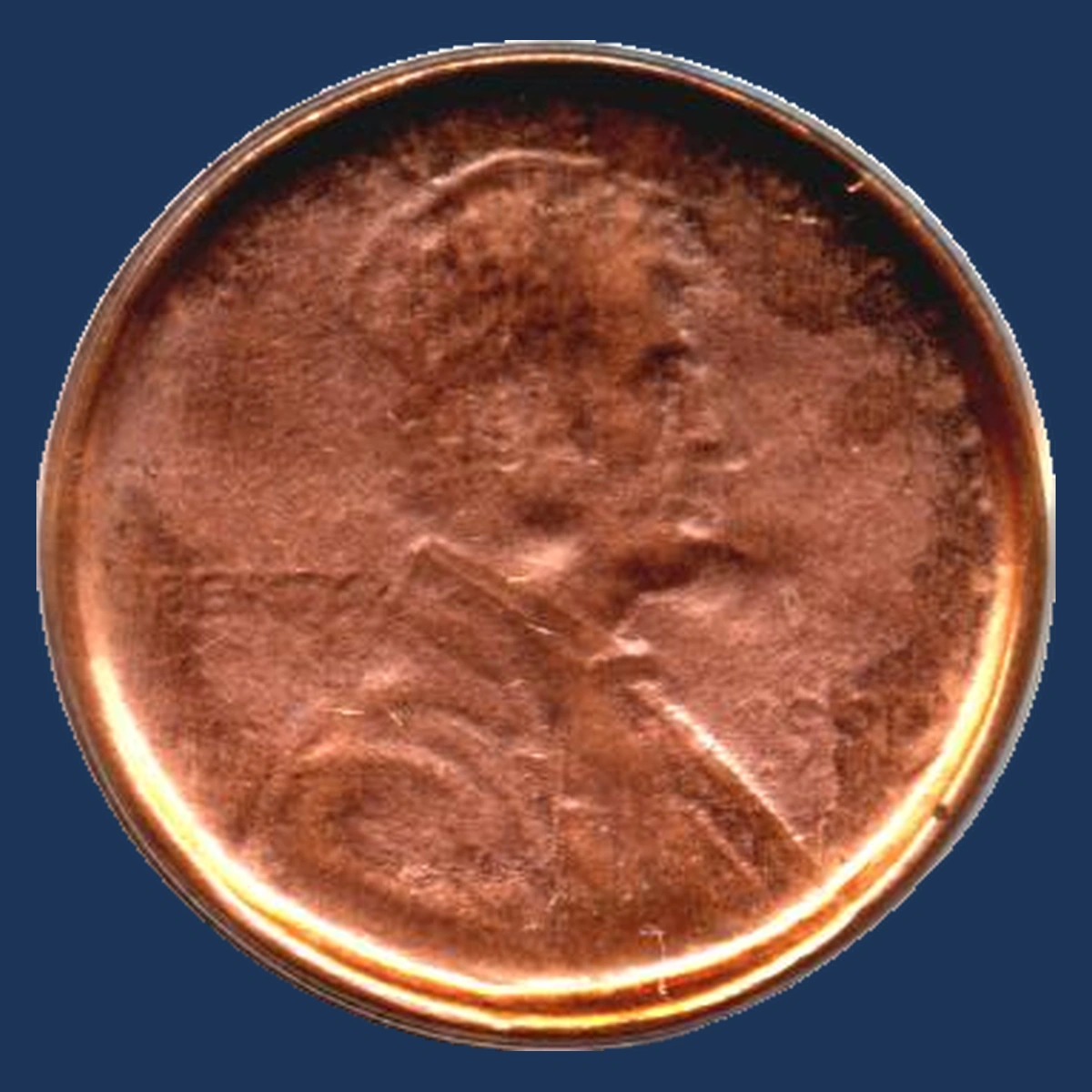
Lincoln’s portrait can appear soft or partly hidden when another piece of metal blocks the stamping tool. A coin stuck to the tool can act as that barrier.
As this cap becomes thinner, some design can press through it and reach the next coin. A 1999 example is recorded as struck through a late-stage cap.
A separate reported 1999 piece combines a front-side struck-through area with an expanded strike. Its obstructing material is not identified.
These coins need not be cup-shaped themselves. The cap or other material interfered with their design rather than becoming their whole outer shape.
Estimated Value
An estimated $25–$400 covers confirmed cap-blocked designs and other clear struck-through impressions. Stronger visible effects can draw more interest than slight weakness.
A 1995 late capped-die strike graded PCGS MS65 Red sold for $180 in March 2025. That is a different-year comparison, not a price assigned to the 1999 cap strike.
The expanded 1999 struck-through report needs its own appraisal. A broad outline does not by itself identify the material that blocked the design.
How to Identify
Compare the weak portrait with sharp areas elsewhere on the same coin. A cap may leave an unevenly transmitted design rather than ordinary wear on the highest points.
A 10× magnifier helps reveal original surface, later scratches, and corrosion. For a distinct impression, follow its boundary instead of assuming it must be grease.
Check the back and the plain edge for a consistent mint-made strike. Later grinding can remove design without creating a struck-through error.
Use a scale and calipers on a loose coin against 2.50 g and 19.05 mm. Expansion can change the outline without proving what blocked the tool.
Find a naturally blocked or transmitted design with intact surrounding surface, then match the appropriate confirmed struck-through type.
7. 1999 Lincoln Memorial Penny Broadstrike and Partial Collar (Estimated Up to $400)
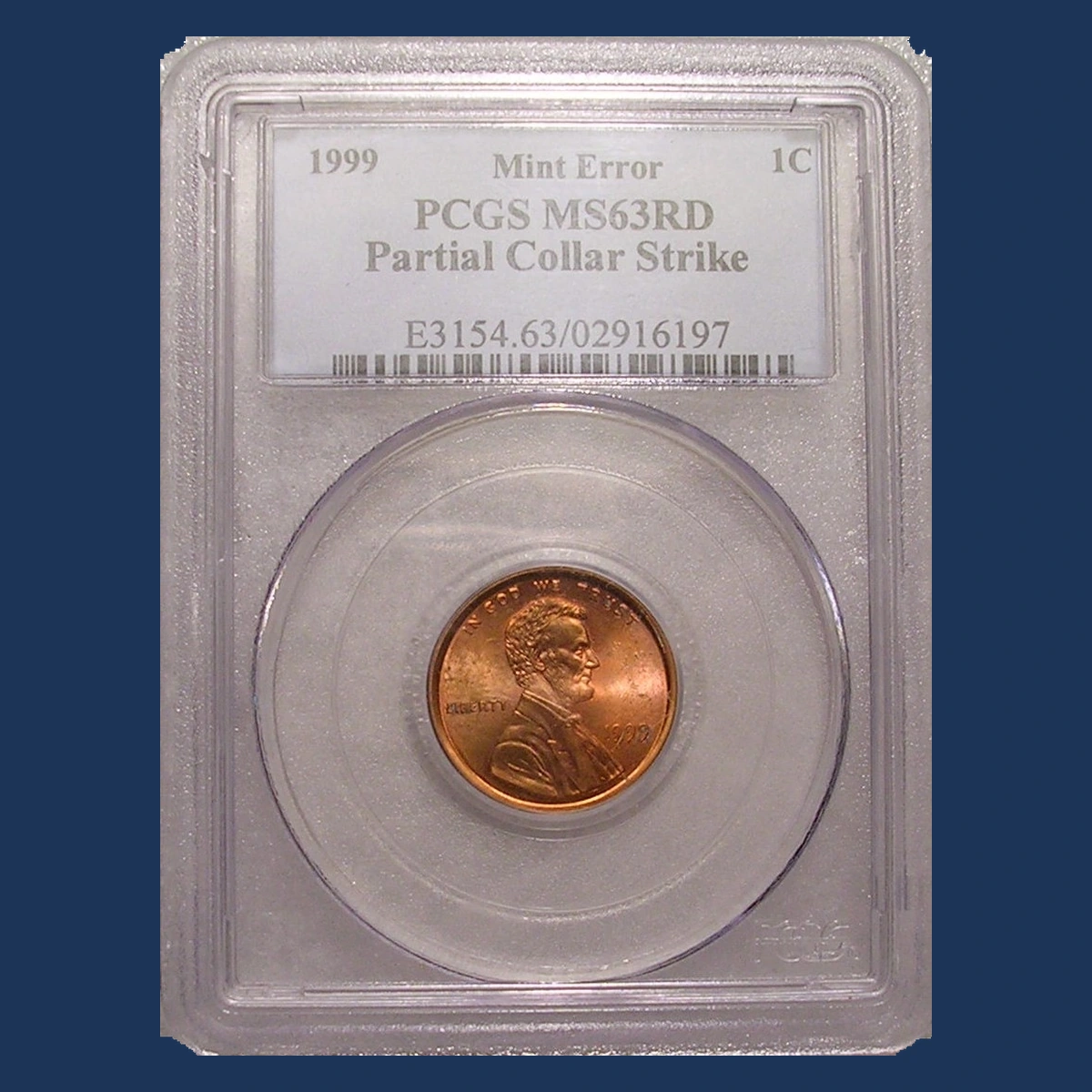
A coin can spread widely and still retain every part of the design. That complete design is the key difference between a broadstrike and an off-center strike.
The collar, a ring that normally controls the edge, failed to contain the metal fully. A documented 1999 example illustrates that the spread can be uneven.
If only part of the coin’s thickness contacts the ring, the edge can develop a step. A 1999 partial-collar example is also recorded.
The normal penny edge has no grooves. An expanded plain edge needs more evidence than merely looking different from a grooved dime.
Estimated Value
A 1999 broadstrike graded PCGS MS65 Red sold for $67 in March 2023. It provides a same-year example at a modest price.
An estimated $20–$400 spans minor edge steps and larger, well-preserved broadstrikes. The complete design and natural spread should remain easy to see.
A partial-collar piece is not automatically worth the same amount as a broadstrike. Later flattening or edge rolling can widen a penny without producing either collectible mint error.
How to Identify
Check whether every letter and both main designs remain on the coin. Use a 10× magnifier at the outermost details rather than judging from overall width.
For a partial-collar candidate, view the plain edge from the side and look for a clear change of level. Inspect that step for later squeezing or filing.
Measure several directions with calipers against the normal 19.05 mm diameter. A scale should place an intact copper-plated zinc cent near 2.50 g.
Uneven spread is possible, so perfect symmetry is not required. Crushed letters or an unnaturally rolled border suggest post-mint damage.
Confirm complete designs with outward spread, or a natural two-level edge showing partial contact with the retaining ring.
8. 1999 Lincoln Memorial Penny Indent (Estimated Up to $500)
A smooth curved depression can occupy a large part of the front without carrying another recognizable design. Another metal disc overlapped this coin during the strike.
The overlapping disc blocked the tool and was pushed into the lower coin. That creates an indent rather than a transferred mirror image.
A PCGS collector showcase lists a 1999 example with a thirty-five-percent front indent and an expanded strike. Its proportion belongs to that particular coin.
Other shapes can occur when the overlap changes. A later dent may look similar, but its disturbed metal and relationship to the design need a different explanation.
Estimated Value
For a confirmed indent, estimate $30–$500, allowing for depth, size, and overall appearance. Clean surfaces make the blocked area easier to appreciate.
The recorded thirty-five-percent example provides a clear type, not a disclosed auction result here. Recent 1999 auction lots sometimes combine an indent coin with a separate brockage coin.
Those group totals should not be assigned to one piece. A deep later dent is also not equivalent to an authenticated mint-made indent.
How to Identify
Look inside the depression with a 10× magnifier. An indent should not be identified as a brockage unless a recognizable transferred design is present.
Follow the curved boundary into the surrounding struck surface. Look for natural metal movement rather than a sharp impact cutting through a finished design.
Compare both faces and examine the plain edge for added pressure damage. The coin may be expanded, so use calipers to record its outline against the normal 19.05 mm diameter.
A scale should be compared with 2.50 g for a loose intact cent. A depression does not necessarily mean metal is missing.
Find a natural overlapping-disc depression without a mirrored design or later impact damage explaining its shape.
9. 1999 Lincoln Memorial Penny Off-Center Strike (Estimated Up to $500)
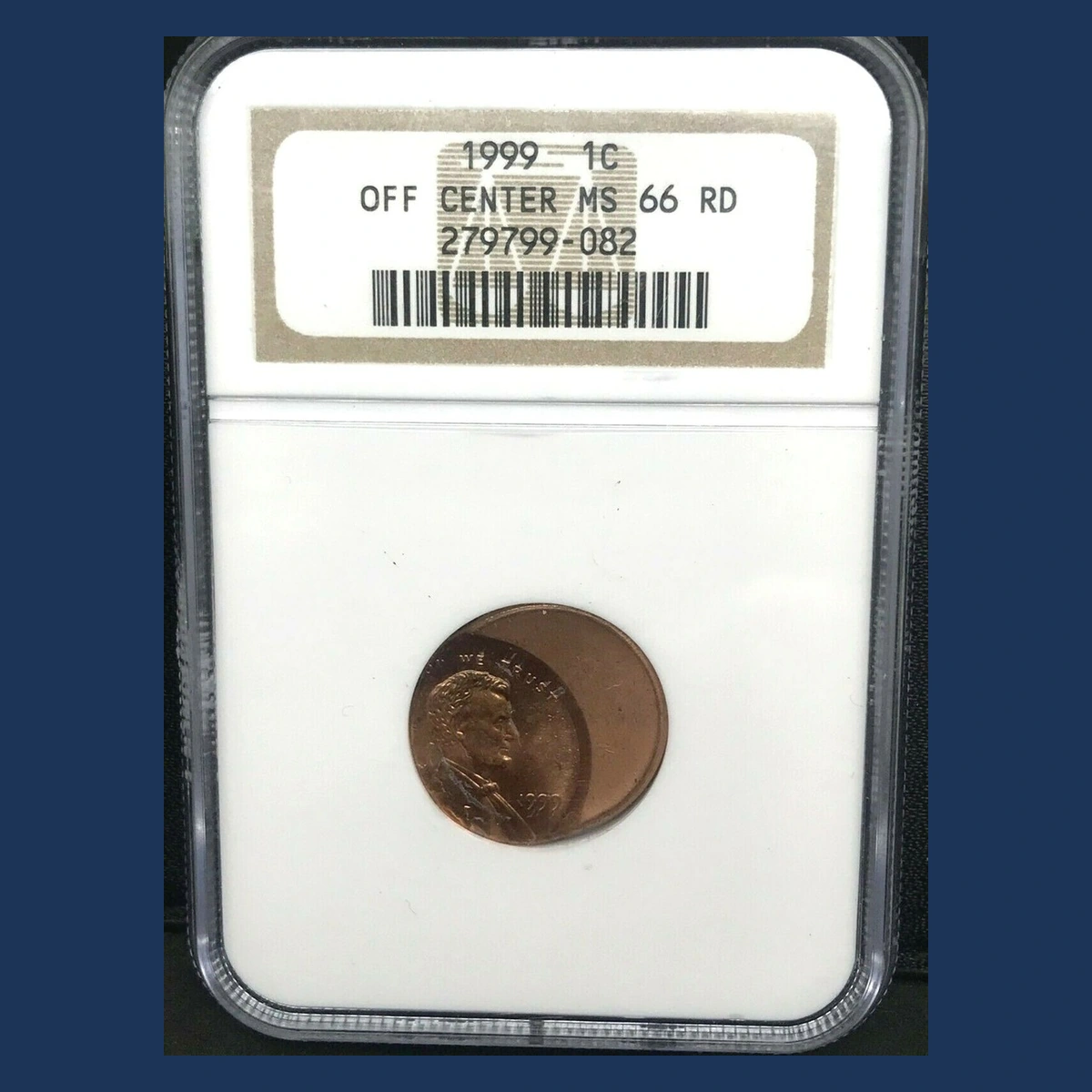
Part of the design falls beyond the coin while a curved area remains unstamped. The metal disc was not completely beneath the tools when they struck.
Philadelphia and Denver 1999 examples are reported. A Philadelphia coin graded PCGS MS64 Red is specifically described as ten percent off-center.
The missing design separates this from an uneven broadstrike that keeps all its lettering. Both faces should agree with the same physical displacement.
Some errors remain easy to date, while others lose part of 1999 at the edge. Blank metal alone does not tell you whether the year can still be read.
Estimated Value
The ten-percent 1999 Philadelphia example sold for $47 in March 2023. Its grade was PCGS MS64 Red.
Use an estimated $15–$500 for ordinary off-center examples, with stronger date-visible strikes generally more desirable than small shifts. Surface quality still affects the result.
A coin that also has the rare Wide AM reverse belongs to a different price comparison. That combination is discussed with the AM varieties rather than treating every off-center 1999 penny as equally rare.
How to Identify
Locate 1999 first, then check how much of the design remains on each face. Do not estimate the shift from the blank arc alone.
Under a 10× magnifier, inspect where struck detail meets untouched metal. Scraping, a saw cut, or filing can expose an artificial blank-looking area.
Check the plain edge and make sure the back shifts consistently with the front. One centered face suggests a misaligned tool instead.
A loose coin can be weighed against 2.50 g and measured with calipers against 19.05 mm. The unusual strike may change its outer shape.
Confirm missing design and a natural blank arc on both faces, with the surviving date clearly readable.
10. 1999 Lincoln Memorial Penny Unplated Zinc (Estimated Up to $600)
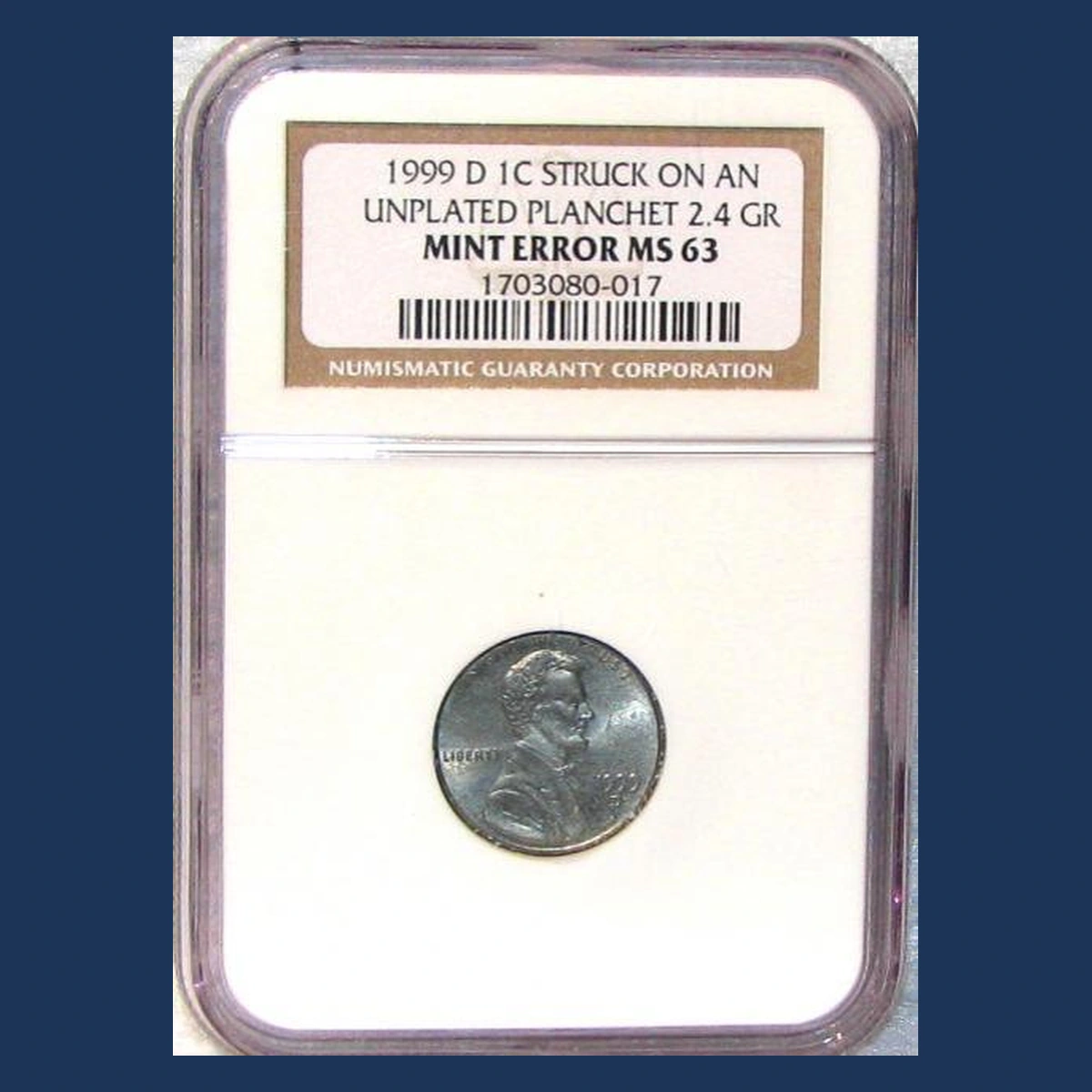
The whole coin can look gray instead of copper-colored. An unplated cent was struck without its normal thin covering of copper.
Lincoln Cent Resource illustrates a 1999-D example. The metal underneath is zinc, the same center used in ordinary pennies of this year.
That makes it different from a penny design struck on a dime’s metal disc. The gray appearance does not identify the underlying metal by itself.
Chemical stripping can remove copper from a finished coin, while added coatings can change its color. The struck surface and the coating’s history must support a genuine production error.
Estimated Value
For a confirmed unplated zinc cent, use an estimated $50–$600. Condition and the quality of the original surface influence the amount.
A 1995-D unplated cent graded PCGS MS63 sold for $180 in March 2023. That is a nearby-year comparison rather than a sale of the illustrated 1999-D.
A gray color alone does not justify the estimate. Chemically stripped, corroded, or coated ordinary cents should not receive the same premium as authenticated missing-plating errors.
How to Identify
Under a 10× magnifier, examine whether sharp struck detail remains across the gray surface. Pits, residue, or softened edges can suggest chemical treatment.
Compare with a confirmed unplated cent rather than a dime. The normal 1999 cent is copper-plated zinc with a plain edge.
Use a scale and calipers on a loose coin against 2.50 g and 19.05 mm. Removing or omitting a thin copper coat may cause only a small weight change.
Inspect the edge as carefully as the faces, without scraping through the surface. Professional examination is needed when later stripping remains a plausible explanation.
Confirm zinc with original struck surfaces and mint-made absence of copper, rather than relying on gray color or weight alone.
11. 1999 Lincoln Memorial Penny Double and Multiple Strikes (Estimated Up to $800)
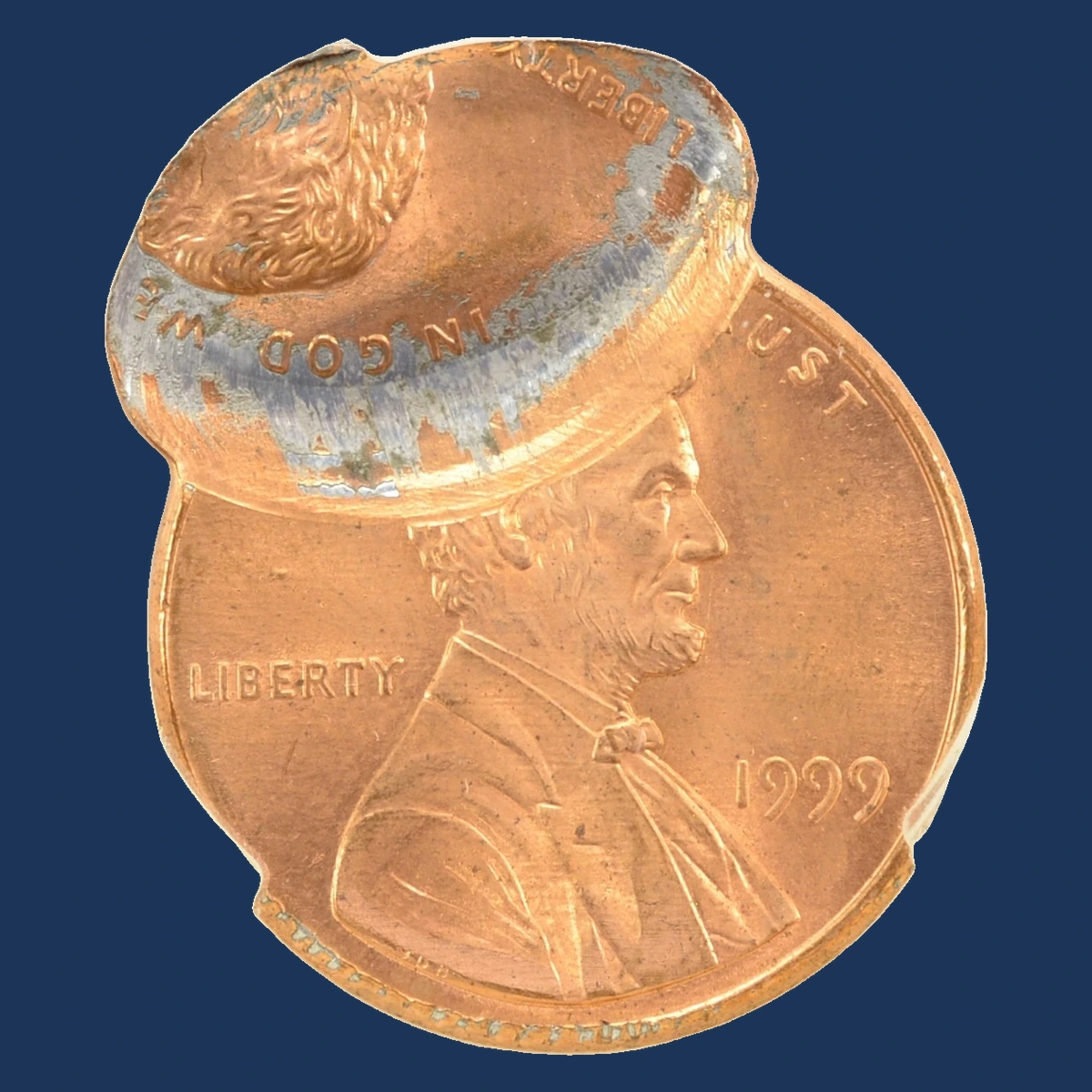
Two sets of lettering or overlapping portraits can remain when a coin returns under the stamping tools. Additional strikes can move, flatten, or partly replace the earlier design.
Recorded 1999 examples include a slightly shifted double strike with expansion and a second strike falling partly outside the coin. Other reports describe a flipped second strike within the retaining ring.
Multiple-struck examples can also spread outward. Each coin records its own sequence.
The number of visible outlines does not always reveal the exact number of blows. Tiny doubled letter edges alone may instead belong to a doubled stamping tool.
Estimated Value
A 1999 flipover double strike with a large expanded outline sold for $159 in March 2023. PCGS graded it MS65 Red.
An estimated $40–$800 covers less dramatic repeated strikes through clearly separated or flipped designs. The sale is one example, not a price for every reported sequence.
Coins showing both strikes clearly tend to be easier to appreciate. A second faint edge from ordinary strike movement should not be valued as a second full strike.
How to Identify
Locate the strongest surviving part of each design and follow it across the coin. Use a 10× magnifier to determine whether separate full strikes explain the overlap.
For a flipover, parts of Lincoln and the Memorial may appear on the same face. A shifted second strike without a flip produces a different arrangement.
Inspect both sides before deciding the sequence. Do not infer an exact blow count where later strikes have erased earlier details.
Compare a loose piece with 2.50 g on a scale and record dimensions with calipers against 19.05 mm. Check the plain edge for crushing or artificial impressions.
Find two or more coherent struck-design positions that explain the coin’s overlap, rather than isolated doubled letter edges.
12. 1999 Lincoln Memorial Penny Struck on a Dime Blank (Estimated Up to $1,500)
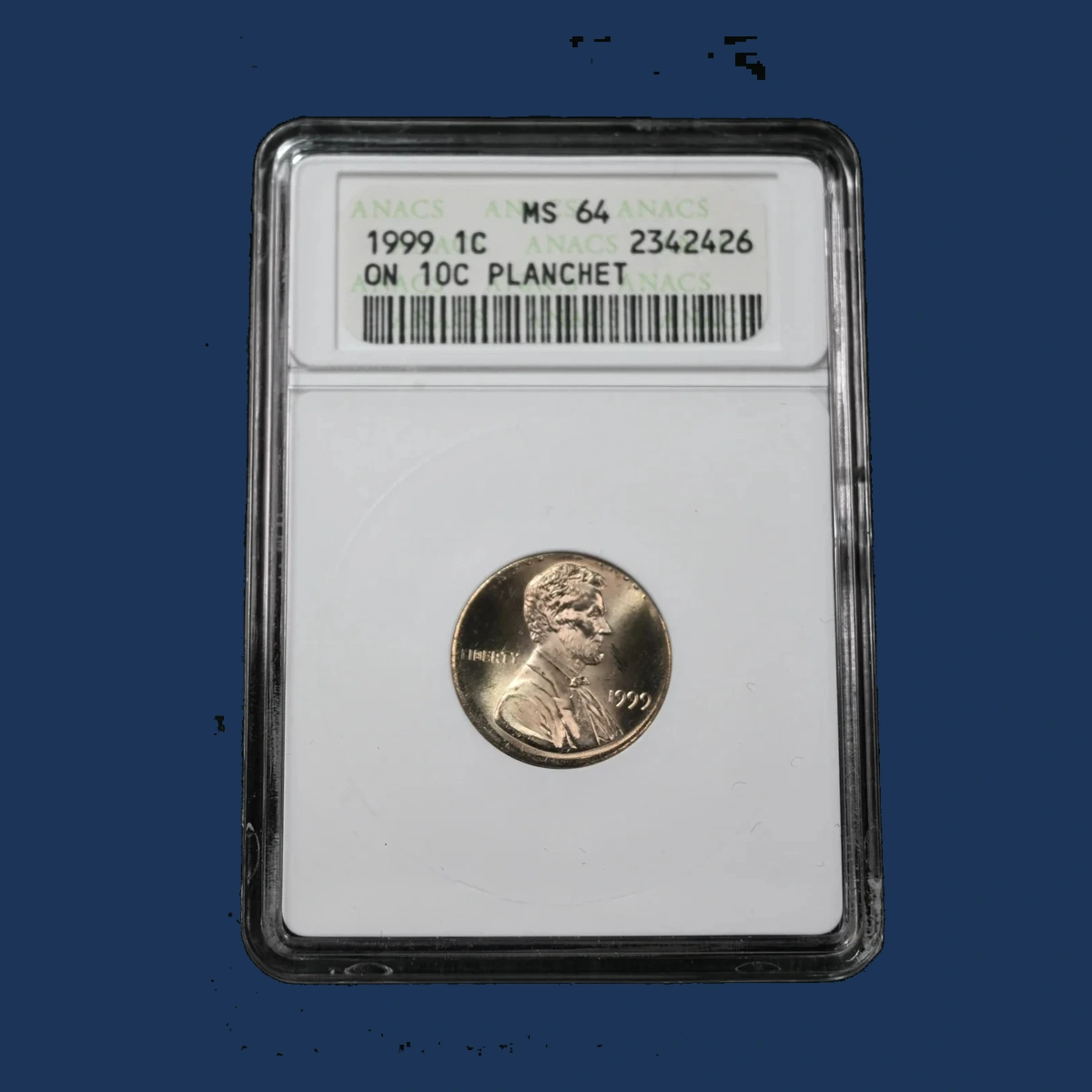
Lincoln’s design can crowd a smaller silver-colored disc, leaving outer lettering incomplete. The press received a blank intended for a dime instead of a penny.
A blank is the prepared metal disc before it receives a coin design. A 1999 example graded PCGS MS65 appears in a collector showcase.
The dime’s metal has bonded outer layers around a copper center. It differs from the penny’s thin copper coat over zinc.
This blank had no earlier dime design. Surviving Roosevelt or torch details would instead identify a cent struck over an already finished dime, a separate error discussed below.
Estimated Value
Estimate $400–$1,500 for confirmed examples, allowing for the completeness of the cent design and the coin’s condition. A readable year helps establish its identity.
A 2007-D cent on a dime blank graded PCGS MS66 sold for $600 in March 2023. That is a different-year comparison, not a price for the showcase’s 1999 coin.
Silver color is not enough for this range. A stripped zinc cent or a coated ordinary penny is not the same error.
How to Identify
Weigh a loose coin before concentrating on its color. A dime blank starts near 2.268 g, while the correct cent disc weighs 2.50 g.
Use calipers to compare the dime’s 17.91 mm starting diameter with the cent’s 19.05 mm size. Striking can spread the smaller disc beyond its original diameter.
A 10× magnifier helps inspect the incomplete outer lettering and the edge’s layered metal. An unused dime blank does not already have a struck dime’s edge grooves.
Check for chemical stripping, added plating, and trimmed edges. Look for earlier dime details that would change the identification.
Confirm dime-type metal and weight beneath only the cent design, rather than treating any small gray penny as a wrong blank.
13. 1999 Lincoln Memorial Penny Die Caps (Estimated Up to $1,500)
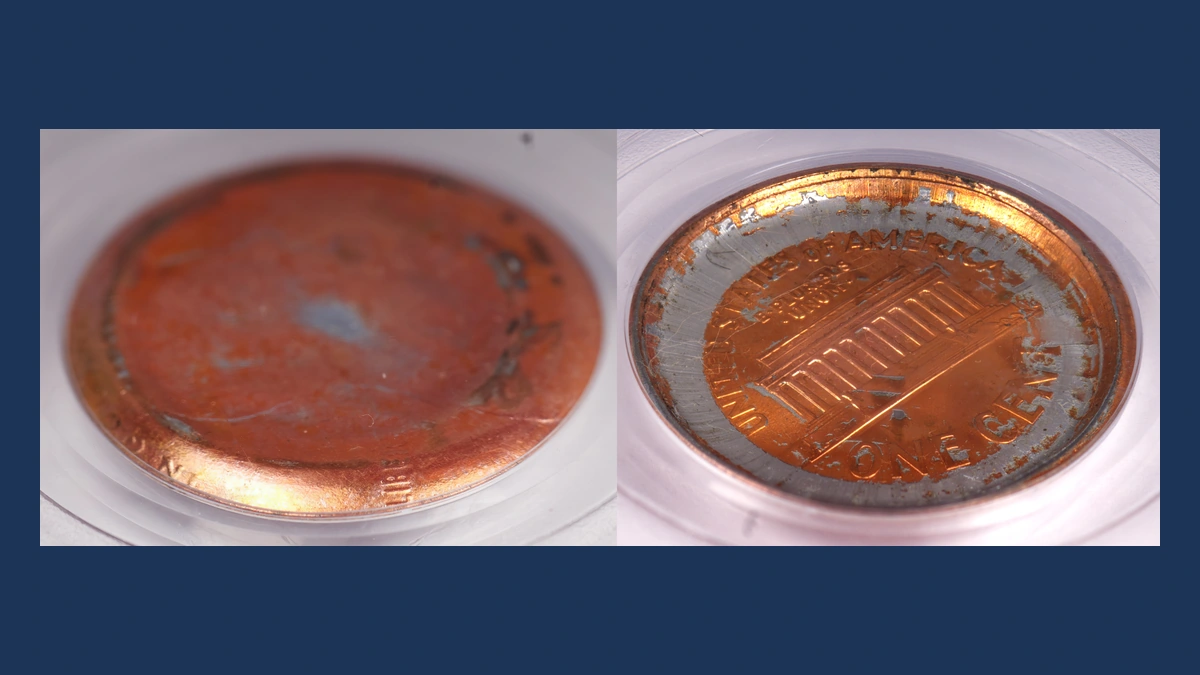
A coin can wrap around a stamping tool and take on a cap-like shape. Further strikes can deepen the walls and stretch the original design.
This stuck coin is called a die cap. Recorded 1999 examples include a back-side cap and a deep front-side cap.
The side name identifies the tool that held the coin. Different caps can show different depths and amounts of stretched detail.
A coin merely struck beneath a cap is another object and need not be bowl-shaped. Likewise, a cupped strike should not automatically be assigned the repeated-strike history of a deep cap.
Estimated Value
A deep front die cap graded PCGS MS64 Red sold for $660 in March 2023. A back die cap graded PCGS MS65 Red brought $124 in the same auction.
Use an estimated $100–$1,500 for authenticated 1999 caps across different depths and conditions. Both sales concern individual pieces with their own shape.
The deeper appearance may attract stronger interest, but bending a finished penny into a cup does not create comparable collector value.
How to Identify
View the side walls first, without pressing them. Genuine caps should show design and metal stretched in a way that fits attachment to a stamping tool.
Examine those transitions with a 10× magnifier. Sharp folds, crushed lettering, or tool marks can reveal later bending.
Use a scale against the normal 2.50 g weight and calipers to record the changed shape of a loose piece. A normal flat cent measures 19.05 mm across and has a plain edge.
Keep certified caps in their holders and use their recorded measurements. Identify which original design remains inside the cap before naming its side.
Match the upturned walls and stretched design to a confirmed die cap, not merely to any bowl-shaped penny.
14. 1999 Lincoln Memorial Penny Brockage and Counterbrockage (Estimated Up to $2,500)
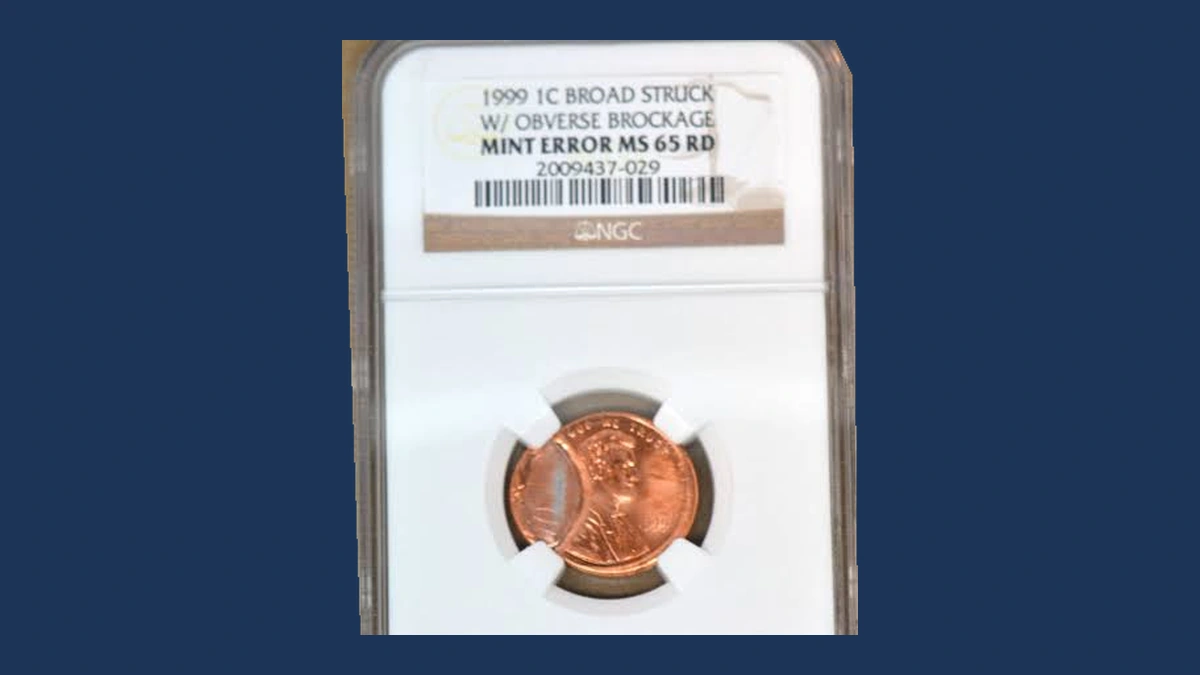
A backward, sunken copy of a design can appear where the normal image belongs. Another struck coin pressed that copy into the new piece.
This is a brockage. If that impressed image is transferred again to another coin, it can become a distorted, raised, normally reading counterbrockage.
Both forms are recorded for 1999 cents. Some examples also spread outward, receive a second strike, or carry a smooth indent.
These combinations belong to the same physical coin. An added feature should not be assumed from a different specimen, and later squeezing of finished coins can imitate a simple mirrored impression.
Estimated Value
A 1999 front counterbrockage graded PCGS MS65 Red sold for $1,680 in March 2023. That strong result applies to an unusual transferred image.
An estimated $20–$2,500 spans lesser partial brockages through more dramatic counterbrockages and combinations. Small partial transfers can sell for much less than the recorded counterbrockage.
Judge how much design survives and how clearly the transfer can be explained. A later pressed-in impression does not receive the same mint-error valuation.
How to Identify
Determine whether the unexpected letters read backward or normally, then inspect whether they are sunken or raised. A 10× magnifier and low light help separate those questions.
A brockage should fit a mirror transfer from another coin. A counterbrockage needs evidence for a further transfer, not just a thick-looking raised letter.
For combined errors, identify the second strike or smooth indent separately on the same piece. Examine both faces and the plain edge for later squeezing.
A loose intact cent can be compared with 2.50 g on a scale and 19.05 mm using calipers, allowing for expansion.
Trace a recognizable transferred design and its reading direction, then confirm that mint striking explains its shape and relief.
15. 1999 Lincoln Memorial Penny Cent Struck Over a Dime (Estimated Up to $3,000)
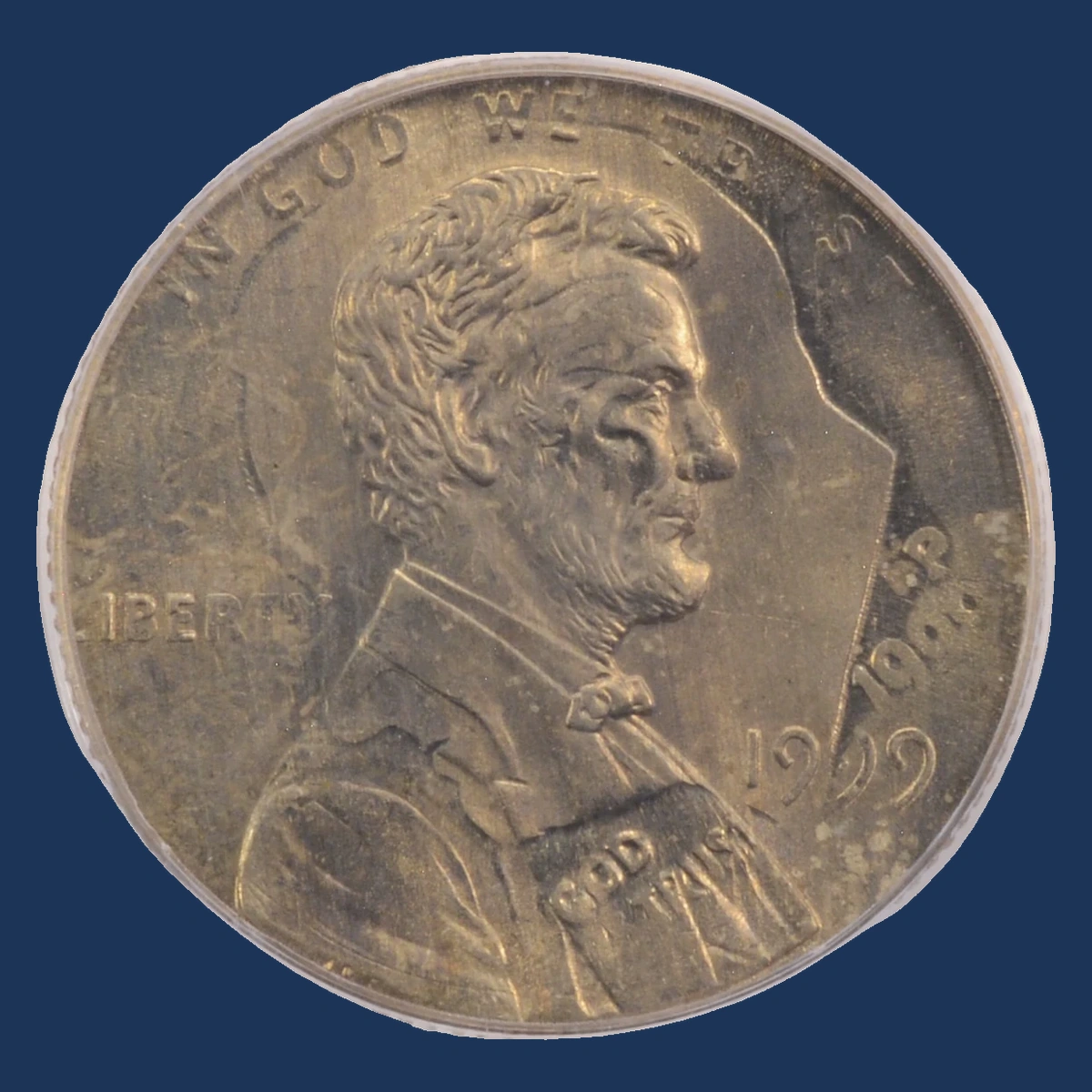
A silver-colored coin may carry both Lincoln-cent and Roosevelt-dime details. A finished dime entered the cent press and received another design over its first one.
Recorded 1999 cents were struck over dimes dated 1997, 1998, and 1999-P. These are separate examples, not three dates on one piece.
One reported 1999-P dime example received a cent strike halfway off-center. That displacement should not be assigned to the other pieces.
The older dime details make this a double denomination, meaning two face values share the object. A plain dime blank lacks those earlier images and belongs to a different category.
Estimated Value
A 1999 cent described as a double denomination on a dime sold for $1,200 in March 2025. PCGS graded it MS64.
Use an estimated $600–$3,000 for authenticated examples with different underlying dimes and design clarity. The sale does not identify which earlier dime date appears on each reported piece.
A recognizable mixture of both designs is especially important. Weight or silver color alone cannot justify pricing an unidentified penny as this two-denomination error.
How to Identify
Find a readable part of Roosevelt, the torch, or dime lettering beneath the cent design. Use a 10× magnifier on both faces before trying to read the older date.
Keep the two design layers separate in your notes. The cent date is 1999, while the earlier dime may have a different year.
A scale should be compared with the dime’s normal 2.268 g rather than the cent’s 2.50 g. Calipers can record changes from the dime’s 17.91 mm size toward or beyond a cent’s 19.05 mm outline.
Examine the edge for surviving or distorted dime grooves and for joining seams.
Confirm an identifiable older dime image beneath a genuine cent strike, not just overlapping marks or a gray surface.
16. 1999 Lincoln Memorial Penny Bonded Coin Groups (Estimated Up to $5,000)
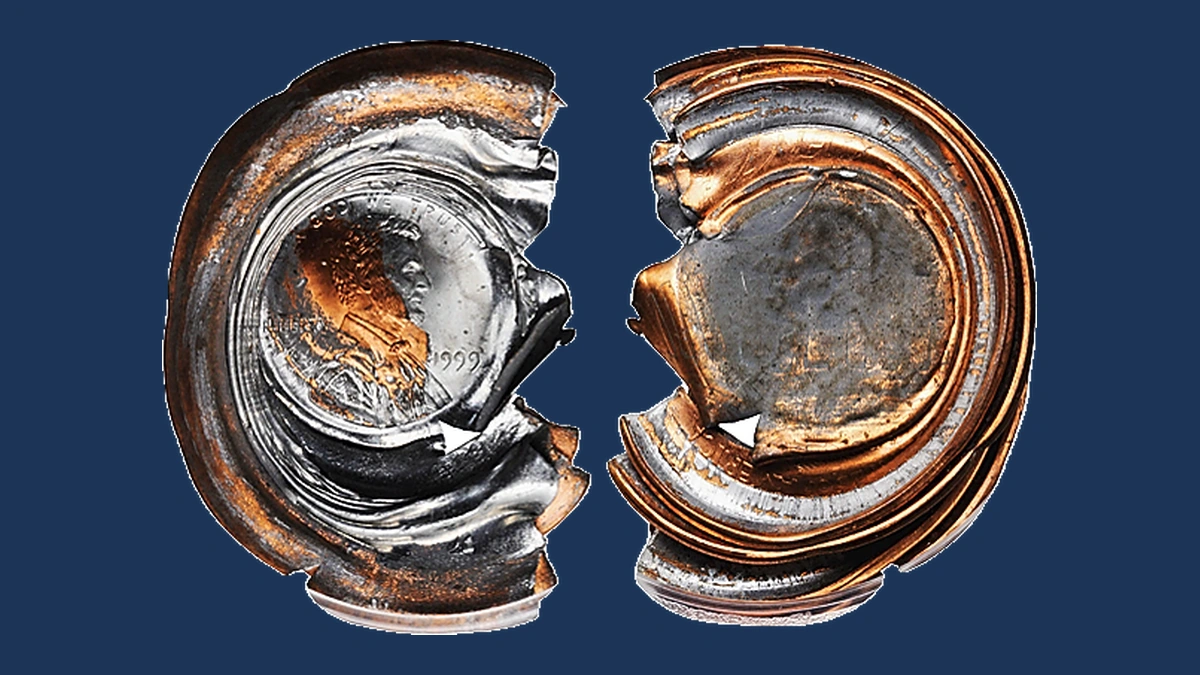
Two or more metal discs can remain joined as one unusual object. Their shared strike and metal connection distinguish a bonded group from separate coins kept together in a holder.
An authenticated two-disc 1999 pair and a three-disc group are recorded. The three-disc example weighs 7.5 grams and is graded NGC MS64 Red.
The individual layers can carry different amounts of visible design. The whole joined object records one connected minting event.
Glue or solder can imitate a stack. A genuine bonded group needs professional confirmation of both the connection and the strikes, without pulling the layers apart.
Estimated Value
The three-disc 1999 group sold for $3,840 in March 2024. Its NGC photo certificate accompanied the auction piece.
An estimated $500–$5,000 covers authenticated joined groups with different layer counts and appearances. The price applies to the complete connected object, not a sum assigned to each separate disc.
The two-disc example should be judged on its own features. Adding another ordinary penny with glue cannot reproduce the value of an original mint-bonded group.
How to Identify
Do not try to separate the layers. Their contact surfaces and joined edges are key evidence and can be damaged by pulling or prying.
With a 10× magnifier, look for glue, solder, or tool marks around the connection. Follow the struck designs where they approach the overlap.
A normal cent is 2.50 g and 19.05 mm with a plain edge. A scale and calipers can compare the total weight and dimensions of a loose group with those starting discs.
The recorded three-disc piece weighs 7.5 g, but matching that weight alone would not prove a genuine bond.
Confirm compatible mint strikes across a natural metal connection, with no added adhesive or solder holding the discs together.
17. 1999 Lincoln Memorial Penny Wide AM and Close AM Reverse Mix-Ups (Estimated Up to $5,000)
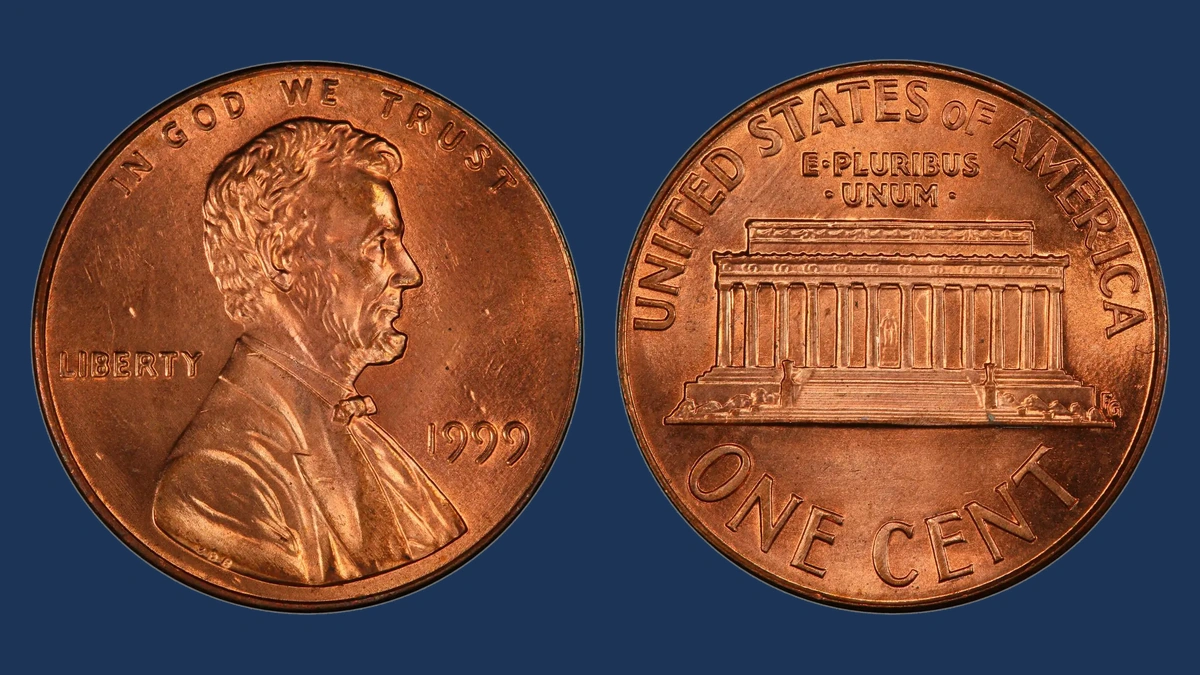
Look at the A and M in AMERICA. On normal circulation pennies they nearly touch, while normal 1999-S Proofs leave a clear gap.
The collectible combinations reverse those expectations. Philadelphia’s Wide AM circulation cent uses the other back-design style, and the S-mint Close AM Proof has the tight spacing.
Proofs are specially made collector coins. A normal Proof with separated AM is not the circulation error.
Both recognized mix-ups use FS-901 in their respective listings. A separate certified Philadelphia Wide AM also has a ten-percent off-center strike, combining the uncommon design with a displaced strike.
Estimated Value
The estimated range is $100–$5,000, with grade and the exact combination driving the value. Exceptional examples should not set expectations for worn coins.
PCGS records $4,583 for a Wide AM graded MS68 Red in January 2020. It also lists a $1,035 result for a Close AM Proof graded PR69 in December 2008.
A Wide AM with an off-center strike needs its own comparison. Its two unusual features should not be priced by simply adding arbitrary premiums.
How to Identify
Check the mintmark and finish before inspecting AM. A no-mintmark circulation coin and an S-mint Proof have different normal back designs.
Use a 10× magnifier on AMERICA, then compare the FG initials and their distance from the Memorial. The full back-design match is safer than judging a worn letter gap alone.
Consult the appropriate Wide AM comparison; keep Proof and circulation photographs separate. A polished ordinary coin is not automatically a Proof.
Check a loose coin with a scale and calipers against 2.50 g and 19.05 mm, and inspect the plain edge.
Find separated AM on the Philadelphia circulation coin, or nearly touching AM on a genuine 1999-S Proof.
18. 1999 Lincoln Memorial Penny Cent Front with Dime Back Mule (Estimated Up to $200,000)
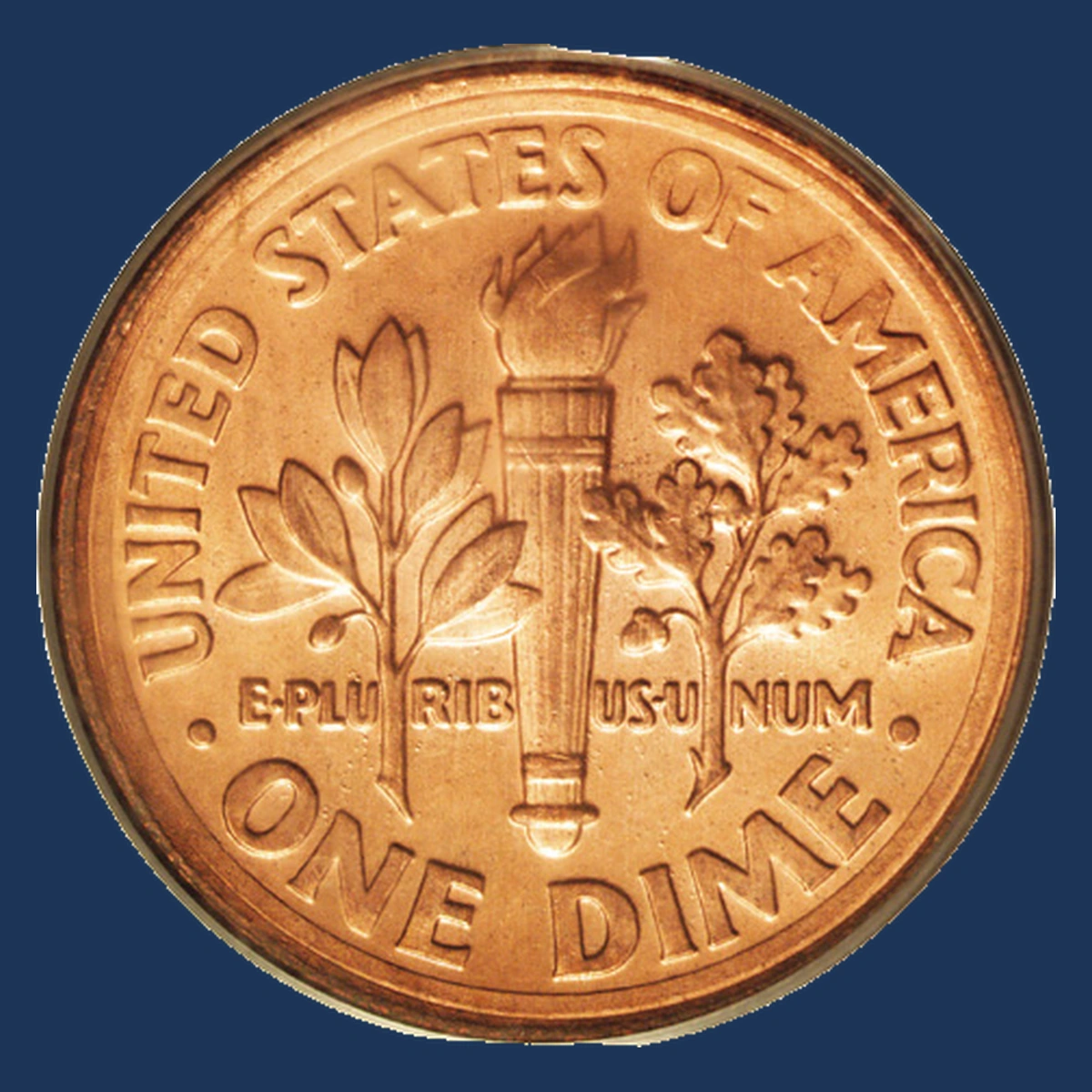
Lincoln appears normally on the front, but the back carries a torch and ONE DIME instead of the Memorial. The wrong pair of stamping tools made the coin.
This combination is called a mule. The documented 1999 piece was struck on a cent’s metal disc, so it keeps the penny’s copper-colored appearance.
It is different from a penny design stamped over a finished dime. Each face received its own design from the mismatched tools rather than preserving two overlapping sets.
Spliced novelty coins can imitate the combination. A genuine example must have an intact structure and a confirmed mint strike.
Estimated Value
The PCGS MS66 Red example sold for $138,000 in April 2006. MS66 describes an unworn coin with few marks, while Red refers to its copper color.
An estimated $100,000–$200,000 reflects this exceptional authenticated pairing and its historical sale. It is an appraisal range, not a prediction of a new auction result.
A joined novelty coin is not comparable. Such a major find needs expert examination before the six-figure estimate has any relevance.
How to Identify
Read both designs: the front must show Lincoln and 1999, while the back shows the dime’s torch and denomination. An overlapping dime image would suggest a different error.
With a 10× magnifier, inspect the plain edge and both faces for seams, solder, machining, or a fitted insert. Avoid scraping any suspicious area.
The genuine pairing used cent metal, normally 2.50 g and 19.05 mm. Compare a loose candidate with a scale and calipers, but normal measurements cannot prove the tool combination.
A specialist must examine the structure and the actual strike. Keep a certified example sealed in its holder.
Confirm a single intact cent-metal coin with Lincoln on one face and the dime’s normal back design on the other.
Conclusion
Estimated values of $2–$200,000 cover very different 1999 finds, from tiny coating blisters to the cent-and-dime mule. Most unusual pennies are nowhere near that exceptional upper end.
Check the mint and finish before judging AM spacing, then separate missing metal, repeated strikes, transferred designs, and wrong-material pieces. Each leaves different evidence.
Photograph both faces and the edge, keep connected or delicate parts intact, and seek expert confirmation for major errors.