1942 Quarter Error List with Pictures

The eagle’s beak is worth a close look on a 1942-D quarter. Doubling there belongs to a valuable variety, with one exceptional example bringing $8,225 in November 2012.
Other 1942 quarter errors involve peeling silver, missing metal, or designs pushed far off center. Estimated prices across this guide run from $20 to $10,000, depending on the feature and condition.
Follow the comparisons below to separate these very different finds.
1. 1942 Washington Quarter Lamination
A thin piece of silver can lift from a quarter like a peeling skin. This is called lamination, a split within the coin’s metal rather than an extra object sitting on top.
The 1942 year guide reports this error type. Dirt trapped in the metal or an uneven mixture can leave a weak area that later separates.
A flap may remain attached, or it may fall away and leave a shallow rough patch. These quarters contain silver throughout their alloy, so the feature is not a missing copper-colored core covering.
Estimated Value
Allow an estimated $20 to $400 for a genuine 1942 lamination. Small flakes on worn coins sit near the lower end, while larger attached pieces can attract stronger interest.
The condition of the flap matters. A naturally raised piece with readable design is more appealing than a disturbed area covered by scratches.
Heavy cleaning or attempts to lift the metal can sharply reduce that appeal. Preserve the surface exactly as found.
How to Identify
Leave any loose flap alone. Lifting it to inspect underneath can break away the evidence that explains the error.
Photograph the attached edge with light coming from the side, then follow the separation across the design. A thin silver layer may carry part of a letter or portrait while the surface underneath remains exposed.
Where a piece has fallen away, compare the exposed texture with nearby undamaged silver. Scattered corrosion pits differ from a sheet of metal separating along a distinct boundary.
Weight is useful only if metal is missing: an intact flap need not make the coin lighter. Have an error specialist examine the boundary before disturbing anything, especially when the split crosses readable detail.
2. 1942 Washington Quarter Clipped Blank
A curved bite missing from the edge can begin before a coin receives any design. The machine that cuts plain metal disks may overlap a hole left by an earlier cut.
The incomplete disk then moves into the press. Its missing arc becomes part of the finished coin’s outline.
The 1942 reports include curved clips. Nearby letters and the rim may weaken because metal moves differently beside the gap during striking.
A rim weakness opposite the clip can also occur. It is a supporting feature, not something every genuine clipped quarter must show.
Estimated Value
A practical estimated range is $25 to $400. Larger cleanly formed gaps and a readable date generally bring more than tiny clips on heavily worn examples.
For a recent comparison, a 1966 quarter with a straight clip sold for $124 in June 2024. That later coin used a different metal and a different clip shape.
Treat it as a broad market comparison. Several cuts made after circulation do not earn a mint-error premium.
How to Identify
Compare photographs of the missing arc from the front, back, and edge. A single overhead view can hide the rough saw marks of a later cut.
Follow the rim toward both ends of the gap. On a genuine clip, its shape and nearby design may soften as they approach the missing metal.
Then inspect the edge directly opposite the gap for a weaker rim. The absence of that weakness does not settle the question by itself.
For a loose coin, use a scale to record the weight. Compare the loss with the size of the gap, allowing for wear on this normally 6.25-gram silver quarter.
Sharp cut edges beside completely undisturbed struck detail deserve closer examination before you pay for a claimed clip.
3. 1942 Washington Quarter Clashed Dies
A faint piece of the eagle may seem to intrude beside Washington, or the portrait may leave traces on the back. Clashed dies can produce these confusing extra outlines.
Dies are the steel tools that stamp the two coin faces. If they meet without a metal disk between them, parts of their designs can mark each other.
Coins struck afterward may carry those transferred lines. The 1942 year guide reports clashes, but the exact pattern must be matched to the individual coin.
Random scratches do not reproduce a connected piece of the opposite design.
Estimated Value
Clashed 1942 quarters can be estimated at $25 to $500. A faint trace on a worn coin belongs toward the bottom of that range.
The upper end calls for a clear, recognizable piece of the opposite design on an attractive coin. Multiple unrelated scratches do not make the clash stronger.
Photographs that show how the extra lines fit the eagle or portrait can make a modest example easier to understand and sell.
How to Identify
Start with an ordinary quarter of the same design, or clear photographs of both faces. Choose a recognizable curve from the eagle or portrait to compare with the extra mark.
Keep the top of the coin fixed while checking where that opposite design would meet the affected face. Turning a comparison image freely until one line seems to fit can create a false match.
Look for a second connected detail in the same position. Two related shapes are stronger evidence than one isolated arc.
Under a 10× magnifier, examine whether the lines belong to the original surface. A scratch usually cuts a trench and may push up metal along its sides, rather than repeating a section of the opposite design.
4. 1942 Washington Quarter Repunched Mint Mark
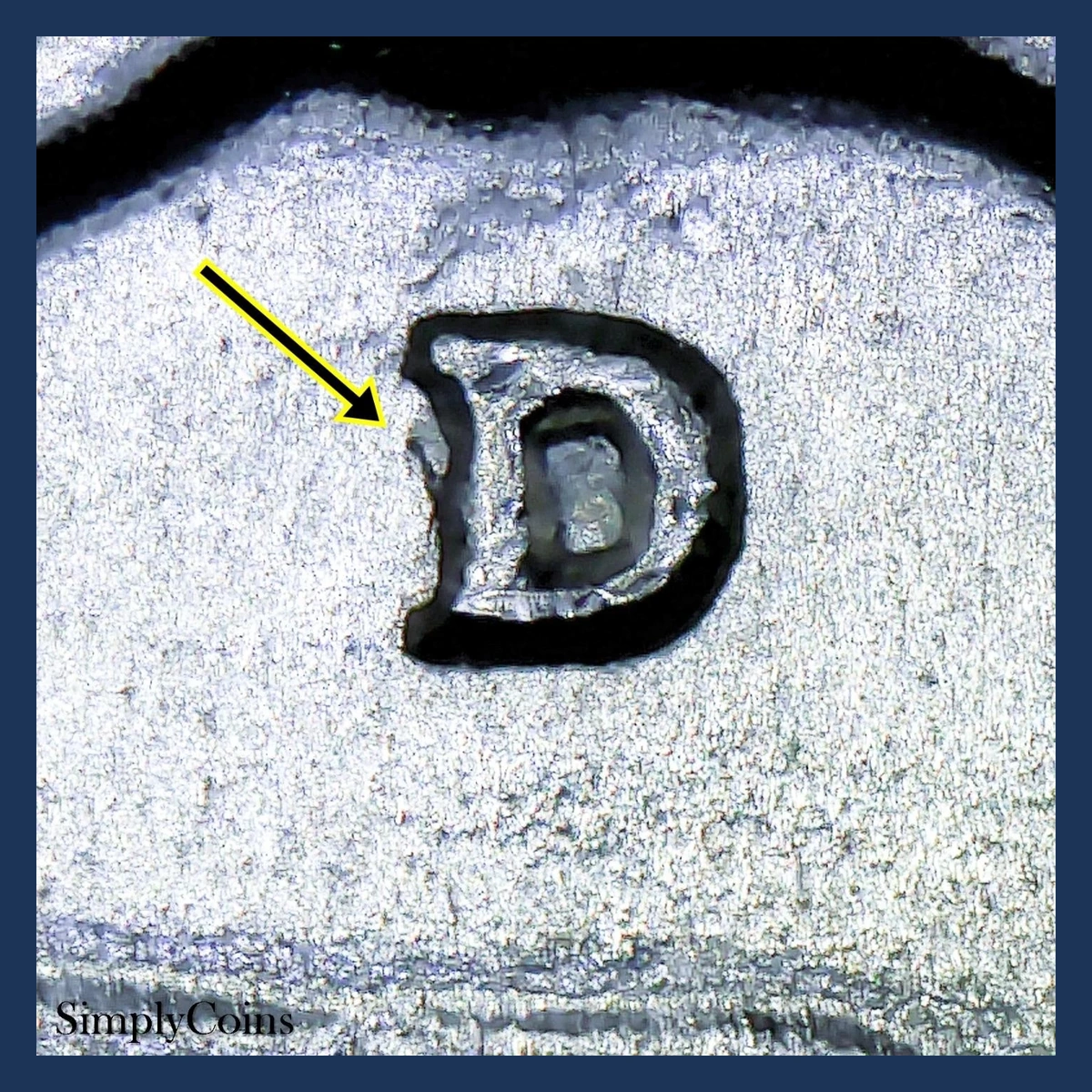
An extra edge around the small D or S can be a second mint-letter impression. Both D-over-D and S-over-S varieties are reported for 1942 quarters.
Workers then added mint letters to the steel die by hand. A second punch placed slightly away from the first could leave parts of both letters.
Those overlapping shapes appeared on coins struck from that die. Collectors call the result a repunched mint mark.
Only the small mint letter needs to repeat. Nearby doubled words belong to a different feature and should not be used to identify the letter by themselves.
Estimated Value
Estimate $25 to $600 for an identified 1942 repunched mint mark. A small visible remnant on a worn coin differs greatly from a strong, cleanly separated letter on an unworn example.
A 1962-D repunched-mint-mark quarter provides a later comparison: PCGS lists a $495 eBay result from August 2021. That price concerns another year and variety.
For 1942, judge the actual repeated D or S before using the upper end of the estimate.
How to Identify
A Philadelphia quarter has no mint letter below the eagle, so start by finding an actual D or S. Only then is there a letter to check for a repeated punch.
Trace the normal outline under a 10× magnifier and draw it on a photograph. See whether the extra curve or upright could belong to another impression of that same letter.
Compare the drawing with a documented 1942 example from the same mint. A D-over-D and an S-over-S require different shape comparisons even though workers created them by the same process.
Change the light angle before trusting a doubled edge that appears in just one photograph. If the extra feature disappears with its shadow, obtain clearer images rather than identifying it from that view.
5. 1942 Washington Quarter Broadstrike
An unusually wide border can surround an otherwise complete quarter design. In a broadstrike, the metal spreads outward because the collar is not containing it normally.
The collar is the ring around the blank during striking. It controls the coin’s width and forms the grooves along its edge.
Without that restraint, the border can flatten and expand. The design need not sit perfectly in the middle, but its outer details should remain on the coin.
Broadstrikes appear in the 1942 year guide. They differ from off-center strikes that lose part of the design beyond the edge.
Estimated Value
A genuine 1942 broadstrike is estimated at $75 to $600. A modestly spread, worn example sits below a large, attractive piece with a complete date and lettering.
A 1966 broadstruck quarter graded AU58, meaning only slight wear, brought $222 in June 2024. It is a later clad coin, not a silver 1942 example.
The comparison supports a general price level. The amount of spread and the original surface determine where a particular coin fits.
How to Identify
For a loose coin, use calipers to measure across several directions without squeezing the edge. The normal width is about 24.3 millimeters; a scale should show roughly 6.25 grams before allowing for wear.
Extra width without added weight suggests that the original silver spread outward. Walk around the complete design on both faces and check whether all the outer letters remain present.
A broadstrike keeps those details even when they sit off to one side within the expanded border. Missing outer design calls for an off-center-strike comparison instead.
Finally, inspect the border beside the portrait and lettering for crushing. Hammering an ordinary coin wider damages existing features, whereas a genuine broadstrike receives its design while the metal spreads.
6. 1942 Washington Quarter Struck Through Material
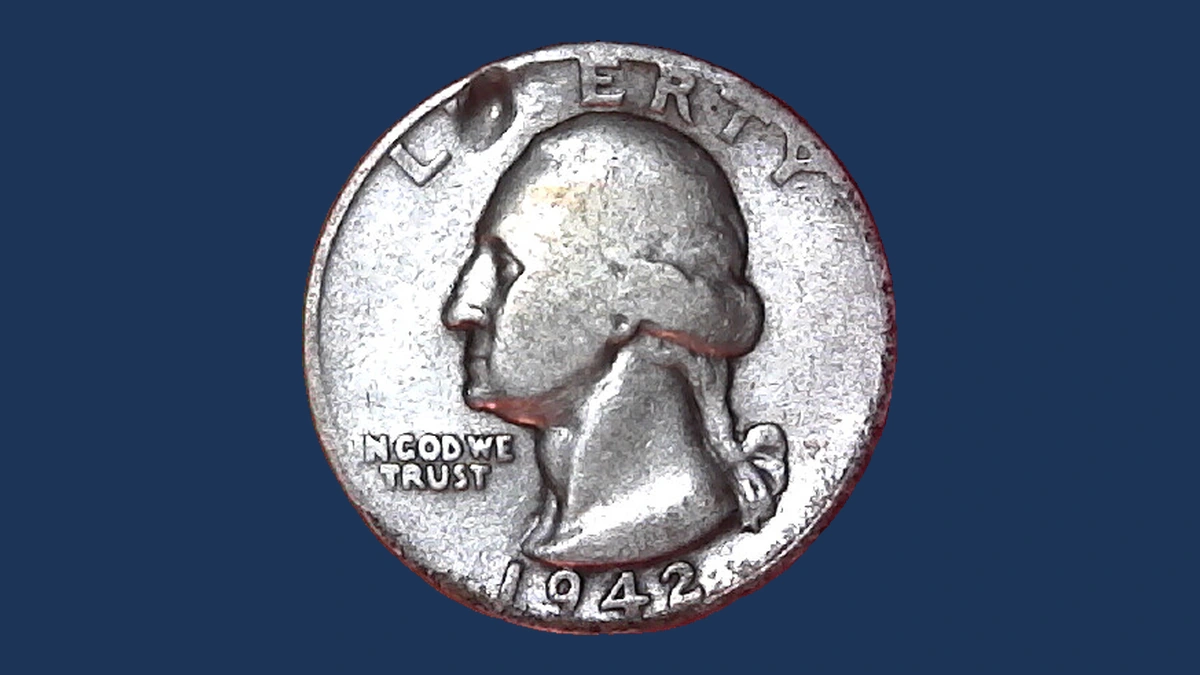
A patch of missing detail can occur when something lies between the blank and a striking die. The material blocks part of the design from reaching the coin.
This is called a struck-through error. Grease may leave soft, weak detail, while a solid object can leave a more clearly shaped recess.
The 1942 reports include this category without naming a particular object. A depression alone cannot establish that it came from cloth, wire, or another specific material.
Its boundary and surviving design explain more than its depth. Damage after striking can also make a deep mark.
Estimated Value
Use an estimated $30 to $1,000 for a genuine 1942 struck-through coin. Minor soft patches belong near the lower end; a large, clearly shaped impression can command considerably more.
A useful comparison is a 1954-S quarter struck through string, sold for $186 in July 2021. That identified object should not be assumed for a 1942 depression.
The stronger prices depend on readable surrounding detail and a convincing original mint-made impression.
How to Identify
First decide whether the affected area is sunken or raised. Material trapped during striking usually leaves a recess or weak design; a raised lump suggests a different cause.
Use angled light to follow the boundary. Look for original detail fading into the recess rather than sharp scrapes crossing already formed letters.
If the shape suggests a thread or woven fabric, compare the entire pattern rather than one short line. A specific object requires a specific matching impression.
Check the opposite face as well. A dent made after striking may distort metal there or push it up around the damaged area.
Do not scrape the recess or remove anything lodged in it. Clear close photographs can preserve the evidence while an error specialist determines how the mark formed.
7. 1942 Washington Quarter Die Cracks and Cuds
A narrow raised line and a large smooth lump can come from different stages of the same problem. The steel die begins to crack and may eventually lose a piece.
Metal enters a crack during striking and forms a raised line on the coin. A missing die section leaves room for a broader lump.
When that lump reaches the rim, collectors call it a cud. The 1942 reports include this type of broken-die error.
Its size and effect on the design vary. A small raised chip should not be mistaken for a major rim-connected cud.
Estimated Value
Estimated prices range from $20 to $2,000. Fine cracks often add little, while a large genuine cud that replaces a substantial part of the design can bring much more.
A 1954 quarter with a head crack sold for $52 in July 2022, illustrating the modest end of this market. That comparison does not price a major 1942 cud.
Original surfaces, an obvious raised shape, and clear rim contact help support stronger values.
How to Identify
Is the suspected crack a raised line or a cut into the surface? Low-angle light makes that distinction easier to see than a bright overhead photograph.
A raised line can lead into a larger broken-die area, so follow it instead of studying only its widest part. For a cud, the raised area must also reach the rim; an isolated internal lump is a chip.
Check where normal lettering or other detail meets that raised patch. Added solder or glue can cover existing features, while a missing die section leaves them unformed in the affected area.
Photograph the same position on the opposite face to look for weak detail from reduced support during striking. Leave the surface uncleaned so a specialist can examine the original boundary and texture.
8. 1942 Washington Quarter Off-Center Strike
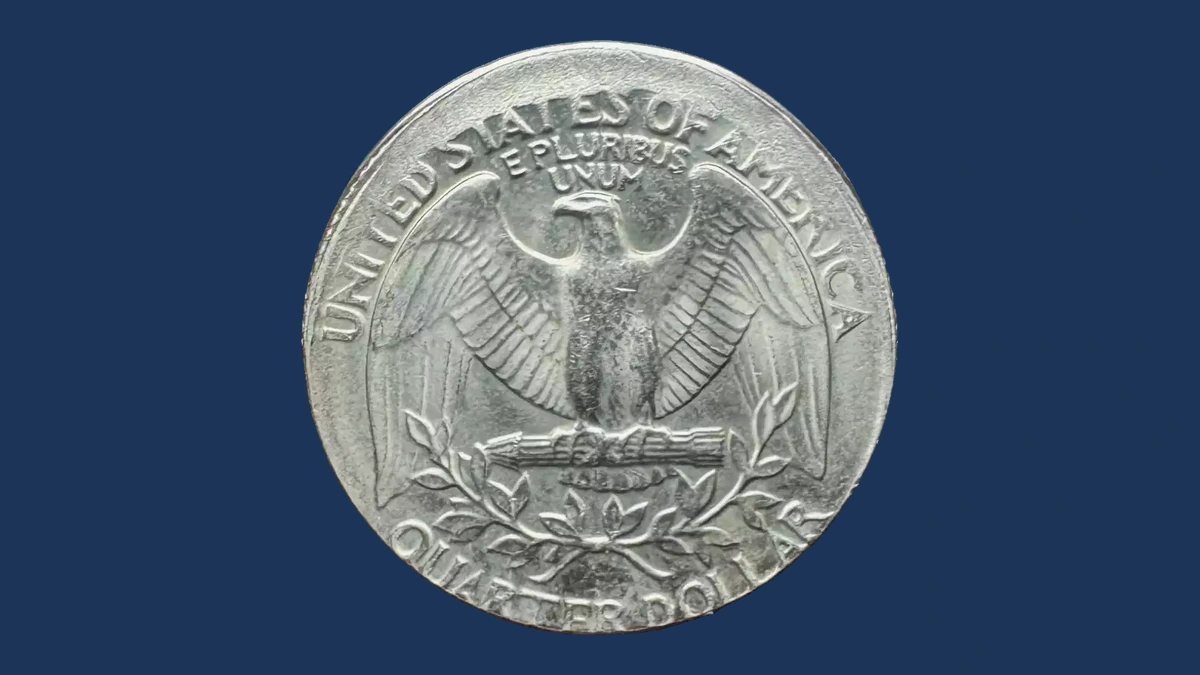
The 1942 year guide describes a quarter struck about 55% off center toward one o’clock. A large part of the blank therefore lay outside the area receiving the design.
The result combines a shifted image with a broad empty section of metal. Some details run beyond the coin’s edge and never appear.
This happens when the disk enters the press in the wrong position. Both faces need to be considered together.
The reported percentage describes the missing portion of the design. It does not mean that 55% of the coin’s silver has disappeared.
Estimated Value
Estimate $150 to $3,500 for a genuine dated 1942 off-center quarter. Small shifts on worn examples occupy the lower end, while dramatic, clearly dated pieces can reach the upper levels.
A 1943-S quarter struck 35% off center sold for $2,640 in July 2022. That is a different coin, not a sale of the reported 1942 example.
An intact readable date is especially important when much of the normal design lies outside the struck area.
How to Identify
Can you read the date on the struck portion? Begin there, because a dramatic blank area alone cannot prove that a coin is from 1942.
Next compare the two complete faces. The design should be displaced in a way that fits the same misplaced disk, with unstruck metal beyond it.
Distinguish missing design from missing metal. A clip removes part of the disk, whereas an off-center strike can leave the original metal present but blank.
The guide’s one-o’clock description refers to the direction of the reported shift. Other coins need their own measurements and photographs rather than that borrowed description.
If only one face appears shifted while the other remains normally centered, ask a specialist to check die alignment before calling it an off-center strike.
9. 1942 Washington Quarter Doubled Dies
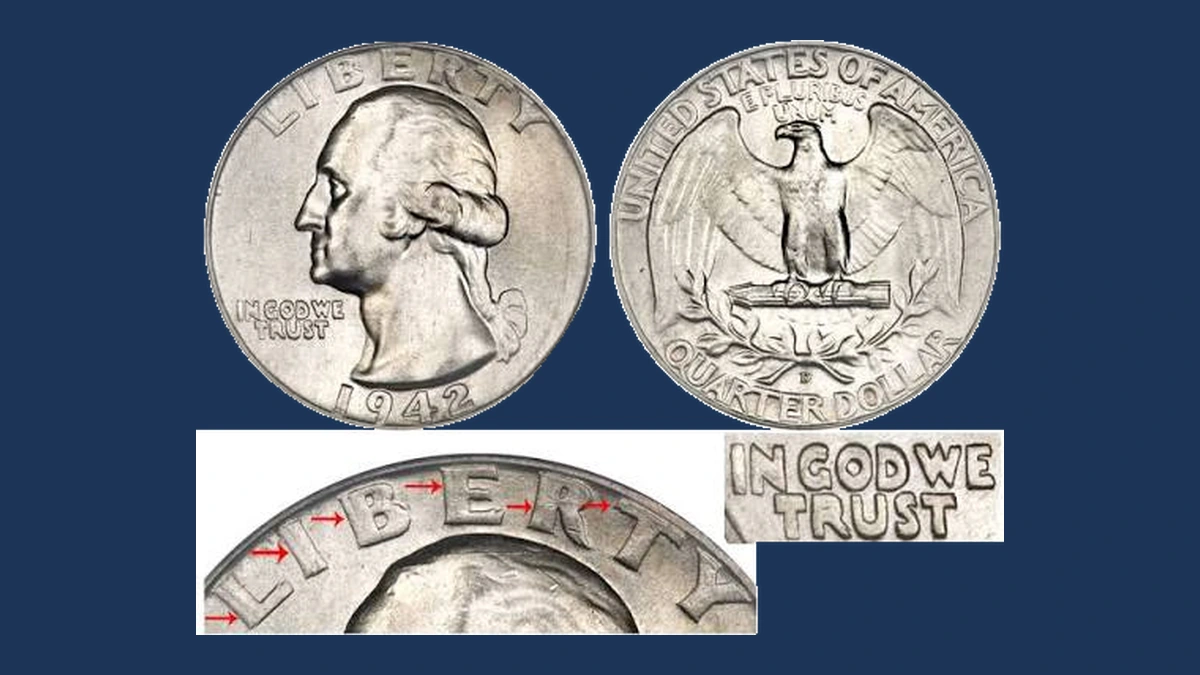
Two sets of raised design edges can make letters or eagle details look unusually thick. A doubled die carries that repeated design before it ever stamps a coin.
For 1942-D, known examples include strong doubling in LIBERTY and IN GOD WE TRUST on the front. A separate back variety affects the eagle’s beak, arrows, and branch above the mint letter.
Philadelphia examples include doubled QUARTER DOLLAR lettering on the back. Front doubling is also reported there in the date and lettering.
These are separate coins and varieties. One coin need not show every listed feature.
Estimated Value
Estimated values span $50 to $10,000, with major Denver varieties and exceptional condition commanding the strongest prices. A Denver back-doubled quarter graded MS66+, an exceptionally clean unworn coin, sold for $8,225 in November 2012.
For comparison within 1942, a worn Denver front-doubled example brought $345 in July 2004. A Philadelphia back-doubled MS64 quarter, an unworn coin with noticeable marks, sold for $517.50 in February 2009.
These prices belong to their particular varieties and condition levels.
How to Identify
Use the mint letter to choose your comparison before magnifying the design. Denver has a D below the eagle; Philadelphia has no letter.
On a Denver front, inspect LIBERTY and IN GOD WE TRUST for split raised strokes. On the Denver back variety, move instead to the eagle’s beak, arrows, and branch above the D.
For the Philadelphia back, enlarge QUARTER DOLLAR. A reported Philadelphia front-doubled coin needs its own matching date and lettering photographs, not a Denver comparison.
Check whether the extra edges are rounded and form part of the letters. Flat shelf-like edges can result from movement during striking.
Compare several affected details on the same face before accepting a match. One thick letter caused by wear or damage is not enough.
Conclusion
Estimated values of $20 to $10,000 cover a wide range of 1942 quarter errors. A small silver flake and a sharply doubled Denver eagle belong at very different price levels.
Keep the mint letter, original surface, and complete shape in view when making comparisons. Clear photographs of both faces help protect against matching your coin to the wrong variety or borrowing the price of a much finer example.