1947 Quarter Error List with Pictures

A small repeated letter can matter more than a dramatic scratch. A 1947 doubled-front quarter graded MS66 sold for $1,020 in February 2025.
The 1947 quarter errors below also include a repeated S and the nicknamed Spitting Eagle. Their estimated whole-coin values run from $25–$1,500.
These features require close viewing, but they leave different kinds of raised metal. Follow the three groups below to see which part of the coin to examine first.
1. 1947 Washington Quarter Repunched S Mintmark
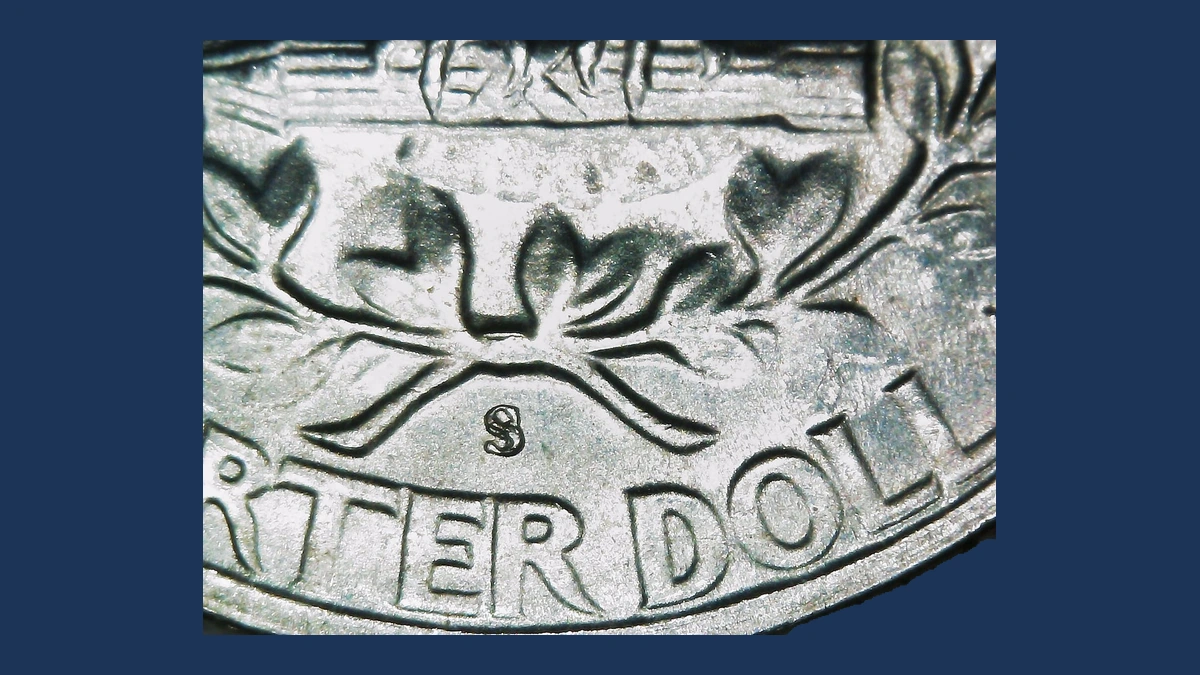
The S on the eagle side may have extra curves beside or below it. These traces came from repeated entries of the mintmark punch into the steel stamping tool, called a die.
Ken Potter listed both westward and southward repunched S patterns for 1947. West means toward the left when the reverse is upright; south means below the main letter.
One westward S pattern also occurs with a doubled front design. That combination is discussed below, but extra S outlines alone do not prove that the front is doubled too.
Estimated Value
An estimated $25–$300 covers identified 1947-S repunched mintmarks in a range of conditions. Strong extra curves and relatively clean surfaces help make a small feature easier to appreciate.
Potter’s older list offered unworn examples at prices in the teens. Those were dealer asking prices, not completed auction results or present-day values.
Judge the whole coin, including wear and cleaning. A faint extra stroke on a worn S should not automatically receive the upper estimate.
How to Identify
Turn the reverse upright and locate the S beneath the wreath. A 10× magnifier can reveal whether extra strokes sit to the left or below the main letter.
Compare each candidate with the appropriate 1947-S pattern in Ken Potter’s listings. Do not combine the outlines of two different examples into an imagined larger S.
Follow the upper and lower curves rather than judging the width of the whole mark. A hit may flatten or push one curve sideways without producing another recognizable punched shape.
Now change the lamp angle to separate a shadow from raised metal. The added S strokes should stay in the same positions around the main letter.
2. 1947 Washington Quarter Spitting Eagle Raised Line
A small raised line in front of the eagle’s beak gives this Philadelphia variety its Spitting Eagle nickname. It is part of the metal on the reverse, not a drop or loose piece sitting on the coin.
PCGS recognizes the variety as FS-901. Its value rests on matching that particular beak-area feature, rather than finding any line near the eagle.
A scratch can cross the same spot by chance. Because a scratch cuts into the surface, checking the line’s height helps separate damage from the raised feature associated with the stamping tool.
Estimated Value
For a correctly identified 1947 Spitting Eagle, estimate $25–$500. The range allows for worn examples through cleaner coins with an easily visible beak-area line.
The PCGS variety page identifies the coin but gives no auction record. This is an estimated collector range, not a claimed sale at its upper end.
An attractive reverse and a clear line are useful selling features. Heavy scratches across the same area can obscure the variety and reduce interest.
How to Identify
Bring the beak area into focus under a magnifier before searching the rest of the reverse. Hold the coin by its edge and sweep a light across the line from both sides.
A raised line catches light differently from a groove. A scratch may also have pushed-up lips, so inspect its center for a cut running between them.
Compare the line’s path and its relationship to the beak with an identified FS-901 photograph. The no-mintmark Philadelphia identity should also match; check beneath the wreath for a D or S.
Keep the complete beak in the close-up. Follow the raised feature outward from that landmark, rather than accepting a disconnected scratch elsewhere nearby.
3. 1947 Washington Quarter Doubled Front Designs
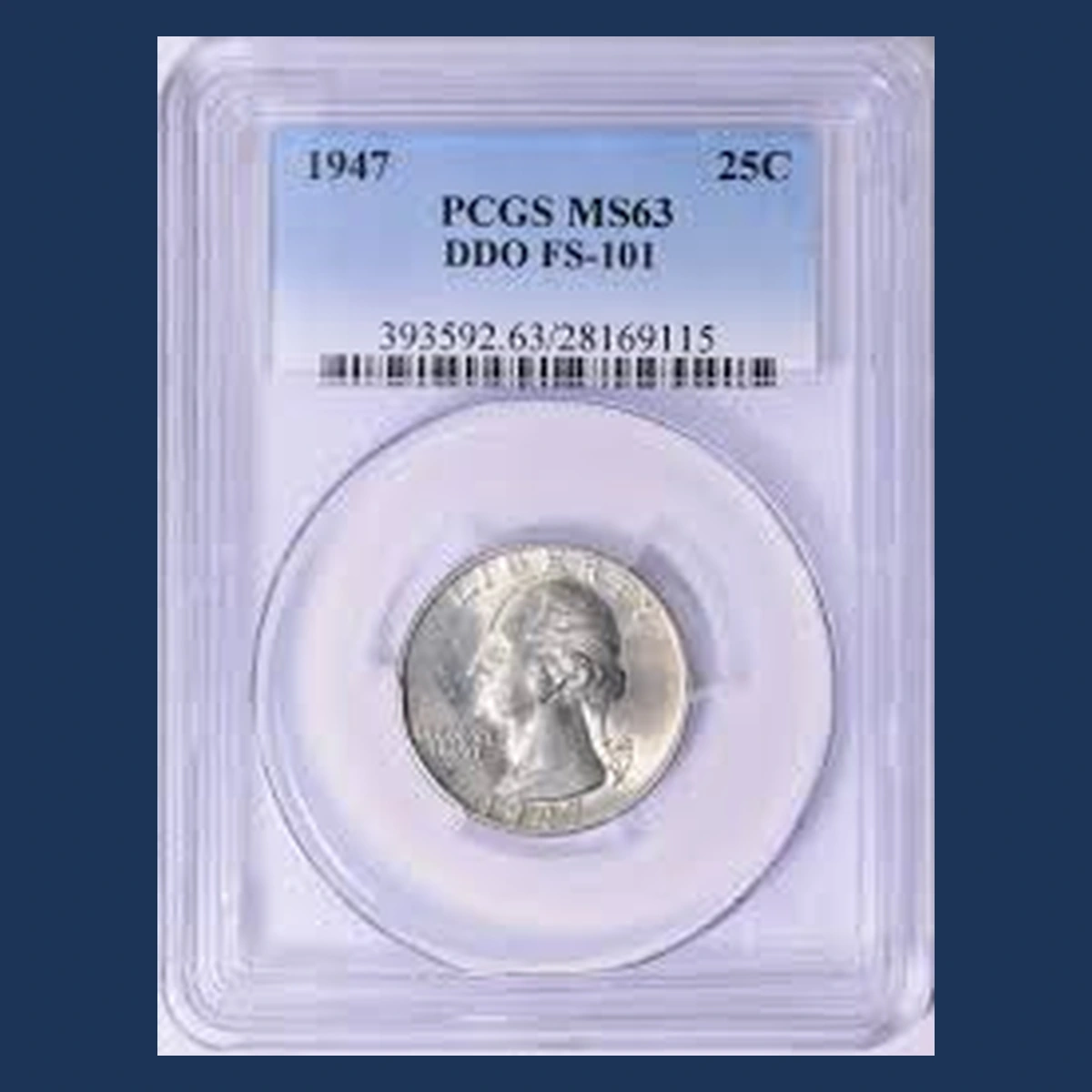
Some front letters or date details can have small extra outlines because the stamping tool already carried a doubled design. A single strike then copied those features onto the quarter.
The Philadelphia variety is listed as FS-101. A separate San Francisco example appears in Potter’s inventory with both front doubling and a westward repunched S.
These are different varieties from different mints. The San Francisco listing does not give the exact strongest front letters, so a matching example is needed before assigning that pattern to thick-looking lettering on another coin.
Estimated Value
PCGS records $1,020 in February 2025 for a Philadelphia FS-101 graded MS66 at Stack’s Bowers. MS66 describes an unworn coin with relatively few marks.
Estimate $40–$1,500 for matched Philadelphia examples and $25–$300 for the reported San Francisco doubling-and-S combination. The combined span is $25–$1,500.
The S coin’s two features belong to one piece. Their estimates should not be added as if they were separate coins.
How to Identify
First read the reverse mintmark area: no letter points to Philadelphia, while S identifies San Francisco. Choose a doubled-front comparison from that same mint.
Take enlarged photographs of the front words and date. Compare several letter edges together instead of relying on a single thick stroke.
Under a 10× magnifier, look for raised extra outlines or divided letter tips at the matching points. Flat shelves beside a reduced main letter can come from movement during striking.
For the San Francisco combination, check the westward extra S separately. It does not establish front doubling by itself.
Trace the affected front lettering against the same-mint example, checking that several extra edges repeat the photographed pattern.
Conclusion
Estimated values of $25–$1,500 cover the 1947 varieties discussed here. The strongest price comparison belongs to a high-grade doubled-front coin, while smaller features need their own assessment.
Follow the eagle’s beak line, the extra S strokes, or the repeated front lettering with a magnifier. Keep the Philadelphia and San Francisco patterns separate.
If two varieties occur together, judge that one coin’s condition and complete combination instead of adding two prices.