1961 Quarter Error List with Pictures

A small gap between two back letters can identify a 1961 quarter with a Proof-style reverse design. An exceptional Type B example graded MS67 sold for $8,519 in December 2021, far above typical examples.
Other 1961 quarter errors include wrong blanks, clipped edges, and interrupted designs. Estimated prices span $15–$10,000, with the highest levels reserved for rare errors or exceptional condition.
Read on to see which details identify each type and how to compare the right coin with its price.
1. 1961 Washington Quarter Raised Cracks and Cuds
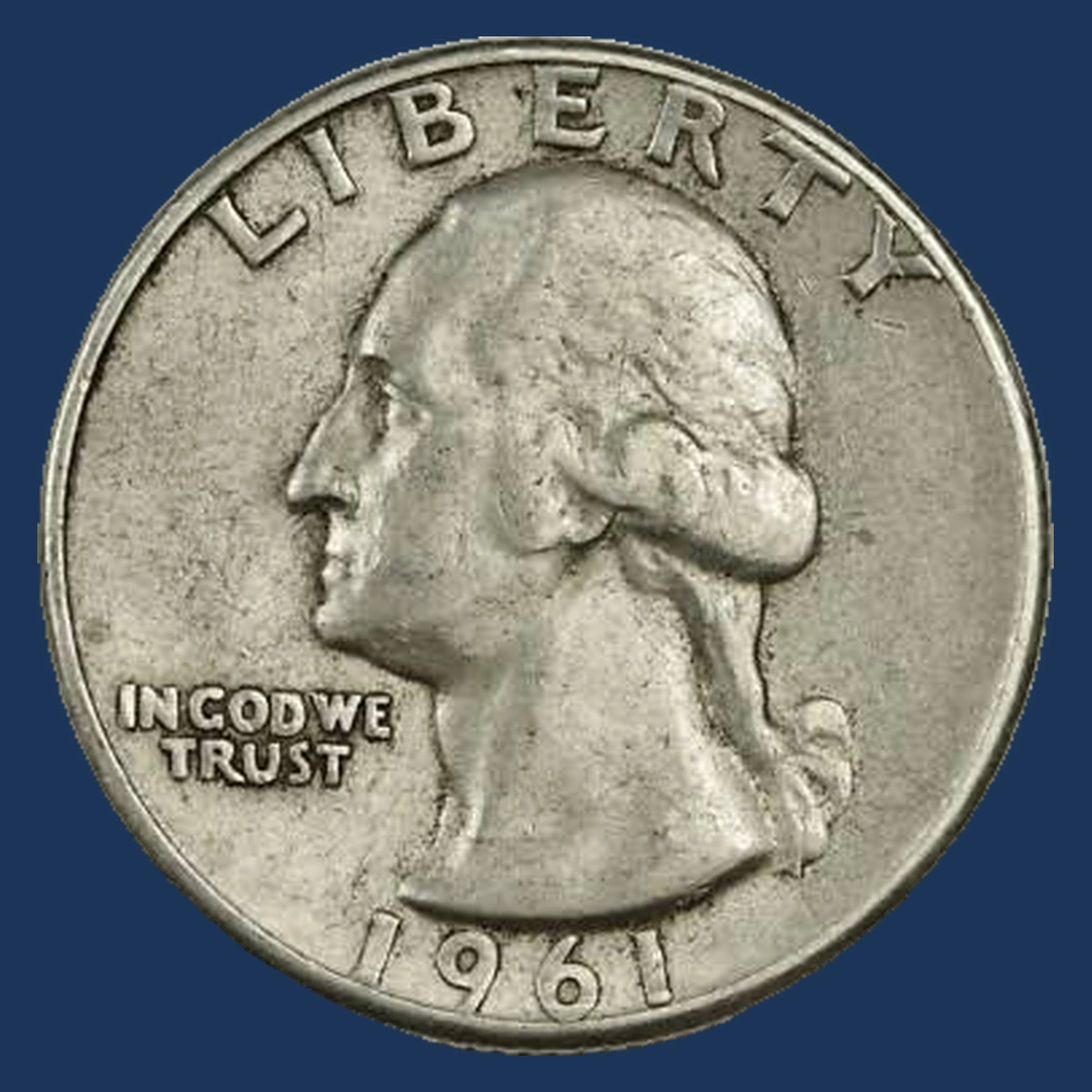
A raised line across the top of Washington’s head appears in a published 1961 example. Such a line can form when the die, the steel stamping tool, cracks and metal enters the opening.
A larger break at the tool’s edge can create a raised lump joined to the rim. Collectors call that feature a cud.
These are related forms of tool damage rather than scratches cut into the coin. Reports include both for 1961, but the pictured head crack does not establish one location or shape for every cud.
Estimated Value
Estimate $15–$150 for modest 1961 crack or cud examples, with larger, clearer raised features usually bringing more interest. This is a whole-coin estimate, including the underlying silver quarter rather than an added fee for each line.
A different-denomination comparison is the 1970-D nickel with two raised rim breaks that sold for $63 in October 2022. The quarter’s preservation and the size of its own defect still control where it fits within the range.
How to Identify
Inspect the line above Washington’s head under a 10× magnifier and move the light across it. A die crack produces a raised feature, while a scratch normally cuts down into the finished surface.
Follow the line where it meets the portrait, checking whether its shape belongs to the original strike. A scratch may cut through details or leave displaced metal along only one side.
For a rim-connected lump, compare the face with the edge and opposite side for dents caused by a later hit. The useful check is raised metal formed naturally from a damaged stamping tool, not simply a line near the pictured location or a bump on the rim.
2. 1961 Washington Quarter Clipped Blank
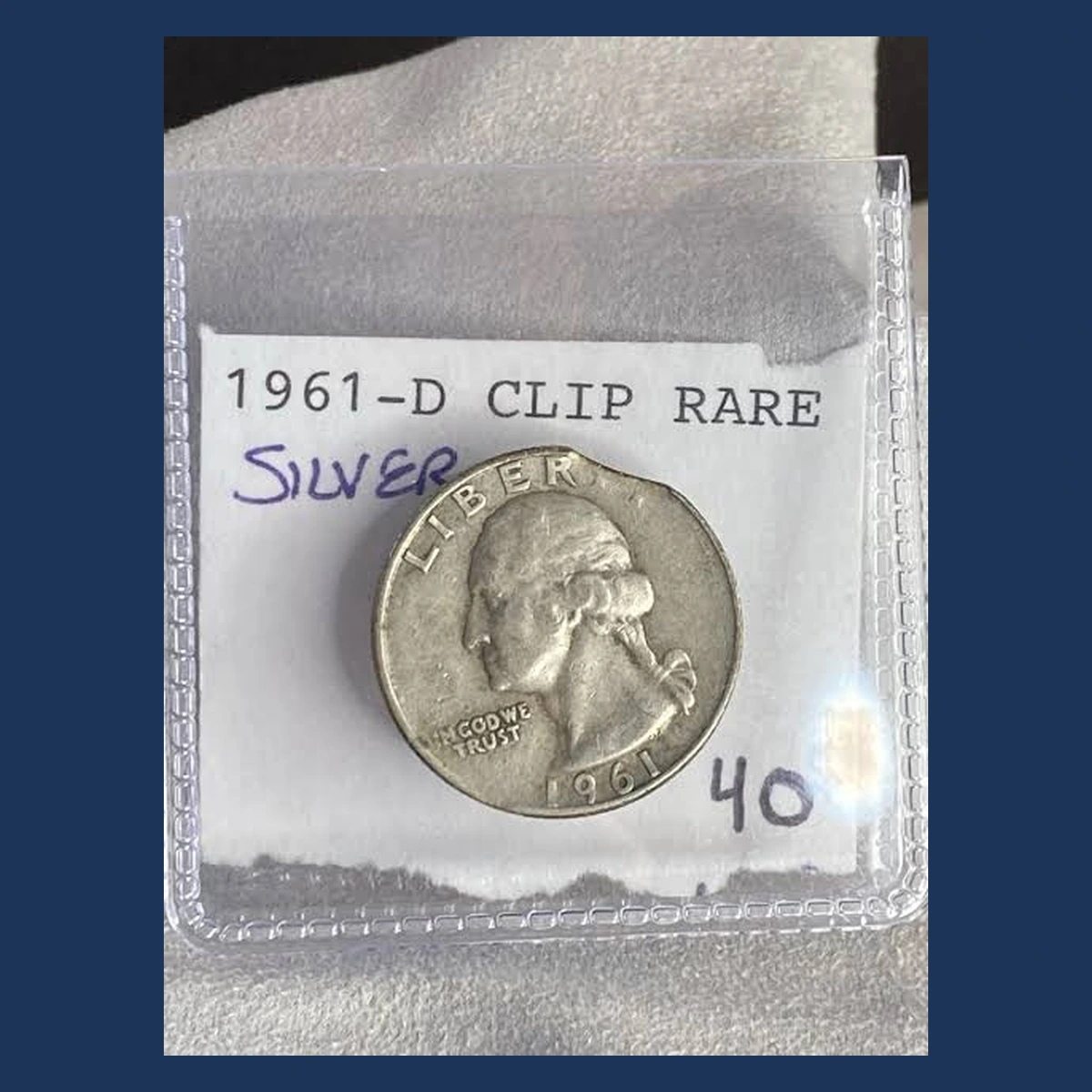
A curved or straight section can be absent from the metal before the quarter receives its design. This is a clipped blank, made when the cutting process overlaps an earlier hole or the edge of the strip.
The strike then shapes the remaining metal around the gap. Lettering or the rim near that boundary can appear softened rather than cut cleanly through afterward.
Both curved and straight clips are reported for 1961 quarters. A later saw cut or broken edge can also remove metal, but it does not reproduce the way the design forms beside an original gap.
Estimated Value
A confirmed 1961 clipped quarter has an estimated value of $25–$300. The amount of missing metal, surviving date, and condition matter, with very small clips often adding only a modest premium.
For comparison, a 1978 quarter with three curved clips sold for $180 in March 2025. That later copper-nickel coin is a different metal and date, so its price helps illustrate collector interest in the outline rather than setting an exact value for this silver quarter.
How to Identify
A normal 1961 silver quarter starts near 6.25 g and measures about 24.3 mm. Weigh the loose coin and use calipers across the surviving full diameter, remembering that both an original clip and later cutting reduce weight.
Inspect the gap under a 10× magnifier for filing, saw teeth, or a sharp cut through completed lettering. Compare nearby letters and the rim with the undamaged parts of the coin.
The remaining edge normally has grooves. A weak rim opposite the gap can provide support, but it is not required on every genuine clip.
Judge where the missing section meets the original strike. Natural metal flow around that boundary is more useful than simply finding a silver quarter that weighs less than normal.
3. 1961 Washington Quarter Repunched D Mint Mark
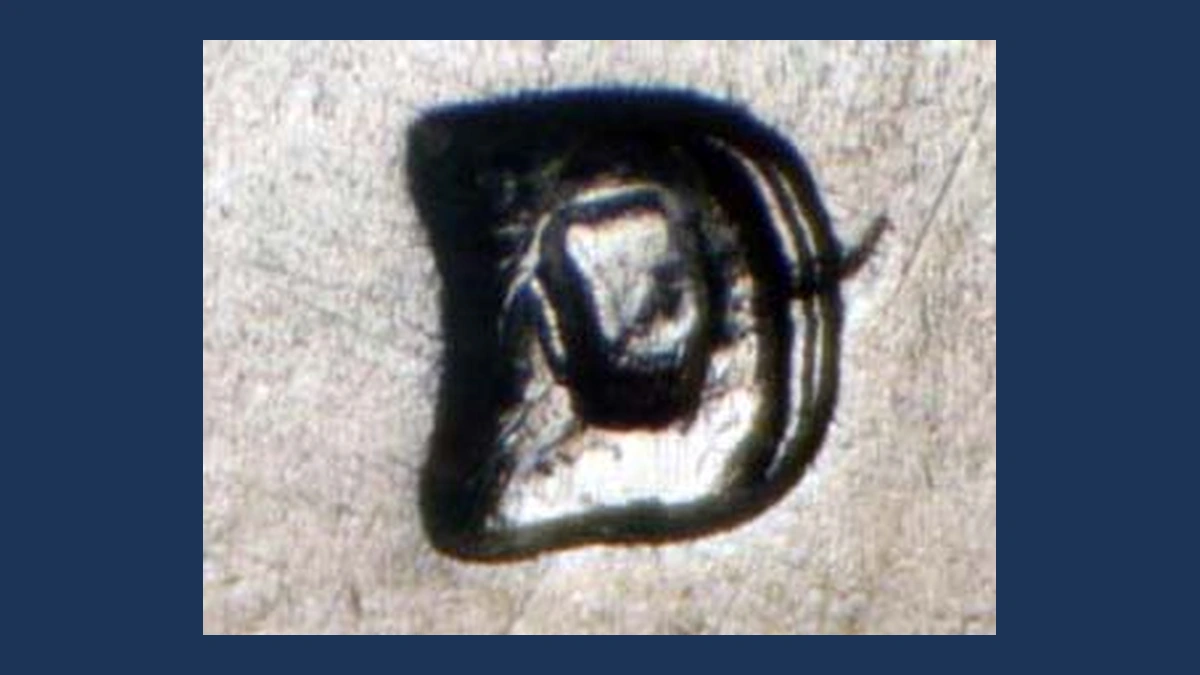
An extra curve beside the D can result from punching the mint letter into the stamping tool more than once. The repeated shape then appears on coins struck by that tool.
Reports list repunched D varieties for 1961, including FS-501 and FS-502. The pattern needs to match the particular variety rather than any vaguely doubled-looking mint letter.
On these silver quarters, the D sits on the back below the eagle, unlike its later position beside Washington. The quarter itself did not need two strikes to receive a repunched mint mark.
Estimated Value
Estimate $25–$400 for recognized 1961-D repunched mint marks across common collectible condition levels. A clearly separated extra D and an unworn surface support stronger prices than a weak or worn outline.
A year-specific sale summary reports $216 for an MS65 FS-501 in March 2018. That grade and variety should remain attached to the comparison, rather than becoming the price for a different FS-502 coin or an unidentified mark beside the D.
How to Identify
The D is on the back below the eagle. Locate it before comparing this coin with later Washington quarters, whose mint marks moved to the front.
Under a 10× magnifier, turn the light until you can follow the suspected second curve. A flat ledge or a short scratch is not enough to identify another D.
Compare the extra shape with photographs of one specific FS variety at a time. Do not combine the strongest features from different catalog examples.
Check whether a nearby hit pushed metal into the letter, leaving a dent beside the raised area.
Follow enough of the added curve to recognize a repeated D in the same position as the reference; its letter shape is more useful than general thickness.
4. 1961 Washington Quarter Defective Metal Blank
A problem in the metal before striking can leave an irregular surface or an incomplete area in the finished design. The description defective blank covers the metal problem rather than one fixed shape.
A recorded 1961 example was graded NGC MS64 and weighs 5.7 g. That is below the normal 6.25 g standard for a silver quarter, but weight alone does not identify the exact defect.
The individual coin’s surface and edge need to explain the difference. It should not automatically be called a clipped blank, a peeling layer, or a wrong-metal coin from its weight alone.
Estimated Value
The NGC MS64 defective-blank example was reported sold for $132 in July 2021. Estimate $50–$500 for comparable confirmed 1961 metal defects, allowing for visibility, remaining design, and surface quality.
A clear original defect can be more appealing than a vague rough patch, especially on an unworn coin. Later corrosion or grinding can also make a quarter light, so those problems do not justify the same range merely because a scale shows 5.7 g.
How to Identify
Record the weight first, but leave the cause open until you inspect the coin. The listed 5.7 g specimen differs from the ordinary 6.25 g silver quarter standard; another example needs its own measurement.
With a 10× magnifier, follow the abnormal area into the surrounding design. Look for original struck details around or across the defect, rather than scratches and pits that removed metal afterward.
Calipers can compare the outline with about 24.3 mm, while an edge view shows whether grooves continue beside the affected area. An obvious cut or broad grinding marks suggest later alteration.
Check the actual metal boundary before choosing a more specific error name. The surface and edge should explain the low weight without relying on the auction label alone.
5. 1961 Washington Quarter Struck Through Material
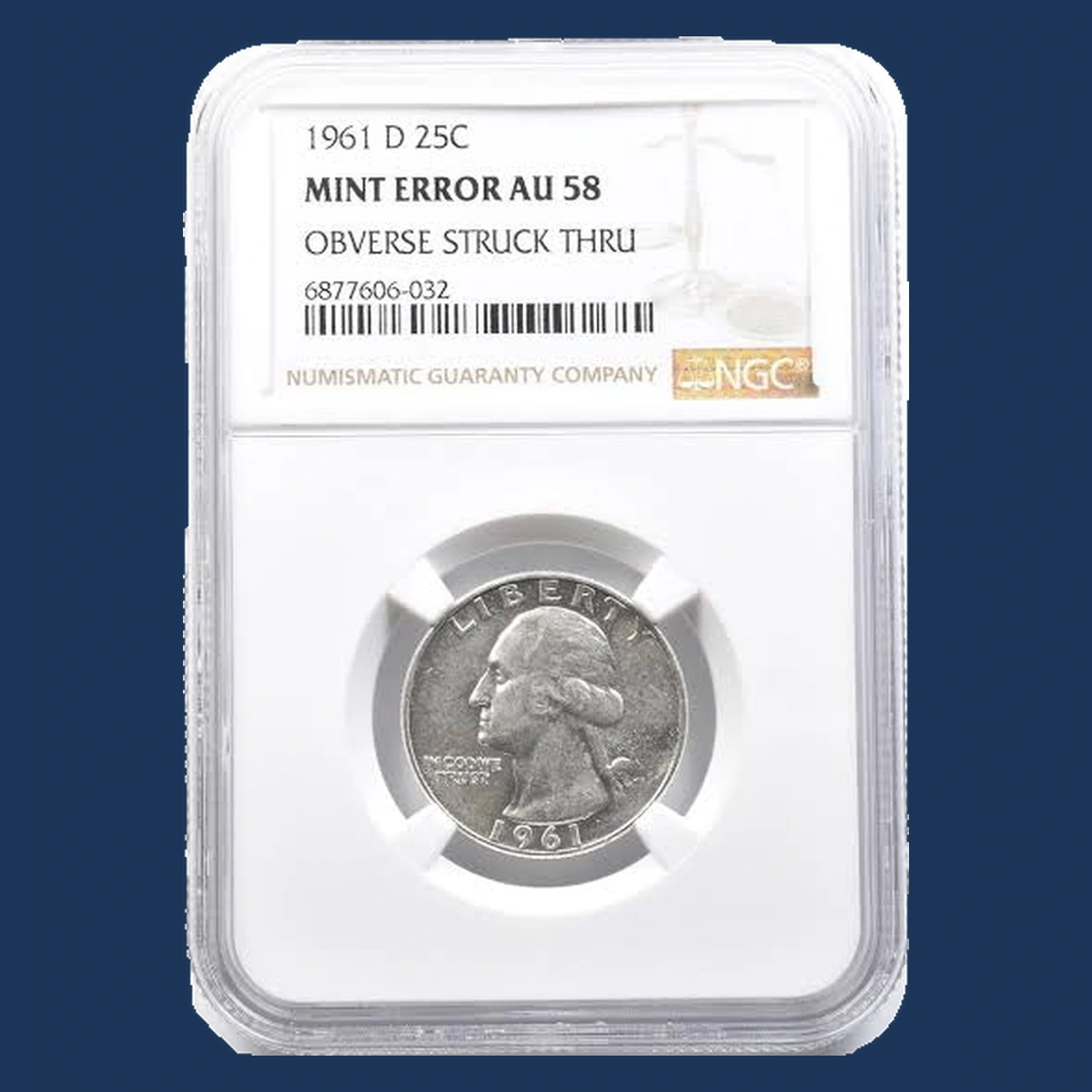
A patch of design can disappear when something lies between the metal blank and a stamping tool. The obstruction blocks that part of the strike, leaving a hollow or an area with weak detail.
An ordinary 1961 coin was cataloged with this problem on the back and graded PCGS MS62. A separate Proof, a specially made collector coin, is recorded as ANACS PR64 Cameo with a struck-through error.
Cameo describes contrast between the portrait and surrounding reflective surface, not the error itself. The two examples need separate face and finish comparisons.
Estimated Value
Estimate $40–$700 for confirmed 1961 struck-through quarters, with finish, visibility, and preservation affecting the price. A prominent impression on an attractive Proof can draw more attention than a faint patch on a circulated coin.
For a related comparison, a 1986-P nickel with a struck-through error sold for $204 in June 2023. That different denomination provides a general market comparison while the silver quarter’s own surfaces and specific interrupted design must be judged separately.
How to Identify
Follow a surviving design line into the abnormal patch before trying to name the material that blocked the strike. The ordinary example concerns the back, while the separate Proof report does not establish an identical position or shape.
Use a 10× magnifier and move the light across the boundary, looking for an original design that fades or stops. A sharp impact lip, a cut through completed details, or connected corrosion pits can explain missing design after the coin left the Mint.
On the Proof, inspect the nearby reflective surface for rubbing or polishing that might explain the patch. Identify a natural interruption during striking first, and reserve names such as cloth or wire for a mark that preserves the recognizable form of that material.
6. 1961 Washington Quarter Off-Center Strike
Part of Washington’s portrait or the outer lettering can run off the metal when a blank enters the press out of position. A crescent of unstruck metal remains on the opposite side.
Off-center examples are reported for both Philadelphia and Denver in 1961. The exact direction and percentage belong to each coin rather than one universal pattern for the year.
This differs from an uneven rim on only one face. In a true off-center strike, the displaced blank affects how the front and back designs fit on the same piece of metal.
Estimated Value
A genuine 1961 off-center quarter has an estimated value of $100–$1,000. A readable year, large displacement, and clean surfaces can support more interest than a small shift on a worn example.
As a different-year and different-metal comparison, a 1965 quarter struck 25% off center sold for $180 in December 2025. Its visible shift provides useful context, while silver composition, condition, and the survival of the 1961 coin’s identity still affect the estimate.
How to Identify
Keep both faces in view while comparing the blank crescent with the missing design. They should fit one misplaced blank, not a rim that appears wider only because one stamping tool shifted.
Read the date and inspect the back mint-mark area. If that area falls beyond the struck metal, do not assume Philadelphia simply because no D can be seen.
A 10× magnifier can reveal hammering, cutting, or a flattened area used to imitate blank metal. The original blank should still contain roughly its full amount of silver, with weight near the 6.25 g standard unless another error intervenes.
Trace the design to its natural ending at the metal edge. The remaining unstruck crescent should explain the part of the design that is absent.
7. 1961 Washington Quarter Doubled Front Design on a Proof
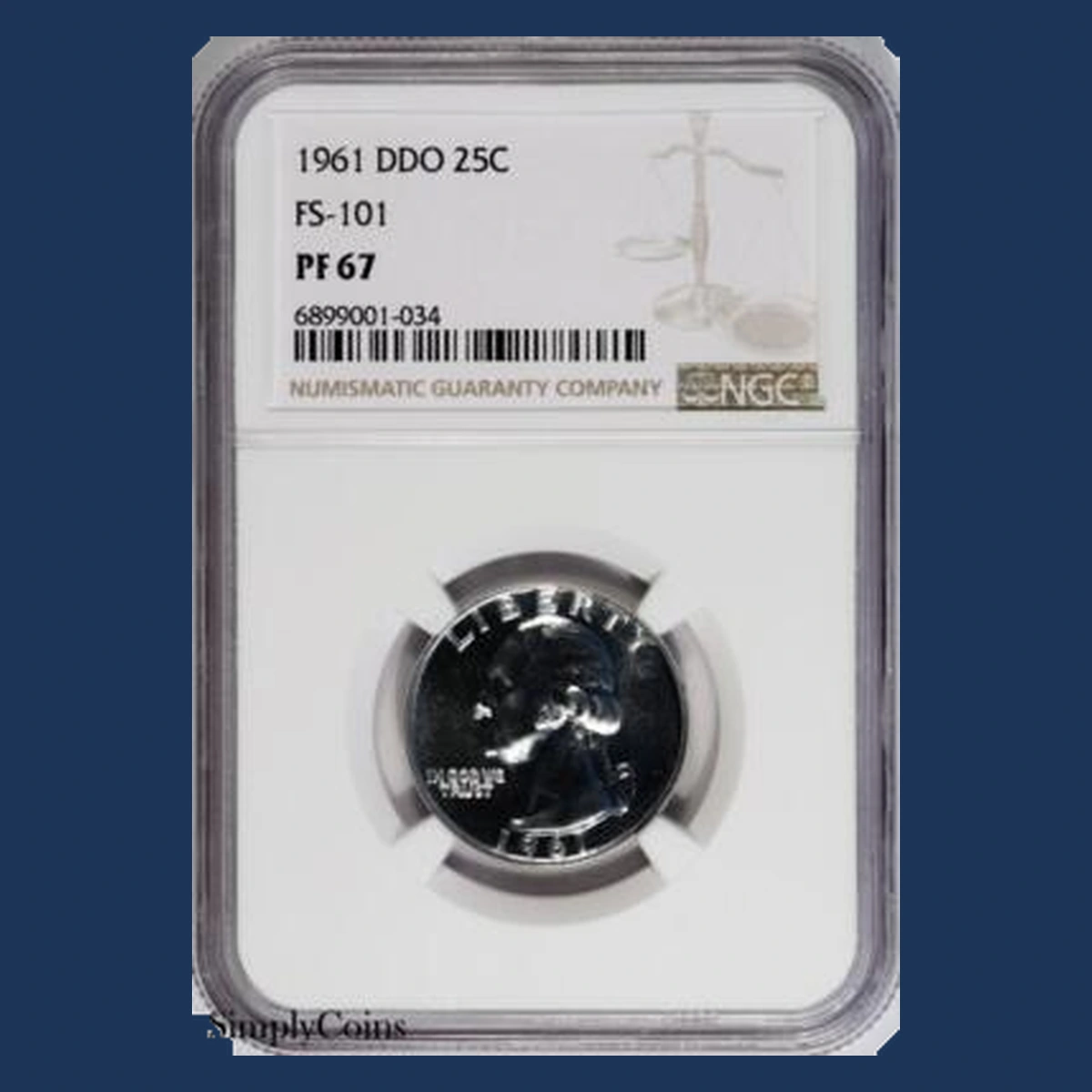
Extra raised outlines on a 1961 Proof can come from a doubled design already present in the stamping tool. The coin then receives those repeated details in a single properly placed impression.
Reports identify a front doubled-die variety, often called DDO, with attention to the motto, date, and portrait. Proof examples are documented in collector and grading-service records.
This is different from a coin struck twice in different positions. It is also different from thin, flat doubling caused by movement during the strike, which can make letters look wider without creating the same rounded extra shapes.
Estimated Value
Use an estimated $50–$1,500 for a confirmed 1961 Proof doubled die, depending on separation, preservation, and the contrast of its surfaces. A minor or hazy example belongs well below a sharply defined, highly attractive coin.
For a different-year comparison, a 1990-S FS-101 Proof graded PR68 Deep Cameo sold for $360 in March 2020. That recognized variety gives context, while the exact 1961 pattern and condition must be matched before using a comparable price.
How to Identify
Begin with the motto and date under a 10× magnifier, comparing them with a normal 1961 Proof. Keep the light soft so reflections do not create bright lines that imitate a second letter.
Follow the suspected extra outline through more than one detail. Rounded separation or split corners are more useful than one thick stroke with a flat shelf beside it.
Inspect the portrait where the same variety’s photographs show doubling, without borrowing a position from a different year. A Proof’s shine does not prove the doubled-die identity or the strength of its contrast.
Match the actual letter and date shapes to a documented 1961 example. The repeated pattern must remain visible as raised metal when the lighting changes.
8. 1961 Washington Quarter Wrong Denomination Blank
A quarter design can land on a smaller blank intended for another coin. Copper color, reduced size, and cut-off outer lettering can reveal the mismatch.
Recorded examples include Philadelphia and Denver cent blanks, a Philadelphia nickel blank, and a silver-dime blank. A Denver nickel-blank example is also reported in an older auction reference.
One Philadelphia cent example weighs 3.07 g, while the recorded Philadelphia nickel example weighs 5.0 g. These numbers describe separate coins; the weight of one smaller blank must not be assigned to a different metal or specimen.
Estimated Value
Estimate $200–$8,000 for 1961 wrong-blank quarters, with the blank type, condition, and remaining date strongly affecting value. The Denver cent-blank PCGS MS64 example sold for $6,900 in August 2006.
A Philadelphia nickel-blank AU50 coin was reported sold for $282 in September 2016. These widely separated results show why a wrong-blank label alone cannot set the price: metal, preservation, and the appeal of the surviving quarter design all matter.
How to Identify
Use a scale and calipers before comparing color with photographs. A normal 1961 quarter is 90% silver, about 6.25 g and 24.3 mm, while a cent blank normally begins near 3.11 g and 19.05 mm.
Nickel blanks use 5.0 g and 21.2 mm standards; silver-dime blanks use about 2.5 g and 17.9 mm. Striking can spread the smaller blank, so its final width may change.
Under a 10× magnifier, inspect the metal edge and surviving date. The outer design should run off a naturally small blank, not through an edge filed down after striking.
A copper-colored coating can imitate a cent blank, while clipping lowers weight without changing the remaining metal. Confirm that size, composition, and the cut-off design support the same denomination blank.
9. 1961 Washington Quarter Type B Back Design
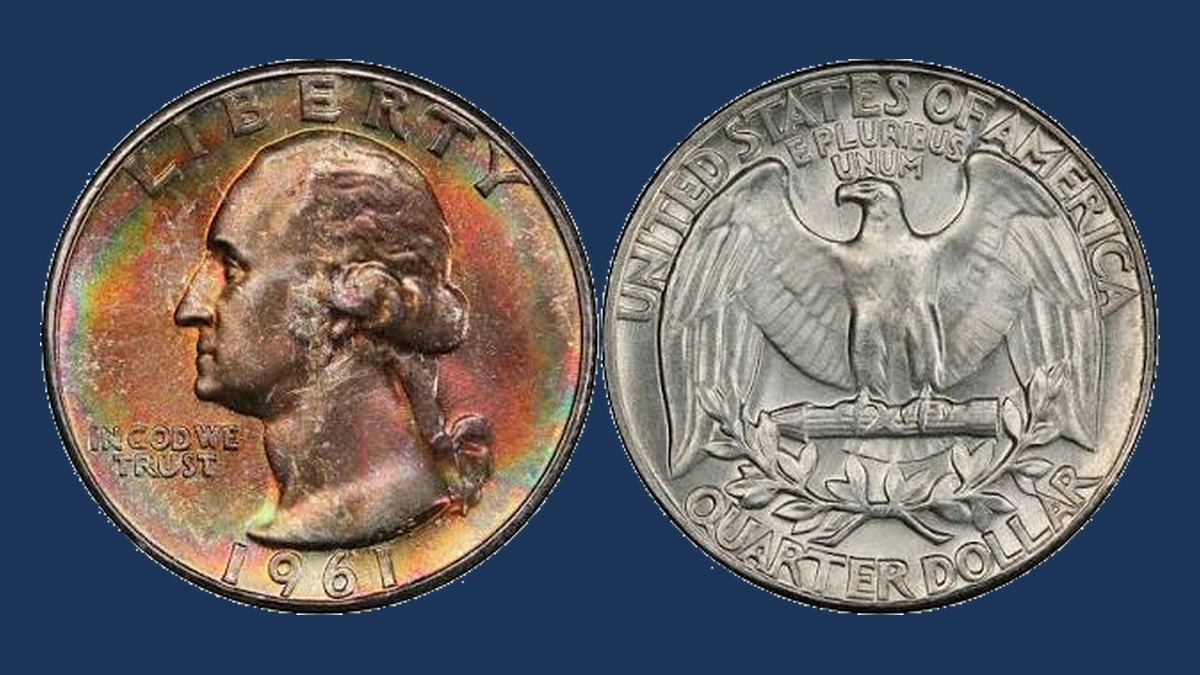
The last two letters of STATES are a useful place to look on a 1961 quarter. A clear gap between E and S can identify the Type B back design on an ordinary Philadelphia coin.
That design was intended for Proofs, the specially prepared coins sold to collectors. Some ordinary circulation coins instead received it, creating a recognized variety known as FS-901.
The normal circulation design places those letters much closer together. A Proof with its expected back is not the same variety, so the coin’s finish and identity matter as well as the letter spacing.
Estimated Value
Typical collectible Type B examples have an estimated whole-coin value of $25–$300, while exceptional top-grade coins can reach $1,000–$10,000. Condition accounts for much of the jump.
PCGS records an MS67 example sold for $8,519 in December 2021. That rare preservation level should not set expectations for a worn find.
The same back design on a more ordinary coin can be much less expensive, even when its letter spacing is clear.
How to Identify
Begin by deciding whether the coin is an ordinary circulation strike or a collector Proof, since a normal Proof can have the expected Type B design. Check the back for a Denver D below the eagle; the recorded circulation variety is Philadelphia without that letter.
Now inspect E and S at the end of STATES under a 10× magnifier. The ordinary circulation design places them almost together, while Type B leaves a clear gap that should remain distinct under changing light.
Compare with a confirmed 1961 Type B coin, keeping the whole back visible. Wear or blurred photographs can confuse the spacing, so establish the separated letters on the correct ordinary coin before naming FS-901.
Conclusion
Estimated 1961 quarter error values range from $15–$10,000, depending on the mistake and the coin’s condition. The highest recorded examples should not become automatic price tags for every piece with a similar feature.
Start with the exact design, mint mark, or metal difference. Use weight and size for blank-related errors, and match small doubled details or the Type B back to a confirmed example before paying a premium.