1963 Quarter Error List with Pictures

Roosevelt’s chin survived beneath Washington’s design on a coin that brought $2,115 in September 2014. The quarter had been struck over an already finished 1963 dime.
Other 1963 quarter errors are smaller surprises: a repeated D, a loose metal flap, or doubled lettering. Estimated values for the groups below range from $20–$4,000.
All normal 1963 quarters are silver, but their mint and finish still matter. Follow the examples below to see which details distinguish these errors.
1. 1963 Washington Quarter Retained Lamination Flap
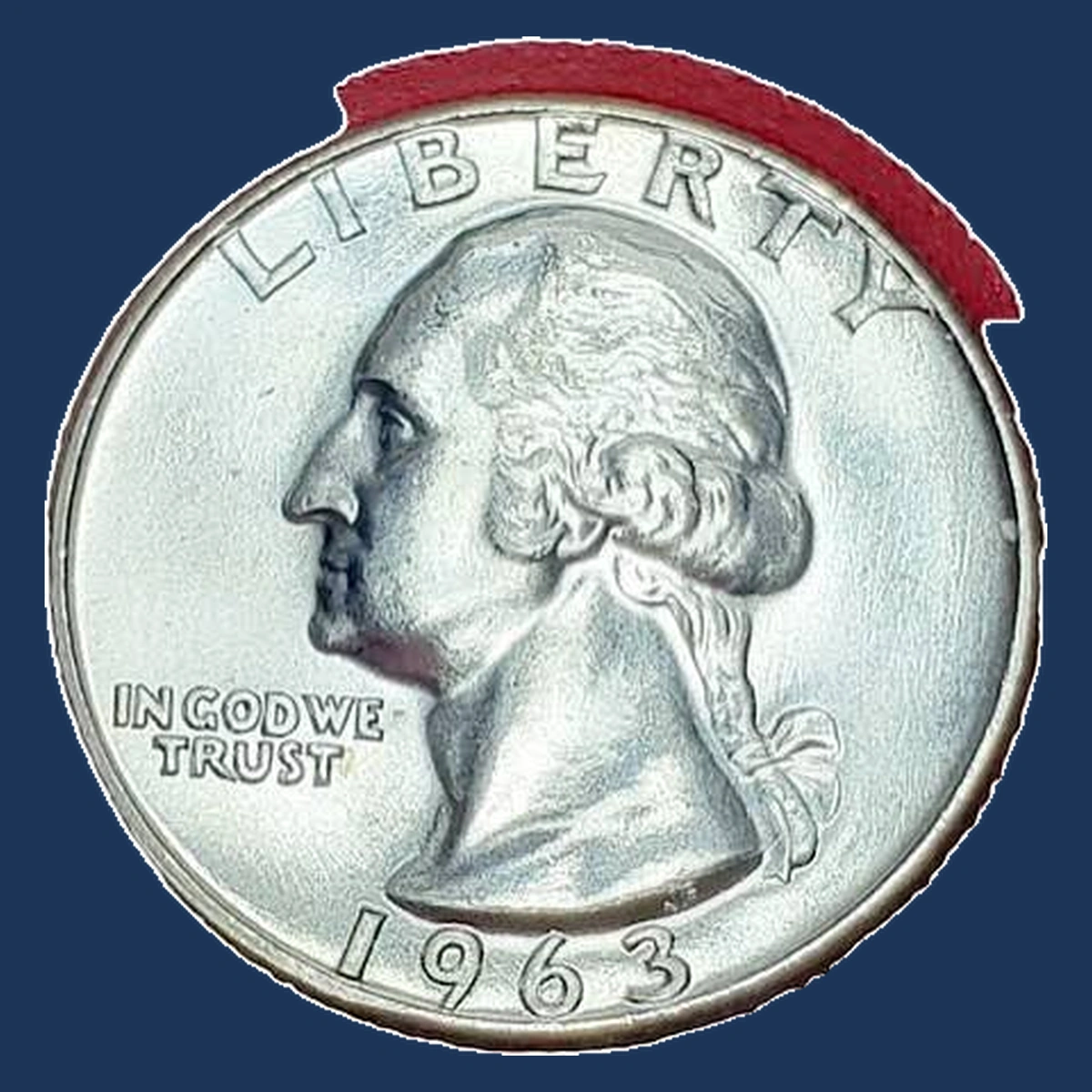
A thin flap still attached to the coin can show that its metal split into layers. This is a lamination fault, which can begin where impurities or a weak bond interrupt the alloy.
A 1963-D example with light circulation wear is reported with a retained flake. The report does not establish the flap’s exact position, so another coin’s location should not be assumed.
Unlike a loose piece stuck onto a finished quarter, the flap starts as part of the blank. Prying at it can destroy the connection that helps explain how the defect formed.
Estimated Value
Estimate $20–$150 for a genuine retained lamination on a 1963-D quarter. A clearly attached flap and readable surrounding design generally offer more interest than a small rough patch.
The normal silver coin’s condition also contributes to its whole value. This range is an estimate for the described mechanism, not a claim that a particular retained-flake example sold within it.
A flap damaged by cleaning or handling may attract less interest.
How to Identify
The first useful photograph looks across the edge of the lifted metal, without touching it. Use angled light and a magnifier to find the small area where the flap still joins the coin.
Follow the split outward into the surrounding surface, looking for a natural crack rather than a seam around an added piece. Pry marks or sharp tool cuts can show that someone disturbed the metal after the coin was made.
Confirm the reverse D below the wreath, and remember that an ordinary 1963 quarter is ninety-percent silver. A natural split should lead into attached original metal, rather than expose copper beneath a later silvery coating.
2. 1963 Washington Quarter Repunched Denver Mintmark
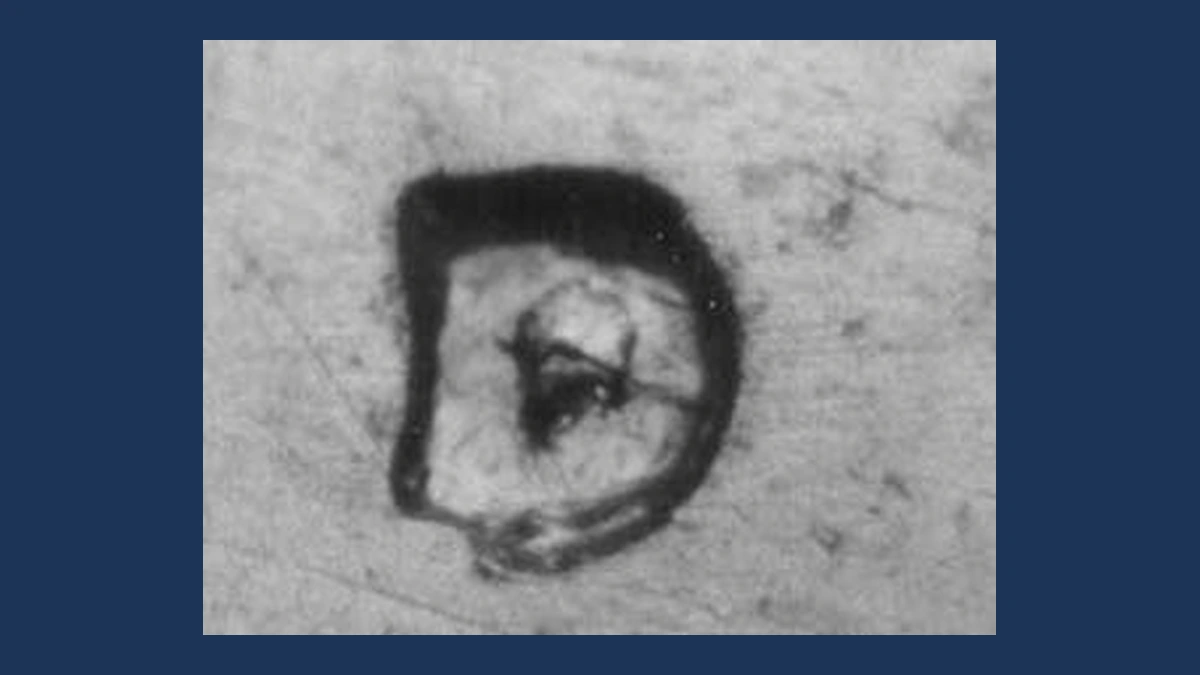
The small D below the eagle’s wreath can have an extra curved or upright outline beside it. Such remnants can form when the mintmark punch enters the stamping tool more than once in slightly different positions.
WRPM-001 has a three-part D pattern with an eastward and tilted extra impression. Other listed Denver patterns show different tilted or southeastward remnants.
This is a local mintmark feature. It does not require the entire eagle side to be doubled, and a thick-looking D caused by wear or a blow does not establish a repunched mintmark.
Estimated Value
For clearly identified 1963-D repunched mintmarks, estimate $25–$250. A distinct extra D outline is more appealing than a tiny feature that can only be seen under strong magnification.
Condition and the exact pattern influence the result, especially when the coin retains sharp reverse detail. The range covers the coin as a whole, including its normal silver value.
A separate grease-related weakness on the same coin should not be priced as another complete coin.
How to Identify
Place a magnifier over the D beneath the reverse wreath and compare the actual letter with a clear variety photograph. A recognizable extra curved back or upright stroke is more useful than a general thick edge.
WRPM-001 needs the illustrated three-part pattern, including its eastward spread; the tilted WRPM-002 and WRPM-003 patterns each require their own comparison. CONECA’s two southeastward listings likewise should not be treated as identical merely because their written directions agree.
Use nearby tool marks to support a letter match, while checking for crushing or a flat shelf from mechanical doubling. The surviving part of another D should fit the specific pattern you are trying to identify.
3. 1963 Washington Quarter Off-Center-Looking Broadstrike
An expanded border can make a quarter look off center even when its complete design remains on the metal. A broadstrike forms when the collar ring fails to contain the blank as the tools press it.
A Philadelphia MS63 example is reported as an uncentered broadstrike. That description should be checked against the full outline and outer lettering, rather than treated as a measured off-center percentage.
The distinction is visible. Broadstriking preserves the complete design while allowing metal to spread, whereas an off-center strike carries part of the design beyond the edge of the blank.
Estimated Value
Use an estimated $40–$350 for an identifiable 1963 broadstrike with original surfaces. A clear expanded border and complete design can make the error easy to appreciate.
A different-year comparison is the 1984-P broadstrike graded PCGS MS65 that brought $169 in December 2025. That later clad quarter differs in metal and condition, so its price helps with the mechanism without setting the exact value of a silver 1963 example.
How to Identify
Find the tightest part of the outer border and inspect the lettering there. Even at that narrow point, the complete design should remain on the metal.
Continue around both faces with a magnifier, checking that no words run off the original edge.
Calipers can document the expansion of a loose coin against the normal 24.3 mm diameter. An increased width is useful evidence only when the surrounding metal remains original.
Look across Washington’s highest details for flattening and across the edge for file marks. Either can show that someone reshaped an already finished quarter.
A complete picture within an uneven, expanded border fits an uncentered broadstrike; genuinely missing design points toward a different striking problem.
4. 1963 Washington Quarter Off-Center Strike
Part of Washington’s portrait or the outer lettering can miss the blank when it sits too far to one side. A crescent of untouched metal remains beyond the struck area on the opposite side.
The off-center type is reported for 1963, although the year reports do not establish one particular mint or percentage. Those details must be read from the individual example.
An oval or small coin is not enough. A wrong blank can also lose outer letters, while a shifted tool can disturb one face without moving the blank beneath both designs.
Estimated Value
Estimate $50–$500 for a genuine 1963 off-center quarter with enough date visible to identify it. Wear, surface marks, and the amount of attractive original blank metal influence the price.
For comparison, a 1988-P quarter struck 30% off center and graded ANACS MS63 sold for $109 in January 2022. Its later clad composition and specific displacement distinguish it from a silver 1963 coin, so it serves only as a mechanism comparison.
How to Identify
A normal loose 1963 quarter weighs about 6.25 g. Start with that scale comparison if the coin looks unusually small, then use calipers to record its widest dimension.
A smaller blank and a misplaced normal blank can both lose lettering. Look for a broad original crescent where neither stamping tool reached the metal, and compare the displacement on both faces.
Use magnification to inspect the boundary between the struck area and that crescent. Filing, sanding, or a blow can erase details but leave scratches and displaced metal behind.
The visible quarter date must identify 1963. Photograph the date together with the untouched crescent and the design that runs beyond the edge.
5. 1963 Washington Quarter Raised Cracks and Rim Cuds
A fine raised line and a broad mound at the rim can both start with damage to a stamping tool. A crack admits a thin line of metal; a missing rim section leaves a larger raised patch called a cud.
Both types appear in 1963 year reports. Their exact positions and tool numbers are not established by those general listings.
The shape must therefore be checked on the coin itself. A scratch cuts into the surface, and an impact can push rim metal inward without any damage having occurred to the Mint’s tool.
Estimated Value
For identified 1963 examples, estimate $20–$75 for modest raised cracks and $50–$600 for more obvious rim cuds. Together, these give a $20–$600 group range.
The amount of design replaced by a break affects its appeal. A clear, original mound touching the rim can command more attention than a faint line visible only under magnification.
These are whole-coin estimates, with wear and surface damage still affecting the final price.
How to Identify
Cast light almost sideways across a suspected crack. Through a magnifier, determine whether the feature rises above the coin or is a cut with a small displaced burr beside it.
Follow the line through every letter or portrait detail that it meets. Random scratches can change depth or cross the finished design in ways that reveal later damage.
For a suspected cud, inspect the rim beside the mound. Crushed metal, an impact notch, or bent nearby lettering may explain the raised area without a missing piece of tool.
Do not assign a catalog number from a roughly similar photograph.
A genuine cud replaces normal design with an original raised area that joins the rim; a genuine crack remains a raised line.
6. 1963 Washington Quarter Clipped Blank and Ragged Missing Edge
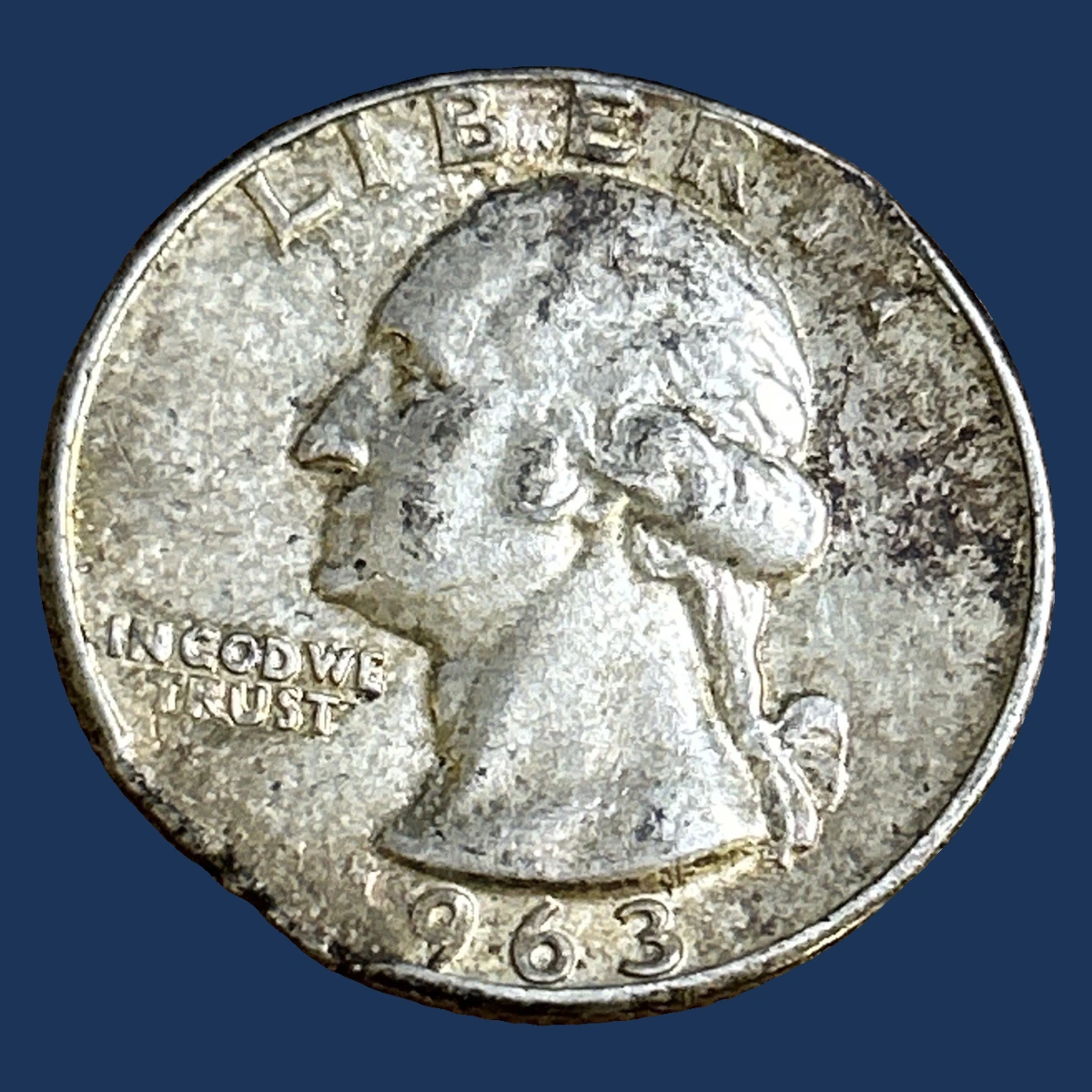
A blank cut from incomplete strip metal can have a gap before the quarter design is struck. Depending on the part of the strip involved, the missing area may have a regular boundary or a rough, irregular edge.
One 1963 listing combines a clip with the Type B reverse, the eagle-side design usually associated with Proof production. A separate report describes a ragged-edge quarter.
Those features need independent observation. A Type B label does not prove the clip, while a rough edge alone cannot separate an original missing-metal blank from later cutting or corrosion.
Estimated Value
Estimate $30–$600 for a genuine 1963 clipped or ragged-edge quarter, allowing for shape, condition, and any correctly identified additional variety. A clear original gap usually presents better than a heavily damaged edge.
A later 1980-P corner clip graded NGC MS65 sold for $204 in June 2023. That comparison has a different shape and metal, but it helps place an attractive clipped quarter within a practical price scale.
How to Identify
Inspect the ragged surface itself before deciding what to call it. A magnifier can reveal corrosion pits, saw marks, or fresh fractures that imitate missing metal from the blanking stage.
Follow the struck rim toward both ends of the gap. Its formation should agree with metal already being absent when the design was applied.
A reported 6.0 g NGC MS62 ragged example provides one recorded weight, not a standard for every coin in this group. A digital scale can document a loose candidate without proving its cause.
For the Type B example, inspect the reverse design separately from the gap. Original surfaces around the missing edge remain the first evidence for the clip itself.
7. 1963 Washington Quarter Struck Through Copper or Grease
A piece of copper caught in the press can remain embedded in a silver quarter after the blow. An ANACS MS64 example is recorded with such a retained fragment.
The surrounding strike holds evidence of the contact. A loose piece glued onto a finished coin does not show the same relationship to the design beneath and beside it.
Another 1963-D report describes weak detail from grease obstructing the tool. That coin’s repunched-mintmark claim is a separate feature, and weak lettering alone cannot establish an extra D or identify a particular mintmark variety.
Estimated Value
The retained-copper example brought $720 in July 2021. For a firmly identified copper fragment embedded during striking, estimate $400–$1,500.
For genuine grease-related weakness, use an estimated $20–$100, depending on how clearly the blocked design can be distinguished from wear. The group therefore spans $20–$1,500.
A retained object usually tells a stronger visual story than a shallow weak area, especially when the surrounding silver design remains clear.
How to Identify
Do not lift the copper fragment or try to clean around it. Photograph its perimeter under angled light so the metal’s contact with the silver surface remains visible.
Through a magnifier, look for design pressed into or interrupted by the fragment, rather than adhesive or a loose object resting above finished detail.
The separate grease report calls for a different check. Compare the weak letters with nearby sharp details to see whether a local blockage explains the pattern better than general wear.
Check the Denver mintmark independently if extra D outlines are also claimed.
For the copper example, the decisive visible evidence lies where the retained piece and surrounding struck design meet.
8. 1963 Washington Quarter Type B Reverse on an Ordinary Coin
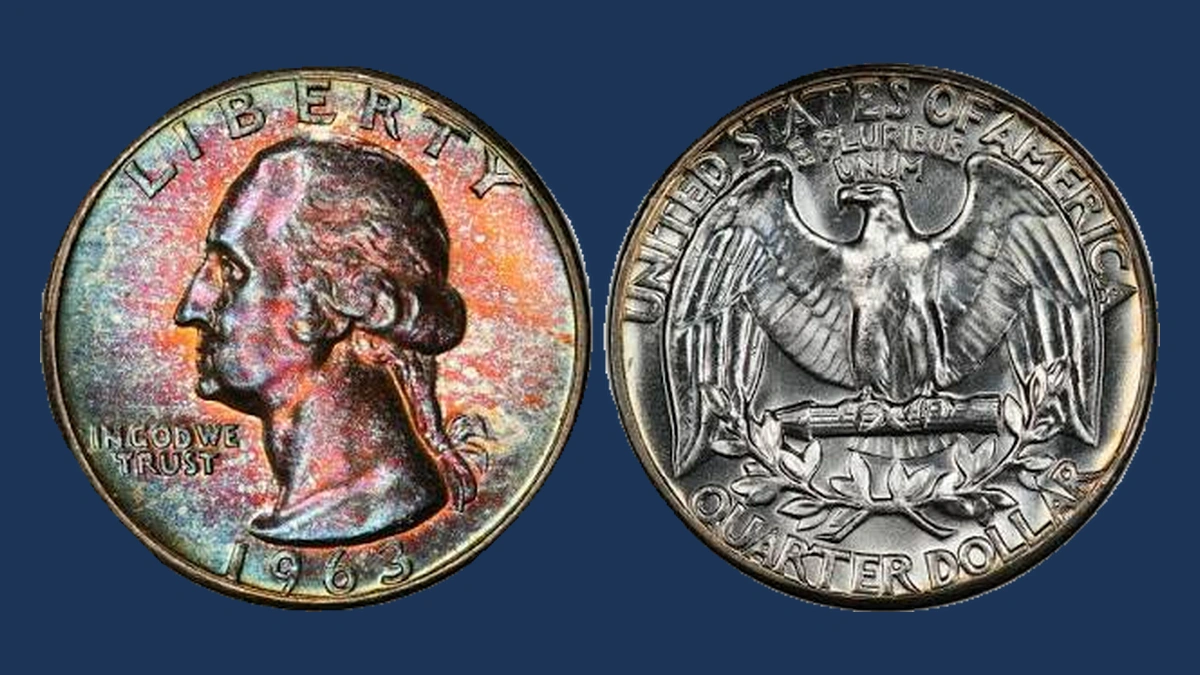
The space between E and S in STATES can reveal a different reverse design. Type B tools carry details associated with Proofs, specially made collector coins, but some were used to make ordinary 1963 quarters.
That use on an ordinary Philadelphia coin creates the collectible variety FS-901. Type B is expected on normal Proof quarters and is not itself an error there.
The related FS-901a version has a visible space between an arrow and the neighboring leaf. It needs that additional comparison rather than being identified from the wider letter spacing alone.
Estimated Value
A Type B coin graded NGC MS67 brought $1,020 in July 2021, as recorded by PCGS. A different PCGS MS66 example with CAC approval sold for $167.50 in January 2020.
For ordinary-strike Type B varieties, estimate $25–$1,500. Exceptional condition can account for much of a high whole-coin price.
An ordinary Proof with the same reverse design does not acquire that premium merely because its E and S are separated.
How to Identify
First decide whether the coin is an ordinary strike or a Proof made for collectors. Use its certified description when available, because reflective surfaces alone can mislead.
Then inspect STATES with a magnifier. Compare the gap between E and S with a normal Type A reverse photographed at the same scale.
Look at the feathers and nearby leaf shapes as supporting design differences. A scrape between the letters should not create a convincing match across these separate areas.
For FS-901a, examine the arrow beside its neighboring leaf closely enough to see the distinct space. The same general Type B photograph cannot establish that smaller difference.
The correct combination is an ordinary strike carrying the matching Type B reverse design.
9. 1963 Washington Quarter Wrong Penny, Dime, or Nickel Blank
A copper-colored miniature quarter may have started as a penny blank. Philadelphia and Denver examples are documented, including separate cleaned and naturally brown pieces.
A silver dime blank creates another small quarter, but with silver color and much less metal than the proper quarter blank. The documented Denver dime-blank example weighs 2.5 g.
A nickel-blank type also appears in a year report, without an identified certified specimen. These are blank errors rather than coins carrying two finished designs; leftover Roosevelt detail would instead point to the overstruck-dime mechanism described below.
Estimated Value
A Philadelphia penny-blank NGC MS65 Brown coin sold for $1,116.25 in October 2016. A separate cleaned PCGS example weighing 3.09 g brought $900 in February 2026.
The Philadelphia silver-dime-blank PCGS AU55 example sold for $675.63 in October 2016. Estimate $300–$3,000 across identified wrong blanks.
The nickel-blank portion remains conditional on authenticating that identity. Cleaning, readable dates, and the amount of surviving quarter design all affect the comparison.
How to Identify
Use the remaining quarter letters to check the design, then record weight and width if the coin is loose. Penny blanks start near 3.11 g and 19.05 mm; silver dime blanks near 2.50 g and 17.91 mm.
The Denver penny example actually weighs 3.03 g, while the cleaned Philadelphia coin is 3.09 g. Do not swap those measurements between pieces.
A proposed nickel blank needs the correct copper-nickel alloy and a normal starting weight near 5 g. Have a specialist examine the metal instead of relying on color alone.
Under magnification, inspect the edge for grinding that could have reduced a normal quarter. Missing outer letters should follow the original small blank, not a cut through finished design.
10. 1963 Washington Quarter Doubled Dies on Ordinary and Proof Coins
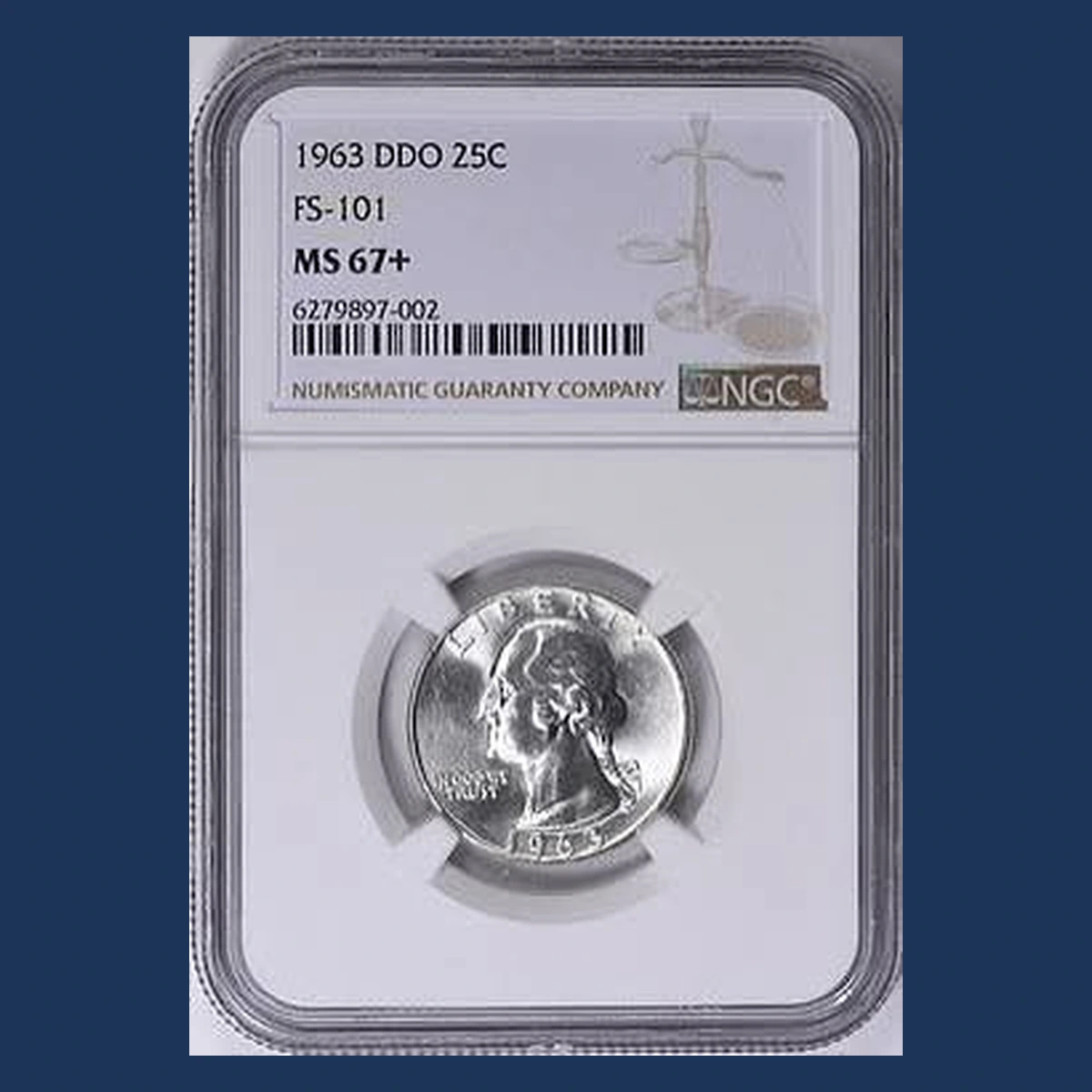
The motto or date can carry extra outlines even when the coin received only one strike. A doubled die is a stamping tool whose own design was doubled before it touched any coin.
The 1963 listings include Philadelphia, Denver, and Proof patterns. Proof means a specially made collector coin, and its variety numbers cannot automatically be exchanged with ordinary-strike numbers.
Philadelphia FS-102 affects both faces, while FS-103 includes the date’s 6 and LIBERTY’s R. Other patterns affect reverse words or branches, ranging from small separations to stronger features spread across several details.
Estimated Value
PCGS records a Philadelphia FS-102, doubled on both sides and graded MS66, at $550 in August 2014. That is one whole-coin price for the combined variety.
Use an estimated $25–$3,000 across identified 1963 doubled dies, with finish, mint, exact pattern, and grade assessed together. Faint varieties generally sit below bold, attractive examples.
The large range does not mean every thick letter belongs to a rare pattern or deserves a four-figure price.
How to Identify
For FS-103, compare the date’s 6 with the lower-right leg of LIBERTY’s R under a 10× magnifier. Both areas matter; a mark near the 6 alone is not enough.
FS-102 takes you to both faces: inspect front lettering and then the repeated outlines in reverse words. Denver varieties require the correct D below the wreath, not a Philadelphia photograph.
For a Proof, select a Proof-specific comparison before studying its motto or branches. The reported Proof FS-101 label does not establish that it shares the ordinary FS-101 pattern.
Flat shelves from mechanical doubling can imitate extra edges. Match the locations and shapes of several raised, separated details to one correct variety photograph.
11. 1963 Washington Quarter Struck Over a Finished 1963 Dime
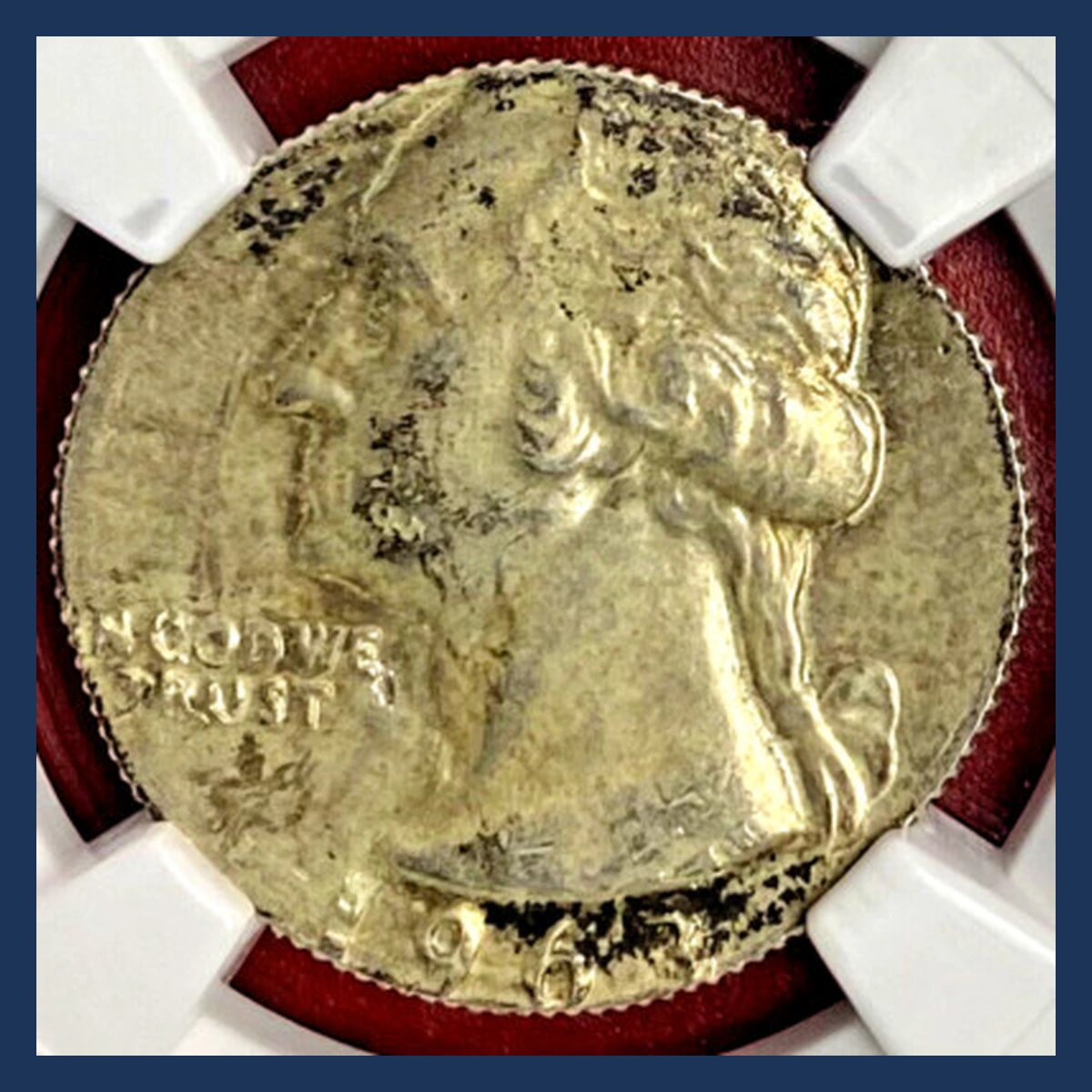
Roosevelt’s chin has no place in Washington’s normal quarter design. Its survival on this piece reveals that a finished dime entered the quarter press and received another denomination’s images.
The quarter date remains bold, while parts of the dime date lie on the crest of the eagle’s left wing as viewed. Much of the original dime design was flattened by the later strike.
This is different from striking an unused dime blank. Both begin with smaller metal, but only the finished dime already carries Roosevelt and a date that can survive beneath the quarter design.
Estimated Value
The NGC MS62 overstruck dime sold for $2,115 on September 5, 2014. Estimate $1,200–$4,000 for a similarly clear and authenticated 1963 quarter-over-dime example.
The readable quarter date and surviving dime details make the sequence easier to explain. Cleaning, wear, or marks that obscure those features can reduce interest.
A different piece with an unreadable quarter date cannot be assigned to 1963 simply because its original dime bears that year.
How to Identify
The bold date belonging to the quarter design establishes its year first. Do not use the earlier dime’s date as a substitute when the quarter date cannot be read.
Now inspect the crest of the eagle’s left wing as you view it. The older dime digits survive there in the documented example.
Use a magnifier to locate the remains of Roosevelt’s chin among the overlapping designs. Those fragments distinguish a finished dime from a previously blank piece of dime metal.
A silver dime normally starts at 2.50 g and 17.91 mm, though the later strike can spread its outline.
The recognizable Roosevelt remnant beside the quarter design provides the direct visual check for two different denominations on one coin.
Conclusion
The estimated $20–$4,000 range includes modest surface and tool faults as well as dramatic wrong-blank and overstruck coins. A high price depends on the exact feature, condition, and identity of the piece.
Check the reverse for a D, then separate ordinary coins from specially made Proofs. A matching design detail is useful evidence; a catalog number or an unusual color by itself is not.