1980 Quarter Error List with Pictures

A missing corner helped a 1980-P quarter bring $204 in June 2023. The gap began in the blank before Washington and the eagle were struck onto it.
That is one way to recognize 1980 quarter errors, but the edge is not the only place to look. Extra letter outlines, missing metal layers, and repeated designs leave different clues.
Estimated values in this guide run from $5 to $700. Read on to compare the visible signs and the prices behind them.
1. 1980 Washington Quarter Grease-Blocked Design
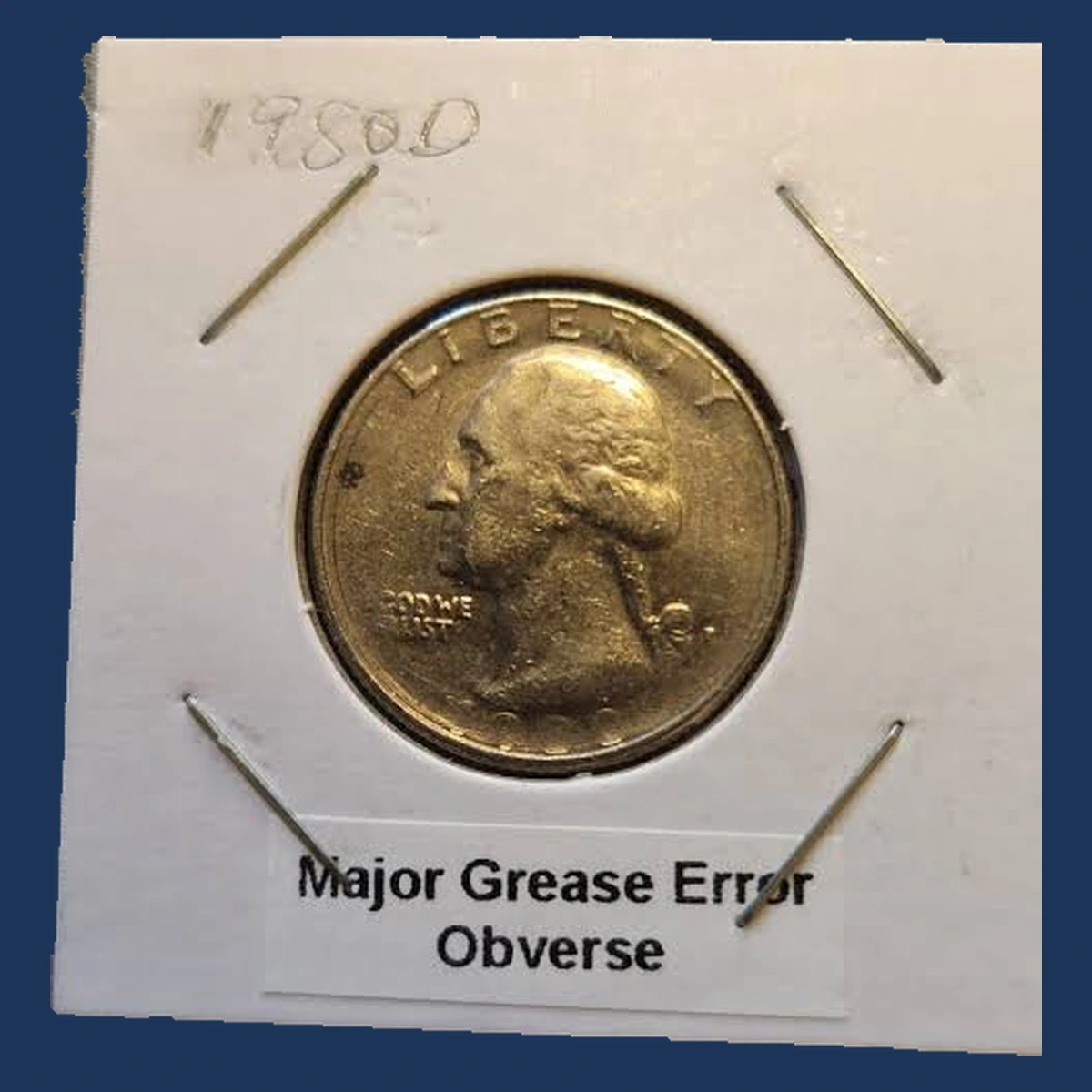
A letter may seem to fade into the background while nearby detail remains sharply formed. Grease trapped in a stamping tool can fill a recess that should create part of the raised design.
A Philadelphia example was graded ANACS MS60 and described as struck through grease. That grade means no circulation wear, although the surfaces can have many marks.
The exact blocked area has not been specified for this coin. A weak P or faint date on another quarter therefore needs separate examination rather than being assumed to match it.
Estimated Value
Allow an estimated $10–$100 for a recognizable grease-blocked design on a 1980 quarter. A clearly missing feature surrounded by sharp detail can be easier to sell than a mildly weak letter.
The surrounding surface matters as much as the missing detail. Heavy scratches or ordinary wear can hide the evidence, while an otherwise clean coin lets a buyer see how the blockage interrupted the strike.
How to Identify
Philadelphia began putting a P on regular quarters in 1980, so absence of that letter needs an explanation. Before calling it grease-filled, compare its surface with the date and nearby portrait under a magnifier.
If Washington’s cheek, hair, and all the letters are similarly flattened, ordinary wear may explain more than a local blockage. A scraped-away letter may instead leave lines cutting through the background where finished metal was removed.
Photograph the transition from a sharp letter to a weak one with side lighting, without cleaning the surface. That clear local change helps reveal a blocked detail; widespread wear or removal scratches would point toward a different cause.
2. 1980 Washington Quarter Partial Collar and Tilted Edge Step
The edge can look like a narrow wheel riding on a wider wheel. This happens when only part of the blank enters the collar, the ring that normally restrains its outer edge.
A Philadelphia ANACS MS63 example is described as a tilted partial collar. The blank’s tilt changes the height of the step as it travels around the coin.
Another Philadelphia example was graded ICG MS63 as a partial collar without a stated tilt. Its simpler label should not be read as proof that it has the same uneven step.
Estimated Value
An estimated $15–$150 covers identifiable partial collars of modest to clear size. A large, easily photographed step can attract more interest than a tiny ridge hidden at one edge.
The ANACS tilted example and ICG example should be valued as separate coins. Neither grade alone describes how dramatic the edge looks, and an unusual outline loses appeal if later impacts have crushed the original step.
How to Identify
Edge photographs are especially useful here. Turn a loose coin slowly under a lamp so you can follow the boundary between the restrained and expanded portions.
On a tilted example, that boundary changes height around the edge. A level step may fit a different partial collar without the same tilt.
Use a magnifier to see where normal grooves stop and smoother expanded metal begins. Compare that shape with the copper-colored stripe of an ordinary clad quarter, which is a change of metal rather than height.
Do not remove a certified coin from its holder just to inspect the edge. Use clear edge images to confirm the physical step and, for the tilted example, its changing height.
3. 1980 Washington Quarter Reported Repunched D Mintmark
Parts of an earlier D can survive beside a later D when a mintmark is punched into the tool twice. The stamping tool then puts those combined shapes onto the coins it makes.
Year guides report this type of mintmark on 1980 Denver quarters. They describe extra outlines in different directions, but those claims do not yet identify two separately established varieties.
A thick-looking D alone is not enough. Movement during striking and small marks beside the letter can also create an apparent extra edge, especially in a strongly enlarged photograph.
Estimated Value
Use an estimated $20–$150 for a confirmed repunched D with readable letter remnants. The lower part fits subtle examples, while stronger separation on a clean coin can support more interest.
Extra marks do not become more valuable simply because several directions are named. What matters is whether they form a convincing earlier D and remain visible without relying on glare, heavy enlargement, or a seller’s drawn arrows.
How to Identify
Find the D to the right of Washington’s hair ribbon. Keep that small letter upright while examining it with a 10× magnifier, because rotating a close-up can make direction claims confusing.
First locate the main upright and rounded side. Then ask whether the extra raised parts could belong to another D in a consistent position.
A random lump does not answer that question. Move the lamp and watch whether the apparent second outline remains raised or turns out to be a low, flat shelf.
Compare the complete shape with a clearly identified 1980 quarter example before assigning a variety name. The useful evidence is connected letter-shaped remnants, not thickness by itself.
4. 1980 Washington Quarter Broadstrike
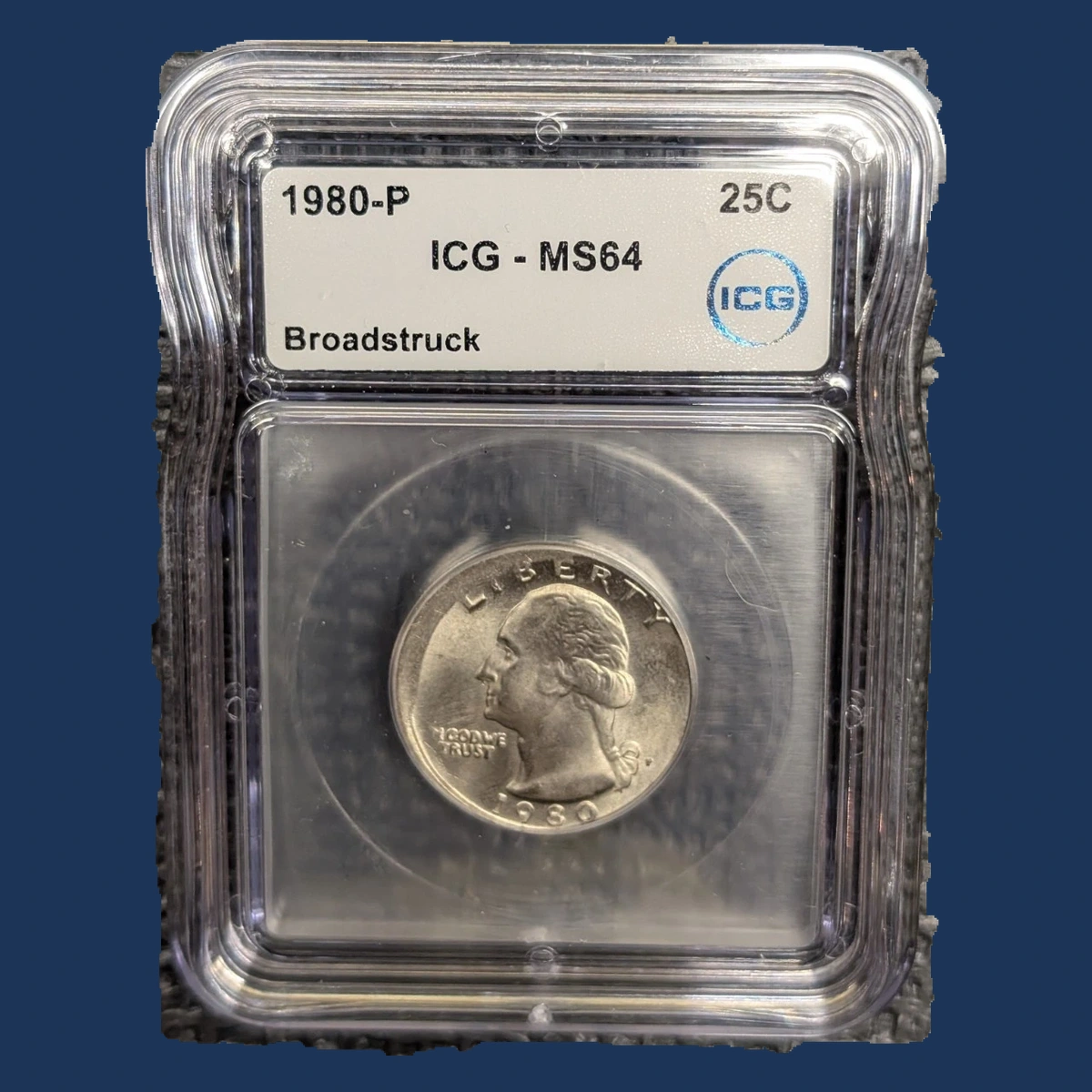
The entire design can remain visible even though the coin has spread wider than it should. This is a broadstrike, made when the collar fails to hold the metal within its normal boundary.
A 1980-P NGC MS65 example appeared in a three-coin auction lot. The other two broadstrikes were dated 1986-D and 1996-P, so they are separate coins with their own shapes.
Denver broadstrikes are also reported in year guides. A wide rim on an ordinary quarter still needs checking, since later flattening can enlarge a coin without a minting error.
Estimated Value
The three-coin lot containing the 1980-P MS65 broadstrike brought $74 total in November 2015. That amount purchased all three dates rather than the 1980 coin alone.
Estimate $20–$150 for an individual 1980 broadstrike with clear original expansion. Complete outer letters and an attractive outline are useful selling points, while flattened designs or damage around the edge can make the cause much harder to judge.
How to Identify
Lay a loose coin beside a normal quarter without pressing their surfaces together. Compare the outlines first, then measure the unusual coin with calipers; normal diameter is 24.3 mm.
Width is only a starting point. Trace the outer lettering on both sides to confirm that the full design is on the metal.
An off-center strike instead loses some design beyond the blank. Do not decide between them from the size of a blank border alone.
Check the expanded edge under a magnifier for grinding or hammered metal. Flattening after minting can widen a finished coin and squash its raised details.
Naturally struck details continuing into a complete design inside the expanded outline support a broadstrike.
5. 1980 Washington Quarter Doubled Design on the Front or Back
Fine extra outlines can appear on several letters when a die, or stamping tool, already carries a doubled design. This differs from a coin receiving two separate blows in different positions.
The Denver reverse variety DDR-001 shows slight separation in UNITED STATES OF AMERICA. Its E PLURIBUS UNUM motto has weaker doubling, which can be harder to see.
A separate Philadelphia front-doubling report concerns the date and front motto, but needs a matching confirmed example. The known Denver back pattern does not identify that reported Philadelphia front variety.
Estimated Value
For the subtle Denver reverse variety, estimate $20–$150 according to wear and visibility. A correctly identified Philadelphia front-doubled example could fall around $20–$200, giving a combined estimate of $20–$200.
The Philadelphia range is conditional on genuine doubled-tool features. It should not be applied to a flat shelf produced during striking, and neither range assumes an unverified catalog number carries an extra premium.
How to Identify
Turn a Denver coin to the eagle and examine UNITED STATES OF AMERICA with a 10× magnifier. The DDR-001 photographs show the slight separated outlines to compare.
Move inward to E PLURIBUS UNUM only after locating that stronger lettering pattern. Its weaker doubling may disappear under wear or poor lighting, so several matching letters are more useful than one bright edge.
For the Philadelphia report, return to the front date and IN GOD WE TRUST rather than borrowing the Denver reverse pattern. DOLLAR is on the back and cannot establish front doubling; look for matching raised outlines or divided corners on the correct face.
6. 1980 Washington Quarter Raised Cracks and Rim Breaks
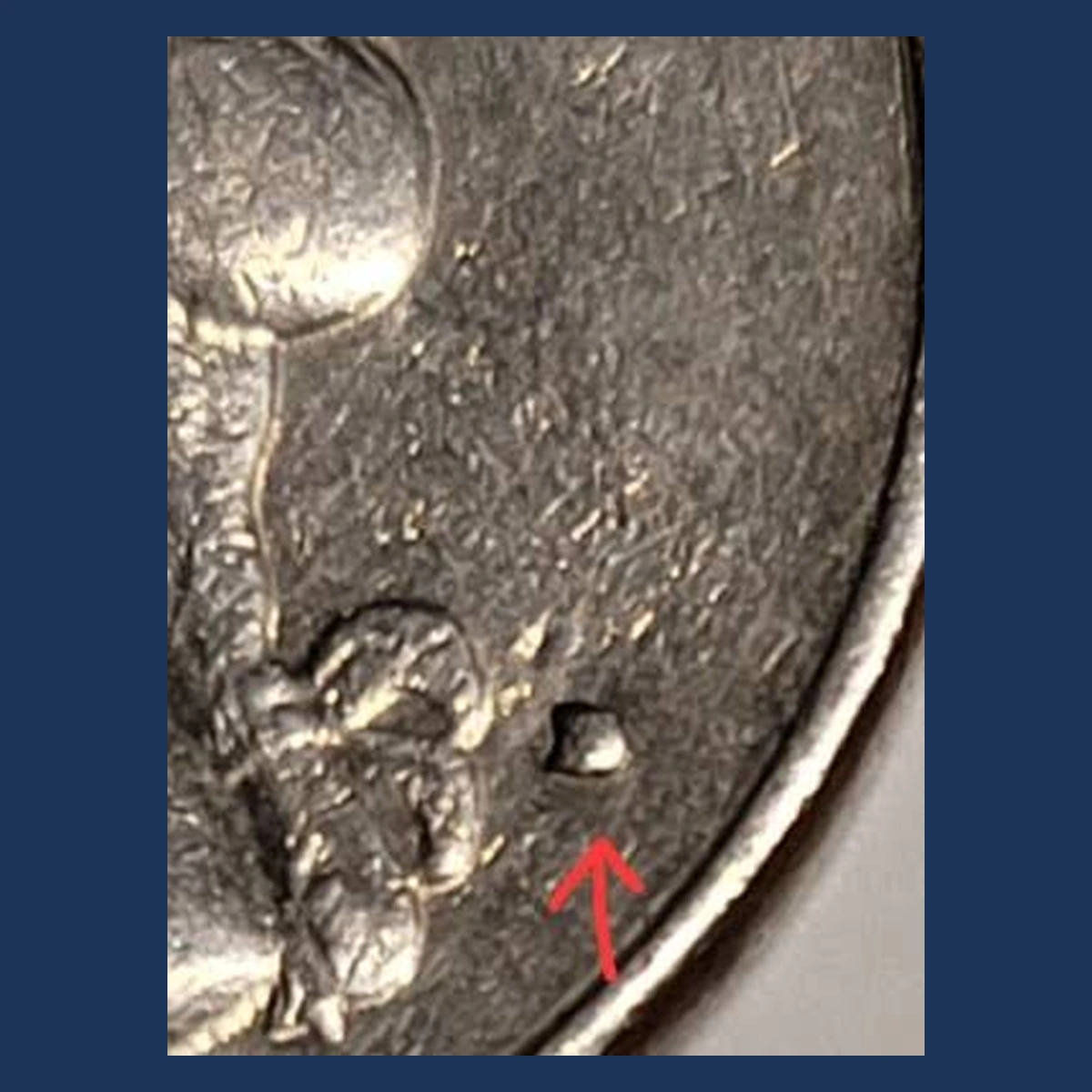
A thin raised line may cross the design, while a larger rounded patch can replace detail beside the rim. Both can result from a cracked or broken stamping tool.
Metal pressed into a narrow tool crack forms a raised line. When a larger piece breaks away at the edge, the resulting rim-connected lump is called a cud.
Philadelphia and Denver examples are reported for 1980, but their exact locations need checking on each coin. A partly dated quarter assigned only to 1980–1998 is not automatically an example from this year.
Estimated Value
Estimate $5–$40 for a small clear crack and $40–$250 for a substantial, identified rim break. The overall range is $5–$250.
An obvious mound replacing part of the design tends to draw more attention than a fine line requiring strong enlargement. Size is not the only factor: the date must establish 1980, and the raised area must be original rather than squeezed metal from a later impact.
How to Identify
For a suspected cud, begin where the mound meets the rim. Normal detail should give way to a raised area where the broken tool could no longer shape the metal.
Inspect nearby letters for crushing. A later blow against the edge can push metal inward and damage those already-struck details.
A narrow line needs a different test: move the lamp across it while viewing through a magnifier. The actual crack line should be raised, rather than a scratch with a small ridge along one side.
Keep the whole coin beside the close-up to avoid mistaking an undated example for this year.
All four date digits must read 1980, with the raised line or rim-connected mound visible on that same coin.
7. 1980 Washington Quarter Single and Double Clipped Blanks
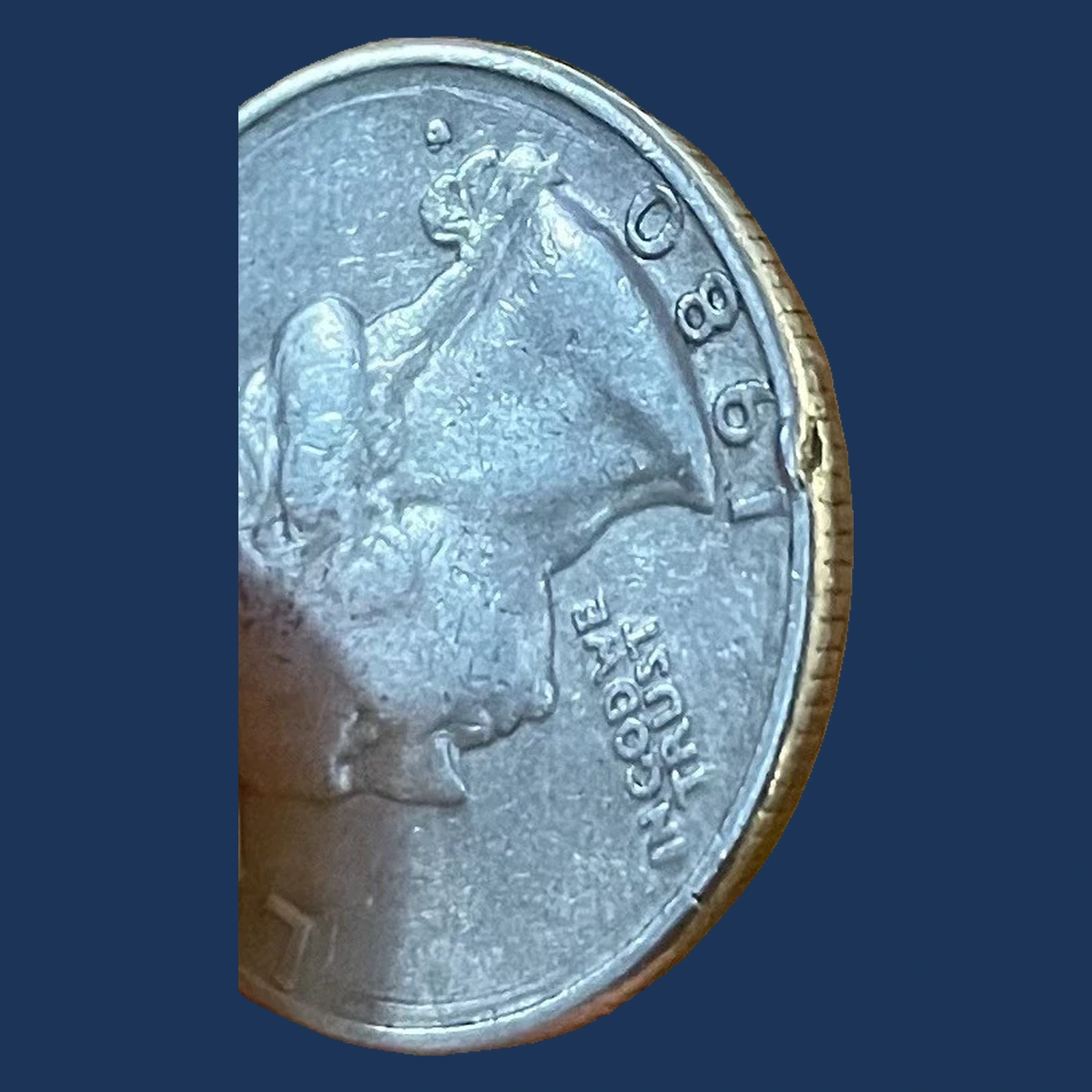
A missing section can begin before the blank ever reaches the coin press. If the blank is cut from an incomplete part of the strip, its edge cannot form a full circle.
A Philadelphia corner-clip example was graded NGC MS65. Another Philadelphia quarter was reported with two clips inside a 1980 mint set, although collector agreement is not professional authentication.
The two-gap report does not mean every clipped quarter has that shape. Curved, straight, and corner gaps need their own edge checks to distinguish original missing metal from later cutting.
Estimated Value
The NGC MS65 corner clip sold for $204 in June 2023. Estimate $20–$300 across genuine single- and multiple-clip examples.
A larger, clear gap with undamaged surrounding design can be more appealing than several tiny missing pieces. Being found in a mint set is useful background, but the price still depends on the actual gaps, the coin’s condition, and whether those edges formed before striking.
How to Identify
Leave the reported mint-set coin in its packaging while examining both gaps through a magnifier. Look at each missing section independently rather than accepting two gaps as automatic proof of a double clip.
At either end, note how the rim approaches the missing metal. A weak area on the opposite rim can also support a blank-cutting error.
That weakness is not always equally strong. Its absence should lead to closer examination of the gap, not an instant decision.
On the corner-clip example, follow the angled missing portion and nearby letters. Saw marks, fresh cut surfaces, or design bent by shears point toward later alteration.
The important connection is original struck detail meeting an edge that was already incomplete.
8. 1980 Washington Quarter Off-Center Strike
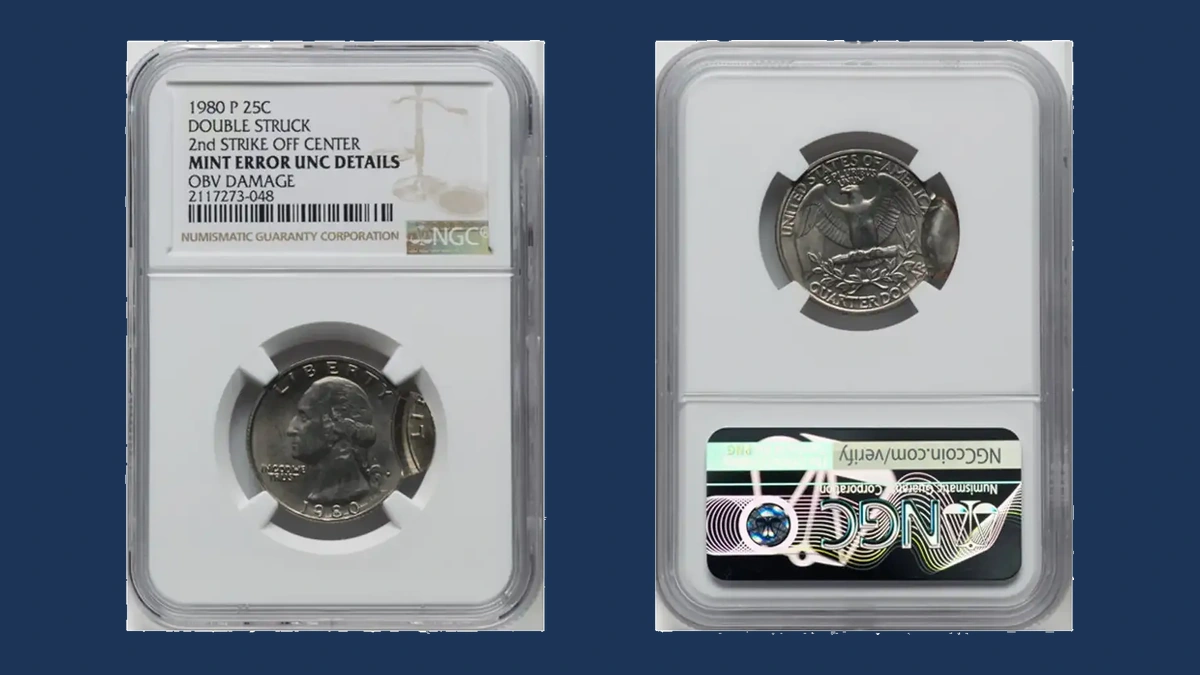
An off-center strike leaves part of the quarter’s picture outside the metal instead of placing everything inside a wider coin. The blank was in the wrong position when the tools came together.
One Philadelphia example is graded ANACS AU55 and described as 10% off-center toward ten o’clock. AU55 indicates light circulation wear on a coin with much of its detail remaining.
Other Philadelphia off-center coins exist, but their directions and percentages can differ. The ten-o’clock description belongs to that identified example and should not be applied to every unevenly struck 1980 quarter.
Estimated Value
For identifiable 1980 off-center quarters, estimate $25–$350. A small displacement with ordinary wear generally belongs below a dramatic error that preserves the full year and mintmark.
The documented 10% AU55 coin offers a useful appearance comparison rather than a price guarantee. Larger blank areas can make the error easier to see, but lost dates, scratches, and damage to the remaining portrait can limit what buyers will pay.
How to Identify
Locate the missing design before the blank crescent. A slightly off-center portrait with all outer lettering intact may have another explanation, especially if the reverse remains centered.
For the identified Philadelphia coin, orient Washington upright and compare the displacement toward ten o’clock. Turn it over and check that the reverse also shows the blank was misplaced.
The bare area deserves a close look through a magnifier. Scraping can erase finished details but usually leaves marks crossing the surface.
Weighing a loose coin can help detect metal removal, although a genuine off-center strike can still weigh the normal 5.67 g. The clearest evidence is missing design on both faces beside original unstruck metal.
9. 1980 Washington Quarter Missing Outer Metal Layer
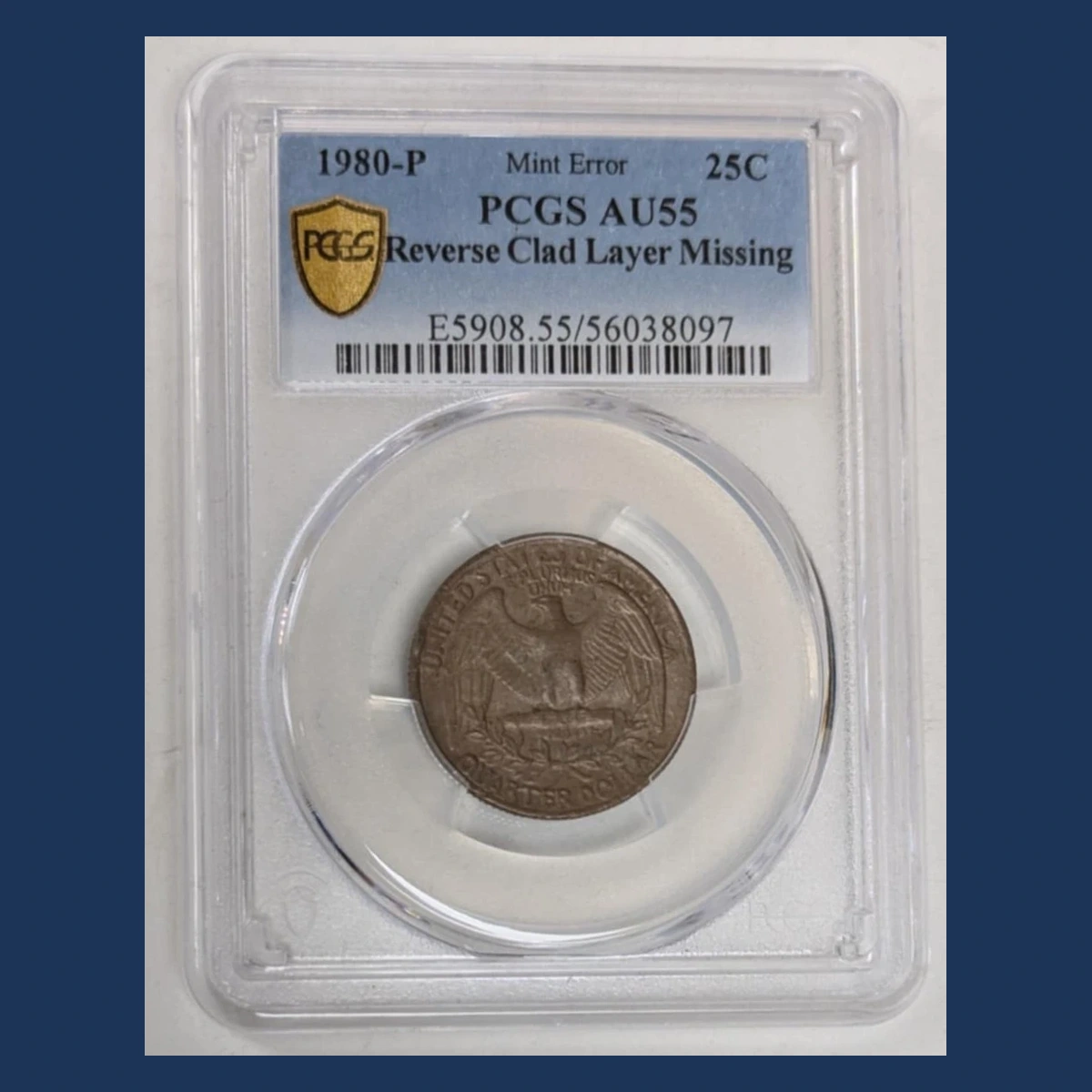
Copper showing across a face can mean that a silvery outer layer is absent. A normal quarter sandwiches a copper center between two copper-nickel layers.
Two Philadelphia missing-back examples, graded NGC MS62 and MS65, each have a recorded weight of 4.7 g. A separate missing-front coin graded NGC MS64 also weighs 4.7 g.
Another Philadelphia report describes only partial loss, with some outer metal remaining. Its face and measured weight are not established, so it should not inherit the full-face examples’ measurements or appearance just because the year matches.
Estimated Value
The NGC MS64 missing-front coin brought $104 in January 2010. The MS62 missing-back record lists $56 in January 2015, but notes that the owner repurchased it.
Treat that repurchase separately from an ordinary sale to another collector. An estimated $50–$350 covers identifiable partial and full-face losses in a range of conditions.
Clear exposed copper, remaining layer edges, and limited damage help a buyer understand what is missing.
How to Identify
A scale reading can be useful before judging a copper-colored face. Normal weight is 5.67 g, while the specific full-face examples described here each weigh 4.7 g.
Do not apply that exact result to every missing-layer coin. The amount removed, wear, and which layer remains can change the measured mass.
Now inspect the exposed surface and edge with a magnifier. Stain changes color without necessarily removing metal, while grinding can cut through already-struck details.
For partial loss, follow the boundary between bare copper and the surviving outer layer without peeling anything back. Even the specially made S Proof collector quarters of 1980 are clad, so confirm an actual layer boundary rather than treating color alone as an error.
10. 1980 Washington Quarter Double Strike with a Displaced Second Impression
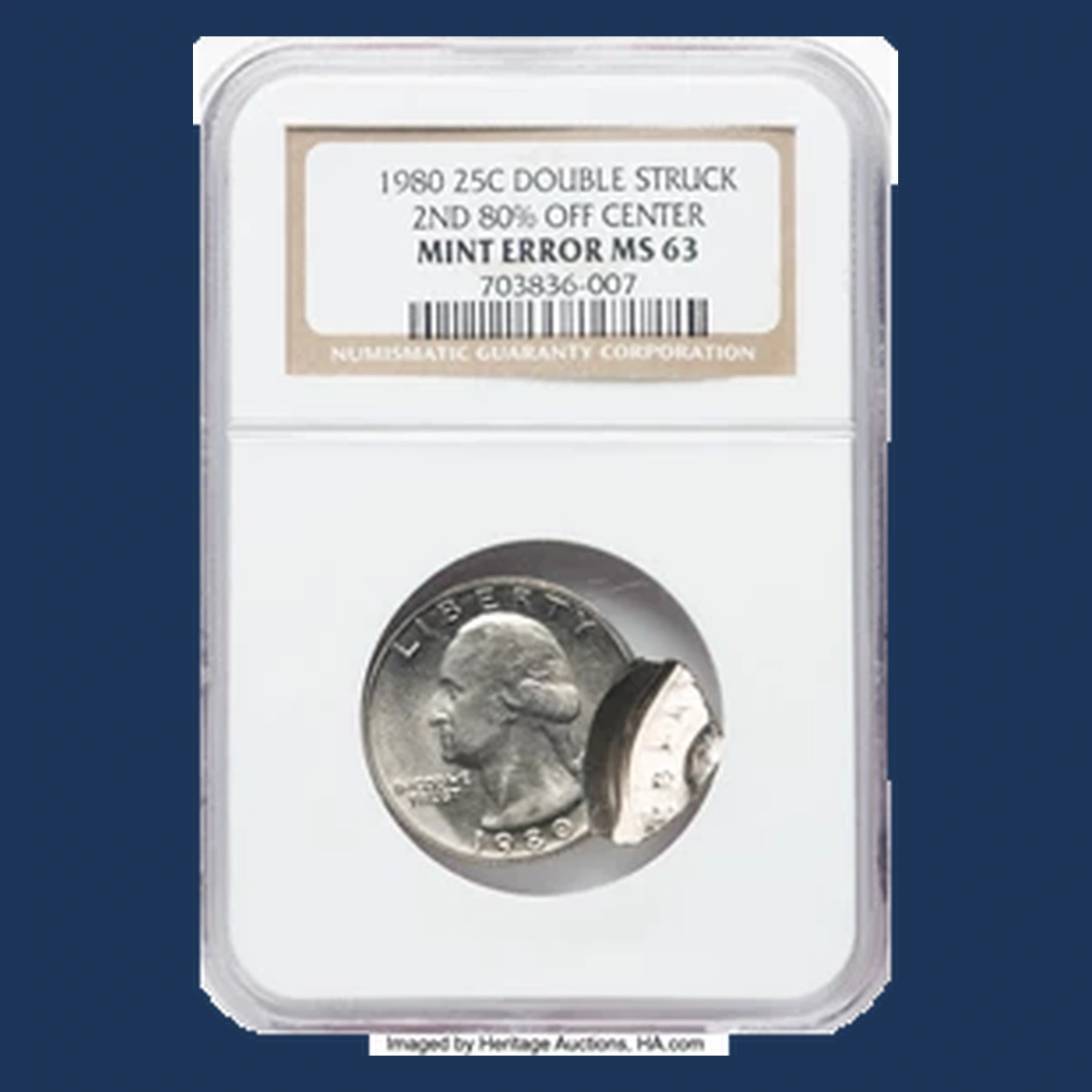
A second set of letters near the edge can reveal that a finished quarter failed to leave the press. When it was hit again in a different position, part of the new design overlapped the first.
An NGC MS63 example is described as having its second strike 80% off-center. Its mintmark is not specified in the available description.
A separate older Philadelphia listing places a second strike toward seven o’clock. That direction belongs to the Philadelphia example rather than automatically describing the NGC coin, whose large displacement needs its own photographs.
Estimated Value
A working estimate of $100–$700 suits clearly identified displaced double strikes. Two readable dates or recognizable portrait fragments can make the sequence easier to explain and more attractive to a collector.
The second strike’s percentage is only one factor. A very large displacement can leave little readable detail, while a less extreme overlap may show the two blows clearly.
Compare the surviving design and condition before relying on the number alone.
How to Identify
Try to connect the extra letters with one another, as if rebuilding a second picture. A true second strike should produce related design fragments rather than a collection of unrelated scratches.
Examine both faces under a magnifier to find where the first and second impressions overlap. Follow recognizable parts of Washington, the eagle, or the lettering through those crossings.
For the older Philadelphia example, compare the stated seven-o’clock direction with its own whole-coin image. Keep the unidentified mint of the NGC example separate.
Doubled-tool lettering normally stays close to the original characters instead of creating a widely moved whole design. Two connected designs in different positions provide the direct clue to repeated striking.
11. 1980 Washington Quarter Struck on a Nickel Blank
Outer letters may be cut short because the quarter design landed on a smaller five-cent blank. The metal also differs from a normal quarter: a nickel blank is solid copper-nickel rather than layered.
Philadelphia examples include an ANACS MS66 coin and NGC examples with recorded weights near 5 g. The MS66 grade describes an unworn coin with relatively few marks.
A Denver ANACS MS61 example is reported by year guides, but its actual weight needs checking. The existence of Philadelphia pieces means this error cannot be described as exclusive to Denver.
Estimated Value
A specialist offered the Philadelphia ANACS MS66 nickel-blank quarter for $325. That is an asking price rather than a recorded auction result.
For correctly identified examples, estimate $150–$700. The upper part favors attractive coins with readable dates and original edges.
The reported Denver MS61 piece needs its own condition judgment. Its lower grade should not be replaced with the cleaner Philadelphia example’s grade when comparing how much either coin might bring.
How to Identify
Can you read enough of the outer letters to recognize a quarter, even though the design runs beyond the edge? Photograph those letters with the date and mintmark before comparing this smaller coin with a nickel.
For a loose coin, a scale reading near the nickel standard of 5 g helps test the blank’s identity. Calipers can compare its width with the nickel blank’s starting 21.21 mm, though striking may spread the metal farther.
Inspect the original edge under a magnifier for uniform copper-nickel metal and check that it has not been trimmed. A visible copper center between silvery layers instead points away from an ordinary nickel blank, even when the outline seems small.
Conclusion
From fine raised cracks to a quarter design on a nickel blank, these errors have an estimated range of $5–$700. The strongest identification usually combines the unusual feature with the coin’s original surface and design.
Keep separate examples separate when comparing weight, grade, or price. A clear view of the edge or a few correctly matched letters can explain more than a dramatic error nickname.