1984 Quarter Error List with Pictures

An expanded outline helped a 1984-P quarter bring $169 in December 2025. The design remained on the coin, but the metal had spread beyond its usual boundary.
That broadstrike is one of several 1984 quarter errors worth understanding. Others involve a smaller blank, overlapping strikes, or missing design details.
Estimated values extend from $10 to $1,200. Explore the types below, with price examples and simple checks that explain what you are actually seeing.
1. 1984 Washington Quarter Reported “Spitting Eagle” Line
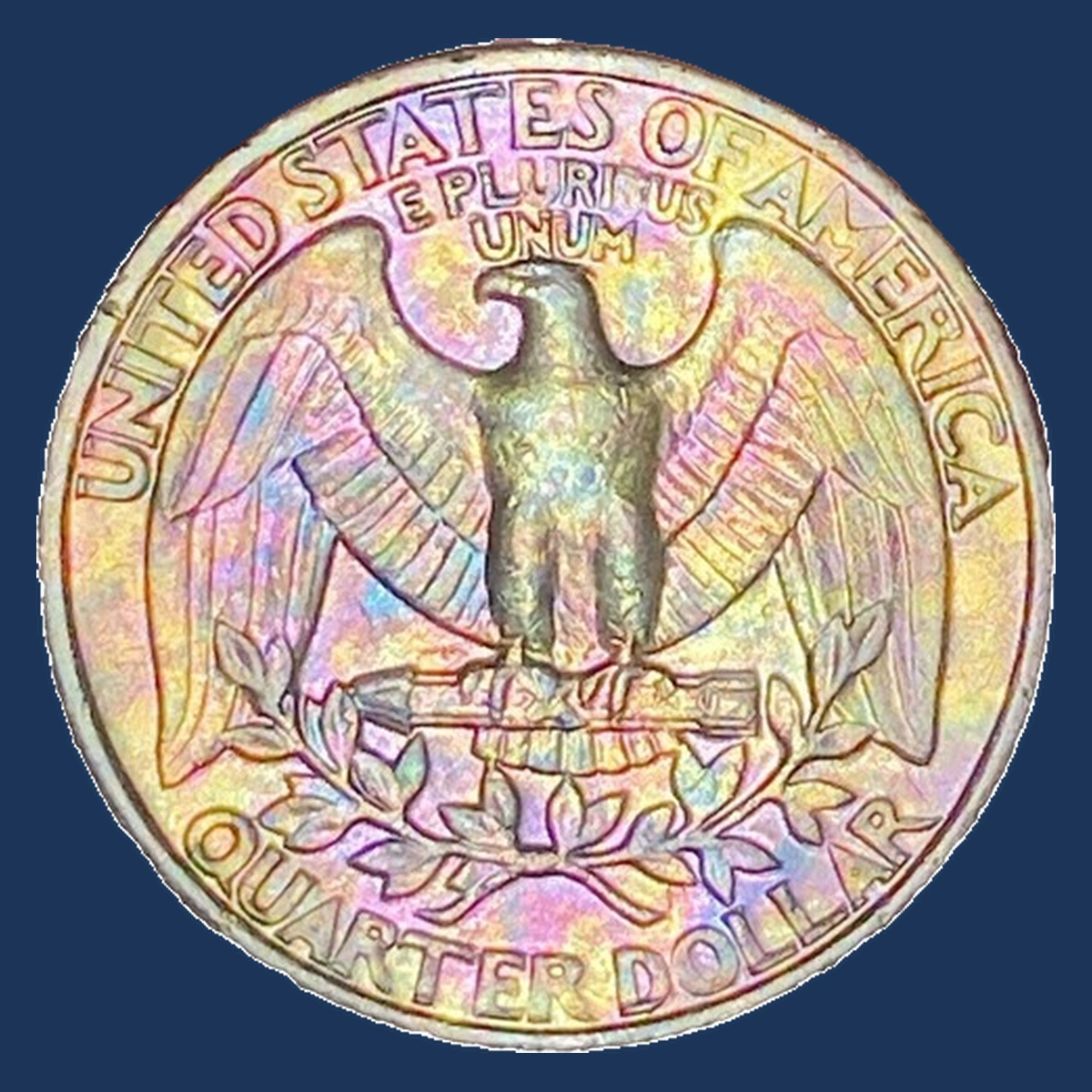
A line extending from the eagle’s beak can create the appearance of spitting. Reports apply that nickname to 1984 quarters, although they disagree about the mint and how the line formed.
A crack, damage to the stamping tool’s surface, and transferred clash marks are different possible explanations. The nickname alone cannot decide among them.
The well-known 1983-P Spitting Eagle is a different dated issue. Its photograph or variety label cannot establish a 1984 example, even if a line near the same part of the eagle looks similar at first glance.
Estimated Value
For a clear, identified Mint-made beak line on a 1984 quarter, use an estimated $10–$100. A long visible feature on an attractive coin may have more appeal than a faint mark hidden by wear.
The nickname is not a guarantee of rarity. A price attached to the 1983-P variety should not be transferred to 1984 without checking the actual line, its cause, and the condition of the coin being offered.
How to Identify
Date the coin before studying the eagle’s mouth. A close-up of the familiar 1983-P variety can look convincing while giving you the wrong comparison for a 1984 quarter.
With a magnifier and side lighting, follow the entire raised line from the beak outward. Decide whether it is actually a ridge, since a scratch cutting into the surface can create a misleading highlight.
Its broader shape may help explain whether a cracked tool or another tool mark caused it. Keep the whole reverse and the front date and mintmark in the same photo set; the first requirement is the reported raised beak line on the correctly identified 1984 coin.
2. 1984 Washington Quarter Grease-Filled Letters
Some letters can look shallow or disappear while neighboring detail remains sharp. Grease and debris inside the small recesses of a stamping tool can stop those letters from forming properly.
The 1984 Philadelphia report concerns local weakness in the motto, LIBERTY, or date. It does not establish one fixed combination of missing letters on every example.
A weak mintmark also needs its own examination. Wear, scraping, and a generally light strike can all reduce detail, so the absence of a P alone does not prove that grease filled its place in the tool.
Estimated Value
Estimate $10–$150 for a clearly identified grease-filled area. An obvious missing letter beside sharp lettering is often more appealing than a generally worn surface with many weak details.
The readability of the year matters because buyers need to know which issue carries the error. A faint date combined with heavy wear may make identification harder, while a clean coin with a localized blocked area can show the mistake without much explanation.
How to Identify
Read the strong letters first and notice how sharply they meet the background. Then compare the weak letter with that normal struck surface through a magnifier.
A patch cut or polished away after minting may show parallel scratches crossing the place where the letter should be. Grease filling does not require those removal marks.
Check Washington’s hair and cheek for ordinary wear as well. If exposed high points and all nearby letters are similarly flattened, a local blockage may not explain what you see.
For a missing P, inspect the area to the right of the hair ribbon without assigning a mint from absence alone. Localized weakness alongside sharp, untouched details is the useful comparison.
3. 1984 Washington Quarter Raised Breaks in LIBERTY
Extra metal between letters can resemble another letter, while a broken part of a stamping tool can leave an outlined area near the rim. These are two different-looking break reports for 1984.
The name BIE describes an I-like raised stroke between the B and E of LIBERTY. The reported quarter needs that position checked on the actual coin.
A separate Philadelphia example has a possible retained break near Y, where part of the damaged tool may have stayed in place. A mark on its date’s 4 was instead judged to be circulation damage.
Estimated Value
Estimate $10–$75 for a recognizable small letter-area break, and about $50–$200 for an identified retained rim break. The combined range is $10–$200.
Buyers need to see the raised stroke or outlined area clearly. A nickname or preliminary opinion does not set a firm premium by itself.
Damage to the date should be assessed separately. It must not be added to the price as another Mint-made error on the coin.
How to Identify
Spell out LIBERTY and find the space between B and E. That is where an I-like added stroke would give the BIE nickname its meaning.
Inspect the stroke through a magnifier for a natural connection with the coin’s surface. A separate deposit or squeezed edge of a letter would need another explanation.
For the Philadelphia Y-area report, move to the end of LIBERTY and follow the outline toward the rim. A retained break may keep some normal detail inside the affected area.
Leave the damaged 4 out of that comparison. Its circulation damage does not confirm the tool break.
Compare the raised or outlined area on the 1984 coin itself, rather than applying the cited 1985 example’s photograph or catalog number.
4. 1984 Washington Quarter Reported Repunched D Mintmark
A second curve or upright beside the D can suggest that the mintmark was punched into the stamping tool more than once. Coins made from that tool may preserve part of the earlier D beneath the later impression.
A Denver repunched-mintmark report exists for 1984, but its exact direction and catalog identity need to match the individual coin. It should not be assigned a ready-made variety number from another denomination.
A separate claim of D over P describes a different mintmark pairing. That claim does not establish the reported D over D.
Estimated Value
For a correctly identified D-over-D example, use an estimated $20–$200. Distinct remnants of the earlier letter on an unworn surface can be more appealing than a barely visible line on a worn mintmark.
The value depends on the shape being an actual repunching feature. A doubled-looking edge created during striking, or damage around the D, should not receive the same premium just because a listing uses the abbreviation RPM.
How to Identify
Ignore the price and variety label at first; inspect the D itself under a 10× magnifier. Look for parts that could belong to another D, such as a second curve joined to a matching upright.
Compare their position with the main letter. One random bump beside it is not enough to establish a second mintmark.
Move the light to distinguish raised letter remnants from a flat shelf or a scratch. Damage can change the apparent shape from one viewing angle to another.
Keep the 1984 date and quarter design visible in a wider photograph. A repunched D on a 1984 cent cannot supply the identification for this quarter.
5. 1984 Washington Quarter Reported Doubled Front Design
Letters in LIBERTY or the motto, and digits in 1984, can appear with extra outlines or divided corners. A true doubled die has those repeated features built into the stamping tool before it strikes a coin.
The 1984 reports concern front-side details rather than a second whole impression landing in a different place. The exact mint and pattern must be checked on the example itself.
No catalog number is supplied here for the reports. A familiar-looking thick letter cannot establish a particular doubled die without a matching set of features.
Estimated Value
An estimated $20–$250 fits an identified doubled-front example with visible separation. A strong pattern across several readable characters is easier to collect than one ambiguous thick edge.
Wear can erase small divided corners, and contact marks can hide them. This affects how convincingly the doubling can be shown.
A strong price needs a clear matching pattern. An enlarged photograph that merely makes ordinary lettering look unusual does not provide that evidence.
How to Identify
Compare a small group of adjacent letters through a 10× magnifier rather than enlarging one suspicious corner alone. Related extra outlines across several characters give you a pattern to test.
Examine the date next, keeping dents and contact marks separate from any repeated outlines. A flat, low shelf beside a normal letter is often movement during striking, so changing the light angle helps reveal its height.
Photograph the front mintmark with those details and choose a comparison showing the same date and denomination. The useful match is the entire group of repeated corners and outlines, not a thick letter that vaguely resembles a different 1984 coin.
6. 1984 Washington Quarter Broadstrike
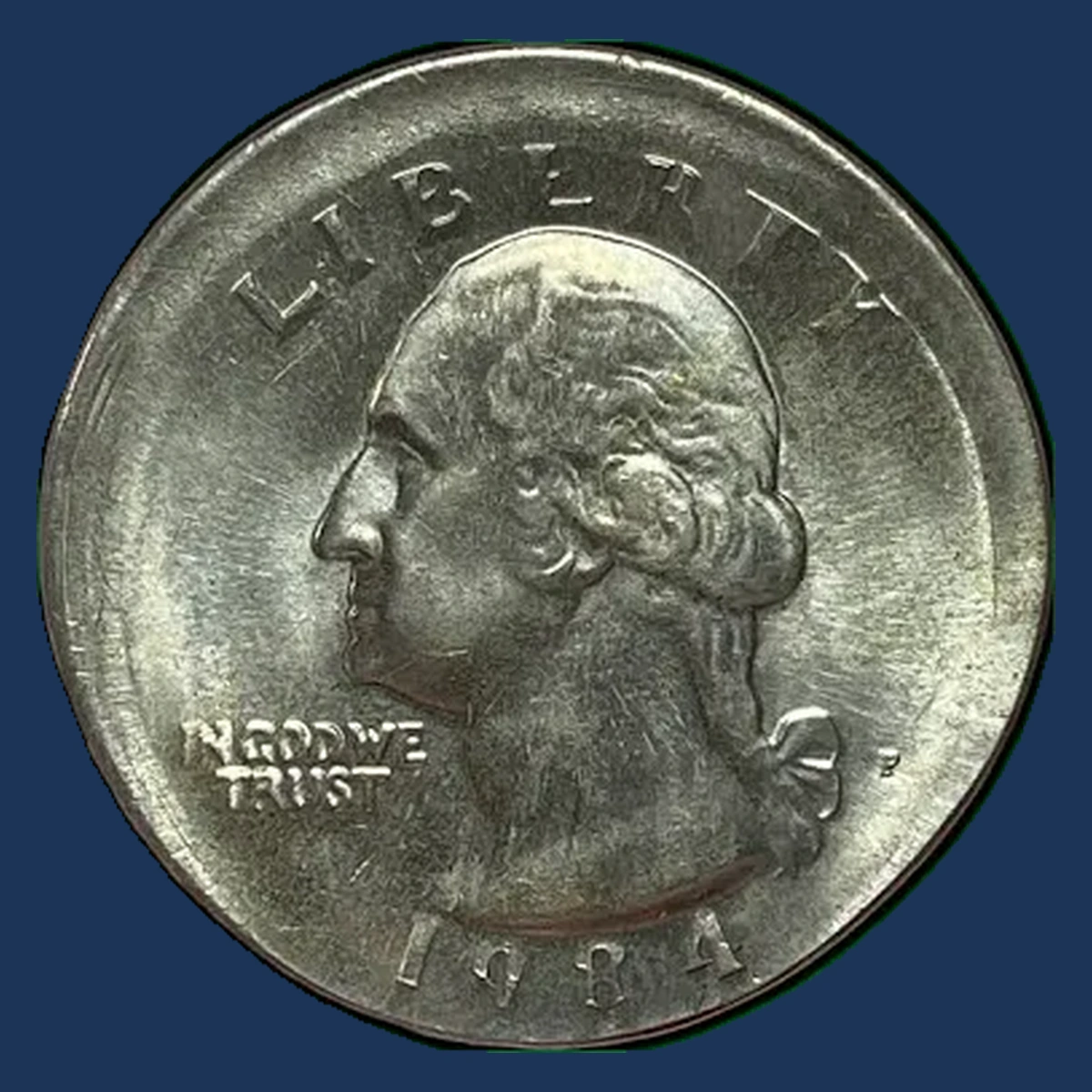
A wide border can develop when the metal is allowed to spread outside the collar during striking. The collar is the ring that normally limits the quarter’s width and gives its edge grooves.
A broadstruck coin retains its full design inside that larger outline. This differs from an off-center blank that misses part of the design entirely during the strike.
Philadelphia examples include a PCGS MS65 coin and a separate NGC MS66 coin sold alongside a 1979 quarter. These grades describe unworn coins, with the higher number allowing fewer surface marks.
Estimated Value
The PCGS MS65 broadstrike brought $169 in December 2025. A different 1984-P NGC MS66 broadstrike sold with a 1979 coin for $149 total in March 2024.
That two-coin price is not a separate $149 result for each piece. Estimate $20–$250 for a comparable 1984 broadstrike.
Greater expansion and a clear, complete design can increase interest. Surface marks and edge damage can reduce the appeal even when the border looks wide.
How to Identify
Follow the outside letters on both faces before measuring anything. If the whole design fits on the metal, a wider outline may be a broadstrike; missing design needs an off-center comparison.
Next, measure a loose coin across several directions with calipers. Normal quarter diameter is 24.3 mm, but an expanded coin may not be equally wide at every point.
Tilt the edge under a magnifier. Look for metal that spread during striking rather than a grooved edge ground smooth afterward.
Flattening a finished quarter can widen it too. That treatment can crush already-formed details or leave impact marks.
The complete picture should remain naturally struck inside the original expanded outline, without those signs of later flattening.
7. 1984 Washington Quarter Curved or Straight Clipped Blank
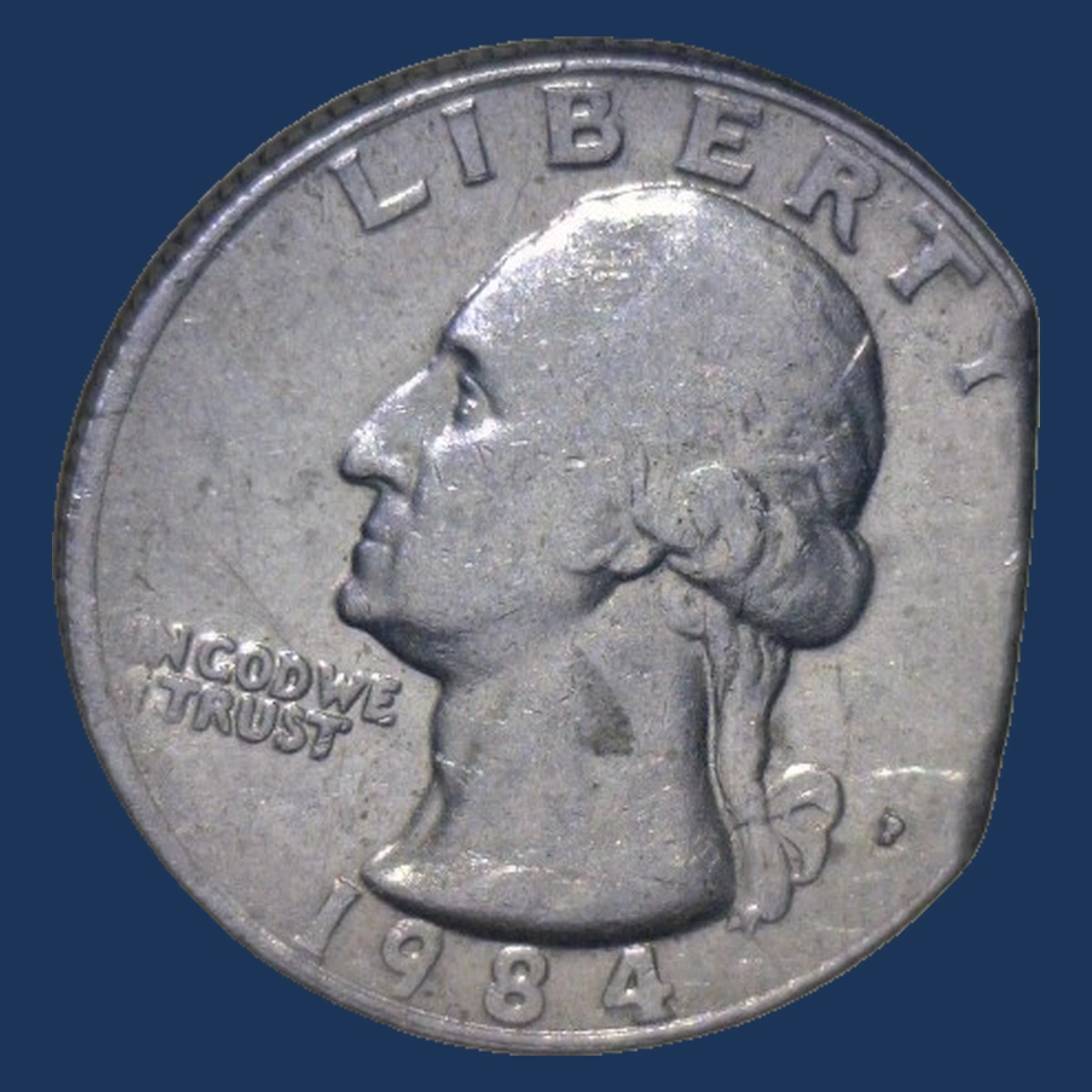
An incomplete blank can leave either a curved gap or a straight missing edge after it is struck. The shape depends on which part of the metal strip supplied the blank.
Both curved and straight clips are reported for 1984 quarters. The straight-edge example appeared in a collector discussion, where the weak opposite rim was also noted.
A gap does not need to be curved to be a Mint-made clip. Its surfaces and nearby design must instead show that the metal was already missing when the coin received its strike.
Estimated Value
A genuine clipped 1984 quarter can be estimated at $20–$350. Small gaps on worn coins usually have less visual appeal than larger, well-preserved incomplete outlines.
The straight-edge report needs its own condition judgment. Approval in a collector discussion is not a professional grade.
Neither a curved nor straight shape guarantees a high value. The gap’s original surfaces must support the claim that the metal was absent when the coin was struck.
How to Identify
A straight gap deserves the same careful edge inspection as a curved one. With a magnifier, study both ends and see how the rim and struck letters meet the missing metal.
Saw lines, filed surfaces, or letters bent by a cutting tool suggest a gap made after minting. A weak rim opposite the gap can support a genuine clip, although that feature is not equally strong on every example.
Keep the whole quarter visible beside any close-up when comparing the straight-edge report. Check that the date and eagle belong to the same photographed coin; the useful signs are untouched gap surfaces and neighboring design that formed while the metal was already missing.
8. 1984 Washington Quarter Missing or Separating Clad Layer
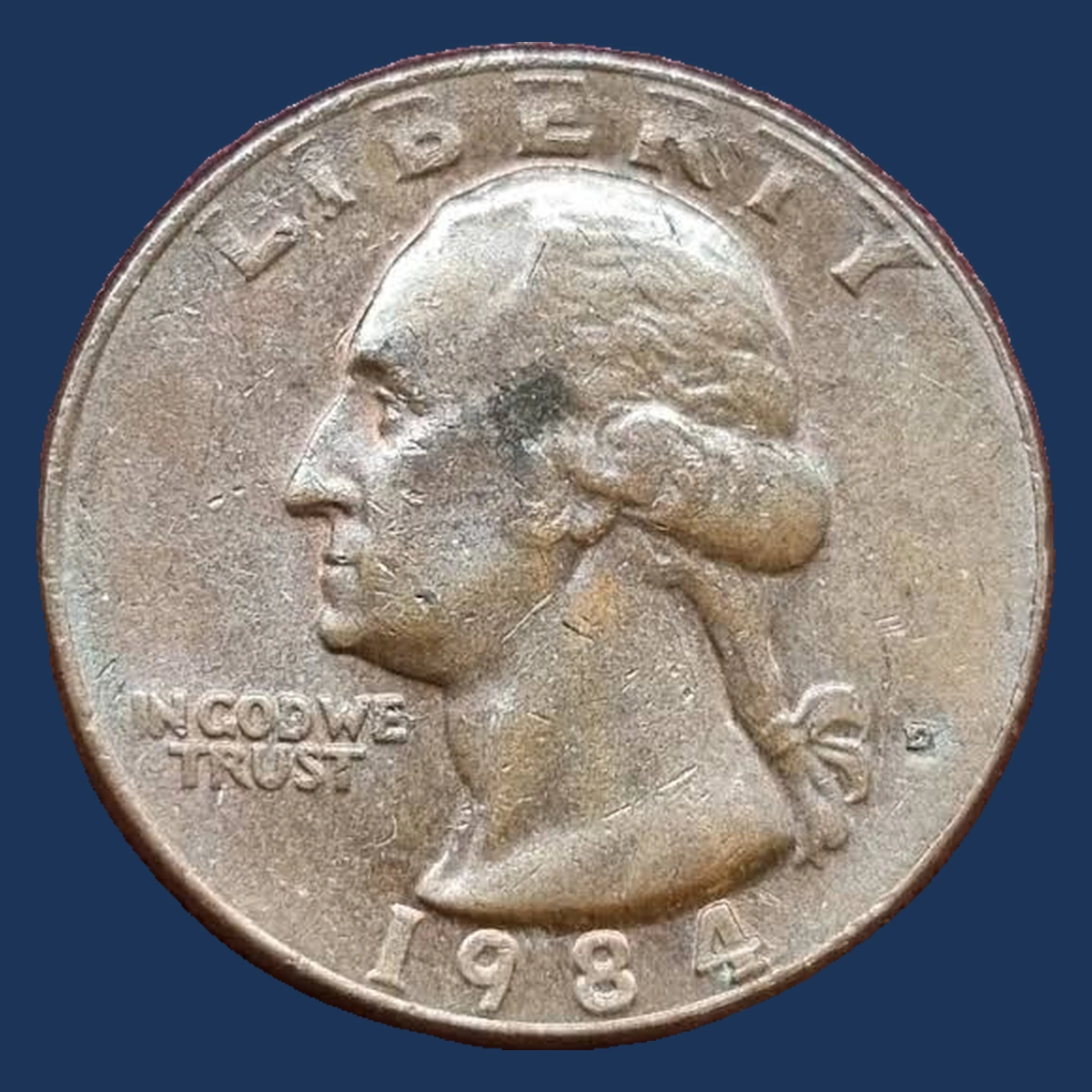
A copper-colored face or a lifted patch can reveal a problem in the bonded metal layers. Normal 1984 quarters have silvery copper-nickel outer layers around a copper center.
Reports include missing outer layers on Philadelphia and Denver coins, plus local separation where part of a layer remains attached. These descriptions do not establish that one coin shows every feature.
A whole missing face differs in appearance from a small flap. Both need the actual layer boundary examined, because staining, corrosion, and later scraping can make ordinary clad metal look abnormal too.
Estimated Value
Estimate $30–$200 for an identifiable local separation and $75–$500 for a clear missing-layer face. Together the range is $30–$500.
Preserved peeling metal can help explain a local defect, while a clean exposed face makes broader layer loss easy to see. Corrosion may conceal those clues, so a brown or rough quarter should not receive a missing-layer premium merely because its color differs from a freshly struck coin.
How to Identify
For an attached flap, start at the point where it still joins the surface. Inspect that boundary with a magnifier without lifting or bending the metal.
Does the surrounding design continue naturally across the affected area? Fresh scratches through finished letters can show that a tool scraped the surface later.
A whole-face missing-layer claim needs a scale reading on a loose coin, compared with the normal 5.67 g weight. Check the exposed copper and remaining edge layers as well.
Record the actual reduced weight instead of borrowing another coin’s measurement. A light reading alone does not explain the cause.
All regular 1984 quarters, including S Proof collector coins, are clad; use the visible layer structure to identify a loss or separation.
9. 1984 Washington Quarter Off-Center Strike
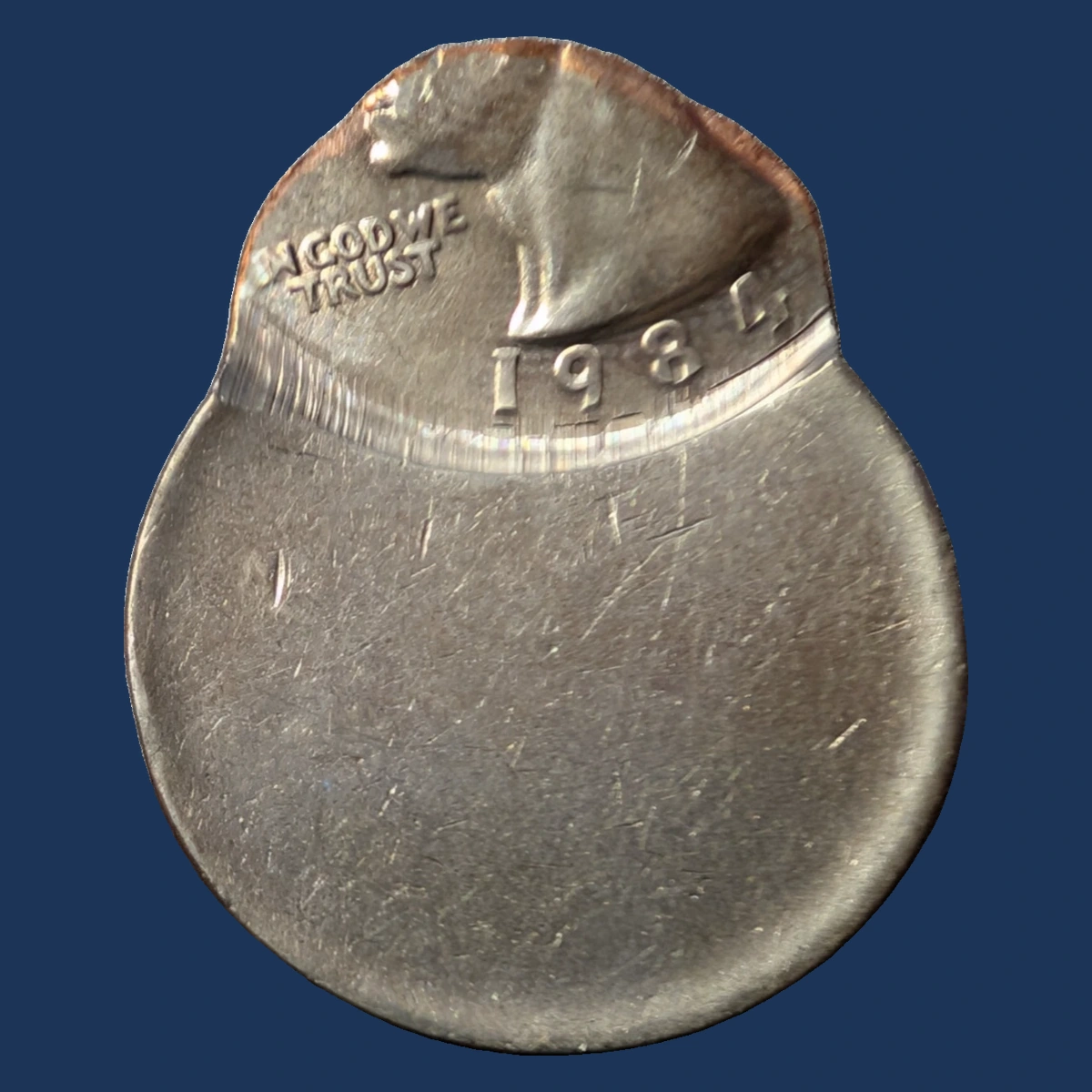
Part of the design can miss the metal when the blank sits too far to one side in the press. The finished quarter then has an unstruck crescent beside an incomplete portrait and reverse design.
A Philadelphia coin graded PCGS MS64 is documented at 10% off-center. Denver reports describe separate coins at 65% and 80% off-center.
Those percentages do not identify the direction or prove that all the coins share the same appearance. Each piece needs its own front and back views, especially when most of the design is missing.
Estimated Value
A working estimate of $40–$600 covers the smaller Philadelphia displacement and more dramatic reported Denver examples. A clearly readable date can make a large off-center error much easier to collect.
Do not assume the 80% coin must cost more than every 65% or 10% example. Wear, missing identifying details, and damage to the surviving struck portion can outweigh the visual impact of a very large blank area.
How to Identify
On the 10% Philadelphia example, look for genuinely missing outer detail, not just an uneven rim. The P mintmark and date should connect the image with the identified coin.
For a much larger displacement, first locate the surviving design and turn the coin over. Corresponding eagle-side detail helps show that the blank, rather than only one stamping tool, was off-center.
A magnifier can reveal abrasive lines on a bare area that someone created by grinding away the design. An off-center strike can keep the blank’s normal mass, so a normal scale reading does not rule it out.
Compare the missing design and unstruck metal together. Their positions explain the displacement better than the percentage alone.
10. 1984 Washington Quarter Double Strikes and Flip-Over Combinations
Repeated portraits or crossed front-and-back details can show that a quarter was struck again after moving. A flip-over double strike means it also turned over between the two blows.
Philadelphia examples include an off-center second strike, a 65% flip-over strike, and a broadstruck coin whose second front impression was blocked. Other pieces have second strikes described as 70% or 90% off-center and one-sided.
One-sided, or uniface, means a face was blocked during that strike. The specified front blockage belongs to the broadstruck example, not automatically to the separate 70% and 90% coins.
Estimated Value
A published sales table reports $350 for the 70% second-strike example with two full dates and mintmarks. Those readable details help explain the appeal of this dramatic coin.
Estimate $150–$900 for comparable double-strike combinations. A readable sequence can be more desirable than confusing extra lines.
The 90% example carries a Details designation, indicating a condition problem. That problem needs its own assessment; the label does not reveal its cause or justify assuming the coin matches the cleaner examples.
How to Identify
Separate connected groups of letters or portrait details before trying to count strikes. Each group should belong to a complete design in a different position, even if only part of it survives.
On the flip-over example, look for front and reverse details crossing one another on the same face. Two shifted Washington portraits alone do not prove the coin turned over.
For the broadstruck combination, compare its expanded outline with the blocked second front impression. Examine the 70% and 90% coins independently because their blocked faces are not specified by those percentages.
A magnifier helps follow the tiny second impressions near an edge. Use the relationships between recognizable details to explain the sequence, rather than treating every stray line as another strike.
11. 1984 Washington Quarter Large Indent with a Partial Collar
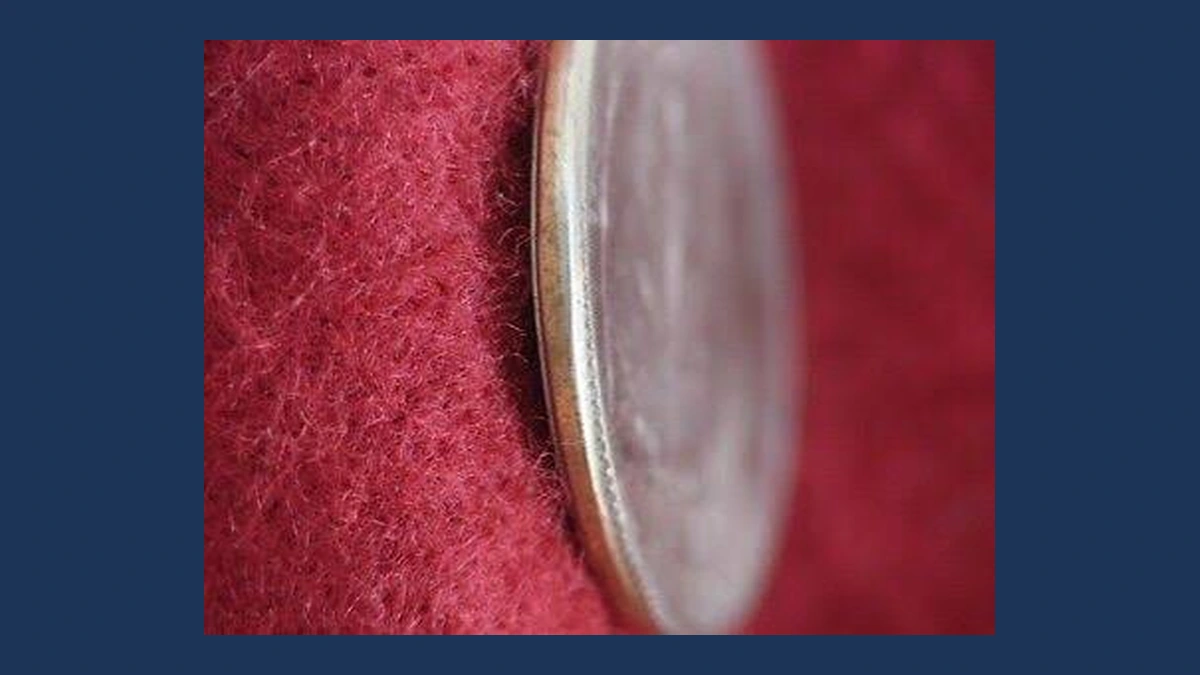
A blank lying over another blank can press a broad hollow into the lower coin during striking. That depressed area is an indent, rather than a normal raised coin design.
A Philadelphia 1984 example is described as having an 80% indent near nine o’clock together with a partial collar. Its edge was only partly restrained by the ring around the stamping area.
The two features belong to one coin. The indent’s percentage describes the affected area, while the partial collar describes a stepped edge; neither term establishes which face carries the hollow.
Estimated Value
The indent-and-partial-collar example appeared with a $160 minimum bid. That catalog figure is an opening requirement, not a confirmed selling price.
Estimate $150–$1,000 for a clearly identified combination with a large intact indent. Buyers will consider the surviving date and the condition of the hollow’s surface.
The stepped edge can add interest, but it remains part of the same coin. Its price should not be added as though a second separate error coin were included.
How to Identify
Inspect the hollow from directly above and then under low-angle light. Its boundary should fit another blank blocking the strike, rather than look like a dent forced through completed design afterward.
With a magnifier, look inside for any sunken mirror-image letters. Those would point to a brockage, whereas a plain indent does not require an impressed backward design.
Turn the coin to examine the edge’s partial collar step, keeping the affected face visible in the photograph. The listed nine-o’clock position does not identify that face for you, and a normal copper-colored stripe cannot replace the physical step needed to confirm the second part of this combination.
12. 1984 Washington Quarter Struck on a Nickel Blank
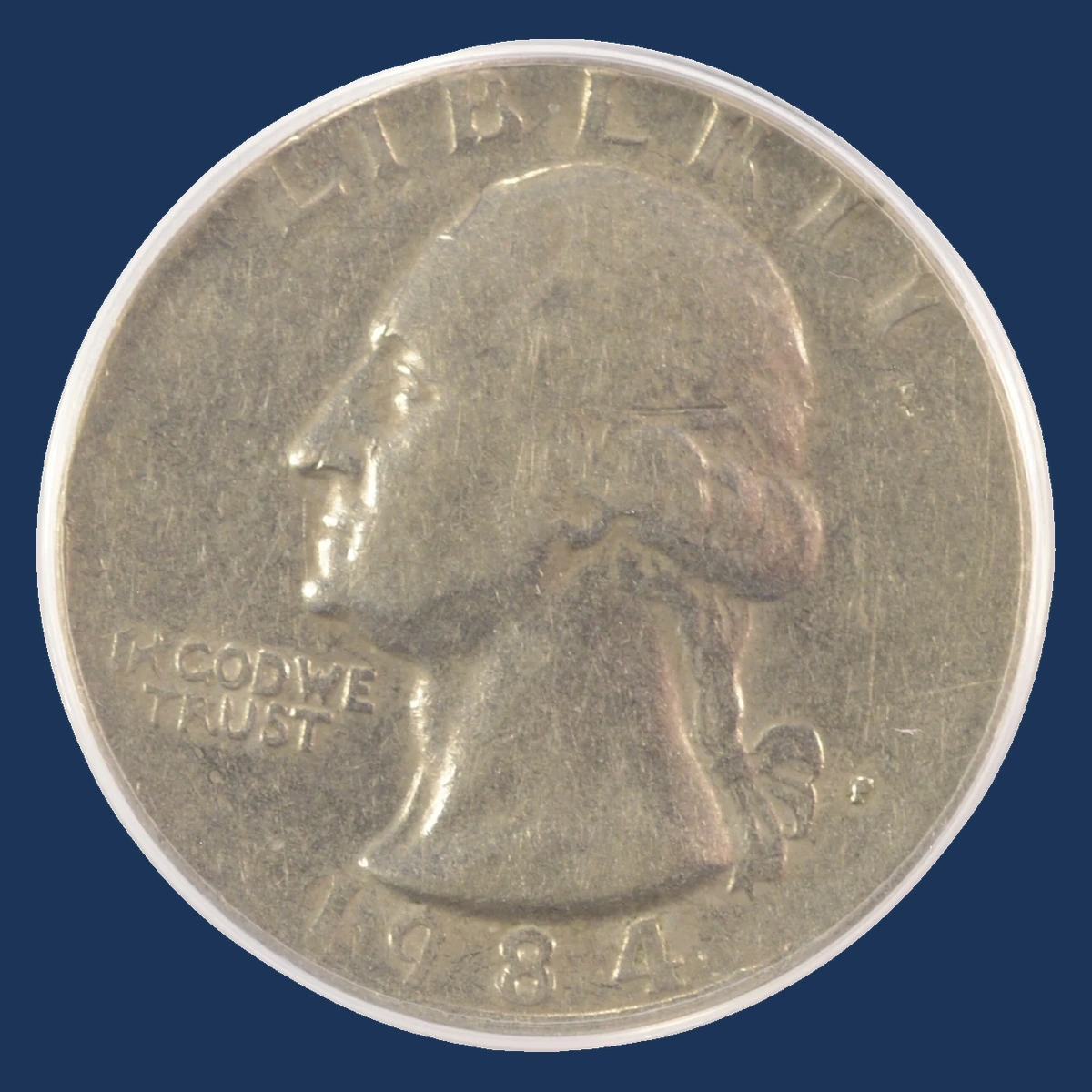
A quarter can receive Washington and the eagle on a blank intended for a five-cent coin. That smaller blank leaves less room for the quarter’s outer lettering and border.
A Philadelphia example offered by a specialist weighs 5 g and is graded ANACS VF35, showing moderate circulation wear. A separate published sales example was graded ANACS AU55, with lighter wear.
These are two different coins. The 5 g measurement belongs to the dealer’s VF35 piece, while the other example’s condition and price cannot be treated as facts about that same specimen.
Estimated Value
The 5 g VF35 example was offered at $190, a dealer asking price. A separate published sales table records $153.61 for an AU55 nickel-blank quarter.
Use an estimated $150–$1,200 across identified examples of different quality. Clear dates, intact original edges, and attractive surfaces can support higher prices.
Those condition differences matter more than borrowing a wrong-blank price from a Canadian quarter or a different United States denomination.
How to Identify
Examine the metal at the edge through a magnifier. A nickel blank is a solid copper-nickel alloy, so it should not show the quarter’s normal copper core between silvery layers.
For a loose coin, weigh it and measure its diameter with calipers. A normal nickel blank starts near 5 g and 21.21 mm, although striking can change its final width.
Compare those measurements with the normal quarter’s 5.67 g and 24.3 mm. A smaller outline alone could result from later grinding.
Follow the remaining date and denomination letters to the original edge. The combination of nickel-type metal and mass with genuine quarter design cut off by the smaller blank supports the identification.
Conclusion
The estimated $10–$1,200 range starts with small, identifiable raised marks and reaches established wrong-blank or complex striking errors. A broadstrike, a clipped blank, and an off-center strike can all change the outline in different ways.
Compare the metal and surviving design before choosing an error name. Keep each coin’s mintmark, measurements, and condition tied to its own photographs when using a price example.