1993 Quarter Error List with Pictures

One 1993 quarter error is not a normal coin at all. A piece of aluminum from feeding equipment received five strikes from quarter tools and sold for $1,495 in 2009.
Other 1993 quarter errors are easier to recognize: a missing edge, a copper-colored face, or two overlapping pictures. Estimated values across the groups below run from $5–$5,000.
Use the visible clues to find the right comparison, then consider the coin’s condition and the strength of its error.
1. 1993 Washington Quarter Reported Doubled Design
An extra edge beside a letter can look like a second impression. A true doubled die is a stamping tool that already carries repeated detail before it touches the coin.
For 1993, the reported doubled design still needs an authenticated pattern, mint, and face. A second outline by itself cannot establish how the feature formed.
Whole shifted pictures point toward another strike. Small repeated outlines can come from the tool, while a flat shelf can result from movement during striking.
Start with the shape you can actually see.
Estimated Value
Use a conditional estimate of $5–$250 for a professionally identified 1993 doubled-tool variety. The stronger end needs clear repeated detail that another collector can recognize.
A vague thick letter is a weak basis for a premium. Wear, lighting, and ordinary flat doubling can make a small mark look more dramatic in a photograph.
The estimate concerns a recognizable doubled-tool feature. A matching extra shape on several details gives buyers more to compare than a blurry image of one thick-looking letter.
How to Identify
Choose the clearest suspected letter and photograph it under light from two directions. Compare the apparent second outline with the top and ends of the main letter.
Check neighboring details for a consistent repeated pattern. A flat ledge that reduces the original letter’s shape suggests a different process from a rounded extra impression.
Include the entire face, date, and mintmark in another photograph. These establish which coin is being examined instead of leaving the identification to a cropped letter.
Compare several matching features with an authenticated example before assigning a variety name. A whole shifted picture belongs with repeated strikes, while this category concerns extra detail already present in the tool.
2. 1993 Washington Quarter Turned Back Design
The eagle can appear tilted when the coin is flipped from top to bottom. A stamping tool that turned away from its normal position can create that changed alignment.
This is called a rotated die. The Philadelphia report does not establish a measured angle for its example.
Normal United States coins use a specific front-to-back arrangement. Turning a coin sideways instead of over its top changes what you see and can produce a false alarm.
A rotation affects the relationship between two pictures. It does not create a second eagle or move the whole design off the blank.
Estimated Value
For a confirmed rotation, estimate $10–$300. A large, easily demonstrated turn usually attracts more interest than a small departure from normal alignment.
The reported Philadelphia example has no established angle. Judge a candidate by its measured turn after a controlled flip, rather than by the way a seller positioned two photographs.
Clear eagle detail makes a small turn easier to judge. Wear that hides the upright direction can weaken both the identification and the appeal of the coin.
How to Identify
Hold Washington upright with the coin’s top at twelve o’clock. Flip the coin from top to bottom around a horizontal axis, without adding a sideways twist.
The eagle should then stand upright on a normally aligned quarter. Repeat the same motion with an ordinary comparison coin if the result seems surprising.
If the eagle consistently leans, photograph the two positions using fixed reference marks outside the coin. Do not rotate each photograph afterward to make its picture upright.
A loose coin turning inside a holder can confuse this test. Establish the relative angle in a controlled flip before asking a specialist to judge whether it exceeds normal production variation.
3. 1993 Washington Quarter Clipped and Oval Blanks
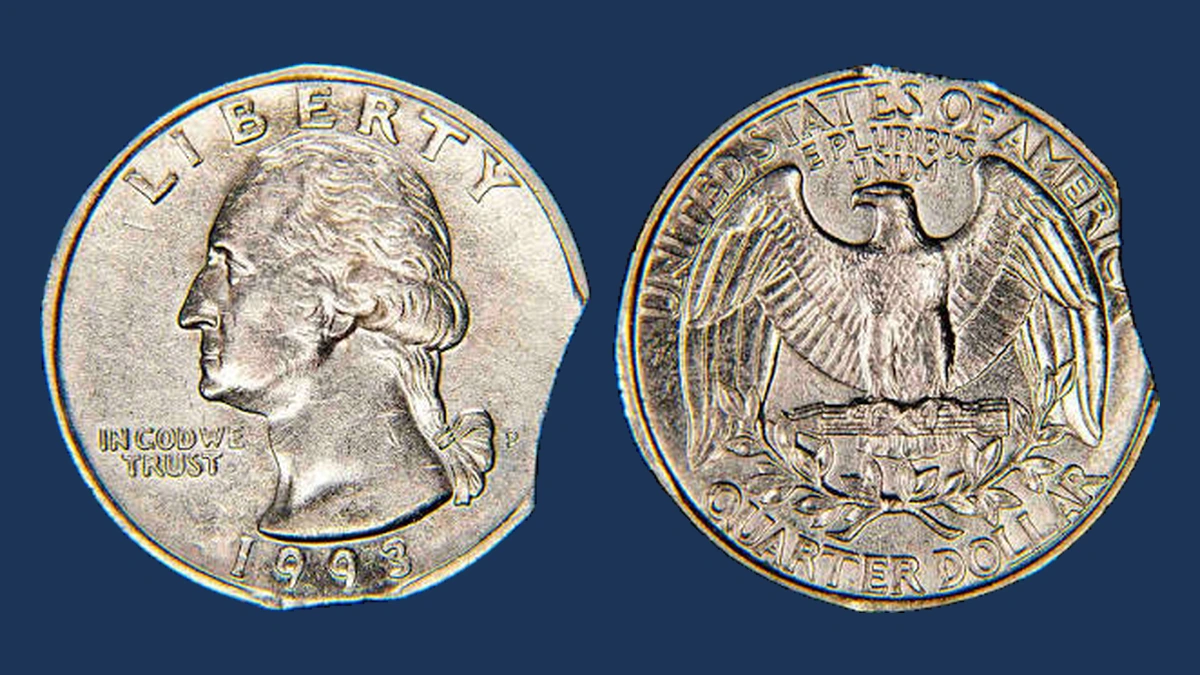
A bite, straight cut-off outline, or oval shape can begin before the quarter is struck. The stamping tools then press the design into an incomplete blank.
Denver examples include a seven-percent curved clip, a fifteen-percent double clip, and a fifteen-percent straight end clip. The double-clip percentage describes the example as a whole.
An oval Denver example has outer detail shortened from LIBERTY toward four o’clock. This is a different outline from a single curved bite.
The seven-percent coin received a Details grade, indicating a condition problem. That matters when comparing its appearance and value with a clean example.
Estimated Value
An estimated $15–$500 covers genuine examples of these missing-blank shapes. Larger, clear openings and readable identity tend to make the strongest display.
The straight-end example appeared in a three-coin catalog group. A group price would not establish what a buyer paid for that individual quarter.
The curved clip’s Details grade also matters when comparing condition. A clean, unworn coin and a problem coin with a similar gap should not automatically receive the same estimate.
How to Identify
Start with the missing section itself. A genuine incomplete blank was already that shape when the tools pressed the quarter design into it.
Use angled light where the gap meets the rim. Look for metal shaped by the strike instead of fresh file lines, burrs, or finished letters cut through later.
For a curved gap, examine the opposite rim for weakness. That can support the identification, although its absence does not settle the question.
Inspect both openings on the double-clip example separately. The recorded fifteen percent applies to the whole coin, not fifteen percent at each opening.
The oval example requires a different outline comparison: follow the shortened design from LIBERTY toward four o’clock. Photograph the full rim so a specialist can compare that unusual shape with the original strike.
4. 1993 Washington Quarter Missing Outer Metal Layer
A copper-colored face can appear when a clad quarter loses an outer layer. The normal coin has pale outer metal bonded to a copper center.
A documented 1993-D example was graded ANACS MS62 Red. MS62 means unworn with noticeable marks, while Red describes the copper-colored appearance.
Either face must be checked before choosing a comparison. The auctioned Denver piece has no stated affected face, so its identity should not be assigned from color alone.
The color needs a physical explanation. Chemicals, plating, and surface damage can change a quarter’s appearance without creating the same original bonding failure.
Estimated Value
The ANACS MS62 Red example sold for $156 on November 6, 2020. It gives a same-year comparison for a documented Denver layer-loss error.
For authenticated examples, estimate $50–$800, depending on the amount lost, the remaining design, and the surface condition. A clear copper face makes the feature easier to display.
This is a price for the surviving coin. It should not be applied to a thin detached sheet or a normal quarter merely stained brown.
How to Identify
For a loose coin, compare its weight with the normal 5.67 grams before judging a brown face from a photograph. Missing outer metal should reduce the weight, but grinding and chemical damage can also remove metal.
Now inspect the edge beneath the copper-colored face and compare it with the opposite side. A normal clad quarter already shows copper along its edge; the unusual feature is exposed copper across a face.
Under neutral light, follow the design across the exposed metal and look for original struck texture rather than broad scraping marks. Photograph the layer boundary and both faces together, keeping the affected side clear when comparing this coin with a known example.
5. 1993 Washington Quarter Partial Collar with an Indent
Two parts of this Philadelphia quarter need attention: its stepped edge and a depression in the picture. They record different parts of one striking event.
A collar is the ring that limits a coin’s width and forms its edge grooves. Partial contact can leave a narrow band beside metal that spread farther outward.
An overlapping blank can also block part of the design and press a hollow into the coin. That hollow is called an indent.
The documented example was graded ANACS MS63. The available description does not locate the depression on a particular face.
Estimated Value
Allow an estimated $50–$1,000 for this authenticated combination. Both the stepped edge and the original indent should be clear enough to explain.
A small partial-collar ledge differs from a large hollow that removes an obvious part of the picture. Their strength, together with the coin’s preservation, determines the most useful comparison.
The estimate concerns one quarter with two related features. Adding the maximum value of an indent to a separate maximum partial-collar price would overstate the evidence.
How to Identify
Photograph the coin from the side to show where the grooved edge changes into a wider band. Follow that transition far enough to distinguish a true step from a dent.
Now examine the depression on the face. Its boundary should fit an overlapping blank that blocked the original strike, rather than a tool pushed into finished artwork later.
Look for normal detail beside the hollow and any metal displaced by a later impact. The face view alone cannot confirm the partial-collar part of the claim.
Keep the edge and face photographs together for comparison with the certified example. Both features must belong to the same coin before applying this combined identification.
6. 1993 Washington Quarter Off-Center Strike
Half of the intended picture can miss the metal when a blank enters the press out of position. The remaining surface shows an unstruck crescent beside the shortened design.
A 1993 quarter described as about fifty percent off center was reported in NGC MS63. Its mint is not established by that account.
The percentage refers to how much of the design lies beyond the blank. It is not a statement that someone removed half the quarter.
Both faces should reflect the misplaced disc. A portrait shifted by itself can come from a different problem with one stamping tool.
Estimated Value
Genuine dated 1993 off-center quarters have an estimated range of $50–$1,500. Large shifts with readable dates can make especially clear displays.
The reported fifty-percent example supplies a type comparison, not a verified sale price in this guide. Its exact surviving picture should determine the comparison rather than the percentage alone.
A small amount of wear may leave the error easy to understand. Grinding, missing identity, or distracting damage can make a superficially dramatic example much less desirable.
How to Identify
Look first at the outer letters where the picture runs out of metal. On the opposite side, find the genuinely unstruck crescent.
Turn the coin over without cropping its outline from the photograph. The eagle side should agree with the same misplaced blank rather than appearing normally centered.
Examine the empty metal for file marks or ghost traces of a removed picture. A finished coin ground down after minting can leave a misleading blank-looking patch.
Keep any surviving mintmark separate from the attribution of other 1993 examples. The fastest reliable comparison joins the readable date, interrupted design, and original blank surface in one complete view.
7. 1993 Washington Quarter Double and Triple Strikes
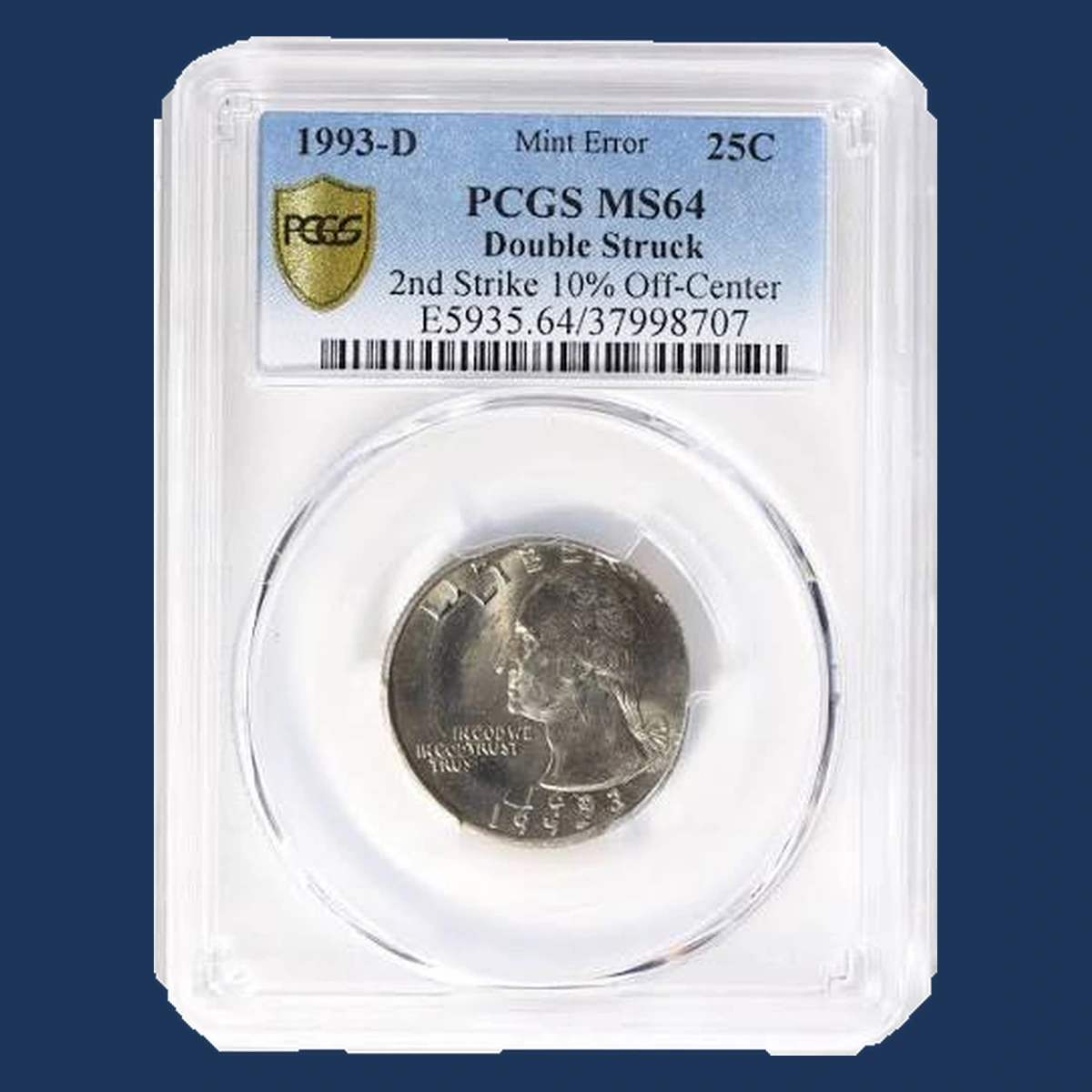
Two complete letter outlines in different positions can show that a quarter received another blow. The coin moved between strikes instead of leaving the press normally.
One 1993-P example first received a centered picture, then a second strike ten percent off center toward twelve o’clock. It was graded NGC AU58, indicating slight wear.
Other Philadelphia reports include a sixty-percent second strike and an NGC MS66 triple strike. A separate ANACS MS63 coin combines two strikes with an indent.
Each coin needs its own pattern. The ten-percent example does not establish the movement or depression on the others.
Estimated Value
The ten-percent second-strike example sold for $431.25 in January 2005. Its surviving pictures demonstrate the error despite light wear.
Estimate $100–$2,500 across authenticated double and triple strikes of the kinds described. Clear separation, readable identity, and condition guide the price.
The indented double strike is one combined object. Its hollow and repeated picture should be evaluated together, without assuming that the hollow formed during a particular blow absent supporting evidence.
How to Identify
Use the AU58 example as a map of two complete designs. Its first image is centered and its second image shifts toward twelve o’clock.
Trace one large repeated letter into the neighboring artwork. Several connected details should explain the same movement; a low, flat ledge on one letter does not do that.
Keep the sixty-percent example separate from this ten-percent coin. Its direction cannot be borrowed from the AU58 comparison.
For a triple strike, look for three overlapping sets on the same coin. Later blows can flatten part of an earlier image, so not every letter will survive three times.
The indented double strike also needs a close view of its hollow. Compare the hollow’s boundary with the overlapping artwork before deciding which blow formed the depression.
8. 1993 Washington Quarter Matching Chain-Strike Pair
Two blanks can sit beside one another and restrict each other as their metal spreads. The contact can leave straightened edges on both coins.
A recorded 1993 pair was cataloged as ANACS MS64. The two quarters preserve the relationship between their neighboring edges.
This is called a chain strike. It differs from one blank deeply overlapping another and leaving a broad depression in a face.
The pair should be examined together. Matching dates alone do not prove that two coins shared an event, and a straight side can also be made by filing after minting.
Estimated Value
For an authenticated matching 1993 chain-strike pair, estimate $300–$3,000 for both coins together. The matching contact and overall preservation determine how convincing the display is.
The recorded grade indicates unworn coins with some marks. It does not provide a price for either quarter separately.
A complete pair can explain more than a single contact edge. Two unrelated coins with similar flat sides should not receive a matched-pair estimate unless their original surfaces support a shared striking event.
How to Identify
Arrange photographs of the two quarters side by side before bringing the coins near each other. Compare the contact edges without forcing a physical fit.
Look at the direction of metal flow beside each straightened area. Both edges should support the same contact while the blanks were being struck.
Inspect for filing, cut marks, and flattened finished design that could have produced a straight side later. Similar length alone cannot establish the relationship.
Keep the dates, full outlines, and certification descriptions with the comparison. An error specialist should be able to explain how both boundaries formed together, not merely say that the shapes look alike.
9. 1993 Washington Quarter Five Strikes on an Aluminum Machine Fragment
A thin, irregular piece can carry Washington’s picture without ever having been a coin blank. In this example, aluminum from a feeding part entered the striking area.
The fragment received five quarter strikes and was graded PCGS MS64. Repeated impressions appear on the same unusual piece of metal.
Mint Error News documented the 1993 feeder-finger tip. A feeder finger is a machine part involved in moving blanks through the press.
This is not a normal quarter holding an attached fragment. The aluminum piece itself received the designs, and its mint should not be guessed.
Estimated Value
The documented five-strike fragment brought $1,495 at the 2009 Central States Heritage auction. That result concerns the entire piece, not a price for each impression.
An estimated $1,000–$5,000 suits an authenticated comparable fragment with recognizable quarter designs. Shape, legibility, preservation, and the clarity of the repeated strikes affect its appeal.
An ordinary aluminum scrap with added marks has a different origin. The value depends on proving that the quarter tools struck the fragment at the mint.
How to Identify
Protect the irregular metal first: do not press it flat, polish it, or trim its edges to make the pictures easier to read. This is a machine fragment, so normal quarter weight and diameter are not the right starting tests.
Find a recognizable Washington-quarter letter or piece of artwork and trace the design around it. Repeat for the other visible impressions, keeping genuine design separate from scratches or bends in the aluminum.
Photograph both faces, the side profile, and any surviving date area without changing the shape. A specialist can compare those views with the documented five-strike piece; the recorded number belongs to that object, not every similar scrap.
Conclusion
A repeated picture, a missing layer, and an unusual edge each need a different test. The 1993 examples include ordinary-looking quarters as well as a five-strike aluminum fragment.
Estimated prices of $5–$5,000 cover the groups described here. Preserve the original surfaces, keep matching pairs together, and use the full coin rather than an isolated close-up when comparing a possible error with a documented example.