1994 Quarter Error List with Pictures

Missing metal is only half the story for 1994 Washington Quarter errors. One coin gained an extra bonded layer, while a matching two-coin error set sold for $1,610 in June 2008.
Estimated values here range from $2–$2,500, covering small raised cracks through unusual layered coins and paired errors. Some dramatic-looking marks are ordinary damage, so the shape alone cannot settle the question.
Read on to compare the metal, design, and edge clues that explain each type.
1. 1994 Washington Quarter Doubled Designs and Flat Doubling
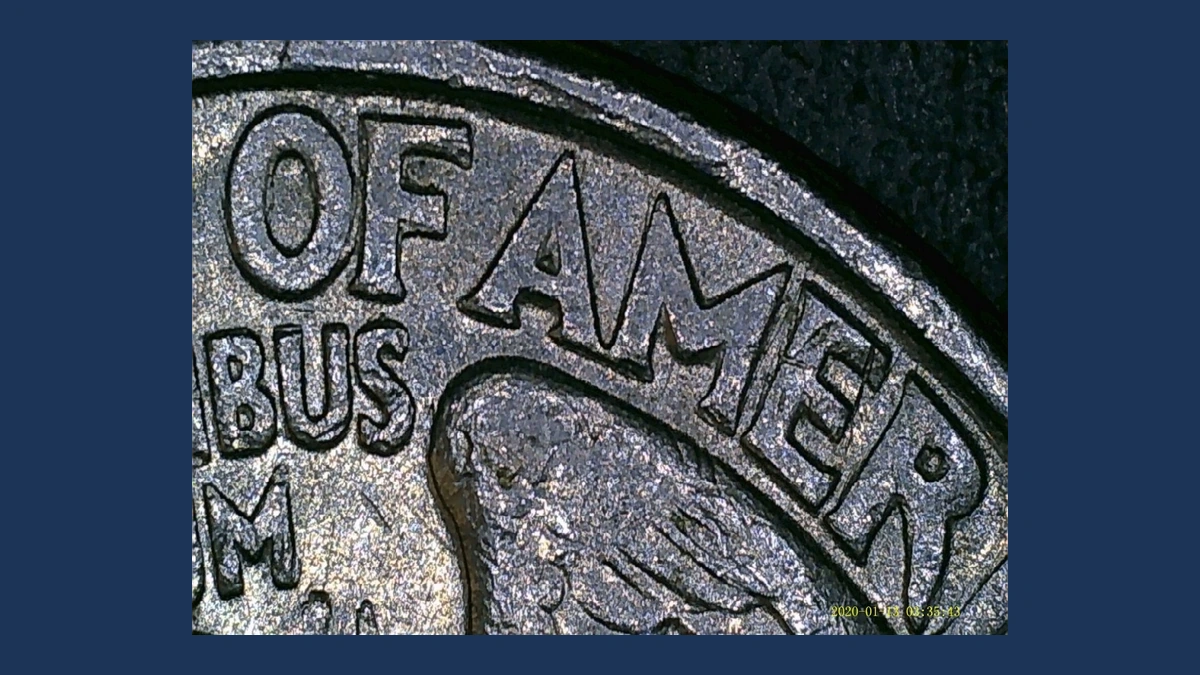
Extra outlines have been reported beside the front motto, date, and LIBERTY on 1994-P quarters. Back-side reports mention the eagle’s beak, nearby leaves, and surrounding lettering.
A true doubled die has the repeated detail on the steel tool that stamps the coin. Each coin made from that tool can repeat the same pattern.
A separate D example was identified as mechanical doubling, which leaves flattened ledges as the tool moves during striking. Its apparent extra E does not establish an extra-letter variety.
The raised pattern and the flat ledge need different comparisons.
Estimated Value
For a matched doubled design, estimate $10–$150 on an ordinary 1994 quarter. Clear rounded separation and original surfaces support a stronger price than a vague thick letter.
Mechanical doubling commonly adds little or no premium. The reported D example should therefore not receive the same estimate merely because it looks doubled.
A variety name is useful only when the actual coin matches it. Wear and surface marks can make a doubled detail harder to see and less appealing to buyers.
How to Identify
Choose a letter with a clear extra outline and inspect it at 10×. A flat shelf that removes part of the original letter points toward mechanical doubling rather than a second rounded design.
Use a normal 1994 quarter as the first comparison, then seek a matching variety photograph. A claimed catalog number cannot replace that visual match.
For a loose clad coin, meaning bonded metal layers, compare 5.67 grams and 24.26 millimeters with a scale and calipers. Check the grooves around the edge for alteration, although ordinary doubling should not change these features.
Judge the extra contour itself: a rounded repeated feature differs from the flat ledge shown by the D comparison.
2. 1994 Washington Quarter Peeling Surface Metal
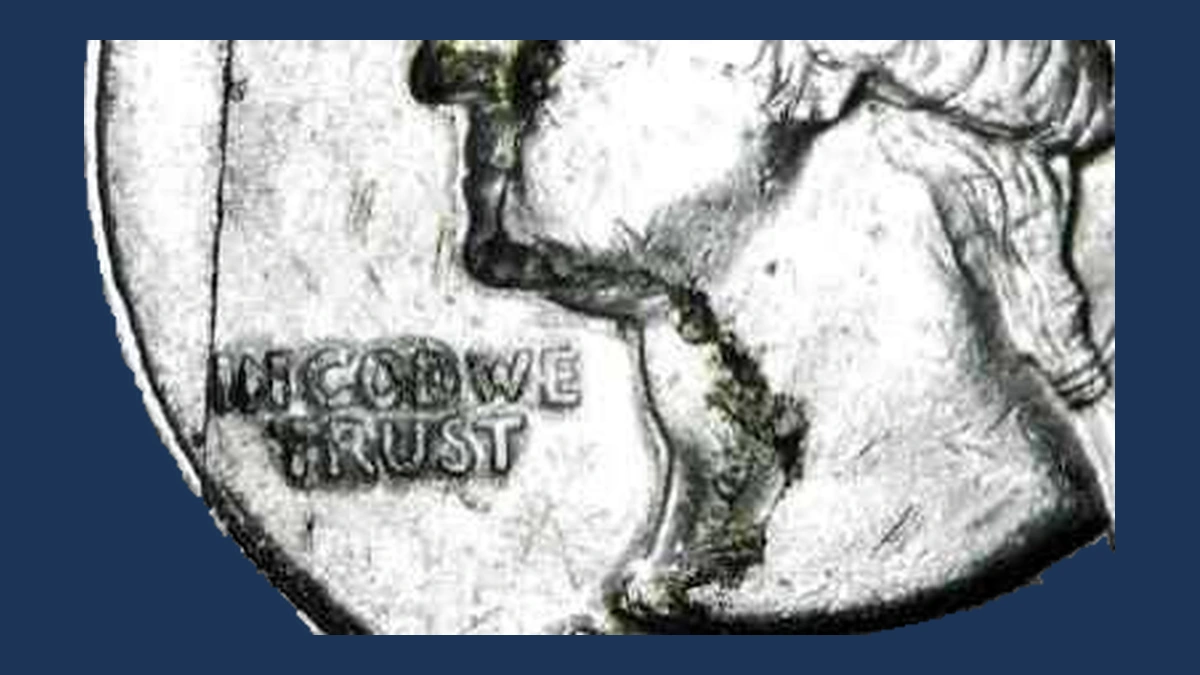
A thin surface layer may lift or leave a shallow cavity when the metal separates internally. This is called lamination, and it can affect only a small part of the coin.
The 1994 error list includes this type without assigning a particular mintmark or side. The position must come from the coin being examined.
A local peel differs from losing a complete copper-nickel outer face. Its shape may be narrow and irregular, with part of the original layer still attached.
Scraping or prying after minting can imitate that appearance, so an exposed patch alone does not identify the cause.
Estimated Value
Small genuine surface separations are estimated at $15–$175. A broad intact flap can attract more interest than a tiny rough patch, especially when nearby design remains clear.
A 1911 Liberty nickel with front-side lamination sold for $51 in January 2023. It offers a different-year, different-metal comparison for a local peel.
The estimate depends on natural separation rather than later damage. A pulled-off layer, gouged surface, or heavy corrosion can reduce appeal even when some original metal weakness remains visible.
How to Identify
Record an untouched coin’s weight and diameter before examining a loose flap. A scale and calipers compare ordinary clad metal with 5.67 grams and 24.26 millimeters, but should never squeeze the lifted part.
At 10×, start where the layer is still joined and follow the split toward its loose edge. An attached piece may leave the weight nearly normal; a fallen fragment can reduce it.
Inspect nearby design and the grooves around the edge for a tool entry point. Leave the flap alone: a thin natural split within the metal is different from a deep scoop cut through finished letters or portrait details.
3. 1994 Washington Quarter Cracks and Raised Rim Breaks
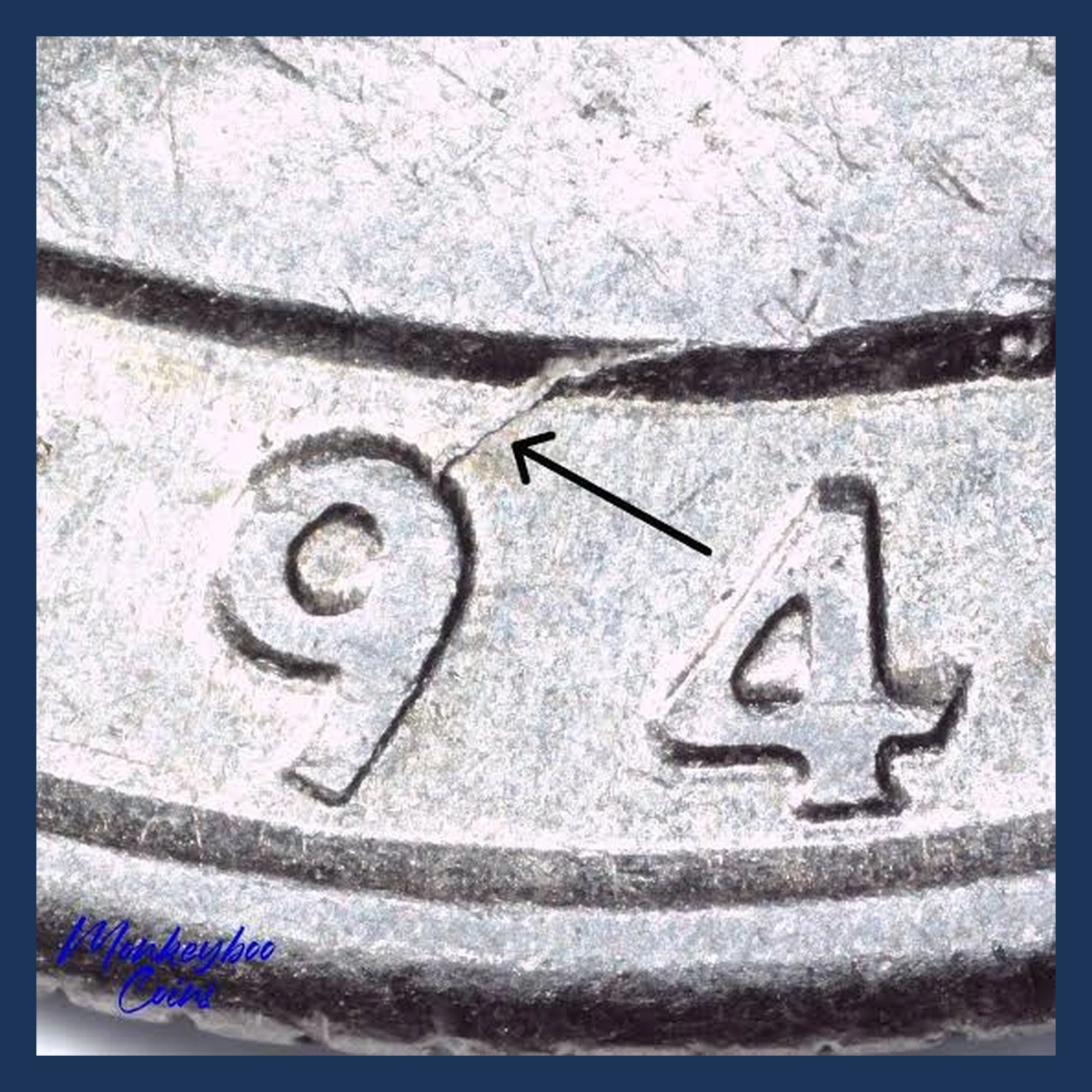
A broad raised patch touching the rim can replace normal detail when part of a stamping tool breaks away. Such a rim-connected patch is called a cud.
Other breaks leave some original design within an outlined area because the broken tool piece remains in place. Thin raised cracks can also run between Washington’s head and the rim.
Cataloged 1994 examples include several P front breaks, a P back break, and a D front break. Their exact shapes differ.
A separate reported coin has marks above the L in LIBERTY and near STATES. It needs its own comparison.
Estimated Value
Estimate $2–$40 for small raised cracks and roughly $30–$300 for clear rim-connected breaks. Larger patches with readable surrounding design tend to be easier for collectors to recognize.
A 1970-D nickel with two cuds sold for $63 in October 2022. That is a different-year comparison, not a price assigned to one of the 1994 catalog numbers.
A still-attached broken-tool area should be valued by its visible appearance and condition. Several linked catalog labels do not create separate premiums on one coin.
How to Identify
Look inside the outlined broken area for surviving design. Detail can remain when a broken piece of stamping tool stays in place, while a missing piece leaves a plainer raised patch.
The mintmark and affected face should match the 1994 rim-break photographs. A small interior lump is not enough to establish a cud.
At 10×, trace the complete shape rather than one corner.
Check weight and size of a loose clad example with a scale and calipers against 5.67 grams and 24.26 millimeters. Examine the adjacent edge grooves for squeezing or added metal.
Follow the raised patch into the rim itself to confirm its rim-connected form.
4. 1994 Washington Quarter Denver Broadstrike
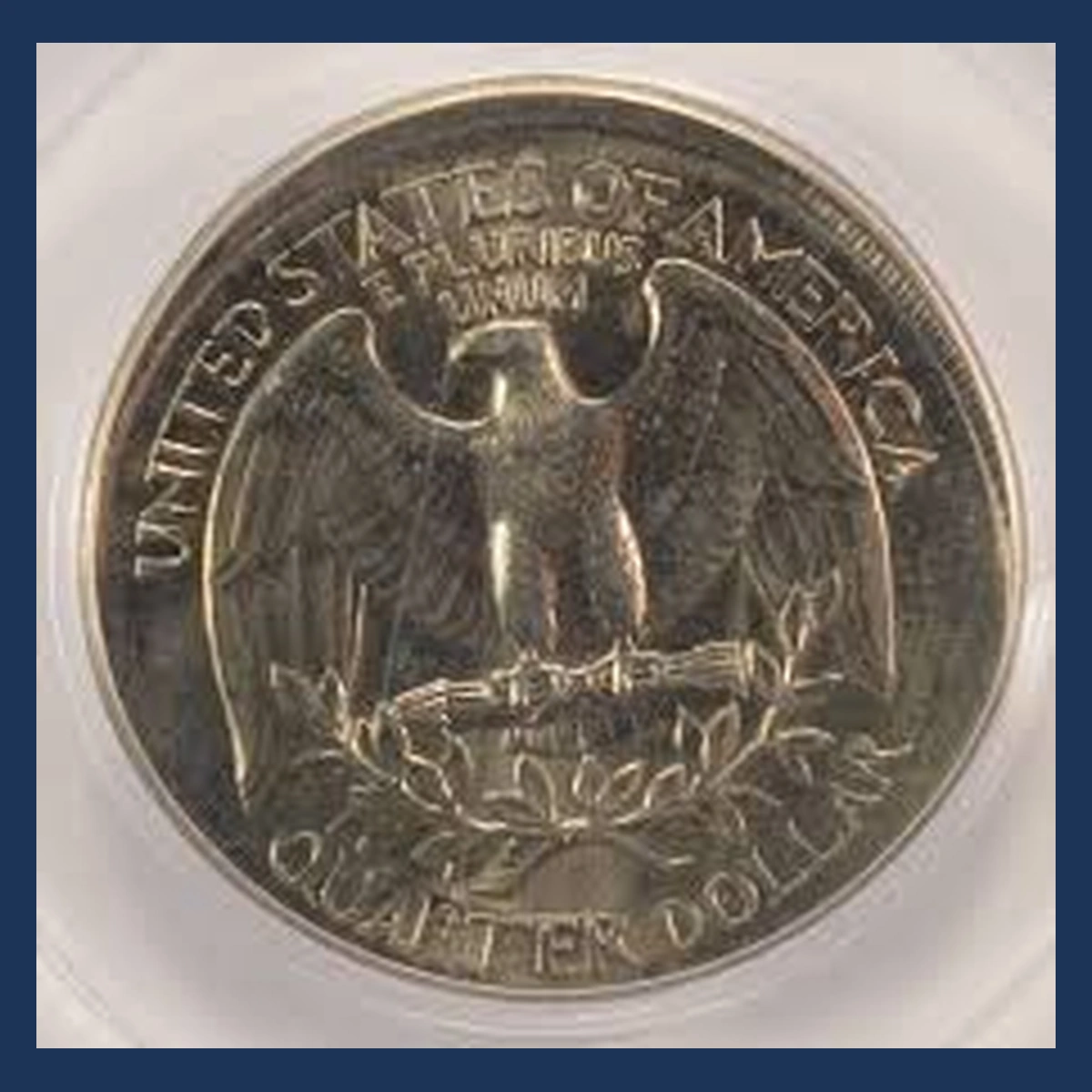
A wider-than-normal quarter can result when its blank is struck outside the surrounding collar ring. That ring normally controls the side and forms the grooves along the edge.
Without full restraint, metal spreads outward while the design can remain complete. This is called a broadstrike.
A Denver example is reported for 1994, separately from Philadelphia coins that combine expansion with a second strike. Its actual diameter must be measured on the coin.
An uneven border alone does not prove expansion. The outline, edge, and placement of the complete design need to agree.
Estimated Value
A genuine ordinary Denver broadstrike is estimated at $40–$300. The lower end suits slight expansion; a stronger spread with clean original design can draw more interest.
A 1990-P nickel with a partial-collar edge error sold for $99 in June 2025. That related but different mistake is a general comparison.
A D broadstrike should not inherit the value of a P double-struck coin. Later flattening, grinding, or a damaged rim does not earn the premium assigned to natural expansion during striking.
How to Identify
Measure the coin in several directions with calipers against the ordinary 24.26-millimeter diameter. Then weigh it against 5.67 grams; spreading the metal does not normally remove a large part of its mass.
Inspect the entire outer lettering and the date. A simple broadstrike should retain the intended design rather than lose it beyond one side.
At 10×, examine the expanded border and side for incomplete grooves, fresh hammer marks, or grinding. Compare both faces with a normal Denver quarter; a full naturally struck design within a genuinely enlarged outline is the combination to look for, rather than a wide rim by itself.
5. 1994 Washington Quarter Curved Clips and Oval Blanks
A curved bite can remain where a blank was punched too close to a previous opening in the metal strip. Other incomplete blanks produce an oval finished coin.
An ANACS MS62 1994-P quarter was cataloged as an elliptical clip, meaning an oval incomplete blank. That description does not make it the same coin as the separately reported curved clip.
Denver also has a clipped-coin report. Its missing section must be checked on its own photograph.
Later cutting can imitate either outline, so a dramatic shape is only the start of identification.
Estimated Value
Smaller genuine curved clips are estimated at $25–$175, while a clear oval example can be estimated around $100–$400. Preservation and readable design help determine the price.
A 1999-D Pennsylvania quarter with overlapping clips sold for $74 in December 2024. Its different shape offers a modest comparison rather than an exact price for the 1994 oval coin.
Do not value an artificial cut as a mint error. Original boundaries and a convincing relationship between missing metal and struck detail are essential.
How to Identify
First decide whether the coin is oval or has one curved bite missing. Compare its complete outline with a normal quarter rather than selecting a photograph by the clip name alone.
Weigh the loose coin and use calipers to record its remaining spans against the ordinary clad standards of 5.67 grams and 24.26 millimeters. The cataloged oval example has no actual weight supplied here.
Turn the coin slowly under a 10× magnifier, following the surviving edge grooves into the missing boundary. Inspect how neighboring letters were struck beside it; natural missing metal should explain that junction without fresh burrs, saw tracks, or filed surfaces.
6. 1994 Washington Quarter Off-Center Strikes
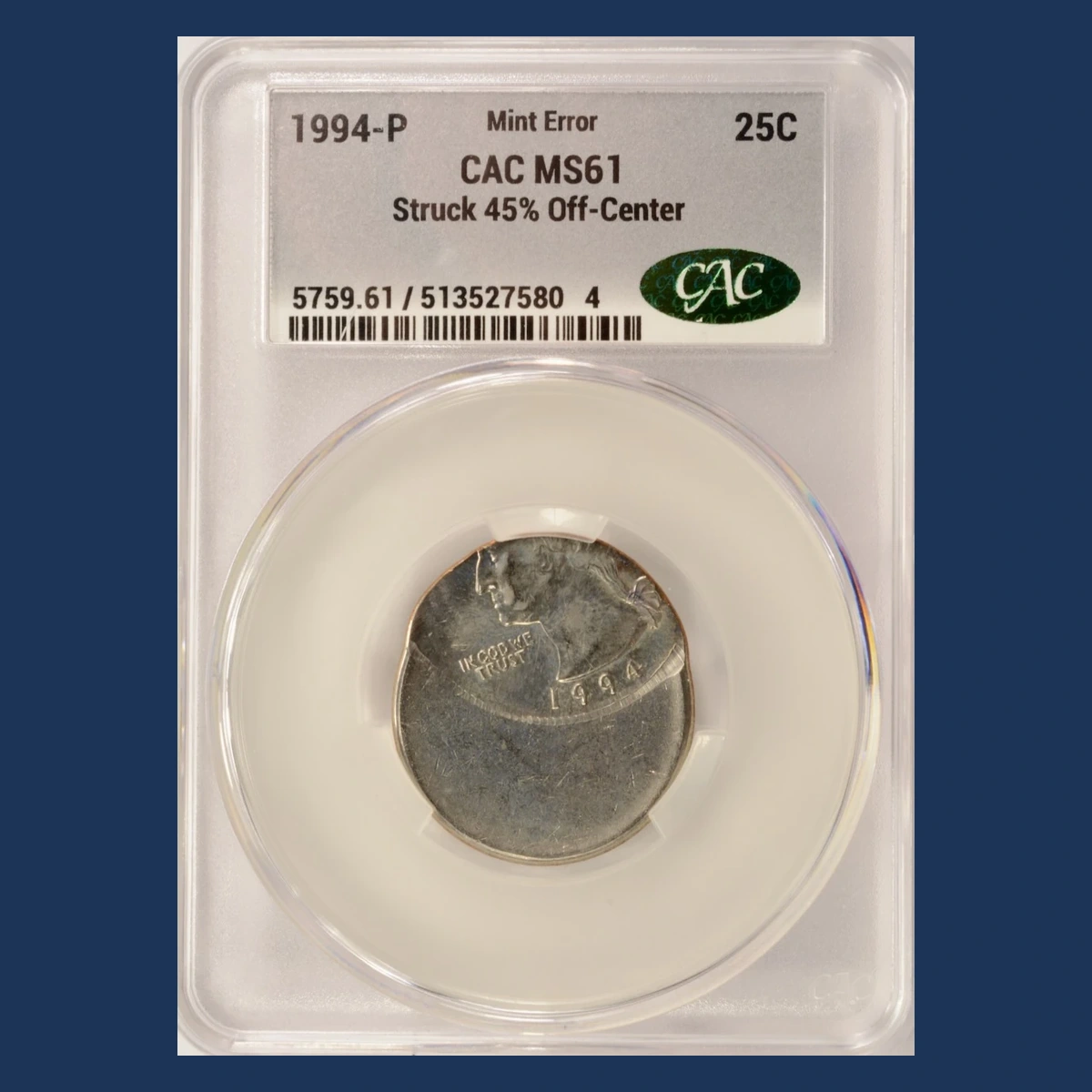
A crescent of unused metal can sit beside a design that runs out of room on the other side. The blank was not centered between the stamping tools.
Philadelphia reports include separate ANACS MS62 and NGC MS62 examples. The latter was described as about 10% off center, with its year shown in parentheses in the catalog.
Denver has a separate report of a roughly 20% off-center strike. Its direction should not be borrowed from a Philadelphia coin.
The unused metal remains present, unlike a clip that removes part of the blank.
Estimated Value
Estimate $30–$450 for genuine 1994 off-center quarters, depending on displacement, condition, and readable date. A small shift usually attracts less interest than a clear blank crescent.
A 1999-P Georgia quarter struck 40% off center sold for $192 in December 2024. That different-year comparison does not establish a 40% shift for either 1994 mint.
A cataloged year in parentheses needs care when matching a photograph. Surviving design, trustworthy identification, and original blank surfaces all affect what a collector will pay.
How to Identify
Check how the year was identified before judging the size of the shift. If part of the date lies beyond the blank, keep the grading record with the coin rather than filling in missing digits.
Compare both faces for the same misplaced blank. A design shifted on only one face can instead indicate a misaligned stamping tool.
Inspect the blank crescent at 10× for scraping, then examine the surviving edge grooves. Use a scale against 5.67 grams and calipers against the normal 24.26 millimeters to record a loose clad example.
Find real untouched metal opposite naturally cut-off design on both faces; a ground-down border does not provide that combination.
7. 1994 Washington Quarter Blocked Details and the Missing P
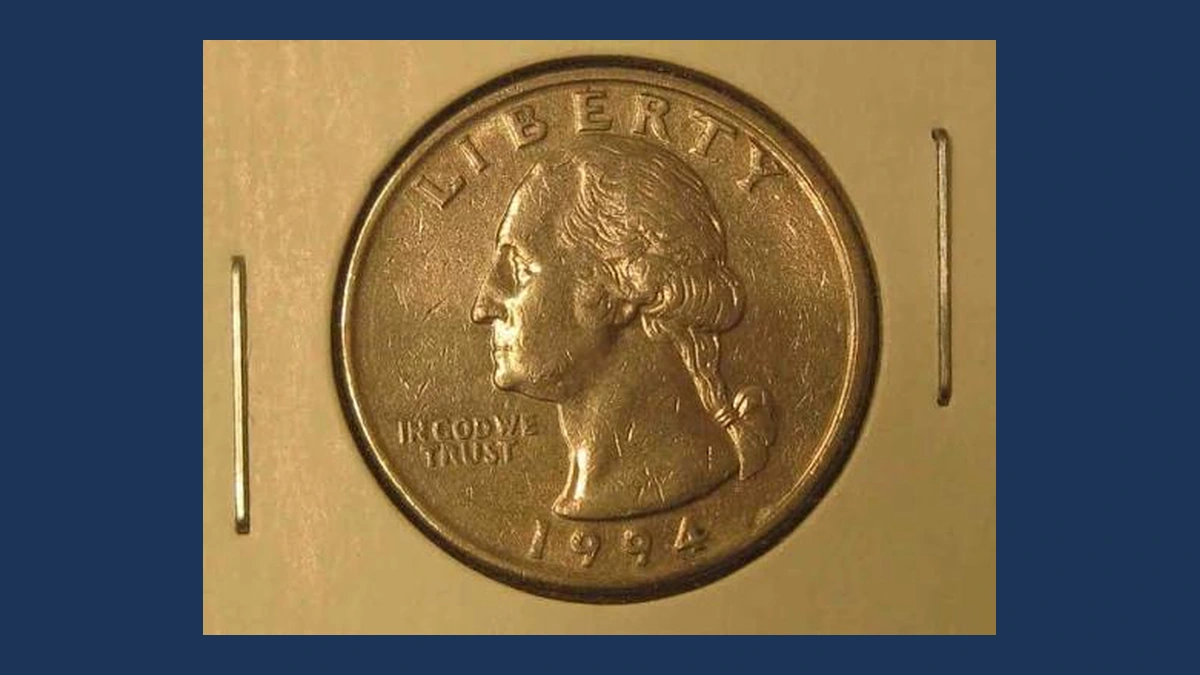
A letter can disappear when material blocks the recess in a stamping tool. A larger object between tool and blank can leave a depressed or weak area instead.
The 1994 No P quarter is listed as FS-501 by Greysheet. Grease filling the mintmark is a suggested explanation, rather than proof that a tool was made without the letter.
A separate 1994-D NGC MS67 coin has a back-side struck-through error. Its blocking material has not been identified.
The missing letter and the larger impression need separate examinations, even though both can involve blocked design transfer.
Estimated Value
For a convincing blocked P mintmark, estimate $20–$200. A larger genuine struck-through area on the Denver coin can be estimated around $50–$500, according to visibility and preservation.
A 1986-P nickel with a struck-through error sold for $204 in June 2023. That is a different-year comparison for blocked design, not a transaction for the No P quarter.
A worn or deliberately removed mintmark does not qualify. The surrounding original surface matters more than the absence of the letter by itself.
How to Identify
Compare the normal P position beside Washington’s hair ribbon with the same spot on the candidate. A 10× magnifier can reveal faint remnants or scratches from removal.
The No P catalog entry does not replace this surface check. Nearby detail should also be examined for wear.
An ordinary loose clad quarter should remain near 5.67 grams and 24.26 millimeters on a scale and calipers. Inspect its edge grooves for unrelated damage.
The Denver coin needs a different focus: follow the boundary of the affected area on its back.
At the missing-P position, seek an intact struck surface rather than a scraped patch.
8. 1994 Washington Quarter Missing Front or Back Outer Layers
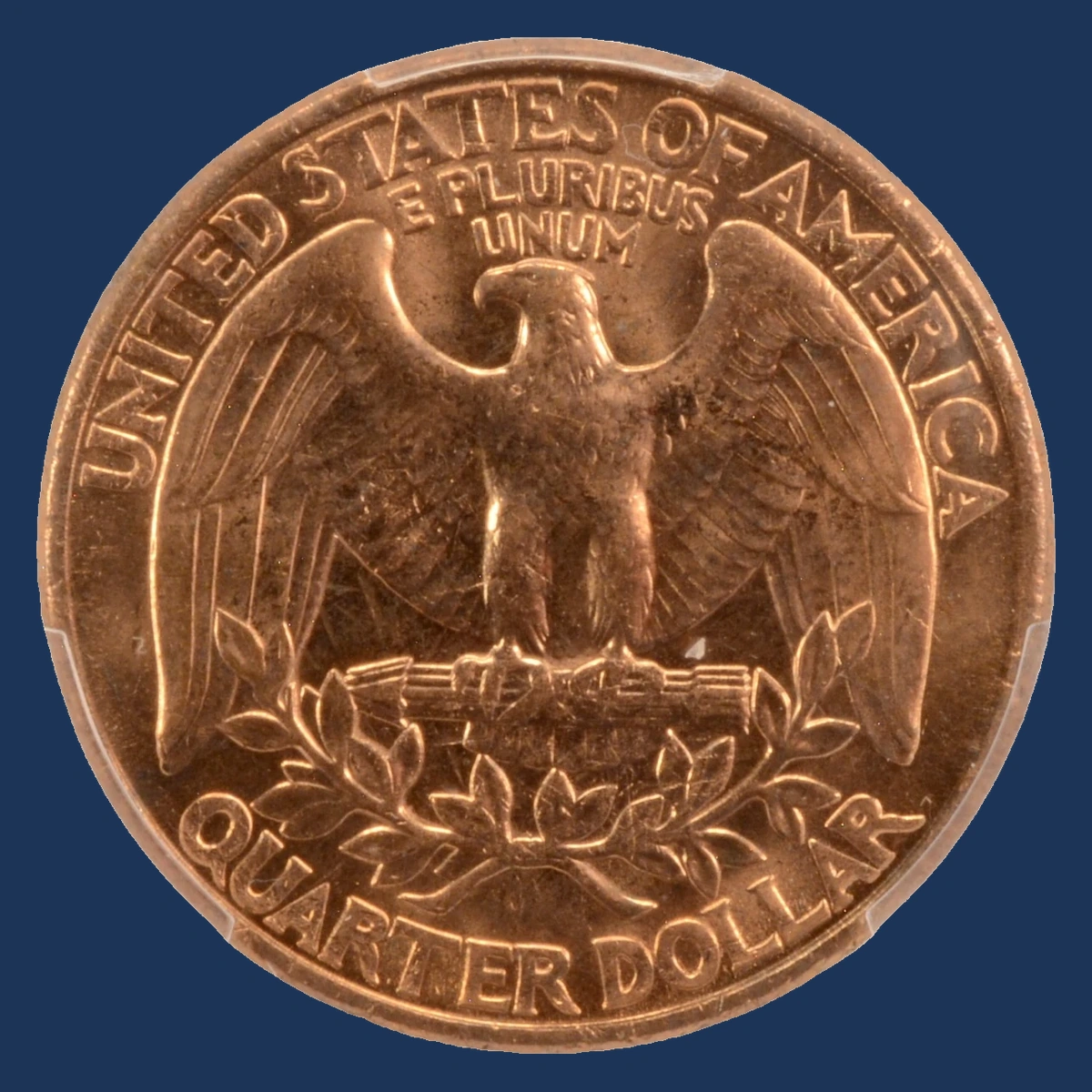
The copper core shows when an ordinary quarter loses one of its copper-nickel outer layers. A naturally struck exposed face can retain the design but weigh less than normal.
A documented Denver NGC MS64 coin lacks its back layer. A different Philadelphia ANACS AU58 coin lacks its front layer and weighs 4.69 grams.
That measured weight belongs to the Philadelphia coin alone. It should not be copied to the Denver example.
Silver Proofs have a different metal construction, while staining can make a normal clad face look copper-colored without removing any layer.
Estimated Value
The 4.69-gram Philadelphia front-layer coin sold for $65 in January 2023. A broader estimated range of $50–$600 covers genuine layer losses with different wear and surface quality.
An attractive exposed design can appeal more than a scratched or corroded face. The Denver coin needs comparison with its own missing side and condition.
Color alone does not justify the range. Added copper plating or chemical stripping after minting can resemble missing metal, but does not carry the same mint-error premium.
How to Identify
Measure the candidate itself instead of assigning it the Philadelphia coin’s 4.69-gram weight. A scale should show a meaningful reduction from the normal clad 5.67 grams if a full layer is absent.
Calipers compare the outline with 24.26 millimeters. Diameter need not shrink simply because one face lost a layer.
Inspect the grooved edge at 10× where copper meets the remaining outer metal. Look for chemical stripping, grinding, or added coating.
Keep front and back losses distinct.
The Philadelphia example lost its front layer, while the Denver example lost its back layer. Combine the measured weight reduction with an undisturbed layer boundary before attributing the reddish face to missing metal.
9. 1994 Washington Quarter Second Strikes, Sometimes with Expansion
A second portrait or border can remain when a coin moves and receives another blow. One 1994-P example was graded ANACS MS61 and described simply as double struck.
Other P examples combine a second strike with expansion beyond the normal edge. On a documented NGC MS62 coin, the later strike moved toward about 11:30.
A separate ANACS MS60 expanded double strike has no direction specified here. It must be judged on its own.
These repeated blows differ from tiny doubled letters already present on the stamping tool. Their larger design positions explain the movement.
Estimated Value
Estimate $75–$700 for genuine double strikes, including clearly expanded combinations. Distinct portraits or rims, a readable date, and original surfaces help support the upper end.
A 1998-P double-struck quarter graded NGC MS63 sold for $312 in December 2024. That later-year result is a useful comparison, but its displacement should not be transferred to a 1994 coin.
Two effects on one coin receive a combined value. An expanded border and second strike are not separate prices to add together automatically.
How to Identify
Find a second rim first, then trace the portrait or letters that belong to it. The outline should explain one movement of the whole design rather than an isolated thick letter.
At 10×, compare the stronger later impression with remnants of the earlier one. Check the back before deciding that the coin turned over between blows.
For the expanded example, measure across the widest points with calipers and compare against 24.26 millimeters. A scale should remain near the normal clad 5.67 grams unless another error removed metal.
Examine the edge grooves for the effect of the later blow. Two linked design positions that agree with their rims demonstrate the repeated strike most directly.
10. 1994 Washington Quarter Stuck Coin That Formed a Die Cap
A coin can stay attached to a stamping tool after receiving its first design. Continued contact then changes its outline and stretches the exposed face.
The documented 1994-P example acted as a cap on the back-side tool. Its eagle remained sharply defined while the front image became elongated but still recognizable.
Collectors call this a die cap. The auction description suggested one or perhaps two later blows, rather than establishing an exact strike count.
The cap is the stuck coin itself. Another coin struck against that cap would be a separate object with different surface clues.
Estimated Value
This ANACS MS63 cap sold for $149.50 in June 2000. An estimated $150–$900 range allows for preservation, shape, and how clearly the cap-forming process can be seen.
For a later comparison, a different 1998-P front-side cap graded NGC MS68 sold for $1,035 in March 2010. Its taller rim and exceptional condition make it a stronger example.
A stretched cap should not automatically inherit that higher price. Later bending or flattening can reduce both its value and its usefulness for identification.
How to Identify
Begin with the eagle side, which stayed against the stamping tool on this example. Compare its clear detail with the stretched Washington image on the other face.
View the side without trying to straighten it. A 10× magnifier helps separate original stretched metal from fresh bending marks around the grooved edge.
Record a loose coin’s weight with a scale against the normal clad 5.67 grams, and use calipers gently against the ordinary 24.26-millimeter diameter. The changed shape needs its own measurements.
Do not count every blurred line as another blow. The clear back design, elongated front, and naturally altered edge together explain the coin’s role as a cap.
11. 1994 Washington Quarter Struck on a Dime Blank
A small dime blank leaves less room for Washington and the surrounding quarter lettering. On one 1994-P example, the complete date and P survive, while part of the motto falls beyond the available metal.
That coin is shifted toward about 10:30. Its missing letters result from the small blank, rather than a clogged lettering recess.
A separate NGC MS64 dime-blank quarter has a recorded weight of 2.3 grams. The measurement belongs to that example.
These coins began on unstruck dime blanks. A dime design underneath the quarter design is not part of this identification.
Estimated Value
The ANACS MS63 example sold for $863.65 in April 2006. A different NGC MS64 dime-blank quarter weighing 2.3 grams brought $504 in April 2022.
An estimated $350–$1,200 suits genuine examples with different surfaces and design placement. The complete date and mintmark can make a small-blank error easier to identify and collect.
A higher numerical grade does not guarantee a higher price. Visible design, eye appeal, and the particular auction all influence what a buyer pays.
How to Identify
Compare the date and P with the amount of metal available around them. On the full-date example, other peripheral lettering extends beyond the small blank.
Weigh a loose candidate and measure its outline with calipers. A normal clad dime starts at 2.268 grams and 17.91 millimeters, compared with a quarter’s 5.67 grams and 24.26 millimeters.
The strike may enlarge the dime blank. The separately recorded 2.3-gram coin should not supply a measurement for the ANACS example.
At 10×, inspect the edge and any grooves for grinding that reduced an ordinary quarter. A specialist should confirm that the light metal disc and naturally cropped quarter design fit the same dime blank.
12. 1994 Washington Quarter Extra Bonded Metal Layer
Instead of losing a layer, this quarter gained one. A thin extra piece became bonded to the back, producing an unusual three-layer outer-metal arrangement around the copper core.
The documented 1994-P example was graded ANACS MS63. Its extra sheet and edge seam distinguish it from a missing-layer error with exposed copper.
The layer needs to be part of the minting event, not a later coating or glued-on fragment. Its relationship to the design helps explain that difference.
A normal quarter’s visible copper stripe at the edge is simply part of its usual construction.
Estimated Value
The ANACS MS63 bonded-layer quarter sold for $1,080 in October 2022. An estimated $600–$1,800 range covers a recognizable genuine example of this unusual added-layer error.
The visible seam and the way the additional metal interacts with the strike are important. A stable, original attachment is more useful than a damaged layer pulled partly away.
Ordinary plating does not qualify for this range. Compare the actual construction and preservation rather than paying a premium solely because an edge appears thicker.
How to Identify
Do not lift or probe the extra sheet. Its undisturbed seam is the main evidence for how the metal became attached.
Look along the back and edge at 10×, comparing the sheet with the struck design. Glue, solder, or a coating spread over finished details suggests a later addition.
If the coin is loose, record weight, diameter, and thickness using a scale and calipers without squeezing the sheet. Normal clad weight and diameter are 5.67 grams and 24.26 millimeters; no actual auction weight is supplied.
Inspect the adjoining edge grooves as well.
Follow the sheet into the naturally struck surface, so its attachment and the design support the same minting event.
13. 1994 Washington Quarter Matched Two-Coin Error Set
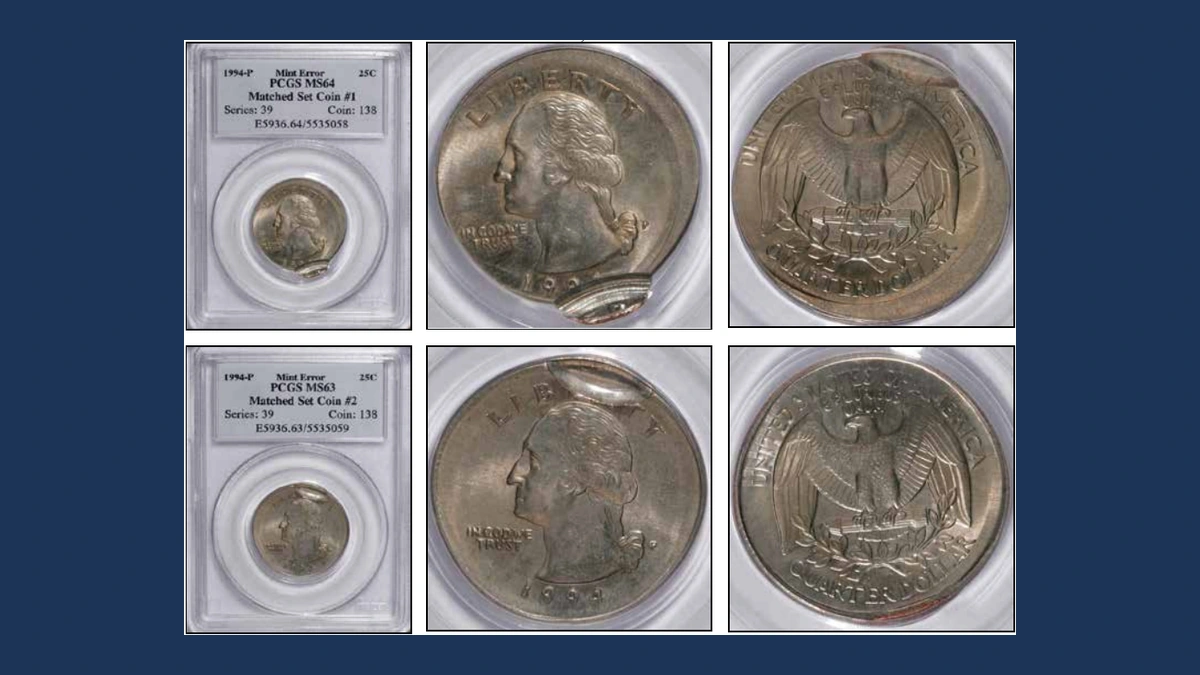
Two coins can preserve related evidence of the same accident in the striking press. A documented 1994-P set contains one PCGS MS64 quarter and another graded MS63.
They are two separate coins, not two blanks fused into a single object. Their affected areas need to fit the same event.
The matched-set description alone does not specify a particular mirror-image impression or a measured indentation. Those features must be checked on the pieces themselves.
Keeping both coins together preserves their relationship. A photograph of only one piece may leave much of the explanation missing.
Estimated Value
The two-coin set sold for $1,610 in June 2008. An estimated $800–$2,500 for the complete set reflects its shared error evidence and the condition of both pieces.
That total is not a separate $1,610 price for each quarter. Nor should it be divided evenly without considering which features each piece preserves.
Clear matching photographs and reliable identification help buyers understand the relationship. Separating the set can remove much of the reason for its premium.
How to Identify
Keep graded pieces sealed while checking the set’s records and photographs. Their different MS64 and MS63 grades help distinguish the two coins but do not prove their physical relationship alone.
Inspect both affected areas with a 10× magnifier and compare how their shapes could have met during striking. Do not press the coins together to test the fit.
If loose measurements already exist, record each weight and diameter separately against 5.67 grams and 24.26 millimeters using a scale and calipers. Check each grooved edge for later damage.
The strongest check is a convincing correspondence between the two affected areas, supported by the matched-set identification, rather than merely two similarly unusual quarters.
Conclusion
The estimated $2–$2,500 range reflects the variety of 1994 mistakes, from fine cracks to a complete matched pair. Extra metal, missing layers, and small wrong blanks require different checks even when their colors look similar.
Keep each actual measurement with its own coin, and compare both faces before naming an error. Leave attached layers and unusual rims untouched; their original boundaries often explain more than a striking photograph alone.