1996 Quarter Error List with Pictures

A $600 sale in January 2023 involved a 1996-P quarter struck on a nickel blank. The wrong piece of metal left the quarter design short of room.
Other 1996 quarter errors are less obvious: a raised crack, weak letters, or an unusual strip of edge grooves. Estimated values across these types range from $5 to $1,500.
The sections below explain what each mistake looks like, how it formed, and which checks help separate it from damage.
1. 1996 Washington Quarter Die Crack
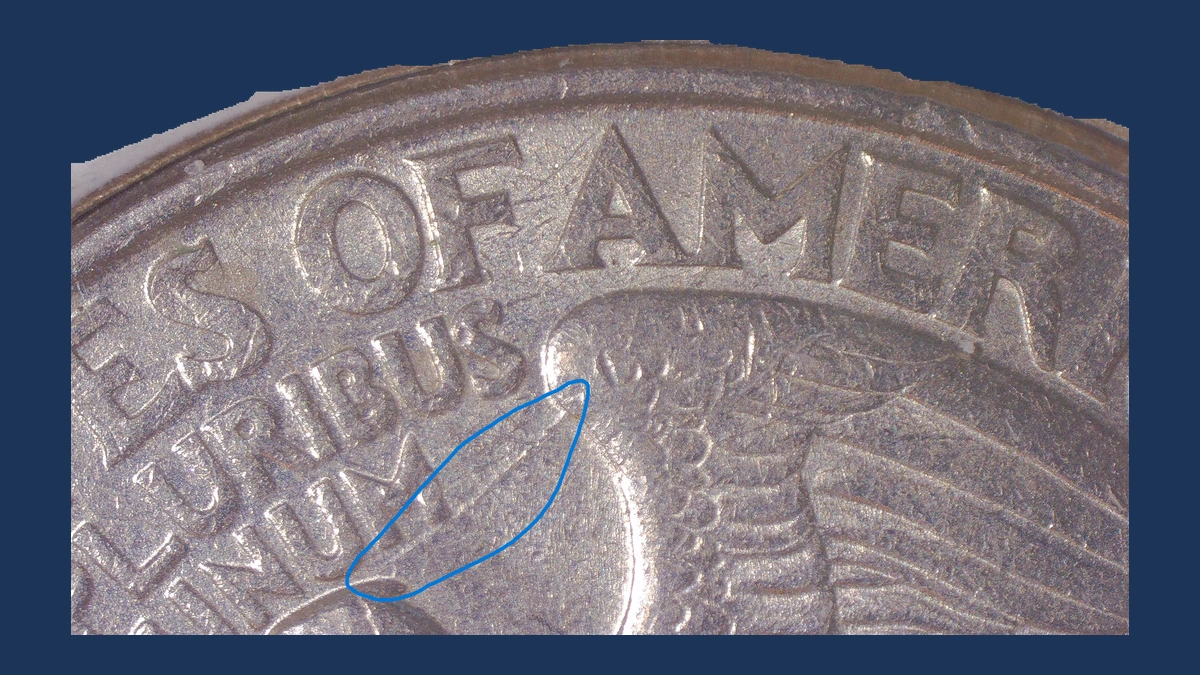
A thin raised line can travel across the eagle side of a quarter. It forms when a die, the tool that stamps the design, develops a crack.
Metal pressed into that opening leaves a ridge on the coin. A Philadelphia crack is reported for 1996, while a separate illustrated report shows a line from the eagle’s wing toward UNITED.
The illustrated line’s mint is not established. It is useful for understanding the shape, but should not be treated as proof that every Philadelphia crack follows that exact path.
Estimated Value
Estimate $5–$75 for a recognizable 1996 die crack. A short, faint ridge on a worn coin usually has limited appeal, while a longer visible line on clean surfaces can attract more interest.
Condition should be judged around the line, not just at its strongest point. Scratches or corrosion may make a crack appear bolder in a photograph without making the coin more desirable to a buyer.
How to Identify
A crack should rise above the background. Move a small light from one side to the other and watch the ridge cast its shadow.
Under a magnifier, follow the line where it crosses the design. A scratch often cuts through finished details and may push a thin lip of metal to one side instead.
On the illustrated eagle-side example, inspect the wing and the nearby E and D in UNITED. That location helps compare the picture, but it cannot establish the mint of a different coin.
Read the actual mintmark to the right of Washington before labeling your example. Then return to the line itself: the raised, continuous ridge is what supports a crack.
2. 1996 Washington Quarter Grease-Filled Details
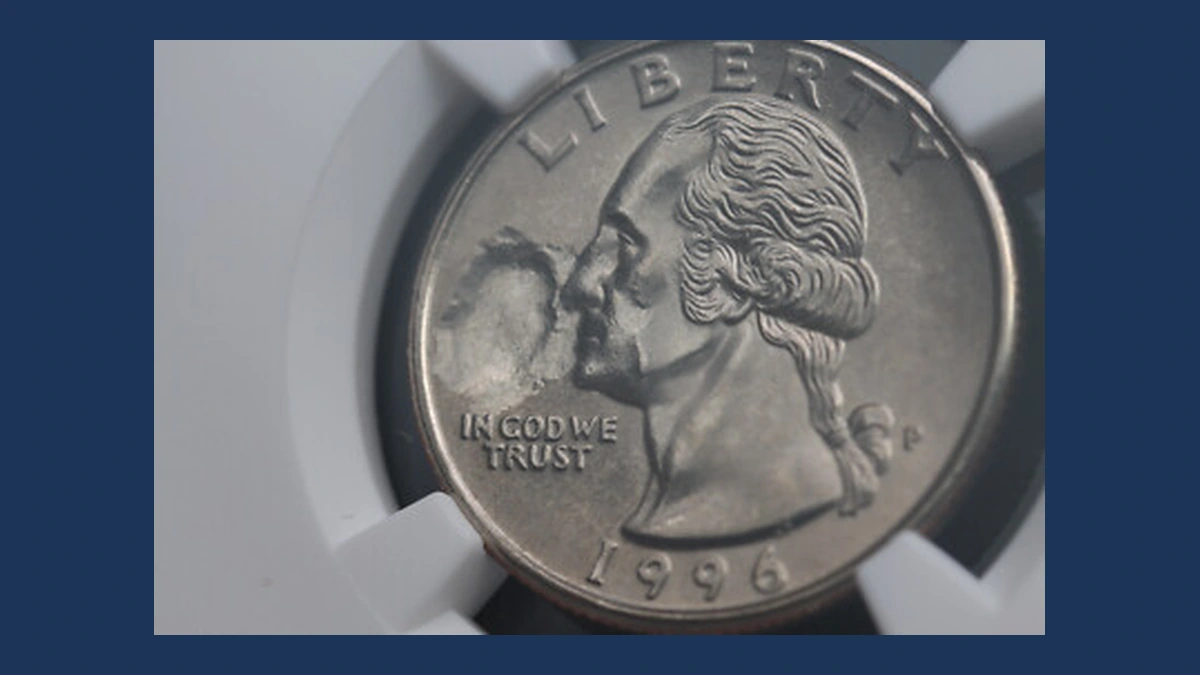
One or two letters can fade into the surface while the surrounding design remains readable. Grease mixed with debris can fill small spaces in a stamping tool and prevent those details from forming.
The reported 1996 type involves weak lettering or eagle details, rather than an identified cloth or wire impression. The precise affected area and mint need to be checked on the individual coin.
This is not the same as a defective blank. Here the metal may be normal, but part of the tool cannot transfer its design properly.
Estimated Value
Small grease-filled areas can be estimated at $10–$50; more obvious missing detail can reach roughly $50–$150. The overall range is $10–$150.
Sharp letters beside the weak patch make the contrast easier to see. Wear can blur that difference.
Several faint letters on a worn coin may have less appeal than one clearly blocked letter on an unworn piece. Judge the visible contrast, not just the number of missing details.
How to Identify
Compare the weak area with the highest parts of Washington’s portrait. If the hair and cheek are heavily worn too, ordinary circulation may explain much of the missing detail.
Now examine a strong letter immediately beside a weak one through a magnifier. A smooth transition can fit a blocked tool, while scraping marks across the missing letter suggest that metal was removed later.
Check both faces without assuming the eagle side must be affected. A broad, uniformly faint design also needs comparison with a weak strike.
For grease filling, look for localized lost detail next to areas that the same strike formed normally.
3. 1996 Washington Quarter Reported Doubled Ear
An extra outline at the upper rear of Washington’s ear is described as doubling in an illustrated 1996 report. This is a small feature, so its position matters more than the impression that the whole portrait looks blurry.
A doubled die carries repeated detail in the stamping tool itself. Coins from that tool can repeat the same shape.
The ear report does not establish a mintmark or recognized variety number. It belongs here as a reported doubled-ear example, without assigning it the identity of a different year’s better-known doubled ear.
Estimated Value
For an established doubled-ear example with clear separation, use an estimated $20–$150. Small extra outlines hidden by contact marks or wear will generally be less attractive than a clean, easy-to-see feature.
That estimate depends on the doubling being identified correctly. A flat shelf caused during striking, or a bright reflection beside the ear, should not be priced as a doubled die just because it looks doubled in one photograph.
How to Identify
Enlarge the upper rear of the ear, rather than starting beneath the earlobe. The illustrated 1996 ear report concerns that upper area.
Use a 10× magnifier and change the light angle. Does the extra outline remain visible when the reflection moves?
Compare its shape with the ear itself. A flat, shaved-looking shelf can come from movement during the strike instead of doubling in the stamping tool.
Keep the date and mintmark in a wider photograph as well. Close-ups alone can hide which coin is being shown.
Match the full extra shape in the correct location before treating a similar-looking line elsewhere on Washington as the same feature.
4. 1996 Washington Quarter Broadstrike
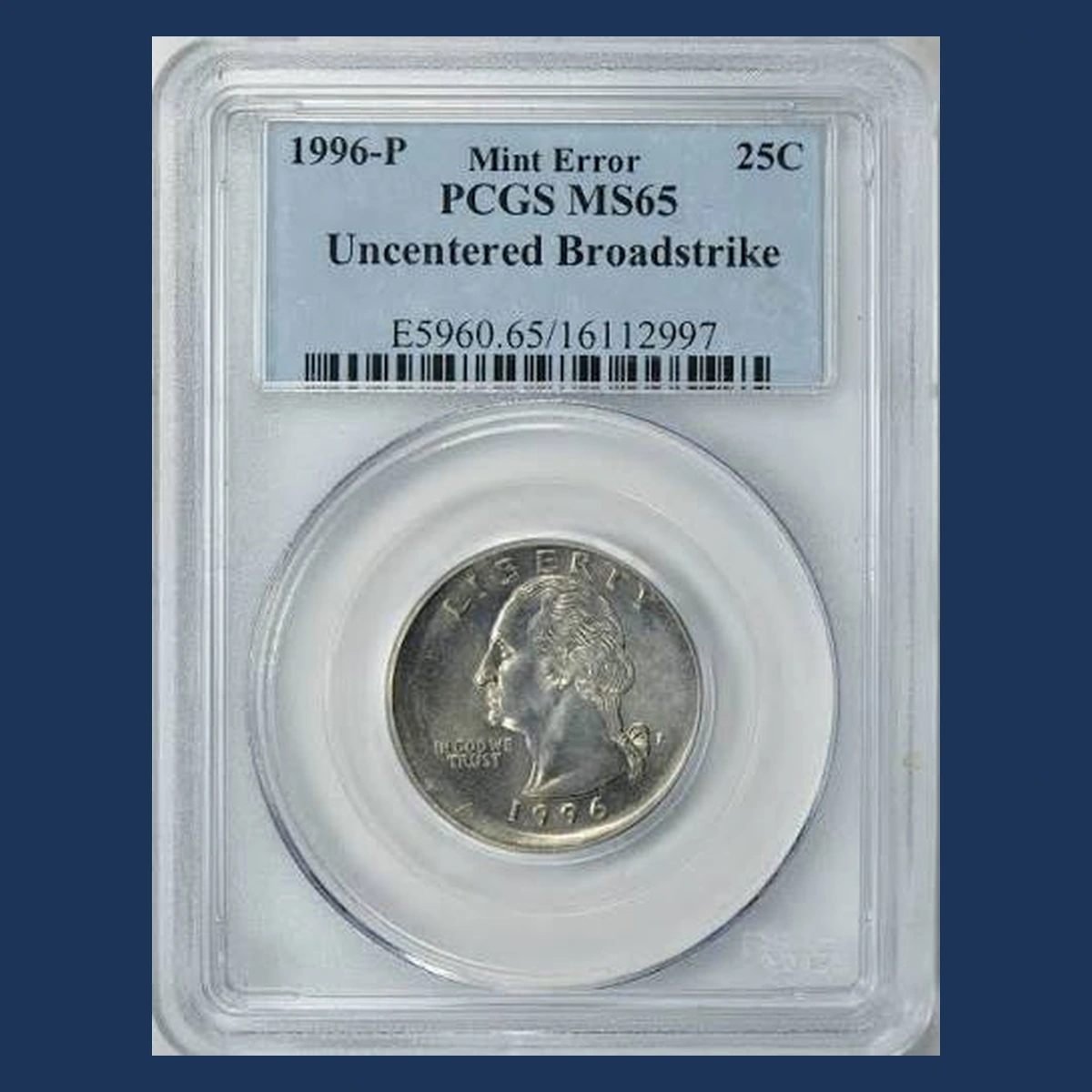
A quarter can spread beyond its usual width when the collar fails to contain it during striking. The collar is the ring that normally forms the coin’s grooved edge.
Philadelphia broadstrikes include a coin made from a Type I blank, meaning a blank without its prepared raised rim. That name describes blank preparation, not a special Washington design.
A Denver example retains a narrow trace of grooves beside its front face. The small contact band can survive even though much of the expanding edge escaped the collar’s normal grip.
Estimated Value
A readable broadstrike fits an estimated $30–$250 range. Mild expansion tends to be less expensive than a wide, attractive example with complete lettering and a clean portrait.
The narrow edge-groove band on the Denver coin adds something useful to examine. It does not make the normal orientation of the stamping tools an extra error, and it should not be priced as a second unrelated coin beside the broadstrike itself.
How to Identify
A complete design inside an expanded border points toward a broadstrike. Compare both faces with a normal quarter before deciding whether any lettering was actually lost beyond the blank.
Then use calipers to check the width against the ordinary 24.3 mm diameter. Take readings in several directions if the outline is uneven.
For the Denver example, tilt the edge toward a magnifier and locate the narrow groove band next to the front. Most of the expanded edge looks different from that small contact strip.
Flattening a finished quarter can also widen it, but usually distorts completed details. Look for the expanded struck shape and collar-contact pattern together, rather than using width alone.
5. 1996 Washington Quarter Struck Through a Late Die Cap
A coin stuck to a stamping tool can block the next blank from touching that tool directly. As the stuck coin thins through repeated use, later coins may receive blurred or incomplete designs through it.
Those later coins are described as struck through a late die cap. They are the receiving coins, not the stuck cap itself.
A Philadelphia example graded ANACS MS61 is reported for 1996. Its affected face must be identified from the actual coin, rather than assuming that every cap-related error blocks the Washington side.
Estimated Value
An auction index lists the Philadelphia MS61 late-cap example at $59 in 2010. MS61 describes a coin without circulation wear but with noticeable marks.
Estimate $50–$250 for comparable pieces. Readable ghost detail can help a buyer understand why the blurred face looks unusual.
The clearer face should also be checked for wear or distracting marks. An obvious cap-softened impression on an attractive coin usually presents better than an indistinct, damaged-looking surface.
How to Identify
Examine the clearer face first so you can establish the date, mint, and normal condition of the coin. Then compare its sharpness with the broad blur on the other face.
A magnifier may reveal traces of the original design transmitted through the thin metal cap. Their pattern should fit a blocked strike rather than a surface ground flat after minting.
Inspect any remaining detail beside the blur for sanding lines or an altered edge. The receiving coin need not have the high bowl-shaped walls of a cap itself; the contrast between a normally struck face and the cap-softened impression is the relevant feature.
6. 1996 Washington Quarter Clipped Blank
A blank can be cut with part of its metal missing before it reaches the press. The finished quarter then has a gap instead of a complete round edge.
One Denver example is described as 45% clipped and weighs 3.16 g. A separate Denver coin has two curved clips, showing two missing sections rather than one.
The first coin’s percentage and weight do not describe the double-clip example. Both belong to incomplete blanks, but their individual outlines must be preserved when comparing photographs or deciding which example a description refers to.
Estimated Value
The Denver 45% clipped coin, graded NGC MS66, brought $79 in July 2021. Its large missing section did not produce an exceptionally high price.
An estimated $40–$400 covers smaller through more striking clips. Buyers need a readable date and convincing original edges around the gap.
Two curved clips can create an appealing outline. A second gap does not simply double the price of a comparable single-clip coin, however.
How to Identify
For a loose coin, record the weight before comparing the outline. The 3.16 g measurement belongs to the documented 45% example, while a normal clad quarter weighs 5.67 g.
Use a magnifier to study the gap edges for metal flow from the strike. Fresh sawing, filing, or shearing marks can show that someone removed metal later.
A weak rim opposite a curved gap can support a genuine clip, though it is not equally visible on every coin. Photograph the whole outline so the opposite edge remains part of the comparison.
On the double-clip coin, inspect each missing section independently. Both should fit the same untouched struck surfaces, not merely resemble two bites cut into a finished quarter.
7. 1996 Washington Quarter Missing Reverse Clad Layer
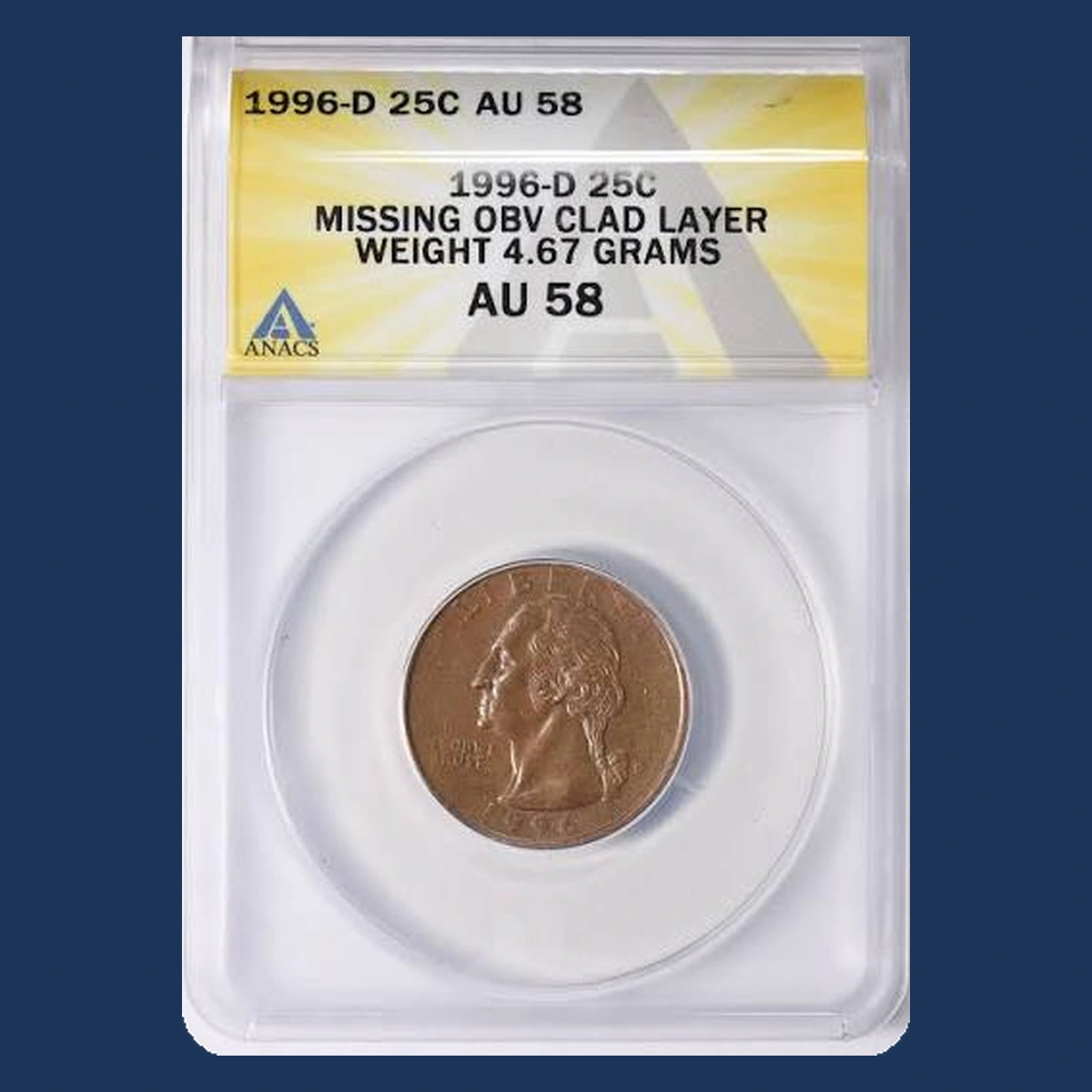
The eagle side can look copper-colored when its silvery outer layer is missing. A normal clad quarter has two silvery layers surrounding a copper center, so losing one face changes both color and weight.
The Denver example was described as missing the reverse layer and weighing 4.7 g. Its front retains the normal-looking outer surface.
That combination is different from a coin stained brown on both faces. Color is a useful clue, but the layer structure and reduced weight explain why this is a metal error rather than simply toning.
Estimated Value
The 4.7 g Denver example graded NGC MS63 sold for $79 in January 2015. That provides a real lower-priced example of the error rather than a four-figure assumption based on color alone.
Use an estimated $75–$400 for similar coins. An evenly exposed copper reverse and clean, readable design usually present better than a scratched or corroded surface, even if the more damaged coin initially appears brighter in photographs.
How to Identify
Read the D mintmark and turn to the eagle. The copper-colored face should be the reverse for this example.
A scale can check a loose coin against the normal clad weight of 5.67 g. The recorded 4.7 g measurement is helpful, but weight loss alone does not identify which layer was lost.
Inspect the edge under magnification and follow the remaining silvery layer beside the copper. Compare this with the normally silvery front face.
Do not polish a colored patch to test it. Cleaning can remove useful surface evidence.
Look for a consistent exposed copper reverse, the reduced mass, and the matching edge structure together; staining over intact cladding does not produce that same combination.
8. 1996 Washington Quarter Off-Center Strike with a Blank Reverse
Only a small portion of the front design appears on a Philadelphia quarter described as 80% off-center with a blank reverse. The rest of the front missed the stamping tool, while the back did not receive its normal eagle design.
The blank reverse is an additional blocked-contact feature, not the inevitable result of being far off-center. Ordinary off-center coins can still show design on both faces.
This type is often called uniface, meaning one-sided. It should not be confused with a quarter whose eagle was removed by grinding after minting.
Estimated Value
An auction index reports $60 in 2020 for the Philadelphia NGC MS65 example. That result shows why an extreme off-center percentage alone does not establish a high price.
Estimate $60–$450 for comparable one-sided combinations. The surviving date and clarity of the small struck portion matter.
Buyers also need to see the blocked back. A photograph of the front’s dramatic blank crescent leaves out half of this coin’s unusual appearance.
How to Identify
Locate the small area that received Washington’s design, then turn the coin over to inspect the corresponding back area. An ordinary off-center strike would normally leave some eagle-side detail where the blank passed between both tools.
Use a magnifier and low light across the blank reverse. Parallel sanding lines, a dished surface, or remaining design ground down to the same level can reveal later removal.
Photograph the edge as well as the two faces. A clear date and P mintmark help identify the coin, but the distinctive check is the combination of a struck front portion and an untouched reverse lacking its normal impression.
9. 1996 Washington Quarter Off-Center Strike
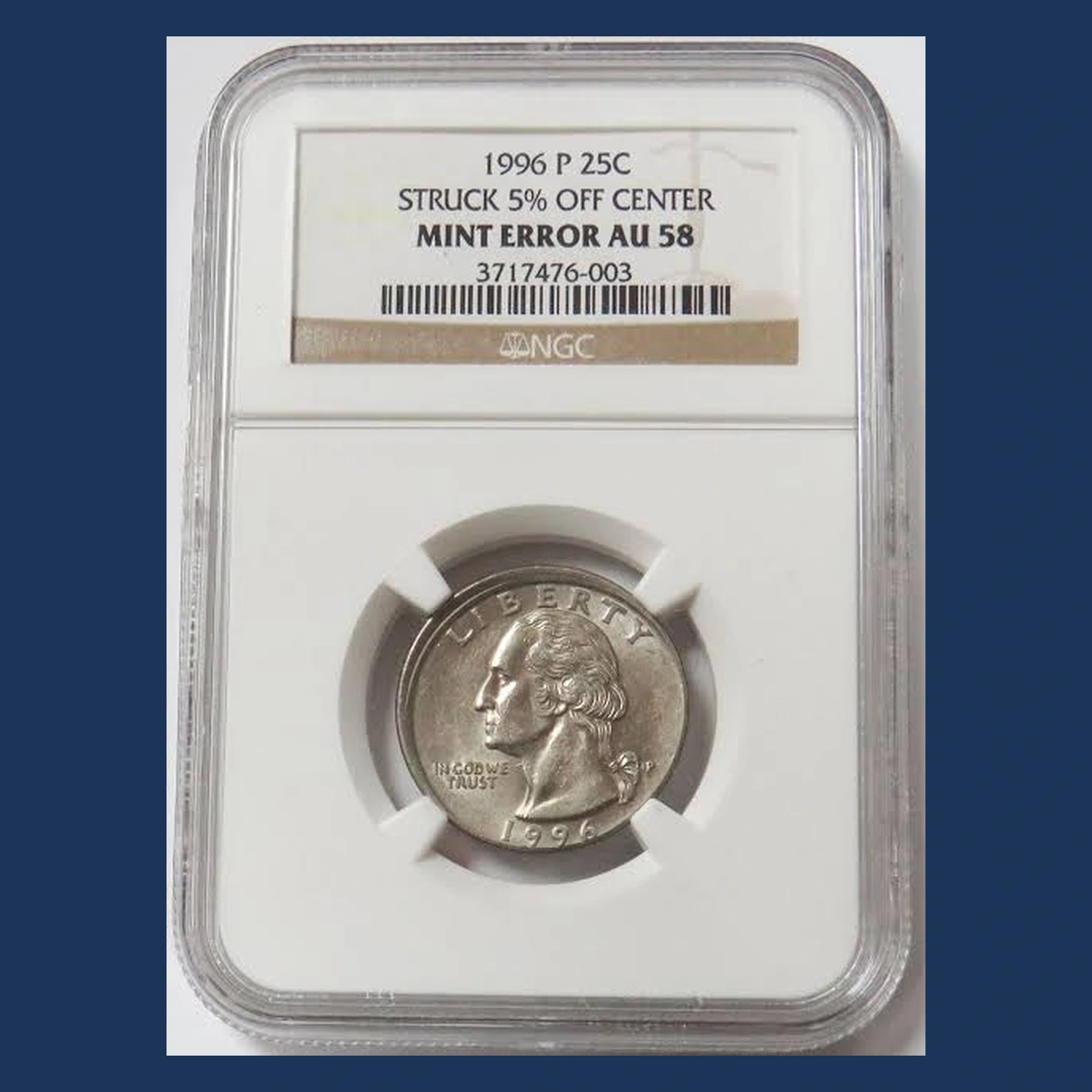
A Philadelphia quarter can carry most of its design on one side of the blank, leaving a bare crescent opposite it. The blank was not centered between the stamping tools when the press closed.
A documented example is described as 25% off-center and graded PCGS MS64. Other amounts of displacement belong to the same mechanism, not separate kinds of error.
Unlike a clipped blank, the metal has not been removed. The missing part of the design never reached the blank because it lay outside the striking area at that moment.
Estimated Value
The Philadelphia 25% off-center MS64 example is listed at $126 in December 2020. A working estimate for comparable 1996 off-center quarters is $50–$500.
A date that remains readable is useful, but condition and the amount of recognizable design also affect price. A bigger blank crescent may look more dramatic without selling for more, especially when scratches, wear, or lost identifying details make the coin less attractive.
How to Identify
Lay a normal quarter beside the suspected error and compare the missing design areas. On an off-center strike, part of the picture is absent even though unstruck metal remains elsewhere.
Check the eagle side too. A front design pushed toward the edge while the back stays centered is more consistent with one misplaced stamping tool.
Follow the boundary between struck and blank metal under a magnifier. A ground-down imitation can leave abrasive lines across that boundary or damage the edge.
Finally, read the date and P mintmark from the surviving front. Those details connect the off-center appearance to a 1996 Philadelphia quarter instead of relying on a seller’s description of an undated piece.
10. 1996 Washington Quarter Multiple Strikes
A second strike can land almost beyond the edge of a coin that was already struck once. Only a small part of the repeated design may remain visible.
Philadelphia examples include second strikes described as 85% and 96% off-center. These figures describe the position of the second strike, not the amount missing from the first design.
Another Philadelphia coin combines multiple strikes with a broadstrike. Its metal also spread outside normal collar control, but the exact number and direction of its strikes should not be invented from that general description.
Estimated Value
Auction listings place the 85% second-strike MS60 coin at $264 in 2022 and the 96% example at $61 in 2022. The latter was graded AU58, meaning slight wear.
The broadstruck multiple-strike MS65 example is listed at $348 in May 2021. Estimate $100–$700 for clear, attractive multiple strikes, with worn or less desirable pieces sometimes below that range, as the $61 sale demonstrates.
How to Identify
Look at the extreme edge before searching the middle for a second portrait. When the second strike is 85% or 96% off-center, only a small patch of its design may touch the coin.
A magnifier can help connect tiny repeated letters or image fragments. They should belong to another coherent impression rather than a random dent.
The separate broadstruck example needs an outline view. Compare its expanded border with the overlapping design groups instead of assuming every distorted line records an extra strike.
Do not count striking blows from the word “multiple” alone. Enough linked design detail must survive to support any claimed number of strikes on the actual coin.
11. 1996 Washington Quarter Struck on a Nickel Blank
A nickel blank is too small to hold a quarter’s complete design. When one reaches the quarter press, the finished piece can lose outer lettering while keeping much of Washington and the eagle.
Philadelphia and Denver examples are recorded for 1996. One Philadelphia coin weighs 4.9 g, while a Denver Type I blank example is listed at 5 g.
Type I means the blank had not received its prepared raised rim. Neither example started as a finished nickel, so surviving Jefferson or Monticello designs are not required for this wrong-blank error.
Estimated Value
A Philadelphia PCGS MS63 example sold for $600 in January 2023. Another Philadelphia coin, graded NGC MS62 and weighing 4.9 g, brought $204 in April 2020 at Heritage Auctions.
Estimate $150–$1,200 across identified nickel-blank examples. The completeness of the date, surviving outer design, and surface quality affect value; the P or D mintmark alone does not explain the difference between two auction results.
How to Identify
A normal clad quarter weighs 5.67 g and measures 24.3 mm. A nickel blank starts near 5 g and 21.21 mm, although striking it with quarter tools can change its final outline.
Use a scale and calipers on a loose candidate, then examine the edge for the nickel blank’s uniform metal. It should not display the normal quarter’s copper-centered sandwich.
Now compare the lost outer lettering on both faces. A coin ground smaller after minting may also lose letters, but fresh abrasive edges or the quarter’s layered metal would contradict the nickel-blank claim.
The useful combination is nickel-like mass and metal, together with a genuine quarter strike that does not fit the smaller blank.
12. 1996 Washington Quarter Collar Shimmy Combination
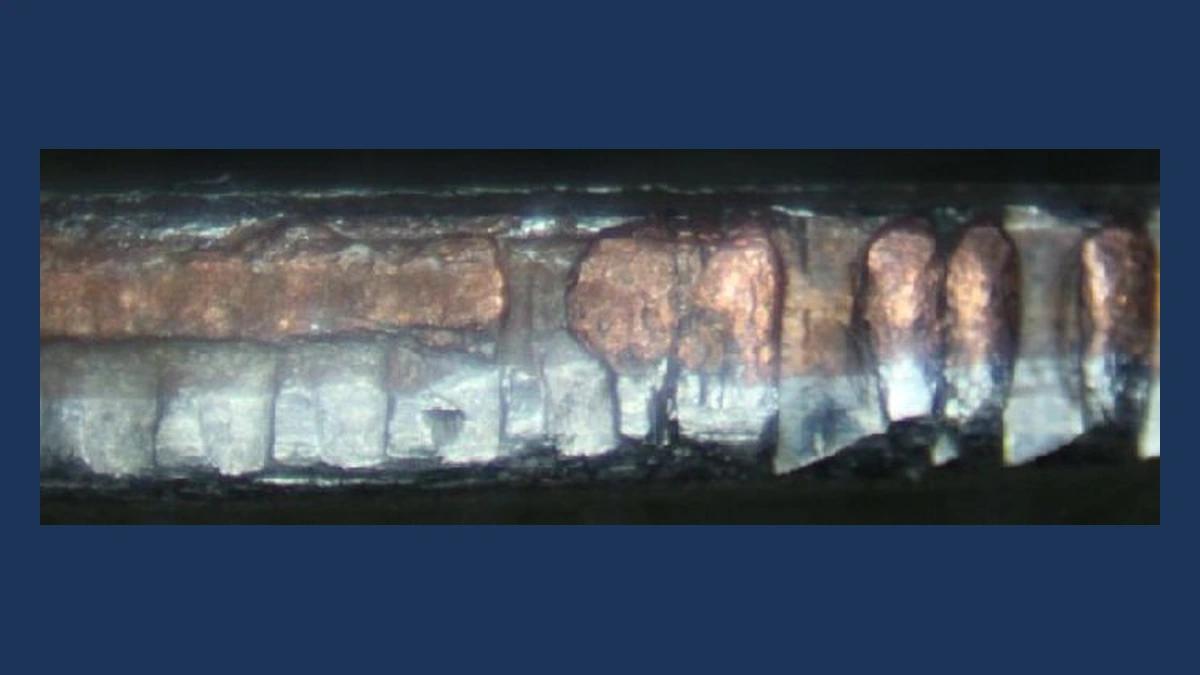
Grooves along one part of this quarter’s edge were pushed sideways or squeezed together. The collar moved back and forth while the coin remained held between the stamping tools, an effect called collar shimmy.
The Philadelphia example also has a strongly cupped unstruck crescent and a misplaced front design. These features belong to one complicated strike.
The squeezed grooves run roughly from six to nine-thirty on the illustrated coin. This movement differs from an ordinary broadstrike, where the blank mainly spreads outward because the collar does not contain it.
Estimated Value
For an established collar-shimmy combination of this kind, use an estimated $250–$1,500. This is an estimate for the unusual mechanism, not a claim that this particular coin sold within the range.
Clear edge photographs are especially important to its appeal. The crowded grooves, cupped crescent, and misplaced design must remain understandable as one coin; adding separate full prices for those related features would exaggerate what a buyer is actually purchasing.
How to Identify
The decisive view is along the edge. A magnifier should reveal grooves pushed sideways or bunched together, rather than merely a smooth strip where grooves are absent.
Compare the affected section with the undisturbed edge. The Error-Ref example also shows a strongly cupped unstruck crescent, which helps connect the edge disturbance with the strike.
Inspect the front separately for its displacement toward about six-thirty. Do not treat an uneven rim by itself as proof of collar movement.
Post-mint squeezing can damage grooves too, often leaving broad crushing or tool marks. Several related striking features should agree before the crowded edge is identified as this unusual collar-shimmy combination.
Conclusion
A small raised crack may fall near $5, while an established unusual collar combination can reach an estimated $1,500. Between them are readable striking errors and coins made from the wrong blank.
Compare the visible feature first, then consider condition and price. Keep the original surfaces untouched, and photograph the edge whenever its shape is part of the error.