2011 Quarter Error List with Pictures

A missing letter and a copper-colored face tell very different stories on 2011 quarter errors. One involves a blocked design; the other can involve missing metal.
For a price comparison, a 1973 quarter missing its front outer layer sold for $384 in January 2022. That is an older coin, not a 2011 sale.
Estimated values below run from $2 to $1,500, with ordinary lookalikes worth face value. Read on to separate the five park designs and their reported errors.
1. 2011 America the Beautiful Quarter Misaligned Die
One face can sit closer to the rim without the whole coin being struck off center. This is called a misaligned die.
A die is the steel tool that stamps a coin’s design. When one tool sits out of place, its image moves while the opposite image can remain centered.
A collector initially described a Vicksburg quarter as off center, then accepted this different explanation. The report concerns uneven placement, not a measured rotation.
Its back shows the USS Cairo, the Civil War ironclad ship.
Estimated Value
Allow an estimated $5 to $100 for a clear one-face shift on an ordinary 2011 quarter. A tiny difference in rim width can attract little extra money.
Larger shifts become more interesting when they visibly crowd letters against the edge. A clean surface also makes the effect easier to enjoy.
This range applies to a genuine tool-position error, rather than a bent coin or a photograph taken at an angle.
How to Identify
Lay the quarter flat and photograph each face directly from above. A tilted photograph can make one side look closer to the edge.
Compare the gap outside the lettering around the whole front. Turn the coin over and repeat the comparison around the park design.
For a one-tool shift, one design should be displaced while the other stays much nearer the center. If both designs run off the same area of the blank, investigate an off-center strike instead.
Inspect the narrow rim for dents that could have changed its shape after minting. The Vicksburg discussion changed its original identification, so the headline alone is not a reliable guide.
2. 2011 America the Beautiful Quarter Clashed Designs
Faint lines from the opposite face can appear where the design should leave open space. Collectors call these clash marks.
They form when the two stamping tools hit each other without a blank between them. The damaged tools can then leave traces of the opposite design on later coins.
Reports include a Denver Vicksburg quarter and a Philadelphia Olympic quarter. Their exact transferred shapes still need a matching photograph.
Olympic shows an elk, the Hoh River, and Mount Olympus; Vicksburg shows a ship.
Estimated Value
A visible, genuine clash on these ordinary quarters has an estimated value of $10 to $200. Fine traces that need careful lighting belong near the lower end.
A clear shape from the opposite face can bring stronger interest than an isolated line. Sharp surrounding detail helps collectors follow that shape.
Use the estimate for an identified clash on the correct park design, rather than any scratch crossing Washington’s portrait.
How to Identify
Place a normal quarter of the same park beside the suspected error. Study the normal design before trying to name an extra line.
A Vicksburg outline must relate to the ship side or Washington’s side, as appropriate. Olympic needs its own comparison; the two parks do not share the same back design.
Use a magnified photograph and follow each unusual line across the surface. A clash can preserve only part of a larger shape, but those surviving parts should fit together.
Random raised lines may instead come from cracks in a tool. Sunken scrapes with torn metal suggest later damage.
Do not press coins together to recreate the mark; compare their photographs instead.
3. 2011 America the Beautiful Quarter Doubled Dies and Mechanical Doubling
An extra edge beside a letter does not always mean the stamping tool carried two images. That distinction matters especially on the 2011 Vicksburg design.
The collector who reported doubled sunken lettering later accepted mechanical doubling, an effect produced during the strike. That example is not an established doubled die.
Separate reports describe front doubling on a Denver Gettysburg quarter and back doubling on a Philadelphia Glacier quarter. A doubled die carries the repeated design before striking coins.
Those reports require their own feature matches.
Estimated Value
True, visible doubled-die features have an estimated range of $5 to $250 on the reported ordinary 2011 issues. Strong split details and a reliable identification support the upper end.
The corrected Vicksburg mechanical-doubling example belongs in a different price category. Allow roughly $0.25 to $2 for an ordinary coin with that appearance.
A large seller price does not turn a flat doubled edge into a valuable doubled-die variety.
How to Identify
First decide whether the lettering stands above the surface or sits below it. Vicksburg’s E PLURIBUS UNUM is sunken, so ordinary raised-letter comparisons can mislead.
For the Gettysburg report, examine Washington’s side for rounded extra edges or split corners. The 2011 date is on the park side, not beside his portrait.
For Glacier, compare the mountain goat, nearby ground, and back lettering with a normal example. A clear photograph should show which detail repeats, not just a blurry outline.
Change the light direction and check whether a second edge remains visible. Flat, shelf-like trimming can come from movement during striking.
Match the actual repeated feature before paying a doubled-die premium.
4. 2011 America the Beautiful Quarter Die Cracks, Chips, and Cuds
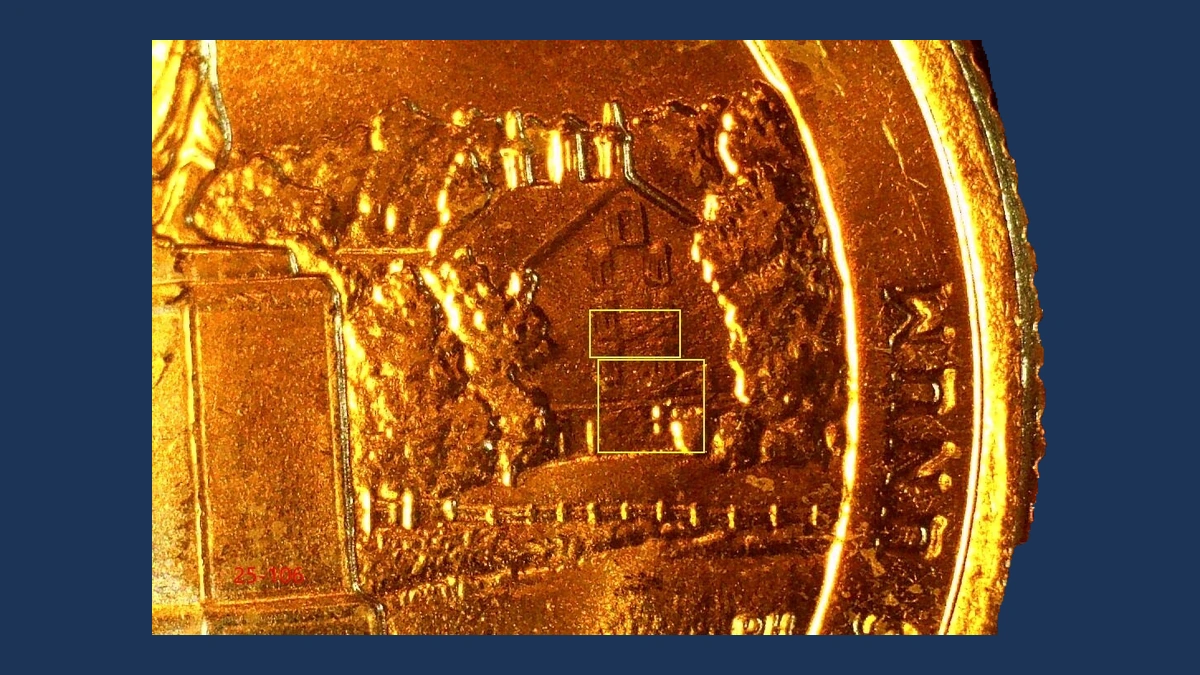
A thin raised line can grow into a larger lump as a stamping tool breaks. Metal flows into the damaged space and leaves extra relief on the coin.
Gettysburg reports place raised lines near the rim and monument base. A Philadelphia Olympic chip is also reported, without a fixed location.
A rim-connected break is called a cud. The Denver cud report does not identify its park.
Vicksburg cracks and cuds remain reported possibilities, so a Denver lump alone does not establish that park’s example.
Estimated Value
Small raised lines or chips commonly fit an estimated $2 to $30 range. A larger break that clearly joins the rim can reach an estimated $30 to $300.
The amount of replaced design matters more than the nickname given to a lump. An obvious feature on an unworn coin is easier to sell than a tiny bump on a worn one.
Apply the higher range only after confirming a genuine rim-connected break.
How to Identify
Draw a simple outline of the raised feature on a photograph. Does it form a narrow line, a small island, or a patch joined to the rim?
Those shapes distinguish a crack, a chip, and a cud. A cud should replace design near the edge rather than look like a blob resting on top.
On Gettysburg, compare the monument base and rim against a normal coin. Follow any extra raised line through the surrounding design, using light from more than one direction.
For Olympic or the park-unspecified Denver report, identify the park before searching for a named feature. Inspect the surface beside a lump for scrape marks or displaced metal from a later impact.
5. 2011 America the Beautiful Quarter Peeling or Separating Metal
A bubble or peeling patch on a Gettysburg quarter raises a question about the metal itself. The visible defect is different from a raised line left by a broken stamping tool.
Ordinary quarters have two outer metal layers bonded to a copper center. Separation can occur within metal or along a bond between layers.
The Gettysburg report describes bubbling and peeling without settling which boundary failed. Heating a finished coin can also raise bubbles.
The shape alone therefore does not establish a mint-made separation.
Estimated Value
For a confirmed mint-made peel or partial layer separation, use an estimated $25 to $500. A small shallow patch sits toward the lower end.
A large attached flap can be more appealing when the original design remains visible across it. Cleaning, corrosion, or a bent flap reduces that appeal.
A heat-damaged quarter does not qualify for this error range, even if the bubble looks dramatic in a close-up photograph.
How to Identify
Leave a lifted flap alone. Pressing or pulling it can remove the evidence that explains how it formed.
Photograph the boundary from above and from the edge. Look for the design continuing across the lifted area, and note whether the exposed metal has a different color.
For a loose coin, use a scale to check whether metal has been lost; an ordinary clad quarter weighs about 5.67 grams. A normal weight can still occur when a flap remains attached.
Heat bubbles often come with altered color or other surface damage, but photographs alone may not settle the cause. Have the intact coin examined before treating a bubble as a valuable mint error.
6. 2011 America the Beautiful Quarter Broadstrikes
The design can fit on a coin that has spread wider than it should. This happens when the surrounding collar fails to contain the metal during striking.
The result is a broadstrike, often with a wide, flattened border. Unlike an off-center strike, it keeps the main design on the blank.
The 2011 reports include Gettysburg and a Denver Chickasaw example. Chickasaw carries Lincoln Bridge on its back.
Expansion and the edge structure matter more than one unusually wide rim in a photograph.
Estimated Value
An estimated $30 to $500 covers modest through conspicuous broadstrikes on these ordinary quarters. A nearly normal-looking border belongs near the low end.
A much wider coin with clear park details offers a stronger display piece. Condition and a professional error description can also affect the price.
Compare the actual spread before choosing a price within the range; a small one-face shift does not have the same appearance or cause.
How to Identify
Measure a loose coin across more than one direction with calipers. The normal quarter diameter is about 24.26 millimeters, so a broadstrike should show real expansion.
Next, check that the main front and back designs fit on the metal. A large blank crescent with missing design points toward an off-center strike instead.
Inspect the edge under good light. The collar normally gives the edge its grooves, and a strike outside it changes that edge structure.
A coin flattened after minting can also become wider. Look for crushed lettering and scraped surfaces before calling it a broadstrike.
The Chickasaw bridge or Gettysburg monument should remain recognizable within the expanded border.
7. 2011 America the Beautiful Quarter Clipped Blanks
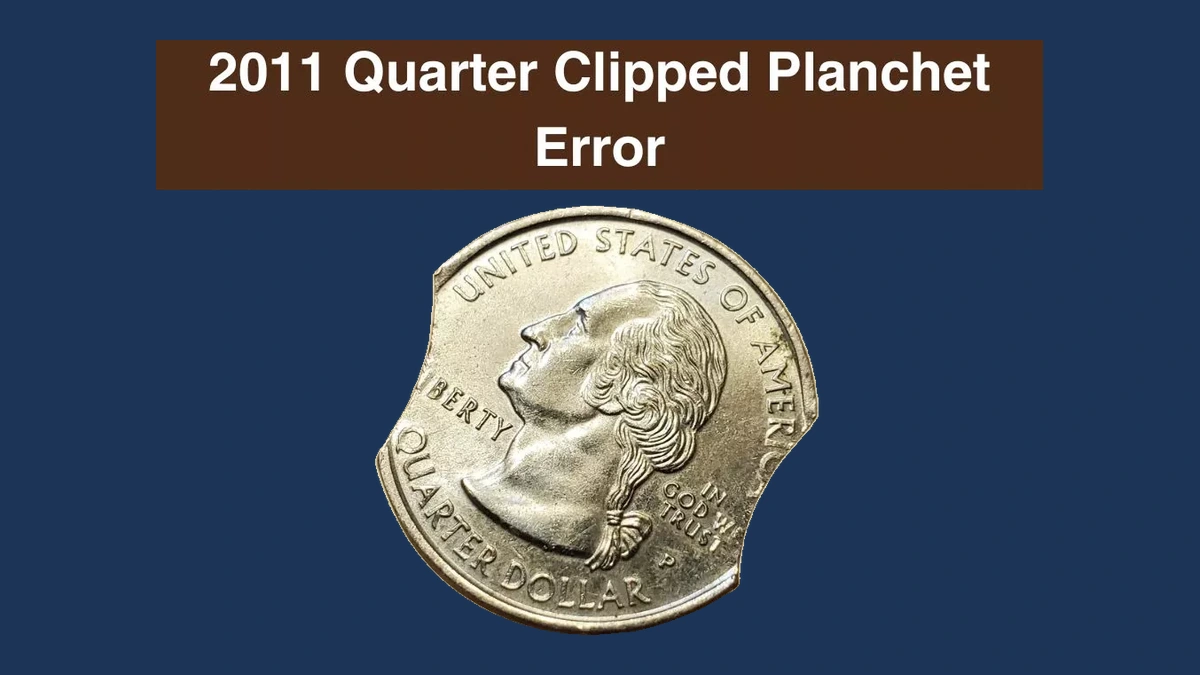
A smooth missing section of the edge can begin before a quarter receives its design. The cutting equipment may overlap an earlier hole or reach an incomplete part of the metal strip.
The undersized blank can then pass into the press and become a clipped coin. A Denver Glacier example is reported for 2011.
Its missing area has not been fixed to a particular position or size. The opening must be judged from the actual coin.
A bite-shaped notch made later is not the same error.
Estimated Value
For a genuine 2011-D Glacier clip, an estimated $25 to $500 covers small through large visible losses. A readable date and clear mountain goat make the coin easier to identify.
Larger clips usually draw more attention, but rough damage around the opening can reduce value. A small, clean clip may be preferable to a badly scratched larger example.
The estimate assumes a mint-made incomplete blank, rather than a section cut from a finished quarter.
How to Identify
Start at the opening rather than at the remaining rim. View it from both faces and then from the edge to follow the metal through its full thickness.
A genuine clip can show softened design near the missing area as metal flowed during striking. The opposite rim may also be weak, although that clue is not required on every example.
Check the opening for saw marks, fresh cuts, or a sharp burr. Those features can indicate later removal.
Weigh a loose specimen and compare it with the usual 5.67 grams. The loss should make sense beside the size of the gap, while the date and D identify the reported Glacier issue.
8. 2011 America the Beautiful Quarter Struck-Through Areas and Missing Letters
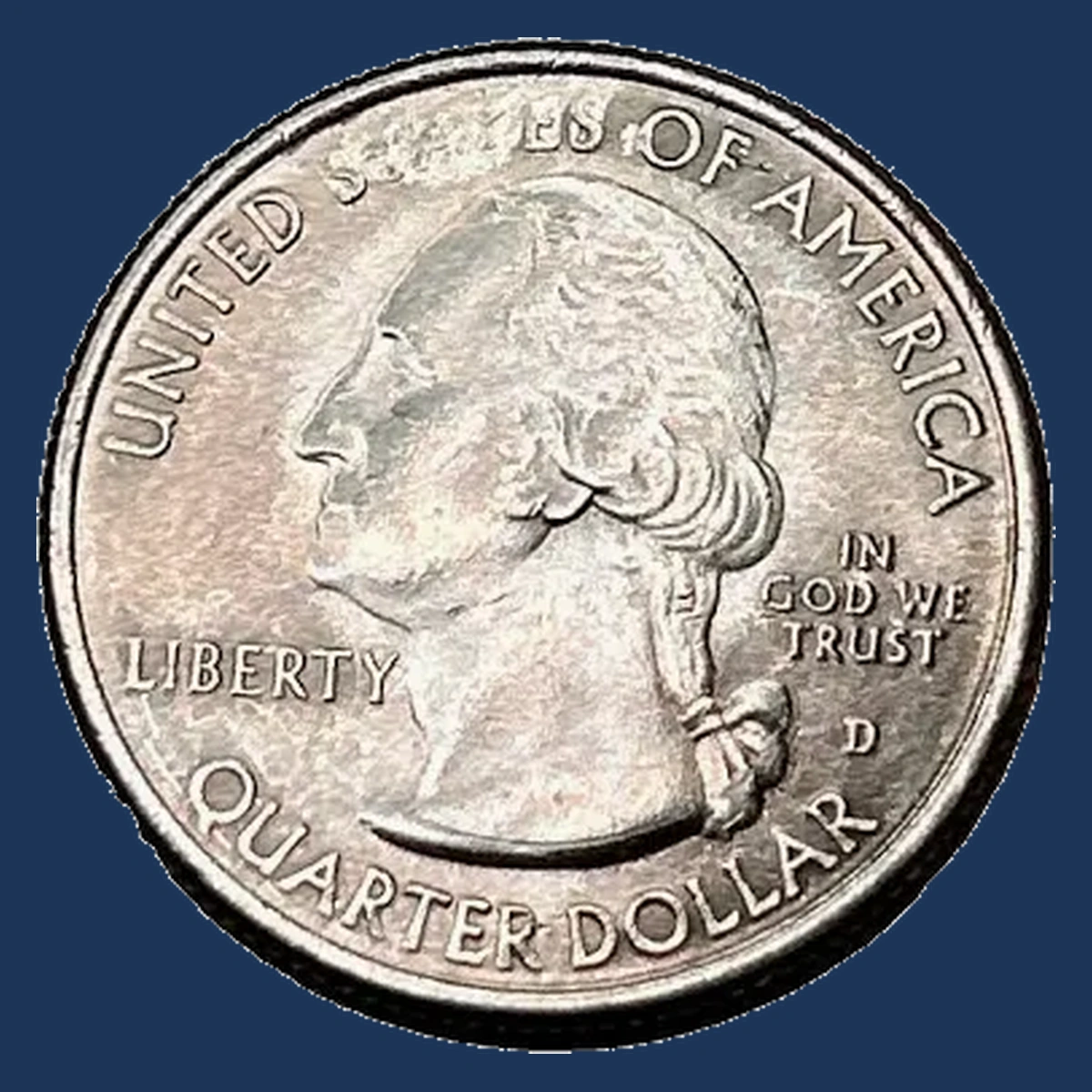
The missing L on a reported Glacier quarter comes with a weak I and weak hair detail. A forum explanation linked that combination to grease blocking the stamping tool.
Material between the tool and blank can also leave a depression or erase a patch of design. Such coins are called struck-through errors.
Reports extend to Gettysburg, Denver Vicksburg, and both faces of a Philadelphia Chickasaw quarter. The material involved has not been identified for those examples.
A weak letter alone does not reveal what blocked it.
Estimated Value
Minor grease-filled details have an estimated value of $2 to $20. Much larger, clear struck-through areas can bring an estimated $20 to $600.
A missing letter needs enough surrounding detail to show that simple wear is not the cause. A deep, well-defined depression can be more striking than general softness.
For a two-face example, price the whole coin once; two affected faces do not automatically double the value.
How to Identify
Read LIBERTY on the Glacier coin and compare the L with the I and nearby hair. Local weakness surrounded by stronger detail supports the reported grease explanation more than overall wear does.
For a depression, move the light across its border. Look for a smooth interruption in the design rather than a gouge with metal pushed up beside it.
Gettysburg’s monument, Vicksburg’s ship, and Chickasaw’s bridge need separate normal-coin comparisons. Do not transfer a missing detail from one park design to another.
If both Chickasaw faces appear affected, photograph them together with the edge so the same coin stays identifiable. Avoid scraping a suspicious patch to see what lies beneath it.
9. 2011 America the Beautiful Quarter Off-Center Strikes
A broad empty crescent beside the design can show where the stamping tools missed the blank. Part of the intended image runs beyond the remaining metal instead.
That combination occurs when the blank enters the press off center. The shift should affect both faces in a matching way.
A Denver Gettysburg quarter is reported with this error. Its exact displacement still needs to be read from the specimen.
This differs from the Vicksburg one-face shift, where a misplaced tool can leave the opposite design centered.
Estimated Value
Expect an estimated $50 to $1,000 for a genuine off-center 2011-D Gettysburg quarter. A slight shift with little missing design belongs near the lower end.
Larger displacements become more desirable when the date, mint letter, and enough of the monument remain visible. Those details identify the coin without guesswork.
Surface damage can outweigh size, so a clean moderate shift may sell better than a larger but heavily scratched example.
How to Identify
Find the date on the park side and the D on Washington’s side before judging the amount of displacement. A readable year matters when much of the design is missing.
Trace the blank crescent around the edge. Turn the coin over and check that the other design also misses the same part of the blank.
Now inspect the opposite side, where letters or the portrait may run beyond the metal. Both effects should fit one displaced strike.
A dented rim or a one-face alignment problem does not explain that pair of features. Keep the entire coin in the photograph; a tight crop can hide the unstruck area needed to make the distinction.
10. 2011 America the Beautiful Quarter Missing Outer Metal Layer
One copper-colored face can signal that an outer layer was absent when a quarter was struck. The exposed copper center then receives the design directly.
A missing-layer Gettysburg quarter is reported for 2011, without an established mint letter or affected face. Color by itself cannot settle the identification.
Stains and chemical treatment can also change a quarter’s appearance. Genuine missing metal should affect its weight and edge structure.
Keep this separate from a small peeling patch, where only part of a layer may have lifted.
Estimated Value
A confirmed Gettysburg missing-layer error has an estimated range of $150 to $1,500. A copper-colored park side can attract collectors building sets of different back designs.
For an older comparison, a 1973 quarter sold for $384 in January 2022. It weighed 4.7 grams and had an unworn MS64 grade.
That sale concerns a different year with its front layer missing, rather than a documented 2011 Gettysburg result.
How to Identify
Weigh a loose coin before relying on its color. An ordinary 2011 clad quarter normally weighs 5.67 grams, and a missing whole layer should produce a meaningful loss.
Keep a certified coin sealed and use its recorded weight instead. Examine the edge photograph for a missing outer layer on the copper-colored side.
The design should be struck into that exposed surface, although some details can be weak on the thinner blank. Scraped metal, patchy residue, or a normal layered edge point toward other explanations.
Identify the mint and finish as well. San Francisco made collector Proof quarters in both clad metal and 90% silver; the silver version normally weighs 6.25 grams.
Conclusion
Start with the park name before judging a 2011 quarter. A faint ship detail, a missing LIBERTY letter, and a raised lump need different checks.
Estimated error values range from $2 to $1,500, while ordinary mechanical doubling can add nothing. Keep peeling metal untouched and photograph both faces of an uneven strike.
The shape of the defect matters more than a dramatic nickname or an expensive listing.