2017 Quarter Error List with Pictures

A tiny extra window bar can be the important detail on a Frederick Douglass quarter. On another 2017 design, the clue may be a missing edge or a copper-colored face.
Estimated values for the 2017 quarter errors below span $2–$1,500. An older cloth strike-through offers a price comparison: a 1776–1976 quarter sold for $881.25 in January 2017.
First identify the design on the back. Read on to compare the five designs and learn where their errors appear.
1. 2017 America the Beautiful Quarter Misaligned Design on Ellis Island
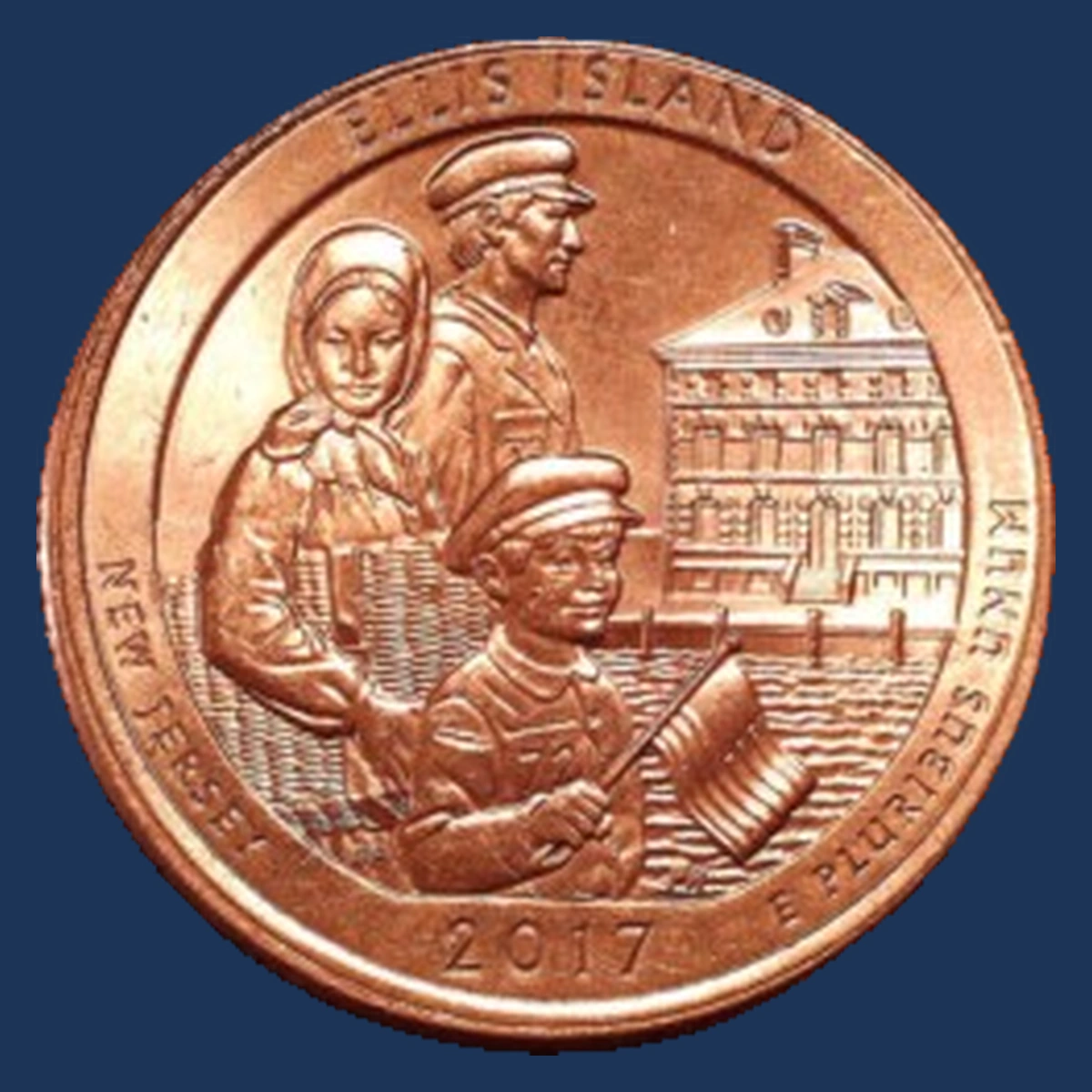
Washington can sit closer to one edge even when the family scene on the back stays centered. A stamping tool that shifts sideways can produce this uneven arrangement.
The tool is called a die. Its position differs from the position of the metal blank, the disc that becomes the coin.
A misaligned-die type is reported for Ellis Island quarters. Compare both faces before deciding whether only one tool moved or the whole blank sat off center.
A slightly wider rim on one side may be subtle. The two designs provide a better clue than rim width alone.
Estimated Value
Use an estimated $5–$75 for a clear, genuine misalignment on an Ellis Island quarter. Small shifts with the entire design present often attract only modest interest.
An obvious difference between the two faces is easier to demonstrate. Wear, dents, or photographs taken at an angle can make the rim misleading.
The estimate applies to a mint-made shift, not a coin bent or squeezed later. Compare the amount of displacement and the condition of the surrounding design.
How to Identify
Place straight-on photographs of the two faces side by side. Compare the distance from each design to the coin’s edge at the top, bottom, left, and right.
If Washington shifts but the back remains centered, a misplaced tool is one possible explanation. If both designs miss part of the blank, examine the off-center category instead.
Check whether all intended outer lettering remains on the metal. An uneven rim around a complete design differs from letters cut off beyond the edge.
Use a magnifier to look for bent rims or flattened lettering from later pressure. A genuine tool shift should explain the relationship between the two designs without requiring damaged metal.
2. 2017 America the Beautiful Quarter Ellis Island Floating Bottle Die Gouge
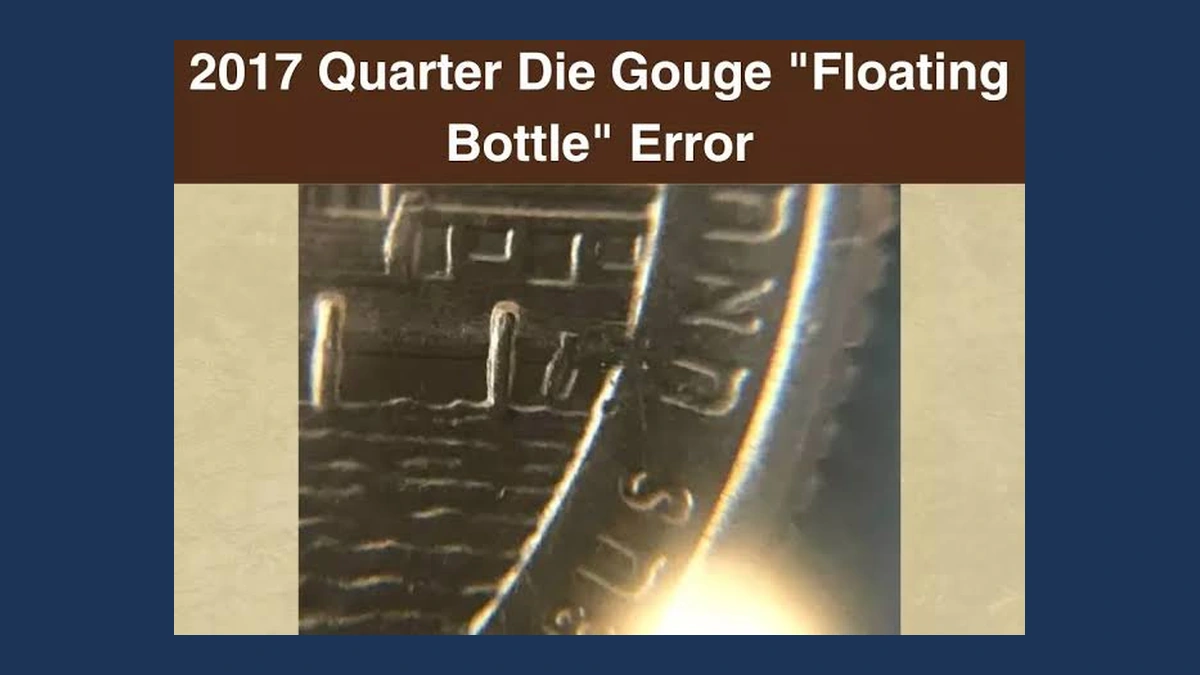
A small bottle-like shape is reported in the water on Denver Ellis Island quarters. It is nicknamed the Floating Bottle, but the name describes its appearance rather than a real object inside the coin.
A cut or gouge in a stamping tool can leave extra raised metal on the coin. Metal fills the tool’s recess when the design is struck.
That differs from a scratch cut into the finished quarter. A matching raised outline needs to be part of the original surface, not dirt, a reflection, or a damaged patch near the water.
Estimated Value
Estimate $5–$100 for a correctly identified Floating Bottle feature. The upper part suits a clear original mark on attractive surfaces rather than a vague shape in a blurry photograph.
The nickname alone does not establish either identity or price. A solid raised feature in the expected water area makes a better comparison.
Cleaning scratches and surface deposits can hide the original shape. Compare the raised shape and preservation before choosing a value within this estimated range.
How to Identify
Find the Ellis Island family scene and confirm the D beside Washington’s portrait. Then enlarge the water area on the back without cutting away the nearby design landmarks.
Change the light angle to establish whether the bottle-like shape rises above the surrounding surface. A depression with scraped edges needs another explanation.
Inspect the mark’s boundary through a magnifier. Attached dirt can have a different texture from the coin, while a tool gouge produces raised coin metal.
Compare the whole outline with a clearly identified Denver example. Do not force an unrelated bump into a bottle shape by rotating or heavily enhancing the photograph.
Leave the surface untouched while making the comparison.
3. 2017 America the Beautiful Quarter Repeated Letters from Contact During Ejection
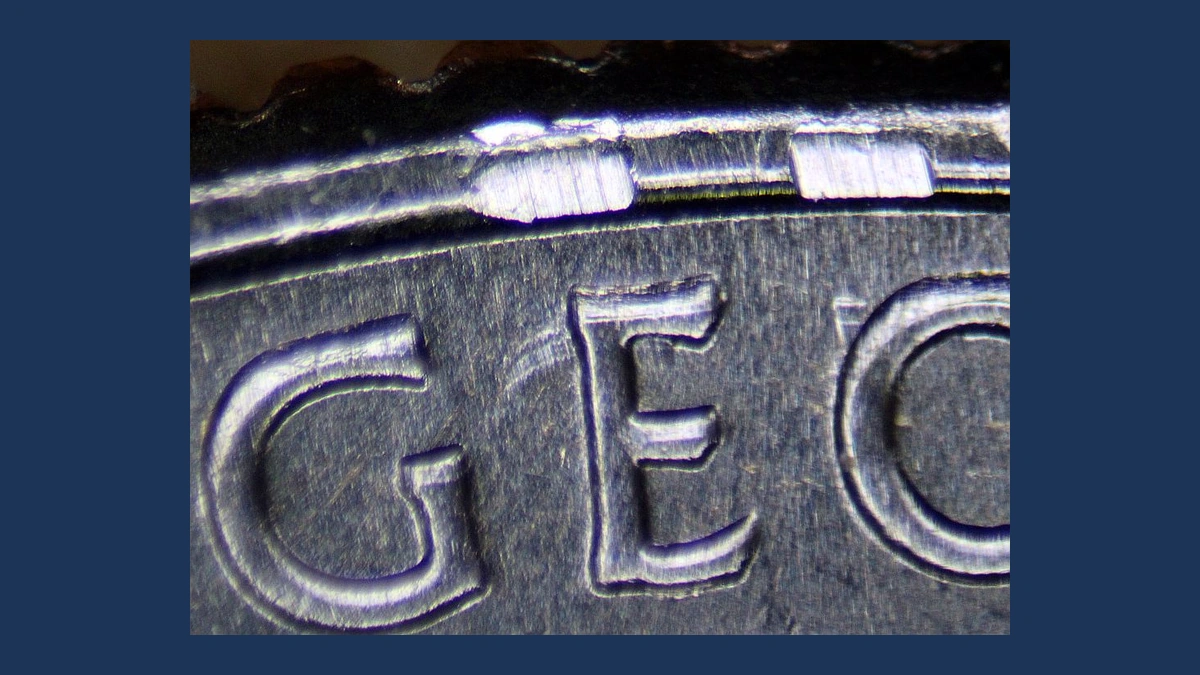
A freshly struck coin can hit the retreating stamping tool as it leaves the press. That contact may press extra letters into its surface without giving the whole coin another normal strike.
Error-Ref documents this on Philadelphia Douglass, Clark, and Ellis Island quarters. The repeated back-side letters sink into the metal.
Douglass examples include extra S letters toward the center; Clark examples show smeared letters from GEORGE near the rim. These are different coins.
This contact error is separate from a doubled die, where repeated detail already exists in the tool before the coin is made.
Estimated Value
For recognizable ejection-contact doubling, estimate $10–$100. Clear repeated letters make a stronger display than a slight smear that cannot be connected to the normal inscription.
The back design and location of the extra letters matter. A Douglass S and a Clark G are separate visual comparisons, even though their underlying cause is similar.
Original rim surfaces help distinguish the mark from later contact damage. A recognizable letter with sharp edges is easier to identify than scattered dents.
How to Identify
Begin with the letters themselves: they should be recessed, or pressed into the metal. Use low side lighting to see their depth.
On Douglass quarters, compare the extra S shapes with DOUGLASS; on Clark quarters, examine GEORGE and the nearby rim. Turn to the back to confirm which of the five designs you have.
Follow a repeated character far enough to recognize its normal shape. A dent can resemble one stroke without reproducing a letter.
Inspect the surrounding metal for later gouges or squeezing. Extra marks from a coin pressed against another coin need a different explanation.
Compare the entire pattern with the documented type. Small pressed-in letters near the rim should not automatically be called a second full strike.
4. 2017 America the Beautiful Quarter Raised Cracks, Chips, and Cuds
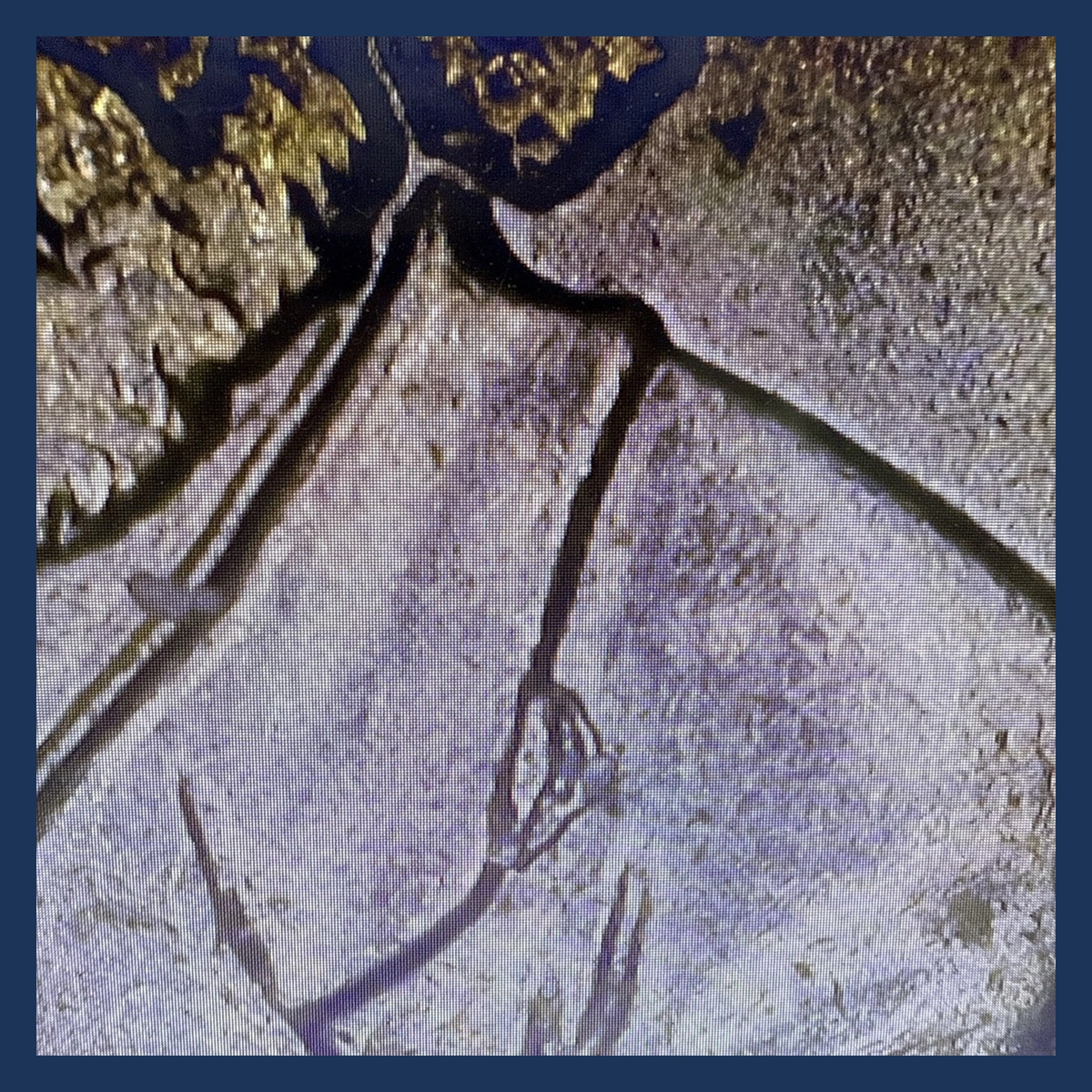
A cracked die leaves a raised line; a small piece breaking out of that tool can leave a lump called a chip. A larger break connected to the rim is a cud.
Reported examples span all five designs. Look for an Ellis Island hat-brim chip, Ozark portrait-base or branch-area cracks, and extra lumps beside Effigy Mounds artwork.
Douglass reports concern cracks and chips around its design. Clark reports include separate Philadelphia rim breaks and Denver interior chips.
An Ozark interior lump does not establish the separately reported rim-connected type. Follow the actual metal to decide which description fits.
Estimated Value
Small genuine cracks and chips fit an estimated $2–$30. Larger clear rim-connected breaks can fit $30–$250, giving this group an overall range of $2–$250.
The strongest comparison shows how much normal design the raised feature replaces. Several small chips on one coin still belong to one collectible object.
A bump inside a portrait should not receive a cud premium merely because a listing uses that word. The actual shape and connection to the rim matter.
How to Identify
Choose a normal coin with the same back design before studying a suspected extra lump. Tree shapes and small details that look unfamiliar may be part of the intended artwork.
At an Ellis Island hat brim, compare the added metal with the normal edge of the hat. On Ozark, follow any raised line through the portrait base or tree branches.
For a claimed cud, trace the lump until it reaches the outer border. An internal chip remains surrounded by struck design.
Use light from opposite sides to distinguish a raised ridge from a scratched groove. Follow the ridge across the design and check for scraped metal beside it.
5. 2017 America the Beautiful Quarter Doubled Windows and Front Lettering
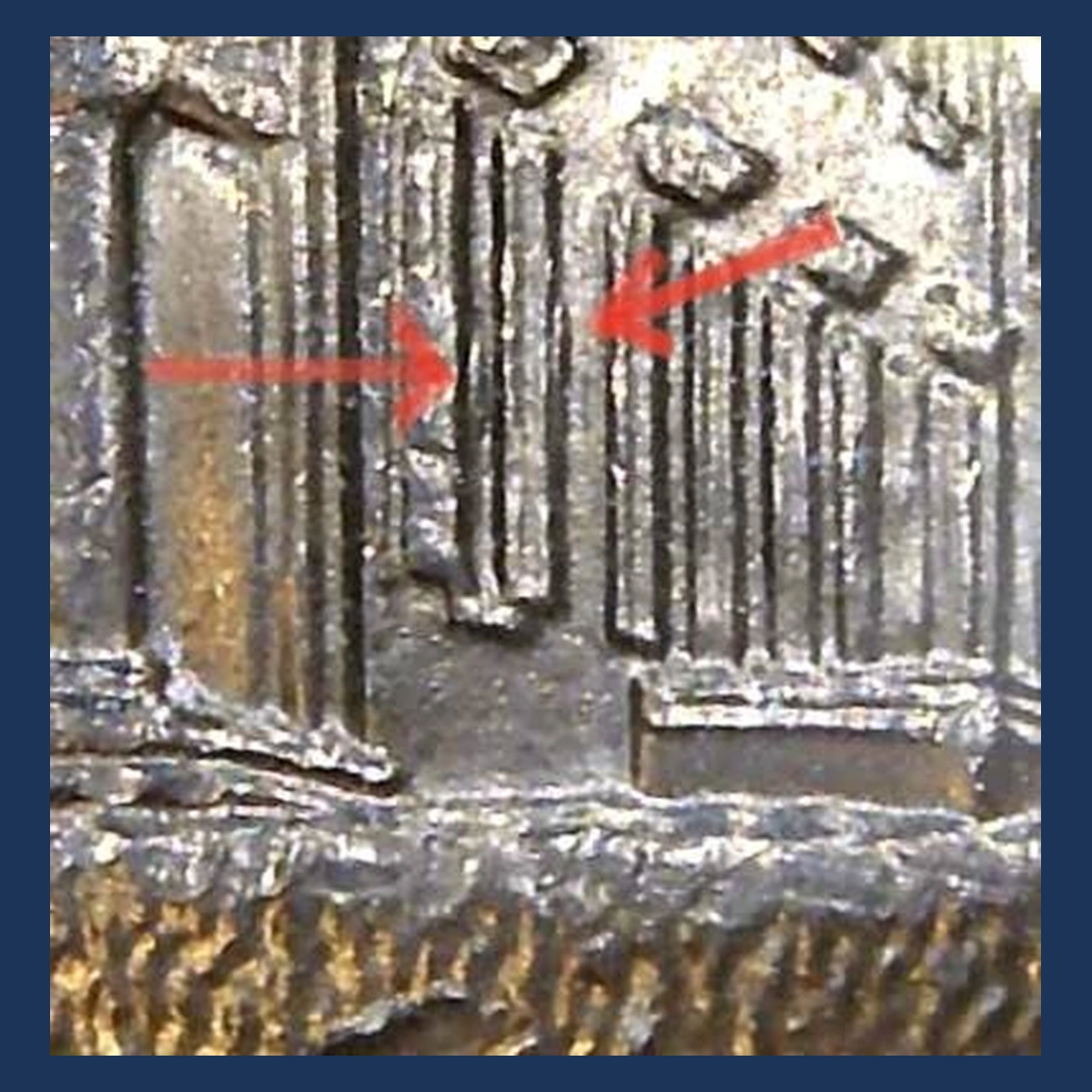
The house windows beside Frederick Douglass can have extra raised bars on Philadelphia quarters. On Philadelphia Ozark quarters, extra cellar-window stones or tree details offer another place to look.
Some Ozark fronts also have repeated letter edges. These images came from doubled dies, which already carried repeated shapes before striking coins.
Front-doubling reports also concern Effigy Mounds and Ellis Island. The Clark lip-area claim is disputed because flat mechanical doubling can imitate an extra outline.
Each design and face needs its own comparison. A doubled window on one coin does not prove doubling on another coin’s portrait.
Estimated Value
Estimate $10–$300 for clearly identified doubled designs on these issues. Strong, well-matched separation on unworn surfaces supports more interest than faint thickening.
A small window detail may require good close-up photographs to show why it differs from the normal design. Several extra stones from one doubled tool do not become separately priced errors.
The disputed Clark lip feature requires authentication before this range applies. A flat shelf produced during striking is not valued as a confirmed doubled die.
How to Identify
For Douglass, compare the window bars in the house beside his portrait. For Ozark, move to the mill’s cellar window and inspect the stones around its opening.
Wexler’s Ozark photographs also show front varieties affecting LIBERTY and QUARTER DOLLAR. Use photographs of the same face and pattern.
On a front-lettering candidate, compare several letters under equal magnification. Look for repeated raised shapes rather than a flat shelf beside a reduced main stroke.
Examine a Clark lip claim especially closely under low side lighting. A thin, flat shelf alongside the lip points toward mechanical doubling rather than a doubled design in the tool.
6. 2017 America the Beautiful Quarter Douglass Improper Annealing
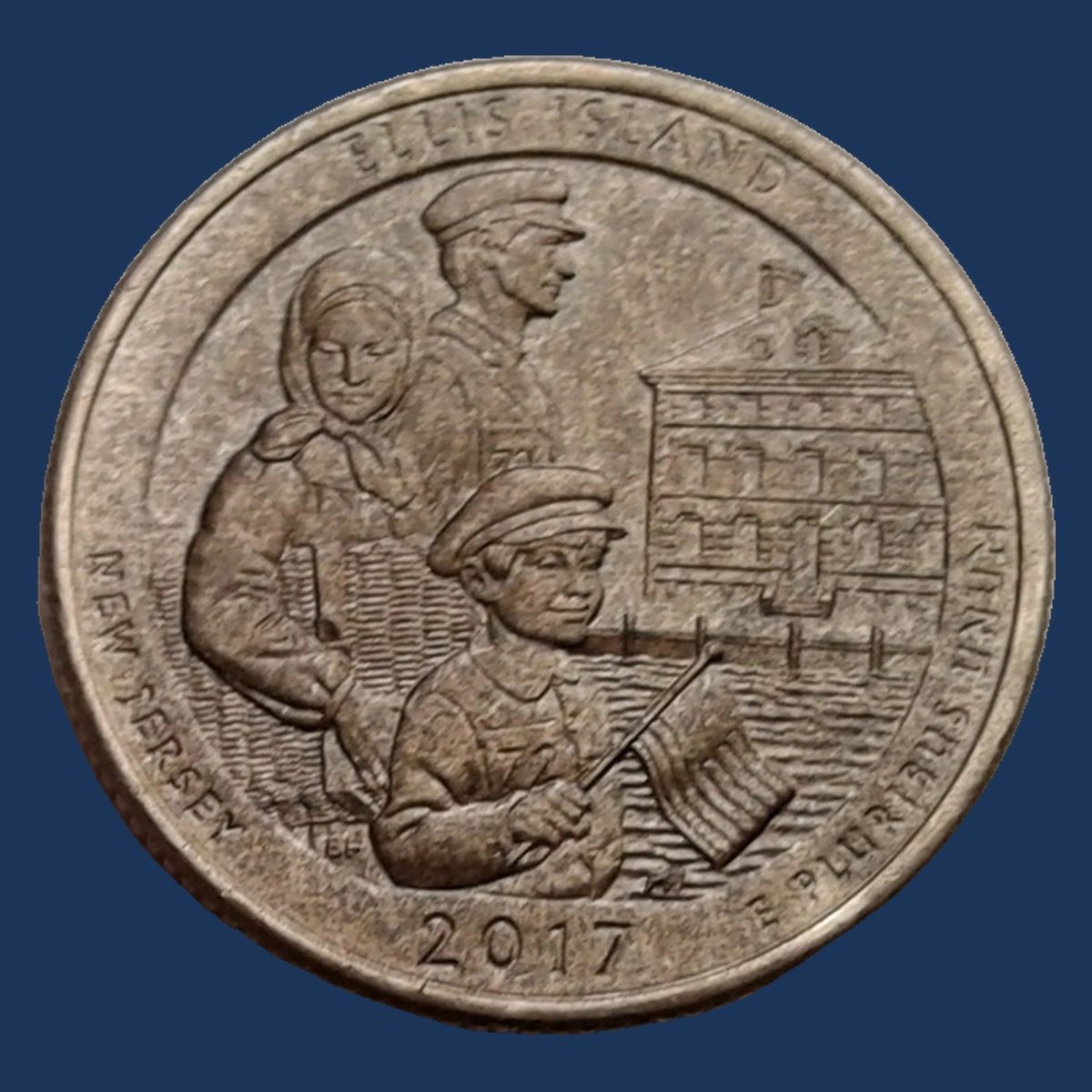
An unusual dark or coppery surface can lead to an annealing-error claim. Annealing is the heating step used to soften metal blanks before they receive coin designs.
A problem during that step can change the surface. This type has been reported on Denver Frederick Douglass quarters.
Color alone cannot establish the cause. Chemicals, heat, and environmental exposure after minting can also turn a quarter brown or gray.
Normal clad quarters contain a copper center beneath pale outer layers. An unusual surface color is different from proving that an entire outer layer is missing.
Estimated Value
For a confirmed mint-made annealing error, use an estimated $25–$300. Clear original surface texture helps more than a dramatic color shown under tinted light.
As a broader comparison, a 2009-P Native American dollar with improper annealing sold for $61 in November 2011. That different denomination and year do not set a fixed quarter price.
The estimate excludes ordinary staining and later heating. A worn or chemically altered surface can lower the value instead of creating an error premium.
How to Identify
Place the candidate beside a normal Douglass quarter under neutral white light. Move both together so reflections do not exaggerate the color difference.
Inspect protected areas near lettering as well as the open background. Patches following corrosion, scratches, or a coating may explain the appearance without a Mint heating problem.
Check the edge for intact layers and confirm the D. A missing outer layer is a different mechanism, even if both problems expose or resemble copper.
Do not test the color with polish, solvents, or heat. Leave any coating and the original surface untouched for an error specialist to examine.
7. 2017 America the Beautiful Quarter Partial Collar on Clark and Ellis Island
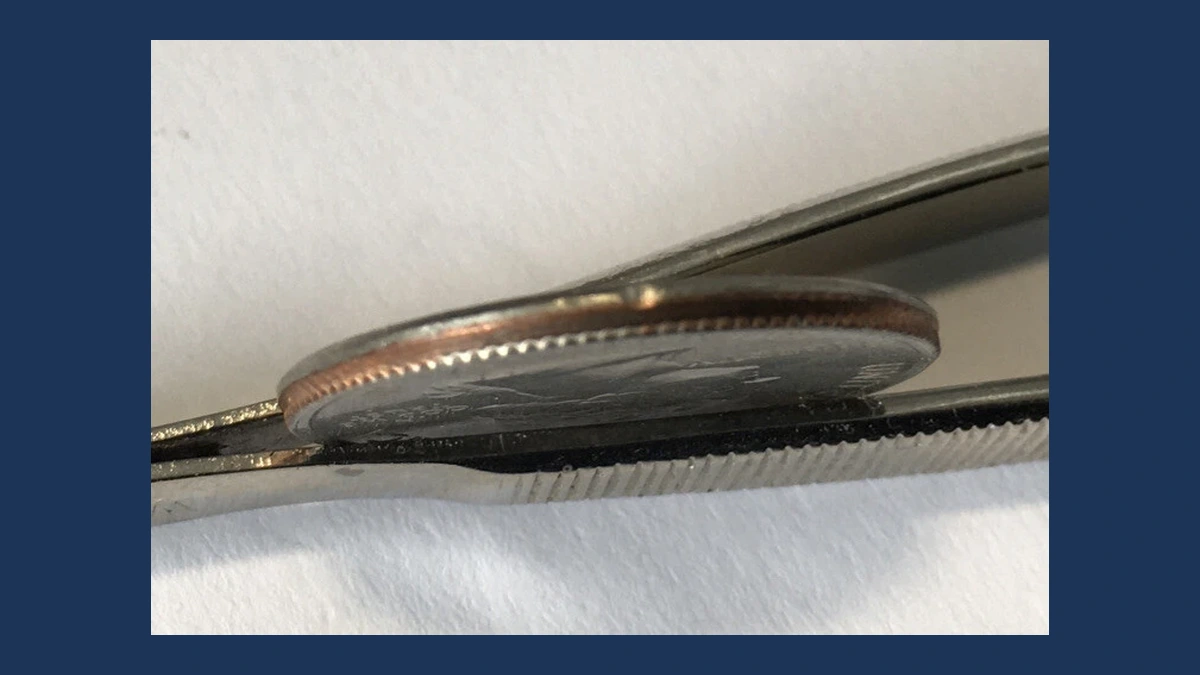
A step around the edge can show that the blank was only partly inside the collar. The collar is the metal ring that limits the coin’s width and forms its edge grooves.
The confined section forms differently from the part free to spread outward. This can create a two-level edge sometimes compared with a railroad wheel.
Partial-collar types are reported for Clark and Ellis Island quarters. A photograph of the narrow side is especially useful because a front-only view can hide the step.
The expanded section should join the grooved edge without a folded or crushed lip.
Estimated Value
Estimate $25–$300 for a confirmed partial-collar quarter from either design. A clear step with original edge surfaces is easier to appreciate than a slight irregularity.
The amount of spread and the condition of the coin affect interest. A strong side view can explain the feature better than a large close-up of the portrait.
This is an estimated range for the mechanism. A rolled or bent edge made after striking does not qualify simply because it has two apparent levels.
How to Identify
An edge view is more useful here than a portrait close-up. Rotate the quarter slowly and find where the grooved section meets the wider section.
Check the transition carefully under a magnifier. A folded lip, crushed letters, or gouges can mean that pressure damaged a finished coin.
On a loose coin, measure the width in several directions with calipers. Normal quarters are 24.26 millimeters wide, while an unconfined part can spread beyond that width.
Now compare the nearby design with a normal Clark or Ellis Island quarter. Follow the original edge grooves to their meeting point with the expanded metal.
8. 2017 America the Beautiful Quarter Reported Effigy Mounds Broadstrike
A broadstrike can leave a complete picture inside an unusually wide coin. The blank spread outward because the collar did not hold it to its normal width.
A broadstrike remains an unconfirmed possibility for Effigy Mounds quarters. A candidate needs a complete design and original expanded metal, rather than edges flattened by later damage.
This differs from an off-center strike, where part of the intended picture falls beyond the blank. It also differs from a normal quarter with a slightly uneven rim.
The collar’s effect must be judged from the whole outline and edge.
Estimated Value
For an authenticated Effigy Mounds broadstrike, estimate $50–$350. Clear spreading with attractive original design gives a stronger comparison than a small shape change.
A different-year Philadelphia broadstruck quarter graded PCGS MS65 sold for $169 in December 2025. That coin was dated 1984, so it is a mechanism comparison rather than a 2017 sale.
An expanded shape caused by hammering or squeezing is damage. It should not receive the same estimated range as a mint-made broadstrike.
How to Identify
Check whether the entire Washington portrait and all outer letters remain on the metal. Then turn to the Effigy Mounds side and check its full border design too.
Compare the outline with a normal quarter in a straight-on photograph. A broadstrike should show extra width around complete design, not simply a shifted picture.
For a loose coin, record its diameter with calipers and inspect the edge. Normal clad quarters measure 24.26 millimeters and weigh 5.67 grams; spreading changes width without adding metal.
Look for flattened details, impact marks, or a bent surface from later force. The intact design, expanded outline, and original edge must fit the same striking event.
9. 2017 America the Beautiful Quarter Effigy Mounds Curved Clips
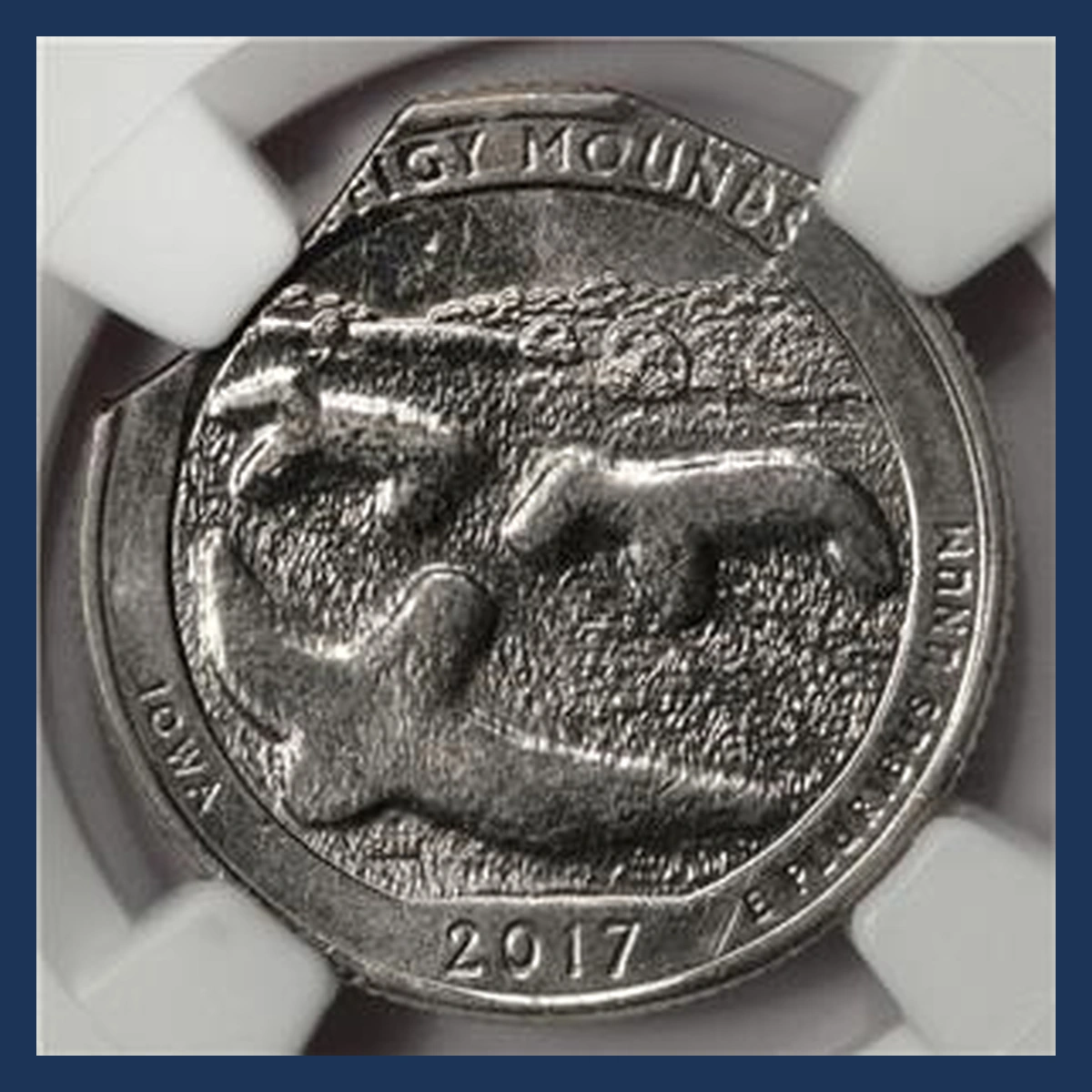
A curved bite in the outline can begin when a blanking punch overlaps an earlier hole in a strip of coin metal. The incomplete blank may then receive a normal coin design.
A Denver Effigy Mounds example graded ANACS MS64 is recorded at 5.38 grams. MS64 describes an unworn coin with visible marks.
A different Denver example graded NGC AU58 has two curved clips; AU58 means very slight circulation wear. These are separate coins with different missing sections.
The single-clip coin has one gap to examine, while the double-clip coin has two separate curved sections missing.
Estimated Value
Estimate $25–$400 for genuine Effigy Mounds clips. A clear gap, readable identity, and original surrounding rim help make the error understandable.
For comparison, a 1980-P quarter with a corner clip sold for $204 in June 2023. That different-year coin was graded NGC MS65 and had a different clip shape.
Two gaps may make an interesting display, but the number alone does not fix the price. Wear, missing area, and edge quality still matter.
How to Identify
Locate the two endpoints of each gap before looking at the rest of the edge. Nearby letters or the rim may weaken where metal flowed toward the missing area.
Inspect those endpoints with a magnifier for cut grooves, sharp burrs, or a design sliced after striking. A weak rim opposite a gap can support a clip, but is not required equally on every example.
Weigh a loose coin if the edge appears incomplete. The documented single-clip coin’s 5.38 grams is below the normal 5.67 grams.
For a double-clip candidate, inspect both gaps separately. Confirm the D and Effigy Mounds design in the same photographs as the missing sections.
10. 2017 America the Beautiful Quarter Missing Outer Layers on Effigy Mounds and Ozark
A pale outer layer can be partly or fully missing from a clad quarter. Copper from the center then appears on the affected face, often accompanied by lower weight.
The Philadelphia Effigy Mounds report concerns partial loss on Washington’s side. The Ozark report does not identify the affected face or mint.
These need separate comparisons. A coppery stain can change the color without removing the original outer metal.
Also distinguish ordinary clad quarters from silver Proofs, specially made collector coins. San Francisco’s normal silver Proof composition does not represent a missing-layer error.
Estimated Value
Allow an estimated $50–$700 for an authenticated missing-layer quarter from these designs. Clearly exposed copper and surviving original detail make a stronger example than a corroded patch.
A 1988-D quarter missing its front layer sold for $156 in November 2020. That NGC MS62 coin weighed 4.8 grams; it is a different-year comparison.
Partial loss may remove less metal than an entire missing layer. Cleanly exposed copper with readable design is more appealing than a rough, heavily worn patch.
How to Identify
On an Effigy Mounds candidate, trace the boundary between pale metal and exposed copper on Washington’s side. Check both sides of an Ozark candidate before deciding which layer is affected.
Weigh a loose coin on a digital scale. Ordinary clad quarters start at 5.67 grams, while the 2017 silver Proof standard is 6.25 grams.
Choose the correct metal type before interpreting the weight. Partial layer loss need not reduce the weight as much as losing the entire face layer.
Look along the edge beside the copper patch with a magnifier. A brown stain can leave all the layers intact.
Check for corrosion pits, scraped design, or added plating. Follow surviving coin detail across the exposed area, looking for metal removed after striking.
11. 2017 America the Beautiful Quarter Struck-Through Fabric and Blocked Design
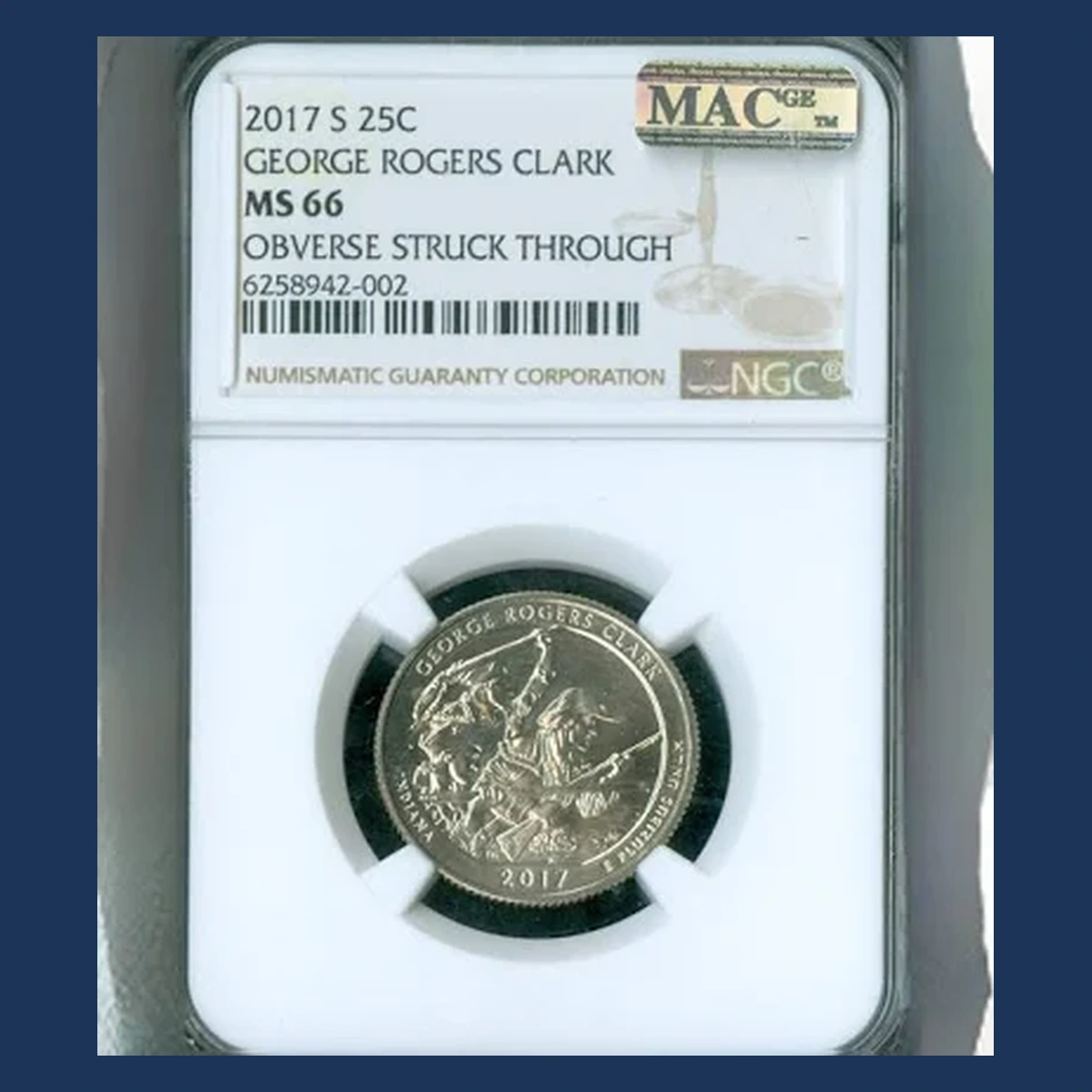
Foreign material between a die and blank can interrupt the design. Fabric may leave a woven impression, while grease can leave letters or portrait details weak.
The Clark report concerns cloth texture beside the historical scene. Philadelphia Douglass reports concern blocked detail on Washington’s side.
Ozark reports separately describe a front mark and missing mill detail; they should not automatically be treated as one coin. Ellis Island has a further report without a named material.
These marks need to interrupt the original strike. Later scratches or dents have different effects on an already finished surface.
Estimated Value
Estimate $10–$150 for clear grease-blocked detail and $50–$750 for stronger identified fabric or other strike-throughs. The overall group spans $10–$750.
A useful older comparison is a 1776–1976 quarter struck through cloth, graded NGC MS66. It brought $881.25 in January 2017.
That recognizable fabric pattern does not establish the material on a 2017 mark. Judge the actual texture, area, and condition rather than assigning a cloth label to every weak patch.
How to Identify
For a Clark cloth claim, look for a repeating woven texture rather than a few parallel scratches. Inspect where that texture meets the normal river-crossing scene.
On Douglass or Ozark fronts, compare the weak area with adjacent sharp portrait detail. For an Ozark mill claim, use a separate back-side comparison.
Change the light angle to reveal a sunken interruption or surviving material. A solid raised chip has a different origin from an object blocking the strike.
A mark on an Ellis Island coin may not reveal what blocked the design. Leave attached material in place and inspect where the normal design disappears at its edge.
12. 2017 America the Beautiful Quarter Ellis Island Off-Center Strike
The Ellis Island family can be partly cut off when the blank enters the press away from the center. A crescent of metal on the opposite side then receives no design.
A Denver example is reported as about ten percent off center. That describes one reported displacement, not a fixed amount for every candidate.
Both faces should fit the same misplaced blank. A shifted front tool with a centered back is a different problem.
The immigrant family and the ELLIS ISLAND name identify the back design. Any missing portion should fit the blank crescent on the opposite side.
Estimated Value
For a genuine, identifiable Ellis Island off-center quarter, estimate $30–$1,000. Larger clear shifts can attract stronger interest when enough design remains to establish the issue.
A 1988-P quarter struck thirty percent off center sold for $109 in January 2022. Its ANACS MS63 grade describes an unworn coin with noticeable marks.
The smaller reported Denver shift would usually suit the lower part of the range. More dramatic missing design can raise interest when the date and issue remain readable.
How to Identify
Read the year and the Ellis Island design name, then find the family scene. Those details should establish the issue before you judge how much of the image is missing.
Compare the empty crescent with the opposite edge. Some of the intended design should fall beyond the original metal.
Turn the coin over and check the corresponding displacement on Washington’s side. If the back remains centered, return to the misaligned-tool comparison.
Inspect the empty metal for grinding or flattened lettering that could imitate an unstruck area. A genuine crescent preserves blank surface rather than a finished picture that someone removed.
Include the D in photographs when comparing the reported Denver example.
13. 2017 America the Beautiful Quarter Ozark Enhanced-Uncirculated Defective Blank
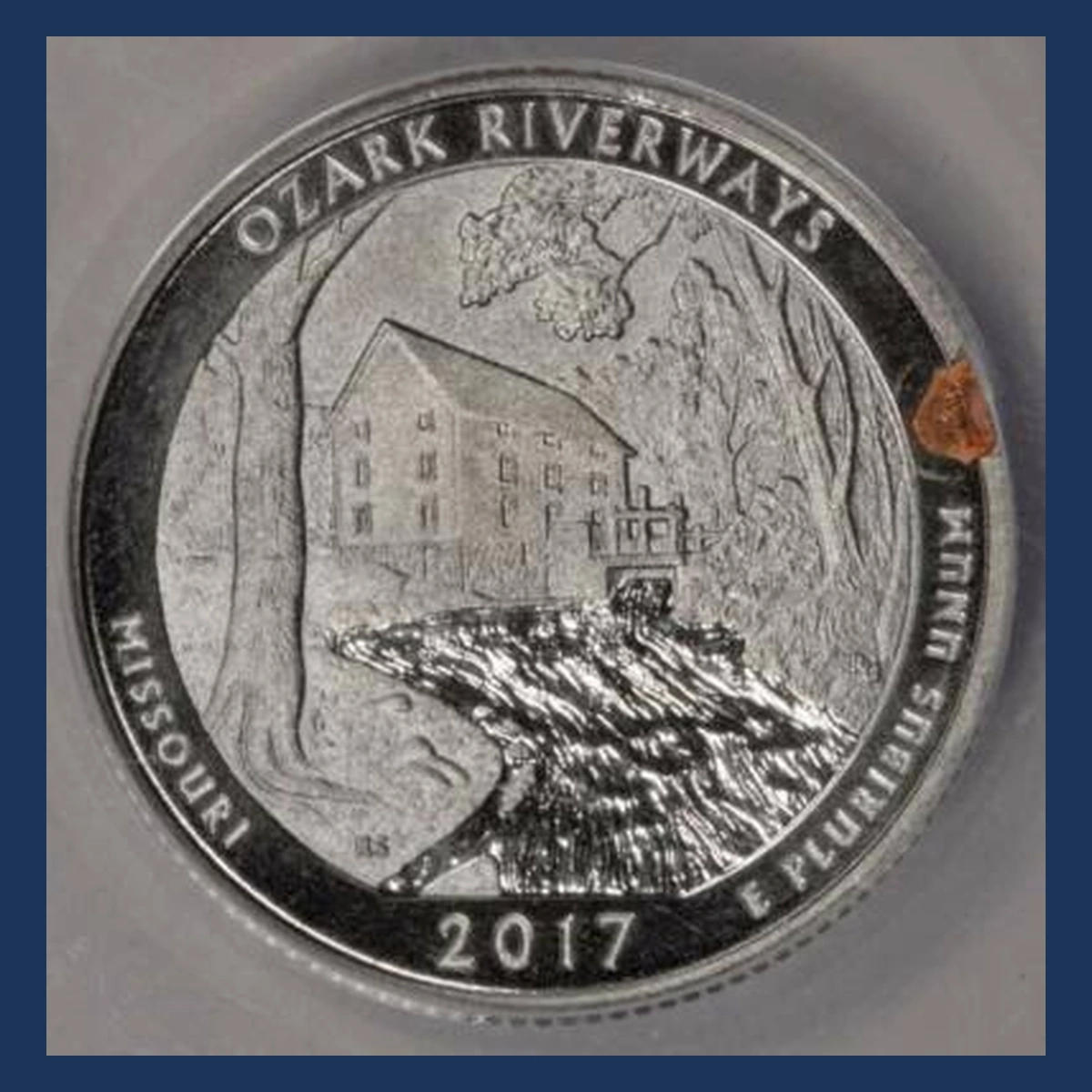
A fault in the metal blank can remain visible after an otherwise sharp collector strike. An Ozark example is cataloged as struck on a defective blank, with an abnormal area near the right reverse rim.
ANACS graded the San Francisco coin EU69. EU means enhanced uncirculated, a collector finish with specially contrasted surfaces; 69 indicates very high preservation.
This is distinct from both an ordinary circulation finish and a Proof finish. A rough area should be compared with the correct enhanced coin.
The label identifies a blank defect without establishing its exact internal cause.
Estimated Value
For a clearly identified defective-blank example of this collector issue, estimate $100–$1,500. The high finish grade and the visibility of the original metal flaw both affect interest.
This is an estimate, not a recorded sale price for the EU69 coin. A clear flaw beside crisp detail makes the error easier to see.
A later rim hit on a normal collector quarter is different. The damaged area must show that the blank was defective when it received its design.
How to Identify
Find the S beside Washington, then turn to the Ozark mill and the right back rim. That is where the reported blank defect appears.
Check the holder’s finish description before comparing surfaces. Enhanced-uncirculated coins have deliberately contrasting finishes; they are different from Proofs and ordinary circulation coins.
Keep a graded coin inside its holder. Tilt it under white light and use a magnifier to inspect the flaw’s boundary.
Compare with a normal enhanced-uncirculated quarter to separate the intended surface texture from the abnormal patch. Look for struck detail around or across the flaw, rather than metal crushed by a later blow.
Conclusion
The five 2017 designs offer different places to begin: a window, a hat brim, a clipped edge, or a patch of exposed copper. Estimated values range from $2–$1,500 across the groups above.
Match the annual design and finish before enlarging the suspected mark. Repeated letters pressed into the rim, raised doubled windows, and an entire misplaced strike each tell a different story.