1811 Dime Error List with Pictures

Every regular 1811 dime carries traces of an earlier date: 1809. The stamping tool was changed, but pieces of the old numbers remained.
This 1811 Capped Bust dime error list also follows raised cracks, clash marks, and a broad bulge. Estimated whole-coin values run from $400–$30,000.
A well-preserved unworn example sold for $24,200 in October 1995. Read on to compare the features without confusing their presence with the coin’s overall condition.
1. 1811 Capped Bust Dime Die Cracks (Estimated Up to $20,000)
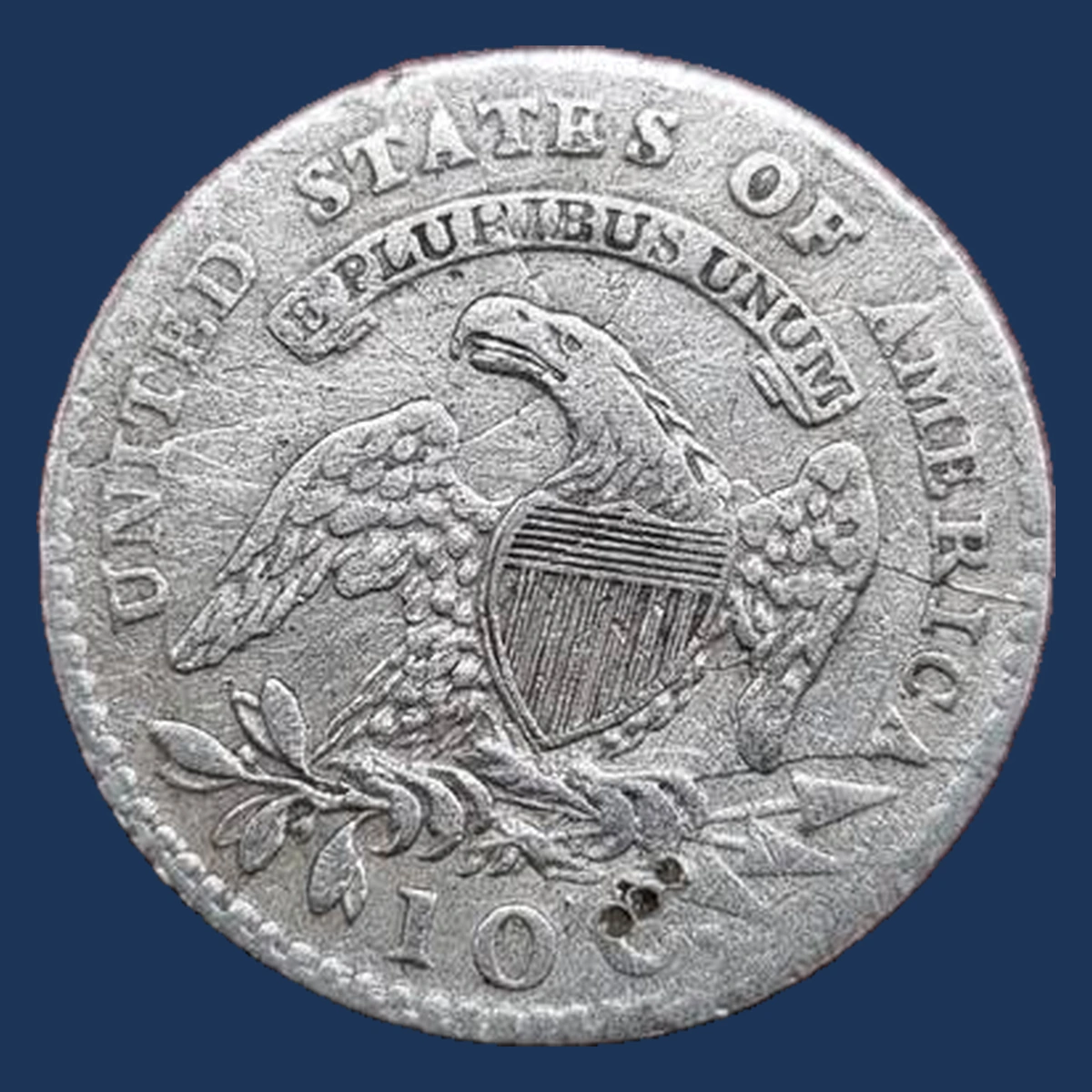
A short raised line joins the rim to the bottom of 8 on the reported example. More cracks appear across its back.
These began in the dies, the steel tools that stamp coins. Silver entered their narrow openings and copied them as raised ridges.
The pattern could grow as the damaged tools continued working. Coins made earlier need not show every line found on later examples.
Several branches belong to the same kind of tool damage. They are not separate errors to count and price individually, and a later scratch has a different cause.
Estimated Value
Estimate $400–$20,000 for worn through lower-grade unworn examples with recognizable cracks. Most of that range reflects the scarce coin’s overall condition.
A PCGS VG10 sold for $528 in May 2025. VG10 indicates heavy wear with some detail remaining.
That sale provides an ordinary condition comparison, not a measured extra price for cracks. A clear network may interest specialists, but cleaning, scratches, and wear still affect what the complete coin brings.
How to Identify
Find the gap between the bottom of 8 and the rim with a magnifier. Move the light to see whether the connecting line rises above the silver.
A scratch normally cuts inward, although its edges may have pushed-up metal. Follow the line’s center rather than judging one bright side.
Turn to the back and compare its complete crack pattern with the reported example. Do not join unrelated scratches into an imagined network.
Use a scale and calipers against about 2.70 grams and 19 mm, allowing for wear. Inspect the edge grooves for filing or repairs.
The direct starting point is a raised connection from the rim to the bottom of 8.
2. 1811 Capped Bust Dime Die Clash (Estimated Up to $20,000)
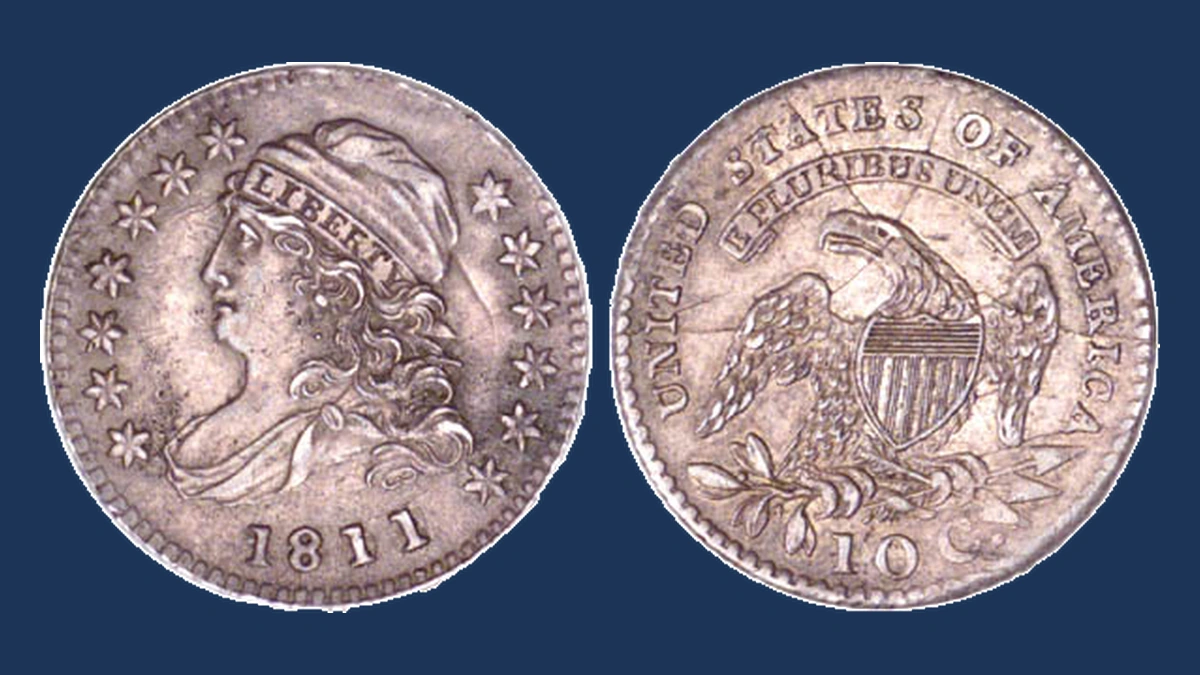
A faint shape from the opposite side can appear beside the normal design. The reported 1811/09 example has prominent marks of this kind, called clashes.
The stamping tools met without a metal blank between them. Each could pick up traces of the other’s picture and copy them onto later coins.
These unwanted shapes differ from the coin’s raised cracks. A clash resembles a design fragment, while a crack follows a split in the tool.
The documented coin has several signs of tool wear together. Each extra mark still needs its own comparison before being called a clash.
Estimated Value
Use an estimated $400–$20,000 range for worn through lower-grade unworn examples with recognizable clash marks. It prices the complete coin rather than each transferred shape.
A PCGS MS62 sold for $5,225 in August 1995. MS62 means no circulation wear but noticeable marks.
That older sale compares condition, not a specific clash. The $528 VG10 sale in May 2025 shows a much more worn level, where clear marks do not erase the effect of wear.
How to Identify
Compare both designs before deciding what an unexpected curve represents. With a magnifier and light from the side, look for a recognizable piece of the opposite picture.
Match its shape and position with the documented clashed example. A random line that happens to be nearby is not the same evidence.
Scratches, normal hair lines, and raised cracks can make the surface busy. Follow each suspected design fragment from beginning to end.
Calipers and a scale can compare a loose dime with about 19 mm and 2.70 grams. Inspect the grooved edge for alteration.
The useful match is an extra shape that fits the opposite design, rather than simply a collection of unexplained lines.
3. 1811 Capped Bust Dime Sunken Die and Raised Bulge (Estimated Up to $20,000)
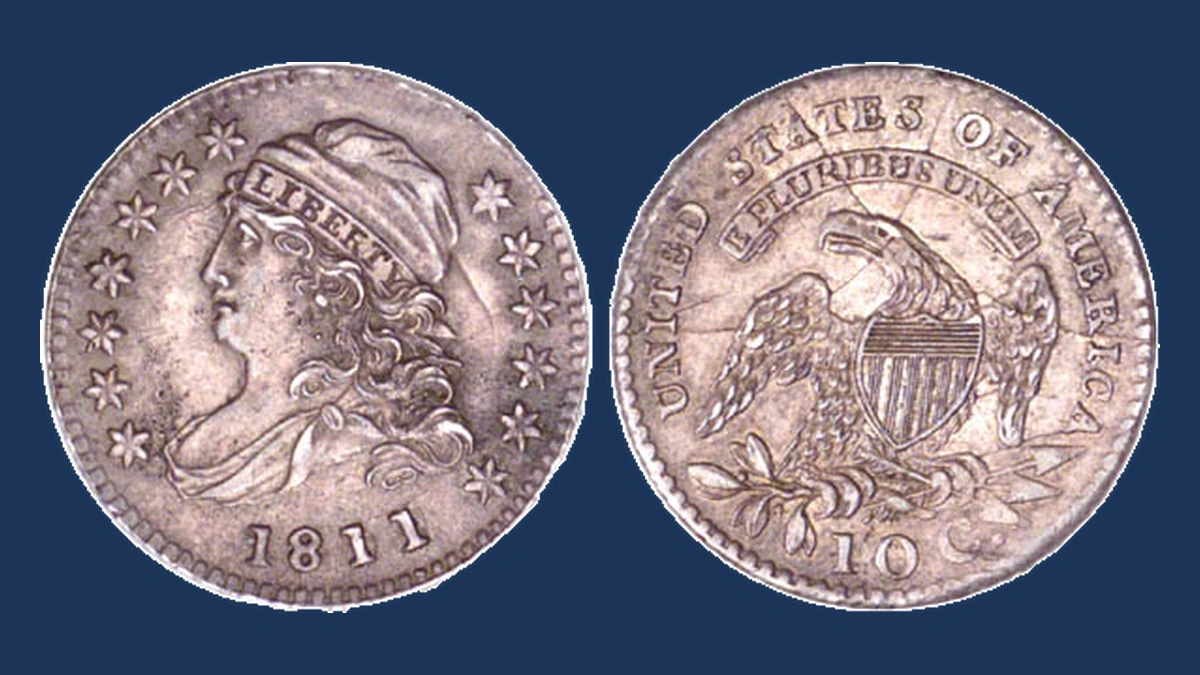
A broad bulge appears at the top of the reported dime, near twelve o’clock. It is wider than a narrow crack line.
The collection description connects it with the worn stamping tool. When part of a tool’s surface sinks, more room remains for silver during striking.
The corresponding area on the coin can therefore rise. The word sunken describes the tool, while the coin itself has the raised area.
The same example also has cracks and clash marks. Those features can accompany the bulge without being the same kind of tool damage.
Estimated Value
An estimated $400–$20,000 covers worn through lower-grade unworn examples with a matching original bulge. This is the value of the complete dime.
The collection description supplies no sale price. The $528 VG10 and $5,225 MS62 results compare different levels of wear and preservation.
A clear natural rise may interest collectors who study worn tools. Later bending or repair is a different problem and can reduce value instead of adding an error premium.
How to Identify
Tilt the front under low light and watch the area near twelve o’clock. A broad, continuous rise should look different from a sharp dent or isolated punched bump.
Use a magnifier to see how the original design crosses the raised area. Compare its position and shape with the documented example.
Inspect the back for signs of later pressure or bending. Leave the coin’s shape untouched so the evidence remains visible.
Use calipers and a scale against about 19 mm and 2.70 grams, allowing for wear. Check the edge grooves for disturbed metal.
The quickest useful clue is the matching broad rise at the top of the front, rather than unevenness anywhere on the coin.
4. 1811 Capped Bust Dime 1811/09 Overdate (Estimated Up to $30,000)
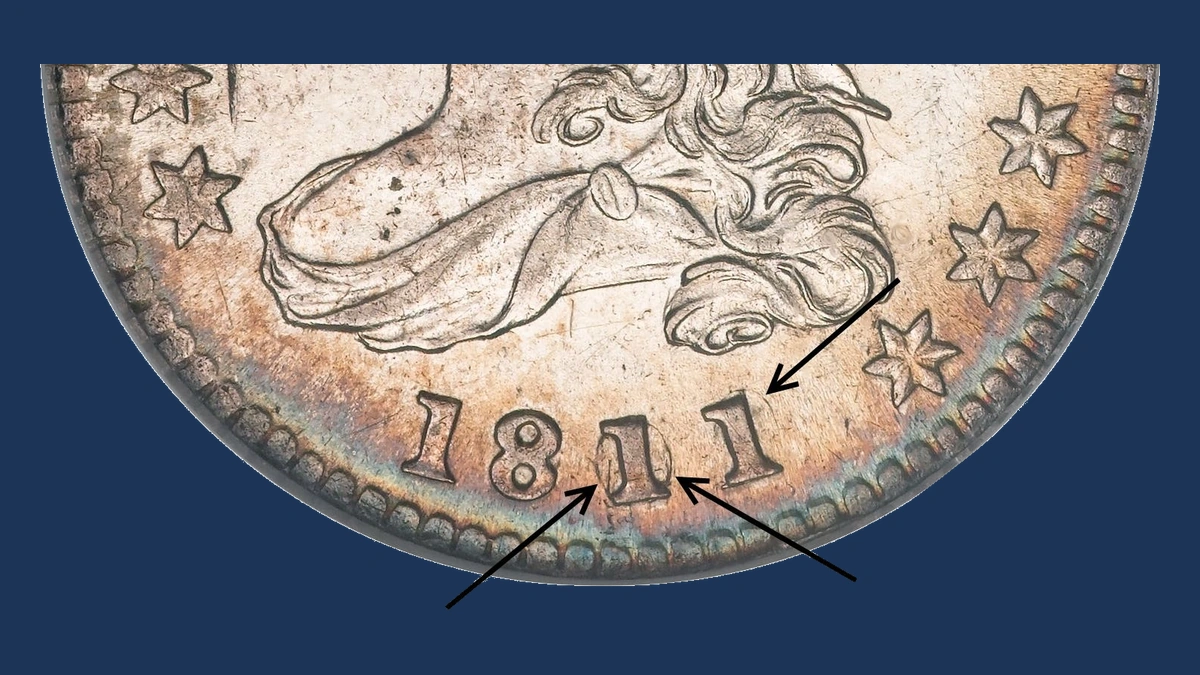
The old 0 is often easier to see than the old 9 beneath the final two date digits. Two new 1s were punched over an 1809 date on the stamping tool.
Parts of the earlier numbers remained and appeared on the coins. Collectors call this an 1811/09 overdate.
Only one tool pairing is known for regular 1811 dimes, and all belong to this overdated issue. There is no separate ordinary 1811 date to use as a cheaper comparison.
The surviving number pieces help identify the issue itself. Their presence alone does not establish a rare subgroup within it.
Estimated Value
Estimate $400–$30,000 from worn examples through exceptionally preserved unworn coins. The overdate is already included in normal pricing for the entire 1811 issue.
PCGS records $528 for VG10 in May 2025. That coin had heavy circulation wear.
At a very different level, a well-preserved unworn example brought $24,200 in October 1995. Sharp detail and original surfaces explain much of the gap, rather than the mere presence of old numbers.
How to Identify
View the final two date digits together through a magnifier. Look for the rounded old 0 and the surviving parts of 9 below the new 1s.
On a worn coin, the clearer 0 may be the better clue. Do not force indistinct lines into a complete 9.
Compare a straight-on date photograph with the known 1811/09 pattern. Added cuts interrupt the surface instead of matching its raised number shapes.
Check the complete Capped Bust design and grooved edge. Use a scale and calipers against about 2.70 grams and 19 mm, allowing for circulation wear.
The direct match is the surviving old-number pattern beneath the final two digits, especially the recognizable curve of 0.
Conclusion
Estimated whole-coin values run from $400 to $30,000. Every regular 1811 dime shares the overdate, while cracks, clashes, and a raised bulge show different changes in the stamping tools.
Begin with the old numbers, then follow each extra line or shape separately. Several features can belong to one coin, so compare its complete condition rather than adding a full price for each unusual detail.