1832 Dime Error List with Pictures

An 1832 dime with cracks and a raised break above its arrowheads sold for $139 in February 2022. Its surfaces had also been altered by mechanical treatment, which affected the price.
This guide to 1832 dime errors explains how a broken stamping tool can leave traces of its design inside a raised area. Estimated values for worn examples run from $100 to $1,000.
Look above the upper two arrowheads to follow the main feature.
1832 Capped Bust Dime Reverse Cracks and Retained Cud (Estimated Up to $1,000)
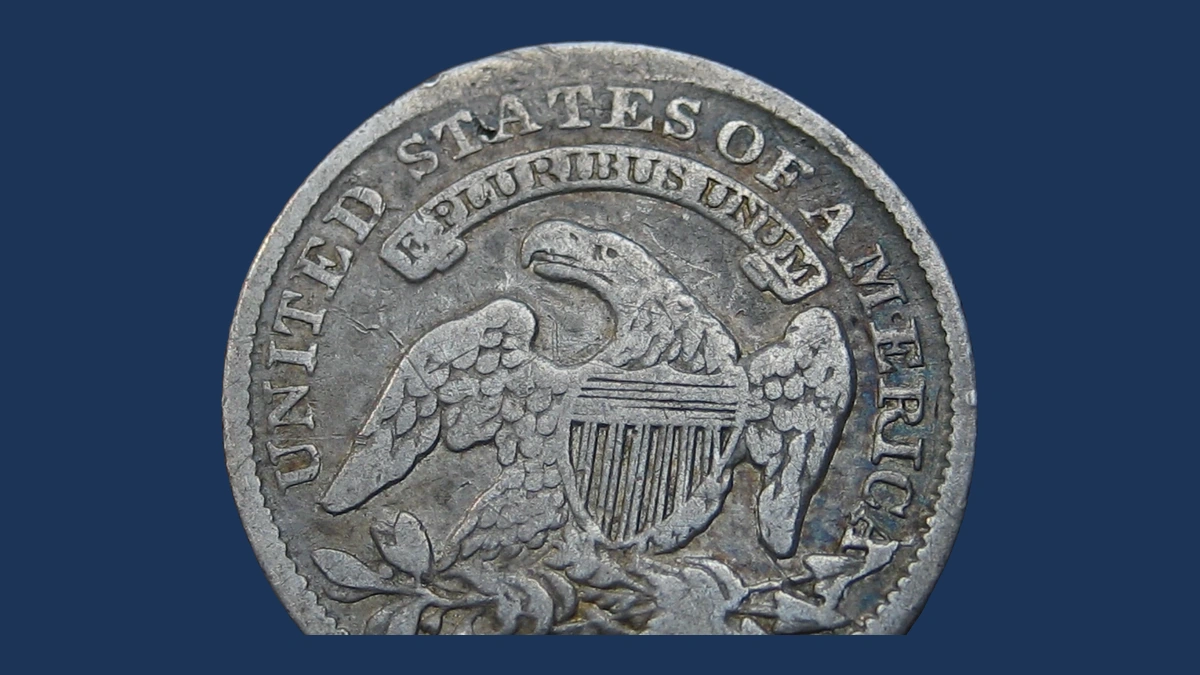
Some of the design remains inside the raised break above the upper two arrowheads. That happens when a broken piece of the die stays in place.
A die is the steel tool that stamps coins. The trapped piece can continue stamping detail even after it has shifted or cracked around its boundary.
Collectors call this a retained cud. Fine cracks around the outer design accompany it on the recorded JR-3 dime.
The auction coin also had whizzed surfaces, meaning they were mechanically altered to imitate original shine. That later treatment is separate from the marks made by the broken tool.
Estimated Value
The estimated whole-coin range is $100–$1,000 for worn examples. Original surfaces and a clearly visible raised break can support a stronger price.
The NGC AU Details coin sold for $139 on February 6, 2022. AU indicates slight wear, while Details flags its surface problem.
That altered example does not set a ceiling for better-preserved coins. The cracks and retained break belong to one specimen, so their values should not be added together.
How to Identify
Inspect above the upper two arrowheads with a 10× magnifier. Look for a raised patch with a clear boundary and some original design still inside it.
Then follow the fine cracks around the outer design and compare them with a JR-3 photograph. Light from a low angle helps show which lines rise above the surface.
Mechanical surface treatment can leave fine lines as well, so a bright streak alone proves little. A coin can carry both genuine striking features and later damage.
When safely accessible, compare scale and caliper readings with the original 2.70 g and 18.50 mm. The coin is about 89.2% silver and has edge grooves.
Return to the arrowheads: the raised boundary plus surviving design inside it is the most useful local match.
Conclusion
Estimated values for this 1832 dime feature range from $100 to $1,000. The $139 auction coin shows why surface condition matters even when a real mint error remains visible.
Check the raised area above the arrowheads and the cracks around the design. Keep later mechanical surface damage separate from those original marks.
The surviving detail inside the break tells the story of a tool fragment that remained in place.