1837 Capped Bust Dime Error List with Pictures

An 1837 Capped Bust dime with small raised rim breaks sold for $33,600 in September 2020. Its exceptional condition explains much of that price.
These 1837 Capped Bust dime errors span estimated whole-coin values from $100 to $35,000, including exceptional unworn examples. This design has Liberty facing right and an eagle above 10 C. on the back.
Read on to compare its cracks, rim breaks, and tilted back without confusing it with the different 1837 Liberty Seated dime.
1. 1837 Capped Bust Dime Mildly Rotated Dies (Documented Coin $15,860)
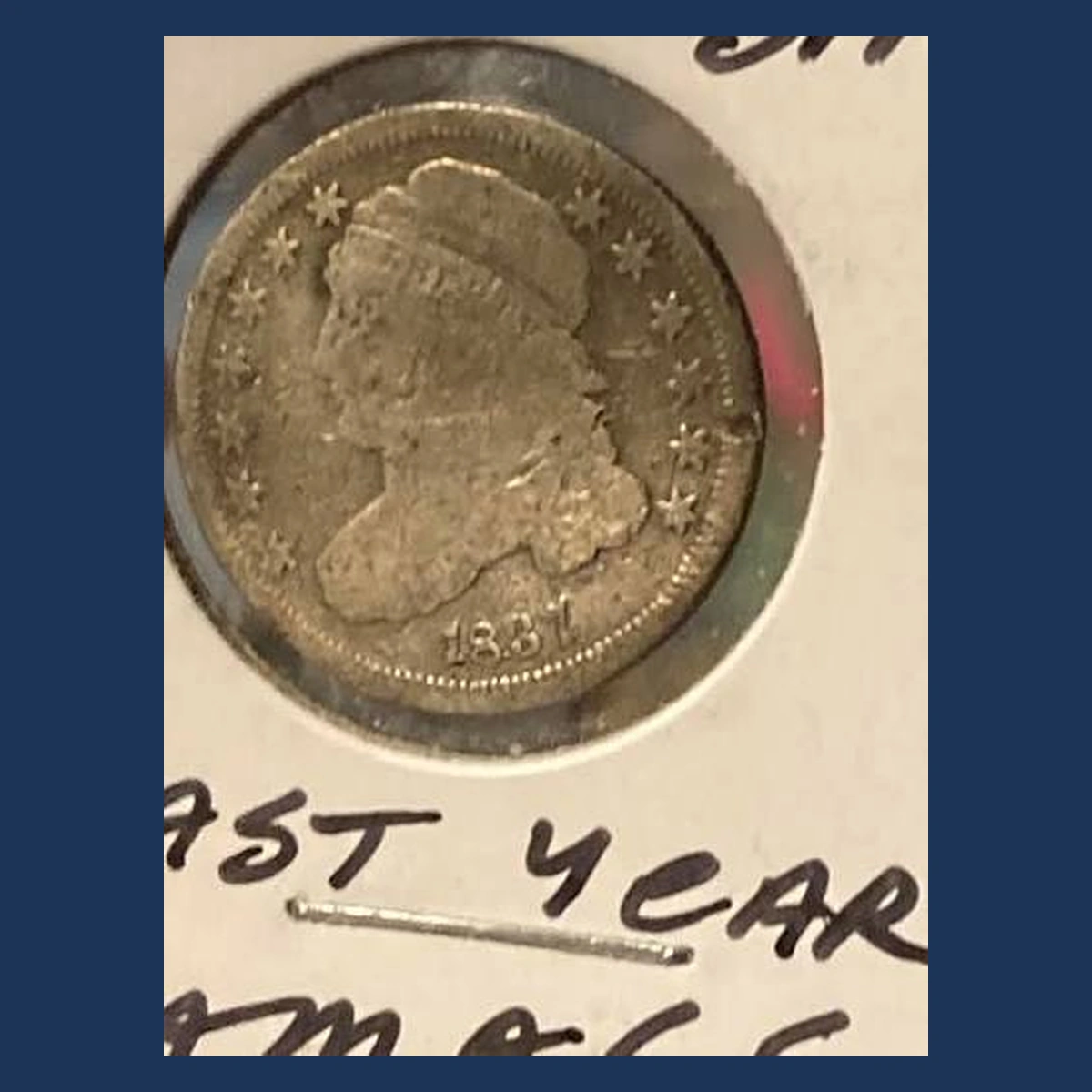
The eagle leans slightly when the coin is turned over with Liberty upright. One stamping tool sat at a different angle from the normal position.
The recorded JR-4 example has this mild rotation, but no exact angle is given. JR-4 identifies the particular pair of tools used to make the coin.
This same coin also has a raised crack across its front. It is one piece with two features, rather than two separate auction examples.
The tilt can disappear from view if each photograph is independently turned upright.
Estimated Value
The PCGS MS65+ CAC example sold for $15,860 in January 2026. It is a highly preserved, unworn coin with a noted ownership history.
For circulated coins with a similar small rotation, estimate $100–$1,500. Better unworn examples need comparisons that account for their much stronger condition.
The $15,860 also covers the front-side crack described below. It is one whole-coin price, so the two features should not be counted as two separate sales or premiums.
How to Identify
Hold Liberty upright and flip the coin from top to bottom without turning it sideways. On a normally aligned dime, the eagle should then stand upright too.
Repeat the movement to see whether the same lean appears each time. Do not judge from two photographs that have already been rotated separately.
Use a magnifier to inspect the edge grooves for seams or signs that pieces were joined. Check that the front is Capped Bust and the back has the eagle above 10 C.
A scale and calipers should show about 2.67 grams and 18.5 mm, allowing for wear. For the quickest test, keep the front upright and repeat the same top-to-bottom flip to check the eagle’s tilt.
2. 1837 Capped Bust Dime Obverse Die Cracks (Documented Coin $15,860)
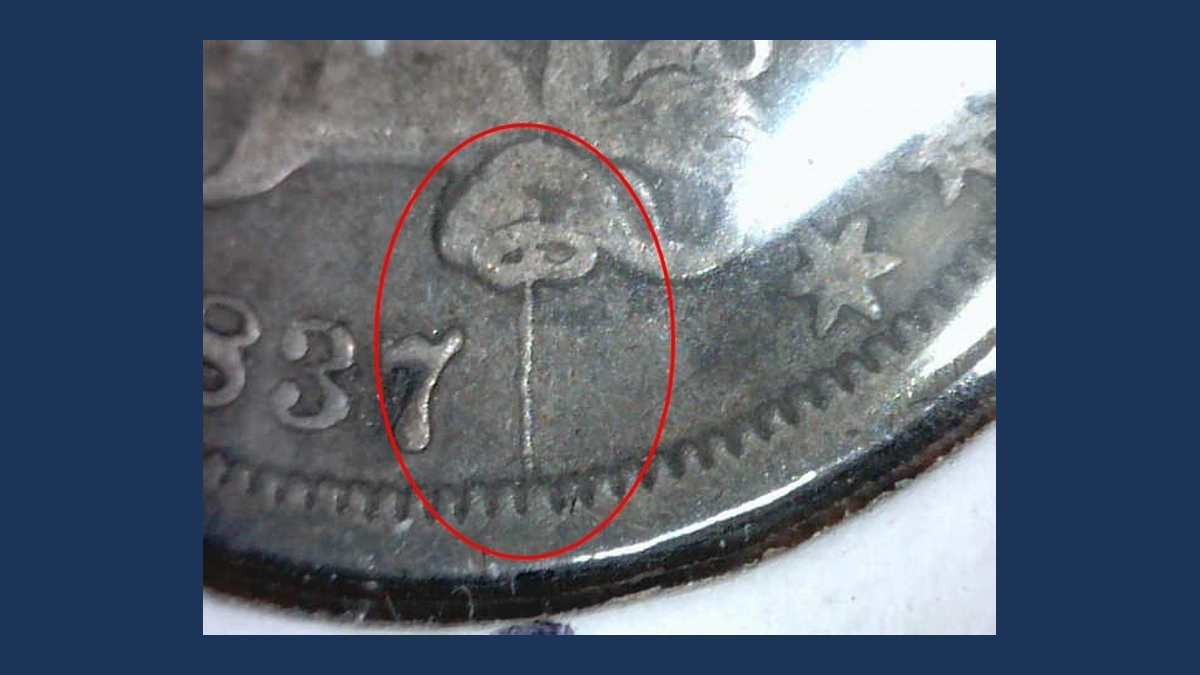
A raised line crosses the front from roughly the top toward the lower-right edge. This is the crack on the recorded JR-4 MS65+ coin.
Silver entered a split in the die, the steel stamping tool, and left a ridge during the strike. The coin itself did not need to split.
A different crack passes through the upright part of the 7 on JR-3 examples. It should not be added to the JR-4 coin’s pattern.
Both examples use the Capped Bust portrait and eagle design, rather than the separate 1837 Liberty Seated design.
Estimated Value
Estimate $100–$1,500 for circulated examples with these raised cracks. Better detail and original surfaces help support the higher part of that range.
The JR-4 PCGS MS65+ CAC sold for $15,860 at Heritage in January 2026. Its slight rotation is described in the previous section.
That result values one exceptionally preserved dime, including its history and both features. It does not make every small crack on a worn coin worth a five-figure amount.
How to Identify
Move the light across the front while viewing the line with a magnifier. A die crack forms a raised ridge; a scratch cuts into the finished surface.
For JR-4, compare the route from about twelve to five o’clock with the auction photograph. For JR-3, look through the upright stroke of the 7 instead.
Use a scale and calipers against the normal 2.67 grams and 18.5 mm. Check the edge grooves where the line approaches the rim for later cuts or impacts.
A similar line elsewhere does not identify the same variety. Start by matching the raised line’s exact route to the correct JR-3 or JR-4 example.
3. 1837 Capped Bust Dime Reverse Rim Cuds (Documented Coin $33,600)
Small raised patches sit on the back-side rim above D STA. They formed where pieces broke from the stamping tool’s edge and silver filled the gaps.
These patches are called cuds. The Newman–Simpson JR-3 coin shows them clearly, along with exceptionally well-preserved surfaces.
Its 7 on the front does not have the later crack known on other JR-3 coins. The two faces therefore help distinguish this particular example.
A matching back-side break does not require a cracked 7, because the front and back tools could deteriorate at different times.
Estimated Value
The PCGS MS66 CAC Newman–Simpson dime sold for $33,600 in September 2020. MS66 describes an exceptionally preserved, unworn coin.
Estimate $150–$2,000 for circulated pieces with similar original rim breaks. Premium unworn examples belong in a separate whole-coin range of about $10,000–$35,000.
The record includes the coin’s color, condition, and ownership history. It is not a $33,600 premium for the narrow breaks, and a rim damaged after minting cannot use the same comparison.
How to Identify
Check the coin’s width at several points with calipers and weigh it on a scale. The normal figures are about 18.5 mm and 2.67 grams.
Turn to the back and use a magnifier directly above D STA. Compare the narrow raised patches with the catalog photograph, following their connections to the rim.
Inspect the nearby edge grooves. A blow after minting tends to crush an existing rim, rather than leave silver shaped by a gap in the stamping tool.
The Newman–Simpson example also has an uncracked 7. For a quick match, compare both the raised patches above D STA and the clear, uncracked date digit.
Conclusion
Whole-coin estimates for these 1837 Capped Bust dimes span $100–$35,000, with exceptional condition accounting for much of the upper end. Keep the slightly rotated, cracked JR-4 separate from the JR-3 with rim breaks and an uncracked 7.
Compare the same design and the same features before using an auction result. One coin can have two errors, but its sale price should only be counted once.