1858 Dime Error List with Pictures

A worn 1857 dime struck five percent off center sold for $184 in 2005. That other-year result offers a comparison for an 1858 dime with a larger misplaced strike.
The 1858 dime errors below have estimated values of $30–$1,500. Some add tiny outlines, while others tilt the whole back or leave part of the metal unstamped.
Read on to choose the right way to inspect each feature.
1. 1858 Liberty Seated Dime Light Reverse Die Clash (Estimated Up to $250)
Faint extra shapes on the back identify a clash on the Philadelphia variety called F-102. They are easier to miss than a large shifted design.
A die is the steel tool that stamps a coin. When the two tools hit each other without a blank between them, each can pick up parts of the opposite picture.
Later coins may show those unwanted shapes beside their normal details. The recorded example is worn but still has substantial detail.
Its weak head and breast are separate features on the front. They do not by themselves establish what caused the back’s clash marks.
Estimated Value
Estimate $30–$250 for worn through slightly worn examples with recognizable clash traces. Clear original surfaces make such a small feature easier to see.
There is no recorded sale here for the reference coin. The estimate covers the whole dime, including its condition.
Heavy wear can erase the extra shapes. A better grade alone also does not turn an irregular line into a clash, so compare the actual mark before deciding that a coin belongs in this range.
How to Identify
Examine the flat areas around the wreath under a 10× magnifier. Try moving the light to find a shape related to Liberty’s side of the coin.
The reported clash is light, so use the F-102 reference rather than expecting an extra complete portrait. A normal leaf vein or random scratch needs a different explanation.
Check the medium-sized date, which slopes downward, against the same example. Keep the weak head and breast separate from the back’s transferred shapes.
Use a scale and calipers when safely accessible against 2.49 grams and 17.9 mm. Inspect the normal grooved edge for damage.
A recognizable piece of the opposite design in the matching back position supports a clash.
2. 1858 Liberty Seated Dime Reported Planchet Flaw (Estimated Up to $500)
Bill Mackrides found an unusual 1858 dime in 2007. Along with a tilted back, the report describes a flaw in its blank, the metal disc used to make the coin.
The account does not describe the flaw’s shape or location. That broad wording cannot identify a particular missing piece or peeling layer.
Those problems leave different evidence. A clip changes the outline before striking, while a layer separation begins within the metal.
The coin’s measured rotation is a separate observation. Its surface and edge still need to show what kind of blank flaw accompanied that tilt.
Estimated Value
Use an estimated $75–$500 for a worn example with a clearly visible original blank flaw. No transaction price is attached to the discovery report.
The range assumes that inspection supports a manufacturing problem rather than later damage. The size, appearance, and condition of the coin would affect its value.
This same dime also has a 45-degree rotation. The two features may attract a buyer together, but adding both full estimates would count the coin twice.
How to Identify
Photograph both faces and the entire edge before zooming in. A 10× magnifier can show whether the unusual area is a missing piece, separating layer, or later cut.
Look for natural struck metal at a gap and a thin boundary beneath any peeling surface. File marks or cut-through design suggest a different cause.
A scale and calipers compare the coin with its original 2.49 grams and 17.9 mm. The normal silver dime has grooves around its edge.
Do not name a specific shape just because another error coin looks similar. The discovery report leaves that detail open.
Match the actual flaw on the same coin as the measured 45-degree rotation, keeping the two observations separate.
3. 1858 Liberty Seated Dime Rotated Reverse (Estimated Up to $700)
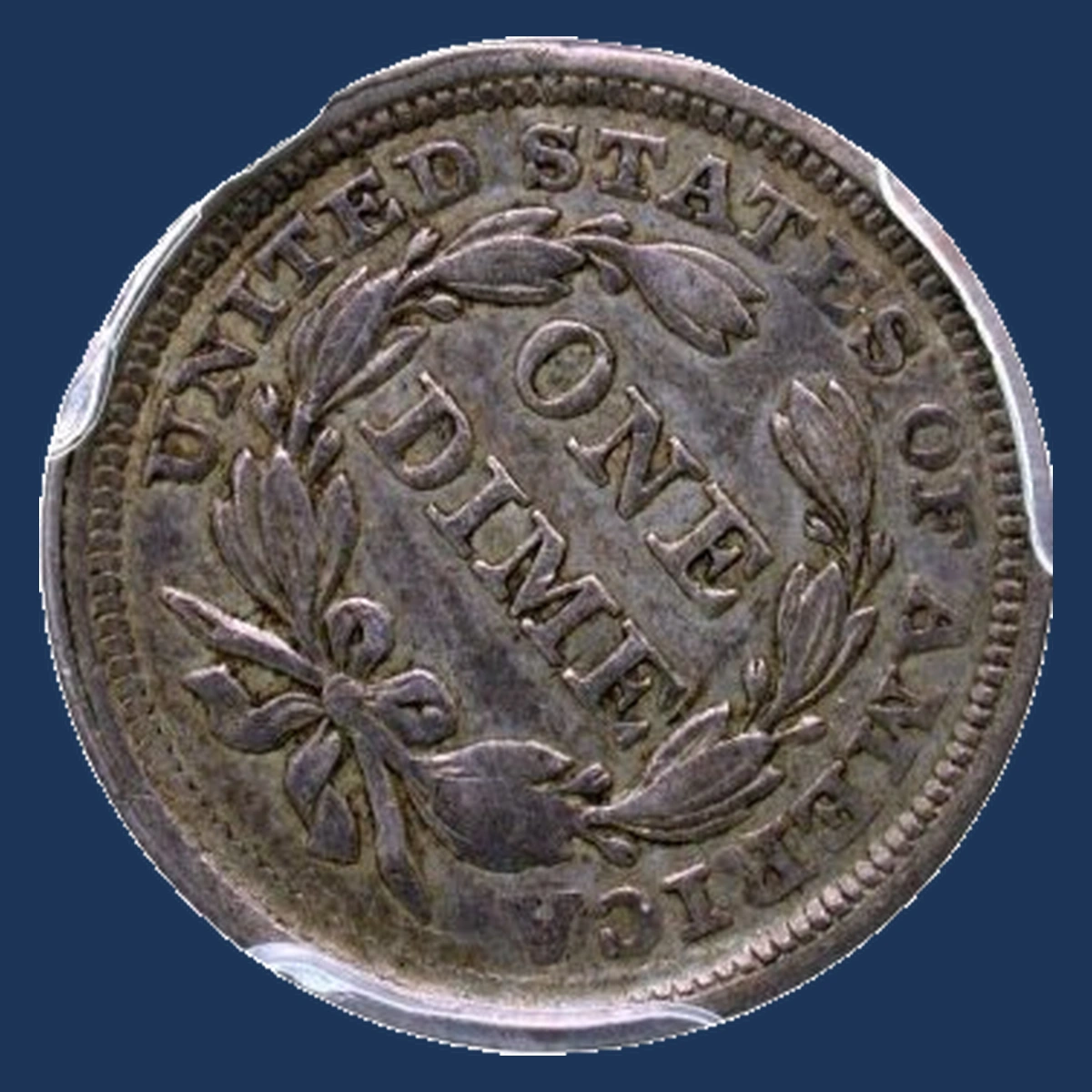
An upright photograph of each face can hide this error completely. The back is tilted relative to Liberty’s picture on the front.
The specialist reference records one example about 45 degrees left of normal. A separate coin has a tilt of about 57 degrees left.
The complete wreath and lettering turn together. This concerns the direction of the stamping tools, rather than a second blow landing at another angle.
The 45-degree discovery also has the blank flaw discussed above. That combination belongs to one coin and should not be expected on every rotated 1858 dime.
Estimated Value
For clear rotations around 45–57 degrees, estimate $100–$700 in worn through slightly worn condition. Attractive surfaces and an angle that can be measured repeatedly support a stronger comparison.
The reference records the rotations but gives no auction prices. This is an estimate for the whole coin.
A seller’s angle from separately straightened photographs is not a reliable measurement. The blank flaw on the discovery coin is also not part of every example in this range.
How to Identify
Place the coin in a transparent holder that keeps it from turning. Set Liberty upright against a fixed vertical line, then flip the holder straight from top to bottom.
A normal back finishes upright. Use a protractor to measure any leftward tilt and repeat the flip to confirm that it stays the same.
Inspect the date and edge grooves with a 10× magnifier. A seam around the edge could reveal joined pieces rather than a genuine rotated strike.
Check safely accessible coins with a scale and calipers against 2.49 grams and 17.9 mm. Use existing measurements for sealed examples.
The same angle after repeated controlled flips shows the relationship between the two faces, which separate upright photographs cannot show.
4. 1858 Liberty Seated Dime 10% Off-Center Strike (Estimated Up to $1,000)
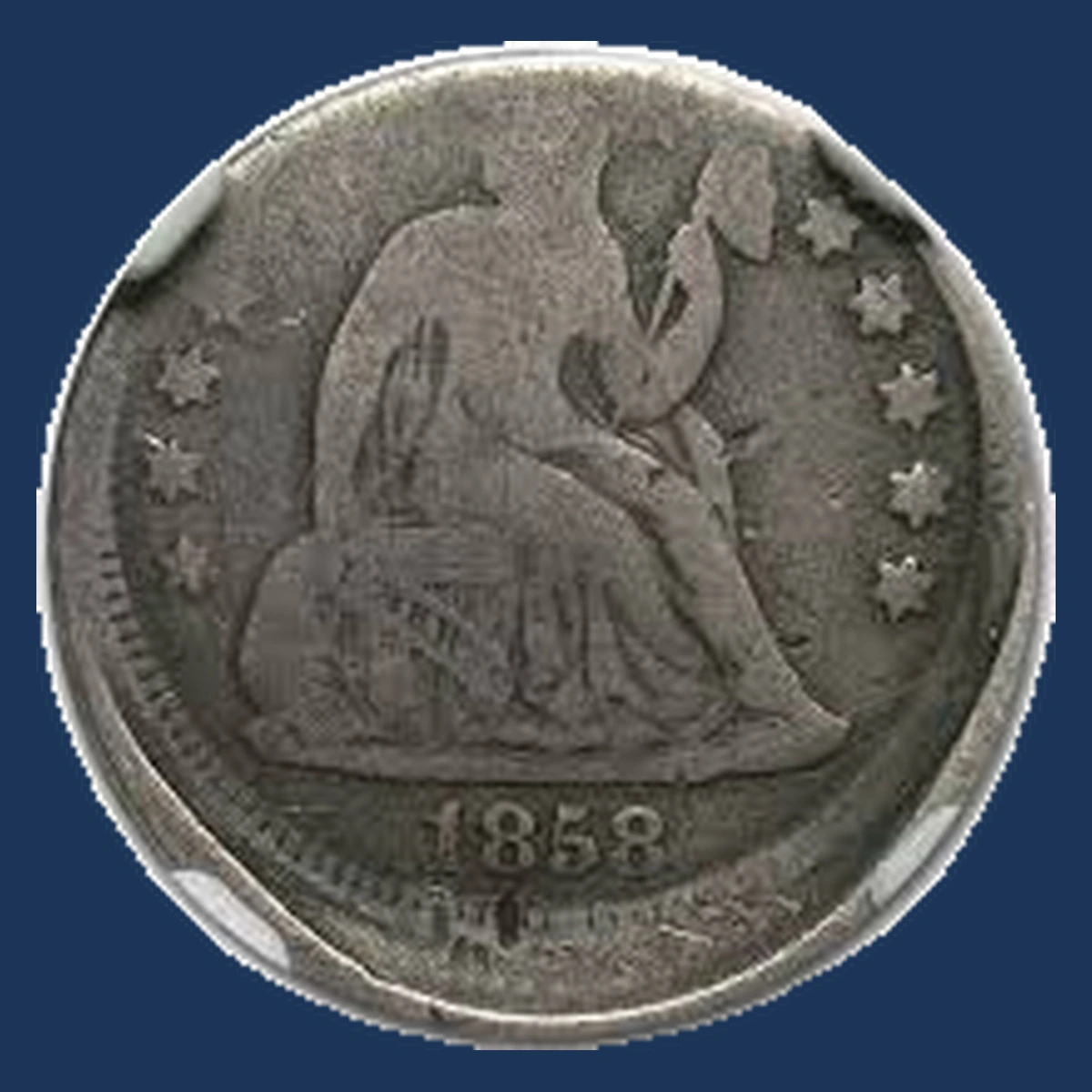
One 1858 dime offered by APMEX has a clearly misplaced design. NGC graded it VG8, meaning heavily worn with some detail remaining, and identified a ten-percent off-center strike.
The blank did not sit fully beneath the stamping tools. Part of the intended image missed the metal at one side.
On the opposite side, some metal received no design. Both faces should fit that same misplaced position.
The written description does not state the direction of the shift. Read that from the actual coin rather than assigning it the direction shown on another year’s example.
Estimated Value
Circulated 1858 dimes with roughly this amount of displacement have an estimated $200–$1,000 range. A readable date and attractive surfaces improve the comparison.
A more worn 1857 dime with a five-percent shift sold for $184 in 2005. It was graded PCGS Good4.
That is another year with a smaller shift, not a sale of the listed 1858 VG8. Damage can reduce the appeal even when a misplaced strike is obvious.
How to Identify
Read DIME on the back before comparing size. The similar-looking 1858 half dime is a different denomination and needs different measurements.
For a dime, use a scale against 2.49 grams and calipers against 17.9 mm. The error can distort the outline, so record more than one span.
Inspect the boundary between stamped detail and bare metal with a 10× magnifier. Scraping or grinding a finished coin does not recreate an original unstamped surface.
Photograph both faces, the remaining edge grooves, and the readable date. When comparing the dealer example, match its VG8 grading label too.
Corresponding design loss on both faces beside original blank metal supports the off-center strike more clearly than an uneven rim alone.
5. 1858 Liberty Seated Dime Doubled Die Obverse (Estimated Up to $1,500)
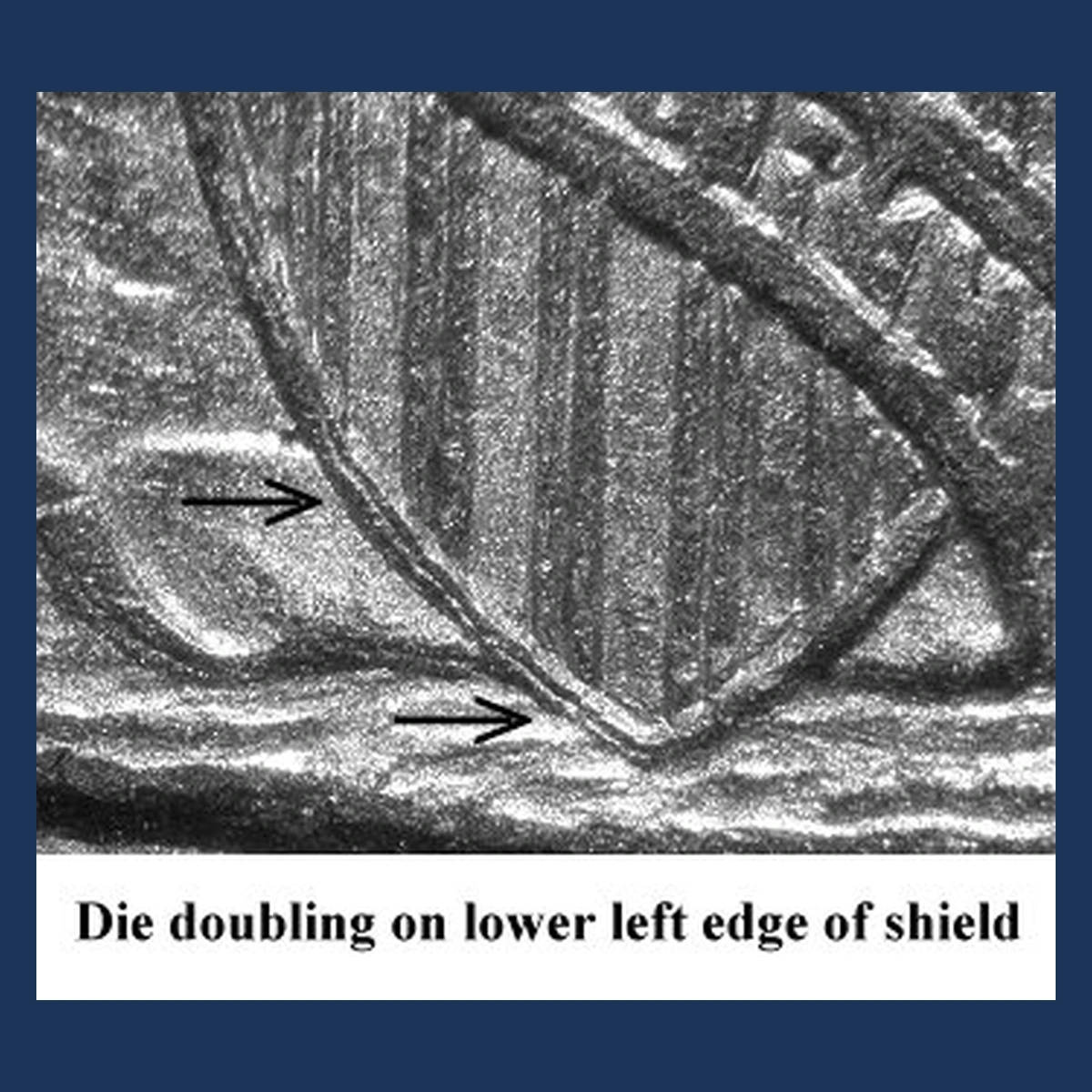
The first five stars and the shield carry extra outlines on the Philadelphia variety called F-107. Look especially at the shield’s lower-left edge and vertical lines.
The repeated detail formed in the stamping tool before any coin received its design. One strike could therefore leave those extra shapes on a dime.
This differs from striking the same coin twice. It also differs from movement during striking that creates flat shelves beside the normal design.
A 2025 auction catalog describes an MS63 example with doubled shield detail. The stars and shield together provide a better comparison than one thick-looking star.
Estimated Value
Clearly identified F-107 dimes have an estimated $100–$1,500 range, from worn coins through attractive unworn examples. The 2025 catalog records an MS63 coin, meaning no circulation wear with visible marks.
The catalog description alone does not provide its sale price. It gives a graded example for comparison.
Separate star outlines and preserved shield lines make the variety easier to see. Ordinary thick edges, damage, or glare do not qualify a coin for the same estimate.
How to Identify
Keep stars 1–5 and the lower-left shield in a full front photograph. Then enlarge both areas with a 10× magnifier to compare the extra raised outlines.
Use the shield’s vertical lines as another check on a better-preserved coin. A flat shelf that narrows the main edge may come from movement during striking.
The expected pattern should appear across the named areas. An extra date-punch mark does not explain doubling on the stars and shield.
Philadelphia examples lack a mint letter. Check safely accessible coins with a scale and calipers against 2.49 grams and 17.9 mm, and inspect the grooved edge.
Matching extra outlines on the shield and first five stars provide the strongest visible link to F-107.
Conclusion
Estimated values for these 1858 dimes range from $30 to $1,500. Choose the check that fits the feature: a controlled flip for rotation, both faces for an off-center strike, and close views for doubled stars.
The discovery coin has both a rotated back and a reported blank flaw. Keep those observations together without inventing a more specific shape or counting the same coin’s value twice.