1873 Dime Error List with Pictures

The only known 1873-CC No Arrows dime sold for $3,600,000 in January 2023. A crack crosses its CC mintmark, but its unique identity explains the price—not an ordinary crack premium.
These 1873 dime errors also include extra date pieces, a doubled shield, and an off-center strike. Estimates span $50–$4 million, with the million-dollar range reserved for that one Carson City coin.
Read on to match the mint and date arrows before comparing any marks or prices.
1. Reported 1873 Liberty Seated Dime Clashed Dies (Comparison Range Up to $1,000)
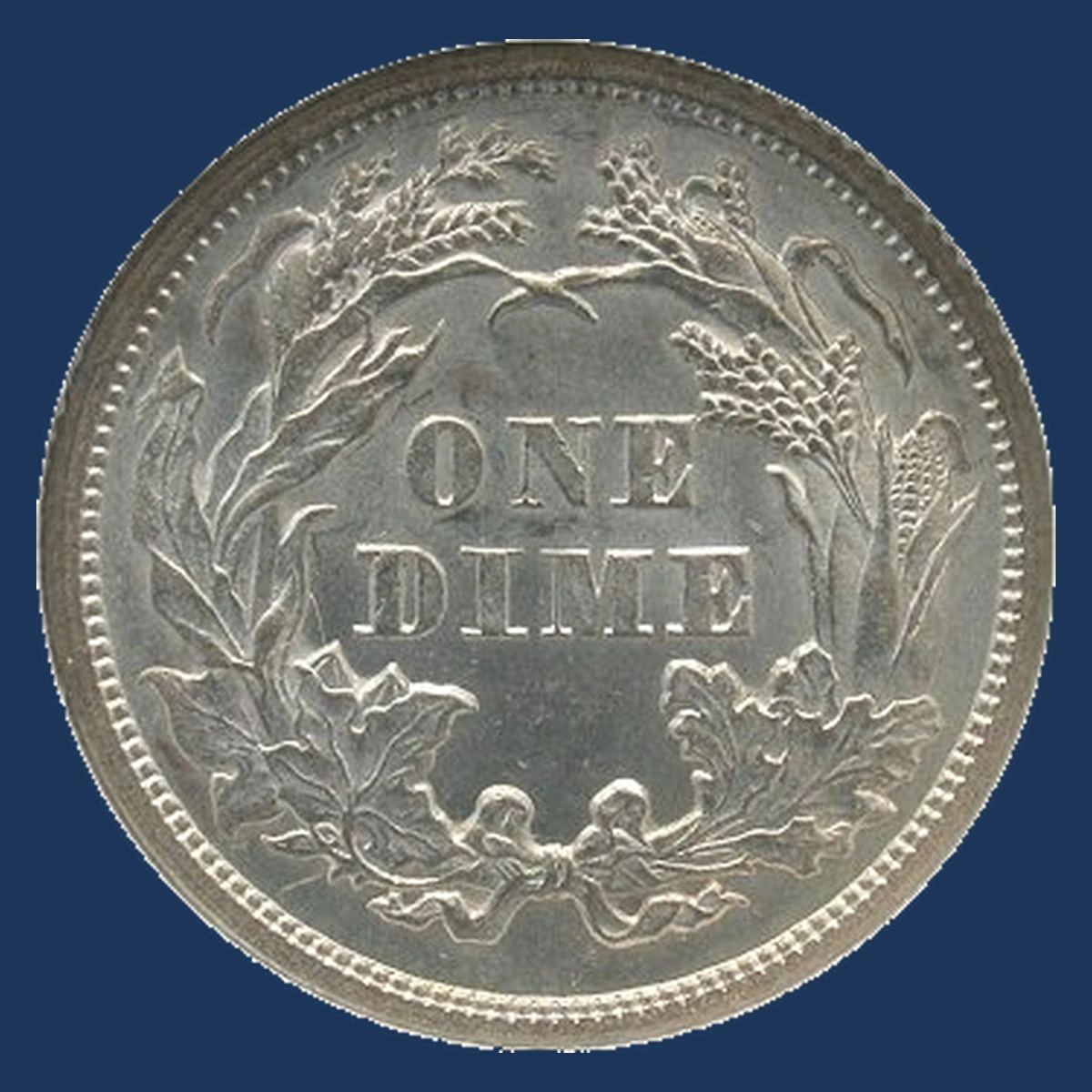
A clash can leave faint pieces of the opposite design on a coin. It happens when the two dies, the steel stamping tools, meet without a blank between them.
The tools pick up marks from each other. Later coins can copy those marks alongside the normal design.
A general 1873 price guide reports this category without identifying one dime’s mint, arrows, and exact clash pattern together. It does not establish a specific place to look on a confirmed example.
A random line near Liberty is not enough. The mark needs to resemble a meaningful part of the other side.
Estimated Value
For an ordinary Philadelphia circulation coin with a genuine clash, estimate $75–$1,000 from worn through attractive unworn examples. This excludes the much higher values of rare Carson City coins.
A documented 1855 dime with shield and scroll traces on its back shows a related error. It is a comparison, not a recorded 1873 sale.
The estimate applies only after the extra shapes match the opposite design. A general guide listing alone does not establish a valuable clash.
How to Identify
Read ONE DIME first; a half-dime photograph shows a different coin. Then check for arrows beside the date.
Without arrows, the normal weight is 2.49 g; with arrows, it is 2.50 g. Both types measure 17.9 mm and have grooved edges, checked on a loose coin with a scale and calipers.
Use a 10× magnifier to compare the faint extra shape with the opposite side’s design. Photographs must show how those designs line up, not just two unrelated close-ups.
Scratches and polishing lines may be thin without resembling any design. The useful first clue is a recognizable fragment of the opposite image, rather than an unexplained line near Liberty.
2. 1873 Liberty Seated Dime Repunched Date (Estimated Up to $1,500)
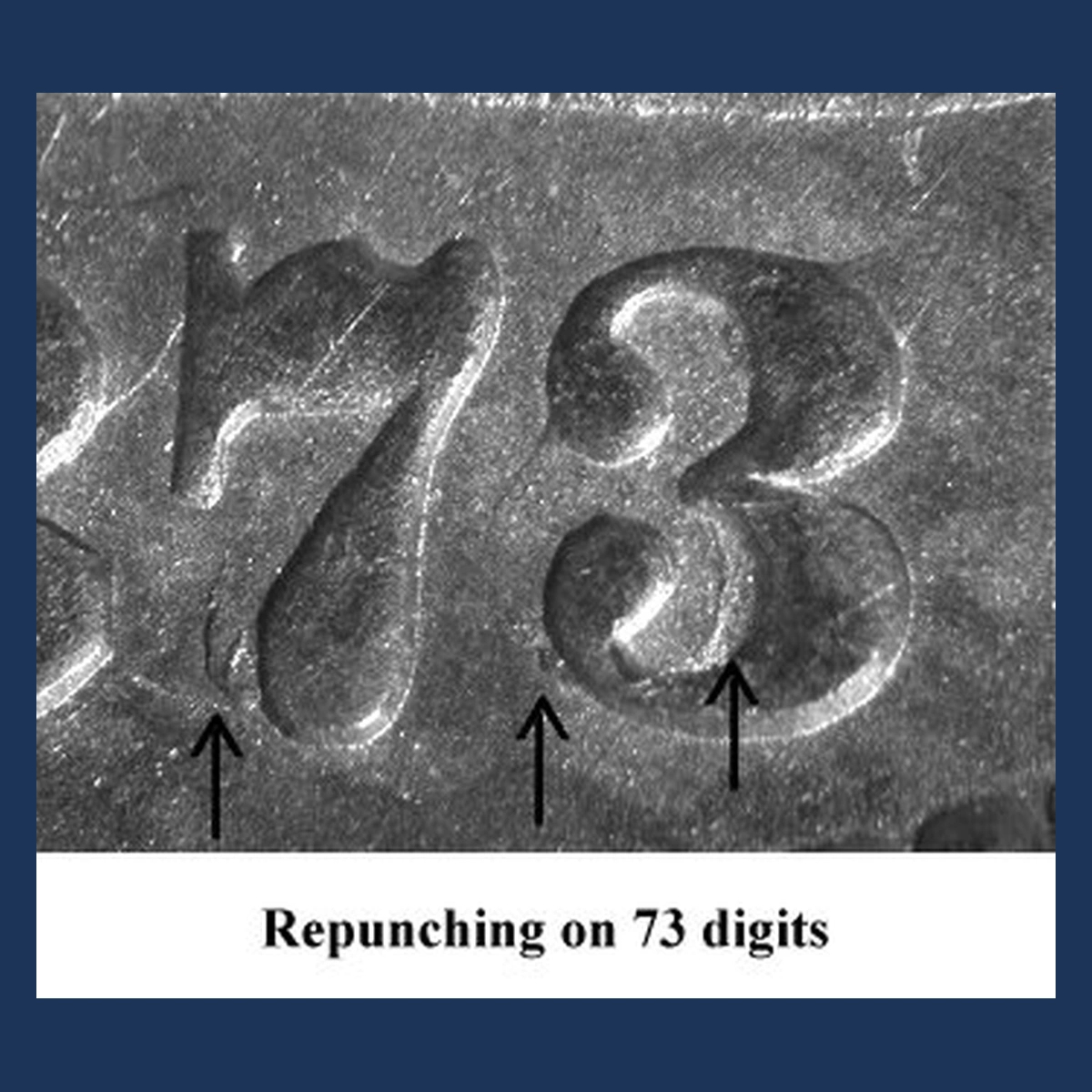
Extra number pieces appear in different places on three reported 1873 issues. They came from repeating the date punch while preparing the stamping tool.
Philadelphia No Arrows examples with the Closed 3 style show remnants toward the lower left of the numbers. Philadelphia With Arrows examples instead direct attention to 1 and 8.
San Francisco With Arrows coins have a reported extra piece above the base of 1. These positions belong to different varieties.
Open 3 and Closed 3 describe normal ways the digit was shaped. Neither style alone proves that the date was punched twice.
Estimated Value
Estimate $75–$1,500 for matching circulated through moderately marked unworn examples. Philadelphia and San Francisco coins have different basic values, even before their extra date pieces are considered.
A reported 1856-O repunched-date dime graded PCGS VF35 sold for $132.50 on the secondary market. VF35 indicates moderate wear with much detail remaining.
That earlier New Orleans coin is only a related comparison. Clear remnants and original surfaces support more interest; an ordinary Closed 3 shape does not.
How to Identify
Keep the whole date, its arrows if present, and the mint letter in your photographs. Decide which issue you have before comparing an extra stroke.
For San Francisco With Arrows, magnify the area above the base of 1. Philadelphia With Arrows needs a comparison at 1 and 8, while No Arrows Closed 3 has broader lower-left remnants.
Use a 10× magnifier to check that each mark is raised and shaped like part of a number. Flat shelves or scratches have different forms.
A scale and calipers can compare with 17.9 mm and either 2.49 g without arrows or 2.50 g with them. Look for the matching earlier number piece, rather than treating the normal shape of 3 as an error.
3. 1873 Liberty Seated Dime Off-Center Strike (Estimated Up to $5,000)
The illustrated off-center dime has arrows beside its date and was graded PCGS AU55. That grade means light circulation wear.
Its label identifies a 12% off-center strike. The blank sat too far to one side when the tools came down, leaving part of the design beyond the metal.
Elsewhere, original blank silver received no design at all. This differs from cutting a piece away after the coin was finished.
The published description does not establish a clock direction for the shift. Its percentage belongs to this With Arrows example, not automatically to the separate No Arrows issue.
Estimated Value
Estimate $1,500–$5,000 for a genuine With Arrows off-center dime of this general quality with a readable date. No completed sale price is used here for the documented AU55 12% example.
A dealer historically asked $2,700 for an 1855 dime graded PCGS AU50 and struck 10% off center. AU50 indicates a little more wear.
That is another date and grade, and the amount was an asking price. It offers a related comparison rather than a recorded 1873 sale.
How to Identify
Match the full coin and label before enlarging its blank margin. The published example has arrows, an AU55 grade, and a 12% shift.
A 10× magnifier should show where struck detail meets untouched silver. Follow that boundary on both sides; a centered back with only the front shifted may indicate a moved stamping tool instead.
This With Arrows dime normally weighs 2.50 g and measures 17.9 mm. Use a scale and calipers if it is loose, or recorded measurements if it is sealed.
Inspect surviving edge grooves for filing or cutting. The clear check is original blank metal opposite missing design on both faces, with the arrows and readable date retained.
4. 1873 Liberty Seated Dime Misplaced Date (Estimated Up to $10,000)
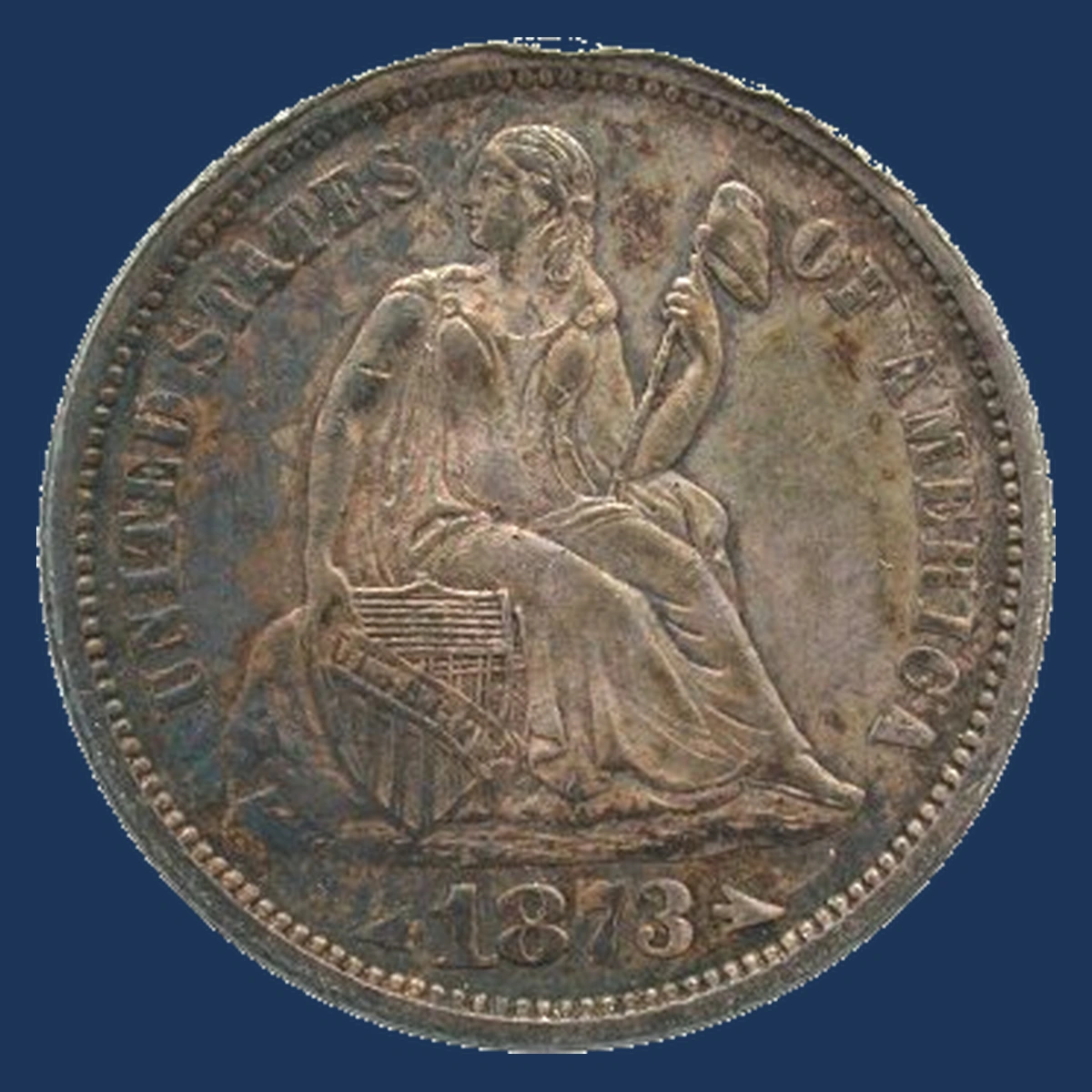
The top of an extra 3 appears among the small teeth along the rim below the date. It belongs to a Philadelphia With Arrows coin that also has a doubled shield.
The misplaced number came from a date punch landing too low in the stamping tool. The correctly placed date remained above it.
The shield doubling formed in a different step of making that tool. Both features can therefore appear on the same coin without having the same cause.
A normal rim tooth can look odd in a blurry photograph. The extra shape must actually resemble the top of 3.
Estimated Value
Value the complete doubled-shield and misplaced-date coin at an estimated $1,000–$10,000. GreatCollections records $2,081.25 for a PCGS F15 example of the combined variety.
F15 describes noticeable wear, making that a circulated-coin comparison. Better condition and clearer details can support higher prices.
This range already includes both features on the same specimen. Do not add it to the doubled-die range below as though two different coins or two separate sale prices were involved.
How to Identify
Enlarge the rim teeth directly below the date with a 10× magnifier. Compare the small upper curve of 3 with a photograph of the known variety.
Keep all of 1873 and both arrows visible, since a tightly cropped bump can lose its identifying position. A crack or damaged rim tooth need not form a number shape.
Check the shield doubling on the same coin as supporting evidence. This With Arrows dime has a normal 2.50 g weight, 17.9 mm diameter, and grooved edge.
Use a scale and calipers for a loose coin, or recorded measurements for a sealed one. The quickest match is the extra 3 below the date together with the correct doubled shield.
5. 1873 Liberty Seated Dime Doubled Die Obverse (Estimated Up to $10,000)
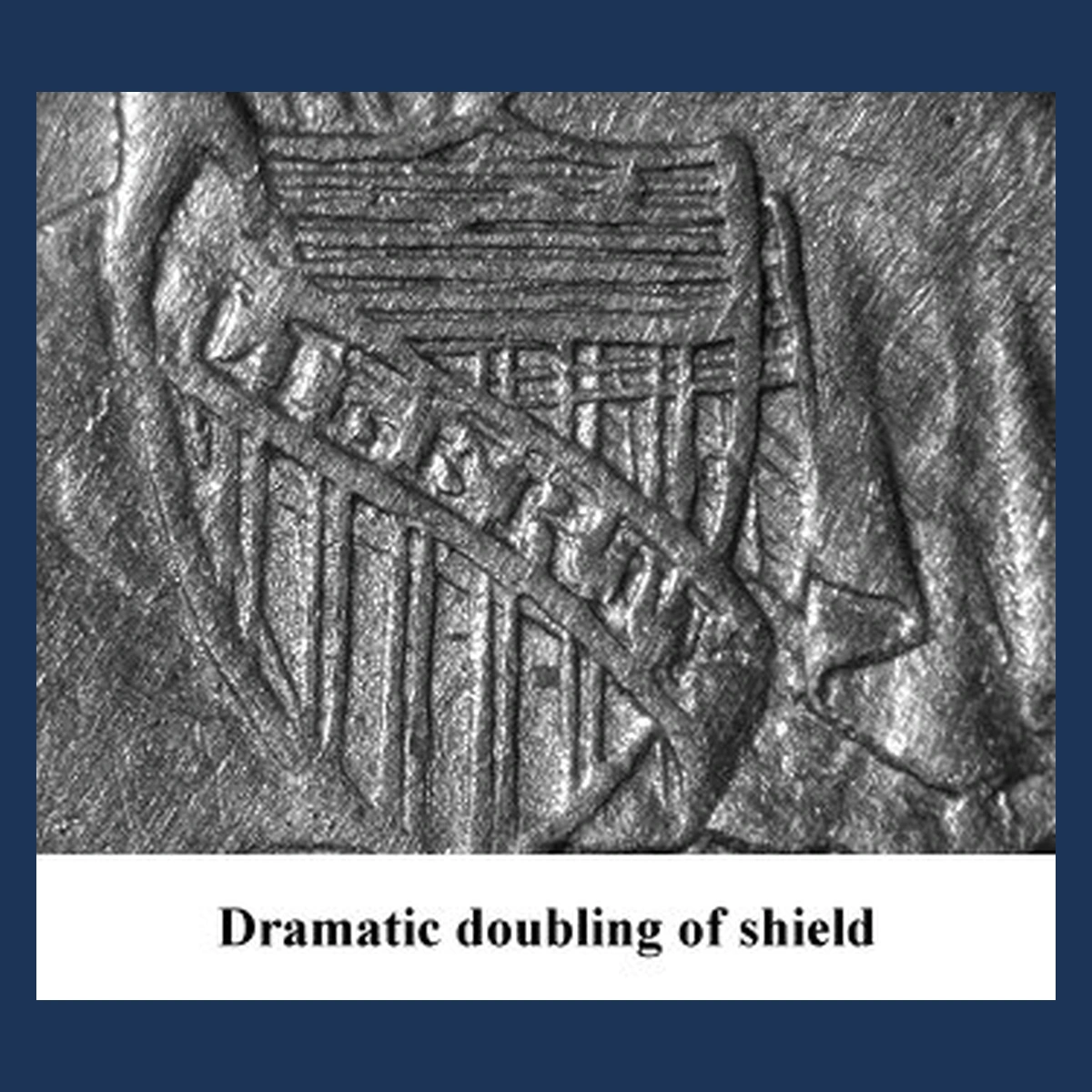
The shield gives this variety its most obvious extra detail. Look inside it, along its right edge, and across the ribbon for repeated raised shapes.
The doubling was already part of the stamping tool before the coin was made. One strike could therefore produce the repeated design without shifting Liberty’s entire figure.
Collectors identify this Philadelphia With Arrows combination as FS-101 or Fortin 103. It also carries the extra 3 below the date.
That stray number helps confirm the same coin, but it is a separate feature. Start with the doubled shield rather than assuming every date piece belongs here.
Estimated Value
The GreatCollections archive records $2,081.25 for a PCGS F15 FS-101/F-103. Estimate $1,000–$10,000 for correctly identified circulated through better-preserved examples.
The price includes the associated extra 3 below the date. It is one whole-coin valuation.
A much higher AU Details offer mentioned in the year guide was not a completed sale. Details also indicates a condition problem, which must be considered even when the shield doubling looks strong.
How to Identify
Inspect the shield’s inside lines, right edge, and ribbon with a 10× magnifier. Look for real separated shapes, not just the normal folds of the ribbon.
A thin, flat shelf caused by movement during striking differs from the repeated raised design of this variety. Compare the full shield with a known example.
The correct coin is Philadelphia With Arrows, normally 2.50 g and 17.9 mm with a grooved edge. A scale and calipers check a loose specimen; use recorded measurements for a sealed one.
Then find the extra 3 below the date on that same face. The fastest visible starting point remains the repeated shield lines and doubled right edge.
6. 1873 Liberty Seated Dime Die Cracks (Unique No Arrows Coin Estimated at $3–$4 Million)
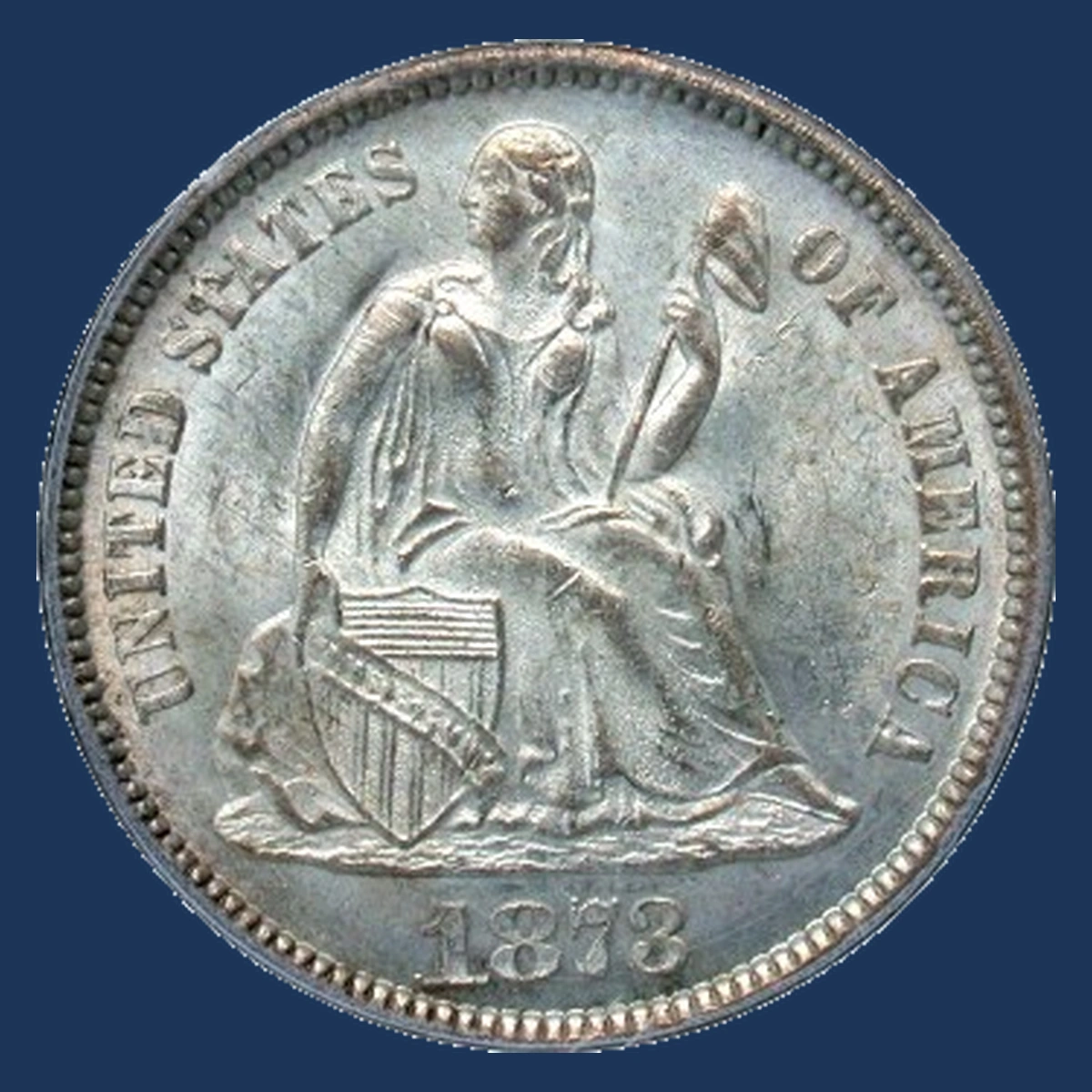
A raised crack crosses CC on the only known 1873-CC dime without date arrows. Heritage notes that the same back stamping tool also made coins with arrows.
The crack helps connect the tool’s use across that change. It does not make the two issues equally rare or valuable.
A separate Philadelphia No Arrows Closed 3 example has cracks on both faces. Its lines need their own comparison, not the Carson City pattern.
Silver filled openings in cracked steel to create these raised marks. The unique Carson City coin’s price comes from its identity and history, not merely its crack.
Estimated Value
Estimate $50–$500 for ordinary circulated Philadelphia examples and $2,000–$50,000 for circulated Carson City With Arrows coins, depending on condition. These are whole-coin ranges.
The unique No Arrows MS65 sold for $3,600,000 at Heritage on January 12, 2023. MS65 means no circulation wear and few marks.
A separate $3–$4 million range refers only to that one coin. It must not be applied to an ordinary cracked dime or a Carson City example with arrows.
How to Identify
Establish the mint and arrows before tracing a line. Both types have grooved edges and a 17.9 mm diameter, but No Arrows normally weighs 2.49 g and With Arrows 2.50 g.
Use a scale and calipers on a loose coin, or recorded measurements for a sealed example. Then examine the raised line through CC toward the wreath ribbon with a 10× magnifier.
A mark near added or altered letters cannot establish a genuine Carson City coin. Philadelphia examples need separate photographs of their own cracks on both sides.
Do not identify the unique coin from a crack alone. For the crack itself, look for a continuous raised ridge through the genuine mint letters rather than a cut below the surface.
Conclusion
The ranges here run from $50 to $4 million, but the highest range belongs only to the unique Carson City No Arrows dime. Ordinary cracks do not carry that value.
Check the mint and arrows first, then compare the actual feature. The doubled shield and misplaced 3 can identify one coin together, so their prices should not be added as separate premiums.