1931 Dime Error List with Pictures

A slight extra outline in the date helped identify a 1931-D doubled die that sold for $2,640 in November 2023. Its MS67+ grade also described exceptional preservation without circulation wear.
These 1931 dime errors span estimated whole-coin values of $35–$3,000. Some repeat a design detail, while others split, peel, or leave part of the original blank missing.
Read on to see which visible clues belong to each type.
1. 1931 Mercury Dime Lamination (Estimated Up to $500)
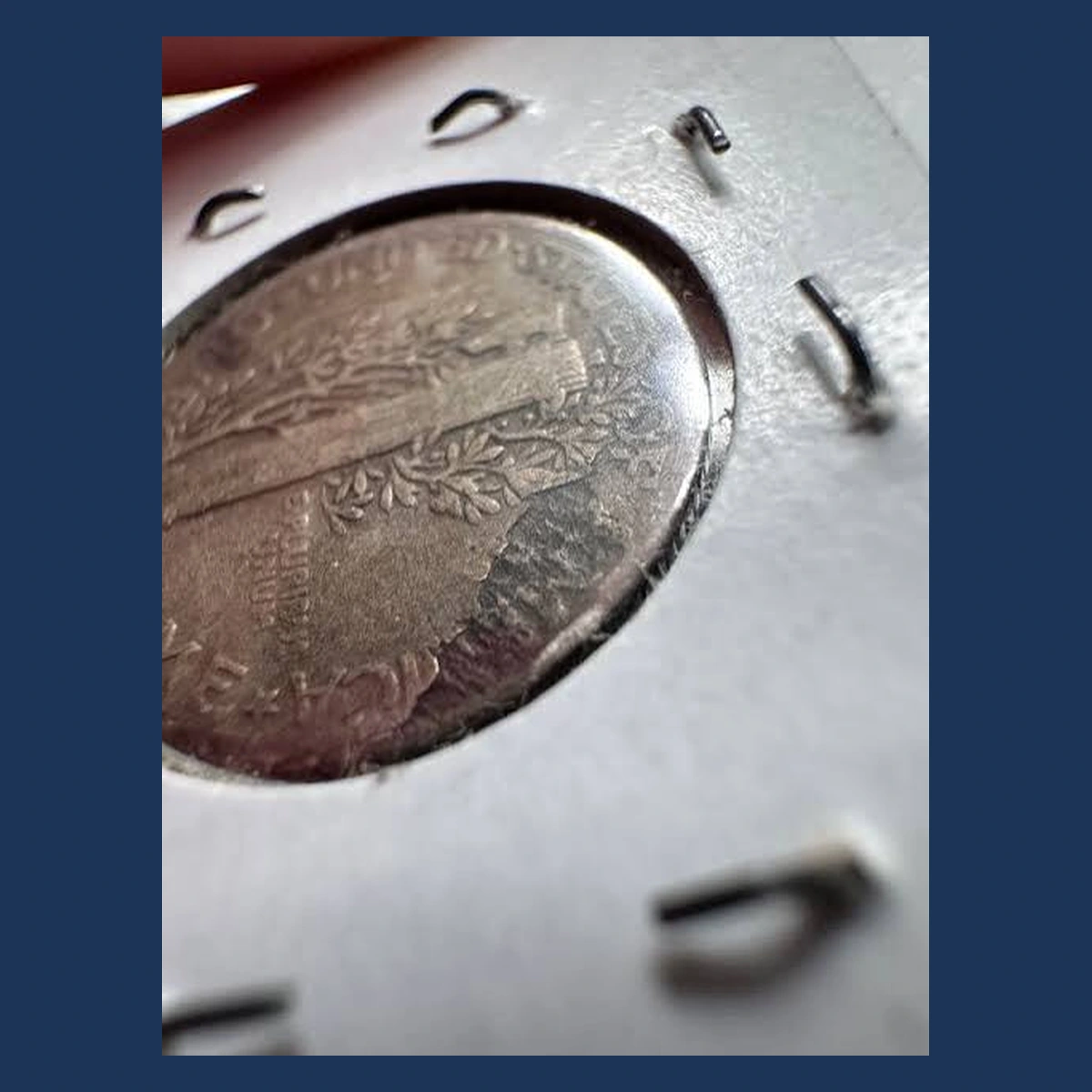
A thin flap lifting from the surface can show a lamination. The silver-copper mixture has separated within the coin, leaving a shallow split or peeling patch.
The 1931-S year guide reports this error type without naming one fixed location. You need to examine both sides rather than search for a particular letter.
Mercury dimes contain silver throughout their metal mixture. They are not ordinary base-metal coins with a thin silver coating.
A bright patch therefore does not show missing silver plating. Scratches and corrosion can also expose fresh-looking metal, but they do not necessarily leave a layered opening.
Estimated Value
Estimate $35–$500 from circulated condition through modest unworn examples. The complete coin’s grade and the extent of its natural separation both affect the price.
A tiny rough patch usually adds less interest than a substantial attached flap. A different-year 1921-D reverse lamination graded NGC VG8 sold for $74 in 2013.
VG8 means heavy circulation wear. That older sale illustrates a modest error price, not a sale of a 1931-S coin with the same condition or defect.
How to Identify
Leave loose metal attached. Use a 10× magnifier and light from the side to follow the split beneath the neighboring intact surface.
Look for an actual layer rather than scattered corrosion holes. Inspect both faces and the grooved edge, since the reported category does not specify one position for all examples.
A scale can compare a loose dime with the normal 2.50 g weight, and calipers with the 17.90 mm diameter. A retained layer may leave the weight almost unchanged.
For a sealed coin, use existing measurements and clear edge photographs. The immediate clue is a thin layer peeling from the metal beneath, not simply a bright spot or a low scale reading.
2. 1931 Mercury Dime Cracked Planchet (Estimated Up to $700)
An opening at six o’clock is described on a 1931-D dime in a June 2014 auction catalog. The crack is in the coin’s blank, also called its planchet.
This differs from a die crack, which produces a raised line from a split in the stamping tool. Here the metal of the coin itself opens.
The example was graded NGC MS62 Full Bands and offered with two other error dimes. MS62 means no circulation wear but noticeable marks.
Full Bands describes separated bands around the bundle on the back. It is a strike-quality feature, not another error.
Estimated Value
Estimate $60–$700 for circulated through modest unworn 1931-D examples with cracked blanks. Attractive preservation can support more than a heavily worn coin.
The 2014 three-coin lot does not provide a separate price for this dime. A different-year 1945-D example graded PCGS AU50 sold for $77 in September 2024.
AU50 indicates light wear. That more common date provides a lower-priced comparison, rather than an automatic value for a 1931-D coin with Full Bands.
How to Identify
The 2014 catalog places the opening at six o’clock on its example. Use a 10× magnifier to determine whether the line opens into the coin or stands above it.
Follow it to the grooved edge and inspect the corresponding area on the other face. Do not assume the crack passes all the way through.
Later bending may leave distortion, stress marks, or pushed rim metal. Check those surroundings along with the crack.
A scale and calipers should be compared with 2.50 g and 17.90 mm; an intact cracked blank can stay near both. The key distinction is an opening connected to the rim, rather than a raised line on the surface.
3. 1931 Mercury Dime Clipped Planchet (Estimated Up to $1,200)
A curved part of the edge can be missing before a coin receives its design. A punch that overlaps an earlier hole in the metal strip cuts an incomplete blank.
That blank may still enter the press and become a clipped dime. A later curved cut can look similar, but has a different history.
For 1931, a seller reports a Philadelphia MS66 Full Bands example, and a separate guide reports San Francisco clips. MS66 describes an unworn coin with few marks.
The reported grades do not prove how the gaps formed. The rim, design, and missing segment must agree.
Estimated Value
An estimated $50–$1,200 covers small worn clips through attractive unworn 1931 coins. Clear reverse bands and overall condition influence the higher end.
For other-year comparisons, a 1942 PCGS MS66 clipped dime sold for $192 in March 2025. A 1924 NGC MS66 Full Bands clip brought $305.50 in 2013.
Neither is a 1931 sale. The wider estimate includes the value of well-preserved 1931 coins, rather than simply treating every clip as worth the same additional amount.
How to Identify
Measure across an undamaged span with calipers, then weigh the loose coin on a scale. The normal references are 17.90 mm and 2.50 g.
Missing metal can reduce weight whether the gap formed at the Mint or was cut later. The scale alone cannot decide.
Use a 10× magnifier to inspect the gap for natural metal flow and design that fades near the boundary. Parallel tool marks, a sharply sawn face, or a burr suggest later cutting.
Check remaining edge grooves and the opposite rim for possible weakness from the incomplete blank. Begin with the way struck metal meets the arc, rather than accepting a curved shape as proof of a clip.
4. 1931 Mercury Dime Off-Center Strike (Estimated Up to $2,500)
An off-center strike leaves blank silver opposite the place where design is missing. The blank itself was largely intact but sat too far to one side between the stamping tools.
That is different from a clip, which starts with missing metal. Here the design simply fails to reach all of the available surface.
The 1931 year guide reports the category without identifying one example’s mint or amount of shift. Those details must come from the actual coin.
A readable date helps establish the year. A shift on only one face may instead involve a moved stamping tool.
Estimated Value
Estimate $200–$2,500 for genuine readable-date examples, from modest shifts through stronger errors in attractive condition. The upper figure is an estimate, not a documented 1931 sale.
A 1944 PCGS AU58 dime struck 10% off center brought $360 in December 2025. It had slight circulation wear.
A 1920-D PCGS MS62 example sold for $1,020 that September and had no circulation wear but noticeable marks. Both are other-year comparisons showing how condition and date can change the price.
How to Identify
Compare the incomplete design on the front with the back while keeping the coin’s position clear. Both faces should show the misplaced blank, unlike a shift affecting just one tool.
Use a 10× magnifier along the boundary between stamped detail and untouched silver. Check that all of 1931 is readable rather than guessing a worn or missing digit.
A loose dime can be weighed with a scale against 2.50 g and measured with calipers against 17.90 mm. Its changed outline need not be a perfect circle.
Inspect the remaining edge grooves for cutting or grinding. The fastest visible check is matching blank crescents and missing outer design on both faces of the same coin.
5. 1931 Mercury Dime Doubled Die (Estimated Up to $3,000)
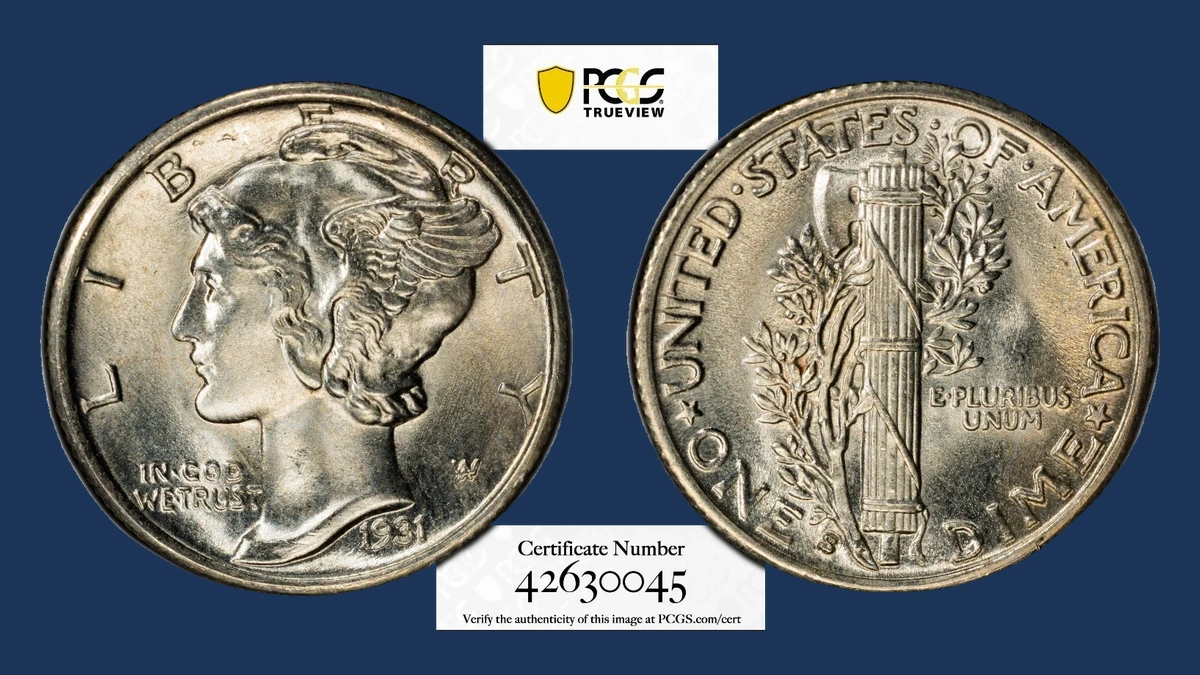
Denver and San Francisco each have a recognized doubled front design called FS-101. Sharing a catalog number does not mean their extra details are the same.
On Denver coins, a date 1 shows slight separation toward the center. The San Francisco variety involves its own date and lettering pattern.
The duplication was already in the steel stamping tool, so a normal strike could copy it onto the coin. The blank did not have to shift.
Older catalog titles also report Denver reverse doubling without a precise matching feature here. That claim needs its own examination of the back.
Estimated Value
The 1931-D FS-101 graded MS67+ brought $2,640 in November 2023, as recorded by PCGS CoinFacts. It was exceptionally well preserved without circulation wear.
Estimate $90–$3,000 across clearly identified 1931 doubled dies, allowing for mint, condition, and strike quality. Ordinary worn examples belong much lower than that top-grade sale.
The price covers the complete coin. A catalog title mentioning reverse doubling does not justify adding a second automatic premium to the Denver front variety.
How to Identify
Read D or S before choosing a comparison photograph. For Denver, use a 10× magnifier to examine the slight inward separation on the date 1.
For San Francisco, match its own date and letters instead. A rounded extra outline differs from a low shelf that flattens part of the main stroke.
Examine any claimed back doubling separately; a title alone gives no exact shape to match. The usual grooved edge, 2.50 g weight, and 17.90 mm diameter still apply.
Use a scale and calipers for a loose coin, or recorded measurements for a sealed example. Start with the mint-matched date pattern, especially the Denver 1’s small inward extra outline.
Conclusion
Estimated prices for these 1931 errors run from $35 to $3,000. A peeling layer, an opening in the blank, and a missing curved edge each need a different metal check.
For doubling, choose the correct Denver or San Francisco comparison before examining the date. Protect any loose flap, photograph both faces, and judge the coin’s condition alongside the feature rather than relying on a seller’s label.