1942 Dime Error List with Pictures

A trace of 1941 beneath the date can turn a common-looking silver dime into a sought-after variety. One Philadelphia 1942/1 graded MS66 Full Bands brought $120,000 in January 2018.
Full Bands means the bands across the back’s rods remain sharply separated. The 1942 Mercury dime errors below span estimated values of $10–$120,000.
Start with what you can see: an extra date stroke, missing edge, peeling layer, or shifted picture. Different clues lead to different checks, even when two unusual features share one coin.
1. 1942 Mercury Dime Peeling and Folded Surface Layers
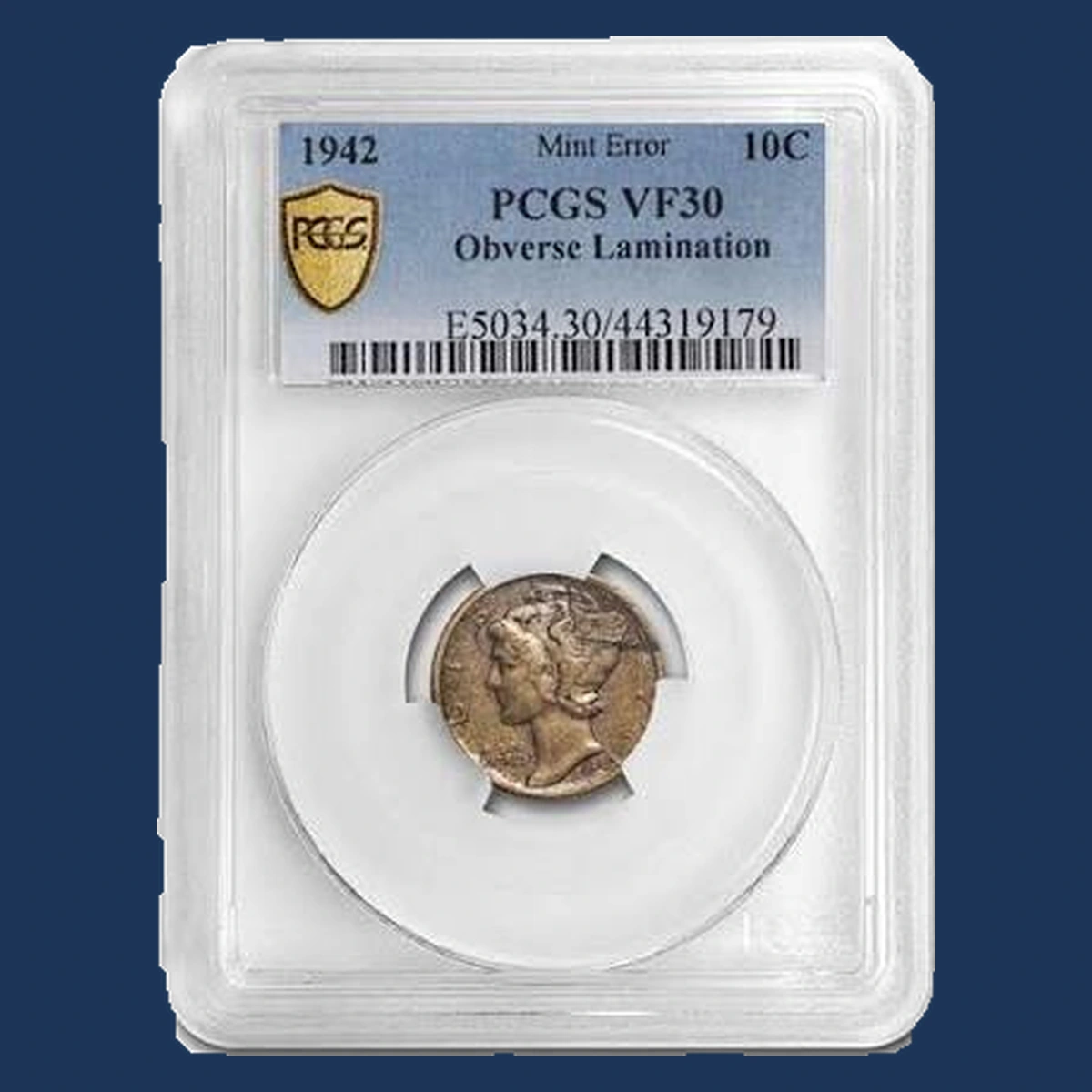
A thin flap of silver can open along a weak layer within the coin’s metal. Collectors call this peeling a lamination.
Recorded Philadelphia examples include a front lamination graded PCGS VF30 and another graded NGC VF20. Both are worn coins with visible detail, but their affected areas must be compared separately.
A different report describes an attached layer folded over the lower bundle of rods on the back. Only the thin layer folded; this does not mean the whole dime was bent in half during striking.
Estimated Value
Estimate $15–$300 for ordinary-date examples with genuine surface peeling or a retained folded layer. Larger visible separations on otherwise attractive coins can draw stronger interest than small rough patches.
A natural lifting edge is more useful than a rough-looking patch alone. Compare the amount of wear, remaining portrait detail, and any scratches around the separation.
Keep a loose flap attached. Removing it can damage the coin and destroy useful evidence.
How to Identify
Leave an attached flap in place while examining its boundary under side lighting. Look for a thin sheet separating from the surrounding silver, rather than a deep groove cut through it.
For the folded-back example, find the lower bundle of rods and follow the flap to its attached edge. The design on that thin layer may help explain how it moved over the coin’s surface.
Photograph the undisturbed metal beside the defect, then compare its texture with the affected area. Scraping cuts into finished metal, while corrosion can produce pits without a lifting sheet.
On a front example, follow its own separation boundary. A naturally attached layer is the strongest visible clue; another coin’s damaged area need not be in the same place.
2. 1942 Mercury Dime Repunched D and S Mintmarks
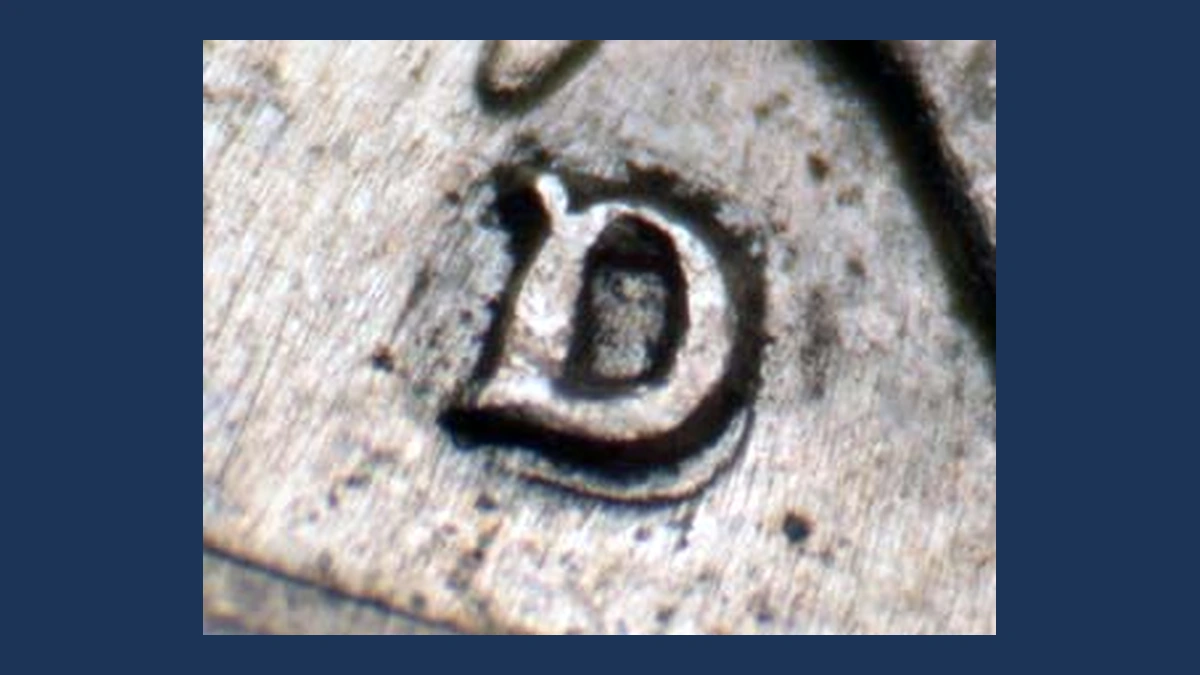
An extra curve beside the mint letter can be the remnant of an earlier punch. In 1942, these letters were added to the stamping tool separately from the main design.
Repeated punches in slightly different positions left overlapping D or S shapes. The resulting coins can show extra strokes in different directions, including tilted letters.
Denver FS-501 is one named D-over-D example, while San Francisco FS-502 has an extra S below the main letter. These two catalog numbers refer to different mint letters and must not be treated as one variety.
Estimated Value
For identifiable ordinary-date repunched letters, estimate $15–$400. Clear repeated curves on an unworn coin are generally easier to appreciate than a faint trace beneath heavy wear.
The specific pattern matters as well as condition. An extra stroke above one D does not automatically identify every cataloged variety described as upward repunching.
A Denver overdate that also has a repunched D needs the overdate comparison later in this guide. Its valuable date should not be priced as an ordinary-date mintmark.
How to Identify
An extra D or S stroke should fit the shape of a second letter. First find the mintmark to the lower left of the rods; a Philadelphia coin normally has none.
Place an identified mintmark photograph beside your enlarged image with both backs upright. Denver FS-501 shows extra detail toward the lower right, while San Francisco FS-502 shows extra detail below.
Trace the curved remnants around the main letter using several lighting angles. Rounded overlapping shapes are more convincing than a shallow flat shelf left along an edge.
Compare nearby tiny tool marks only after the letter itself matches. The combined letter shapes and matching surroundings distinguish patterns that share the same general direction.
3. 1942 Mercury Dime Reported Tilted Partial Collar
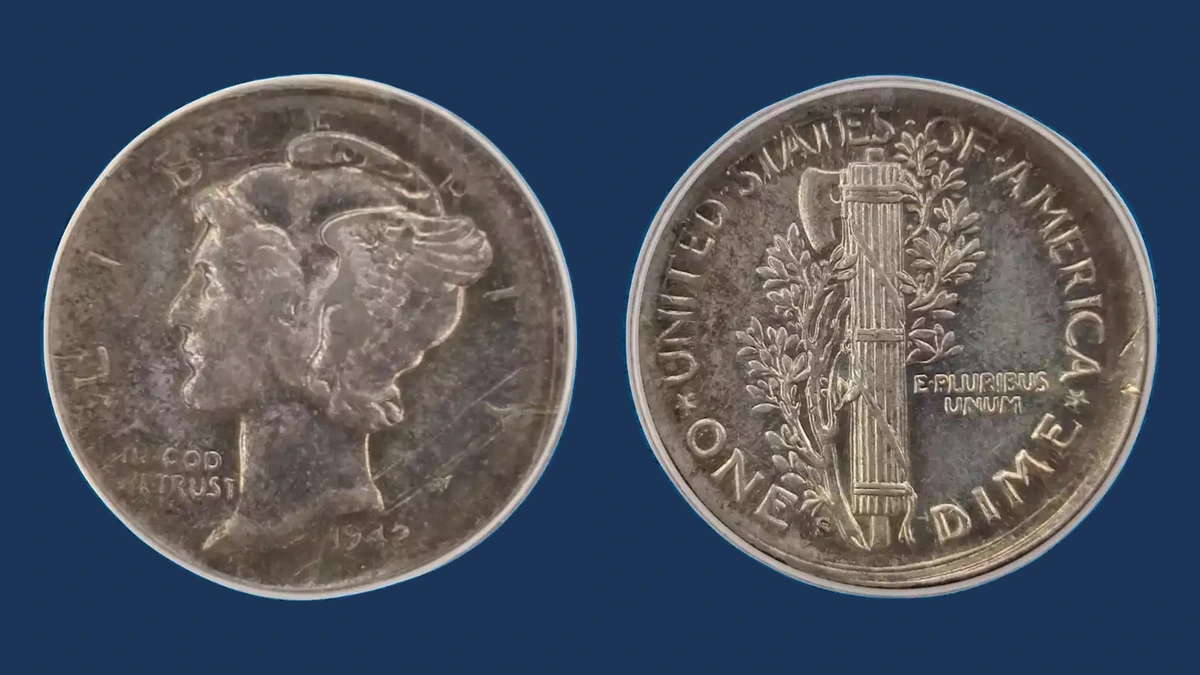
A step around part of the edge can show that the blank, or unstruck metal disc, entered its surrounding ring unevenly. This collar controls the coin’s width and forms its edge grooves.
If the blank sits tilted, some metal remains inside the collar while another part spreads above it. The boundary between those areas can change height around the edge.
A tilted partial collar is reported for this year. A wobbling dime alone does not establish the error, since a coin bent after leaving the Mint can also rock on a flat surface.
Estimated Value
Use a conditional estimate of $40–$500 for a confirmed 1942 tilted partial collar. A clear, continuous change in edge formation is more useful than a vague uneven rim.
For a later silver-dime comparison, a 1953-S example was cataloged as a partial collar in MS64 Full Bands. Its grade describes that separate coin, not the reported 1942 piece.
Value depends on the actual edge, remaining detail, and surfaces. A bent coin does not qualify simply because it sits unevenly.
How to Identify
Inspect the edge at several points while keeping track of which face is upward. Look for a real height difference between the portions held inside and expanded above the collar.
Follow that boundary around the coin to see whether its height changes gradually, as expected from a tilted blank. Photograph overlapping sections so the edge pattern can be reconstructed without guessing from one view.
Check both faces for crushed design or a sharp bend that could explain the uneven shape after striking. Normal edge grooves and rim wear should also be compared before naming a collar error; the rocking test by itself cannot distinguish these causes.
4. 1942 Mercury Dime Broadstrike
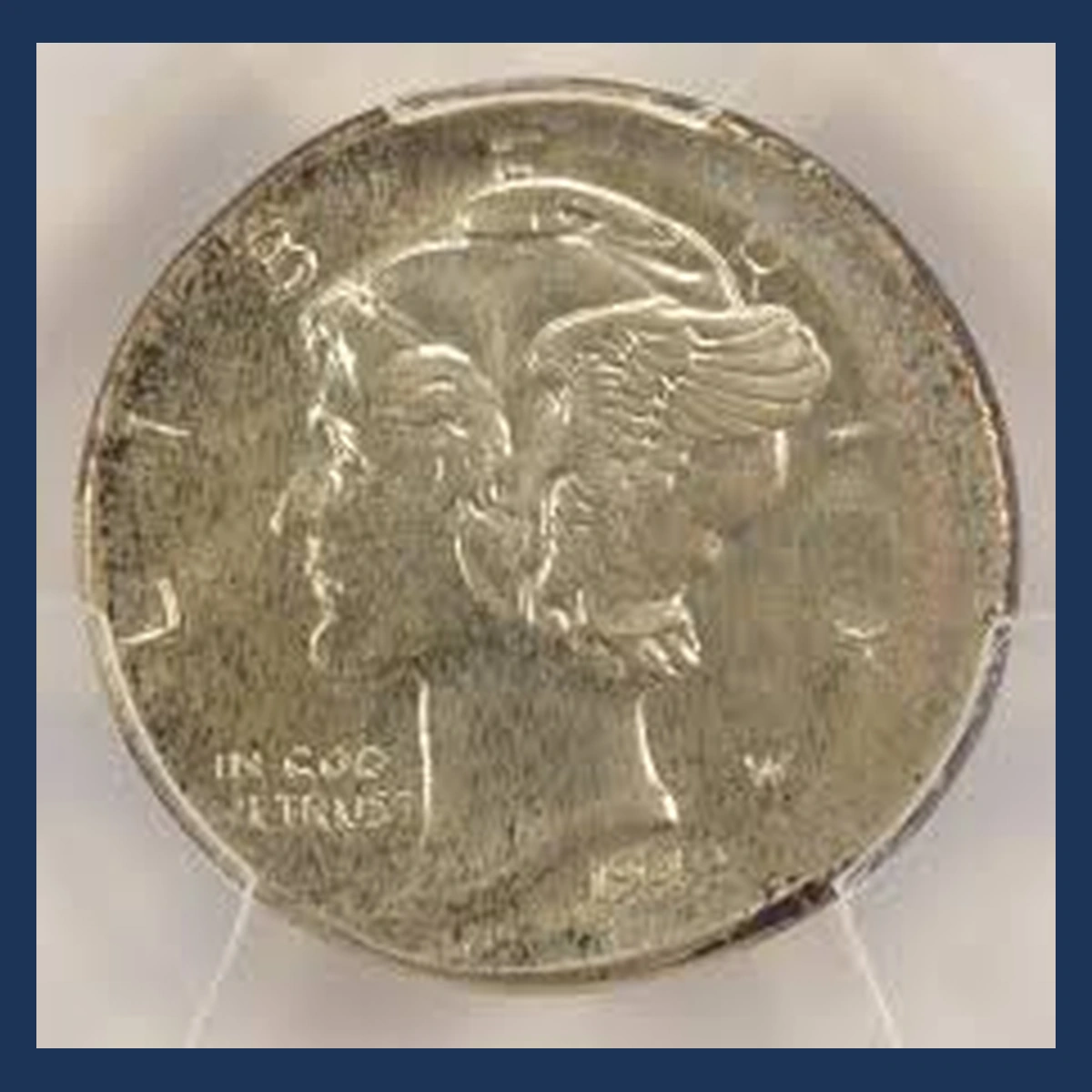
The portrait and back design can remain complete even when the dime spreads wider than usual. That combination is the key difference between a broadstrike and an off-center strike.
Broadstriking occurs when the surrounding collar does not contain the metal normally during the blow. The silver expands instead of forming the usual controlled edge.
A broadstrike is reported among 1942 dime errors. Its actual outline must be judged from the coin rather than assigning a diameter from another example or assuming that every wide dime also has a clipped blank.
Estimated Value
Estimate $30–$600 for confirmed ordinary-date broadstrikes across different conditions and amounts of spread. A complete design surrounded by obvious original expansion makes the error easier to display.
As a different-design silver-dime comparison, a 1946 Roosevelt broadstrike graded MS66 Full Bands sold for $99 in July 2021. That sale is not a result for a 1942 Mercury dime.
Later flattening can make a coin wider too. Such damage should not receive the same estimated error premium.
How to Identify
Read around the outer lettering on both faces before measuring the coin. A broadstrike keeps the intended design on the metal, even if the picture sits unevenly inside the expanded outline.
Missing outer design beside an untouched blank area points toward off-center striking instead. A gap in the metal itself requires a separate clip examination.
For a loose candidate, compare its width in several directions with the normal 17.9 millimeters. Record the actual measurements instead of borrowing a wide diameter from another coin.
Examine the widened border and adjacent letters for crushed detail or hammer marks. The surfaces should show that expansion and design formation happened together, not that a finished dime was later pressed flat.
5. 1942 Mercury Dime Clipped Blanks and a Broadstruck Combination
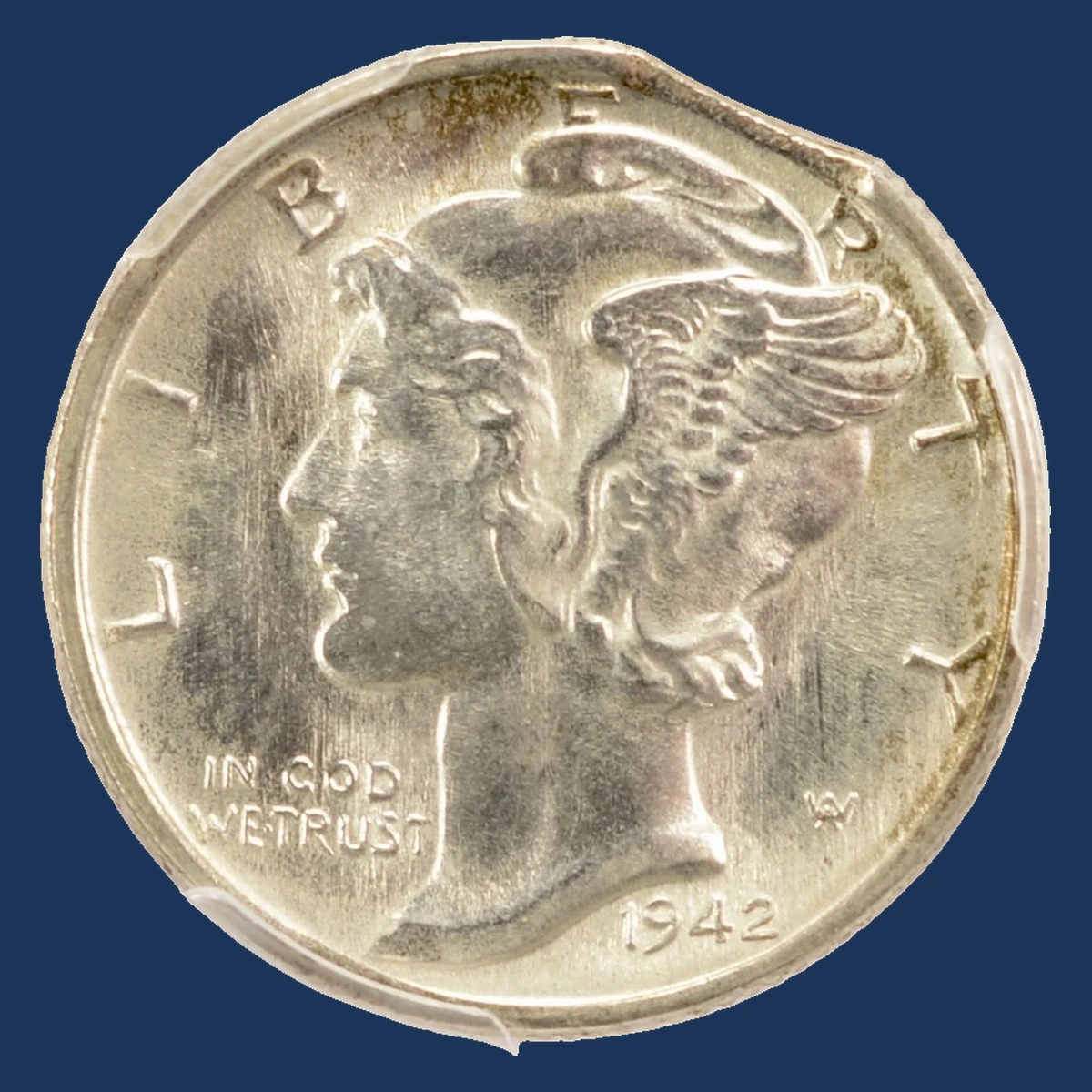
Part of a dime’s edge can be missing before the design is struck. An incomplete cut from the metal strip can leave a curved or straight gap in the blank.
Separate recorded examples include a straight clip weighing 2.3 grams and a curved clip weighing 2.44 grams. A San Francisco straight clip also weighs 2.3 grams, but is a different coin.
Another 1942 dime combines a 24% clip with broadstriking. Its missing metal and expanded design describe two features on one piece, not two separate coins or independently added prices.
Estimated Value
An estimated $30–$800 covers ordinary-date clips and more dramatic clipped-broadstrike combinations. The gap’s size, original edge, and overall condition shape the comparison.
The 2.44-gram curved clip appeared in a three-coin lot with other years. A lot total would not establish that dime’s individual price.
Keep exceptional overdates separate when comparing values. The 1942/1 clipped examples below carry an important date variety as well as missing metal, which makes them different from ordinary-date clips.
How to Identify
The exposed gap is more informative than its outline alone. Examine the edge surface and the points where the struck rim enters the missing section.
Sawing or filing can cut through already-finished letters and leave parallel tool marks. An original clip can affect nearby metal flow as the design forms around the gap.
Keep the weight attached to the correct example. The separately recorded 2.3-gram straight clips do not establish a shared mint or a single coin.
For the 24% clip combination, inspect the expanded border for broadstriking as well. Do not assign a curved shape merely because another clipped dime has one.
Weigh a loose candidate without scraping its edge. Reduced weight supports missing metal, but does not by itself prove when the loss occurred.
6. 1942 Mercury Dime Other Doubled Designs and a Repunched-S Combination
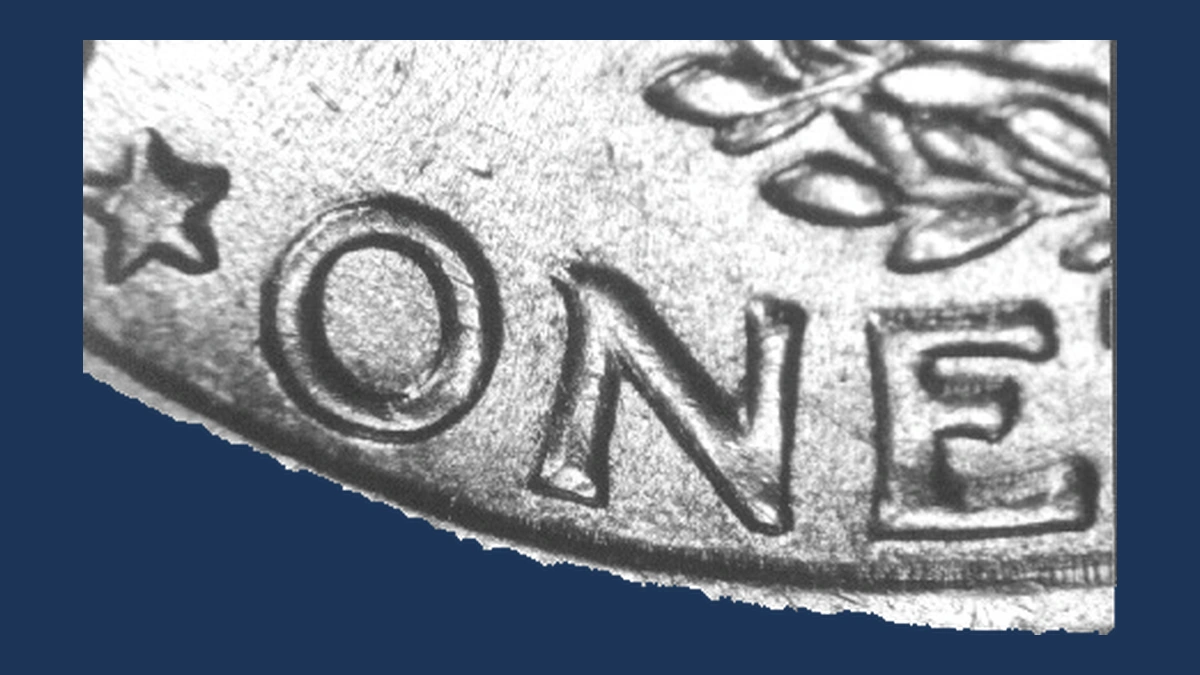
Repeated outlines can appear beyond the famous overdate. A die, the steel tool that stamps the design, can already carry those doubled shapes before it strikes the coin.
Philadelphia back doubling includes ONE, a nearby leaf, and the left star. Denver front varieties affect different parts of the date, lettering, or designer’s initials.
San Francisco has back doubling in the leaves and nearby design. One pattern also shares its tool with a repunched S, so doubled design and repeated mint letter can occur together without being the same mechanism.
Estimated Value
For identified minor doubled designs and the ordinary-date San Francisco combination, estimate $25–$1,000. Wider visible separation and strong preservation can support more interest than a subtle thickened edge.
This range concerns the patterns described here, not the famous 1942/1 overdate. A date can show modest doubling without containing the earlier year.
For the combined San Francisco example, compare the complete coin. The back doubling and repeated S do not create two independent prices to add together.
How to Identify
On a Philadelphia dime, start with ONE on the back, then compare the adjacent leaf and left star. Repeated shapes in all three places help distinguish this pattern from one damaged letter.
Denver needs a front-side comparison instead. Depending on the variety, inspect the date, LIBERTY’s Y, or the designer’s initials against the correct photograph.
For San Francisco WDDR-001, check the branches, star, and lettering together with the extra S toward the lower left. The other back variety has a different pattern in the lower-left leaves and twigs.
Tilt the coin to separate rounded repeated details from shallow, flat edges. An exact match at several design points is more useful than two catalog entries with similar numbers.
7. 1942 Mercury Dime Head Cracks and Rim-Connected Breaks
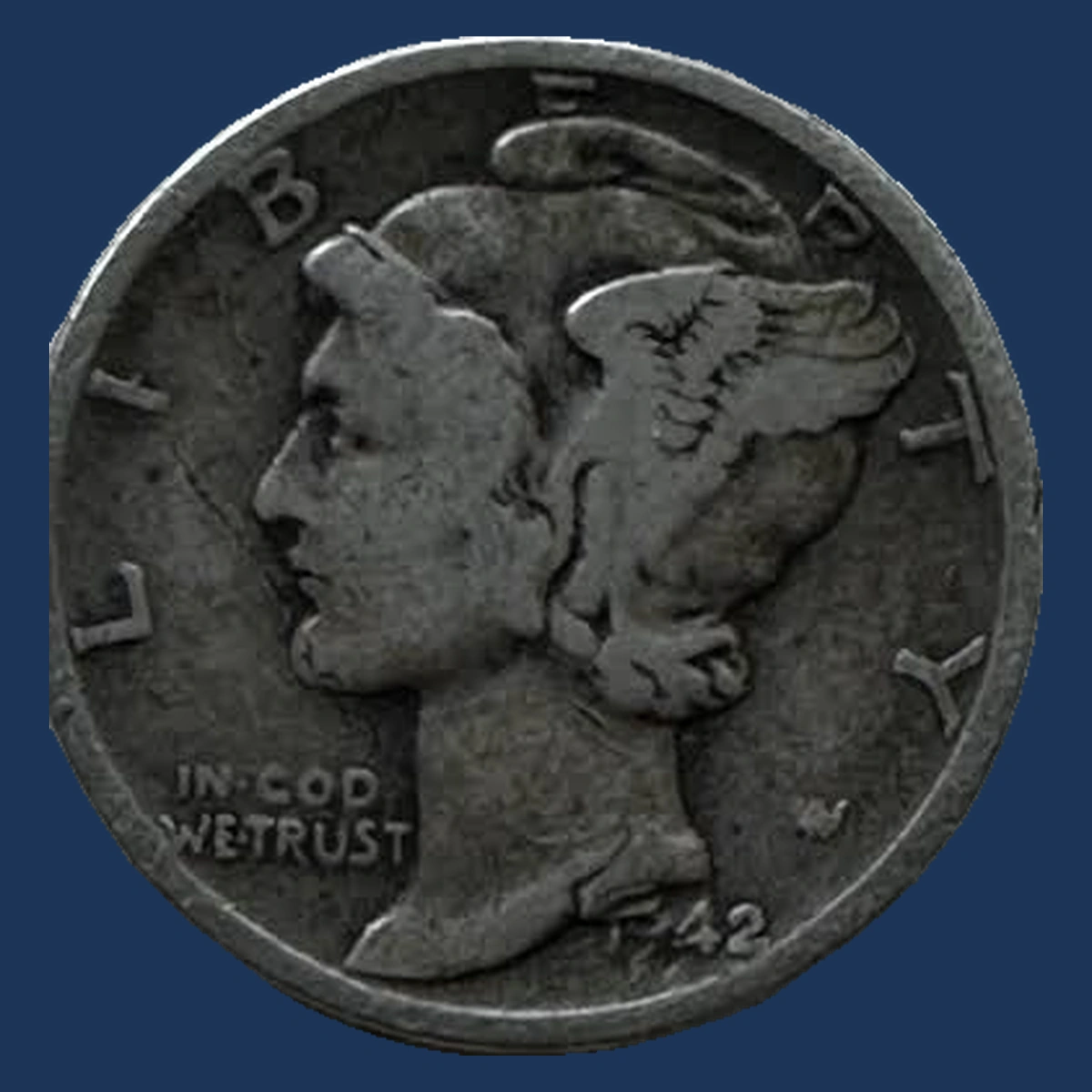
A thin raised line from Liberty’s head can resemble a spike. It forms when metal enters a crack in the stamping tool.
A larger missing piece of steel leaves a broader raised area. When that area joins the rim, collectors call it a cud.
The recorded Philadelphia head crack runs toward the top of the coin. Its back-rim cud lies around the lower right, while the San Francisco back-rim example sits near STATES at the top.
Each pattern has its own location. A complete coin view helps connect the raised feature with the correct mint and date.
Estimated Value
Small recognizable head cracks can be estimated at $10–$100. Clear rim-connected cuds can fit $75–$1,200, giving the group an overall estimated range of $10–$1,200.
A large original mound that replaces normal design is easier to appreciate than a hairline hidden among scratches. The underlying coin’s preservation also matters.
A deposit or impact can imitate raised metal. The premium depends on an original tool defect, not just a dramatic-looking lump in a photograph.
How to Identify
Locate the unusual feature on a complete face photograph first. The head crack belongs near twelve o’clock, while the Philadelphia back cud occupies roughly three-thirty to five o’clock.
For the San Francisco example, compare the rim near STATES around eleven to twelve o’clock. Confirm the S on the actual coin rather than assigning a mint from a close-up of the lump.
Under angled light, check whether a crack rises from the surface or cuts into it. A genuine cud must connect to the rim and replace an area of normal design.
Compare each full pattern with its own reference image. Glue, solder, or metal pushed inward by a blow can sit over finished detail instead of explaining a missing part of the stamping tool.
8. 1942 Mercury Dime Major Front Strike-Through
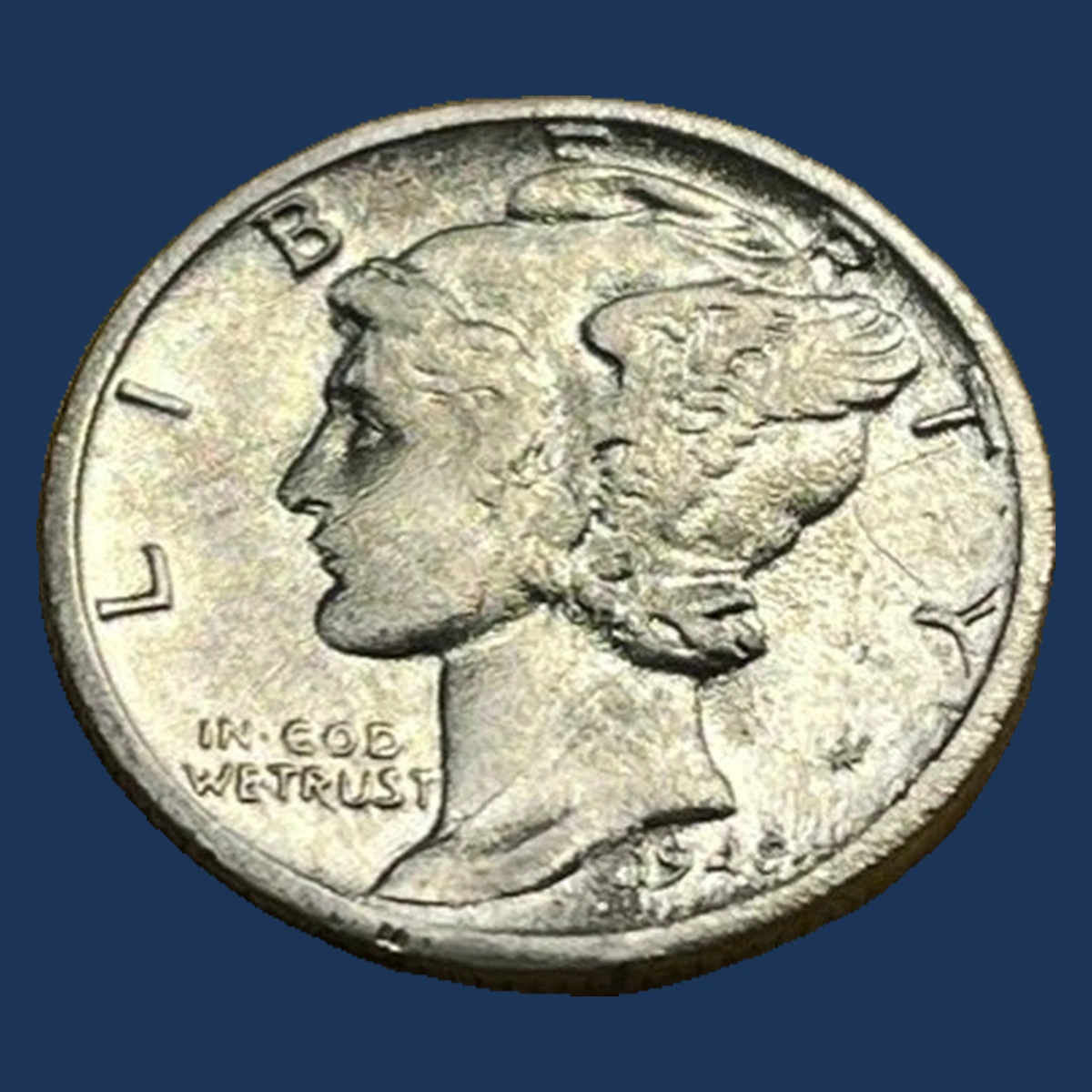
Something between the blank and the stamping tool can prevent part of the portrait from forming. The resulting interruption is called a strike-through.
Heritage cataloged a 1942 dime with a major strike-through on the front, graded PCGS MS63. That grade describes an unworn coin with visible surface marks.
The description does not identify the object that blocked the design. It should not automatically be called cloth, grease, or a stuck coin.
Each of those materials can leave different evidence. The surviving surface and shape of the affected area must guide the explanation.
Estimated Value
Estimate $50–$1,500 for a genuine major front strike-through, depending on how much design is interrupted and how clearly the original surface survives. Dramatic examples with readable identity can attract stronger interest.
The auction label’s word “major” is not a measurement of the affected area. Judge the actual photographs instead of assigning the highest estimate from that word alone.
Scraping or polishing can also erase a portrait. Those later alterations do not qualify for the same error range.
How to Identify
Photograph both faces and the edge before enlarging the missing-looking front area. Those views help separate a striking problem from a coin altered afterward.
Find where normal portrait or date detail gives way to the affected surface. Inspect that boundary under low-angle light.
Look for cuts crossing finished details, polishing lines, or metal pushed aside by scraping. These can reveal that someone removed part of an already-struck design.
Texture may suggest what blocked the blow, but faint letters alone do not identify grease. A cloth explanation needs a convincing woven pattern.
Compare any surviving texture with an identified strike-through photograph. The original surface and its transition into normal struck detail provide the most useful evidence.
9. 1942 Mercury Dime Inverted S Mintmark, FS-501
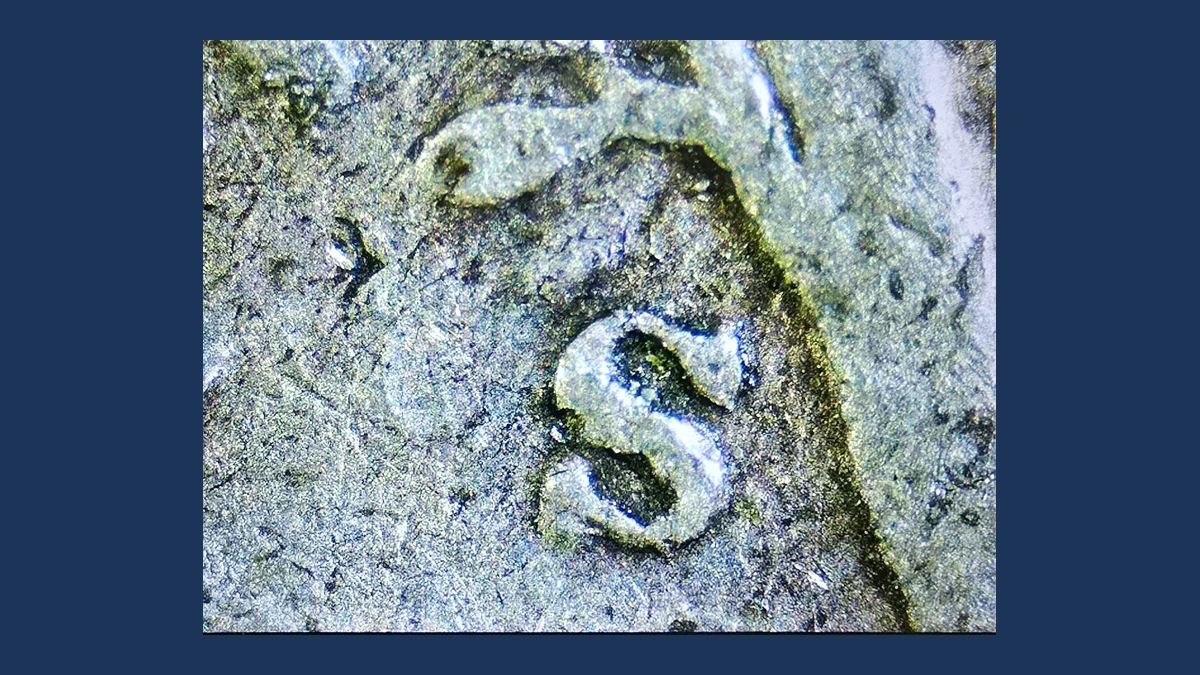
An S is not perfectly symmetrical when examined closely. Turning its punch upside down changes the positions of its end shapes and inner curves.
PCGS recognizes the 1942-S inverted mintmark as FS-501. Its identification depends on that letter’s specific shape, rather than the whole coin being rotated in a photograph.
Reference comparisons emphasize a flatter upper inner curve, a longer upper tip, and a notch inside the lower curve. Worn or damaged letters can hide these differences.
This is separate from an extra S outline caused by repunching in another position.
Estimated Value
PCGS records an MS63 FS-501 example at $960 in July 2021. Use an estimated $50–$1,500 for identifiable examples from worn through well-preserved condition.
The upper portion requires a convincing match and attractive surfaces, not merely a tilted-looking letter. A repunched S has different identifying features and should use its own comparison.
Tiny end shapes can be difficult to judge through wear. A clear specialist identification and usable close photographs are especially valuable for this small feature.
How to Identify
Place a normal 1942 S and an identified FS-501 photograph beside the candidate, all at the same scale. Keep the entire backs upright so a rotated close-up cannot create a false comparison.
Compare the two letter ends and both inner curves as one shape. FS-501 references show a flatter upper inner curve, a longer upper tip, and a notch inside the lower curve.
Examine worn ends under changing light before treating their flattened shape as a match. If one feature agrees but another does not, have a specialist compare the actual coin with the reference; the complete S shape matters more than an unusual-looking tip.
10. 1942 Mercury Dime Off-Center Strikes
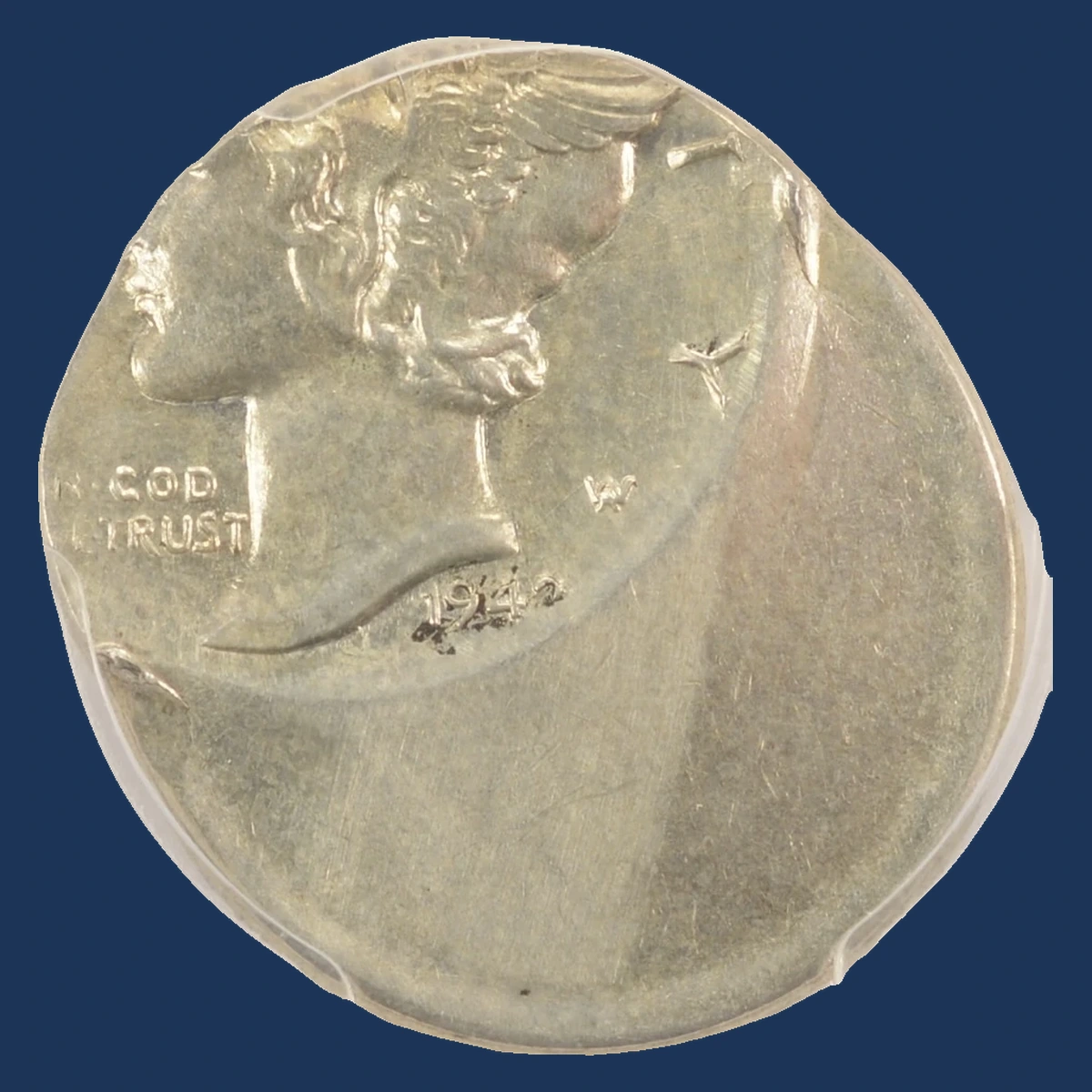
A misplaced blank can leave an untouched crescent beside an incomplete dime design. Part of the image misses the metal on both faces.
Recorded 1942 examples include a 10% off-center coin graded NGC MS63 and a separate 50% example graded PCGS MS62. Both are unworn, with different amounts of design missing.
Another coin was cataloged as (1942), 30% off-center, in MS62 Full Bands. The parentheses indicate an assigned year rather than a fully readable date.
Full Bands describes clear separation in the bands across the rods on the back, not another striking error.
Estimated Value
The 50% off-center PCGS MS62 coin sold for $1,320 in November 2022. Estimate $100–$2,000 for comparable Mercury dime off-center strikes across smaller and more dramatic displacements.
A readable year and attractive original surfaces help explain interest. A date assigned from other evidence is not equivalent to four complete digits on the coin.
Compare how much date and portrait remains beside the blank area. Original surfaces and a clear edge can make one example more appealing than another with similar displacement.
How to Identify
Begin with the date rather than the empty crescent. Record which digits are actually visible, and keep a parenthesized year separate from a fully readable one.
Compare both faces to see where their designs missed the disk. A shift on only one face needs a different explanation.
Look closely at the unstruck metal for original surface texture. Grinding away completed letters can leave scratches or an unusually thin patch.
The fifty-percent example is PCGS MS62; the thirty-percent coin with an assigned year is NGC MS62 Full Bands. Keep their labels and photographs paired correctly when judging the displacement.
A wide coin with every intended design element still present belongs with broadstrikes instead.
11. 1942 Mercury Dime Rotated Double Strike
Two sets of design details can appear when a coin receives another blow after turning. The second impression then sits at a different angle from the first.
Heritage cataloged a 1942 Mercury dime as a rotated double strike and graded it PCGS MS63. The description identifies repeated striking, but does not supply a rotation angle.
This differs from a single front design paired with a rotated back. Here, the important evidence is more than one impression on the same face, not simply an unusual relationship between the two sides of the coin.
Estimated Value
For an authenticated rotated double strike, estimate $300–$3,000. Clear repeated dates, portraits, or lettering can make the sequence easier to recognize and explain.
Surface preservation and the visibility of both impressions help determine where a coin belongs within that range. A high numerical grade does not automatically mean the second image is dramatic.
The cataloged coin’s rotation was not stated. A guessed angle should not become a selling point or an additional claimed error.
How to Identify
Choose a recognizable feature, such as a date digit or part of the portrait, and trace both impressions. Look for other repeated elements that fit the same turning movement.
A magnifier can help separate connected design fragments from random scratches. The repeated details should form related images rather than isolated marks chosen to resemble letters.
Inspect the other face for evidence of the same sequence without assuming that every detail must remain equally visible. Later blows can flatten portions of an earlier impression.
Do not test this only by flipping the coin to compare front and back orientation. That test addresses tool alignment; the repeated designs on a face establish the double strike described here.
12. 1942 Mercury Dime Struck on an Ecuador Five-Centavos Blank
A golden-looking Mercury dime can have a very different starting material from normal silver. The documented error used a brass blank intended for an Ecuador five-centavos coin.
Philadelphia was making foreign coins as well as United States coins. A blank intended for the other issue received the Mercury dime design instead.
One example graded NGC MS65 Full Bands weighs 2.06 grams. A separate MS62 Full Bands example is also recorded.
These are blank mix-ups, not dimes struck over already-finished Ecuador coins. Their color alone cannot establish the metal or the original intended denomination.
Estimated Value
The MS65 Full Bands example sold for $14,375 in January 2008. NGC also reports $11,400 in July 2023 for the separate MS62 Full Bands coin.
Estimate $10,000–$25,000 for comparable authenticated examples on the correct foreign blank. The metal identification, remaining design, and surface quality are central to that comparison.
Gold-colored plating on a normal dime cannot justify the same range. Its silver core and altered surface would tell a different story.
How to Identify
A loose candidate can first be weighed and measured without scratching its surface. Normal silver dimes weigh 2.50 grams; the documented MS65 foreign-blank coin weighs 2.06 grams.
That figure is a comparison, not a target that proves the error. Wear or a different kind of blank defect can also reduce weight.
Read the date and inspect the gold-colored surface around the edge. Plating can disguise a normal silver coin without changing its underlying metal.
Have an error specialist assess the alloy by a test that does not damage the coin. The metal, size, and struck design must support an Ecuador five-centavos blank.
The separately recorded MS62 example requires its own measurements. Do not transfer the MS65 coin’s weight to it.
13. 1942 Mercury Dime 1942/1 Overdates, Including Clipped and Peeling Examples
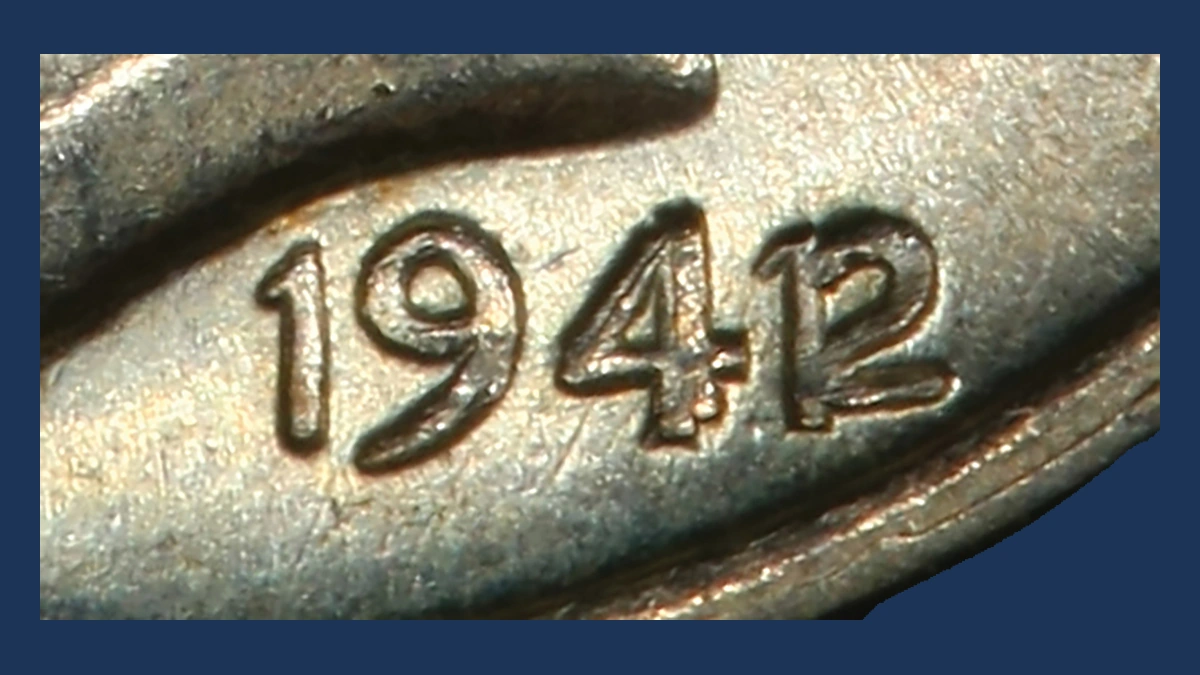
The earlier year can survive beneath the final date because one stamping tool received designs from both 1941 and 1942. This created the overdate before any coins were struck.
The Philadelphia 1942/1 shows the earlier 1 more clearly than the Denver version. Denver examples also have a repunched D.
Separate Philadelphia overdates are known with a clipped edge or a front lamination. Their date variety and physical defect occur on the same coin.
An overdate is not a 1941 dime struck again in 1942, and its digits were not individually repunched into each coin.
Estimated Value
An exceptional Philadelphia MS66 Full Bands brought $120,000 in January 2018, recorded by PCGS. Its unworn surfaces and sharply separated back bands contribute to that whole-coin result.
Estimate $300–$120,000 across worn overdates and exceptional preserved examples. Most circulated coins belong far below the upper end.
A clip or lamination needs its own assessment within the complete coin. Do not automatically add a maximum physical-error price to the highest overdate valuation.
How to Identify
Read the mintmark area before selecting an overdate photograph. Denver’s faint earlier 1 requires a Denver comparison; the Philadelphia 1 is more obvious.
Enlarge the final date digits with the coin upright. On Philadelphia examples, inspect the earlier 1 beside the 2 and the doubled notches of the 4.
Check that these are raised parts of the original design rather than cuts or added metal. A damaged 2 alone does not establish the overdate.
Then inspect any clip or peeling layer without disturbing it. The clipped VF25 and EF45 examples are separate coins, as are the NGC and PCGS AU58 lamination reports.
A convincing date match establishes the overdate first. The edge or layer defect then needs its own close-up and surface examination.
Conclusion
The estimated $10–$120,000 range includes small tool cracks, misshapen blanks, and the famous overdate in exceptional condition. A plain 1942 date or normal silver content does not make a dime an error.
Choose comparisons from the visible feature and the actual mint. Keep a repeated date, a repunched letter, and a later physical defect distinct, even when more than one appears on a single coin.