1943 Dime Error List with Pictures

A missing crescent of design can matter far more than a tiny extra line on a 1943 dime. One example struck 40% off center brought $1,680 at Heritage in July 2021.
This 1943 Mercury Dime error list covers estimated whole-coin values from $10 to $2,000. Read on to compare doubled letters, damaged stamping tools, and flaws in the silver itself.
1. 1943 Mercury Dime Faint Design Marks from Clashing Tools
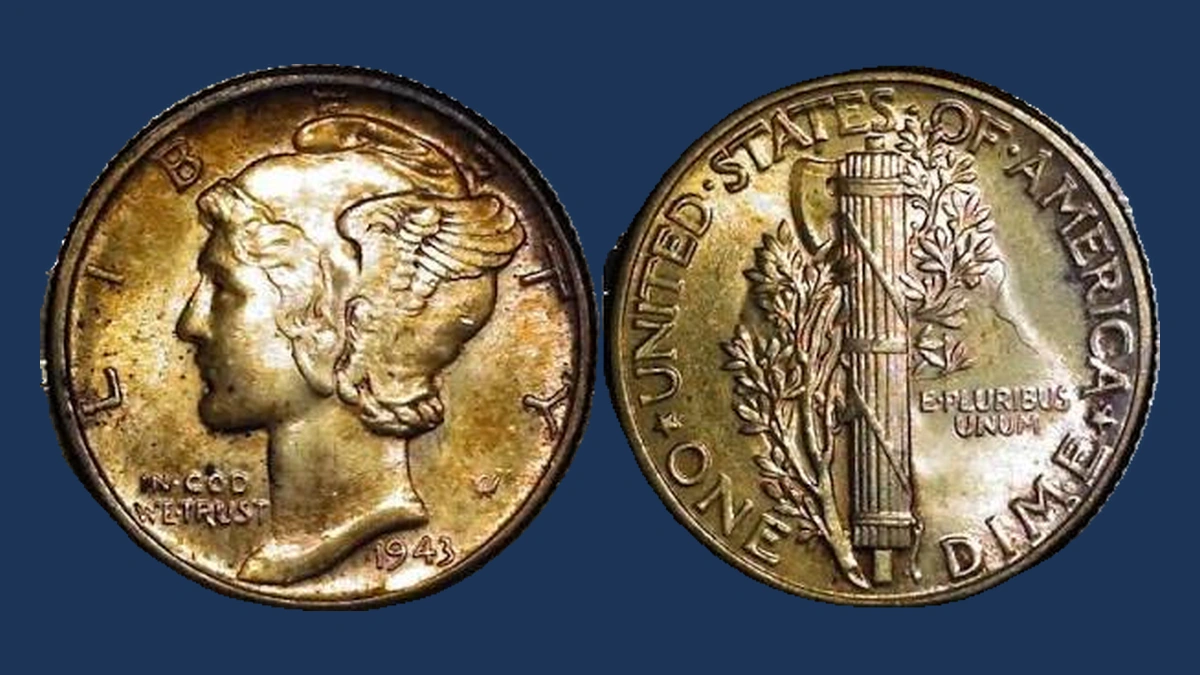
Faint extra shapes can appear below the leaves beside ER in AMERICA. On one Philadelphia variety, these marks occur alongside a doubled front design.
The two steel stamping tools, called dies, sometimes meet without a coin blank between them. Each tool can pick up parts of the opposite design.
Later coins receive those unwanted shapes along with their normal pictures. This accident is called a die clash.
The marks are not an extra strike on the finished coin. On this example, the doubled design and clash marks belong to the same piece.
Estimated Value
A visible clash on a circulated 1943 dime is estimated at $10–$40. An attractive unworn coin with clearer marks can fall around $40–$150.
These are whole-coin estimates for a modest silver-dime error, rather than a recorded sale of this exact tool pairing. A weak mark may add little above the coin’s ordinary value.
When doubling and clashing occur together, their premiums should not simply be added together.
How to Identify
Below the leaves beside ER in AMERICA, compare the faint downward marks with a normal dime. A 10× magnifier helps separate these extra shapes from the intended leaves.
Check the date and AW initials on the front for the fine doubling associated with this Philadelphia tool. The marks on both sides must belong to that pairing, rather than unrelated examples shown in separate pictures.
On a loose coin, a scale and calipers should read near 2.5 grams and 17.9 millimeters, with normal grooves around the edge. Return to the area under the leaves: a recognizable transferred design fragment supports a clash, while random scratches do not.
2. 1943 Mercury Dime Peeling Silver Layers
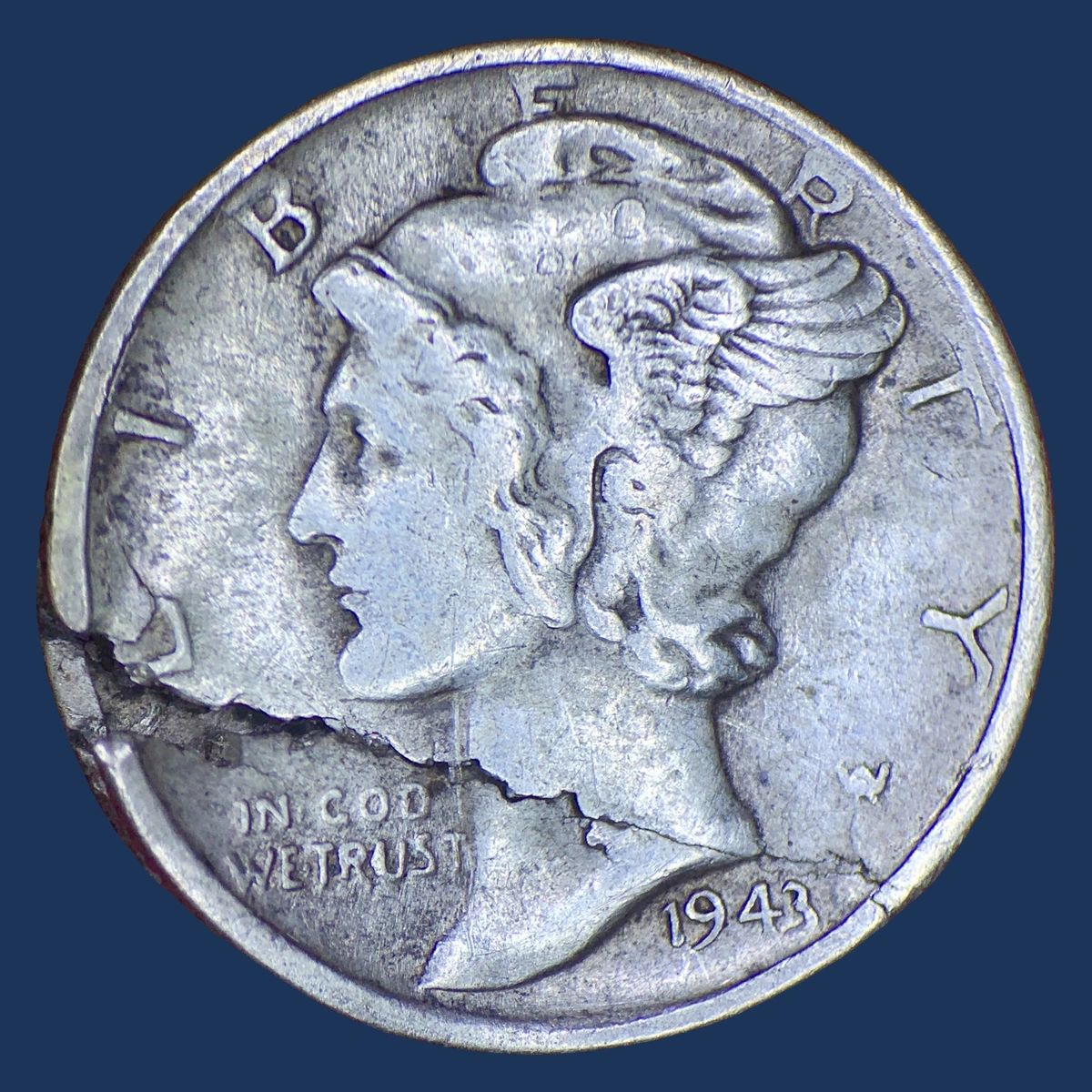
A thin flap or shallow missing patch can reveal layers separating inside the silver alloy. Collectors call this a lamination error.
The metal may contain impurities or fail to bond properly when the strip is prepared. Striking can expose the weak layer, and part of it may later peel away.
A Philadelphia example is reported in an AU50 collection, meaning it has light wear. Its exact peeling location is not established here.
A separate 1943 forum coin shows a wider opened split. That piece needs a damage check because someone may have pulled the layers apart.
Estimated Value
Estimate $15–$75 for a small genuine peeling area on a worn coin. A larger natural flap on an attractive example can reach roughly $75–$250.
These ranges compare the size and visibility of silver-alloy flaws, not a confirmed auction result for the AU50 coin. Surface damage and cleaning lower the likely price.
The opened forum example belongs in this range only if its separation began as a mint-made metal defect.
How to Identify
Never lift an attached flap to see beneath it. That can turn an intact error into a damaged coin.
Examine the exposed boundary under a 10× magnifier, looking for a thin layer separating along the surface. A deep cut with pushed-up metal calls for a different explanation.
Check thickness gently with calipers away from the fragile area; a normal dime measures about 17.9 millimeters across. On a scale, a complete coin starts near 2.5 grams, while lost silver can reduce that figure.
Follow the separation toward the grooved edge and look for bending or tool marks. A shallow natural layer supports lamination; a forcibly opened crack does not prove it.
3. 1943 Mercury Dime Design Blocked by Foreign Material
A sunken patch can interrupt Liberty’s portrait where material lay between the coin and its stamping tool. The object blocks part of the design as the press closes.
Philadelphia examples include coins graded MS62 and MS63, both unworn grades. The material that caused their impressions has not been identified.
Another S-mint coin has a deep blocked area covering the date, motto, and lower portrait. Its edge also shows that it sat only partly inside the retaining ring.
That scratched coin was described as probably 1943-S. Its hidden date prevents a firm year identification.
Estimated Value
For genuine 1943 examples, estimate $30–$250, depending on the size and clarity of the impression. Small, shallow patches belong near the lower end.
The undated S-mint coin brought $54 at Heritage on July 8, 2006. That was a sale of a scratched coin with a proposed year, not a securely dated 1943-S.
A sharp impression on an unworn, fully dated piece can command a stronger price than that damaged comparison.
How to Identify
The deep S-mint example cannot be firmly dated from its blocked front. A large S and faint date traces supported only a proposed 1943 date.
For a fully dated Philadelphia coin, examine the pressed depression with a 10× magnifier. Look for a smooth transition into the normal design instead of the raised impact rim around an ordinary dent.
Use a scale and calipers on a loose piece: normal figures are 2.5 grams and 17.9 millimeters. A hollow impression need not remove enough metal to change the weight noticeably.
The unusual S-mint coin also has a stepped edge from 11 to 3 o’clock. That step records partial contact with the ring that normally forms the edge grooves, alongside its separate blocked design.
4. 1943 Mercury Dime Expanded Strikes Outside the Ring
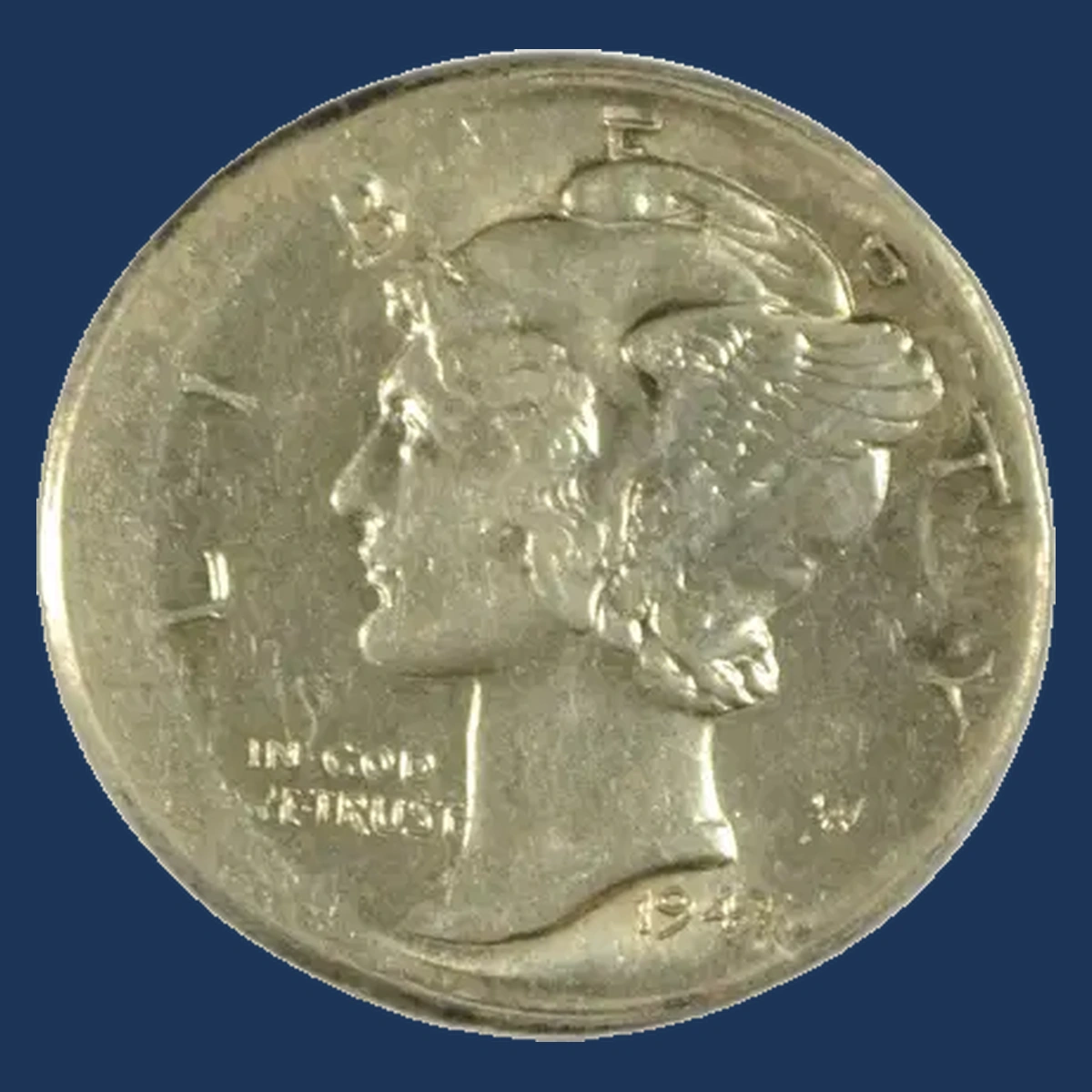
A broadstrike has an unusually wide border because the metal spread beyond its normal size. The ring that usually restrains the coin did not hold it correctly during striking.
Both sides can still retain their complete designs. The pictures may sit unevenly within the larger border, so an uncentered broadstrike is not automatically an off-center strike.
Examples are reported for Philadelphia, Denver, and San Francisco. An early San Francisco tool pairing also combines this expanded strike with a repunched S.
Other S-mint examples should be checked separately. Sharing the same year does not establish the same doubled mintmark.
Estimated Value
A practical estimate is $40–$300 for a genuine 1943 broadstrike. The width of the expansion, remaining detail, and condition all affect its place within that range.
For comparison, a different-year 1988-P dime with overlapping strikes and expansion sold for $80.50 in May 2005. Its added strike makes it an imperfect price match.
The upper end here suits a clearer, attractive silver-dime error; it is not a claimed sale for every mint.
How to Identify
Compare the coin’s diameter with an ordinary dime before inspecting the portrait. Calipers may show an uneven expansion beyond the normal 17.9 millimeters.
Now check whether every major part of both designs remains on the metal. A naturally wider coin with complete designs points toward a broadstrike; a cut-off design calls for an off-center check.
Its weight should remain near 2.5 grams on a scale unless a second error changed the blank. Under a 10× magnifier, examine the edge for missing or incomplete grooves and reject explanations involving obvious filing.
Hammering can also spread a coin. Flattened lettering and impact marks distinguish that damage from a design struck cleanly into freely spreading metal.
5. 1943 Mercury Dime Cracks Through the Coin Blank
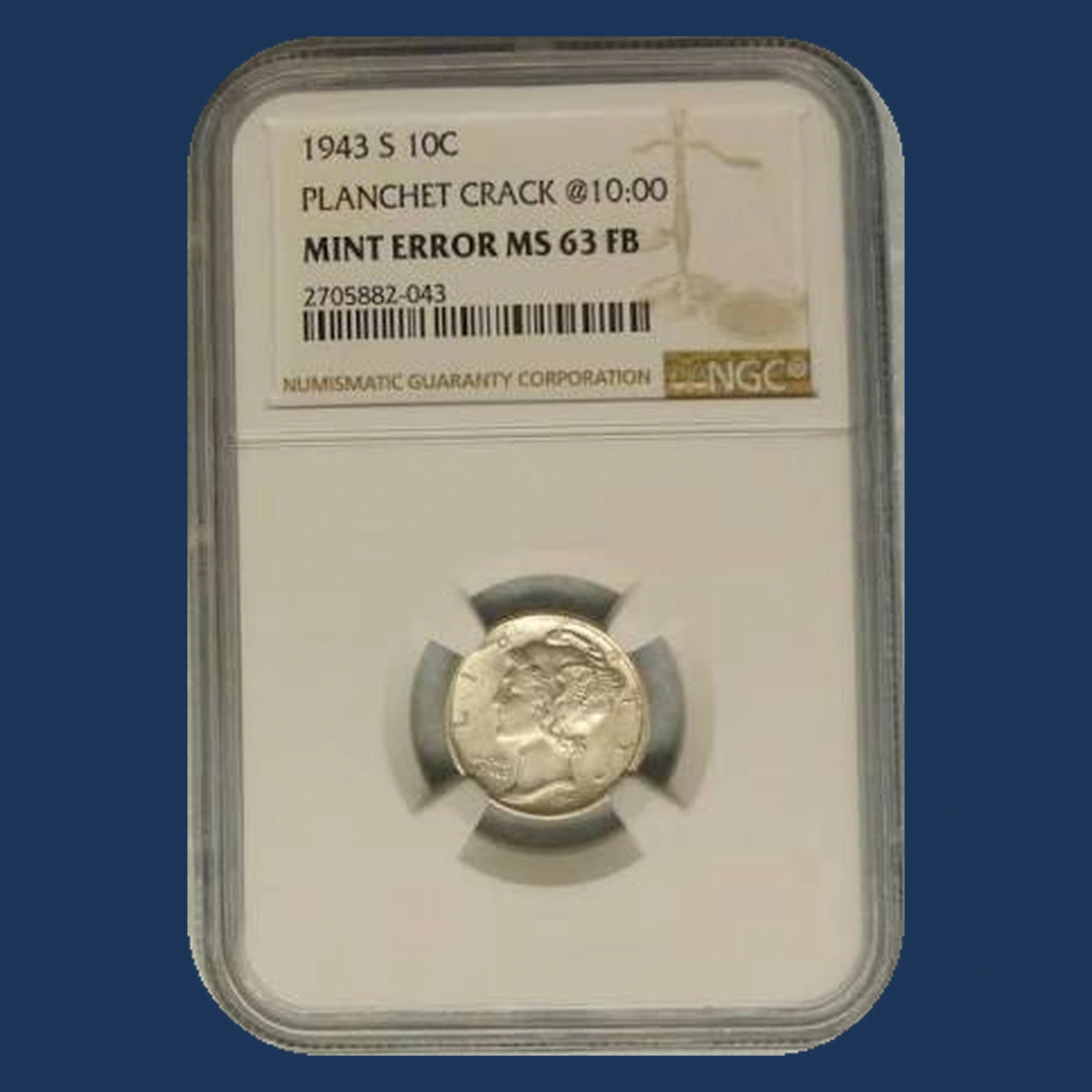
A dark opening that runs into the coin can be a crack in the metal itself. It differs from a raised line copied from a damaged stamping tool.
The round piece of metal before striking is called a blank. A weakness in that blank can open when the press applies pressure.
One 1943-S example has a crack entering at 10 o’clock and is graded MS63 Full Bands. Full Bands describes clear separation in the central straps on the back.
A different Philadelphia piece is graded XF45, showing circulation wear. The two coins have separate cracks and conditions.
Estimated Value
Estimate $35–$350 for a genuine cracked-blank 1943 dime. A small opening on a worn coin sits toward the bottom, while a clear crack on an attractive unworn piece can bring more.
The Philadelphia XF45 example sold for $41 at Heritage on October 10, 2022. That provides a same-year comparison for the lower end.
The San Francisco Full Bands example needs its own price assessment; its grade does not make every crack equally valuable.
How to Identify
Photograph both sides and the adjoining edge without bending the coin. With a 10× magnifier, follow the opening inward from the edge, checking for fresh prying or sawing marks.
On the San Francisco example, that opening starts at 10 o’clock. A raised line in the same area would instead suggest a crack in the stamping tool.
A scale can still show close to the normal 2.5 grams if the coin has lost no metal. Calipers should show roughly 17.9 millimeters across, although pressure can spread a cracked blank.
Inspect the edge grooves where the opening begins. A natural split through the edge and into the coin is the key distinction from a ridge standing above the surface.
6. 1943 Mercury Dime Flawed Coin Blank
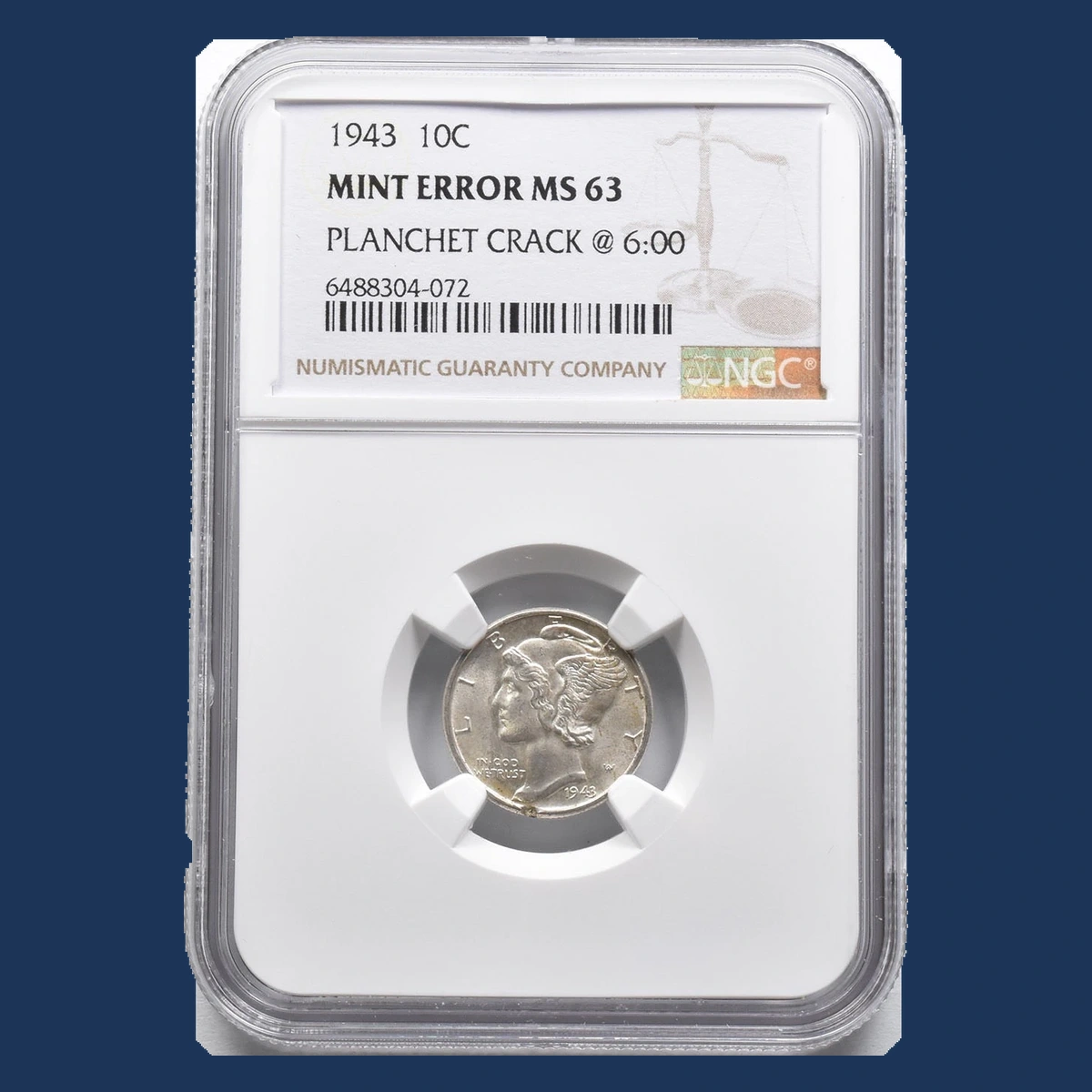
An uneven patch or malformed area can begin in the coin’s metal before the design is struck. NGC has described a 1943 Philadelphia dime as struck on a defective blank.
That broad description does not, by itself, identify a particular alloy or missing layer. The shape and surface of the actual defect must explain the diagnosis.
A blank is the round metal piece that enters the press. Poor metal or an irregular blank can leave parts of the finished coin rough or incomplete.
This example should not be treated as a copper coin merely because its blank was defective.
Estimated Value
Allow an estimated $40–$400 for a visibly defective 1943 dime blank. Small flaws with limited eye appeal fall lower than large, clearly mint-made defects.
A different-year comparison is a 1942-D nickel on a defective 4.4-gram blank, sold for $156 in July 2021. Its different metal and denomination limit the comparison.
The 1943 coin’s value depends on its own defect and condition. No measured weight or wrong-metal premium is assumed for it.
How to Identify
For a loose coin, record weight and diameter before naming the defect. Use a scale and calipers to compare with the normal 2.5 grams and 17.9 millimeters.
Those figures provide context. A low weight does not, on its own, prove a different metal.
Read the label’s exact description, then examine the malformed area under a 10× magnifier. “Defective planchet” means a flawed blank, without specifying every possible cause.
Check the edge grooves for filing, crushing, or other damage that could explain the shape. Note where the stamped design changes as it crosses the flaw.
A defect present during striking should affect the design there. A cut that simply slices through completed details suggests later damage instead.
7. 1943 Mercury Dime Gradually Thinning Blank
One edge area can become thinner without a bite-shaped piece being missing. This happens when a blank is cut from the tapering end of a metal strip.
The thin section may fail to fill the stamping tools, leaving weaker detail in that area. Thickness changes gradually toward the edge.
A Philadelphia example is graded MS63 and described as a 24% tapered-end blank. That percentage refers to the affected part, not a measured loss of 24% of its weight.
The coin is still a silver Mercury dime. Weak detail alone does not establish this particular blank defect.
Estimated Value
The 24% tapered-end example sold for $252 at Heritage on July 15, 2021. It provides a direct same-year sale for this unusual thinning error.
A reasonable estimated range is $100–$450 for comparable genuine pieces. A plainly visible taper, readable date, and attractive surface support the stronger prices.
A weakly struck coin of normal thickness should not receive the same estimate. The metal’s changing thickness is part of what buyers are paying for.
How to Identify
Use calipers with light pressure to measure thickness at several accessible points. The coin should become gradually thinner toward one side, rather than show one abruptly shaved edge.
Its diameter should remain around the normal 17.9 millimeters, allowing for uneven metal spread. Weigh it on a scale against the normal 2.5 grams, but do not interpret the catalog’s 24% figure as a weight loss.
Then compare the thin area with the weak design under a 10× magnifier. The same section may have weak edge grooves because too little metal reached the retaining ring, so matching weakness and a gradual taper provide the useful combined check.
8. 1943 Mercury Dime Doubled Letters and Design Details
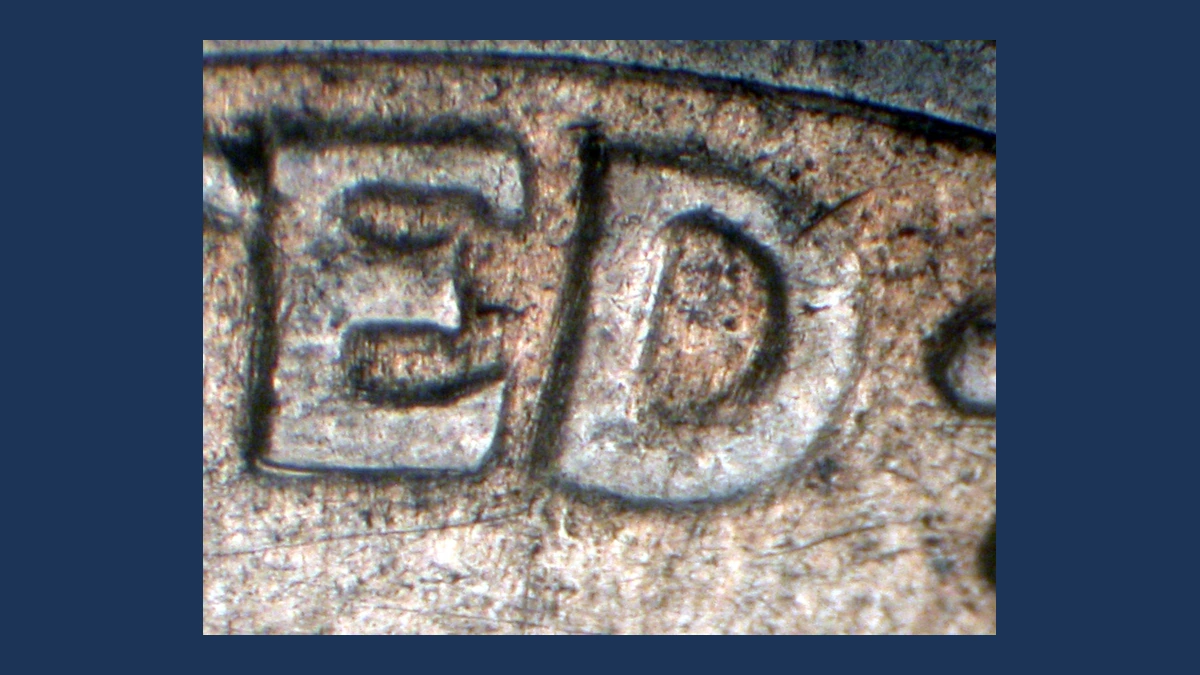
Some letters look slightly thick or carry a fine second outline even though the coin was struck only once. A stamping tool with a doubled design passes that mistake to each coin it makes.
Philadelphia reports include front-side doubling around the date, motto, LIB, or AW initials. A different back-side variety has thickened lettering and stars.
Denver examples show fine doubling in the date and parts of the motto. Their exact patterns differ.
San Francisco front-side doubling is also reported, without a secure catalog match here. Flat, shelf-like edges alone do not prove this error.
Estimated Value
Estimate $20–$150 for modest, correctly identified doubling on circulated or lower-grade coins. Clearer recognized varieties on attractive unworn pieces can fall around $150–$500.
These are estimates for the described small-scale doubling, not the value of a dramatic repeated strike. The San Francisco report receives that range only if genuine tool doubling is established.
A catalog match and good photographs matter more than a seller’s use of the word “double.”
How to Identify
Sort the coin by its back-side mintmark before comparing pictures. No letter indicates Philadelphia; D and S identify Denver and San Francisco on ordinary 1943 dimes.
With a 10× magnifier, compare Philadelphia front doubling around the date and motto separately from the thickened back lettering. For Denver, inspect the date and OD in GOD or the wider motto pattern.
A loose normal coin should weigh about 2.5 grams and measure 17.9 millimeters on a scale and calipers. Normal edge grooves do not establish the variety, but filing or distortion can explain misleading nearby shapes.
Avoid mixing several catalog pictures into one expected pattern. Match the doubled details on one identified tool, rather than accepting a flat shelf as a second rounded outline.
9. 1943 Mercury Dime Repunched D and S Mintmarks
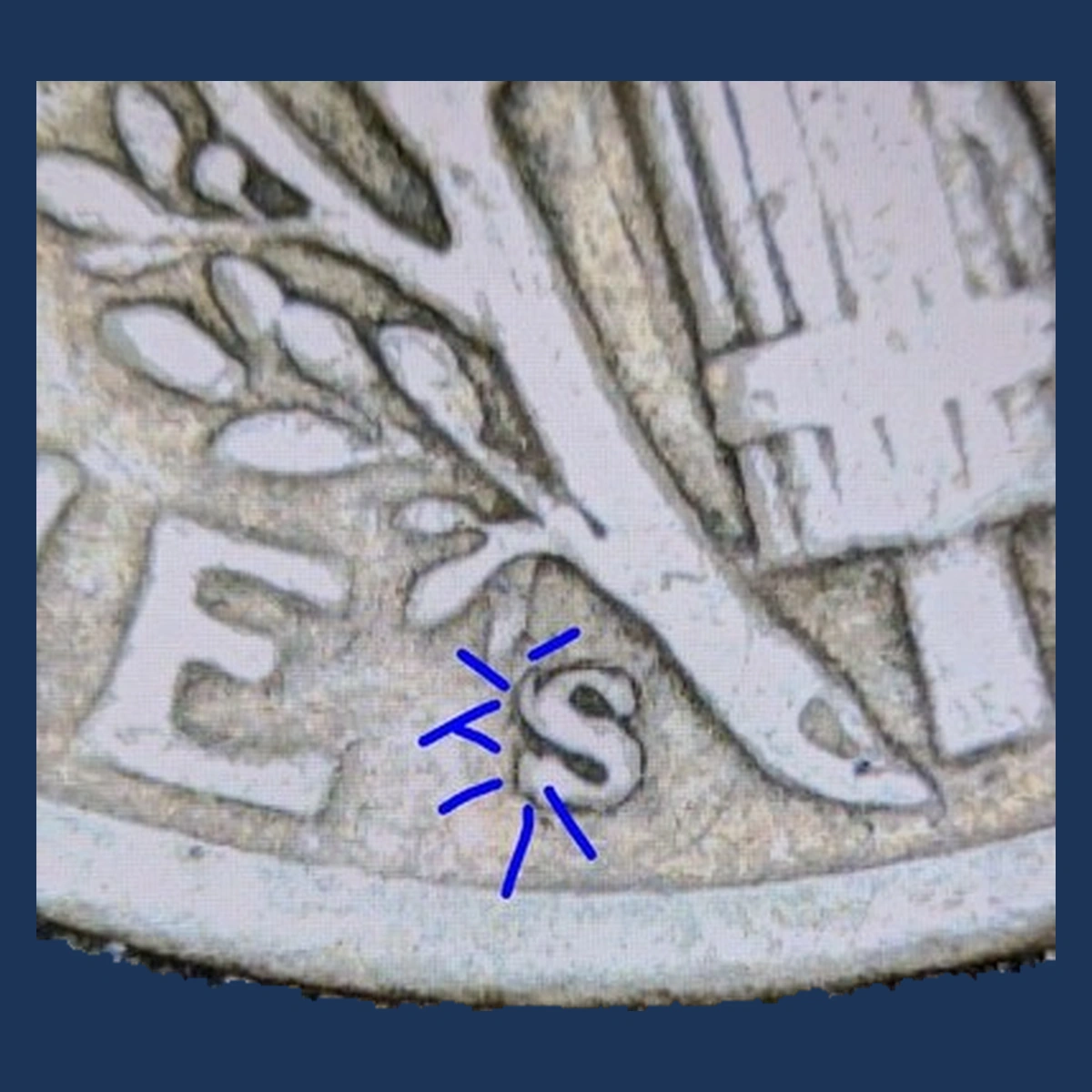
A smaller D or S outline can peek out beside the main mintmark. In 1943, workers punched these letters into the stamping tool by hand.
A second punch placed slightly differently could leave part of the first letter behind. Denver examples include D over an upside-down D, called FS-501.
Other Denver patterns show remnants above, below, left, or right of the main letter. San Francisco examples also have several different patterns.
The S known as “Trumpet Tail” is a normal letter style. Its flared end alone does not show that the mintmark was punched twice.
Estimated Value
Small repunched mintmarks are estimated at $20–$100 on worn or ordinary unworn coins. Recognized varieties with clear separation and better condition can bring roughly $100–$600.
For a different-series comparison, GreatCollections records for the 1951-D Roosevelt FS-501 Full Bands variety range roughly from $35 to $115. That comparison does not price the scarcer 1943 varieties directly.
The inverted-D variety and stronger S patterns deserve individual comparison with coins carrying the same identification.
How to Identify
Locate the letter to the lower left of the upright bundle on the back. For a loose coin, a scale and calipers should show close to 2.5 grams and 17.9 millimeters, with a grooved edge.
Use a 10× magnifier on the Denver FS-501. Part of an upside-down D should appear below and to the right of the main letter.
The S FS-501 follows a different pattern, with extra remnants left and lower left. A flared tail on a normal S is not enough.
Other Denver numbers identify different directions of repunching. Choose a picture of the same catalog variety rather than treating all notches alike.
Match the separate letter remnant, not just the outline of the main mintmark.
10. 1943 Mercury Dime Raised Cracks and Broken Rim Areas
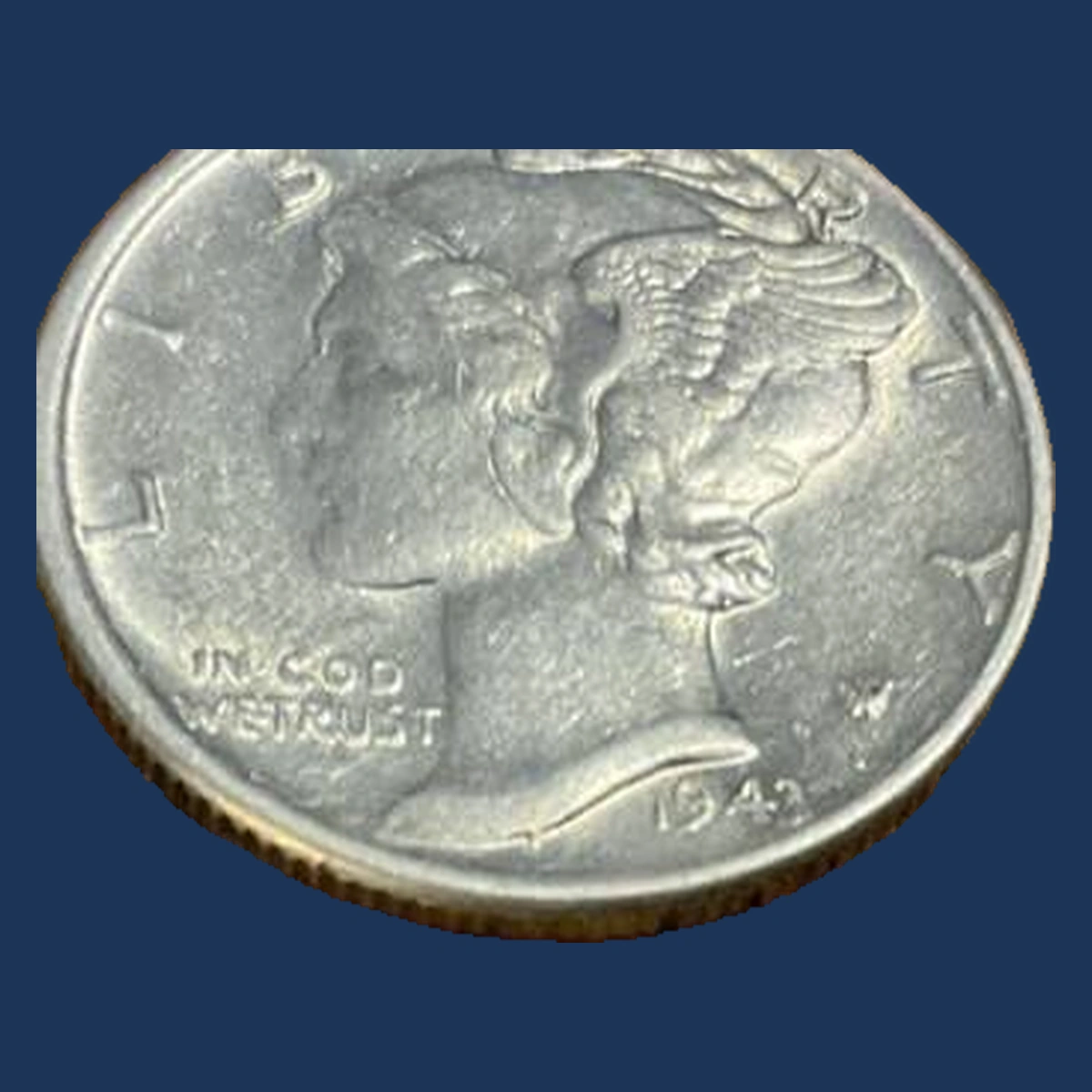
A thin raised line records a crack in a steel stamping tool. A larger raised patch can form when part of that tool breaks away.
If the patch meets the coin’s rim, collectors call it a cud. Philadelphia examples include thickened back borders and a larger front patch beside B near 10 to 11 o’clock.
A Denver example has a raised area along the lower back border, beside the bundle and DIME. Other Denver and San Francisco tools developed narrower cracks.
These locations belong to different coins or tool stages. One coin need not show every feature.
Estimated Value
Fine raised cracks are estimated at $10–$60, while stronger rim breaks can fall around $50–$700. Size, missing design, condition, and collector demand explain the wide difference.
A different-year 1970-D nickel with two cuds sold for $63 in October 2022. That smaller-price example shows why a visible break does not automatically mean a four-figure coin.
The higher estimate here is reserved for a much stronger, clearly mint-made Mercury dime break.
How to Identify
Decide whether you see a narrow raised ridge or a broad patch joined to the rim. Side lighting and a 10× magnifier make that distinction easier than a straight-on photograph.
For the Philadelphia front cud, examine the area beside B at about 10 to 11 o’clock. Compare back-side breaks separately: the upper-right and lower-right patches are different catalog entries.
A loose piece should stay near 2.5 grams and 17.9 millimeters on a scale and calipers because a broken tool does not remove coin metal. Check the adjacent edge grooves for the dent or bend that could instead have pushed metal upward.
A naturally struck raised patch with lost design supports a cud; an isolated scratch does not.
11. 1943 Mercury Dime Missing Pieces of the Blank
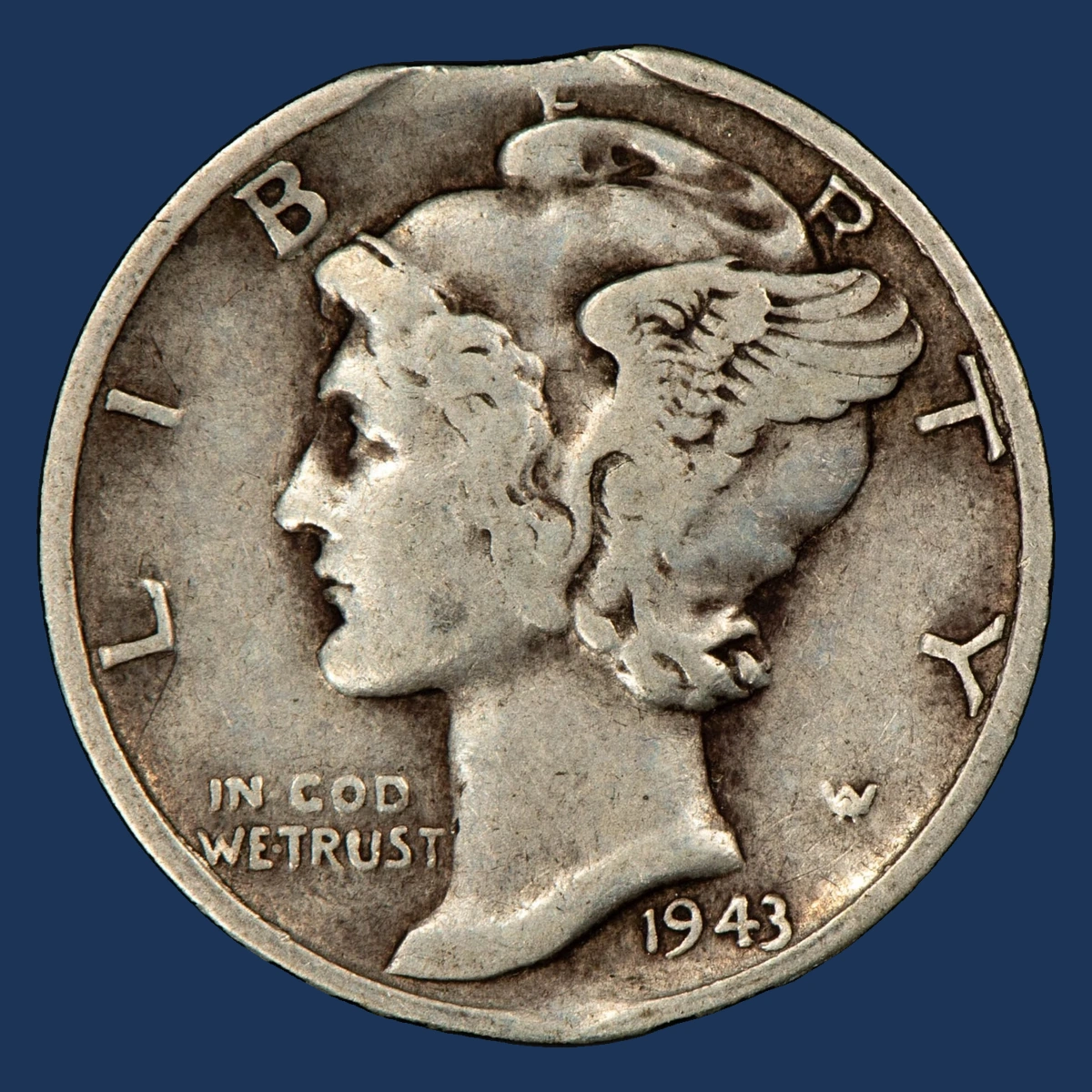
A curved bite or rough missing section can begin before the coin receives its design. The cutting press may overlap an earlier hole or reach an irregular part of the metal strip.
A Philadelphia example has a 10% curved clip along the bottom, from about 5:30 to 7 o’clock. Another curved example has its missing section near 8:30.
San Francisco also produced a reported 6% ragged clip, with a different rough outline. Its direction is not established here.
These are different shapes of missing-blank errors. A cut made after striking can imitate either shape.
Estimated Value
Estimate $40–$200 for smaller genuine clips on worn or ordinary unworn dimes. Larger, attractive examples with clearer missing sections can reach roughly $200–$750.
A different-denomination comparison is a 1997-P nickel with a 20% clip, sold for $124 in March 2025. Its larger missing portion and different metal prevent a direct price match.
The 1943 coins’ own grades and clip shapes determine their prices. A high grade alone does not authenticate a cut.
How to Identify
A loose clipped coin will usually weigh less than the normal 2.5 grams. Check it on a scale, then measure an intact direction with calipers against the normal 17.9-millimeter diameter.
The missing boundary matters more than either number. Under a 10× magnifier, inspect it for a natural cut-and-break surface rather than a freshly filed groove.
The 10% Philadelphia example loses metal between about 5:30 and 7 o’clock. That position does not describe the separate San Francisco ragged clip.
Follow the surviving edge grooves into the missing section. Nearby weakness can support a natural blank-cutting error.
Look opposite the clip as well, where the rim may be weak. That feature helps when present, but cannot replace inspection of the missing boundary.
12. 1943 Mercury Dime Off-Center Strikes
A wide blank crescent beside a cut-off design shows that the coin entered the press in the wrong position. Part of the metal missed the stamping tools entirely.
One Philadelphia example was struck 40% off center and graded MS63 by NGC. A different PCGS MS62 example has a smaller 5% shift.
Both are unworn grades, but the amount of missing design creates a very different appearance. A readable date helps connect the error to 1943.
A border that is wider on only one side is not sufficient proof. Both faces need to show the matching misplaced strike.
Estimated Value
The 40% off-center example brought $1,680 at Heritage on July 15, 2021. Its large blank area makes it a strong same-year comparison.
Estimate about $75–$350 for smaller genuine shifts and $500–$2,000 for more dramatic, attractive examples with readable dates. These are whole-coin estimates, not a price for each percentage point.
The 5% PCGS coin should be assessed separately rather than assigned the 40% coin’s result.
How to Identify
Look at both faces before using a ruler or calipers. A true off-center strike should leave corresponding unstruck areas and cut off part of the design on both sides.
Use a 10× magnifier to check the transition between the struck area and the blank crescent. Hammer damage or deliberate grinding should not be mistaken for untouched blank metal.
A scale should show close to the normal 2.5 grams if the full blank remains. Compare the shape with the normal 17.9-millimeter diameter using calipers, allowing for metal spread where the strike landed.
Inspect where the usual edge grooves stop or change, and confirm that 1943 remains readable. Matching blank crescents on both faces distinguish this error from a single shifted stamping tool.
Conclusion
The errors here span an estimated $10–$2,000, from small raised lines to major off-center strikes. Condition and the strength of the visible mistake help explain that wide spread.
Start with both sides, then check the edge before naming an error. Keep the coin uncleaned, and compare its exact features with a known example before paying for a valuable variety.