1947 Dime Error List with Pictures

A tiny letter can make a big difference. A 1947-S/D dime graded MS67 sold for $646 at Heritage in April 2014.
Look closely at the mintmark: part of a D remains beneath the S. Other 1947 dime errors show doubled letters, missing metal, or a design struck off center.
The examples below have estimated values of $20–$1,000, depending on the error and condition. Keep reading to learn where to look and how to spot each type.
1. Reported 1947 Roosevelt Dime Struck-Through Error (Estimated Up to $300)
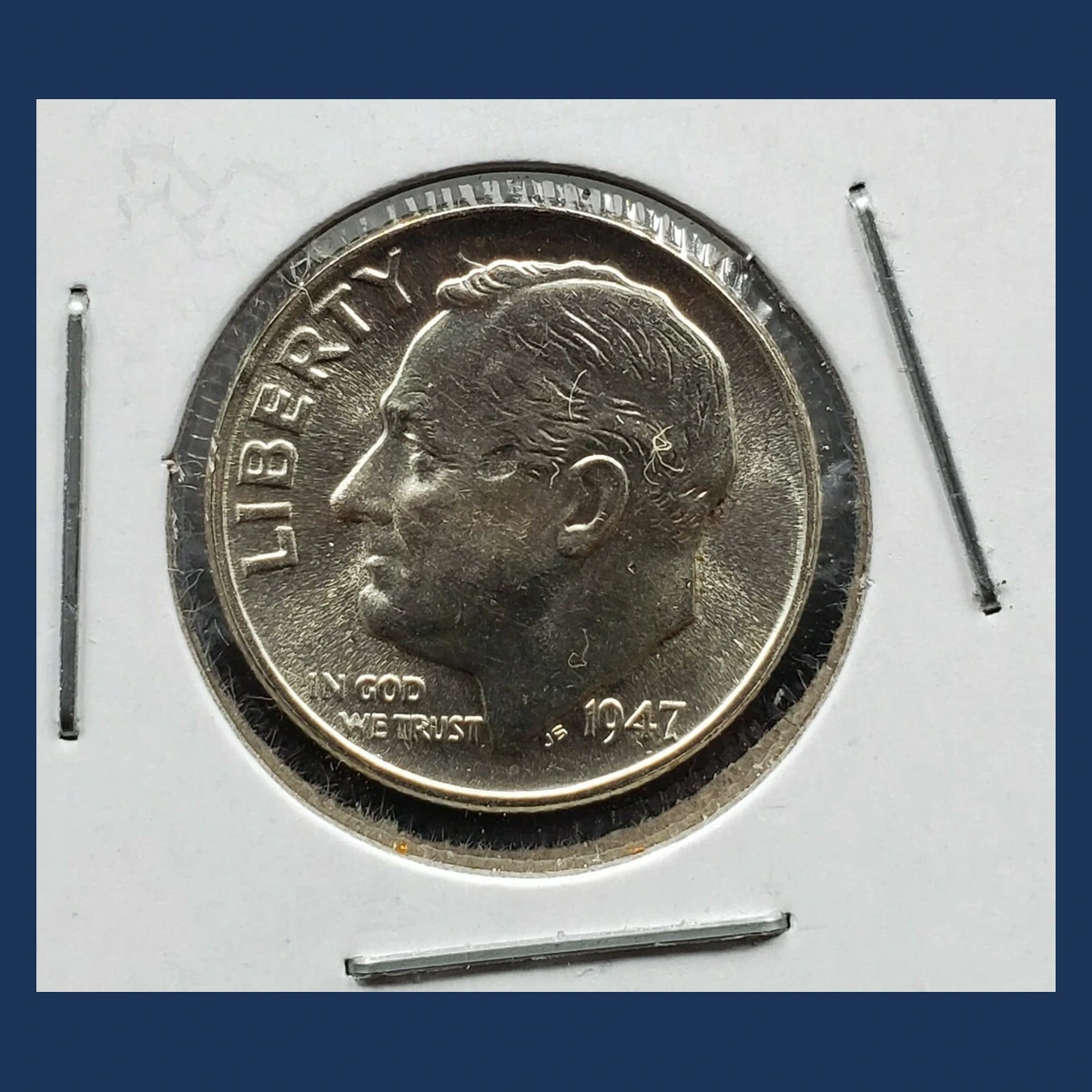
A patch of missing detail can begin with something caught between a die and the blank. The die is the metal tool that stamps the design onto the coin.
The trapped material blocks part of that design. Collectors call the result a struck-through error, and its shape depends on what got in the way.
This error is reported for 1947, but no specific certified example is identified here. Look for a clear interruption beside normal detail; a worn or dirty patch alone is not enough to identify this error.
Estimated Value
Estimate $20–$100 for a small genuine strike-through on a circulated silver Roosevelt dime. A larger, clearer example can bring an estimated $100–$300.
These figures are comparisons with similar silver-dime errors, not a recorded sale of a specific 1947 coin. The upper range requires an obvious mint-made mark and appealing surfaces.
A dull patch from wear adds no error value. Dirt stuck to a finished coin does not qualify either.
How to Identify
Start beside the weak patch. If nearby letters remain sharp while one small area is missing, something may have blocked the strike.
Use a loupe to check the boundary in changing light. A scratch cuts into the surface, while corrosion often leaves rough pits.
A normal silver dime weighs 2.50 g and measures 17.9 mm across. When safely accessible, check it with a scale and calipers, and inspect the grooves on its reeded edge.
Those measurements help reveal major changes, but they cannot prove a strike-through. Compare the affected area with a normal dime and look for interrupted design, rather than material sitting on top of complete letters.
2. 1947 Roosevelt Dime Doubled Die Obverse (Estimated Up to $300)
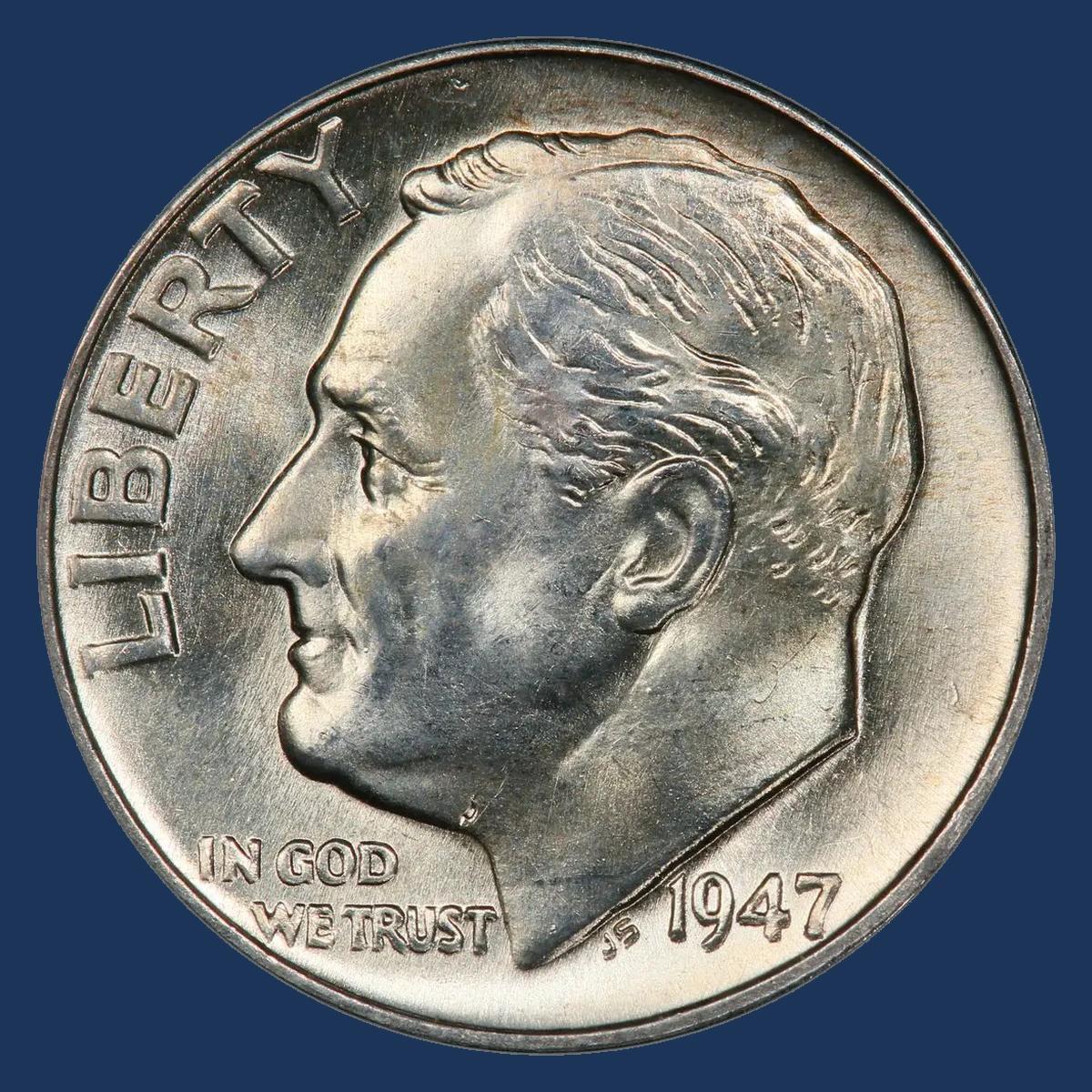
The small JS initials below Roosevelt’s neck are a useful place to check this doubled die. On the Philadelphia FS-101 variety, they show especially strong extra outlines.
FS-101 is a catalog label. The same variety also shows inward doubling on the date, IN GOD WE TRUST, and LIB in LIBERTY.
The doubling was already on the die before it struck the coin. It does not mean the dime was struck twice.
A GreatCollections example was graded PCGS MS65, an uncirculated grade. Its Philadelphia origin matters when choosing a matching comparison photo.
Estimated Value
Estimate $50–$300 for correctly identified FS-101 examples, from circulated coins to attractive lower uncirculated grades. Clear doubling and cleaner surfaces help a coin reach the upper range.
The PCGS MS65 listing ended in November 2025, but its final price is not publicly shown. The $75 opening bid was not the sale price.
This is an estimated range for similar minor varieties. It does not claim a new auction record.
How to Identify
Find JS near the base of the neck and enlarge the initials with a loupe. Compare their extra outlines with a clear FS-101 photograph, then check the date and motto.
A real match needs more than one thick letter. Rounded extra outlines should agree with the reference, while a flat, shelf-like edge can come from movement during striking.
Turn the coin over: the Philadelphia example has no mintmark beside the torch. Its normal weight is 2.50 g, diameter 17.9 mm, and edge reeded.
Use a scale and calipers when safely accessible, or check recorded measurements for an enclosed coin. Matching the strong JS doubling is more useful than chasing a bright reflection on one digit.
3. 1947 Roosevelt Dime Clipped Planchet (Estimated Up to $400)
A clipped dime is missing metal that was never part of its finished blank. A blank is the small metal disc that receives the coin design.
One 1947-S example has a curved clip of about ten percent. Such a curve can form when the blank-cutting punch overlaps a hole left by an earlier cut.
A separate Philadelphia example has a rough missing section from five to six-thirty on the rim. That shape can come from the rough edge of the metal strip.
These are two different coins. Neither should resemble a finished dime cut with pliers.
Estimated Value
A 1947-S ten-percent curved clip graded NGC MS66 sold for $104 in December 2024, according to Heritage. Estimate $30–$400 for clipped examples across circulated and attractive uncirculated grades.
The older Philadelphia rough-edge listing had a $6 minimum bid. That was neither a sale result nor a current value.
Shape, condition, and clear signs of a genuine clip matter. The $104 curved-clip sale does not set the price of the rough-edge coin.
How to Identify
The Philadelphia example needs a different comparison from the curved San Francisco clip. Check its rough boundary near the bottom of the coin, between five and six-thirty.
With a loupe, look where the struck design meets the missing section. Metal should show signs of flowing around a gap that was already there.
The opposite rim may also be weak. Check for fresh cuts or crushed metal that suggest later damage.
A normal dime weighs 2.50 g and measures 17.9 mm, with a reeded edge. Use a scale when safely accessible, then place calipers across an intact span; a lower weight supports missing metal but cannot prove when it disappeared.
Check first for a rim and design formed around the missing section.
4. 1947-S Roosevelt Dime Doubled Die Reverse (Estimated Up to $600)
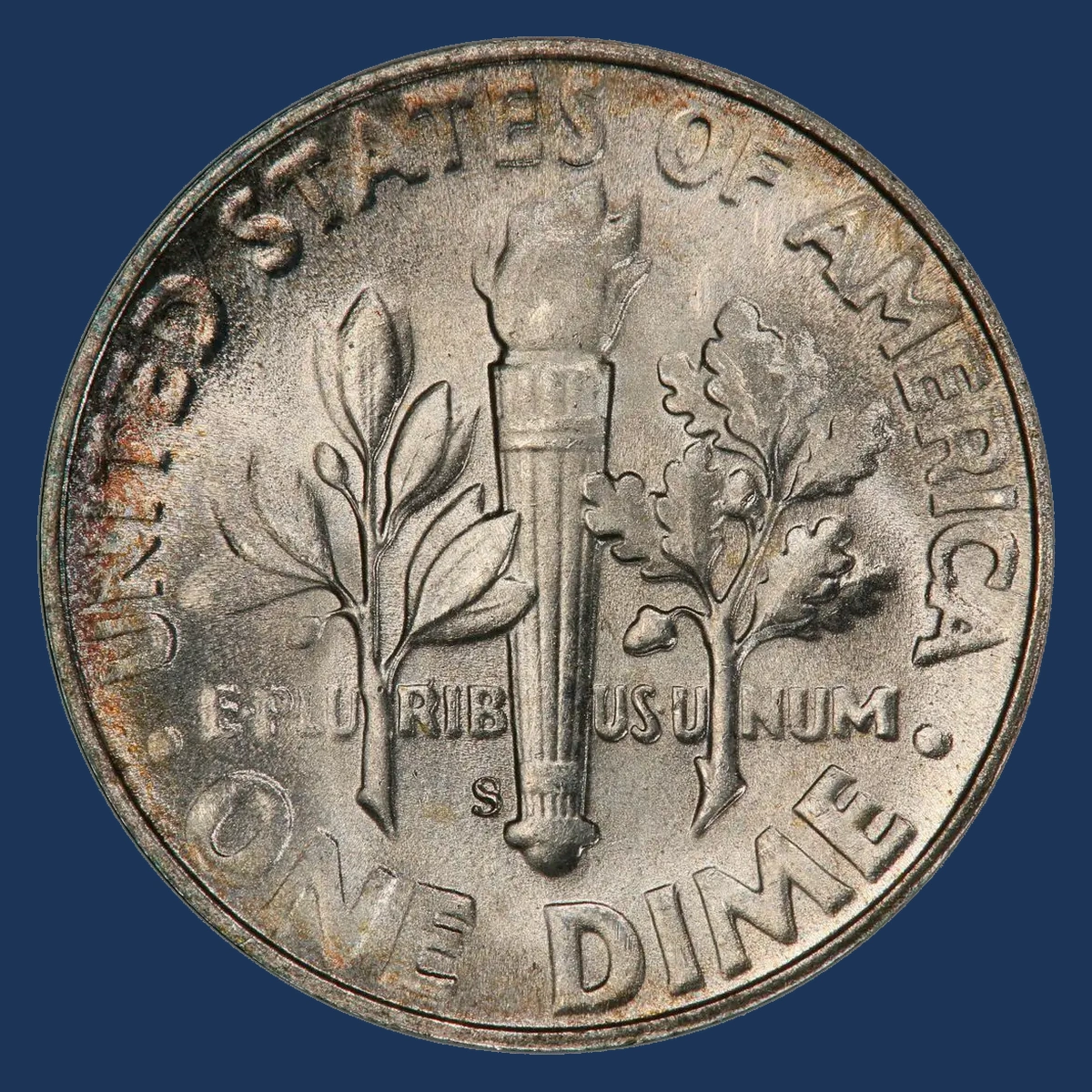
Turn this dime over to find the doubled design. The 1947-S FS-801 variety has extra raised outlines on its reverse, the side with the torch.
An example in an older ANACS holder was graded MS65 and sold in May 2022. FS-801 names the variety; MS65 describes the coin’s uncirculated condition.
The repeated details came from the die itself. They are different from the doubled front of the Philadelphia FS-101 dime.
Use a photograph of the correct variety when checking the torch and lettering. The normal lines across the torch are not proof of doubling.
Estimated Value
The ANACS MS65 FS-801 dime sold for $120 in May 2022. PCGS Auction Prices records that result, even though ANACS graded the coin.
An estimated $50–$600 covers correctly identified circulated through better uncirculated examples. The $120 sale provides a real comparison within that range.
The upper estimate allows for better condition and stronger eye appeal. It is not the price paid for that MS65 coin, and sharp torch detail can affect value separately.
How to Identify
A comparison photo should show the full reverse and the doubled details. The sold ANACS example has certificate number 971199, which helps keep the correct images together.
Look for the S left of the lower torch. Then use a loupe to match the extra raised outlines with the FS-801 reference, rather than looking for thick letters anywhere.
The torch normally has paired lines across it. Those lines alone do not identify a doubled die.
For basic checks, use the normal 2.50 g weight, 17.9 mm diameter, and reeded edge. A scale and calipers are useful when the coin is safely accessible, but matching the reverse design remains the deciding step.
5. 1947-S Roosevelt Dime Off-Center Strike (Estimated Up to $750)
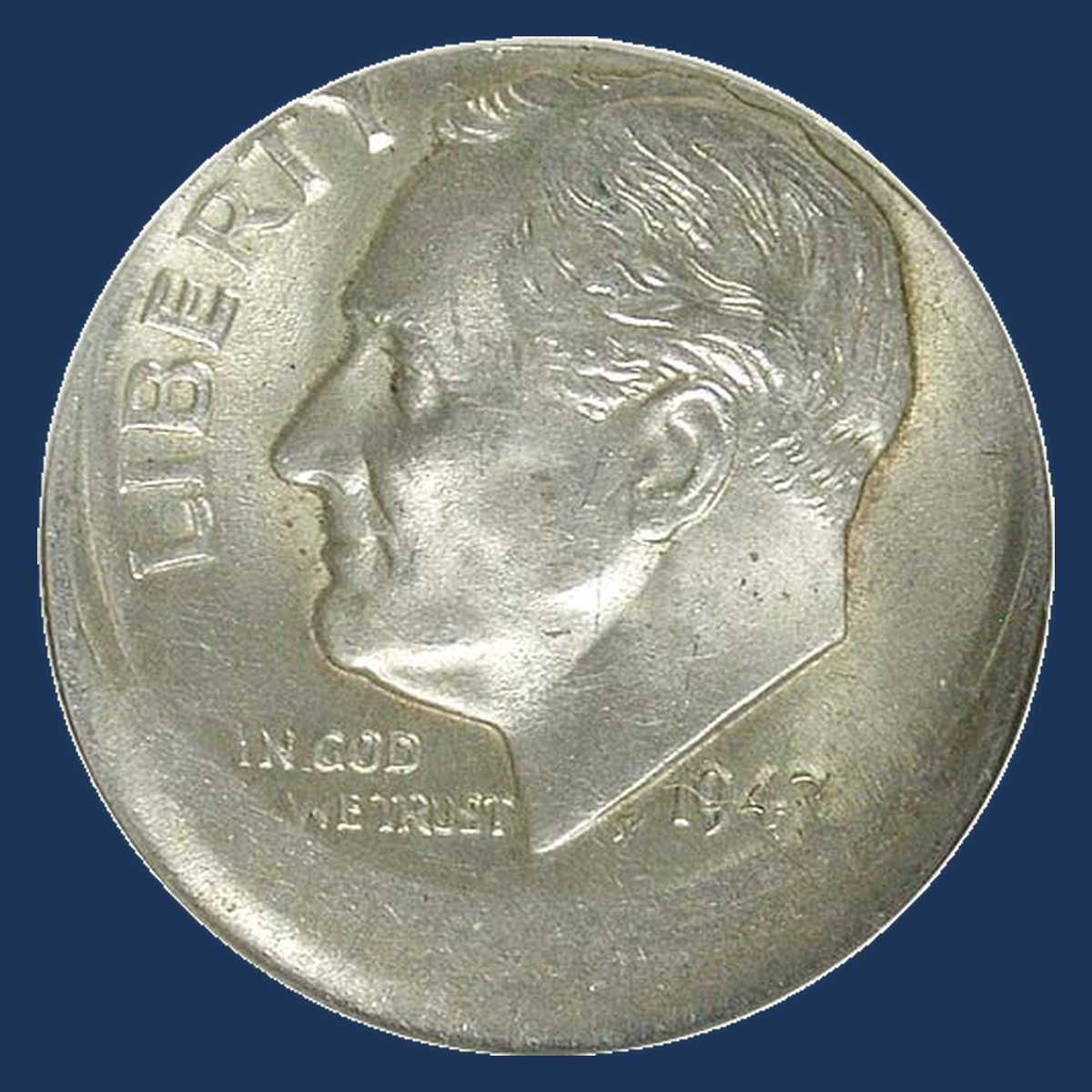
The design on this 1947-S dime sits partly off the metal disc. A collector’s NGC set lists the coin as fifteen percent off center, graded MS62 FT.
MS62 describes an uncirculated coin with noticeable marks. FT means Full Torch, a label for sharp torch detail that survives despite the misplaced strike.
The blank was out of position when the dies came together. Part of the design missed it, leaving some blank metal on the other side.
This is one identified San Francisco example. Its fifteen-percent figure should not be applied to every off-center dime from 1947.
Estimated Value
For genuine examples with a readable date and a similar off-center strike, estimate $150–$750. Condition and the amount of visible blank metal help determine the price.
No sale price is recorded here for the collector-listed MS62 FT dime. A 1934-D Mercury dime, graded PCGS AU50 and ten percent off center, was offered at $350.
That was an asking price for a different design, date, and grade. It offers a broad comparison, not a sale result for this 1947-S.
How to Identify
Both sides tell the story. Look for displaced designs on the front and back, with untouched blank metal beside the struck area.
If only one side is shifted, a misaligned die may be responsible instead. A complete design on a wider coin can point to a broadstrike, which forms without proper edge restraint.
Use a loupe to inspect the border between struck and blank metal. Filing away part of a normal dime can remove design, but it leaves different surface marks.
The normal blank weighs 2.50 g and measures 17.9 mm. Check with a scale and calipers when safely accessible, inspect any remaining edge grooves, and match the date and S mintmark to the reference.
Start by matching the displaced designs and blank crescent on both faces.
6. 1947-S Roosevelt Dime Repunched and Overpunched Mintmarks (Estimated Up to $1,000)
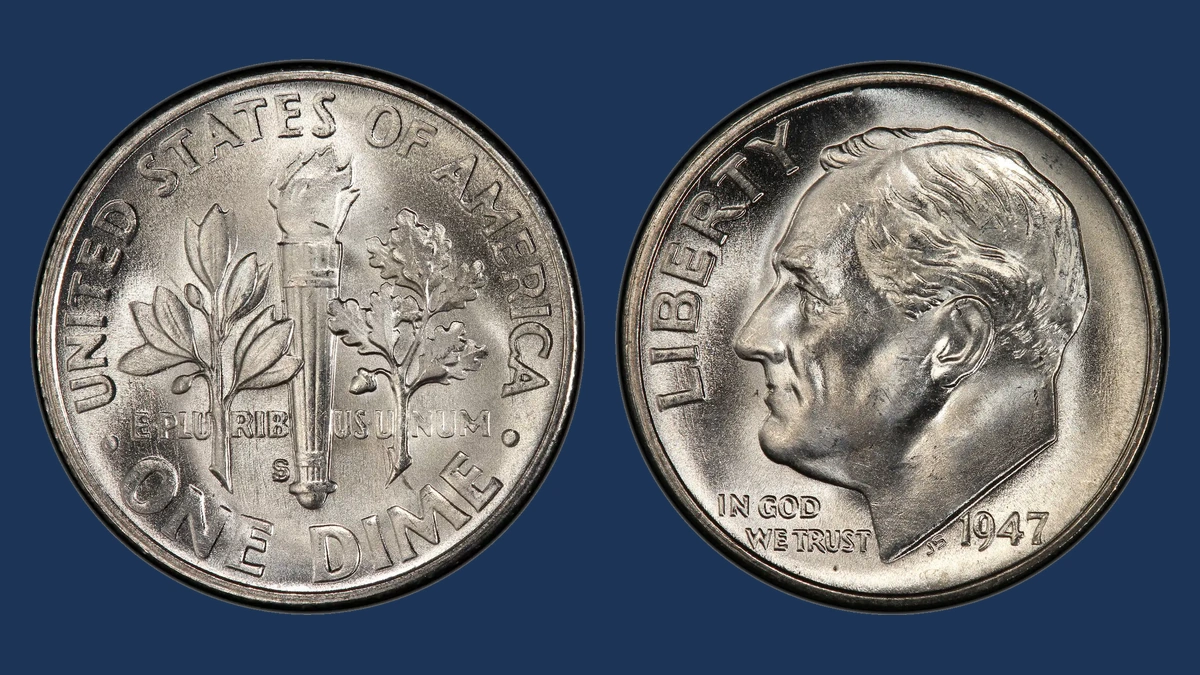
Look closely at the S beside the torch. Some 1947-S dimes show part of a D underneath it, while others show traces of another S.
Workers punched mintmarks into dies by hand at this time. A second punch could leave part of the earlier letter visible.
S/D means an S was punched over a D. S/S means the same letter was punched again in a slightly different position.
The extra shape must resemble the earlier letter. A stain or a thick edge around an ordinary S is not enough to identify either variety.
Estimated Value
An MS67 S/D dime sold for $646 in April 2014, as shown in PCGS auction records. Estimate $75–$1,000 for correctly identified S/D examples across circulated and better uncirculated grades.
Ordinary S/S examples have a separate estimated range of $25–$300. Do not use the S/D sale to price every doubled-looking S.
Clean surfaces, condition, and sharp torch bands can also raise the whole coin’s value. Match the letter combination before comparing prices.
How to Identify
A normal dime weighs 2.50 g and measures 17.9 mm, with a reeded edge. A scale and calipers can check these basics when the coin is safely accessible.
Now examine the S left of the lower torch through a loupe. Does the extra curve fit a D, or does it follow another S?
Compare it with a clear photo of that exact variety. Different mintmark varieties can leave different parts of the earlier letter exposed.
Watch for added metal, stains, or flat edges from movement during striking. An extra line is useful only when its shape matches the earlier letter; that is what separates an S/D from an S/S.
Conclusion
Most useful checks start small: the JS initials, the reverse mintmark, or the edge of a missing piece. A loupe can reveal details that a full-coin photo hides.
Estimated values run from about $20 for a minor strike-through to $1,000 for a strong S/D example. Match the error first, then compare condition and prices; the recorded $646 S/D sale is one reference, not a value for every 1947 dime.