1949 Dime Error List with Pictures

A 1949-S dime with a jagged missing edge sold for $69 at Heritage in September 2023. It shows that 1949 dime errors can be affordable, even when the damage looks dramatic.
The eight types below have estimated prices from $15 to $500. Start with what you can see, then use the close-up checks to separate mint errors from later damage.
1. 1949 Roosevelt Dime Die Crack (Estimated Up to $100)
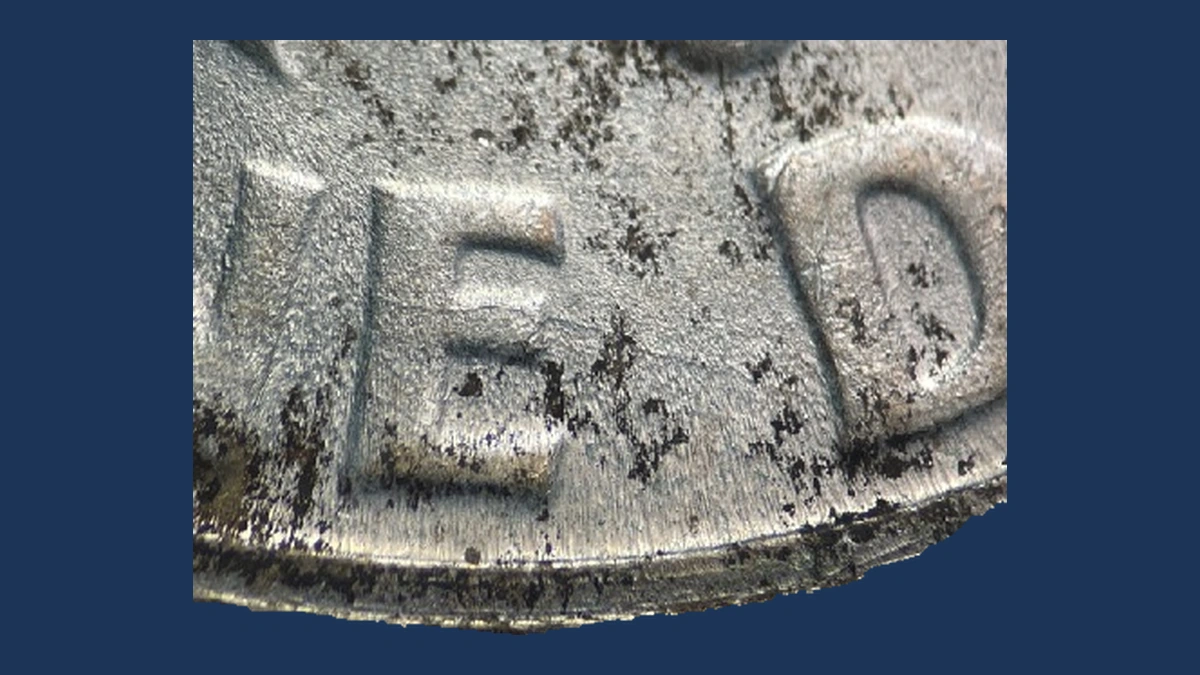
A thin, raised line behind Roosevelt’s head can come from a cracked die. The die is the steel tool that stamps the coin’s design.
When that tool cracks, coin metal enters the opening and forms a small ridge. One 1949-S example has a diagonal ridge behind the head and another across the reverse lettering.
The reverse line runs from the E in ONE toward the D in DIME. Other cracks can follow different paths, so those positions describe one example rather than every 1949 coin.
Estimated Value
Expect an estimated $15–$100 for worn to ordinary uncirculated examples with small die cracks. A clear line may add a little value, but the coin’s condition still matters most.
Some 1949-S coins have a crack, a doubled mintmark, and clash marks together. Price the whole coin once; adding three separate estimates would overstate its value.
Very high-grade coins can cost more because of their condition, even when their cracks are small.
How to Identify
Tilt the coin under a lamp. Follow the line with a loupe: a die crack leaves a raised ridge, while a scratch usually cuts into the surface.
Check behind the head, then look from ONE’s E toward DIME’s D on the reverse. Compare the full path with a matching example, rather than judging one short mark.
Use a scale and calipers to check the normal 2.50 g weight and 17.90 mm diameter. Inspect the reeded edge for an opening in the coin itself, which has a different cause.
A dark line alone proves very little. A ridge that stays raised as the light changes is the quickest clue to a die crack.
2. 1949 Roosevelt Dime Repunched Mintmark (Estimated Up to $125)
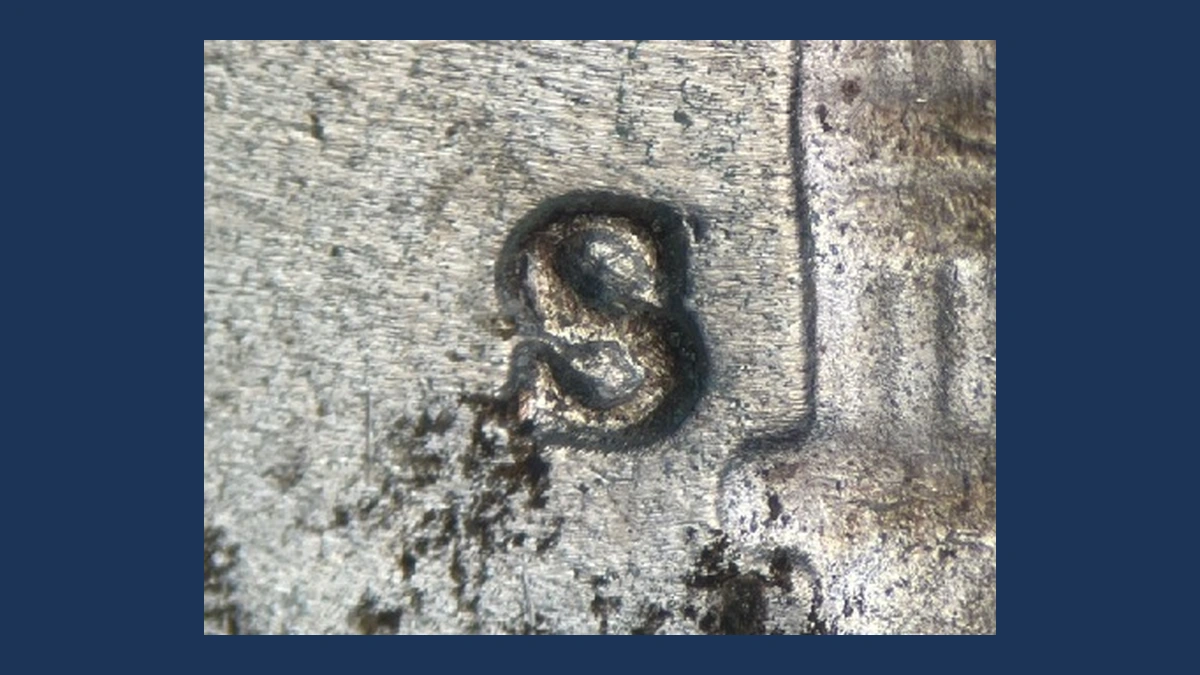
Look closely at the small S or D beside the reverse torch. Part of a second letter can remain around the main mintmark.
In 1949, workers added mintmarks to dies with a separate punch. If they moved the punch between blows, part of the first letter could remain visible.
This is called a repunched mintmark, or RPM. Several 1949-S forms exist, and their extra strokes point in different directions.
Denver examples are also reported, but their D must be compared with another D. The shape of a doubled S cannot identify a Denver variety.
Estimated Value
A practical estimate is $15–$125 for worn to ordinary uncirculated coins with a clear repunched mintmark. The underlying dime accounts for much of that price.
Small varieties often add only a few dollars; published guidance suggests roughly $5–$10 for a modest premium. A sharply preserved coin with an easy-to-see extra stroke is more appealing.
Paying more for a high grade does not mean the mintmark error itself is worth hundreds.
How to Identify
Find the mintmark beside the reverse torch. It sits at the lower left; use a loupe to study its outside curves and the spaces inside the letter.
Compare an S with Wexler’s 1949-S photographs. The extra stroke should fit part of another S, not just form a random bump.
One listed example has traces toward the east and south; other forms look different. A flat ledge or corrosion pit should not be mistaken for another punched letter.
Check the normal 2.50 g weight with a scale and the 17.90 mm diameter with calipers. Inspect the reeded edge for damage, then use the matching extra letter strokes as the main identification clue.
3. 1949 Roosevelt Dime Die Clash (Estimated Up to $150)
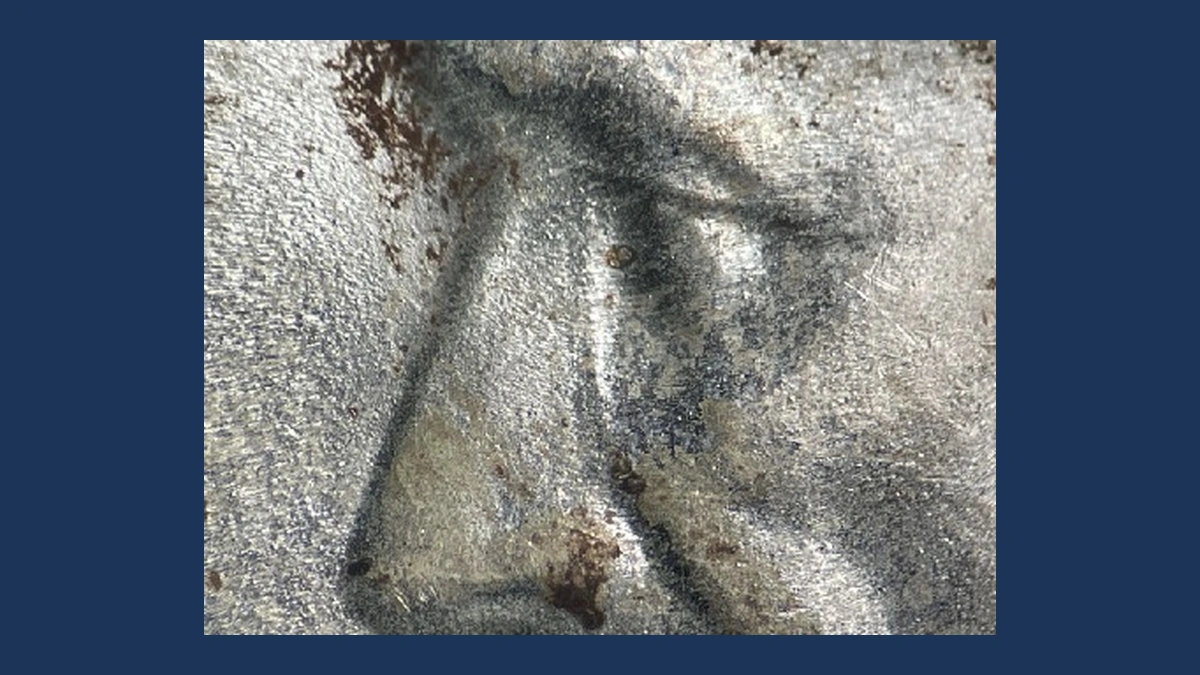
A faint shape just in front of Roosevelt’s eye can be a die-clash mark. This feature appears in a specialist reference for one 1949-S die.
A clash happens when the two dies hit each other without a blank between them. They can pick up parts of each other’s design.
Those marks may then appear on later coins struck by the damaged tools. They often look much weaker than the coin’s normal design.
Several other lines can occur near the eye, so location alone is not enough. A scratch in that area has no automatic error premium.
Estimated Value
Use an estimated $20–$150 for worn to ordinary uncirculated 1949-S coins with visible clash marks. A clear, recognizable trace generally attracts more interest than a very faint line.
This range estimates the complete coin; it is not a recorded sale of the specific clash shown. The same die also has a repunched mintmark and cracks.
Those features can help identify the coin, but their separate price ranges should not be added together.
How to Identify
Start just in front of Roosevelt’s eye. Turn the coin under a lamp and use a loupe to bring faint marks into view.
Compare the shape with the reference photograph, keeping the coin in the same position. A genuine clash trace should relate to a part of the opposite design.
A straight scratch or several fine polishing lines can look convincing under one lighting angle. Move the light again before deciding that a faint shape matches.
A scale should read near 2.50 g, and calipers should show about 17.90 mm. Check the reeded edge for unrelated damage; the eye-area shape remains the key comparison.
4. 1949 Roosevelt Dime Lamination (Estimated Up to $150)
A peeling patch on a 1949 dime can expose a weak layer within the metal. This type of separation is called a lamination.
The dime contains a silver-copper alloy, rather than the layered metal used for later clad dimes. A peeling silver surface therefore should not be described as a missing modern outer layer.
The loose piece may remain attached like a flap, or it may break away completely. Either form can leave a rough patch.
Scraping can also make a rough patch, but it usually pushes or cuts the metal instead of separating a natural layer.
Estimated Value
Estimated prices run from $15–$150 for small flakes through larger separations on worn or lower-grade uncirculated coins. A clear attached flap usually draws more interest than a tiny rough spot.
The coin’s condition and mintmark still affect the total price. A shallow flaw on a worn dime may add very little.
The upper figure is an estimate for a stronger example, not a claimed auction result for a particular 1949 lamination.
How to Identify
Do not lift or bend an attached flap. Use a loupe to look along its edge and see how the opening enters the surrounding metal.
A natural layer should meet the surface without fresh gouges or obvious tool marks. Scraped metal often shows parallel cuts or a pushed-up lip.
Check the reeded edge for a continuation of the opening, then inspect the other face. The separation does not need to appear on both sides.
Use a scale to compare with 2.50 g and calipers to compare with 17.90 mm. Missing flakes can reduce the weight, while an attached flap may leave it nearly unchanged.
The most useful sign is an actual layer boundary, not a change in color.
5. 1949 Roosevelt Dime Ragged and Clipped Planchet (Estimated Up to $200)
A clip does not always leave a smooth, curved notch. One 1949-S dime has a jagged missing edge known as a ragged clip.
ANACS graded that lightly worn coin AU55, and its recorded weight was 1.99 grams. This gives collectors a real example to compare with rough-looking gaps.
Such a gap can begin at the uneven end of a metal strip used to make blanks. The incomplete blank then receives the coin design.
Other 1949 clips may have different shapes. A rough edge alone cannot tell you whether metal was missing before striking or removed afterward.
Estimated Value
The 1949-S ANACS AU55 ragged clip sold for $69 at Heritage on September 18, 2023. It weighed 1.99 grams.
For 1949 clips more broadly, use an estimated $30–$200. Larger gaps and better condition can raise interest, especially when the date and mintmark remain readable.
A ragged shape does not automatically cost more than a curved clip. Collectors also consider the coin’s appearance and signs that the gap formed at the Mint.
How to Identify
Place the coin on a scale first: a normal 1949 dime weighs 2.50 g. The recorded ragged-clip example weighs 1.99 g, but later cutting can also reduce weight.
With a loupe, inspect the rim and lettering beside the gap. Look for metal that spread naturally during striking, rather than sharp cut marks.
Measure across intact parts with calipers, using 17.90 mm as the normal diameter. Examine the remaining reeded edge for filing or sawing.
The rim opposite a genuine clip may be weak; collectors call this the Blakesley effect. It is helpful when present, but not every clip shows it clearly.
Shape alone is not enough. Natural strike flow beside the missing edge is more useful than whether the gap looks rough or smooth.
6. 1949 Roosevelt Dime Doubled Die (Estimated Up to $200)
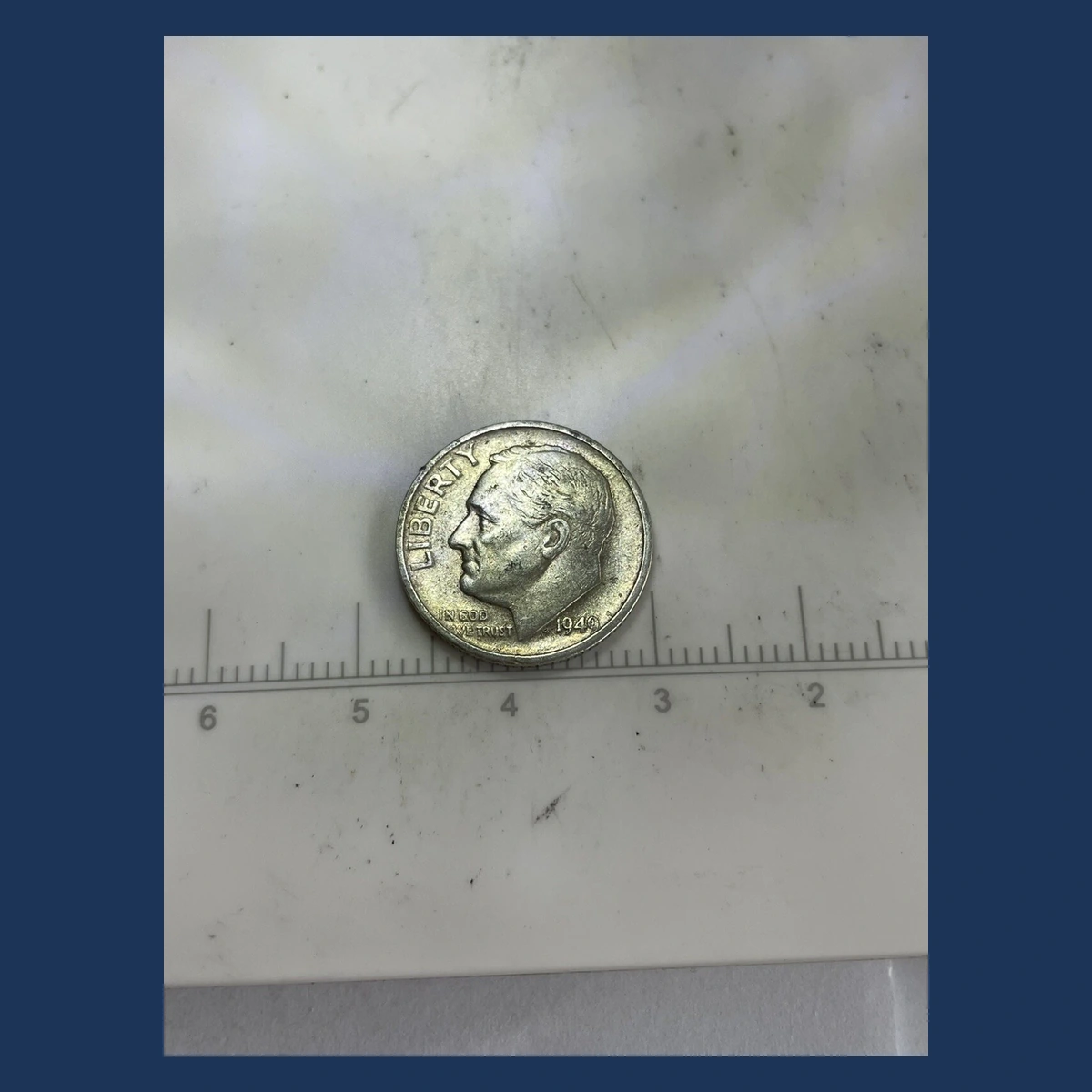
A letter or design detail may seem to have a second outline. If both outlines were present in the die, the result is called a doubled die.
Reports for 1949 include both front and back doubling. These belong to the same basic error type, but each face needs its own close-up.
A doubled-looking photograph does not prove that the die carried two images. Light reflections, wear, and movement during striking can also create extra edges.
Look for repeated, rounded detail rather than a thin, flat shelf. The clearest examples make the second part visible without relying on one lighting angle.
Estimated Value
An estimated $25–$200 covers worn to lower-grade uncirculated coins with genuine die doubling. This includes the value of the silver dime itself.
Clear extra detail can add a modest premium, while weak or poorly photographed marks attract less interest. An ungraded seller’s use of “DDO” or “DDR” does not establish a sale price.
Flat mechanical doubling and ordinary wear should not receive the same premium as a confirmed doubled die.
How to Identify
Put an ordinary 1949 dime beside the candidate and inspect one face at a time. A loupe helps separate rounded extra detail from a low, flat shelf.
Check letters, the date, and nearby design lines without assuming all must be doubled. Turn the light to see whether the second outline remains part of the metal.
On the reverse, inspect the torch and branches in the same way. Matching photographs of a known same-year variety are more useful than a seller’s label.
Use a scale and calipers to check 2.50 g and 17.90 mm, then inspect the reeded edge. Repeated raised detail that matches a known example is the key sign to look for.
7. 1949 Roosevelt Dime Broadstrike (Estimated Up to $300)
An unusually wide dime with a complete design may be a broadstrike. Its metal spread outward because the collar failed to hold the blank in place.
The collar is the ring that controls the coin’s outline during striking. It also forms the reeds along the edge.
Without that support, a coin can become wider and lose part of its normal edge pattern. The center design may still look quite normal.
A wide border on only one face can have a different cause. A hammered coin can also look wider, but its damaged surfaces reveal the later treatment.
Estimated Value
An estimated $50–$300 suits genuine 1949 broadstrikes from worn to attractive uncirculated condition. Clear expansion and original surfaces make stronger examples more appealing.
A 1946 NGC MS66 Full Torch broadstrike sold for $258.50 in October 2012. That older, different-year sale provides context rather than a direct price for a 1949 coin.
Its high grade also contributed to the result. A worn broadstrike should not be valued as though it had the same preservation.
How to Identify
Use calipers to measure the coin in several directions, starting from the normal 17.90 mm diameter. A broadstrike should show outward spread that fits the way the blank was struck.
The weight should remain near 2.50 g on a scale if no metal is missing. A wide but unusually light coin needs a closer check for other causes.
Inspect both faces through a loupe. The design should remain complete, with natural spreading near the border rather than flattened details from hammering.
Check the reeded edge for areas where the collar failed to shape it. A complete design, expanded outline, and matching edge changes together provide the clearest identification.
8. 1949 Roosevelt Dime Off-Center Strike (Estimated Up to $500)
A blank crescent beside the design is the main sign of an off-center strike. The blank sat partly outside the dies when they came together.
Some of the coin therefore received no design, while another part of the design missed the blank. Metal remains in the empty area, unlike a clip where part of the blank is missing.
A readable date helps identify the coin as a 1949 issue. The reverse mintmark may survive even when other details are lost.
If the mintmark area falls outside the strike, its absence cannot prove that the coin came from Philadelphia.
Estimated Value
Readable-date examples have an estimated range of $50–$500. Small offsets tend toward the lower end, while bold errors with attractive surfaces can bring more.
A 1964 ANACS MS65 dime struck sixty percent off center sold for $134 in December 2025. This recent silver Roosevelt sale offers a useful different-year comparison.
It does not set a fixed price per percentage of offset. Condition, eye appeal, and a readable date all affect the final price.
How to Identify
Compare the blank area on both faces before examining small details. An off-center blank shifts both impressions; one shifted die may leave the other face centered.
Use a loupe to read the date and look beside the lower left of the reverse torch. Record any surviving D or S without guessing at a missing area.
An intact blank should weigh near 2.50 g on a scale. Check its outline with calipers against the normal 17.90 mm, allowing for distortion from the strike.
Inspect the reeded edge for uneven contact with the collar and for later cutting. Matching blank areas on both faces give the quickest distinction from a single shifted die.
Conclusion
Start with the visible feature: a raised line, a peeling layer, a missing edge, or a shifted design. Each points to a different cause and needs a different check.
The 1949-S ragged clip sold for $69, while estimated prices across these types run from $15 to $500. Value each complete coin once; several errors on one dime do not mean adding every section’s estimate.