1959 Dime Error List with Pictures

A tiny letter beside the torch can be more interesting than a large scratch. On one 1959-D variety, an upright D covers an earlier upside-down impression.
An exceptionally well-preserved example sold for $264 in December 2017. The 1959 dime errors below have estimated ranges spanning $15–$3,000, from small metal flaws to authenticated wrong-blank errors.
Read on to see which marks come from the Mint and which details matter when comparing prices.
1. 1959 Roosevelt Dime Peeling Metal
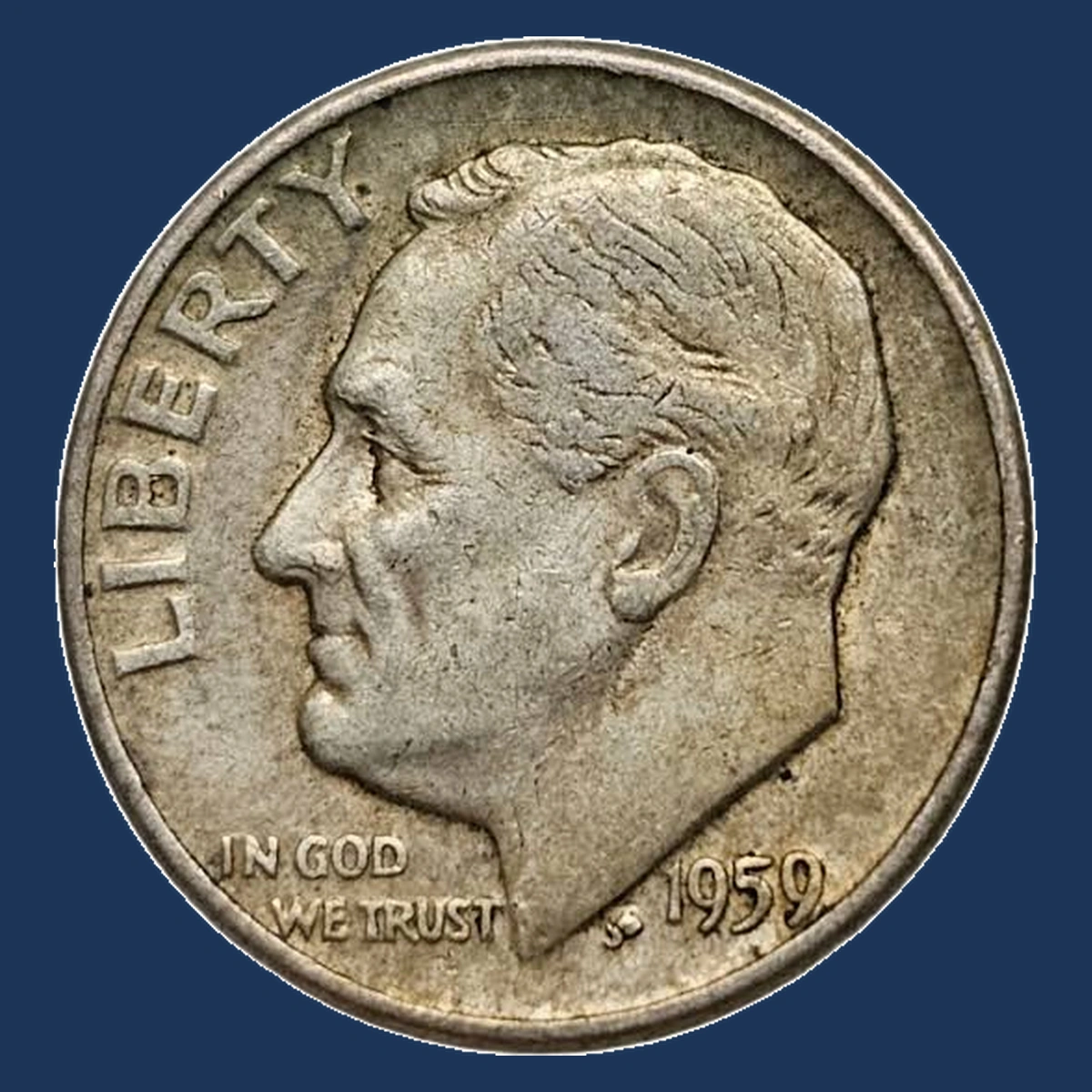
Part of the front surface can lift away in a thin flake. This is called lamination: metal separates within the blank rather than receiving an extra stamped design.
A 2009 auction described a large lower-left front peel on a 1959 dime. Some metal had fallen away, while another portion remained attached.
A separate seller example shows flaws in the hair and below the nose. Peeling can occur in different places, so examine the lifted edge instead of expecting one fixed pattern.
The original alloy is 90% silver and 10% copper. It is not the copper-core construction used on later dimes.
Estimated Value
Estimate $15–$200 for genuine peeling, from modest worn examples to larger, attractive separations. A flap that remains attached can help collectors see how the metal separated.
For a silver-dime comparison, a 1942 Mercury dime with major front peeling sold for $89 in March 2023. That is a different design and year.
Loss across important facial detail can reduce appeal. The range concerns the complete coin, not an amount to add for each separate flake.
How to Identify
Leave the loose metal alone. A pick, brush, or fingertip can detach the flap and remove part of the evidence.
Photograph the lower-left front area under low side lighting. With a 10× magnifier, trace the lifted edge into the remaining surface; on the separate seller example, inspect the hair and area below the nose instead.
For a loose coin, a scale reading can be compared with 2.50 grams. Lost metal may reduce that weight, but an attached flap may leave it close to normal.
Calipers can check the usual 17.9 mm diameter, and the edge should retain grooves where undamaged. A shallow scoop with tool scratches needs a different explanation from a sheet of metal separating along its own boundary.
2. 1959 Roosevelt Dime Raised Marks from a Broken Stamping Tool
An extra raised area on the front can come from a broken die, the steel tool that stamps coins. Metal flows into the opening in that tool and leaves a lump on the finished dime.
A 1959-D example was graded NGC MS66 Full Bands. That means strong unworn condition with clearly separated horizontal bands on the torch.
The auction calls its flaw a front die break. It does not describe an exact location or a rim connection, so a raised mark elsewhere cannot be matched by date alone.
Estimated Value
The NGC MS66 Full Bands coin sold for $95 in July 2021. Comparable genuine raised tool breaks are estimated at $20–$300.
A small lump partly hidden in the design may attract less interest than an obvious original break. Clean surrounding surfaces also help a buyer understand the feature.
The $95 result includes the whole high-grade coin. It should not be treated as a fixed surcharge for every raised mark found on a 1959-D dime.
How to Identify
A dent often leaves metal pushed up along one side, so inspect any depression beside a suspected lump. Tilt the coin under a light and use a 10× magnifier to follow its boundary into the surrounding design.
The Denver D belongs left of the torch base, but the error lies on the front. Compare that front feature with the pictured example before calling it the same break or assuming it reaches the rim.
For a loose complete coin, use a scale and calipers to check 2.50 grams and 17.9 mm. Inspect the grooved edge for a blow, and look for dirt, solder, or corrosion that could imitate raised original metal.
3. 1959 Roosevelt Dime Doubled Designs
The letters E PLU on the back can look thick and show an extra outline. Wexler describes this pattern on an ordinary 1959 dime from Philadelphia.
A doubled die carries a repeated design in the stamping tool itself. One normal blow can therefore put the extra detail onto a coin.
Reports also include front doubling and a seller-described Proof with back doubling. Proofs are collector coins made with special preparation; those reports do not establish the same E PLU pattern on them.
Keep the ordinary back pattern separate when comparing photographs.
Estimated Value
For clearly matched minor doubling on ordinary coins, estimate $20–$150. An authenticated minor doubled-design Proof can be estimated at $50–$300, with the exact pattern and surface condition guiding the price.
These estimates depend on identifying the doubled pattern. A sharp extra outline is easier to collect than vague thickness, especially when photographs show how it differs from ordinary lettering.
Scratches in a Proof’s reflective background can reduce its value. Flat shelf-like machine doubling should not receive the same premium.
How to Identify
Separate the coin’s finish from the extra design before comparing details. An ordinary Philadelphia dime and a Philadelphia Proof both lack a mint letter, so that blank space does not settle the question.
For the ordinary back pattern, magnify E PLU to look for the cataloged thickness and doubling. Tilt the light to separate a real raised outline from a reflection.
A flat step shaved beside a letter can result from movement during striking. It should not be matched merely because it looks like a second edge.
On a loose candidate, check 2.50 grams, 17.9 mm, and the grooved edge with a scale, calipers, and magnifier. Front and Proof claims need their own matching photographs; the ordinary back image cannot confirm them.
4. 1959 Roosevelt Dime Defective Blank
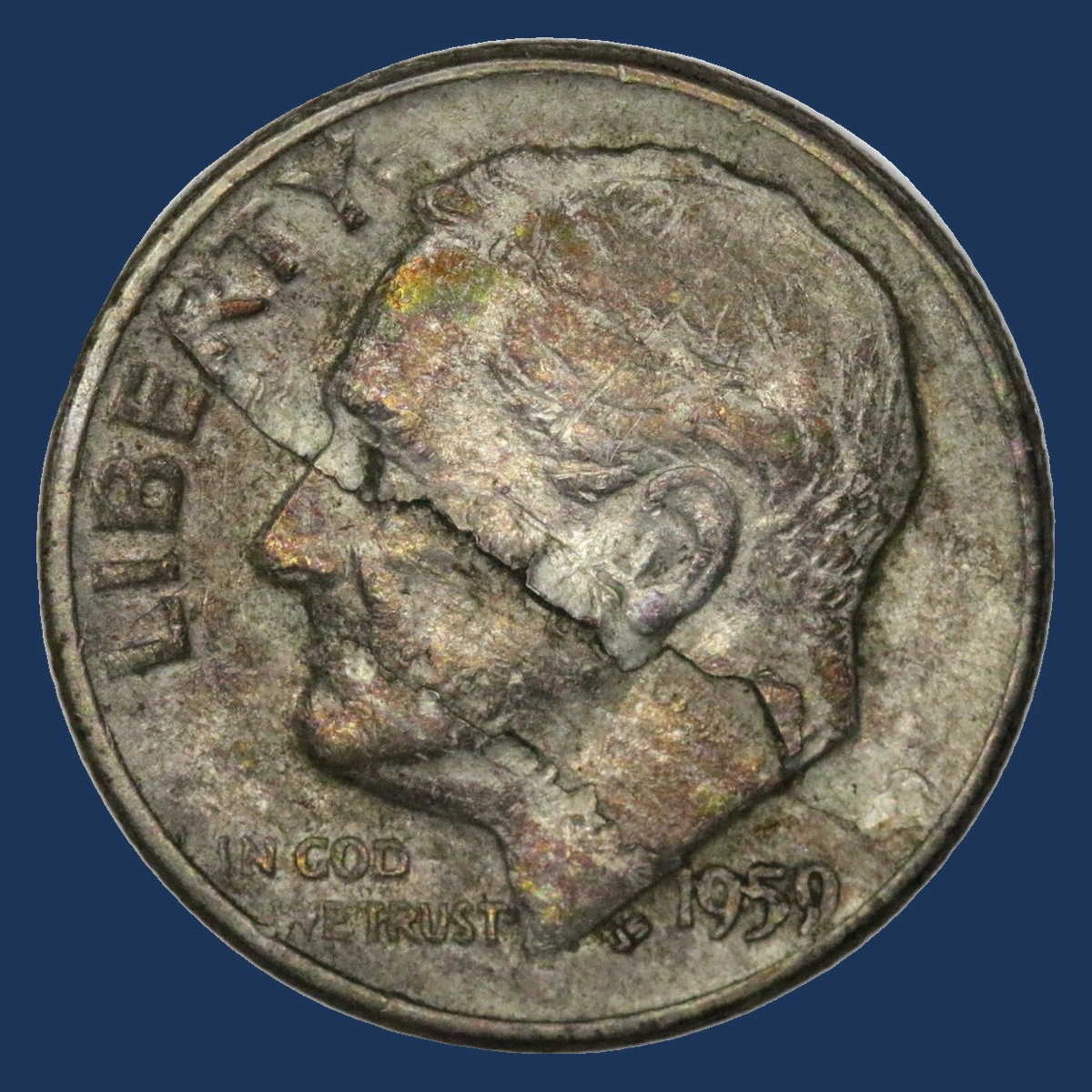
A damaged-looking area can already have been present in the metal blank before the design was stamped. One no-mint-letter 1959 dime was cataloged as struck on a defective blank.
NGC graded it MS64 Full Bands, meaning an unworn coin with some marks and clearly separated horizontal torch bands. The blank defect is separate from that quality designation.
Its short description does not specify a hole, a split, or an exact weight. The coin’s original surface and the way the design crosses the flaw are therefore more useful than guessing a specific shape.
Estimated Value
A genuine defective silver blank has an estimated range of $30–$350. The amount of visible disruption and the remaining design can make two examples look different to a collector.
This estimate compares similar silver Roosevelt blank defects. A clear original flaw on an unworn coin can be more appealing than a vague rough patch on a heavily worn one.
Cleaning, deep scratches, or later corrosion can lower demand. Those problems should not be mistaken for the production flaw itself.
How to Identify
Begin with the struck design at the edge of the unusual area. Magnify where a letter, hair line, or background meets the flaw, and ask whether stamping shaped the metal there.
A later gouge may cut directly across finished detail and leave sharp displaced edges. Corrosion can instead leave pits unrelated to the design.
Record the whole coin before trying to name the defect. A scale and calipers can compare a loose example with 2.50 grams and 17.9 mm; the cataloged coin has no exact weight to copy.
Inspect the grooved edge and photograph the flaw from an angle. If the shape remains unclear, seek an error specialist’s assessment without scraping, polishing, or opening the affected area.
5. 1959 Roosevelt Dime Broadstrike
A broadstrike can make a dime wider while keeping its design on the metal. The collar ring failed to contain the blank properly when the stamping tools came together.
That differs from an off-center strike, where part of the design misses the blank. The useful comparison is the relationship between the outer lettering and the expanded border.
Broadstrike appears in a 1959 error guide, without a specific graded specimen attached to the claim. A candidate should show genuine spreading during the strike, rather than a normal dime flattened or hammered later.
Estimated Value
Estimate $40–$350 for an authenticated 1959 broadstrike with a complete, readable design. Wider natural spreading and attractive surfaces can support the upper part of that range.
As a nearby silver-dime comparison, a 1956 coin with both a broadstrike and a clip sold for $126 in July 2021. That price covers the combined error on a different year.
A slightly widened worn coin would be a weaker comparison. Later hammering or edge grinding does not create the same premium.
How to Identify
Measure several widths on a loose candidate with calipers, rather than checking only its widest point. A normal dime is 17.9 mm across, and uneven spreading can produce different readings.
Weigh it against 2.50 grams. A broadstrike redistributes metal; it does not by itself require a lighter coin.
Now use a magnifier to follow the lettering around both faces. The whole design should fit on the widened blank, unlike a displaced strike that loses design beyond an edge.
Examine the side for how the collar ring affected the grooves. Flattened lettering, sharp tool marks, or crushed edge metal may reveal later hammering, so increased width must agree with the preserved struck design.
6. 1959 Roosevelt Dime Clipped Blanks
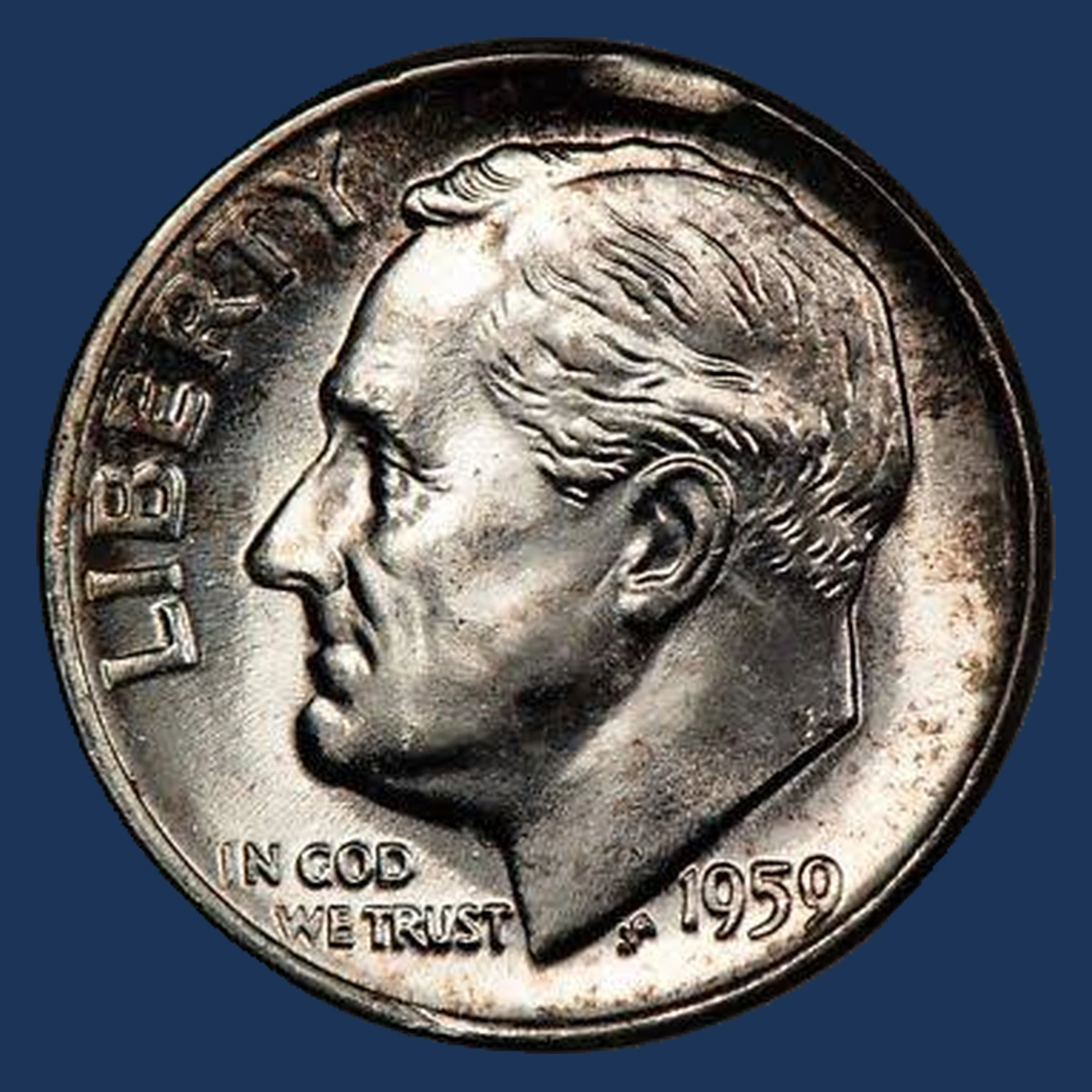
A rounded bite can result when a blank is cut from a sheet too close to an earlier hole. The incomplete disk then receives the dime design.
One 1959 no-letter example was listed with a 10% curved clip near 1 o’clock and light wear. A separate 1959-D had a 5% clip near 2 o’clock and heavier wear.
A seller also reported a double-clipped 1959 dime. Its two gaps belong to that separate coin, rather than a combined drawing of the first two examples.
Original clipped edges need to be distinguished from later cuts.
Estimated Value
An estimated $20–$400 covers genuine clips from small worn examples to attractive larger or multiple gaps. The number of gaps does not automatically determine the price.
A 1942 Mercury dime with a curved clip sold for $73 in March 2023, graded ANACS MS63. This different silver-dime design provides a comparison for an unworn example.
Readable dates and natural-looking boundaries help collectors judge the error. A later notch, even a neat curved one, should not be priced within this range.
How to Identify
Compare the date and mint area before matching the missing metal. The no-letter example’s gap is near 1 o’clock; the D example’s smaller gap is near 2 o’clock.
Use a 10× magnifier along the curved boundary. Metal flow near the cut and a weak rim opposite it can help, although the opposite-rim weakness need not always be visible.
For a double clip, inspect both gaps independently rather than assuming that one genuine-looking curve confirms the other.
A loose clipped dime should usually weigh less than 2.50 grams. Record the weight with a scale and the remaining diameter with calipers against 17.9 mm.
Inspect the surviving edge grooves and cut surfaces for saw lines or fresh burrs. Do not trim rough metal to make the outline look cleaner.
7. 1959 Roosevelt Dime D over an Inverted D
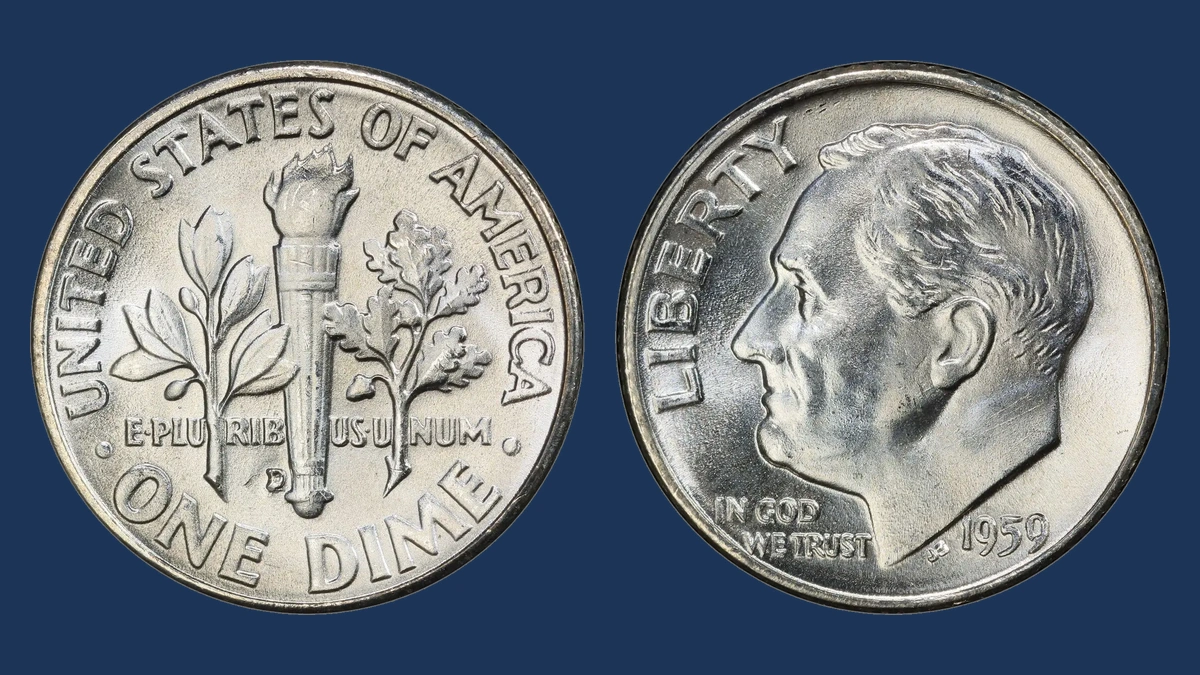
The D beside the torch can contain traces of an earlier upside-down D. The punch that added the mint letter to the stamping tool was applied in different positions.
An upright impression corrected the earlier placement but did not fully erase it. Coins struck from that tool inherited the overlapping mint-letter pattern.
Collectors call this D over inverted D, cataloged as FS-501. It belongs to ordinary Denver dimes, not to Philadelphia Proofs or coins missing a mint letter.
A misshapen D alone is not enough to identify the pattern.
Estimated Value
A PCGS MS67 example sold for $264 in December 2017, as recorded by PCGS CoinFacts. MS67 describes exceptional unworn preservation.
Estimate $20–$400 across worn examples and attractive unworn coins with a clear matching letter. That range includes both the variety and the underlying coin’s condition.
Heavy wear may hide the earlier impression, while clean close-up photographs help show it. Random damage beside D should not be valued as the recognized inverted-letter variety.
How to Identify
Enlarge the D left of the torch base beside a photograph of the recognized variety, keeping both coins upright. Compare the surviving earlier strokes within the letter, rather than simply looking for a thick or misshapen D.
A rotated photograph of a normal letter does not show two punch impressions overlapping on one upright coin. Under a 10× magnifier, change the light to separate the extra raised strokes from a reflection or a flat striking shelf.
For a loose dime, use a scale and calipers to check the usual 2.50 grams and 17.9 mm. Its grooved edge and surrounding surface should show no alteration, while the earlier inverted strokes must still match the catalog image.
8. 1959 Roosevelt Dime Thin Blank
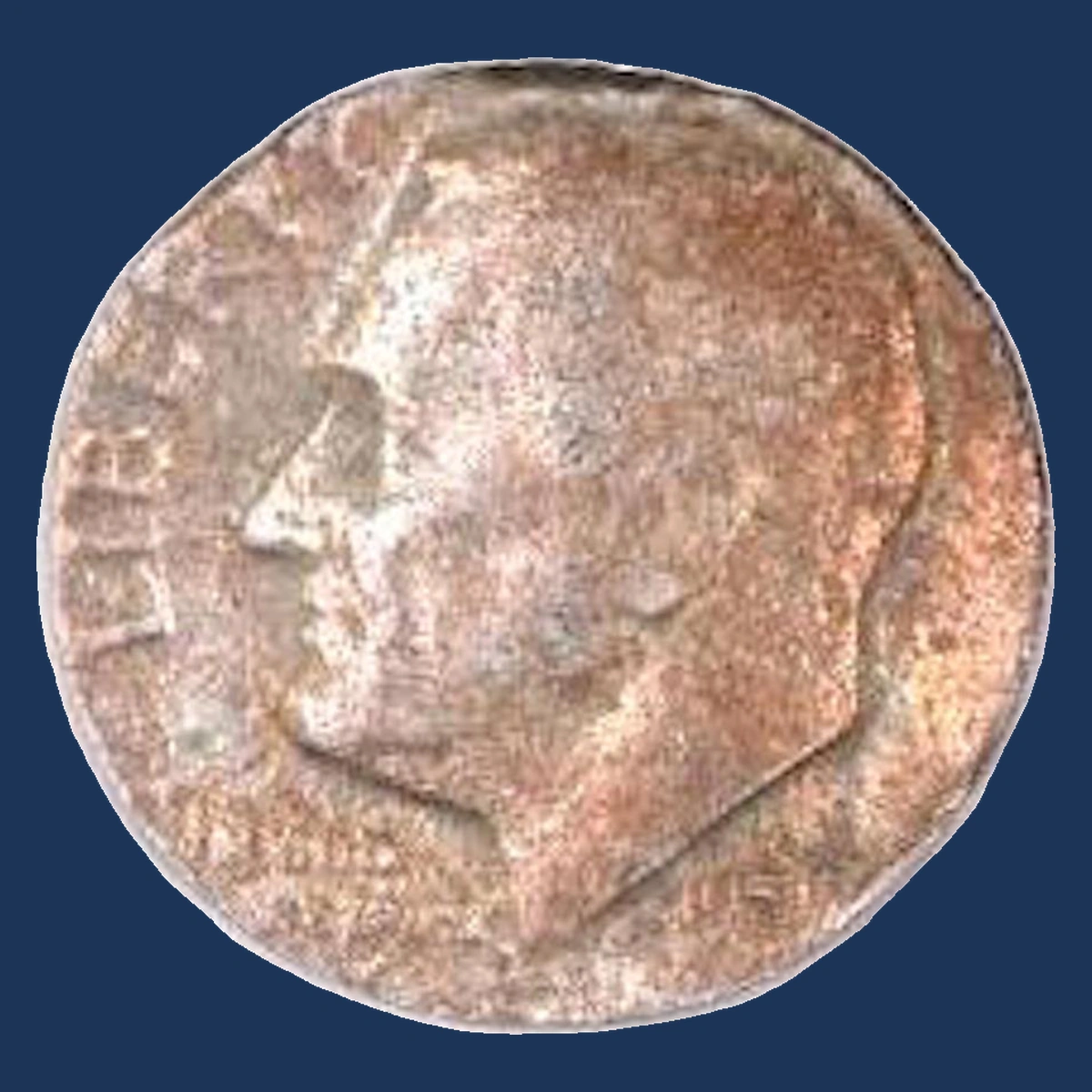
A dime can look unusually thin when its blank contains too little metal. The design may still cover the normal diameter, making the edge a useful place to compare it with another coin.
A seller listed an unworn 1959-D as a thin-blank error. The listing does not give a measured weight or thickness, so it does not establish a particular amount of missing metal.
A genuinely thin blank is a production error. A coin thinned by wear, grinding, or chemical treatment can look similar but has a different history and value.
Estimated Value
For an authenticated thin silver blank, estimate $50–$500. A clear thickness difference with strong original design is more useful than a small weight difference alone.
The estimate compares other underweight silver-dime blank errors. Measurements should agree with visible thinness in the original edge metal.
An unworn surface helps show whether the metal was thin when struck. Heavy wear, scratches across the edge, or chemical roughness can both reduce appeal and complicate the explanation of a low reading.
How to Identify
Put a normal 1959 dime beside the candidate for an edge photograph. Do not press the coins together or scrape their edges to expose fresh metal.
For a loose candidate, record weight with a calibrated scale and thickness at several points with calipers. Compare its diameter with 17.9 mm and its weight with the standard 2.50 grams.
A single low reading needs checking. Wear removes metal too, and a damaged scale can produce an apparent difference that is not in the coin.
Inspect both faces through a magnifier for grinding, rough chemical attack, or unusually flattened detail. Original edge grooves and struck surfaces must support a thin blank; the missing weight alone cannot establish when the metal was lost.
9. 1959 Roosevelt Dime Off-Center Strike
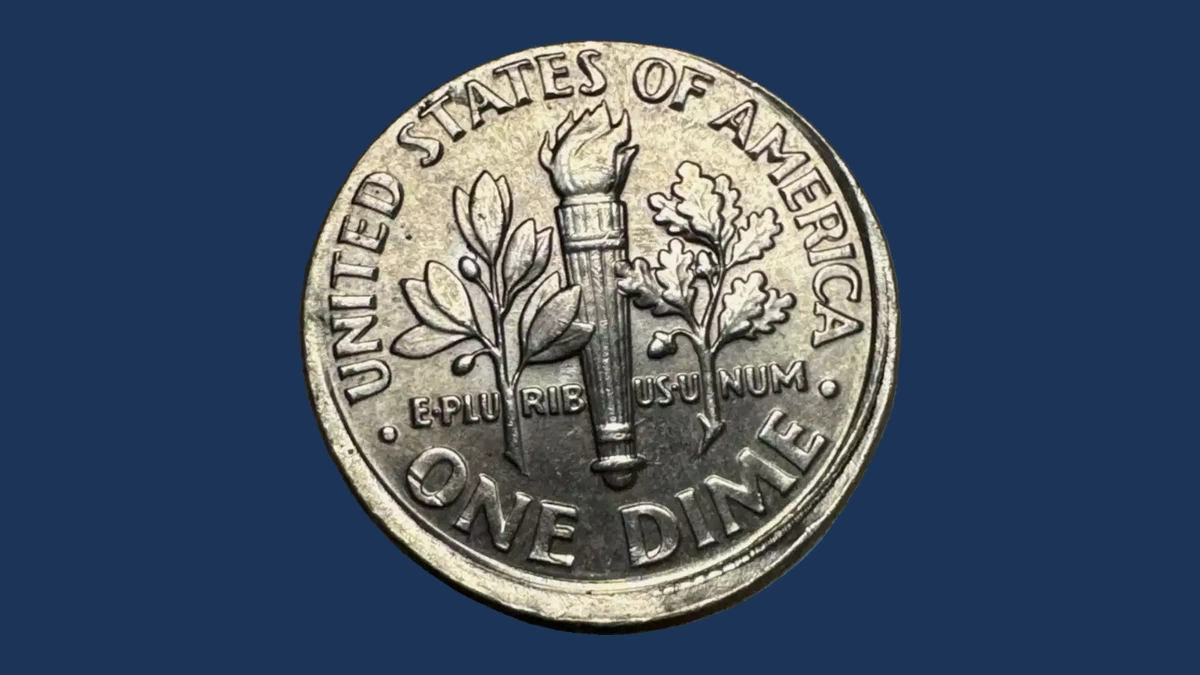
A blank that lands off to one side of the press can receive only part of the dime design. Untouched metal remains as a crescent, while detail is lost beyond the opposite side.
The same displacement should make sense on both faces. A narrow rim on just one face can instead result from a stamping tool sitting out of alignment.
A 1959 error guide reports off-center strikes without fixing a mint or percentage for a specific specimen. The actual date, blank crescent, and surviving design should therefore lead the comparison.
Estimated Value
Genuine readable-date examples have an estimated range of $100–$1,000. The shift, preservation, and arrangement of the surviving design all affect interest.
A 1964 silver dime struck 60% off center sold for $134 in December 2025. ANACS graded that different-year comparison MS65, a well-preserved unworn grade.
That sale shows why a large percentage need not bring a large price. A clear 1959 date helps establish the year, while a missing date or serious scratches can limit demand.
How to Identify
Cover the description on a seller’s listing and look at the whole coin first. Find untouched blank metal, then check what portion of the design has gone beyond the opposite edge.
Turn it over. The back should fit the same displacement; an uneven front rim with an otherwise centered back calls for another explanation.
Use a magnifier to read the complete date and inspect the border of the blank crescent. A later cut removes metal rather than preserving the original unstruck surface.
A loose complete candidate normally starts near 2.50 grams on a scale. Measure its outline with calipers against the usual 17.9 mm, then inspect surviving edge grooves where the collar ring contacted the coin.
10. 1959 Roosevelt Dime Reported Wrong Blank
A different coin’s blank can enter the dime press and receive Roosevelt’s portrait and the torch design. Its metal, size, or weight may differ from the intended silver dime blank.
The 1959 category has been reported in a year guide, but no particular foreign or domestic blank is established by that report. A copper-colored dime should not automatically be called a cent-blank error.
The normal 1959 dime is already 90% silver and weighs 2.50 grams. Silver color by itself is therefore ordinary for this year, rather than evidence of the wrong metal.
Estimated Value
For an authenticated 1959 wrong-blank dime, use a conditional estimate of $500–$3,000. The identified blank, readable design, and condition would determine the useful comparison.
A different 1973-S Proof dime on a Liberian one-cent blank sold for $1,560 in November 2020. It was a specially prepared collector strike on a known foreign blank.
That result illustrates the importance of establishing the metal and blank identity. It is not a 1959 sale or proof of a particular 1959 combination.
How to Identify
Write down what is physically different before naming another denomination. For a loose candidate, measure its weight and diameter with a scale and calipers against 2.50 grams and 17.9 mm.
Inspect both faces and the grooved edge through a 10× magnifier. A coating can change color without changing the underlying blank, while filing or corrosion can reduce weight.
The coin must show the dime design and a genuine 1959 date. Do not confuse a different denomination stamped on a dime blank with a dime stamped on the wrong blank.
Keep the surface intact for professional metal testing. Matching the composition and dimensions to a plausible blank is the useful next step; a surprising color or scale reading cannot identify that blank on its own.
Conclusion
From minor peeling around $15 to an authenticated wrong-blank error estimated as high as $3,000, the physical cause matters. A large ugly mark is not automatically more valuable than a small extra D.
Keep loose flakes in place and photograph both faces before seeking an opinion. For doubled designs, match the right issue: an ordinary dime and a Proof collector coin do not automatically share the same extra lettering.