1960 Dime Error List with Pictures

A 1960 dime with doubled lettering sold for $1,160.90 in February 2014. It was a Proof, a specially made collector coin with a mirrorlike background.
That sale involved the FS-102 variety. The 1960 dime errors below have estimated ranges of $20–$1,200, including that historical auction level.
Some show extra letters; others have missing metal or overlapping designs. Read on to learn where to look and what each feature means.
1. 1960-D Roosevelt Dime Repunched Mintmark (Estimated Up to $200)
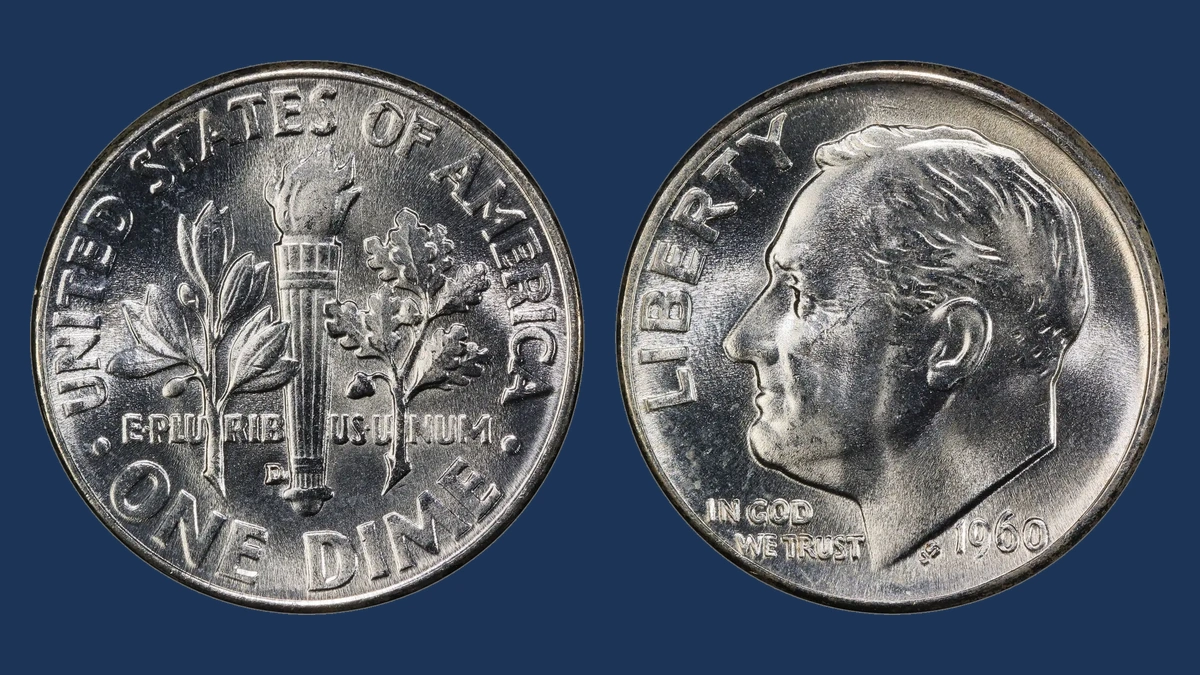
The Denver mintmark can be the smallest feature worth checking on a 1960 dime. A reported D/D variety shows traces of a second D beside the main letter.
Workers punched the mintmark into the die by hand. The die is the steel tool used to stamp the coin, so a misplaced second punch could repeat on many dimes.
This is called a repunched mintmark. The extra part should follow the shape of another D.
A thick letter alone does not qualify. Different punch positions can leave different portions of the earlier letter visible.
Estimated Value
A minor, clearly identified D/D can fit an estimated $20–$75 range with wear. Sharper, unworn examples may reach approximately $75–$200.
These estimates use similar silver Roosevelt mintmark varieties. They are not sale prices for a specific 1960-D.
Strong extra curves are easier to see than a faint mark. Scratches and heavy wear can lower the value, even when a second letter remains visible under a 10× magnifier.
How to Identify
Turn the coin over and find the D left of the lower torch. Compare it through a 10× magnifier with a normal Denver mintmark.
Try to follow the extra outline as part of another D. A small dent or flat shelf can add an edge without showing a second letter.
The extra D does not always point in the same direction. Compare its shape with a photo of the particular variety.
A normal silver dime weighs 2.50 g and measures 17.9 mm across. Use a scale and calipers when safely accessible, and inspect the edge grooves.
Return to the mintmark after those checks. A curved remnant that follows another D is the feature to find.
2. 1960 Roosevelt Dime Lamination Error (Estimated Up to $350)
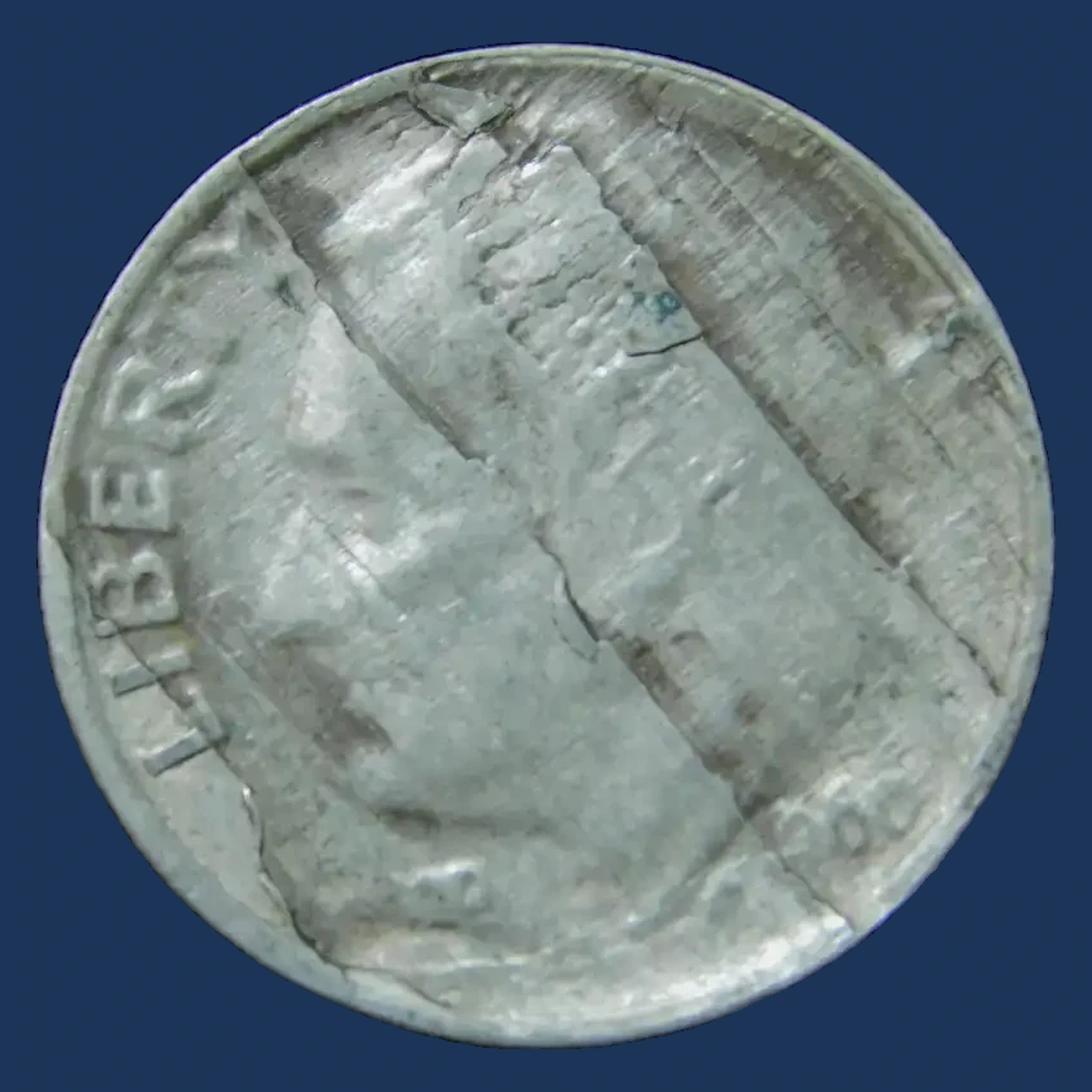
A thin flap or uneven peel can reveal a weakness inside the coin’s metal. This is called lamination, and it begins in the blank rather than the design on the die.
Heritage listed a 1960-D with peeling on its front, graded NGC MS65. This grade describes a well-preserved coin without wear.
A separate Philadelphia Proof has a peel near five o’clock on the back. Its reflective surface makes it look different from the regular Denver coin.
The two examples should be compared separately. A peel on one face does not mean the other coin has it in the same place.
Estimated Value
Brian’s Variety Coins offered the Proof with a back-side peel for $24.95. That was a dealer price, not an auction result.
Estimate $25–$150 for smaller visible laminations. Stronger examples with appealing surfaces may fit $150–$350.
A 1942 Mercury dime with major front-side lamination sold for $89 in March 2023. Its design, grade, and peel size differ, so that sale is a comparison for the 1960 coins.
How to Identify
Leave any loose flap alone. Lifting it can break off original metal.
A normal 1960 dime is 2.50 g and 17.9 mm across, with grooves around its edge. A scale and calipers help check these figures when the coin is safely accessible.
Missing metal can reduce the weight. An attached flap may leave it unchanged.
On the Proof example, examine the back near five o’clock with a 10× magnifier. The Denver coin needs a front-side comparison photo because its peel is elsewhere.
Glittering dirt, glue, and corrosion can all look rough. Look instead for a thin layer of the coin’s own metal lifting from the surface beneath it.
3. 1960 Roosevelt Dime Clipped Planchet (Estimated Up to $400)
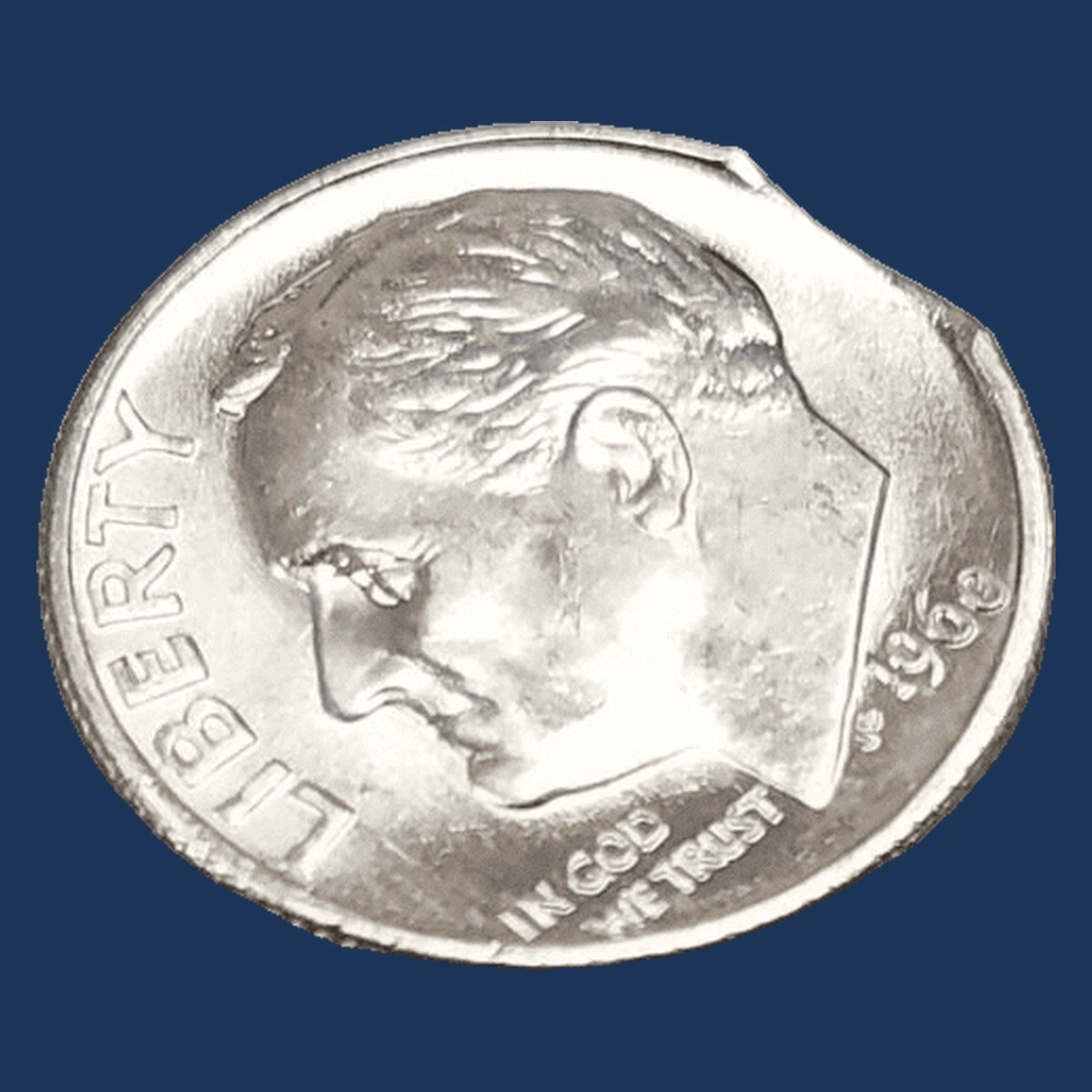
One Denver example has a curved piece missing at three o’clock. It weighs 2.2 grams and was graded NGC MS63 FB.
MS63 means unworn with noticeable marks. FB, or Full Bands, describes clearly separated bands across the torch.
The curve formed in the blank before striking, often when a cutting punch overlapped an earlier hole. A Philadelphia example has a rough missing edge instead and was graded ANACS MS63.
Both are incomplete blanks. The rough shape can come from the metal strip’s edge, so a clip need not have a smooth curve.
Estimated Value
Clipped examples have an estimated range of $50–$400, depending on condition and how clearly the missing section shows. A 1947-S ten-percent curved clip graded NGC MS66 sold for $104 in December 2024.
That offers a recent silver-Roosevelt comparison, with a different date and grade. No separate sale amount is used here for the 1960 examples.
The Philadelphia rough-edge dime appeared in a two-coin lot. A group price would not automatically be the value of that dime alone.
How to Identify
The Denver coin’s 2.2 g weight falls below the usual 2.50 g. This fits the missing metal, but a later cut would also reduce weight.
Check it with a scale when safely accessible. Use calipers across an intact span to compare with the normal 17.9 mm diameter.
Inspect the three-o’clock gap through a 10× magnifier, then look for weakness on the opposite rim. That weakness can occur when a clipped blank is made.
The Philadelphia example has a rough gap instead of a smooth arc. Inspect the remaining edge grooves on either coin.
Fresh saw marks suggest a later cut. Rounded metal flowing into the gap during striking helps show that the gap was already there.
4. 1960 Roosevelt Dime Struck on a Defective Planchet (Estimated Up to $500)
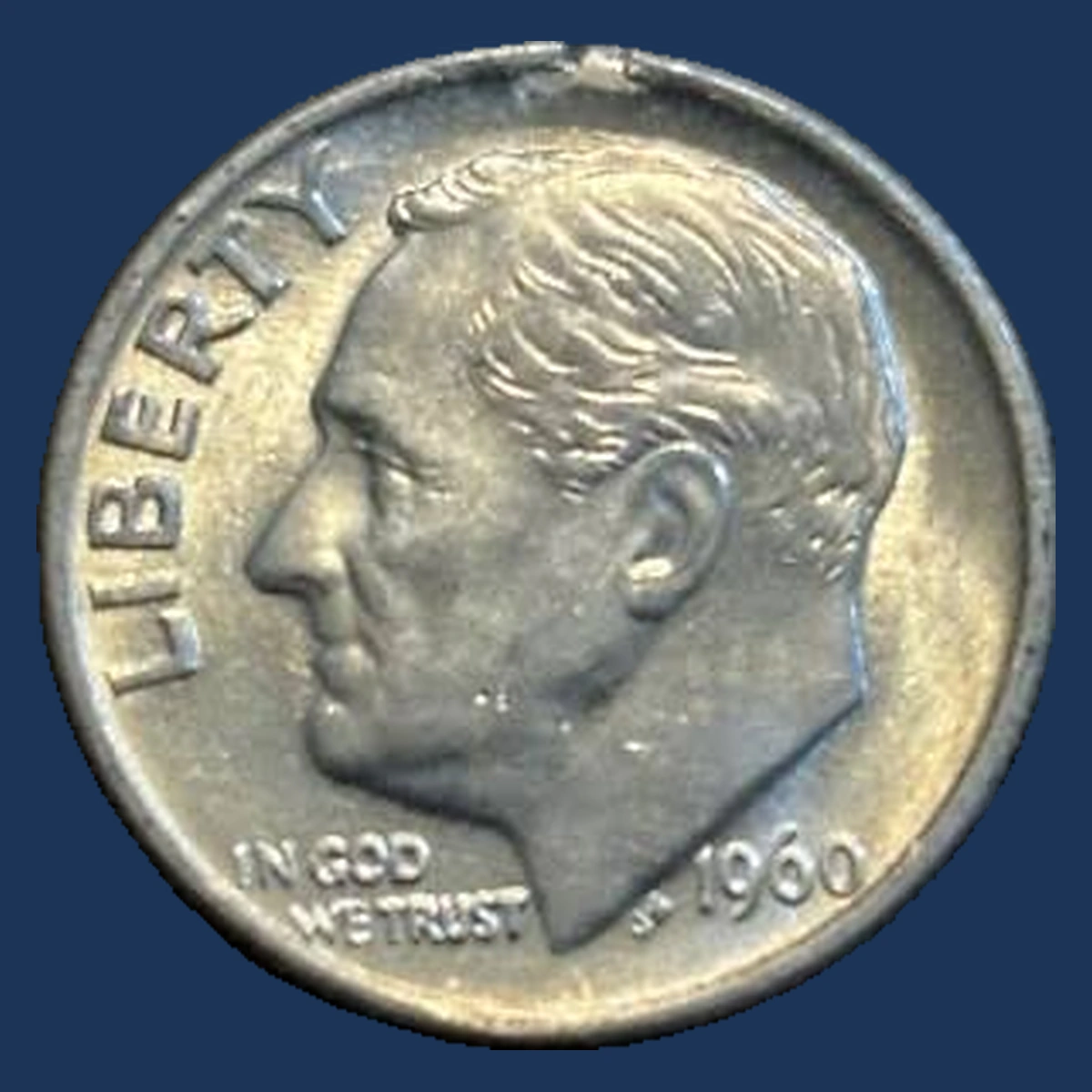
A coin can begin with a flawed metal disc even when it has no neat curved clip. A planchet is the prepared blank that goes into the coining press.
An NGC collector’s set lists a 1960 dime struck on a defective planchet, graded AU55. AU means About Uncirculated, with only light wear.
The broad description does not specify a hole or a particular thickness problem. Those features must be checked on the actual coin.
The key question is timing. A mint-made blank flaw affects the design as it is struck, while later damage cuts into an already finished coin.
Estimated Value
For a genuine visible blank flaw, estimate $75–$500, with size and condition guiding the price. The listed AU55 dime has no sale amount used here.
A different example, a 1980-P Roosevelt dime struck on a defective blank, sold for $139 in March 2023. It was graded ANACS MS62 and uses a different metal composition.
That comparison shows a general price level for a visible blank defect. It does not turn the older silver dime into the same error or grade.
How to Identify
Use a 10× magnifier and light from the side to examine the flawed area. Fresh cuts, pushed-up metal, and rough pits can point to later damage.
The normal silver dime weighs 2.50 g and measures 17.9 mm, with edge grooves. A scale and calipers can reveal missing metal or unusual thickness when the coin is safely accessible.
The AU55 listing does not specify a hole. Compare the actual coin and its grading label before giving the defect a narrower name.
Now follow the design into the damaged-looking area. A gouge that cuts across finished letters differs from letters formed around a flaw already in the blank.
5. 1960 Roosevelt Dime Proof Doubled Die Reverse (Estimated Up to $700)
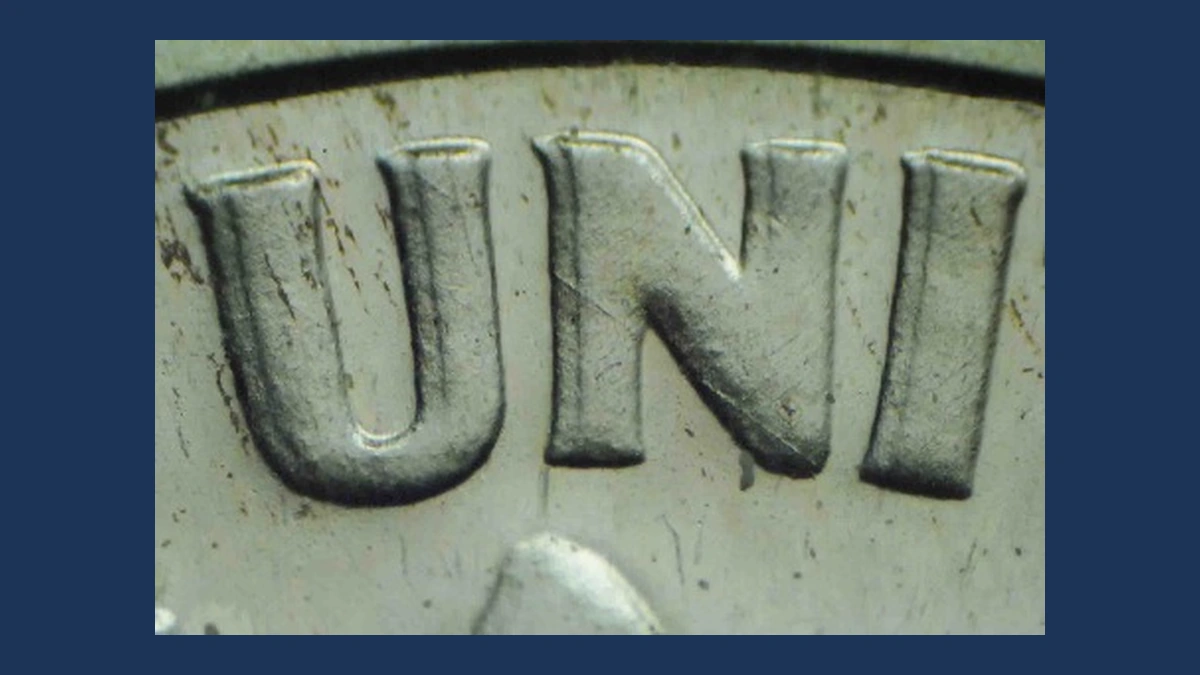
UNITED is a good place to look for doubling on the back of this Proof. Wexler’s catalog describes strong extra outlines there and on other letters, dots, and the right-hand branch.
The reverse is the side with the torch. Its repeated details came from the die before the coin was struck.
That differs from the normal repeated strikes used to make a Proof. A properly made Proof should still show one clean design.
Some 1960 Proofs have doubled details on both faces. They remain single coins, even when both sides offer something interesting to examine.
Estimated Value
A PCGS Proof-68 Cameo FS-801 sold for $533.50 in the GreatCollections archive. Its grade indicates very few flaws.
Cameo means frosted designs against a reflective background. Those qualities help explain its price.
Estimate $75–$700 from clear ordinary examples through attractive coins in excellent condition. Faint doubling and scratched surfaces reduce appeal.
Some coins also have doubled front details. Compare the whole coin instead of adding separate prices for each face.
How to Identify
Philadelphia made these Proofs without a mintmark. That absence is normal; it does not make this a missing-S error.
They share the regular silver dime’s 2.50 g weight, 17.9 mm diameter, and edge grooves. Check safely accessible coins with a scale and calipers, or use recorded measurements for sealed coins.
The mirrorlike background can create misleading reflections. Change the light angle while viewing UNITED through a 10× magnifier.
Then compare the rim dots and right-hand branch with a photo of the same variety. One bright edge is easy to mistake for doubling.
Look for extra outlines that stay in place as the light moves. Matching outlines on several of these features identify the doubled design.
6. Reported 1960 Roosevelt Dime Off-Center Strike (Estimated Up to $750)
A broad empty crescent can appear when the blank misses the center of the dies. Part of the intended design then lands beyond the metal.
This is an off-center strike. It should affect both faces, with missing design on one side of the outline and unstruck metal elsewhere.
The error is reported for 1960 regular dimes, without one fixed mint or percentage assigned here. A readable date helps keep a coin tied to the correct year.
Do not confuse a blank margin with a cut edge. Later damage can remove metal, but it cannot recreate an original missed strike.
Estimated Value
An estimated $100–$300 suits modest off-center examples with readable dates. More striking or better-preserved pieces can fit approximately $300–$750.
These estimates concern regular silver dimes, not a recorded 1960 sale. A known 1947-S fifteen-percent off-center dime shows a related shape.
A ten-percent 1934-D Mercury dime was offered at $350. That is an asking price for another design and grade; Proof errors have a separate market.
How to Identify
Keep the date in view while examining the full outline. Without a readable year, a similar Roosevelt dime cannot simply be called a 1960 example.
Turn it over and compare the shifted designs. If only one face is shifted, one stamping tool may have been out of position.
A normal blank weighs 2.50 g and measures 17.9 mm, with edge grooves. Use a scale and calipers when safely accessible, allowing for any stretching during the strike.
With a 10× magnifier, inspect where the design ends beside untouched metal. Tool marks can reveal a later cut.
For an off-center strike, look for incomplete designs on both faces beside a smooth, unstruck margin.
7. Reported 1960 Roosevelt Dime Double Strike (Estimated Up to $1,000)
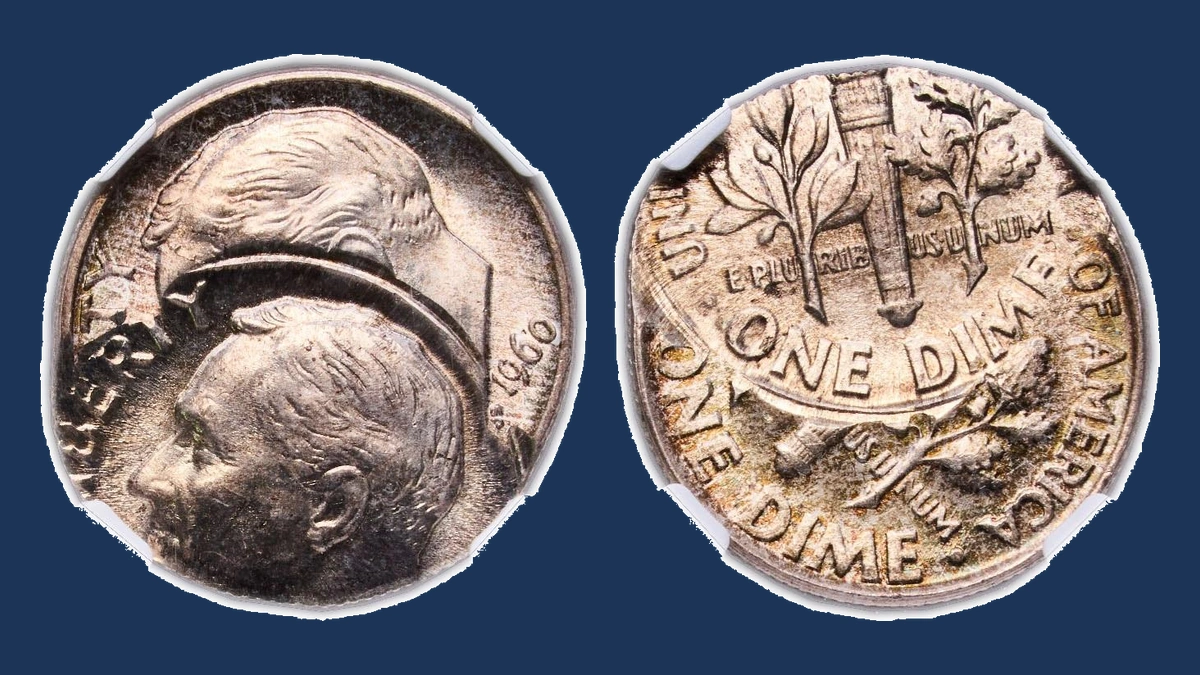
Two overlapping impressions tell a different story from doubled letters on one die. A double-struck coin remained in the press or returned for another blow.
An owner reported a 1960 dime with its second strike off center in 2025. The owner described an NGC MS65 coin bought at an auction in Spain.
The owner provided this description. The account gives no exact shift percentage, and the grading record has not been checked.
The second strike should leave a separate design in the metal. A faint extra edge on one letter does not show that sequence.
Estimated Value
A 1964-D silver Roosevelt dime with its second strike 75% off center sold for $312. Heritage sold it in March 2023, graded NGC MS64.
For a genuine 1960 double strike, estimate $200–$1,000. The other year’s sale is a comparison, not the price paid by the 1960 owner.
Clear overlapping designs and attractive surfaces support stronger prices. The second strike’s appearance matters more than the error name alone.
How to Identify
Find a second design, not just a second line. A shifted piece of portrait, lettering, or date should show where the coin received another blow.
Follow the overlapping impressions with a 10× magnifier. Pressing a coin against another after minting can leave sunken, reversed marks instead.
Check the normal silver blank’s 2.50 g weight and 17.9 mm diameter with a scale and calipers when safely accessible. Inspect the edge grooves for later damage too.
The owner described an MS65 coin, meaning well-preserved and unworn. Compare its full photographs with the grading label.
A separate second impression, crossing the first design, is the visible feature that needs to be clear.
8. 1960 Roosevelt Dime Proof Doubled Die Obverse (Historical Auction Level Up to $1,200)
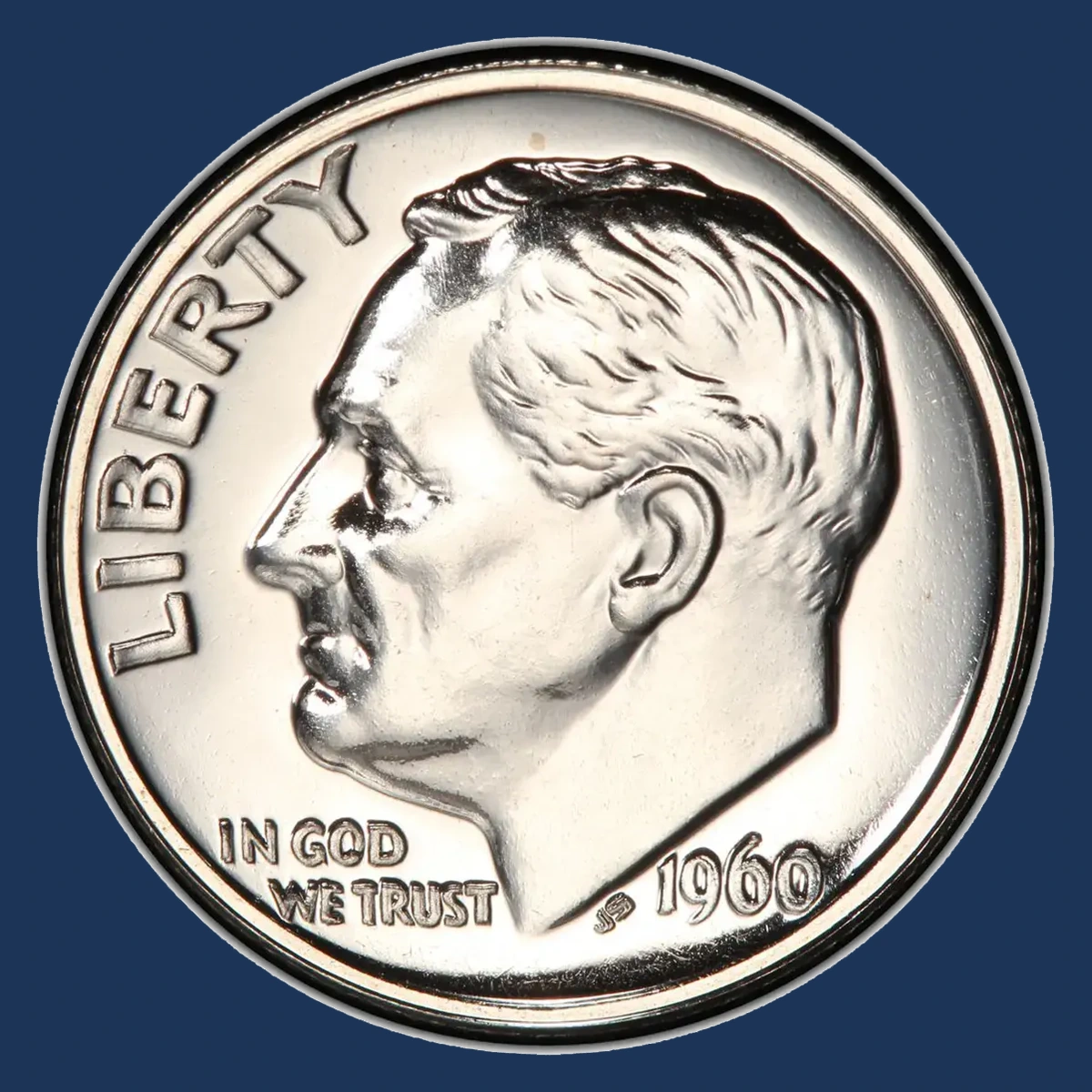
The 60 in the date gives a useful starting point on the FS-102 Proof dime. Extra raised outlines also appear in the motto, LIBERTY, and the designer’s JS initials.
FS-102 is a catalog name for this doubled die. Obverse means the front, where Roosevelt’s portrait appears.
The pattern was already doubled on the die. Each coin struck from that tool could receive the same extra outlines without an accidental second strike.
GreatCollections listed a PCGS Proof-67 example in 2026. Its shiny finish alone is not the error; the matching repeated details distinguish it from an ordinary Proof.
Estimated Value
PCGS records $1,160.90 for a Proof-65 FS-102 sold in February 2014. Treat approximately $1,000–$1,200 as that historical auction level, not the usual price today.
A practical estimated range of $75–$350 covers more ordinary clear examples. Grade, surfaces, and demand can change the result.
The 2026 Proof-67 listing has no public final price used here. Its $40 starting bid was not a sale, and a higher grade does not automatically repeat the old record.
How to Identify
Begin with a clear FS-102 photo beside the coin. Enlarge the 60, then compare the motto, LIBERTY, and JS with a 10× magnifier.
A doubled camera image shifts everything, including scratches. Genuine die doubling affects particular design details instead.
Check the silver dime’s normal 2.50 g weight and 17.9 mm diameter with a scale and calipers when safely accessible. Inspect the edge grooves as well.
Proof surfaces reflect strongly, so move the light before deciding a bright line is raised metal. The normal repeated strikes used for Proofs do not create this doubled pattern.
The extra outlines around the 60 and nearby lettering should match the FS-102 photo in shape and position.
Conclusion
A second letter and a second strike can look similar at first. Check whether you see a small repeated detail or an overlapping design.
Estimated values span $20 for a minor repunched mintmark to about $1,200 at the historical doubled-die auction level. Compare Proofs with Proofs and regular coins with regular coins.
Each price concerns a whole dime. Two errors on one coin do not mean adding two price ranges.