1966 Dime Error List with Pictures

Roosevelt’s cheek can hide a tiny raised “5” on a 1966 Special Mint Set collector coin. PCGS records a $1,500 October 2023 eBay result for that variety.
This 1966 dime error list also covers broken tools, missing layers, and misplaced strikes. Estimated values run from $5–$20,000, with the highest range applying only if a silver-blank candidate receives expert confirmation.
Read on to compare the actual shapes, surfaces, and weights behind each description.
1. 1966 Roosevelt Dime Struck Through Grease or Other Material
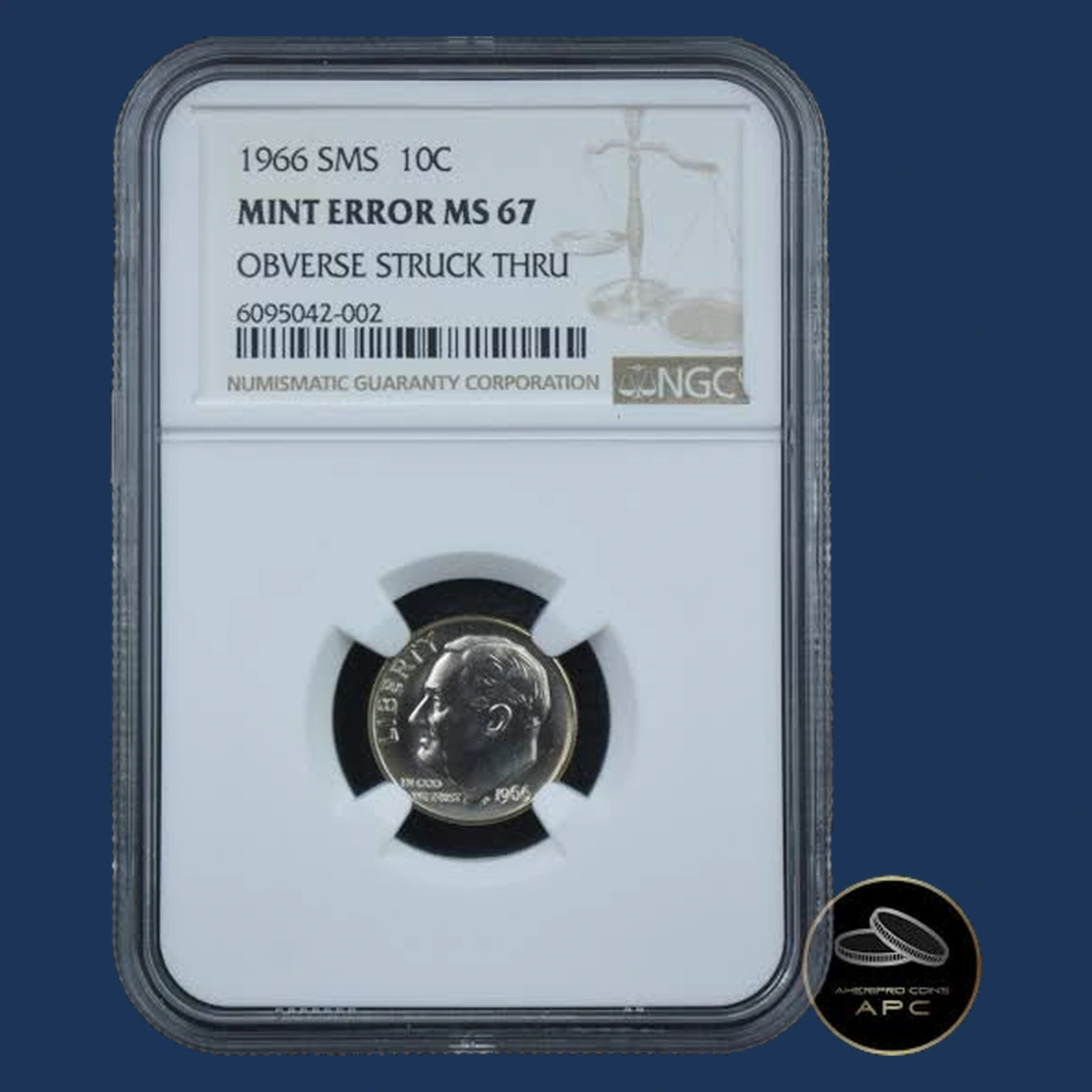
A missing letter can result from something blocking the stamping tool rather than from metal disappearing afterward. Grease can fill a small part of the tool and stop that detail from forming.
Other material caught against the blank can leave a hollow or a sharply bounded weak area. Collectors call these strike-through errors.
A seller reports a grease-struck 1966 dime, and year guides also list strike-throughs with the material unspecified. The descriptions do not establish a particular missing word or prove that wire, cloth, or wood caused any given 1966 mark.
Estimated Value
Small grease-filled details generally fit an estimated $5–$40 range, while a clear impression from other material can reach $20–$150. These are comparisons with similar clad-dime strike-throughs.
A faint missing letter has less visual impact than a distinct hollow beside sharp lettering. Wear and damage can imitate weak striking, so the upper estimate depends on an original Mint-made impression, readable date, and enough untouched surface to explain what happened.
How to Identify
Turn the dime over before studying the weak patch closely. Sharp detail on one face can help show that the coin was struck, even though part of the opposite design was blocked.
A scale and calipers can check a loose coin against 2.268 g and 17.91 mm. Those normal readings are compatible with a strike-through because the blocking material need not remove any metal.
Use a 10× magnifier to compare the affected patch with nearby sheltered letters. Wear or polishing can weaken many details together, while a blocker can interrupt just one area; an undisturbed boundary beside original sharp detail is the evidence worth examining.
2. 1966 Roosevelt Dime Broadstrike
A broadstrike spreads the blank sideways instead of keeping it inside its intended outline. The collar, a metal ring surrounding the blank, failed to contain the strike normally.
A complete design can sit inside a broad, uneven border. Some edge grooves may also be weak or absent where the collar did not engage.
The documented 1966 example was cataloged in NGC MS65, an unworn grade with relatively few marks. Its expanded blank is the feature to examine, rather than treating every thin rim or smooth edge on a worn dime as the same error.
Estimated Value
A year guide links the NGC MS65 example to a reported $42 sale in 2011. Estimate $25–$200 for comparable broadstrikes with readable dates.
The price depends on the coin’s appearance as well as its grade. An obvious expanded border and clean surfaces make the error easier to show.
A coin widened by later squeezing or hammering needs a different explanation. It should not receive a Mint-error premium for that damage.
How to Identify
Look along the edge grooves with a 10× magnifier. A broadstrike may have weak or missing grooves where the surrounding collar failed to hold the blank.
Next check whether the broad border contains crushed letters or fresh tool marks. Later squeezing can enlarge a coin too.
Calipers should compare its whole outline with 17.91 mm. A scale can test whether a loose example stays near 2.268 g despite the extra width.
Inspect the outer lettering on both faces after those checks. All of the intended design should remain on the metal.
The useful match is a complete design inside original spread metal, supported by the edge’s signs of incomplete collar contact.
3. 1966 Roosevelt Dime Local Peeling or Separation
A small flap can lift while most of the coin’s outer surface remains in place. A weak bond or flaw in the blank allows part of its metal to separate.
Collectors often call this lamination. The opening may stay attached, or a small piece may fall away and leave a rough patch.
Year reports list local peeling for 1966 without identifying one fixed location. That local flaw should be examined separately from a whole missing face, a fully detached outer layer, or an edge split that opens like a clamshell.
Estimated Value
Estimate $15–$200 for genuine local peeling on a 1966 dime. This compares modest clad-dime surface separations, with small worn flaws near the lower end.
An attached strip and readable design can make the cause easier to show than a shallow rough patch. A larger opening does not automatically mean a higher price, especially if it removes the date or if handling has broken away metal that was originally still attached.
How to Identify
Photograph the opening without moving its flap. If the piece is loose enough to weigh safely, a scale can compare it with 2.268 g; attached metal may leave the reading normal.
Use a 10× magnifier to follow the separation through the outer metal. A natural layered opening differs from a gouge that cuts through finished lettering or piles up metal beside it.
Check an intact span with calipers against 17.91 mm, without touching the lifted section. Change the lamp angle to see the point where the thin layer rejoins the coin; that connection and the natural separation boundary matter more than an isolated brown patch.
4. 1966 Roosevelt Dime SMS Die Clash
Faint outlines near Roosevelt’s face can come from the opposite design. A die clash happens when the two stamping tools meet without a blank between them and mark each other.
Those tool marks can appear on coins struck afterward. They are not a second whole coin design pressed onto the surface.
A public discussion of a 1966 SMS dime reports traces around the brow, nose, and chin, with other marks near the reverse branches. SMS means Special Mint Set, a collector issue; the reported coin still needs comparison with the actual opposing design.
Estimated Value
For a properly identified SMS clash, use an estimated $25–$250 range. The comparison is with modern collector dimes showing clear opposing-design traces, not a completed sale of the discussed coin.
Visibility is important: several understandable outlines can draw more interest than one faint line. Original collector surfaces also matter, while scratches, polishing lines, or marks that cannot be matched to the opposite design should not be priced as a clash.
How to Identify
Choose one reported outline near the brow, nose, or chin and compare it with the reverse design. A 10× magnifier and photographs of both faces help track its shape.
Mirror the reverse photograph for comparison rather than assuming every line belongs to a branch. The location must also fit the way the two tools face each other.
SMS dimes share the 2.268 g and 17.91 mm standard with ordinary 1966 issues. A scale and calipers check loose coins, but those readings do not identify the collector finish.
Look for additional traces that support the first match. Several correctly placed parts of the opposing design offer better evidence than a single unexplained scratch.
5. 1966 Roosevelt Dime Off-Center Strike
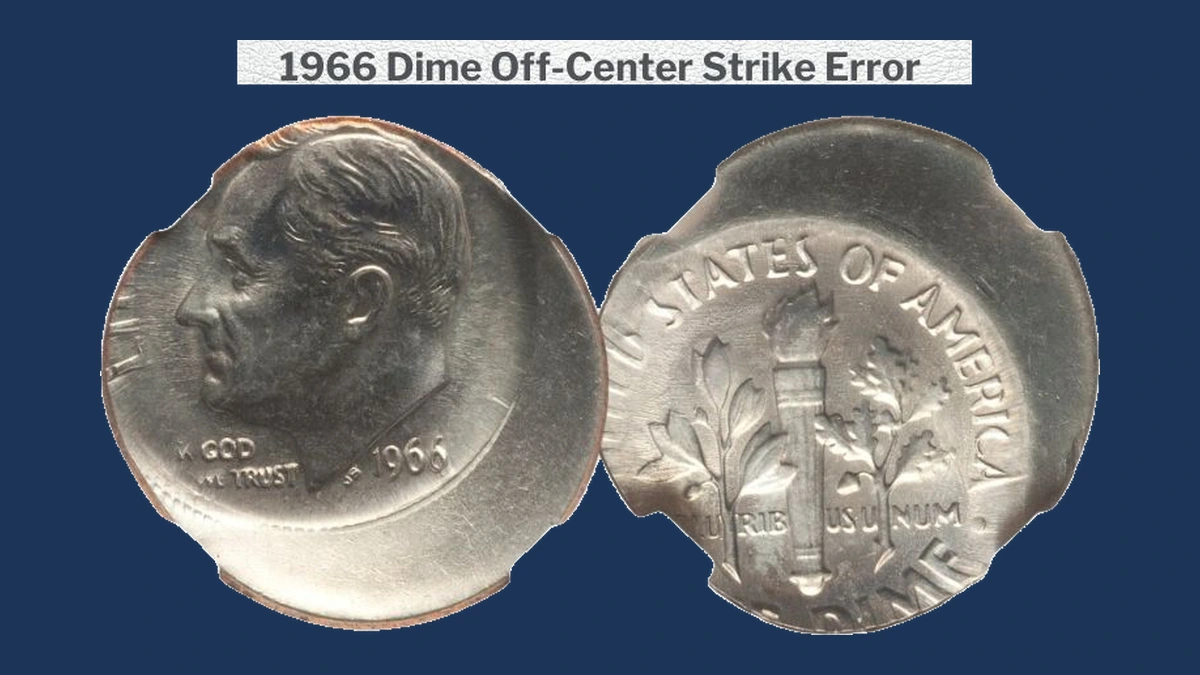
Part of the design can miss the metal when a blank enters the press off-center. The remaining surface carries a displaced image beside a crescent that received no design.
The 1966 examples include a 35% off-center NGC MS64 dime. Separate records describe a 25% example in MS65 and a 50% example in MS63.
These are different coins with different amounts of displacement. Their percentages should not be combined into one description, and a shift on only one face can instead reflect a misaligned tool rather than a misplaced blank.
Estimated Value
A dated 1966 off-center dime fits an estimated $35–$300 range. A year guide reports $104 for the separate 50% example in 2020, providing one comparison within the group.
A complete date helps a collector identify the year even when much of the design misses the blank. Attractive original surfaces also count, so the largest percentage is not automatically the most valuable coin if its remaining date or design is hard to read.
How to Identify
Choose the record that matches the coin in front of you: 35%, 25%, and 50% describe separate 1966 examples. Do not combine one coin’s blank area with another’s grade or position.
With a 10× magnifier, examine where the surviving design reaches the edge and where it meets unstruck metal. Check enough of the date to identify 1966.
A scale may still show nearly 2.268 g because the blank need not lose metal. Record the outline with calipers against 17.91 mm, without squeezing an irregular edge.
Turn the dime over to compare the reverse’s displacement. Both designs must have missed part of the same blank; a narrow rim on one face alone is not an off-center strike.
6. 1966 Roosevelt Dime Incomplete Blank-Cutting Mark
A curved cutting mark can survive even when the metal inside it has not fallen away. The blank-cutting punch started an overlapping cut but did not complete the separation.
This produces an incomplete punched blank. Unlike an ordinary clip, the coin may still retain the metal that the curve appears to outline.
A 1966 example from the Fred Weinberg collection was graded PCGS AU58, showing only slight wear. Its surviving punch trace needs to be examined as part of blank preparation, rather than described as a missing chunk or a later decorative scratch.
Estimated Value
The PCGS AU58 example sold for $139 in July 2022. Estimate $75–$350 for comparable incomplete-punch errors with clear original traces.
The appeal lies in seeing a cutting step that stopped before the metal separated. A shallow or worn line can be difficult to distinguish from damage.
A clearly formed curve and undisturbed surrounding detail make the process easier to recognize. They also help explain the error to another collector.
How to Identify
Follow the curve across the metal with a 10× magnifier. Note whether metal remains on both sides of the trace, rather than calling it a clip because the line looks circular.
Use side lighting to inspect the line’s walls and its meeting points with the coin’s edge. Later carving may cross already-struck details sharply or leave fresh burrs.
A scale can compare a loose example with 2.268 g, and calipers can check the 17.91 mm outline. Metal remaining inside an unfinished cut can leave the weight near normal; the evidence to match is an original punch trace with the outlined metal still present.
7. 1966 Roosevelt Dime Clamshell Separation
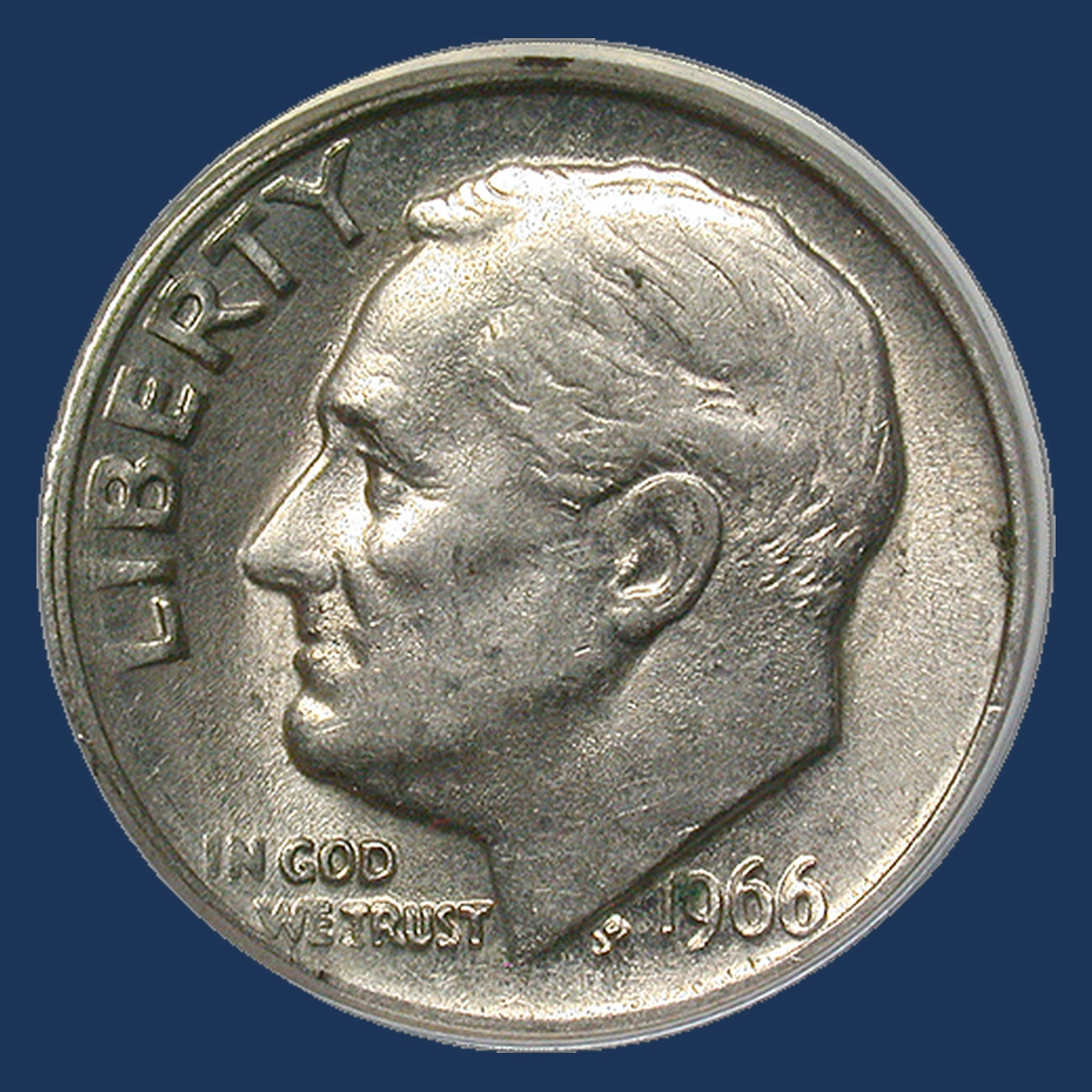
A separation at the edge can open while one end remains attached. The result resembles a partly opened shell, which gives a clamshell error its name.
This is more than a small surface flake. The opening follows a layer within the blank, while a surviving connection keeps the separated portions together.
A dealer lists a 1966 example graded ANACS AU50, indicating light circulation wear. It is a different object from the detached 0.38 g front layer described elsewhere here, so an open edge should not be mistaken for a fully separated thin piece.
Estimated Value
The ANACS AU50 dime carried a $65 asking price at Northeast Numismatics. Use an estimated $50–$350 range for comparable clamshell errors.
That listing is an offer to sell, not a completed transaction. The opening’s size, its surviving connection, and the coin’s condition all affect appeal.
Forcing the layers apart can destroy that connection. It is the feature that makes a clamshell different from a completely loose fragment.
How to Identify
Protect the hinge. Never insert a blade or bend the opening to check how far it extends.
A 10× magnifier and light from the side can show the separation between layers. Follow it only as far as the visible opening allows.
If no metal has detached, a scale may still read near the normal 2.268 g. Calipers can compare intact areas with 17.91 mm, taking care not to compress the open section.
Inspect for pry marks, fresh bending, or a flap cut into the surface. Those later changes can imitate a natural opening.
A true clamshell retains a metal connection at the end of the split, which distinguishes it from two completely separate pieces.
8. 1966 Roosevelt Dime Strike Through a Die Cap
A coin stuck against a tool can cover it during later strikes. The next blank receives a softened image through that metal.
The stuck coin is the cap; the coin struck through it is a different object. A blurred face on the receiver does not mean that it grew the tall sides of the cap itself.
A 1966 receiver appears in an auction with a PCGS AU58 grade, meaning slight wear. Its blocked design needs to be compared with a cap-interfered strike.
The receiver is not a tall-walled cap body. Its wear must be distinguished from the original soft strike.
Estimated Value
Estimate $60–$400 for an identified 1966 cap-struck receiver with readable date detail. This comparison uses similar clad-dime strikes through a metal cap rather than a price for the cap itself.
A broad area of softened design can make the interference easy to see, but the remaining image must still explain the error. Wear, polishing, or a generally weak strike can also blur a coin and should not receive the same value without a proper examination.
How to Identify
Compare the soft face with the opposite face before deciding why the design is weak. A cap can block one tool while the other continues to strike more directly.
Examine the boundary and surviving design with a 10× magnifier. Ordinary wear usually affects exposed high points first, rather than producing the same broad blocking pattern.
Use a scale and calipers on loose coins against 2.268 g and 17.91 mm. A cap-struck receiver does not require a loss of blank metal.
The cataloged AU58 coin has some wear, so separate worn detail from the striking effect. Look for design softened by a covering layer, not merely a shallow portrait or a raised rim.
9. 1966 Roosevelt Dime Rolled-Thick Blank
A dime can look almost normal from above while carrying too much metal. If the strip was rolled thicker than intended, a blank cut from it can produce an overweight coin.
The recorded 1966 PCGS AU58 example weighs 3 g. Another 3 g example is reported in MS64, an unworn grade allowing some marks.
The extra weight belongs to the blank, not to a missing or doubled design. These records identify thick stock without proving a foreign blank or a blank intended for another denomination, so thickness alone should not be used to name a different coin.
Estimated Value
The PCGS AU58 3 g dime sold for $30 in January 2014. Estimate $30–$450 for identified rolled-thick examples with different condition and visual appeal.
A precise weight record helps show why a fairly ordinary-looking dime is unusual. Added plating, solder, or a second piece attached later can also increase weight, so buyers need an originally struck thick blank rather than simply the heaviest reading on a scale.
How to Identify
Weigh a loose coin accurately before studying small design details. The documented 3 g examples are noticeably above the normal 2.268 g standard.
Use calipers to compare several edge points, not just a high spot on the rim. Record the diameter against 17.91 mm as a separate measurement.
Examine both surfaces and the edge with a 10× magnifier for a join, solder, or added coating. These can create extra weight after minting.
Keep sealed examples in their holders and use their recorded weights. Consistent extra blank thickness together with excess weight supports the error, while identifying the exact source stock requires evidence beyond the scale reading.
10. 1966 Roosevelt Dime Doubled Die on the Front or Back
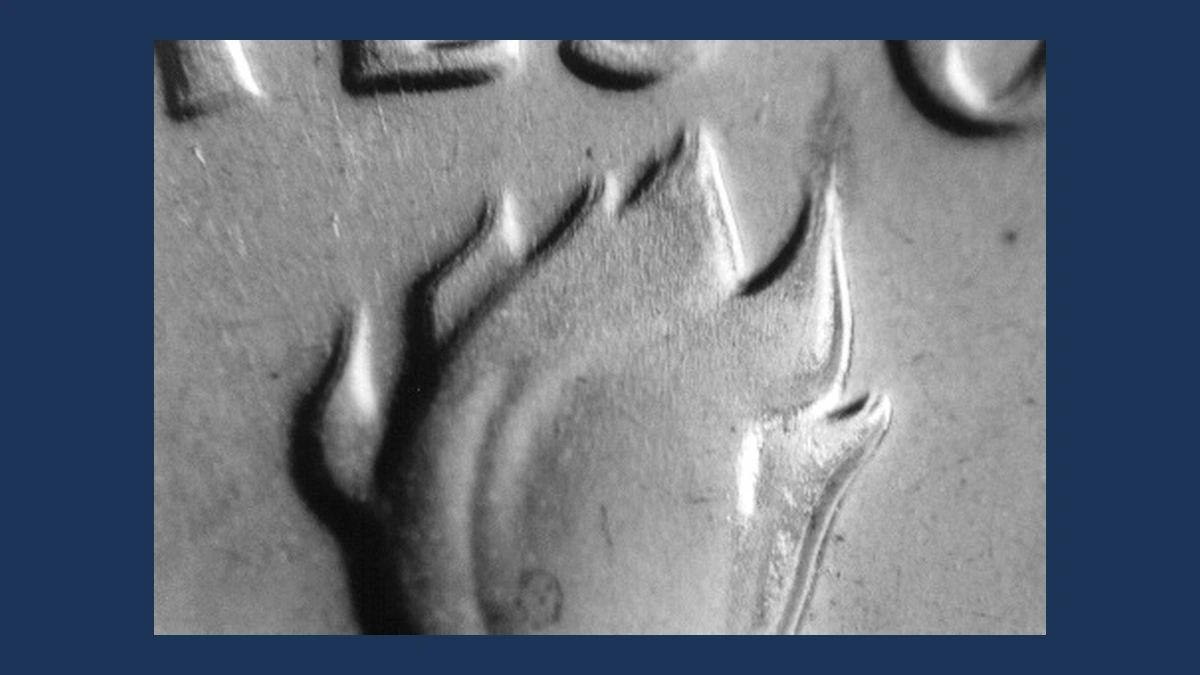
Extra raised edges can be built into a die before it strikes a coin. A doubled die repeats those extra details without requiring the coin to receive another blow.
Front doubling is reported around the date and lettering for 1966, without a settled catalog number in the year lists. SMS reverse examples have more specific patterns.
One reverse pattern has slight separation in lettering and repeated flame tips. Another shows thicker lettering, upper leaves, and flame detail, so a matched photograph matters more than assuming that every broad letter belongs to the same doubled die.
Estimated Value
For identified examples, estimate $20–$500, with small worn features below clear, attractive SMS varieties. This compares modest Roosevelt dime doubled dies rather than famous high-value doubled-date cents.
Separated outlines are easier to demonstrate than general thickness, but the thickened reverse pattern also needs its own proper match. Surface quality and a readable date support value; a flat shelf produced by movement during striking usually adds little to the coin’s ordinary worth.
How to Identify
Pick the face and pattern before comparing close-ups. A front year-list claim cannot establish one of the cataloged SMS reverse varieties.
Under a 10× magnifier, compare the reverse lettering, flame tips, and upper branches with the illustrated reverse pattern. Look for actual separated edges on the first pattern rather than treating general thickness as the same feature.
SMS and ordinary dimes share a 2.268 g, 17.91 mm standard, which a scale and calipers can check on loose coins. Neither normally has a mintmark; match several extra design details to the same reference coin, distinguishing rounded doubling from flat, lowered strike shelves.
11. 1966 Roosevelt Dime Curved, Straight, or Multiple Clipped Blank
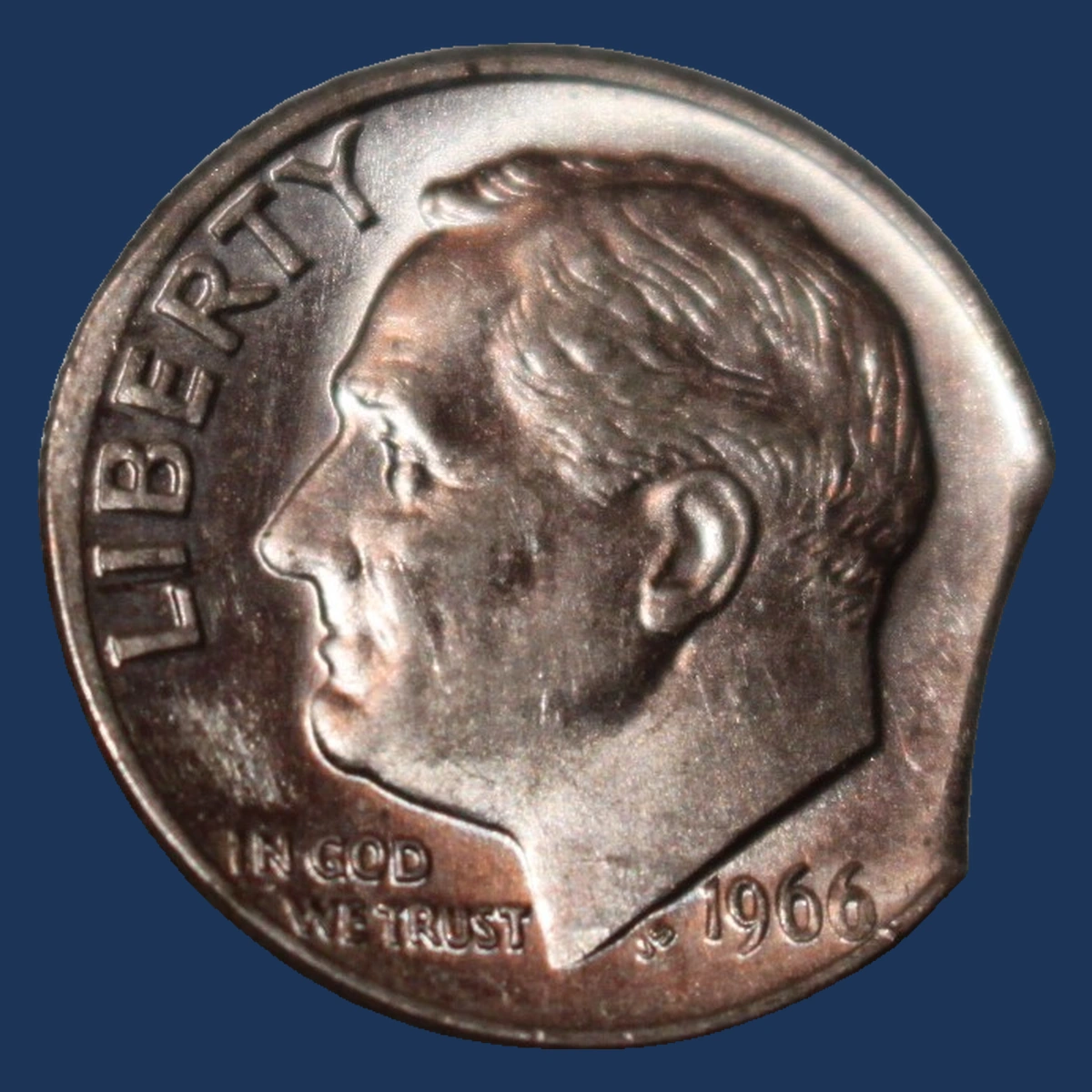
A missing part of the outline begins during blank cutting rather than during the design strike. Overlapping an earlier hole can produce a curved gap, while the strip edge can leave a straight one.
1966 records include ordinary curved and straight clips, double clips, and a reported lens-shaped remaining blank. These shapes need their own examination.
An SMS example has a curved clip near 1 o’clock and an NGC MS67 grade. Its collector finish is separate from the ordinary examples, and a two-gap coin does not automatically share either gap’s size with another specimen.
Estimated Value
Ordinary 1966 clips fit an estimated $15–$200, with distinct multiple or lens-shaped examples reaching $75–$500. An identified SMS clip can be estimated at $100–$500, depending on preservation.
A 2021 group containing the MS61 straight-clip dime sold for $35, but included two other coins. That total cannot be assigned to the 1966 piece alone; each gap’s size, remaining date, surface quality, and original shape affect an individual coin’s value.
How to Identify
For the SMS example, compare the curved gap near 1 o’clock and retain its collector-issue identity. A photograph of an ordinary clipped dime cannot establish that finish.
With a 10× magnifier, inspect the ends of every gap for metal flowing toward the missing area. Multiple clips need separate checks, and a lens-shaped outline needs more than a rounded appearance.
A scale should record reduced weight against 2.268 g, while calipers compare intact spans with 17.91 mm. The three-coin auction’s other weights do not belong to the 1966 straight clip.
Look for cut grooves or fresh burrs along the wall. Natural strike-related transitions at each gap support an original clipped blank.
12. 1966 Roosevelt Dime Missing Front Layer or Detached Outer Piece
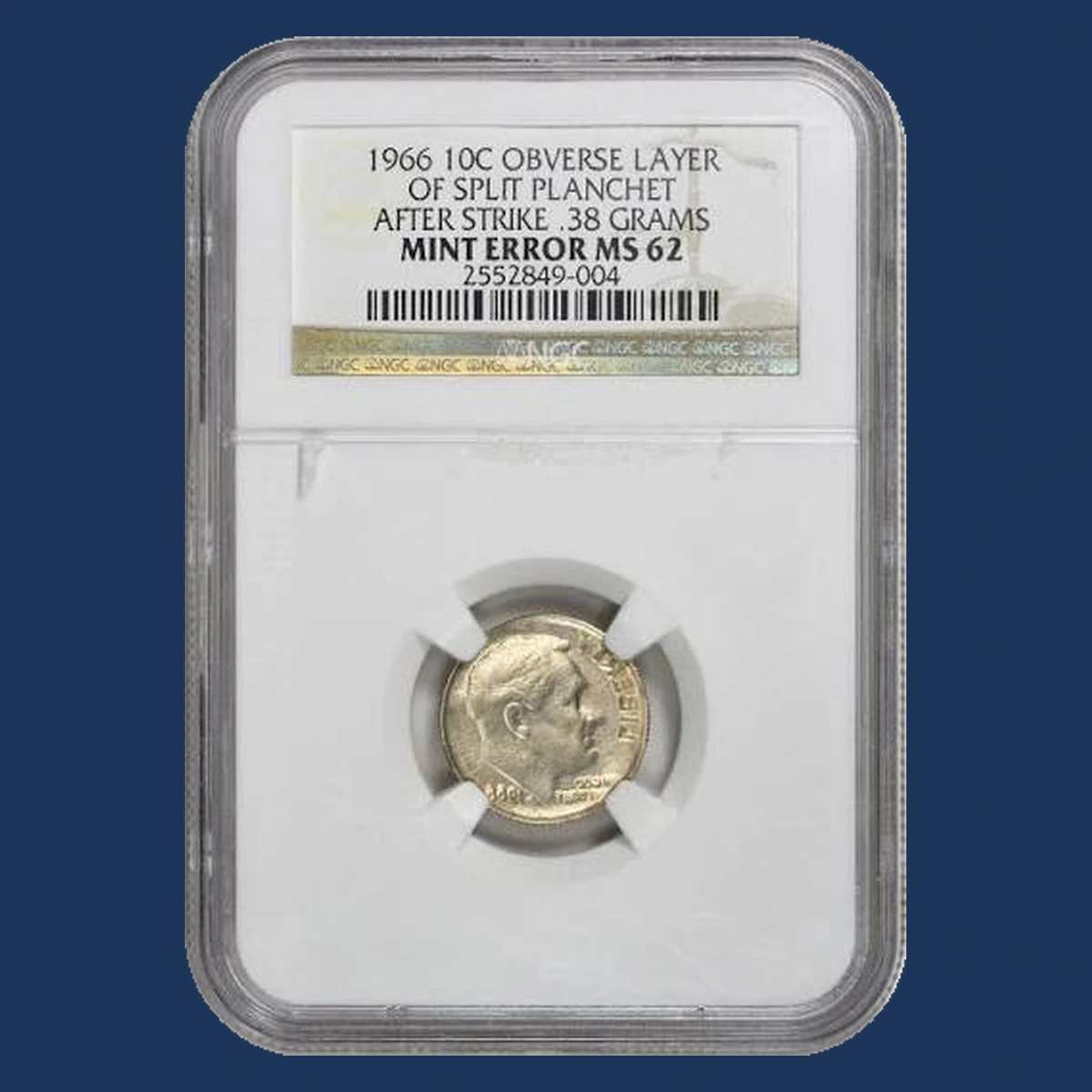
A missing layer can leave the copper-centered body of the dime behind. If the layer separates after striking, the loose thin piece can also survive as a different collectible object.
One NGC MS62 body lost its front layer after striking and weighs 1.8 g. A separate NGC MS63 coin was struck after that layer was already missing, and weighs 1.9 g.
The 0.38 g NGC MS62 example is the detached front layer itself. It is not another lightweight copper-centered body, and these separate records do not establish that any two pieces originally fitted together.
Estimated Value
The 1.8 g body sold for $79 in December 2020; the separate 1.9 g coin brought $51.75 in March 2004. Estimate $50–$400 for comparable missing-layer bodies.
For an identified detached front layer, estimate $75–$600. Its complete date, preserved outer design, and undamaged inner surface help explain what it is.
The 0.38 g piece should not be priced as a complete matching pair. Only one detached layer is present in that auction record.
How to Identify
Decide which object you have before interpreting its weight. A copper-centered body and a pale, extremely thin outer layer are different surviving parts of a dime.
Use a scale to record the individual piece. The documented readings are 1.8 g, 1.9 g, and 0.38 g, compared with a complete clad dime’s 2.268 g.
Inspect both faces through a 10× magnifier. Metal exposed before striking can receive direct design detail, while a layer detached afterward exposes an inner separation surface.
Calipers can compare intact outlines with 17.91 mm without bending a thin piece. Keep graded examples sealed.
For the loose front layer, identify Roosevelt and the date on its outside, then examine the opposite face as its interior surface.
13. 1966 Roosevelt Dime Major Die Break or Raised Crack
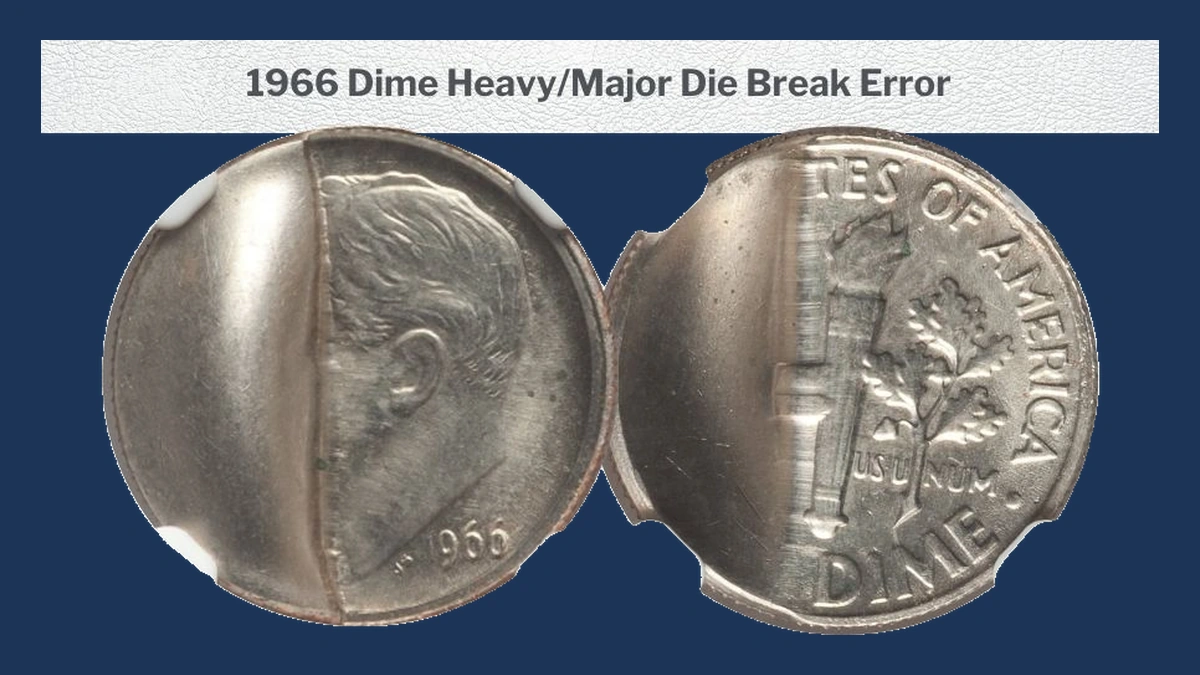
A raised mass can swallow part of the portrait when a piece breaks away from the stamping tool. Metal fills the empty space and leaves a lump connected to the rim, called a cud.
The 1966 catalog shows breaks near the left edge, above the head toward the upper right, and around the lower-right rim. The rim-only example does not cover a large part of the portrait.
A separate auction records an NGC MS66 dime with a major front break. Year reports also include narrow raised cracks, representing smaller openings in the tool.
Estimated Value
The NGC MS66 major-break dime sold for $384 in July 2021. Estimate $5–$50 for small raised cracks and $40–$650 for stronger rim breaks.
MS66 means an unworn coin with few marks. A large, clear break that leaves the year readable can be especially appealing.
The auction result belongs to that individual coin. It should not be assigned automatically to each cataloged break or to a tiny line near the edge.
How to Identify
Match the raised area’s position with a photograph from the 1966 break catalog. Left-side, upper-right, and lower-right rim breaks are different shapes.
A 10× magnifier can show whether a large lump meets the rim and replaces the missing design. For a thin crack, change the light angle to confirm that the line rises above the surface.
Check a loose coin with a scale and calipers against 2.268 g and 17.91 mm. Tool breaks add raised shapes by moving the blank’s metal, rather than attaching another substance.
Look for glue, solder, or scraping at a suspicious lump. A natural rim connection and the exact missing-design boundary provide the useful match.
14. 1966 Roosevelt Dime Repeated Strike, Sometimes with a Blocked Face
A second blow can add another set of details after the coin moves away from the center. One 1966 PCGS MS63 example has a second strike 80% off-center.
Another cataloged coin first spread in a broadstrike, then received a second blow 90% off-center. Its front was blocked during that later strike, leaving a one-sided effect in the affected area.
These are separate examples of repeated striking. The second coin also has scratches, which are later damage; neither its blocked face nor its 90% position belongs automatically to the PCGS MS63 example.
Estimated Value
A year guide reports $360 in 2022 for the PCGS MS63 dime with an 80% second strike. Estimate $150–$750 across clearly identified repeated-strike examples.
The combined broadstrike and blocked-face coin needs its own condition assessment, including its scratches. Two distinct design impressions can be easier to display than a small later edge mark.
Their overlap must show an actual striking sequence. Damage that merely resembles doubled detail cannot justify the same error value.
How to Identify
Trace the first design before following the smaller later impression. A 10× magnifier should show where the second blow crosses, flattens, or replaces earlier detail.
For the PCGS example, look for the recorded 80% second-strike displacement. Do not add a blocked front merely because the other 1966 coin has that feature.
On the separate 90% example, compare the enlarged first-strike outline with the later area whose front was obstructed. Examine its scratches as damage outside that sequence.
A scale and calipers can compare a loose coin with 2.268 g and 17.91 mm, allowing for spread. Distinct overlapping strike details, rather than the number of scratches or raised edges, establish repeated blows.
15. 1966 Roosevelt Dime SMS “5 on Cheek” Variety
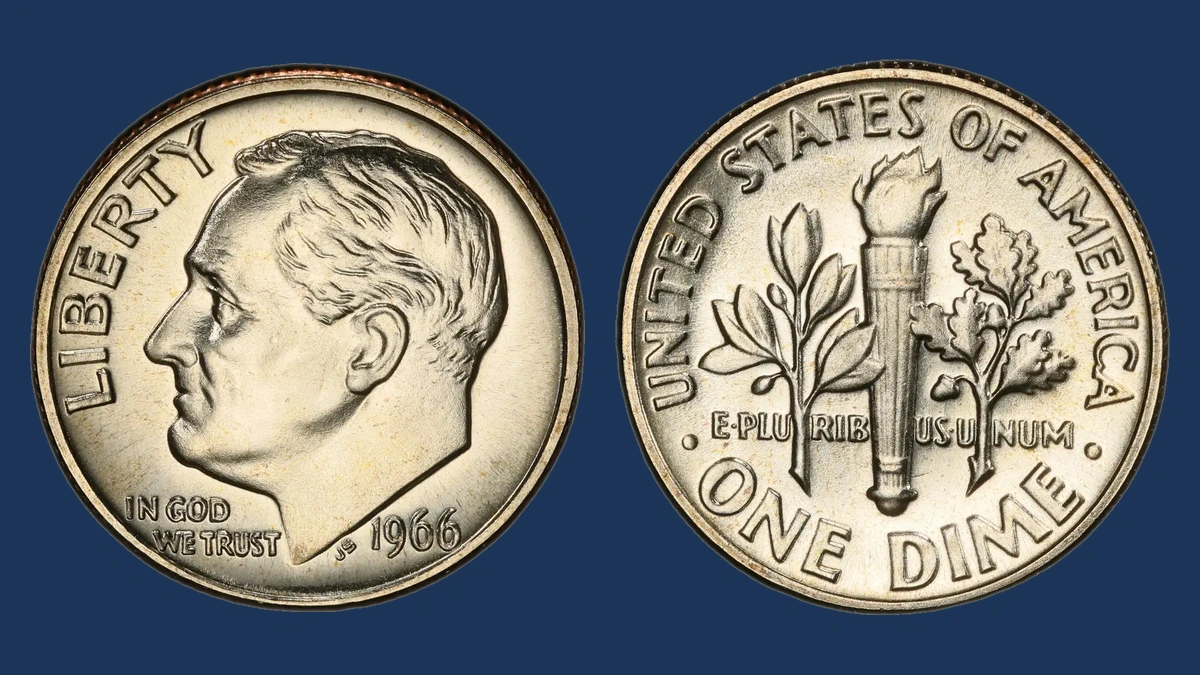
A small raised shape resembling 5 appears on Roosevelt’s cheek on this recognized SMS variety. Its fixed position and form allow collectors to match it to examples labeled FS-401.
The mark sits below the eye and above and behind the mouth. It is not a five-cent denomination mistakenly stamped onto a dime.
The exact origin of the tool mark has been explained in different ways, but the coin should be identified from its appearance. A random scratch that happens to resemble a numeral cannot establish the variety, and the listing applies specifically to SMS coins.
Estimated Value
Use an estimated $100–$1,500 range for properly identified examples with different surface quality. PCGS records an $1,500 eBay result in October 2023 for an SP67 coin.
SP67 describes a well-preserved special collector strike with few marks. The clear cheek feature and original SMS surfaces support interest.
Haze, scratches, or a weak match reduce appeal. A seller’s claim of a numeral on an ordinary dime does not justify the same price.
How to Identify
Locate the tiny shape below the eye before enlarging the photograph. Compare its curve, lower stroke, and position with the PCGS FS-401 images.
A 10× magnifier and light from different sides should show a raised mark, not a line cut into the cheek. Check the surrounding metal for tooling.
Confirm the SMS collector finish as part of the identification. No mintmark is normal for both SMS and ordinary 1966 dimes, so its absence cannot distinguish them.
A scale and calipers can check loose examples against 2.268 g and 17.91 mm. The fixed raised shape in the correct cheek position, together with SMS identity, is the match that matters.
16. 1966 Roosevelt Dime Silver-Blank Candidate
A genuine 1966 dime on a silver blank would be an unusual leftover-metal error. Ordinary 1966 dimes use copper-nickel layers around a copper center, not the earlier silver alloy.
The available 1966 dime report describes a candidate, not a certified example. Its date, metal, and original strike must agree before this error name can be applied.
A bright white edge or a heavy scale reading can justify further checking, but neither is conclusive. Plating, an altered date, or confusion with an earlier dime can produce misleading clues.
Estimated Value
If a genuine 1966 Roosevelt dime on a 90% silver blank is confirmed, estimate $5,000–$20,000. This conditional range compares identified 1965 silver-blank errors, not a sale of an established 1966 coin.
A 1965 NGC MS62 example sold for $14,400 in January 2023, and a worn AU53 brought $9,150 in January 2026. Clear date authenticity, confirmed metal, and overall preservation would determine where a newly identified example belongs.
How to Identify
Check the date before the color. Under a 10× magnifier, compare the 1966 digits and surrounding surface with an ordinary example to look for alterations.
A scale should compare the normal clad weight of 2.268 g with the old silver standard of 2.50 g. Calipers should also compare the diameter with 17.91 mm.
Inspect the edge for the usual copper-centered layers. A plated clad coin can hide the copper color, so professional metal testing must resolve what appearance cannot.
Avoid scratching or filing the edge. Keep any graded coin sealed.
The required combination is a genuine 1966 date and a confirmed silver blank; neither a white edge nor extra weight establishes both.
Conclusion
A small cheek mark and a detached metal layer require very different checks. The estimated $5–$20,000 range spans ordinary minor errors through the conditional silver-blank category.
Keep SMS collector coins separate from ordinary issues, and remember that no mintmark is normal for 1966. Protect loose layers, record each coin’s own weight, and follow the visible evidence before comparing it with a valuable example.