1970 Dime Error List with Pictures

A missing S helped one 1970 Proof, a specially made collector coin, sell for $5,750 in August 2007. Yet millions of ordinary 1970 dimes correctly have no mint letter.
This 1970 dime error list explains that difference and the year’s unusual blanks, doubled details, and striking mistakes. Estimated values span $5–$30,000, with rare silver-blank errors at the upper end.
Look through the examples below to see which features deserve a closer examination.
1. 1970 Roosevelt Dime 1968-S Style Reverse
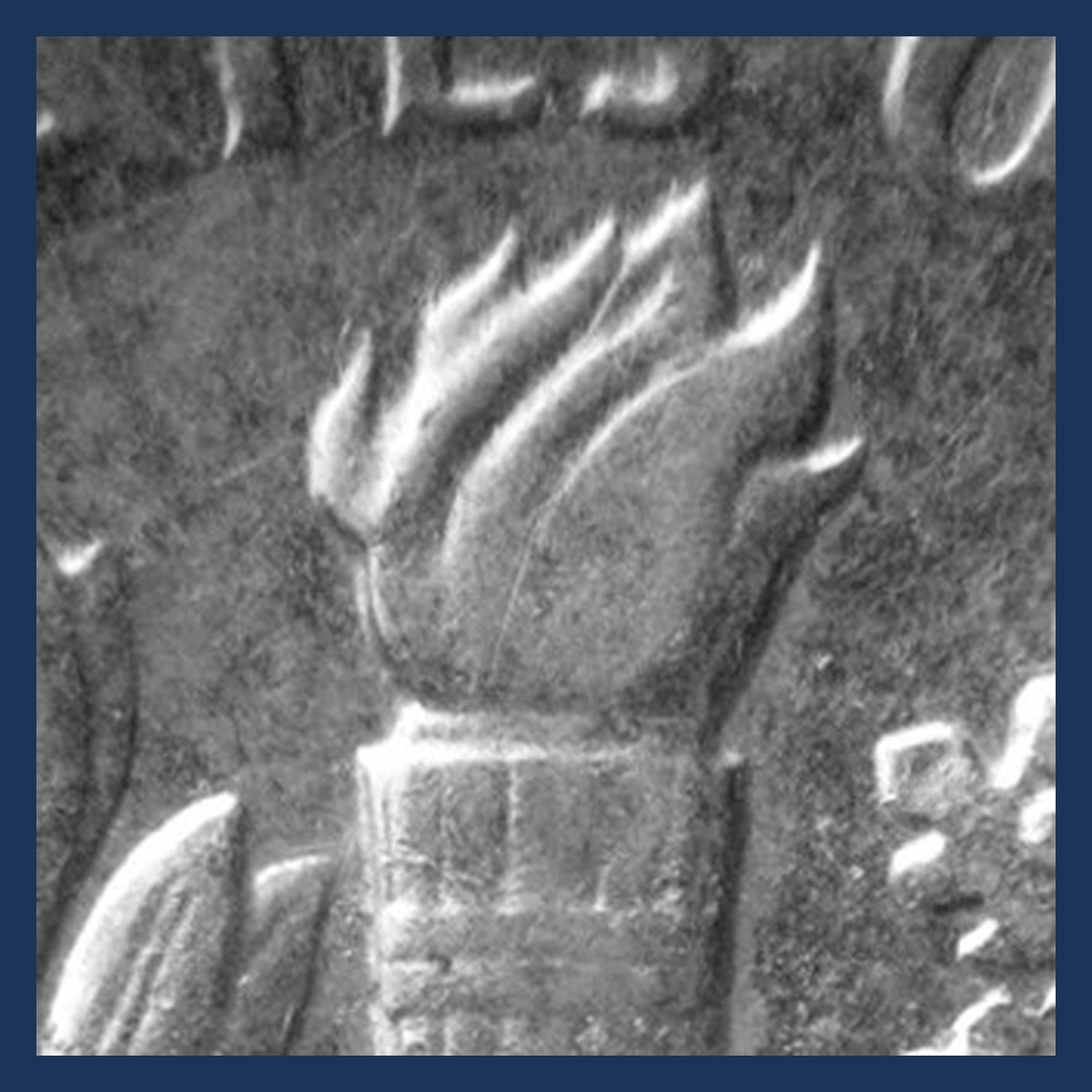
The little flame above the torch can reveal a different reverse design. Some 1970 Philadelphia and Denver dimes show the sharper flame shape associated with the 1968-S collector issue.
This is a design variety, not another flame struck over the first. The difference came from the reverse tool used to make the coin.
Error-Ref illustrates both 1970 mint versions. Their clearer flame does not prove that a collector coin entered circulation.
It also does not establish that workers used the reverse tool by mistake. The recognizable design is what identifies the variety.
Estimated Value
For a clearly matched example, estimate $10–$150 across circulated and ordinary unworn coins. This compares modest modern dime design varieties rather than the much scarcer No S Proof error.
Preservation can change the total price considerably. Sharp torch detail and few distracting marks make the flame easier to study, while wear can hide finer outlines.
An unusually high-grade coin needs a separate condition comparison. Its entire value should not be credited to this reverse alone.
How to Identify
Place close-up photographs of the normal reverse and the sharper-flame reverse beside your coin. With a 10× magnifier, compare the outline at the top of the torch rather than general brightness.
An ordinary Philadelphia example has no mint letter; Denver has D. Neither becomes a Proof merely because the flame resembles the collector design.
For a loose coin, use a scale and calipers to compare the normal 2.268 g and 17.91 mm. These measurements help rule out a different blank, but both reverse styles use the same standard.
Change the lamp angle if the flame is worn or shadowed. The useful match is its particular divided outline, not a generally stronger strike.
2. 1970 Roosevelt Dime Cracked or Broken Die
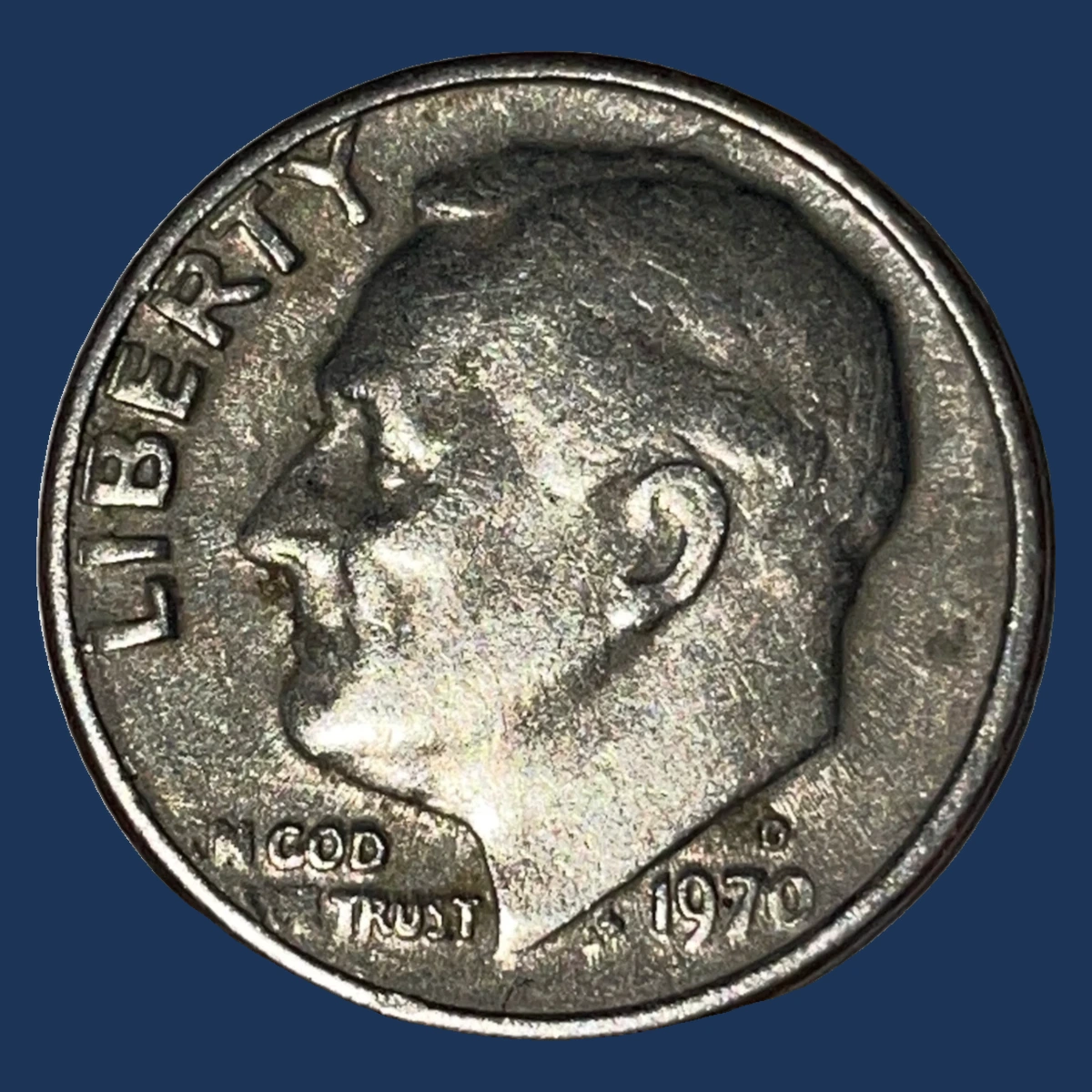
A narrow raised line can trace a crack in a die, the steel tool that stamps the design. Metal flows into the opening and leaves the line standing above the coin.
If a piece breaks away at the tool’s edge, the coin can show a larger raised patch joined to the rim. Collectors call that patch a cud.
Year reports include both forms for 1970 without fixing one path or mint. A raised line may grow into a broader break as the damaged tool continues striking, but each coin needs its own close examination.
Estimated Value
Use an estimated $5–$200 range, with small cracks near the bottom and bold rim-connected breaks higher. This comparison follows similar modern dime tool breaks with readable dates.
The shape and visibility usually matter more than the length of a faint line. A large raised patch can be attractive, but damage, heavy wear, or missing date detail can lower its price.
Marks cut into the coin after striking do not earn this premium.
How to Identify
Light the suspected line from the side and see whether it stands above the surface. A 10× magnifier can separate a raised crack from a scratch with displaced metal beside it.
The normal 2.268 g weight remains relevant because a die crack does not remove part of the blank. Use a scale on loose coins and calipers for the usual 17.91 mm diameter.
For a larger patch, follow it to the rim. A true cud joins the edge and replaces the missing design with raised metal.
Inspect the opposite face for weak detail that can accompany a large break. A raised patch connected to the rim is more specific than an isolated lump or stain.
3. 1970 Roosevelt Dime Broadstrike
A dime can grow wider when the collar, the ring around the blank, fails to hold it during striking. The metal spreads outward beyond its intended diameter.
The design can remain complete inside that larger outline. This is called a broadstrike, even when the image sits unevenly within the spread metal.
Year reports include 1970 broadstrikes, with one guide specifically discussing Denver examples. They do not supply a measured coin for every claim, so a slightly uneven rim or a flattened edge alone cannot establish that the collar failed.
Estimated Value
An estimated $20–$200 suits a straightforward dated broadstrike. A later comparison, a 1995-P dime graded NGC MS66 with sharp torch bands, sold for $45.
That sale describes another year, but helps show the price scale for an uncomplicated example. Strong outward spread and clean surfaces can improve appeal, while a rim flattened after minting needs to be excluded before assigning a broadstrike value to the coin.
How to Identify
An unusually wide rim is only the beginning of this check. Turn the dime over and see whether every outer letter remains on the metal.
Calipers should compare the entire outline with the normal 17.91 mm, not just the broadest-looking border. A scale can check whether a loose coin still weighs near 2.268 g despite its extra width.
Use a 10× magnifier around the edge to inspect how the metal spread. Squeezing or hammering can also widen a coin, but may crush existing detail or leave worked surfaces.
The useful match is original outward flow surrounding a complete struck design on both faces.
4. 1970 Roosevelt Dime Off-Center Strike
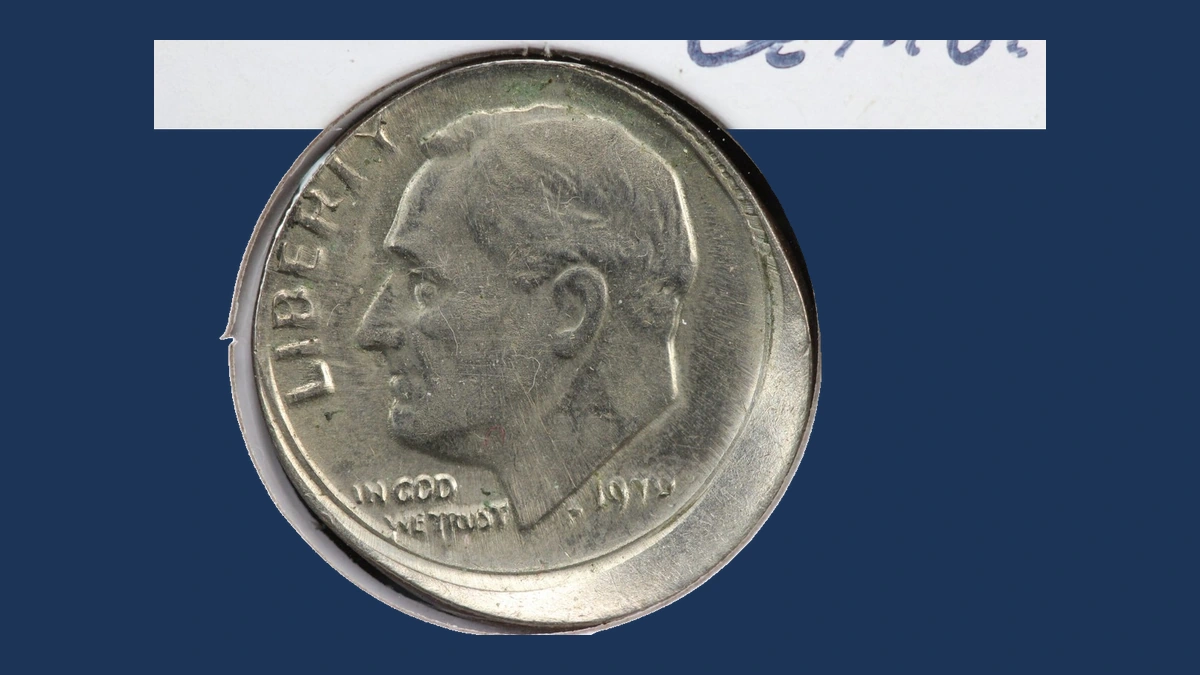
An off-center blank catches only part of the design because it enters the press in the wrong position. One side of the blank remains unstruck while the opposite side loses part of the intended image.
The effect involves both faces. A design that looks shifted on just one side may instead come from a misaligned stamping tool.
1970 year guides report off-center dimes without naming a particular mint, direction, or percentage. The separate twice-struck example later in this list has its own second-strike position and should not define these single-strike reports.
Estimated Value
Estimate $25–$250 for a dated 1970 off-center dime, depending on how much design remains and how well the surfaces survive. As a comparison, a 1974-D dime struck 45% off-center sold for $45 in January 2022.
That is a different year’s coin, not a measurement for the 1970 reports. A clear date and undamaged blank crescent can make a moderate shift more appealing than a larger error with its year missing.
How to Identify
Find the date first, then turn the dime over and compare the reverse’s position. Both designs should be displaced relative to the same blank.
The weight can stay near 2.268 g because no piece of the blank had to fall away. Use a scale and record the outline with calipers against the ordinary 17.91 mm size.
Inspect the unstruck crescent under a 10× magnifier. It should retain original blank surface rather than grinding marks.
A coin cropped by cutting can lose design too. Check the edge for a fresh worked surface or a line that slices through existing detail.
The surviving blank crescent and matching displacement on both faces are the useful signs to compare.
5. 1970 Roosevelt Dime Straight or Curved Clipped Blank
A large straight gap changes the whole outline of the documented 1970-D clip. Its blank lacked about 35% of its metal before the coin was struck.
The catalog records an actual weight of 1.5 g and an NGC Uncirculated Details label for cleaning. The missing metal is the minting error; the cleaning happened later.
Curved clips are also reported for the year. Those usually form when blank cutting overlaps a previous hole in the strip, while a straight missing edge can come from cutting across the strip’s boundary.
Estimated Value
The cleaned Denver dime with a 35% straight clip sold for $37 in July 2021. Estimate $20–$300 across genuine straight and curved clips with different sizes and preservation.
Its unworn condition did not remove the effect of cleaning on the price. A larger natural gap can create a stronger display, but collectors still consider the remaining date, surface quality, and whether the cut wall shows damage added after striking.
How to Identify
The documented coin’s 1.5 g reading belongs to its large straight clip. Weigh a loose candidate against the normal 2.268 g, rather than expecting every smaller curved clip to match it.
Inspect both ends of the gap through a 10× magnifier for rim and lettering drawn toward the missing metal. A weak rim opposite the gap can support the identification, although it is not always obvious.
Use calipers across intact parts to compare with 17.91 mm. Photograph the cut wall as well: saw grooves, fresh burrs, and abruptly sliced lettering suggest later cutting, while natural strike-related transitions at the gap’s ends support an original clipped blank.
6. 1970 Roosevelt Dime Missing Front Layer with Peeling Metal
The documented Denver dime looks brown on the front but pale gray on the back. The different colors reflect a missing front outer layer, exposing the copper beneath it.
Its auction description also records lamination, meaning metal separated along a weak layer. These features belong to the same coin, rather than two independently priced examples.
The ANACS MS60 coin has traces of orange color on its front and normal nickel-gray shine on the reverse. MS60 describes an unworn coin with noticeable marks; the missing layer is a separate physical feature.
Estimated Value
This 1970-D example sold for $33 in August 2004. An estimated $30–$400 range covers identified front-layer losses with different levels of wear, peeling, and surface quality.
The old sale provides one actual result, not a guaranteed price for every copper-colored dime. Clear original design on exposed copper is especially useful, while stains, scratches, or later stripping can reduce appeal and may imitate the appearance of a missing layer.
How to Identify
Compare the two faces under the same light. The cataloged coin pairs a mostly brown front with a nickel-gray reverse, rather than an evenly brown coating over everything.
A 10× magnifier can help trace the remaining layer or peeled area. Do not lift attached metal to reveal what lies beneath.
Normal dimes weigh 2.268 g, but no individual weight is established for this example. Use a scale for a loose candidate instead of adopting a standard figure from an auction page.
Calipers should compare the intact diameter with 17.91 mm. Inspect the edge for its remaining layers.
Look for undisturbed struck detail in the exposed copper, rather than scraping that removed the surface after minting.
7. 1970 Roosevelt Dime Doubled Die on the Front or Back
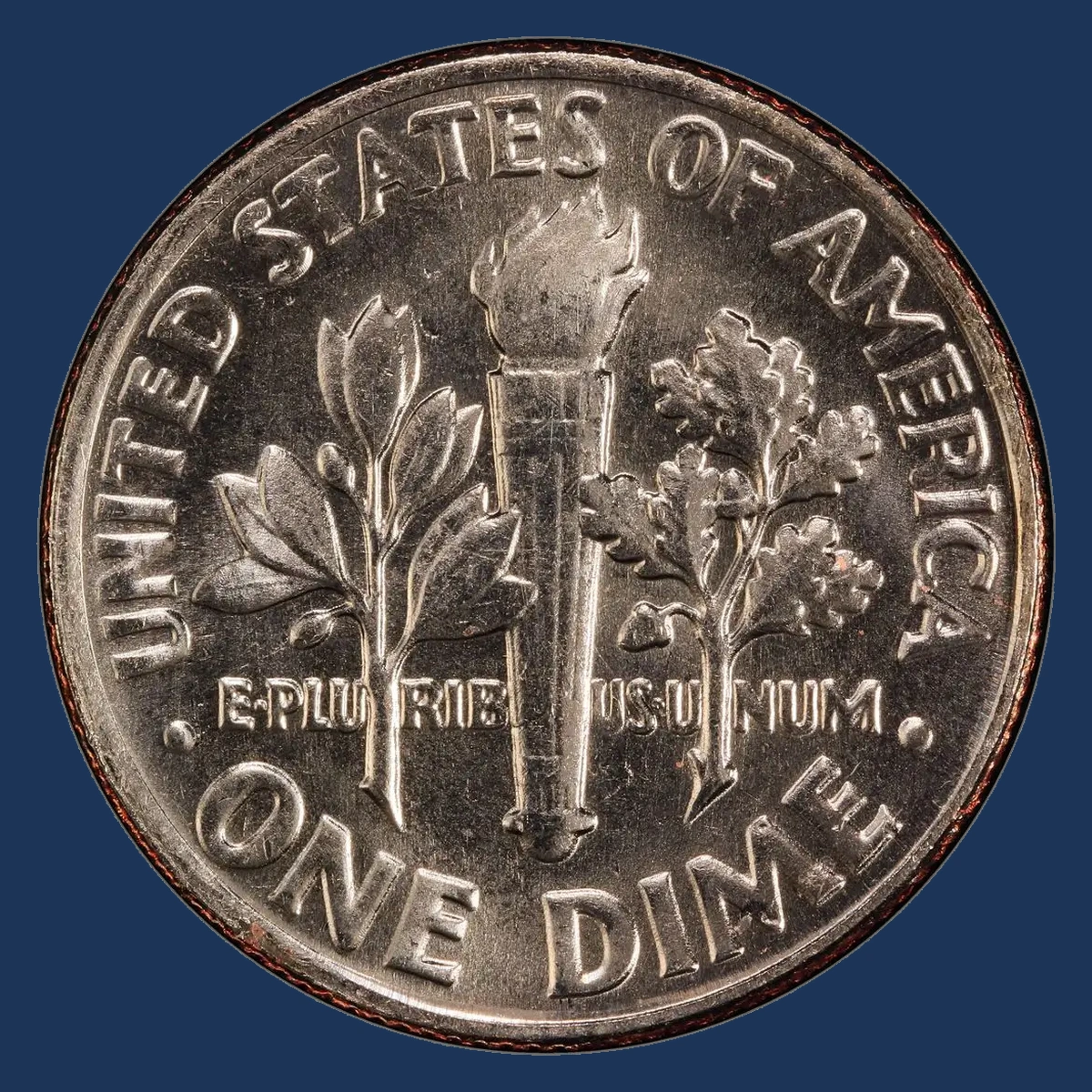
The torch flame or lettering can have a second raised outline even though the dime received only one strike. The extra detail was already present in the die before it touched the blank.
Philadelphia examples include small doubling on the date’s 0 and several reverse patterns. Denver has separate reverse patterns, including the varieties commonly called FS-801 and FS-802.
The 1970-S Proof, a specially made collector coin, has its own reverse pattern. These designs need separate photograph matches: doubling on one mint’s torch does not establish the same variety on another mint’s dime.
Estimated Value
Estimate $15–$500 for identified doubled dies across minor worn examples and clearer, better-preserved varieties. This is a comparison range for modest Roosevelt dime doubling, not the exceptional prices of famous doubled-date cents.
Separation in letters and flame details makes a coin easier to show and match. A sharp, unworn FS variety can draw more interest than a faint minor pattern, while flat shelves caused during striking usually add little value.
How to Identify
Use the mint letter and finish to choose the correct Wexler photograph set. A Philadelphia coin normally lacks a mint letter, while Denver has D and Proofs usually have S.
With a 10× magnifier, inspect the 0 for the small Philadelphia front variety. On the back, compare the lettering, flame, and upper leaves as a group rather than selecting one thick letter.
A scale and calipers can check loose coins against 2.268 g and 17.91 mm; the metal standard does not change with the doubled die. Photograph distinct rounded separations or split corners, avoiding flat lower shelves that shrink the original letter instead of adding another raised outline.
8. 1970 Roosevelt Dime Double Strike with a 90% Off-Center Second Blow
A nearly complete first image can survive when the second blow only catches the edge of a coin. The documented 1970 example received its later strike 90% off-center.
The coin was graded NGC MS62, an unworn grade allowing noticeable marks. The important feature is the meeting point between the original design and the later impression near the edge.
This is a repeat-strike error, not simply a single blow landing far from the center. The auction description gives the second strike’s percentage without establishing a clock direction or a blank, flattened face.
Estimated Value
The NGC MS62 dime sold for $26 in January 2012. A broader estimated range of $25–$500 allows for the clarity of the extra impression and the coin’s preservation.
A second blow that barely catches the edge can be less obvious than two widely separated portraits or dates. The percentage alone therefore does not set the value; buyers need to see genuine repeated design rather than a dent or a folded rim.
How to Identify
Begin with the small later impression near the edge, not with the percentage on the label. Under a 10× magnifier, find design detail that cannot belong to the first, mostly complete image.
Follow where that later detail crosses or flattens the earlier strike. Examine the reverse for changes consistent with the same event.
If loose, use a scale to compare the coin with 2.268 g. Calipers can record its outline against 17.91 mm, allowing for spread during repeated striking.
A flattened dent has no separate struck design. Look for an actual second set of raised details at the overlap, without assuming that the limited auction wording establishes their precise direction.
9. 1970 Roosevelt Dime Heavy, Thick Blank
This Denver dime has extra thickness rather than a missing piece. A dealer catalog describes a PCGS AU55 example struck on a 45-grain blank.
Grains are a weight unit; 45 grains is about 2.916 g. That is substantially heavier than a normal 2.268 g dime, and AU55 means the coin shows slight wear.
The record establishes an overweight blank but does not identify where its metal came from. It should not automatically be called quarter-thickness stock or a different denomination’s blank just because its edge appears unusually thick.
Estimated Value
Estimate $150–$600 for an identified thick-blank example of this kind. The cataloged AU55 dime had an $85 minimum bid, which is a starting amount rather than a completed sale.
The estimate compares other well-identified overweight dime blanks. A clear weight record and visible extra thickness support collector interest.
Added metal, solder, or another coin bonded onto the surface would require a different explanation. Those changes would not justify this range.
How to Identify
A scale is essential here. Check a loose coin against the recorded 45 grains, or approximately 2.916 g, rather than estimating weight from how heavy it feels.
Use calipers to compare its diameter with 17.91 mm and record the thickness at several intact edge points. An expanded rim alone can look thick from one angle.
Inspect the surface and edge with a 10× magnifier for solder, joins, or added plating. Those can increase weight after the coin leaves the Mint.
Keep the PCGS example sealed and use its recorded figures. Excess weight combined with a consistently thick, originally struck blank is the useful evidence; its source metal needs a separate identification.
10. 1970 Roosevelt Dime Aluminum Scrap Strike
An irregular piece of aluminum can receive a dime design if it enters the striking area. That is different from a complete round aluminum blank prepared for another country’s coin.
The known 1970 piece was cataloged as Aluminum Scrap, Cut in Half, in an ANACS holder. Its unworn design received a lower net assessment because of its condition.
The later cut is important: the surviving fragment does not preserve the original piece’s full outline or weight. The straight cut edge is damage to the error coin, not evidence of a straight clipped blank.
Estimated Value
The cut aluminum-scrap piece sold for $322 in May 2011. An estimated $250–$1,000 range suits comparable identifiable pieces, with the amount and clarity of surviving design strongly affecting appeal.
This sale concerns a damaged fragment, not an intact foreign-blank dime. Cutting can remove evidence and reduce collector interest, so a small surviving piece should be compared with similarly incomplete objects rather than priced as though the whole original strike remained.
How to Identify
Identify the surviving 1970 date and Roosevelt-dime design first. Then use a 10× magnifier to separate the later cut edge from any original scrap boundary still present.
A scale can record the fragment, but its current weight cannot reconstruct the full scrap piece. Likewise, caliper measurements of the surviving section should not be treated as its original diameter.
The normal dime standard is 2.268 g and 17.91 mm. This fragment needs a metal check as well, because light weight alone could also result from missing material.
Keep the ANACS holder intact and use non-destructive metal testing when needed. The identifying combination is a genuine dime impression on aluminum scrap, with the later cut recorded separately.
11. 1970 Roosevelt Dime No S Proof
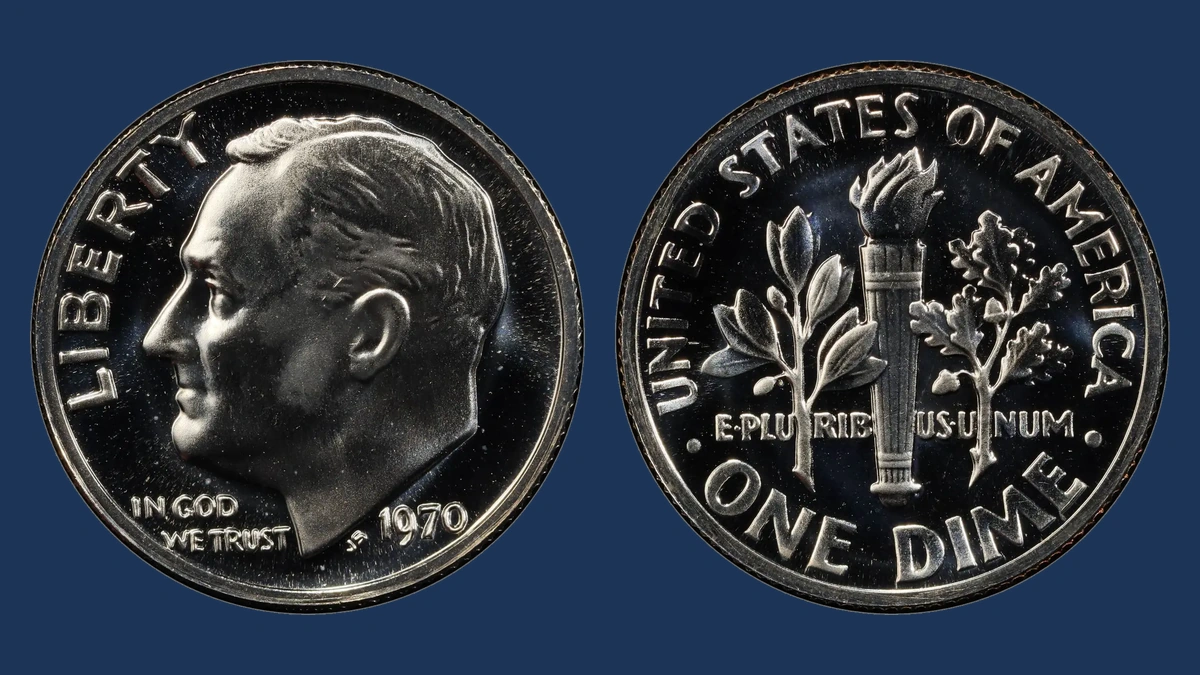
A missing mint letter becomes special only after identifying the kind of coin. Ordinary Philadelphia dimes correctly have no mintmark, while the 1970 San Francisco Proof should carry S.
A small number of Proof dimes were struck from a tool without that letter. Their specially prepared collector surfaces separate them from ordinary no-mintmark pocket change.
The error is known as No S Proof. It is not a silver issue, and polishing an ordinary dime to make it shiny does not turn it into this scarce collector coin or create the missing-letter error.
Estimated Value
An estimated $500–$6,000 covers authenticated No S Proofs with different surface quality and contrast. PCGS records a $5,750 August 2007 sale for a PR69 Deep Cameo example.
PR69 indicates a nearly flawless collector coin. Deep Cameo describes strong contrast between frosted designs and mirrorlike backgrounds.
That result should not be applied to every No S Proof. Scratches, haze, and weaker contrast can place another example much lower.
How to Identify
Establish the Proof finish before looking for the missing letter. Compare both faces with a genuine 1970-S Proof, paying attention to sharp detail, prepared surfaces, and the overall quality of the strike.
Through a 10× magnifier, examine the mintmark position above the date for a smooth, undisturbed area. Scraping away an S can leave tool marks or disturbed metal.
The normal clad standard is 2.268 g and 17.91 mm. A scale and calipers help with loose coins but cannot distinguish an ordinary Philadelphia dime from a No S Proof by themselves.
Use graded No S examples for comparison. A genuine Proof finish together with an original empty mintmark position is the necessary match.
12. 1970 Roosevelt Dime Foreign Aluminum or Obsolete Silver Blank
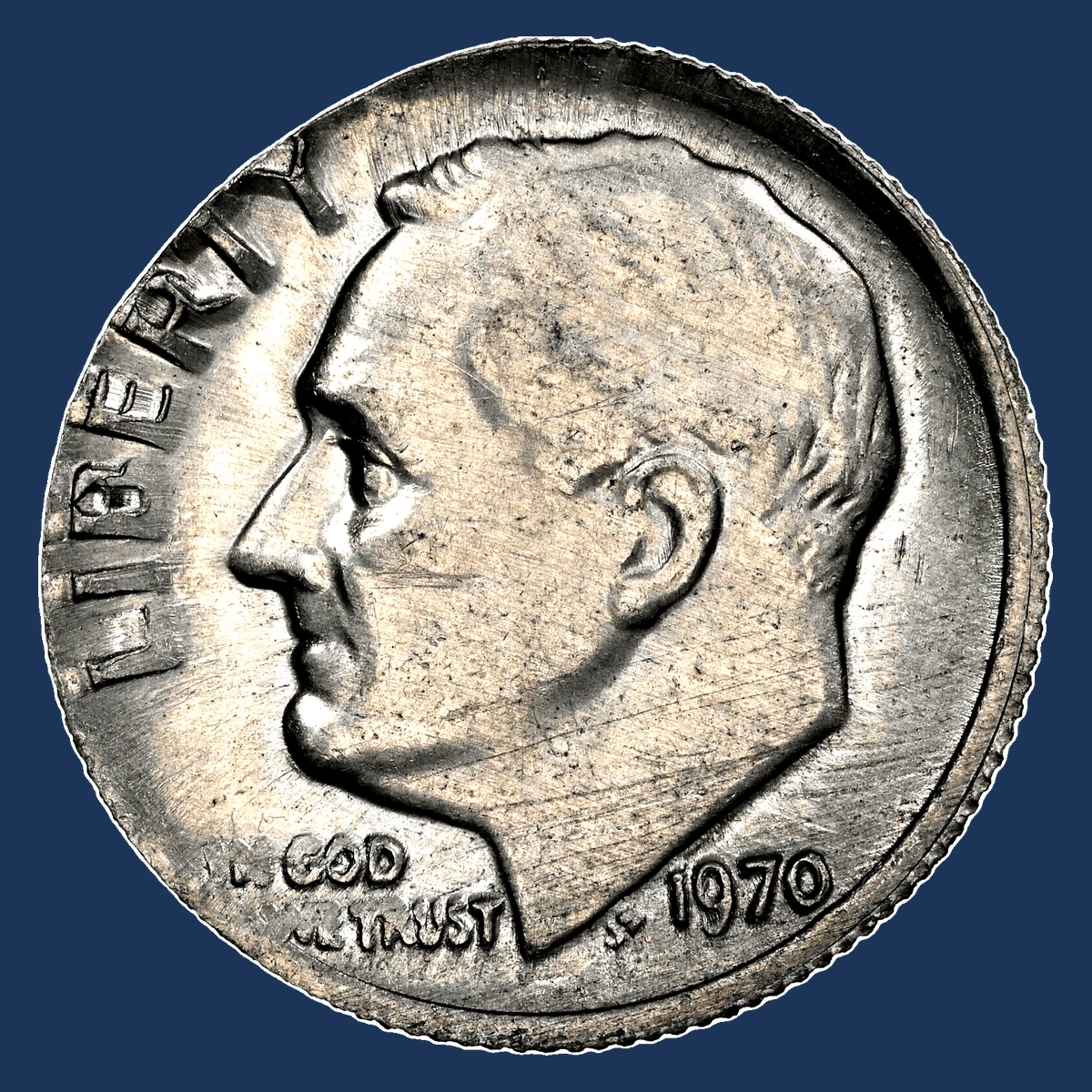
One wrong-blank dime is extremely light, while another weighs more than a normal clad dime. They were struck on different metals and need separate comparisons.
The aluminum example uses a Philippine one-sentimo blank, called “1 Sen” in its auction title. The NGC MS62 coin actually weighs 0.5 g, and a different PCGS MS62 example is also recorded.
The Denver silver example weighs 2.5 g and was graded NGC AU50, showing light wear. Its 90% silver blank belongs to the earlier dime standard, five years after regular dimes changed to clad metal.
Estimated Value
The aluminum NGC MS62 dime sold for $1,740 in October 2022; estimate $1,000–$2,500 for comparable examples. A separate PCGS MS62 piece brought $1,006.25 in January 2008.
For the rare 1970-D silver-blank error, estimate $10,000–$30,000. As different-year comparisons, 1965 silver-blank dimes sold for $14,400 in MS62 in January 2023 and $9,150 in AU53 in January 2026; neither amount is a sale of the 1970-D coin.
How to Identify
Put the coin on a precise scale if it is loose. The documented aluminum piece reads 0.5 g and the silver piece 2.5 g, against the normal clad dime’s 2.268 g.
With calipers, compare the outline with the ordinary 17.91 mm size. Do not assume the two wrong blanks started with equal diameters.
Inspect the edge through a 10× magnifier. Neither solid aluminum nor the silver alloy should show the usual copper center between pale clad layers.
Plating can hide those colors. Metal testing should avoid scratching or filing the coin.
The aluminum example provides one measured comparison; match the date, metal, and weight together, keeping the Denver silver coin’s identity separate.
Conclusion
The estimated $5–$30,000 range covers very different finds, from small raised cracks to a dime struck on the wrong metal. A missing letter only carries the No S premium when the coin is a genuine Proof.
Keep each example’s measurements with its photographs. The aluminum blank, the silver blank, and the partly cut scrap piece need separate comparisons, even though all carry the Roosevelt design.