1971 Dime Error List with Pictures

One 1971-D dime has an oval outline and only part of the intended design. That PCGS MS63 example sold for $460 in July 2002, despite a scrape on its back.
The 1971 dime errors below also include small mint-letter changes, exposed copper, and a backward impression. Estimated values range from $2–$2,500.
Start with the visible change on your coin, then follow the matching checks. A missing mint letter alone is not enough: ordinary Philadelphia dimes have no mintmark this year.
1. 1971 Roosevelt Dime Weak or Missing D Mint Letter
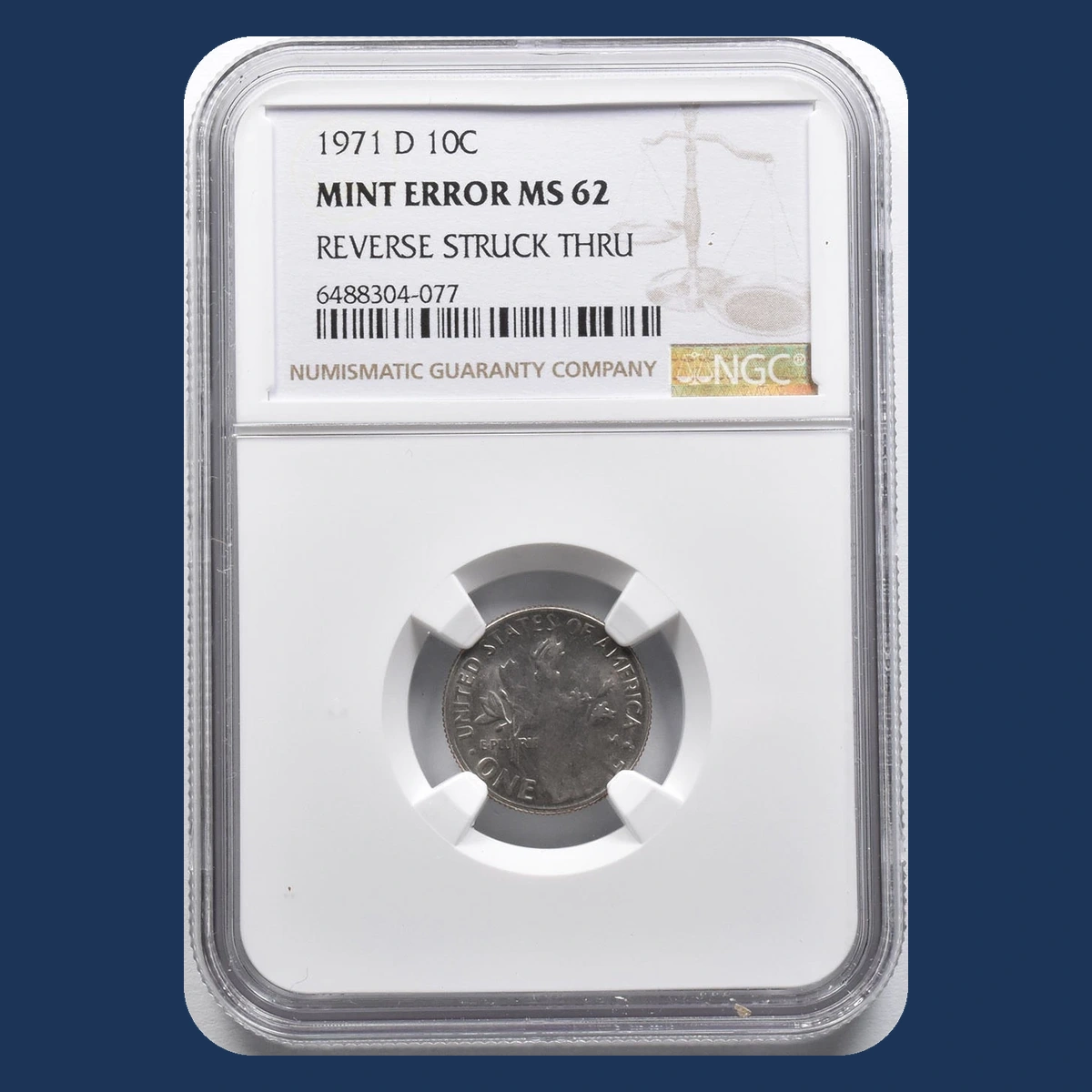
Grease packed into a letter-shaped hollow in the stamping tool can prevent that letter from forming fully. A weak D on a Denver dime is one reported result.
Tool wear or polishing of the stamping tool can also weaken a D. These possible causes need different evidence, even though each can leave a faint or missing letter.
Philadelphia dimes normally have no mint letter this year. A smooth space above the date therefore cannot establish Denver origin, and it should not be confused with the separate 1971 No S nickel.
Estimated Value
For an identified Denver dime whose D was genuinely weakened by blocked detail, estimate $2–$50. Clear remaining letter traces and an otherwise sharp surrounding design improve the comparison.
A missing letter attributed to tool treatment needs evidence of the same tool before using a similar minor-error estimate. An ordinary Philadelphia dime does not receive this premium.
Wear and deliberate removal can also erase a letter. A blank-looking patch alone supplies neither a valuable error nor proof of its cause.
How to Identify
A blank space above the date is normal on Philadelphia coins. Begin with a regular no-mintmark dime beside the coin you are checking.
On a suspected Denver coin, tilt that space under a small light. Look for part of the D, such as its upright stroke or curved side.
Check nearby details for wear and examine the surface for scraping. A shallow hollow where the letter belongs can point to deliberate removal after the coin left the Mint.
Without a surviving D, an identified Denver coin made by the same stamping tool is needed for comparison. A similar portrait alone cannot establish the mint or explain why a letter is missing.
2. 1971 Roosevelt Dime Raised Cracks and Rim Breaks
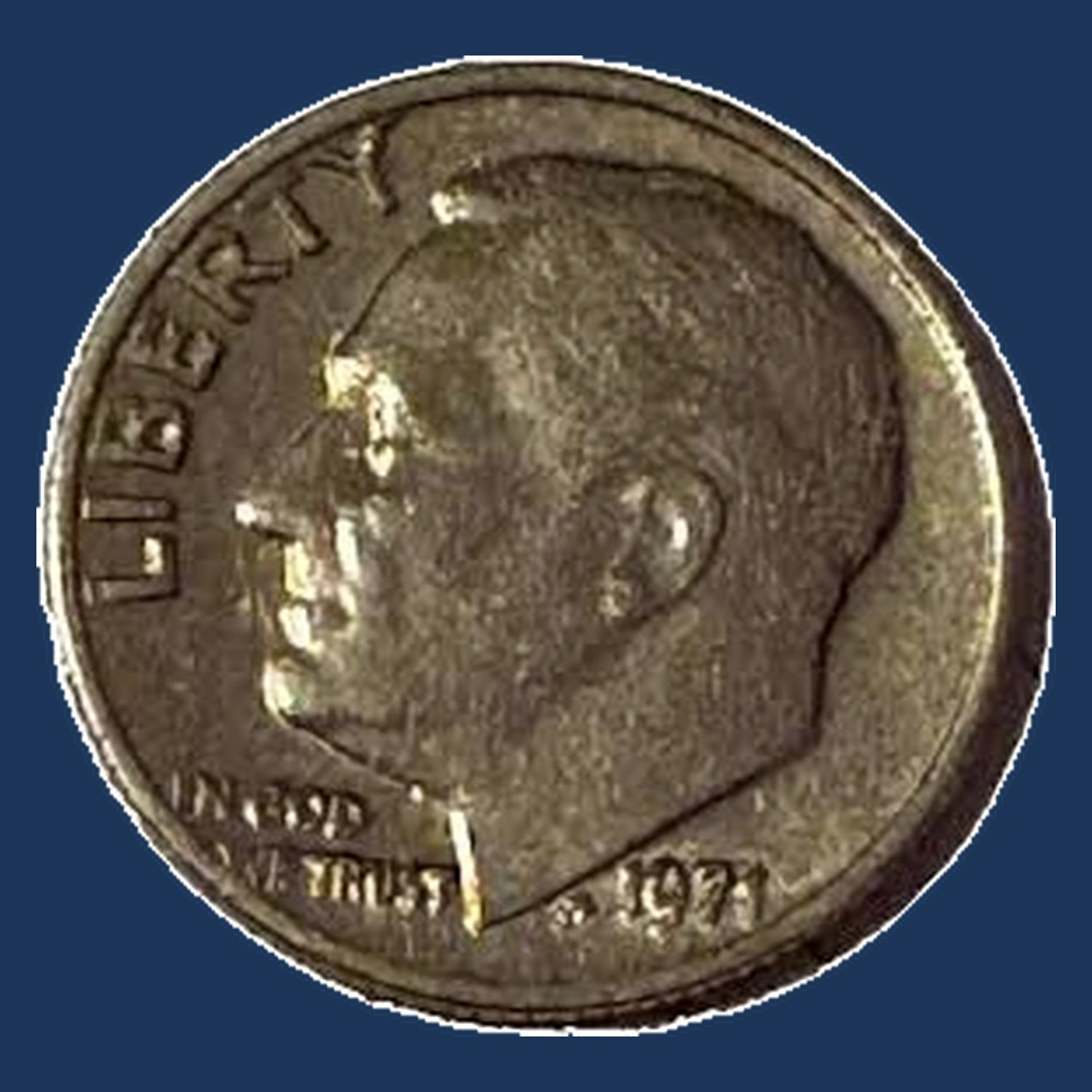
A hairline in the stamping tool can leave a raised line on the coin. If a larger part breaks away, metal can fill that opening and form a raised patch.
These features are called die cracks and die breaks, with die meaning the steel tool that carries the design. A larger break joined to the rim is called a cud.
They are reported for 1971 without one established location or mint defining the whole category. Normal portrait lines and damage beside the edge need to be separated from actual extra metal.
Estimated Value
Small genuine cracks can fall around $2–$30, while clearer raised breaks can support an estimated $30–$200. These are whole-coin ranges, not separate charges for every ridge.
A visible boundary and recognizable surrounding design help show what the damaged tool failed to stamp. Wear and scratches can hide those clues.
The upper range assumes an original raised break that a collector can identify. Added material, corrosion, or a folded rim does not qualify merely because it looks bulky.
How to Identify
A normal dime gives you the first comparison: Roosevelt’s hair and the torch already contain narrow raised lines. Find what is extra before deciding that a line is a crack.
Shine light across the feature to distinguish raised metal from a groove. A dent can push up a ridge along one side without involving a damaged stamping tool.
For a larger patch, trace its full boundary. A cud must connect to the original rim, rather than simply sit somewhere near the edge.
Keep neighboring letters in the photograph and leave deposits untouched. Scraping a suspected lump can damage the evidence needed to tell original struck metal from something added later.
3. 1971 Roosevelt Dime Spread Metal around a Complete Design
A broadstrike gives the metal more room to spread than it normally has. The ring around the blank, called the collar, fails to contain the coin during striking.
The result can be a wider outline surrounding the complete intended design. This differs from an off-center strike, where part of the design misses the metal entirely.
Broadstrikes are reported for 1971 without a specific mint or measured width established for the general category. A large diameter alone cannot identify the error, since hammering or squeezing a finished dime can also enlarge its outline.
Estimated Value
Estimate $20–$300 for a genuine simple 1971 broadstrike. Clear outward spread around an intact portrait and readable back design generally attracts more attention than a slightly uneven rim.
The original edge and surface condition help explain the range. Heavy marks or later flattening can make a real striking error harder to recognize.
A coin that became wide through later pressure is damage. Its diameter does not place it within the same estimate as an original broadstrike.
How to Identify
If the dime is loose, use calipers to measure its width in several directions. The usual diameter is 17.91 millimeters, but extra width alone does not prove a broadstrike.
Follow the outer words on both faces to check that the full design fits inside the wider metal. Missing words at one edge beside a plain crescent suggest an off-center strike instead.
View the edge from the side, checking how the metal spread beyond its normal outline. The edge grooves may also differ where the surrounding ring failed to contain the metal.
Finally inspect the portrait and torch for flattened high points. Hammer marks or crushed details can explain a wide coin that was damaged after striking.
4. 1971 Roosevelt Dime Doubled Details on Proofs and a Denver Report
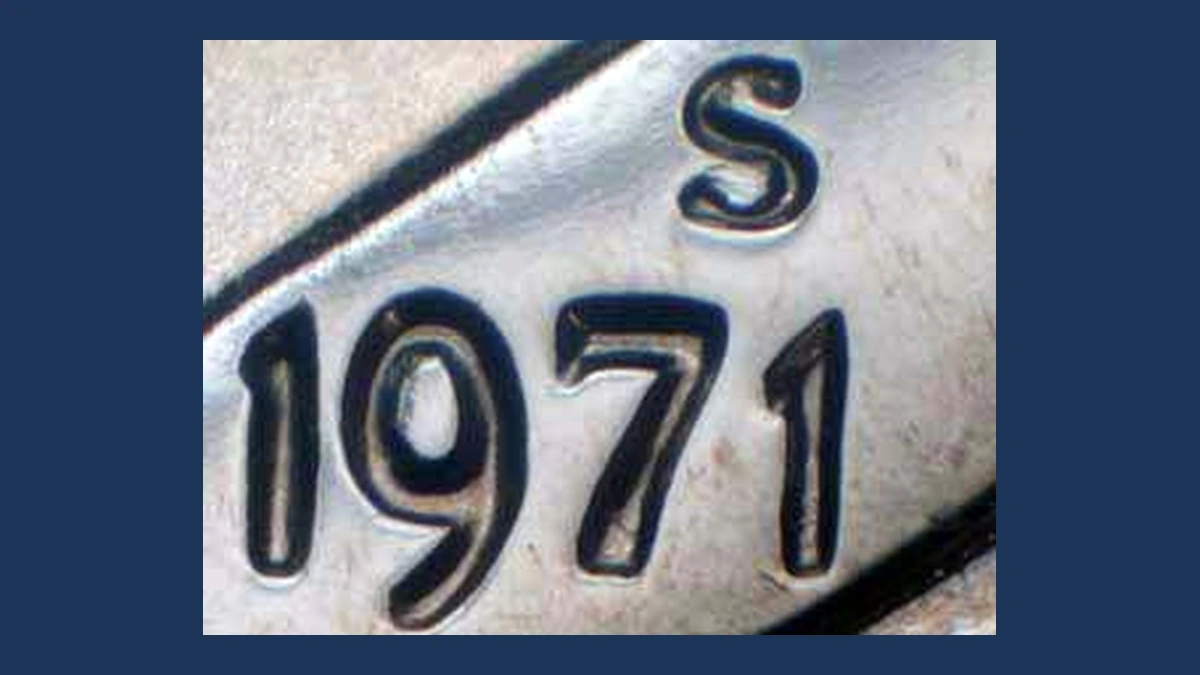
A stamping tool can contain a repeated part of its design before striking any blanks. The same extra shapes then appear on coins made from that doubled die.
On 1971-S Proofs, the front variety affects the date, JS initials, and motto. A separate back variety involves STATES OF AMERICA, flame tips, and leaves on the right.
Proofs are specially prepared collector coins, not ordinary circulation issues. A reported Denver lip-and-chin pattern remains a separate candidate without a matched tool number; the San Francisco details cannot be used to identify it.
Estimated Value
Identified minor 1971-S doubled-die Proofs have an estimated value of $20–$300. Clear separation and undamaged reflective surfaces help a collector see the small design changes.
For an authenticated minor Denver lip-and-chin pattern, use a conditional estimate of $10–$150. That range assumes a genuine doubled tool, rather than flattened edges or a reflection.
The different faces and finishes need their own matching examples. A clear Proof variety does not establish the identity or value of an unrelated Denver coin.
How to Identify
Choose the mint and face before comparing small details: the San Francisco Proof front and back have different patterns. On the front, examine the date, the designer’s JS initials, and IN GOD WE TRUST.
On the back, compare STATES OF AMERICA, the flame tips, and the leaves on the right with an identified example. Tilt the reflective coin to separate fixed, rounded extra outlines from glare that moves with the light.
The Denver report concerns the lips and chin instead of those Proof details. Compare these areas with a normal Denver dime, then seek an identified matching example before accepting the doubling claim.
5. 1971 Roosevelt Dime Repeated D and S Mint Letters
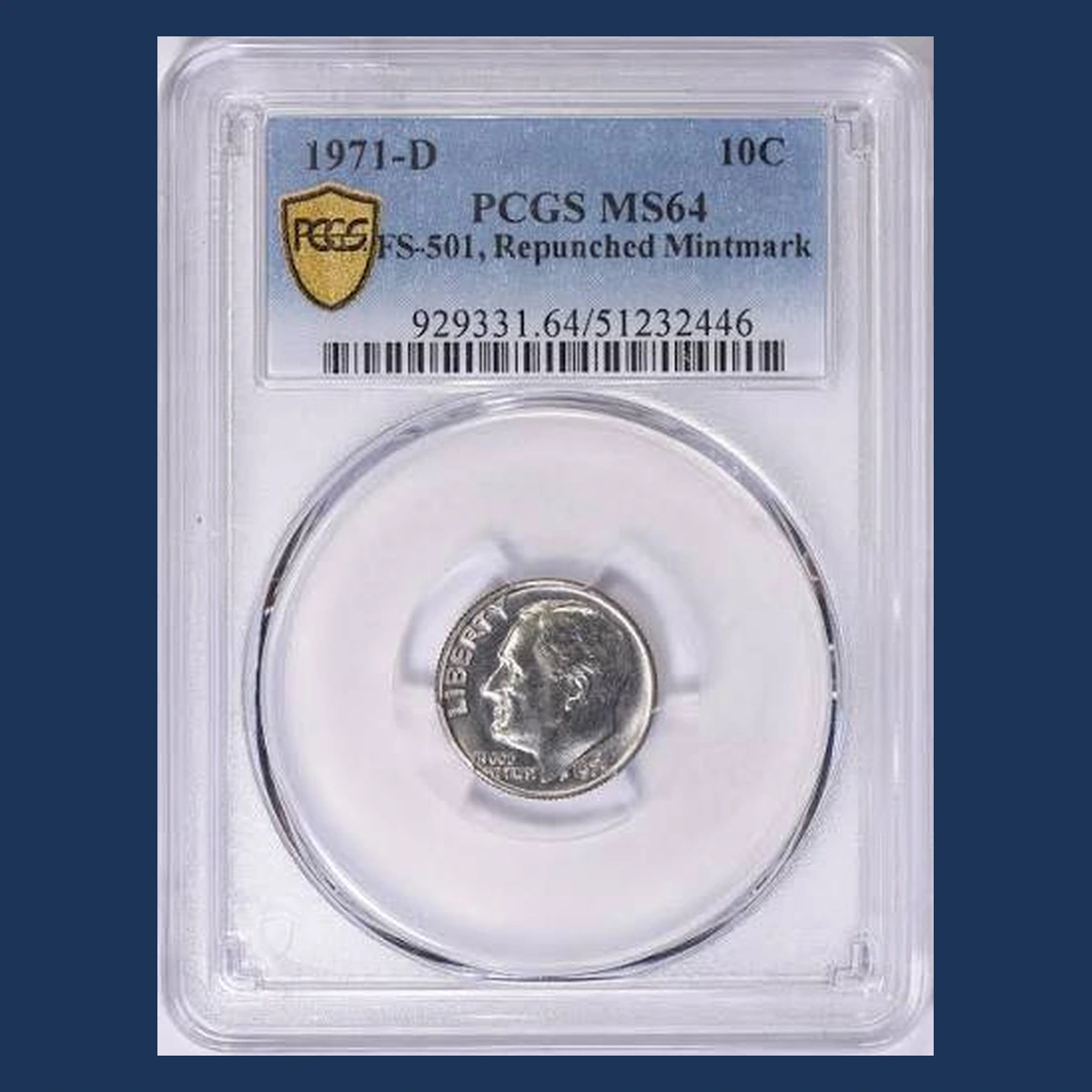
Before mint letters became part of the main design, workers punched them separately into the stamping tool. A second punch in a slightly different place could leave overlapping letter shapes.
The Denver FS-501 variety has an earlier D below the main D. San Francisco Proofs have separate S patterns shifted left, right, downward, or at an angle.
These all belong to the repeated-mint-letter category, but one direction is not a complete identification. Two S varieties can shift toward the same side while leaving different surviving curves and ends of the earlier letter.
Estimated Value
For identified Denver D/D examples, estimate $15–$300. San Francisco repeated-S Proofs have an estimated range of $20–$400, depending on the pattern and surface preservation.
The PCGS listing identifies Denver FS-501 by its repeated D. Compare coins with the same letter pattern and similar wear before choosing a value within the estimated range.
Strong letter fragments are easier to appreciate than a faint trace hidden by wear or haze. A damaged letter needs a different comparison.
How to Identify
Locate the mint letter above the date, then trace its normal outline. For Denver FS-501, inspect below D for raised pieces of the earlier letter.
For an S Proof, examine both curved ends before selecting a reference. The catalog includes leftward, rightward, downward-tilted, rotated, and upper-left patterns.
A similar direction does not prove that two coins match. Compare the precise surviving letter portions instead of combining all reported S shapes into one imaginary mintmark.
Use lighting from opposite sides to distinguish raised curves from a scratch or flat shelf.
Keep the entire letter and surrounding surface in close photographs. A specialist can then compare the actual pattern without relying on a seller’s variety number alone.
6. 1971 Roosevelt Dime A Partly Missing Front Covering
Copper can show on the front when part of a dime’s pale outer sheet is absent. A normal dime has two copper-nickel coverings bonded to a copper center.
A 1971-D graded NGC MS65 is cataloged with a partially missing front layer and an actual weight of 1.8 grams. MS65 describes an unworn coin with relatively few marks.
The exposed area can vary in size and shape. Look for the boundary of the remaining sheet and the design on the copper, rather than relying on its brown color alone.
Estimated Value
The recorded NGC MS65 example sold for $186 in December 2022. Comparable genuine partial-layer-loss dimes have an estimated range of $50–$600.
The size of the exposed copper area and its original design affect the visual appeal. Remaining outer metal can also help show the boundary where the covering is absent.
Brown staining or chemical stripping does not receive the same premium. Compare the actual metal structure and condition before using the range for a copper-colored candidate.
How to Identify
The documented dime weighs 1.8 grams, below the normal 2.268 grams. Weigh a loose candidate, but remember that different amounts of missing metal produce different weights.
Next find the line where the pale covering ends and copper begins. Follow it across the front and toward the edge wherever the exposed area reaches the rim.
Use a magnifier to compare details on the copper with those on the remaining outer sheet. Scraped lettering, pits, or rough tool marks may reveal metal removed after the coin was struck.
Turn the dime over to inspect the other covering as well. A brown stain changes surface color without exposing a separate level of metal.
7. 1971 Roosevelt Dime Oval and Other Clipped Blanks
An incomplete blank need not have one obvious bite-shaped gap. Overlapping cuts in the metal strip can produce an oval piece that receives only part of the dime design.
The 1971-D PCGS MS63 oval example preserves lower-front and upper-back details. The remaining design falls beyond the available metal, and a scrape crosses the right side of the back.
Another Denver dime, graded ANACS MS65, has a clipped blank with a missing piece at its edge. This is a separate coin, so the oval example’s outline and back scrape do not describe it.
Estimated Value
The PCGS MS63 oval example sold for $460 in July 2002. Estimate $20–$150 for modest genuine clips and $150–$800 for clearly identified unusual oval blanks.
The ANACS MS65 clip appeared in a three-coin lot sold for $31 in July 2021. That whole-lot amount also covered 1966 and 1980-P dimes.
Shape, remaining identity, and damage affect the comparison. Neither sale supplies a universal price for any incomplete dime.
How to Identify
Trace the whole outline before looking for a gap. The oval coin has incomplete metal around its perimeter, not simply an extra blank crescent beside a displaced round design.
Check the surviving lower-front and upper-back details against photographs of the documented example. Their relationship helps connect its unusual shape with the original strike.
Along the edge, look for filing or fresh cuts through finished letters. Those can create an artificial oval from a normal dime.
Keep the back scrape separate from the blank error when judging condition.
For another clipped dime, inspect its own missing edge and the nearby rim. Fresh cut marks across finished detail can reveal a gap made after the coin was struck.
8. 1971 Roosevelt Dime Ordinary Off-Center Strikes
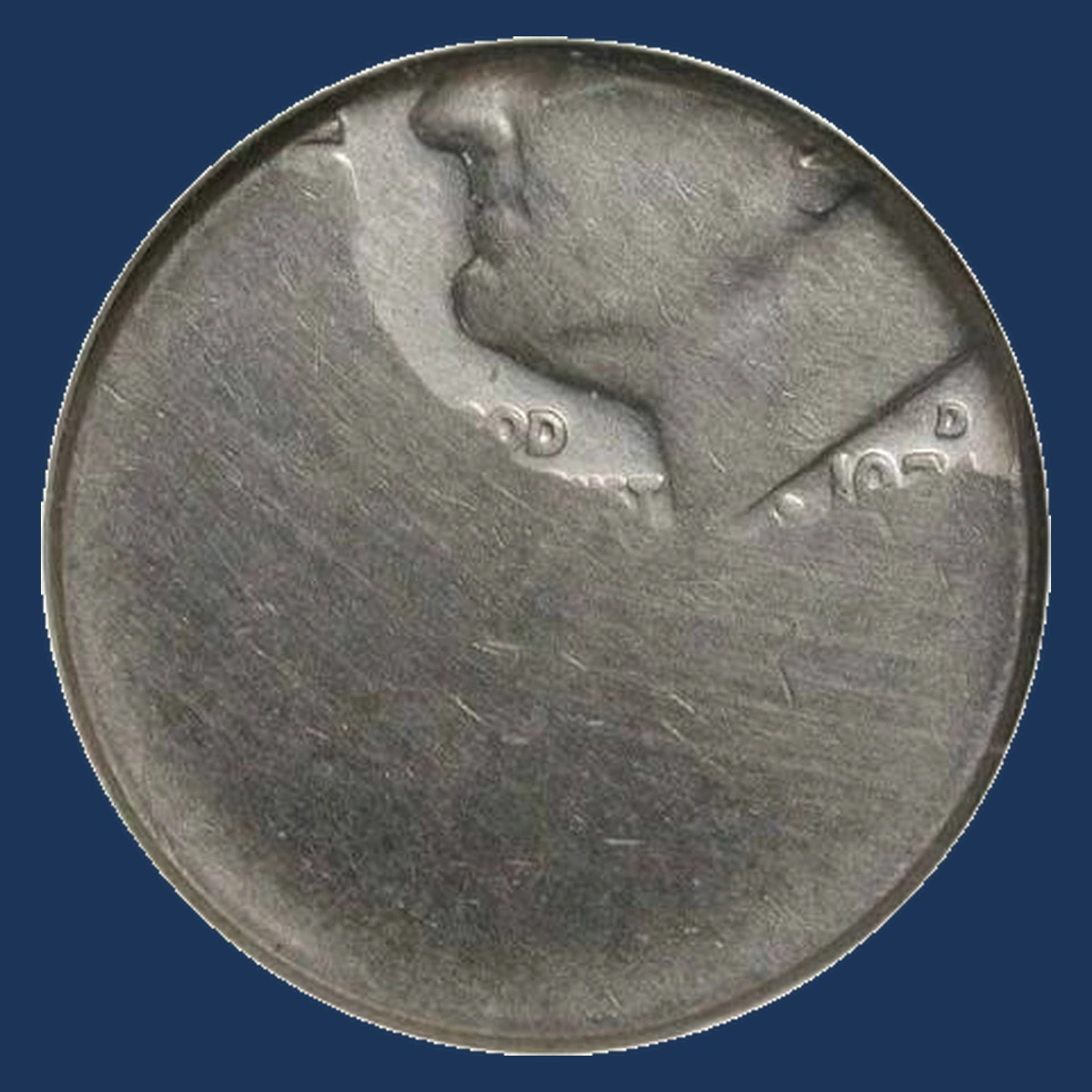
A round blank can receive only part of the design if it enters the press too far to one side. The unused metal remains as a plain crescent.
Off-center examples are reported for both no-mintmark Philadelphia and Denver dimes in 1971. No single displacement percentage or clock direction describes that entire group.
The error differs from a clipped blank, where metal is physically missing. It also differs from the separately recorded Denver coin combining a fifty-percent shift with very weak striking pressure; that coin’s faint design adds another feature to its displaced position.
Estimated Value
Comparable genuine dated off-center dimes have an estimated range of $30–$800. A complete year and a clear boundary between struck and plain metal help collectors understand the error.
A nearby-year example, a 1981-P dime struck fifty-five percent off center and graded ANACS MS64, sold for $49 in January 2022. It provides a different-year comparison rather than a 1971 sale.
Condition and surviving identity matter alongside displacement. A larger shift can remove useful date or mint information.
How to Identify
With the date upright, locate the plain crescent and the opposite edge where the design ran out of metal. They should fit one misplaced blank.
Turn the coin over and compare the back’s struck boundary. A centered back behind a shifted front may instead indicate a misplaced stamping tool.
Read the year and any visible D directly from the coin. If the mint-letter area is outside the design, its absence does not prove Philadelphia origin.
Inspect the plain surface under low light for erased lettering or grinding tracks. Photograph the whole outline so a naturally unstruck area can be distinguished from metal made artificially smooth afterward.
9. 1971 Roosevelt Dime Weak Strike on a Half-Off-Center Blank
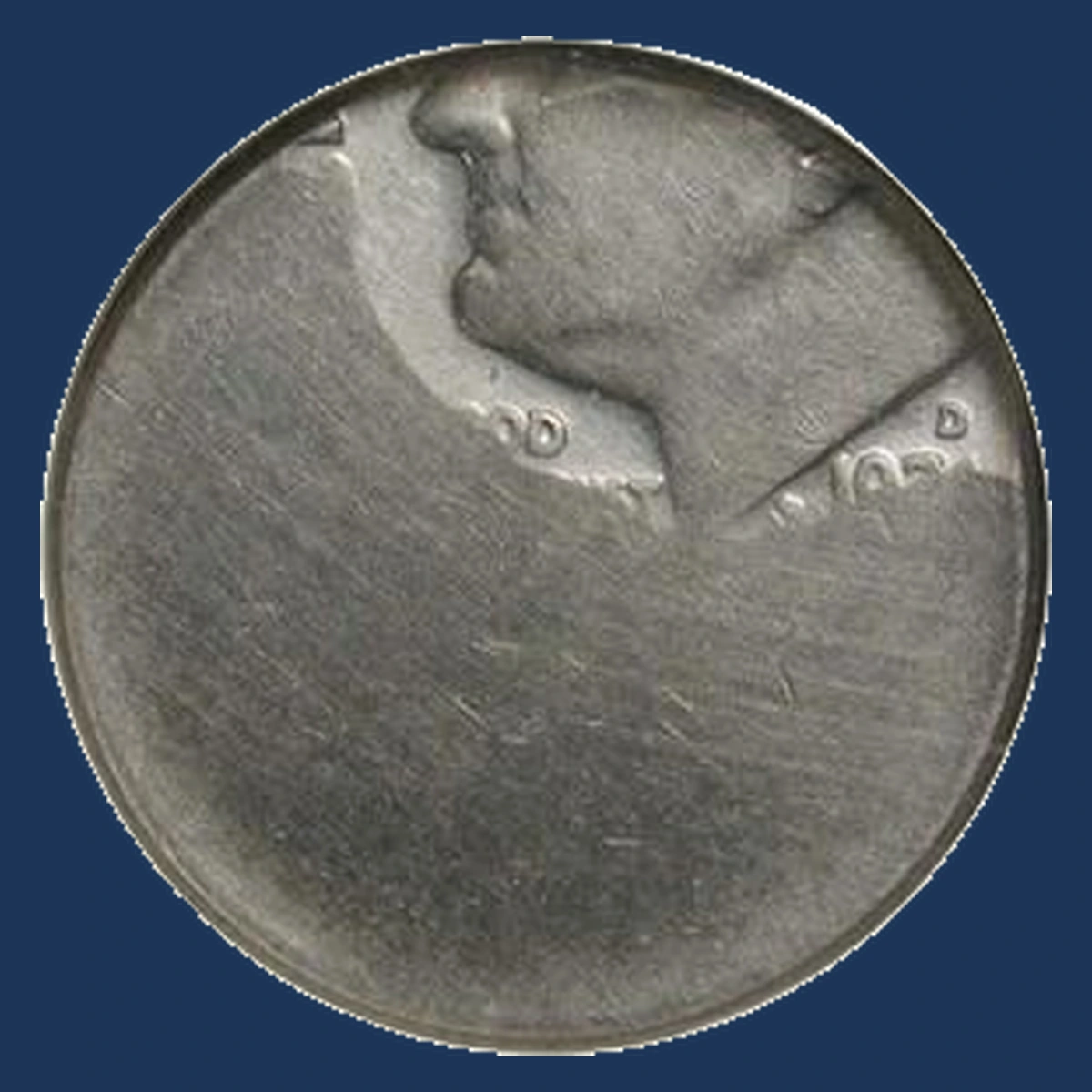
A displaced blank can also receive too little pressure to bring up the design clearly. Its untouched crescent and faint struck area tell two parts of the same event.
A collector display records a 1971-D dime as fifty percent off center with a die adjustment strike label. That older term suggests press setup, but the weak design alone cannot establish the operator’s purpose.
The reported NGC PrAg assessment describes very low remaining detail. The important comparison is the original shallow impression and surface, not an assumption that every faint coin was an intentional test strike.
Estimated Value
For a genuine off-center and low-pressure combination, estimate $100–$1,000. A recognizable date and an original shallow design help distinguish the manufacturing event from heavy wear.
The estimate concerns this one combined coin, not an off-center price added to a separate weak-strike price. Its unusual appearance needs to remain understandable in full photographs.
Polishing, corrosion, and later flattening can obscure the same evidence. A normally struck dime worn nearly smooth should not receive the premium merely because little design remains.
How to Identify
Begin in the shallow design, especially the protected spaces beside letters. Original surface texture there helps separate a weak strike from a normal coin rubbed nearly smooth.
Examine the untouched crescent next. It explains the off-center position, while the faint impression on the other half points to weak striking pressure.
Compare both faces with the recorded Denver example, keeping its fifty-percent shift and weak detail together. One small missing patch could instead come from material blocking part of a stamping tool.
Leave the surface untouched when taking photographs. Polishing can erase the texture needed for this check.
A label reading die adjustment does not prove that the Mint deliberately made a test coin. Judge the shallow impression itself before accepting that explanation.
10. 1971 Roosevelt Dime Backward Impressions and a Double-Strike Combination
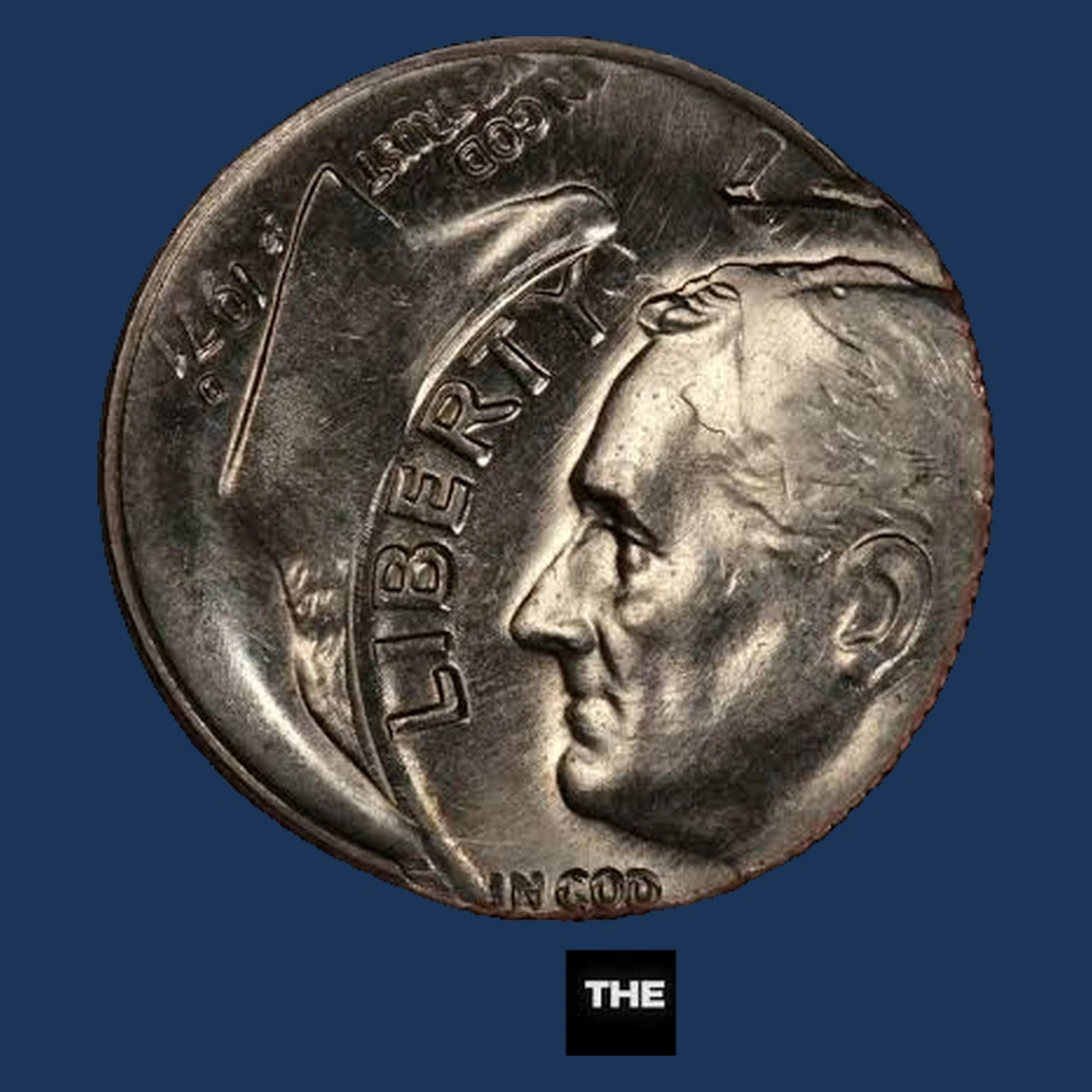
A finished coin can press a backward copy of its design into another blank inside the press. That sunken transferred image is called a brockage.
One 1971-D graded NGC MS64 has a partial front brockage from an off-center interfering coin. Its sunken copied detail occupies only part of the front.
A different Denver coin, graded PCGS MS62, received two strikes, with the second thirty-five percent off center and a back brockage. The extra strike and transferred image belong to that same coin, rather than two separately valued pieces.
Estimated Value
The NGC MS64 partial-front example sold for $204 in July 2021. Estimate $100–$1,000 for comparable clear partial brockages.
For a well-identified double-strike and back-brockage combination, use an estimated $300–$2,000. That higher range reflects a more complex object, not an additional charge applied to the front-brockage coin.
Readable backward details, original surfaces, and the relationship between impressions affect the price. A smooth dent without copied design is not an equivalent error.
How to Identify
Look inside the unusual patch for copied letters or a recognizable design, rather than just a smooth depression. Shine light across it to check that the copied image sinks into the surface and reads backward.
For the double-struck Denver coin, trace the first design before following the second impression toward the edge. Its thirty-five-percent shift describes the second strike, not the size of the backward image on the back.
Photograph both complete faces and the edge to show how the impressions fit together. Have an error specialist examine any signs of squeezing or added cuts, since later pressure can also transfer a design.
11. 1971 Roosevelt Dime Candidate Strike on a Cent Blank
A copper-colored dime can prompt a wrong-blank claim, but color does not identify the original piece of metal. A cent-blank claim has been reported for 1971 without a matched specimen.
A normal 1971 cent blank weighs 3.11 grams and starts wider than a dime blank. It is not the smaller, lighter blank sometimes suggested by misleading comparisons.
The candidate would need a genuine Roosevelt strike on that different metal disk. A Lincoln cent struck on a dime blank reverses the two denominations and cannot serve as evidence of this proposed dime error.
Estimated Value
If a genuine 1971 dime on a period cent blank is authenticated, use a conditional estimated range of $500–$2,500. Original metal and an identifiable Roosevelt design would be essential to that comparison.
The range is an estimate for the proposed wrong-blank event, not a recorded sale of a confirmed 1971 example. Brown color or an unusually low weight does not establish it.
A missing outer layer, added plating, or an altered edge requires a different identification and value.
How to Identify
Weigh the loose coin first, without cleaning it. A normal dime is 2.268 grams, while a cent blank of this period is 3.11 grams.
Compare the width with the dime’s usual 17.91 millimeters and the cent blank’s 19.05 millimeters. Striking can change the final width, so size alone cannot identify the blank.
Inspect the edge for pale outer sheets around a copper center. A period cent blank instead has copper-based metal throughout.
Check that Roosevelt and the torch are genuinely stamped into the metal. Look for plating, chemical pits, trimmed edges, or joined pieces.
An error specialist should test the metal and examine the strike together. Brown color by itself cannot show that a dime was made on a cent blank.
Conclusion
Estimated values for these 1971 dime errors run from $2–$2,500. A weak D, an oval blank, and a sunken backward image each require different evidence.
Compare the original shape and design before choosing a price. Keep Denver circulation coins and San Francisco Proofs separate.
A Philadelphia dime normally lacks a mint letter. That ordinary feature is not a rare missing-mintmark error.