1985 Dime Error List with Pictures

An unusually thick dime may actually contain two blanks joined in the press. One 1985-P bonded pair sold for $1,080 in July 2021.
Other 1985 dime errors look very different: a missing piece, a copper-colored face, or even Lincoln stamped over Roosevelt. Estimated values in this guide run from $5 to $2,500, with pair prices covering both pieces.
Read on to see which visible clues separate these errors and what affects their value.
1. 1985 Roosevelt Dime Die Cracks
A thin raised line is worth a closer look. It can come from a crack in a die, the steel tool that stamps coins.
Coin metal enters that narrow opening during the strike. The result is a line standing above the surface, rather than a groove cut into it.
Cracks appear in the 1985 dime listings, but no single position identifies every example. Follow the actual raised line across the coin rather than assuming that any mark beside the date belongs to the same cracked tool.
Estimated Value
Allow an estimated $5–$75 for a genuine crack on an otherwise ordinary 1985 dime. A faint line on a heavily worn coin belongs near the lower end.
A strong raised line crossing a recognizable part of the design is easier to see and collect. It can bring more when the surrounding surface remains clean.
The price depends on the actual crack and condition. A date alone does not give every raised mark the same premium.
How to Identify
Photograph the suspected line under light from two directions. A changing reflection can hide its shape, so turn the lamp before deciding that the line is raised.
With a 10× magnifier and light from the side, trace the suspected line across the surface. A die crack rises above the metal; a scratch cuts downward and may push metal along its sides.
For a loose coin, use a scale and calipers to check the normal 2.268 grams and 17.91 mm. Examine the edge grooves for damage from a later blow.
Photograph the whole coin before enlarging the line. Keep both ends visible so a grader can follow its path without mistaking an isolated glare streak for raised metal.
2. 1985 Roosevelt Dime Doubled Dies
Look for a second rounded outline beside part of a letter or number. A doubled die has this extra image in the stamping tool itself, so it can repeat on many coins.
Minor front doubling is reported on 1985-P dimes around IN GOD WE TRUST, the date, or facial details. These reports do not establish one major variety with a fixed doubling direction.
Back doubling also appears as a listed category. A back example needs its own matching raised detail; front doubling does not prove that the torch or back lettering is doubled.
Estimated Value
Minor genuine doubled dies are estimated at $10–$100. Clear separation that remains visible in an ordinary close-up is more useful to a buyer than vague thickness.
The lower end suits small effects on worn coins. A clean example with a convincing repeated outline can reach higher levels.
This range also covers a back example once genuine doubling is established. Flat shelf-like doubling from movement during striking does not receive the same variety premium.
How to Identify
Begin with the reported front areas rather than searching for a dramatic split across the entire portrait. Under a 10× magnifier, examine individual letters in IN GOD WE TRUST and the date.
Rounded extra outlines or divided corners deserve attention. A flat lower shelf that seems shaved away from the main letter points toward movement during striking instead.
Check a loose dime with a scale and calipers against 2.268 grams and 17.91 mm; its normal edge has grooves. These checks establish the basic coin, not the doubled die.
For a suspected back example, compare that same area with a normal back under matching light. A photograph of front doubling cannot serve as proof for a separate torch or lettering claim.
3. 1985 Roosevelt Dime Clipped Blanks
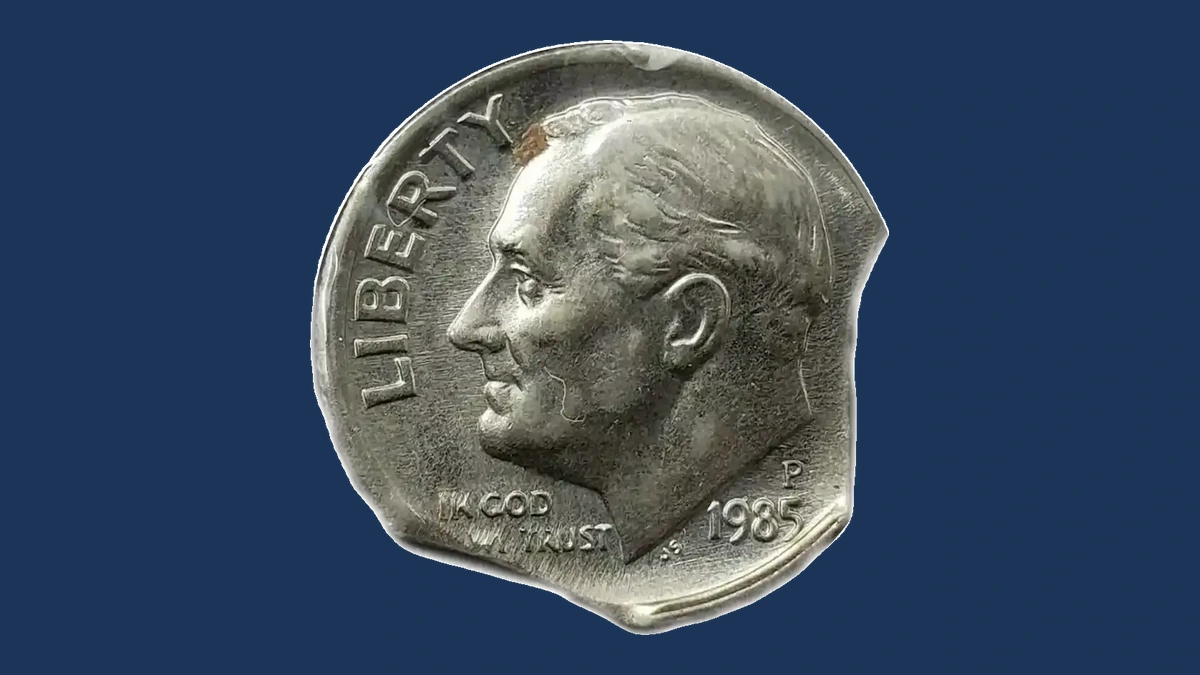
One or more pieces of the original blank can be missing before the dime is struck. This happens when the blank-cutting machine overlaps an earlier hole or reaches an edge of the metal strip.
Curved and straight gaps are reported for 1985 dimes from Philadelphia and Denver. A separate Philadelphia example has two curved gaps and an NGC MS64 grade, meaning an unworn coin with visible marks.
The shapes describe different forms of the same blank-cutting error. Two gaps on one dime do not mean it was struck twice.
Estimated Value
The double-curved Philadelphia example has a reported $38 sale from January 2023. It provides a useful modest-price example despite having two separate gaps.
An estimated range of $15–$150 covers genuine single and double clips. Small missing areas on worn coins fit near the bottom.
Larger clean gaps and good remaining detail can support higher prices. Two small clips should not automatically cost twice as much as one large, attractive clip.
How to Identify
For a loose coin, weigh it before studying the missing section. A clipped dime should generally weigh less than the normal 2.268 grams; calipers can compare its surviving full width with 17.91 mm.
Examine each end of the gap through a 10× magnifier. Metal shaped during striking may soften into the opening, while later cutting can leave sharp tool marks or a burr.
Follow the edge grooves up to the gap and inspect the opposite rim for weakness. Opposite-rim weakness helps when present, but its absence alone does not settle the question.
On the double-curved example, inspect both gaps independently. A genuine clip in one place does not prove that a second missing piece also left the Mint that way.
4. 1985 Roosevelt Dime Broadstrike
A broadstruck dime looks spread out around its design. The metal expanded because the surrounding collar, a ring that normally controls the coin’s width, did not contain it properly.
The design should still fit on the coin. That separates a broadstrike from an off-center strike that loses part of the design at one side.
Broadstrikes are reported for 1985, without a single mint letter or border shape defining the group. Missing edge grooves can accompany this error, but a smooth edge alone is not enough to identify one.
Estimated Value
Genuine examples are estimated at $30–$200, with the amount of clear outward spread making a practical difference. Slight expansion on a worn coin fits toward the lower end.
A wider, undamaged example with readable lettering is more appealing. The extra metal around the design must be part of the strike.
A rim ground smooth after minting does not add broadstrike value. Buyers pay for the expanded struck shape, rather than simply an unusual diameter.
How to Identify
Calipers help answer the first question on a loose dime: has the metal spread beyond its usual 17.91 mm width? A scale should still read near 2.268 grams unless another error changed the amount of metal.
Place a normal dime beside it and follow the outer letters on both faces. A complete design surrounded by extra metal supports broadstrike; a section of missing design points toward an off-center strike.
Examine the widened border and edge with a 10× magnifier. Grinding leaves tool marks, while hammering can flatten the design along with the rim.
A smooth edge alone proves little. The complete design and outward-spread metal need to explain the unusual shape together, without relying on later flattening.
5. 1985 Roosevelt Dime Missing Outer Layer
A normal 1985 dime has silver-colored outer layers over a copper core. If one layer is missing before striking, the exposed copper receives the design and makes that face look brown or reddish.
The other face may retain its usual color. This creates a much stronger contrast than a small patch of ordinary tarnish.
The year’s missing-layer report does not identify which face lost its layer. It also does not establish a 1985 example missing both layers, so one copper-colored face should be assessed on its own.
Estimated Value
A single missing outer layer has an estimated value of $40–$250. For comparison, a 1989-P front-layer example sold for $92 in August 2004.
That was a different year, although the same basic clad construction applies. Worn examples usually sit lower than clean pieces with an intact design on exposed copper.
Full loss across one face is more striking than a small damaged patch. Artificial stripping or copper plating should not receive this mint-error range.
How to Identify
Color is the first clue, but weight gives it a useful second check. On a loose example, compare the scale reading with the normal 2.268 grams.
Loss of an outer layer should reduce weight. A brown dime that weighs normally may simply be stained or coated.
Inspect the boundary at the edge with a 10× magnifier. Look for the exposed core meeting the surviving layer, and note whether the design was struck directly into the copper.
Calipers should find a width around the usual 17.91 mm, with edge grooves consistent with striking. Pitted metal, peeling after the strike, and tool scratches need separate attention.
Photograph both faces together. That makes a genuine one-face color difference much easier to assess than an isolated close-up.
6. 1985 Roosevelt Dime Off-Center Strikes
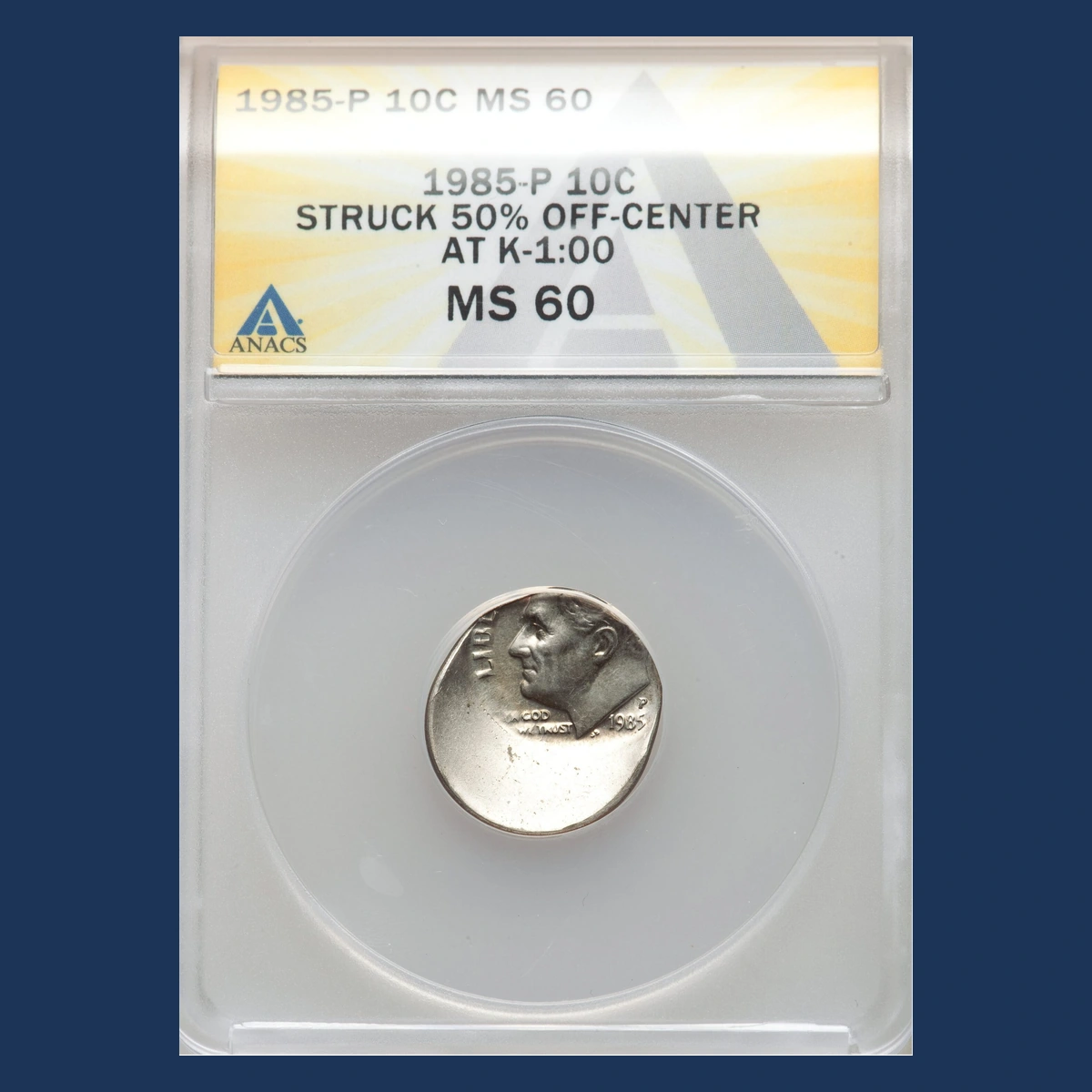
When a blank sits partly outside the stamping area, only part of it receives the design. The untouched crescent remains beside the struck section.
The 1985-D example in a Heritage three-coin lot is 65% off center toward 10 o’clock. Its ANACS MS63 grade describes an unworn coin with noticeable marks.
Philadelphia examples include a 25% off-center coin and a separate 40% example toward 1 o’clock. These are different coins, not alternate measurements of the Denver piece; dark spots on the latter Philadelphia coin are surface stains.
Estimated Value
The Philadelphia 25% example has a reported $139 result from January 2023. An estimated $30–$300 covers a broader selection of genuine 1985 off-center dimes.
Readable dates, clean blank areas, and an attractive balance of design and empty metal affect demand. A larger percentage alone does not guarantee a higher price.
The Denver coin appeared with two other dates in one lot. Any price for that group must not become the Denver coin’s individual sale price.
How to Identify
Confirm which coin you are comparing before judging its position. The Denver example is 65% off center toward 10 o’clock; the separately listed Philadelphia coin is 40% toward 1 o’clock.
A loose piece should remain near the ordinary dime’s 2.268 grams. A scale checks the metal present, while calipers document how far its outline differs from the usual 17.91 mm circle.
Now hold Roosevelt upright and examine both faces. The missing design and untouched crescent should follow the same displaced blank.
With a 10× magnifier, follow the join between struck and blank metal into the edge. Cut marks or smoothing at that join need investigation; dark surface spots on the Philadelphia example are simply stains.
7. 1985 Roosevelt Dime Struck Through a Die Cap
The front of this Philadelphia dime was struck through a coin stuck to the stamping tool. That stuck coin acted as a cover, weakening the design reaching the next blank.
This is a receiving coin. It is different from the cup-shaped coin that remained attached to the tool.
The listing also describes clashed dies, meaning the two tools had hit each other without a blank between them. Traces from that contact can appear alongside the softened front, but the report does not give a fixed location for those extra marks.
Estimated Value
A reported June 2026 sale places this combined Philadelphia error at $124. The capped-tool effect and clash marks belong to the same coin and share that price.
An estimated $75–$400 allows for differences in clarity and condition. A visibly softened front with recognizable surviving detail is easier to understand than a nearly featureless face.
Clash marks can add interest when they are clear. Their mere presence does not create a second, separate value to add on.
How to Identify
Compare the front with the back before focusing on small marks. A covered front tool can leave soft front detail even when the opposite face retains stronger design.
Examine the weak areas with a 10× magnifier. Wear tends to flatten exposed high points, while an intervening cap can distort how the design reaches a much broader area.
For a loose coin, check 2.268 grams and 17.91 mm with a scale and calipers. Inspect the edge grooves and surfaces for sanding that could imitate a weak face.
Next, look for recognizable fragments from the opposite design among the extra lines. A random scratch is not a clash mark, and this coin’s listing supplies no exact letter or portrait point to match automatically.
8. 1985 Roosevelt Dime Double Strikes
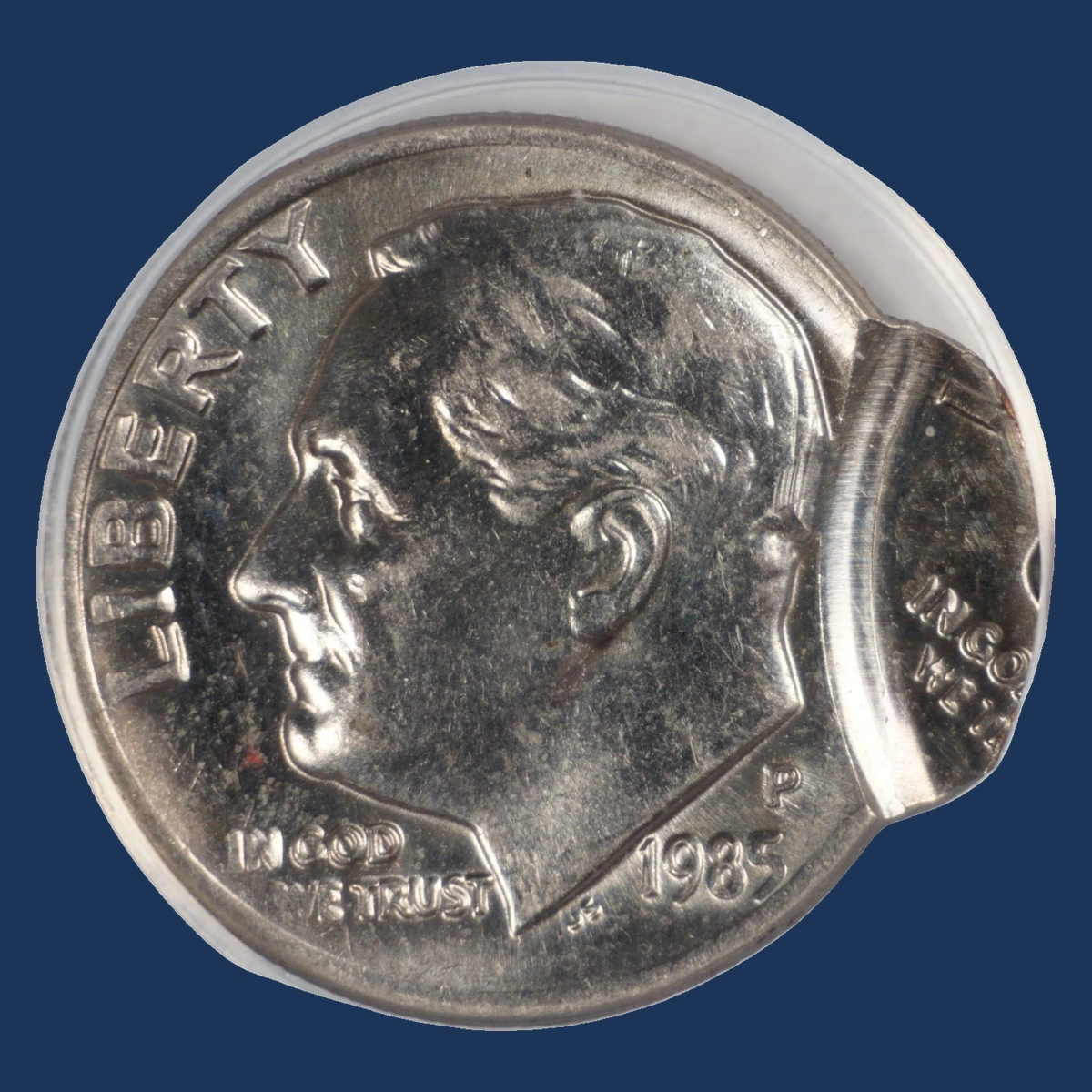
Two separate design impressions show that these coins returned under the stamping tools. On Philadelphia examples, the second blow landed either 75% or 60% off center.
Other pieces also had one face blocked during the later strike. This leaves an area without the normal design, even though the opposite side received another impression.
The blocked-face records describe a Philadelphia coin with its second strike 75% off center and a Denver coin at 85%. The Denver piece has later scratches; those scratches did not cause the repeated mint design.
Estimated Value
In March 2023, the Philadelphia and Denver blocked-face pair sold together for $139. That amount covers two separate coins, not one especially valuable double strike.
Individual 1985 double strikes are estimated at $50–$700. Widely separated, readable impressions can command more than faint overlap.
The scratched Denver example belongs below a comparable undamaged coin. A second strike that hides the date may also make an otherwise dramatic error harder to identify and sell.
How to Identify
The blocked-face pieces make most sense when viewed from both sides. Find the later strike’s border, then look directly opposite it for the area where another blank prevented normal detail.
A loose example can be checked with a scale against 2.268 grams. Calipers record its altered outline relative to a normal 17.91 mm dime; surviving edge grooves can help track where the later blow landed.
Use a 10× magnifier to follow a recognizable letter or portrait feature from the first impression into the second. Whole design sections can move far apart, unlike the tiny flat shelf of mechanical doubling.
Keep later scratches separate from this reading. On the Denver coin, they affect condition but do not explain the second strike or its blocked area.
9. 1985 Roosevelt Dime Flip-Over Double Strike
This Philadelphia dime turned over between strikes. Its second strike landed 75% off center, leaving parts of the front and back designs together on the same face.
That mixed design tells a different story from an ordinary double strike. Simply sliding sideways does not put the opposite face under the same stamping tool.
Heritage listed the coin with an NGC Uncirculated Details grade. That means it had no circulation wear but had a condition problem; the available description does not state the problem, so it should not be guessed from the grade alone.
Estimated Value
A flip-over double strike of this kind is estimated at $150–$900. Strong, readable overlap between opposite designs is its main attraction.
The 1985 example appeared in a three-coin lot that brought $176.25 in January 2015. That group also contained two other double strikes, so the full amount is not this coin’s individual price.
The Details grade matters when comparing it with cleaner pieces. Buyers generally discount damaged surfaces even when the striking sequence remains impressive.
How to Identify
Photograph both faces and separate the surviving Roosevelt details from the torch and branches. Finding parts of these opposite designs together gives a reason to investigate a flip between blows.
For a loose coin, weigh it against 2.268 grams and use calipers to record its changed outline. A normal dime is 17.91 mm wide, but repeated striking can distort that circle and its edge grooves.
Under a 10× magnifier, follow how the later design overlaps the earlier one. The reported second strike is 75% off center, without an established clock direction.
Check whether the extra image is raised or pressed inward. An inward mirror image suggests brockage, a transferred impression from another coin, rather than proving that this coin flipped.
10. 1985 Roosevelt Dime Deep Die Caps and a Matching Pair
A die cap has bent upward around a stamping tool, creating a cup-like coin. One 1985-P example weighs 2.26 grams and received an NGC MS66 grade, indicating a very well-preserved unworn coin.
A separate pair shows how two coins can record related strikes. Its first coin has a deep front cap and flattened back; the second has a clear back, faint front, and raised border.
The pair’s second coin has no readable date and is dated through its match. These two pieces remain separate, rather than being bonded together.
Estimated Value
The 2.26-gram cap has a $977.50 sale from January 2010. An estimated $500–$1,500 suits a strong individual cap of this general quality.
For the separate matching pair, allow an estimated $1,000–$2,000 for both coins together. Its January 2008 auction listing says it did not sell.
A matching pair needs convincing physical links between its members. Two unrelated cup-shaped coins do not receive the same paired value simply because their dates appear compatible.
How to Identify
The individual cap’s recorded 2.26 grams is close to the standard 2.268-gram dime. For protected coins, use their recorded measurements; a loose example can be checked gently with a scale and calipers.
The normal 17.91 mm diameter and grooved edge are starting comparisons, not limits a tall cap must retain. Never squeeze its walls flat to make it fit.
For the separate pair, inspect side photographs under a 10× magnifier. Compare the first coin’s flattened back with the second coin’s clear back, faint front, and raised border.
The PCGS grades are MS66 and MS64, both unworn grades. The second piece has no readable date, so its connection to 1985 depends on the matching shapes rather than a guessed numeral.
11. 1985 Roosevelt Dime Two Blanks Bonded Together
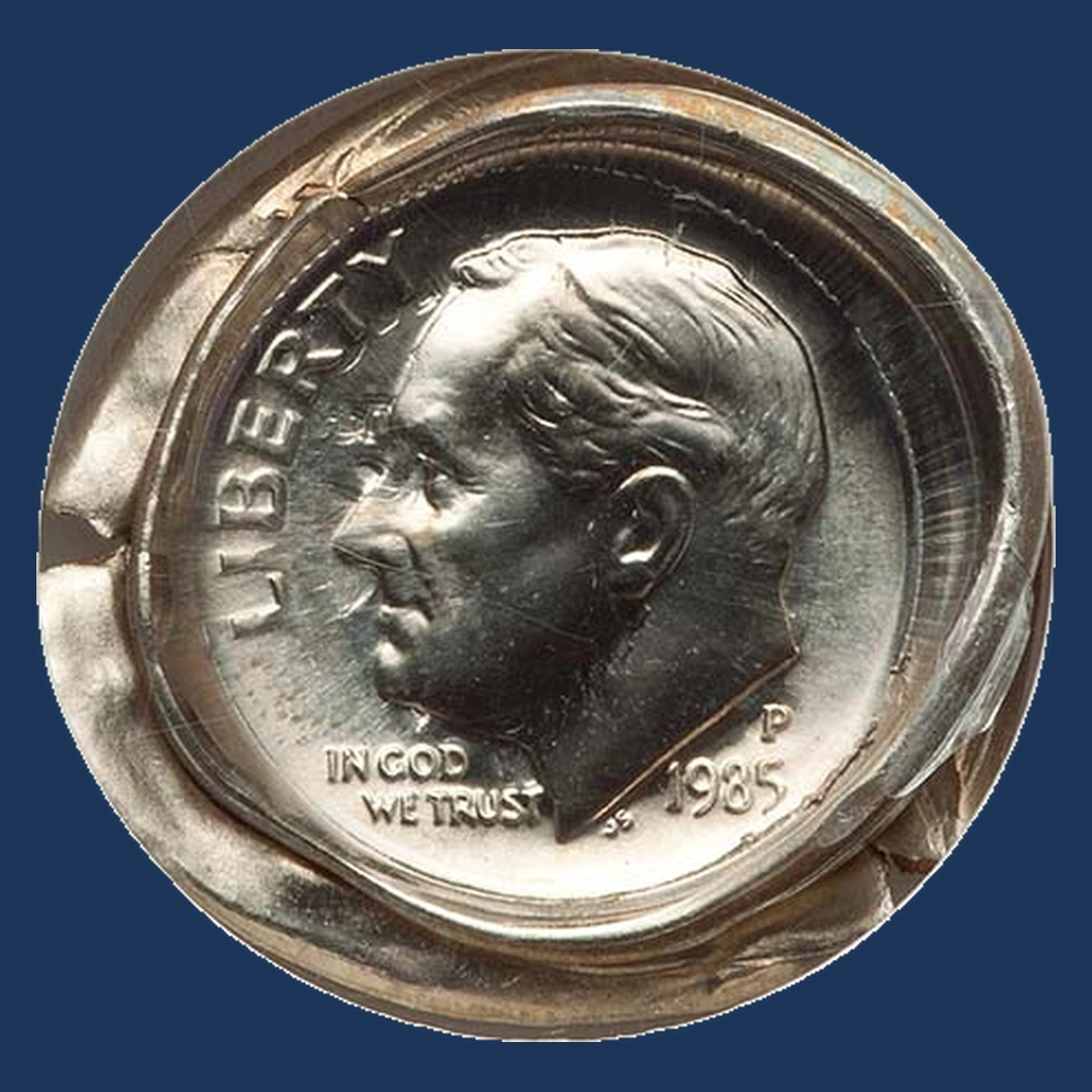
This object contains two coin blanks pressed together so firmly that they stayed joined. It is more than an unusually thick single dime.
The Philadelphia pair also formed a front die cap. A design remains on the back, while expanded metal creates an uneven border around both sides.
NGC graded the joined object MS67, a high grade for an unworn piece. Its bright, mirror-like areas do not make it a Proof collector coin; those reflective surfaces developed on this unusual mint error from two ordinary clad dime blanks.
Estimated Value
The bonded pair sold for $1,080 in July 2021. That is the price for the complete joined object, including its cap shape.
An estimated $800–$2,500 allows for comparable two-blank pieces with differences in condition and clarity. A strong seam and recognizable struck designs make the unusual construction easier to appreciate.
Do not add a separate cap price to the pair’s value. Separating or otherwise damaging the joined metal would also harm the feature collectors are buying.
How to Identify
The joining line deserves attention before the shiny surfaces do. Use a 10× magnifier and side lighting to inspect where the two blanks meet.
Look for metal shaped together under striking pressure. Glue, solder, or a neat seam between two normal finished dimes would tell a different story.
A normal single dime weighs 2.268 grams and measures 17.91 mm across. Two intact blanks would start near twice that weight, but no exact measured weight is established for this pair.
For a loose joined object, use a scale and calipers without squeezing its cap walls. Examine the stretched edge and irregular border, then compare the visible back design with the front cap; keep the two blanks attached throughout the inspection.
12. 1985 Roosevelt Dime Lincoln Cent Struck Over a Dime
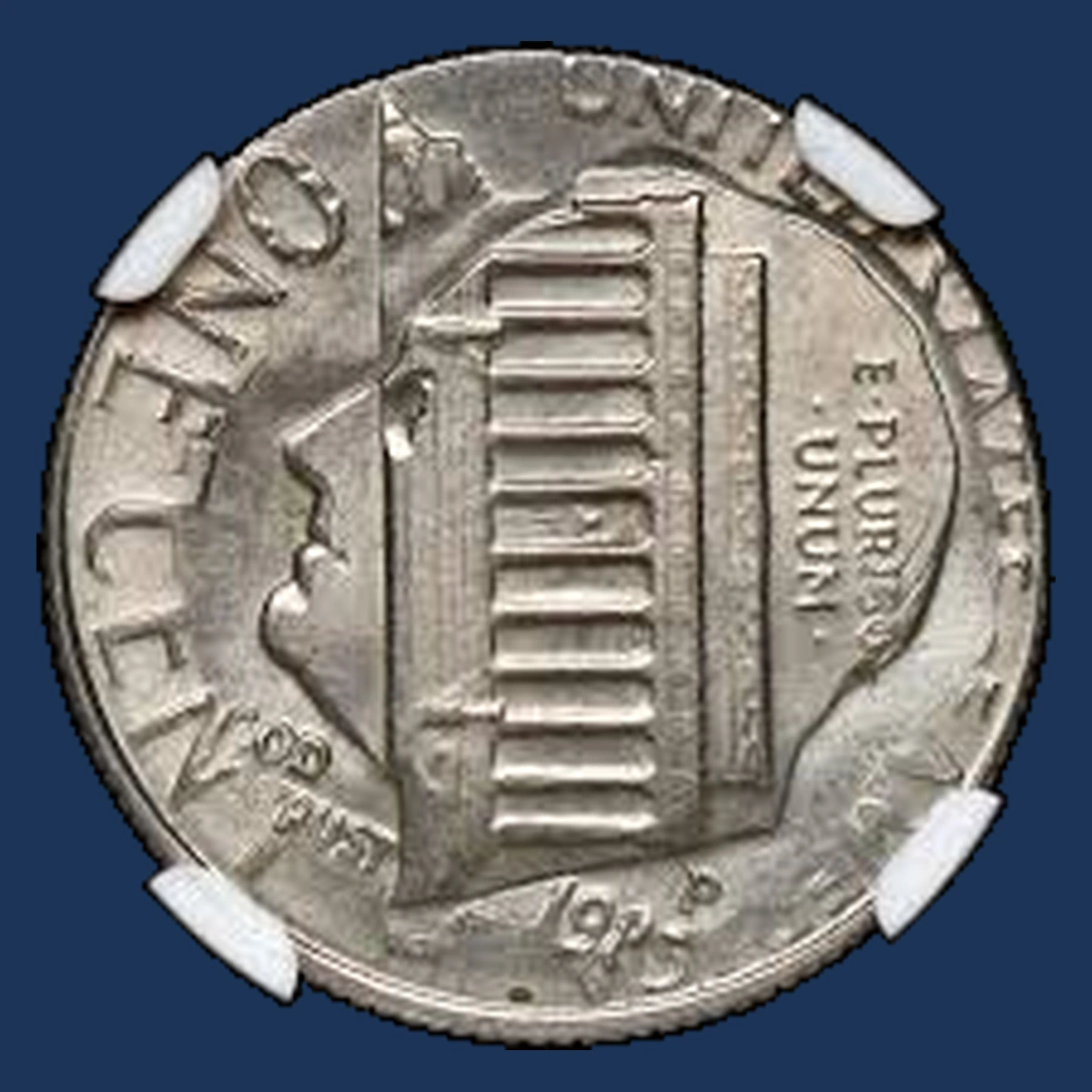
A Lincoln portrait on a silver-colored dime-sized coin is an immediate surprise. Here, a finished 1985-P dime entered a cent press and received the 1985 Lincoln cent design over its earlier images.
Parts of both dates survived. On the NGC MS67 example, the dime date lies among the folds at the left side of Lincoln’s jacket.
This is different from a cent struck on an unused dime blank. The earlier Roosevelt design matters because it shows that the metal had already become a dime before entering the wrong press.
Estimated Value
Heritage sold the MS67 example for $747.50 in April 2011. Its grade describes an exceptionally well-preserved unworn coin.
An estimated $700–$2,500 covers comparable cent-over-dime pieces with both dates established. Clear remains of the earlier dime and an attractive later cent strike improve appeal.
The price belongs to one coin carrying two denominations. It is not the combined value of a separate cent and dime, and the older sale is not a guaranteed current offer.
How to Identify
Locate the two dates before making a weight-based claim. A 10× magnifier should help reveal the older dime date within the jacket folds on this example.
Then search both faces for other surviving parts of the dime design beneath the cent. A cent image on small silver-colored metal alone would also fit an unused dime blank.
For a loose coin, use a scale to compare it with the dime’s normal 2.268 grams, rather than the cent’s 2.50 grams. Calipers can record how the later strike changed its original 17.91 mm outline.
Inspect any surviving edge grooves and the places where the two designs cross. In the illustrated example, the jacket-area dime date connects the earlier 1985-P host to the later 1985 cent strike.
Conclusion
The smallest 1985 dime errors can start around $5, while striking combinations and paired pieces reach an estimated $2,500. Size alone does not explain the difference.
A raised crack, missing layer, and second design each tell a different minting story. Look at both faces and the edge before choosing a price comparison.
Keep joined or matching pieces together. Their relationship may be the most valuable part of the error.