1988 Dime Error List with Pictures

Copper showing on Roosevelt’s face can mean more than a change of color. A 1988-D dime missing its front metal layer weighed just 1.9 grams and sold for $360.
Other 1988 Roosevelt Dime errors change the edge, move the design, or leave a backward impression. The examples below have estimated ranges spanning $5–$1,000.
Keep reading to compare each visible clue with the press accident that could produce it.
1. 1988 Roosevelt Dime Traces from Tools Touching
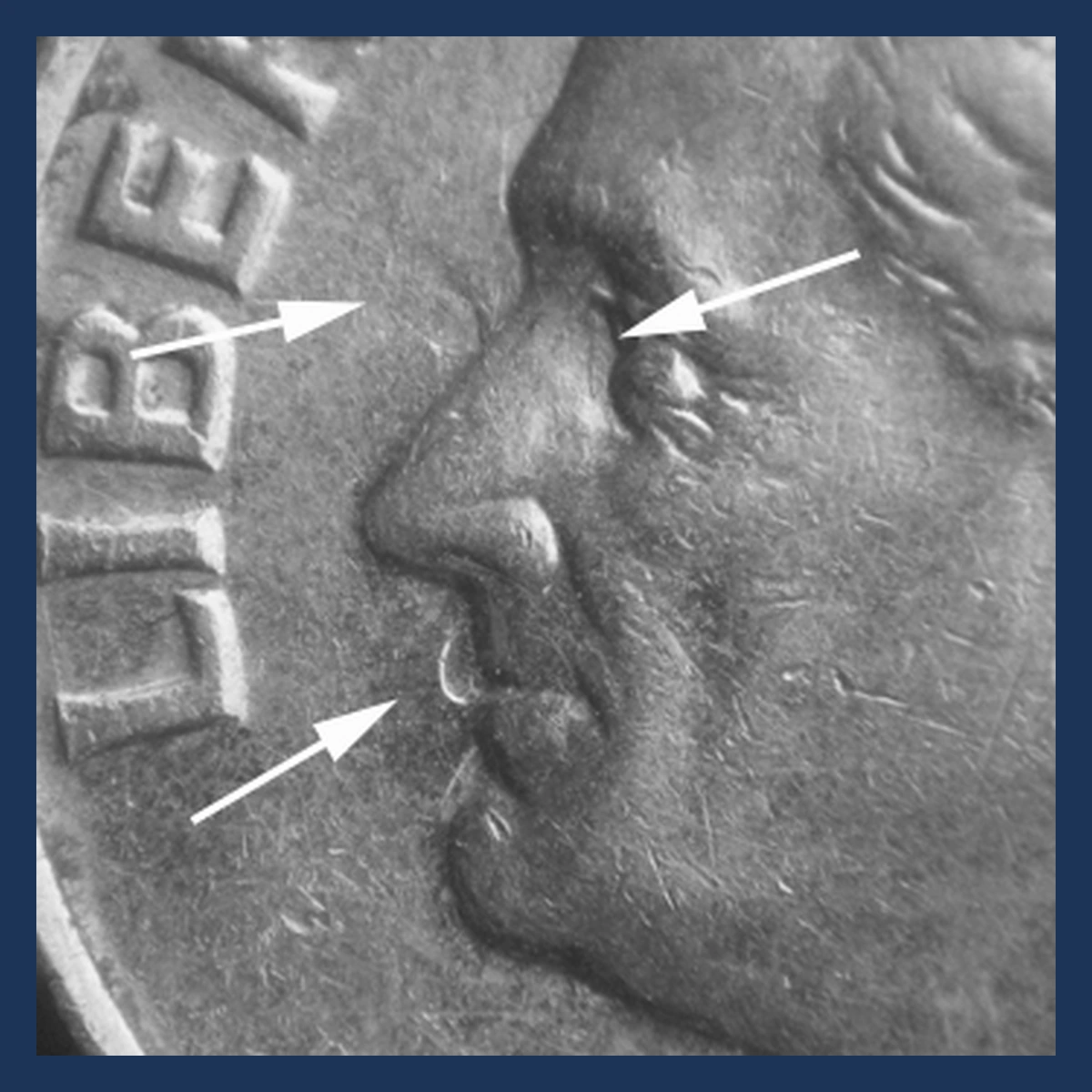
Faint pieces of the opposite design may appear where the normal dime has open space. These can be clash marks left by damaged stamping tools.
The tools, called dies, normally have a metal disk between them. If they meet without that disk, one tool can receive traces of the other’s design.
Later coins can then pick up those extra outlines. Reports list this problem for both Philadelphia and Denver dimes from 1988.
The reports do not establish one required location. A random line or scratch should not be named a clash without a matching design shape.
Estimated Value
Minor genuine clash marks are estimated at $5–$150, with stronger recognizable outlines generally more desirable. This is a comparison-based range for the reported 1988 type.
A 1993-P dime combining clash marks with a shifted front sold for $63 in April 2021. That separate-year coin had two features, so its price is not a direct 1988 clash-only result.
Condition matters, but the extra detail must first be recognizable as part of the opposite design.
How to Identify
Compare the suspected extra mark with the normal design on the other face before measuring its size. A clash should resemble something the opposite stamping tool could transfer.
Turn a normal dime top to bottom to understand the two designs’ relationship. Then use a 10× magnifier to follow the extra outline rather than relying on one bright reflection.
For a loose coin, check roughly 2.268 grams and 17.91 millimeters with a scale and calipers, and inspect the grooved edge. A cut into the surface or unrelated parallel lines need a different explanation.
No particular letter or portrait fragment is established for these reports. Identify the transferred shape before assigning a clash premium.
2. 1988 Roosevelt Dime Stepped Edge from Partial Collar Contact
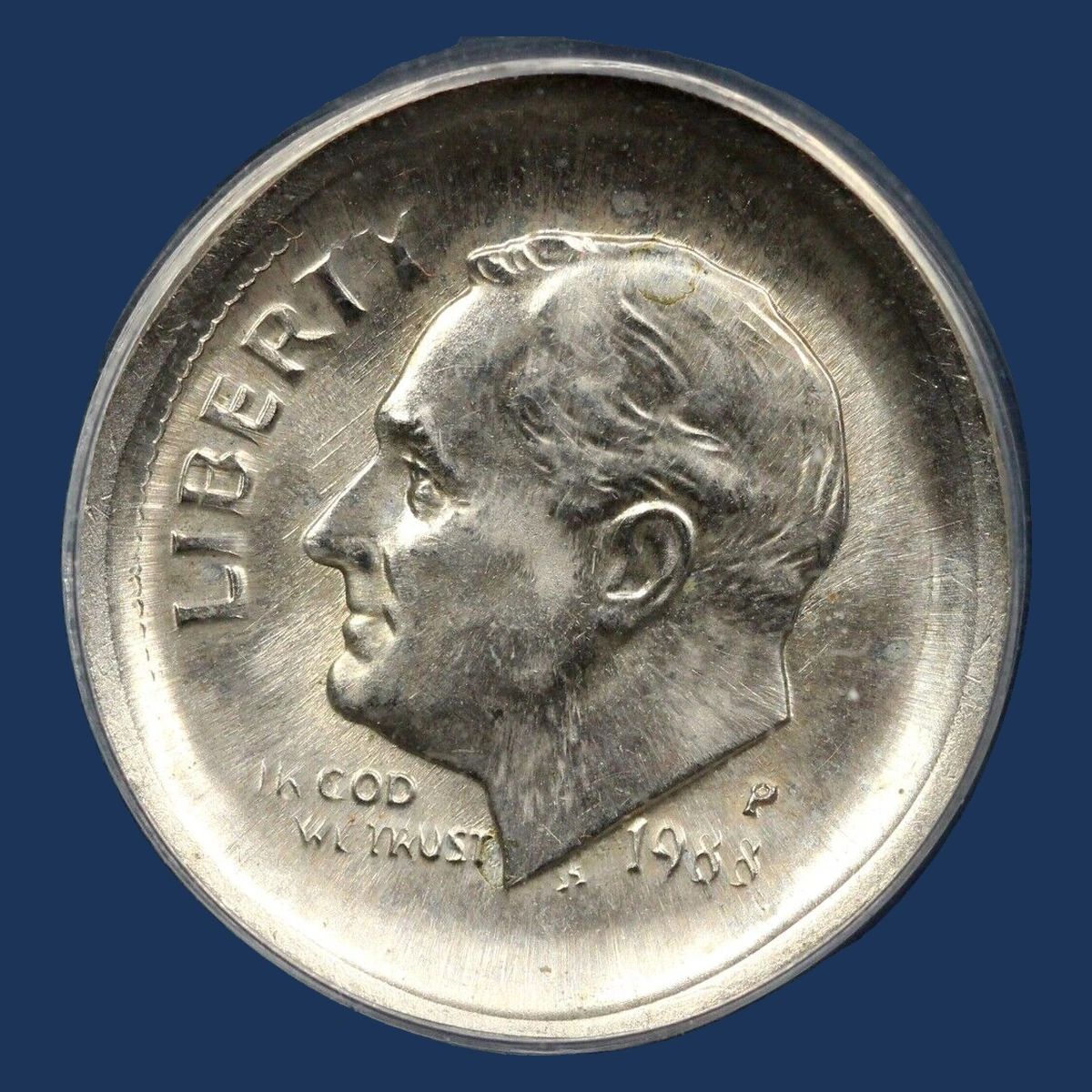
A step around the edge can show where only part of a dime met the restraining ring during striking. Collectors call that ring the collar.
The confined part receives the normal edge grooves, while metal outside the ring can expand. If the disk sits unevenly, the step can change height around the circumference.
One 1988-P example was graded ICG MS65, an unworn grade. A separate tilted partial-collar coin was offered as ANACS MS63.
These are edge errors, not evidence of a silver issue. Ordinary and Proof dimes dated 1988 used layered copper-nickel metal.
Estimated Value
The ICG MS65 example sold for $11 in December 2008. An estimated range of $10–$200 covers ordinary and tilted partial-collar examples with different levels of visibility and preservation.
A small step can be inexpensive even on an unworn coin. A pronounced, clearly formed edge usually makes the error easier to recognize.
The separately offered ANACS MS63 tilted coin does not share the ICG coin’s recorded price. Its own edge shape and condition must guide comparison.
How to Identify
View the edge directly, turning the coin slowly rather than judging from a face photograph. Look for a ledge between the grooved portion and the metal that expanded beyond the collar.
A 10× magnifier helps distinguish that formed step from a battered rim with flattened grooves. On a tilted example, follow how the ledge changes height around the coin instead of expecting an even shelf.
Check a loose coin on a scale against 2.268 grams, then use calipers against the normal 17.91-millimeter diameter. Extra width should agree with the expanded edge, and the clearest clue is the boundary where normal collar contact ended.
3. 1988 Roosevelt Dime Reported Copper-Colored Surface
Both faces of a 1988-P dime were described by a dealer as having a heavy copper wash. The phrase refers to its copper-colored surface, not a confirmed copper-only metal disk.
A thin surface change can leave the coin’s normal layered construction intact. That differs from a missing outer layer, which removes part of the coin’s metal.
The dealer report does not establish the coating’s composition or when it formed. Later plating and chemical changes can create a similar appearance.
The coin therefore needs examination beyond its color. A reddish photograph alone cannot show whether the Mint caused the change.
Estimated Value
For an original Mint-related copper wash, use an estimated range of $15–$200. This is conditional on identifying the surface change rather than assuming every copper-colored dime is an error.
A separate 2005-P dime with a recognized heating-related surface problem sold for $74 in April 2015. It offers a general surface-error comparison, not proof of the 1988 coin’s cause.
A later coating does not receive this Mint-error estimate. Nor should the coin be priced as a wrong-metal blank from color alone.
How to Identify
Weigh a loose coin before calling it a missing-layer error: a copper-colored surface can remain near the normal 2.268 grams. Check its diameter with calipers against 17.91 millimeters as well.
Inspect both faces and the edge grooves under a 10× magnifier. Look for an added film bridging fine details, peeling coating, or trapped dirt rather than assuming the color belongs to the original metal.
Take photographs under neutral light without polishing the coin.
If the ordinary layered edge remains visible, that is different from an outer layer being absent. Have the intact surface examined for when and how the copper color formed before treating it as a Mint error.
4. 1988 Roosevelt Dime Blocked Back Design
Some back details on a reported 1988-P dime are weak or missing. Material filling the stamping tool can prevent those details from reaching the metal disk.
This is often described as a filled die or grease strike. Grease is one possible obstruction, but a weak design does not identify the substance on its own.
The report does not give a specific affected letter or prove that any foreign material remains attached. It describes the loss of normal detail.
Wear, weak striking pressure, and surface damage can also soften a design. The difference is best judged against the surrounding preserved features.
Estimated Value
An estimated range of $10–$250 applies to genuine blocked-design examples, depending on the area affected and how clear the interruption is. A small weak letter generally offers less visual impact than a broad missing section.
This is a modern Roosevelt striking-error comparison rather than a documented sale for the reported 1988-P coin. No separate value is assigned to an unidentified blocking substance.
Ordinary wear or corrosion that erases the design does not qualify for this error range.
How to Identify
Put a normal 1988-P dime beside the suspected example and compare the back details. Check whether the weak patch interrupts otherwise well-preserved design or merely follows the usual high points of wear.
The reported coin’s exact affected letters are not specified.
Use a 10× magnifier along the transition from strong to weak detail. Scratches, pits, or scraped metal can show that the design disappeared after striking.
A loose dime should be checked with a scale and calipers against 2.268 grams and 17.91 millimeters. Examine the edge grooves for damage that accompanies the weak surface.
An undamaged boundary between clear detail and a localized blocked area is more useful than simply finding a faint letter.
5. 1988 Roosevelt Dime Doubled Design on the Stamping Tool
Letters or numbers with a second formed outline can point to a doubled stamping tool. The tool already carries that extra detail before it strikes the coin.
That is why a doubled die does not require the coin to be struck twice. The duplicate design can appear in one normal blow.
A 1988 report lists doubled-die errors without establishing a mint, finish, or specific catalog variety. It should not be assigned a famous number from another year.
Flat shelves beside letters can instead come from movement during striking. Wear and damaged lettering can also imitate a second outline.
Estimated Value
For a genuine, identifiable 1988 doubled die, estimate $15–$300, allowing for the strength of the extra detail and the coin’s condition. The range uses minor modern Roosevelt varieties as a guide.
The broad 1988 report does not establish a specific variety’s auction record. A seller’s doubled-letter description is not itself evidence for the upper end.
Shelf-like mechanical doubling should be separated from doubling carried by the stamping tool. It does not automatically receive the same collector premium.
How to Identify
Choose one clear letter or date digit and inspect its corners with a 10× magnifier. Look for a second rounded outline or separated detail, rather than a thin flat shelf cut from the main design.
Then inspect nearby letters for a consistent relationship, allowing for changes across the tool. A random dent beside one numeral does not demonstrate a duplicated design.
Record the actual mint and finish before comparing with a catalog example, since the general 1988 report supplies neither. A scale and calipers can check a loose coin against 2.268 grams and 17.91 millimeters.
Inspect the grooved edge for damage too. The useful confirmation is an exact match to a recognized doubled-tool pattern, not merely the word “double” in a listing.
6. 1988 Roosevelt Dime Missing Metal from an Incomplete Blank
A missing section of the outline can begin before the design is stamped. The metal disk, called a blank, may have been punched from an incomplete area of the metal strip.
The resulting coin forms its rim and lettering around that shortage. This is the basic distinction between a genuine clip and metal cut away later.
Reports name both 1988-P and 1988-D clips, but do not establish every shape or number of gaps. A particular curved or straight example needs its own photographs.
The remaining surface matters as much as the outline. Filing and corrosion can produce deceptive missing areas.
Estimated Value
Allow $20–$350 for genuine clips, depending on the size and shape of the shortage, preserved identification, and condition. This range does not imply that every clip shape is documented for both mints.
A different 1997-P nickel with a twenty-percent clip sold for $124 in March 2025. That provides context for a visible missing-metal error, though the denomination and date differ.
An ordinary dime cut after striking falls outside the range. Its missing metal was not a Mint blanking mistake.
How to Identify
Examine the rim at each end of the gap rather than starting with the gap’s shape. Metal struck around a pre-existing shortage should differ from a finished rim sliced or filed away.
A 10× magnifier can reveal those rim ends and nearby lettering, while the remaining edge grooves help expose grinding. Weakness opposite the gap can support a clip, but should not replace examination of the opening itself.
Use a scale to compare a loose example with 2.268 grams and calipers across intact spans against 17.91 millimeters. The first convincing clue is natural struck detail around the shortage, supported by sensible weight loss rather than a matching silhouette alone.
7. 1988 Roosevelt Dime Expanded Strike
An expanded dime has a wider outline because metal spread beyond its normal restraining ring. When the design remains complete, the error is called a broadstrike.
Examples reported for 1988 include Philadelphia coins and a separate Denver listing. Some Philadelphia pieces also received more than one strike.
One multiply struck example was described as larger than a cent, with a shallow cup shape at the front. That description belongs to the combined-error coin, not every broadstrike.
A wide-looking rim alone can mislead. The coin’s overall size, intact design, and edge must agree with metal spreading during the strike.
Estimated Value
Ordinary genuine broadstrikes are estimated at $25–$400, with greater expansion and clearer preservation tending to improve appeal. An added second strike should be assessed as part of the same coin.
The closely overlapping double-strike example discussed below sold for $80.50 in May 2005 and also had an expanded second strike. That is one combined-error price, not a separate broadstrike sale.
A dealer’s $32 minimum bid for another multiply struck piece likewise does not establish a completed transaction.
How to Identify
Before calling a dime too large, compare its outline with a normal coin and measure several directions using calipers. The normal diameter is 17.91 millimeters, but uneven spreading can produce different readings around an error.
Check that the design remains on the stamped metal rather than disappearing beyond a large unstruck crescent.
Use a 10× magnifier to examine the widened border and reduced edge grooves. Flattening from later impacts may damage the rim without producing the same outward flow.
A loose broadstrike should still be weighed on a scale against 2.268 grams. If extra impressions also appear, assess them as part of the coin rather than adding separate maximum prices.
Retained design within a genuinely expanded outline distinguishes the basic broadstrike.
8. 1988 Roosevelt Dime Raised Cracks and Rim Blobs
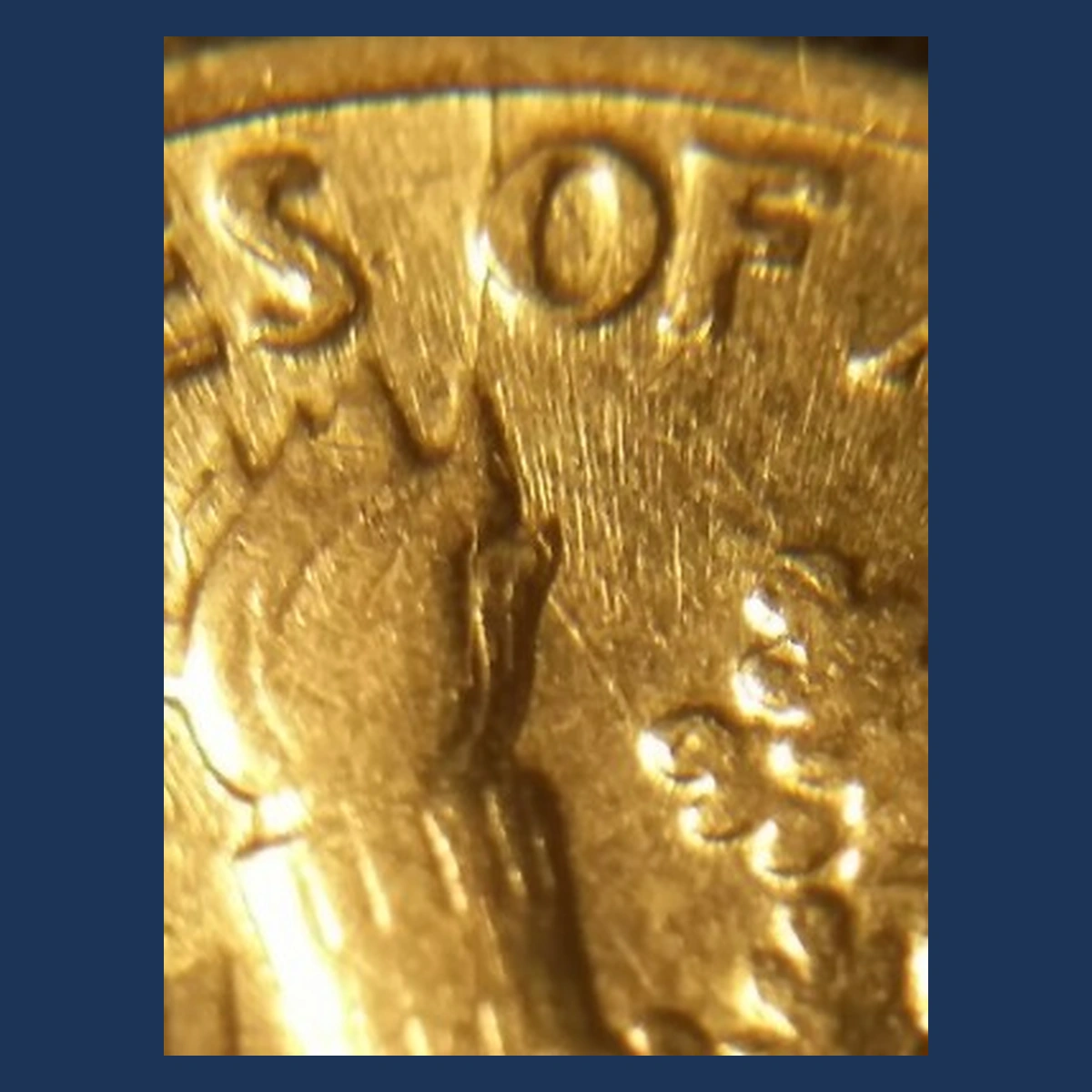
A narrow raised line can record a crack in the stamping tool. Coin metal enters that opening under pressure and preserves its shape on the finished dime.
If a piece breaks away at the tool’s edge, a larger raised patch can join the rim. Collectors call that kind of rim-connected break a cud.
Both forms are reported for 1988 dimes, without one established mint or required path. A small line and a large blob belong to different stages of tool failure.
Neither should be confused with a split in the coin itself. Later rim damage can also push metal upward.
Estimated Value
Small raised cracks can start around $5, while clearer rim-connected breaks may bring substantially more. Use an estimated range of $5–$450 across genuine examples of the reported type.
These are comparison-based values for minor modern dime cracks through more conspicuous tool breaks. No specific 1988 cud auction is assigned to the general report.
The size and clarity of the raised feature matter more than a dramatic nickname. A scratched line does not qualify for the same premium.
How to Identify
Light the coin from the side to see whether the feature rises above the surface or cuts into it. A 10× magnifier should show a continuous raised trace for a tool crack.
For a larger suspected cud, check whether the patch truly meets the rim. Look for surrounding design weakened or replaced by metal entering the broken portion of the tool.
Inspect the grooved edge near that patch for a dent that pushed metal onto the face. A loose example can be checked against 2.268 grams and 17.91 millimeters with a scale and calipers.
The report provides no fixed position to match. Confirm a raised struck feature, not displaced metal beside a later impact.
9. 1988 Roosevelt Dime Off-Center Designs
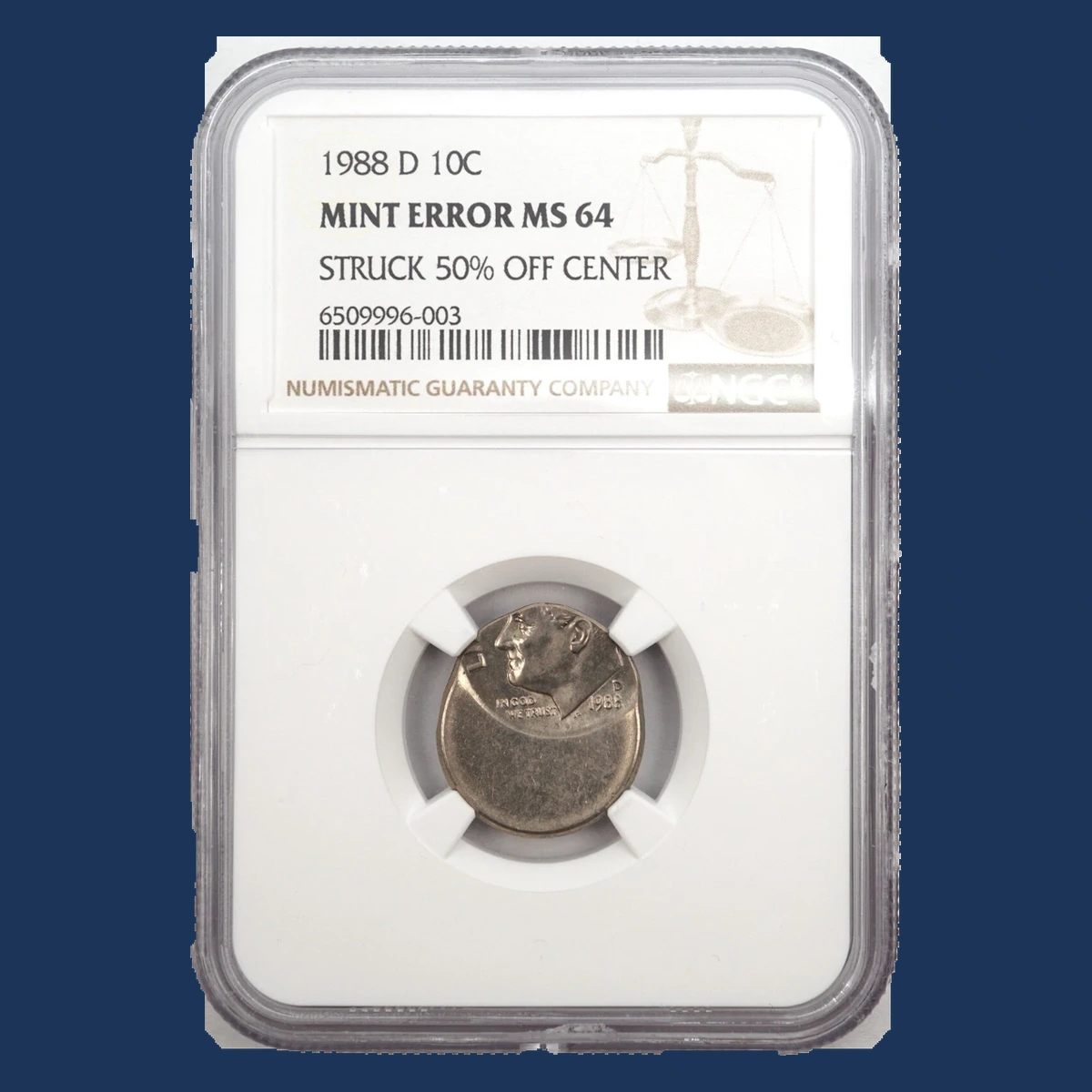
The portrait and lettering sit away from the center when a metal disk enters the press in the wrong position. Part of the disk can remain blank after both tools strike it.
A documented 1988-P dime is ten percent off-center toward one-thirty and graded ANACS MS62. A separate Denver example is reported at forty-five percent toward one o’clock, graded ANACS MS64.
Those percentages and directions describe different coins. They should not be combined into one dramatic specimen.
The blank area still contains metal. That distinguishes an off-center strike from a clip where part of the disk is actually missing.
Estimated Value
The ten-percent Philadelphia coin sold for $39 in August 2021. Estimate $25–$500 across genuine 1988 off-center examples, allowing for different displacements, condition, and readable dates.
The Denver coin’s forty-five-percent shift is a separate visual comparison, not the identity behind that $39 result. A larger blank area can increase interest if the date and mint remain identifiable.
A tiny one-sided shift does not automatically deserve a price associated with a strongly displaced whole design.
How to Identify
First read the mint mark so you know which photographed example to compare: Philadelphia’s ten-percent coin or Denver’s forty-five-percent coin. Their directions are one-thirty and one o’clock respectively.
Inspect both faces and follow the unstruck metal around the displaced designs with a 10× magnifier. One centered face beside one shifted face instead suggests a misplaced stamping tool.
A scale should check a loose specimen against 2.268 grams, while calipers compare its outline with the usual 17.91 millimeters. Examine the edge grooves and the transition into untouched metal rather than mistaking a cut-away section for a blank area.
A retained disk with both designs displaced is the key comparison.
10. 1988 Roosevelt Dime Repeated Strikes
Extra design near the back rim reveals two closely overlapping strikes on one 1988-P dime. The coin did not rotate between those blows.
Its second strike spread the metal outward, giving the piece a slight cup shape. PCGS graded it MS65, an unworn grade with good preservation.
Another Philadelphia example received a second strike ninety-five percent off-center, with that strike recorded as one-sided. A dealer also described a multiply struck, expanded piece larger than a cent.
These are separate examples of repeated striking. Their angles, shapes, and affected faces should not be transferred from one coin to another.
Estimated Value
The PCGS MS65 overlapping-strike dime sold for $80.50 in May 2005. Comparable genuine repeated strikes are estimated at $60–$700, depending on how clearly the impressions separate and how well the coin survives.
A far-off-center second impression presents differently from close overlap at the rim. Its value needs a similarly dramatic comparison.
The expanded edge on the $80.50 coin belongs to that same sale. It should not receive another full price added on top.
How to Identify
On the close-overlap specimen, begin at the back rim where the earlier impression is most apparent. Follow that impression under a 10× magnifier to distinguish it from a narrow shelf beside a letter.
The two strikes did not involve rotation on this particular coin.
For the separate ninety-five-percent second strike, find the small area reached by the second blow. Do not demand the close-overlap coin’s shallow cup shape or duplicate pattern.
Weigh a loose specimen against the normal 2.268 grams and measure it with calipers against 17.91 millimeters. Inspect the grooved edge for expansion or flattening consistent with the extra blow.
Identify two struck impressions and their overlap rather than counting every doubled-looking letter as another strike.
11. 1988 Roosevelt Dime Missing Front Metal Layer
Roosevelt’s face appears on exposed copper when the front outer layer is missing. The normal dime uses bonded metal layers, called clad construction, around a copper center.
A recorded 1988-D example weighs 1.9 grams, below the ordinary 2.268 grams. NGC graded it MS65.
The missing material is the front copper-nickel layer, not a layer of pure nickel. The back does not automatically share the same defect.
A copper-colored coating can resemble this appearance without removing metal. Weight, the struck surface, and the boundary at the edge must support an actual missing layer together.
Estimated Value
The NGC MS65 front-layer example sold for $360 in June 2024. Estimate $150–$750 for comparable genuine 1988-D missing-front-layer dimes, depending on condition and how clearly the exposed metal shows.
Its recorded 1.9-gram weight helps explain why this coin is different from one that merely looks copper-colored. The range prices the complete error coin.
A later chemical change or added coating should not be priced from this sale simply because a photograph has similar color.
How to Identify
Compare the two faces: this recorded Denver coin has the missing layer at the front, not an unspecified copper-colored surface. A 10× magnifier should help show struck Roosevelt detail on exposed metal.
If the coin is loose, use a scale to compare it with the documented 1.9 grams and ordinary 2.268-gram standard. Do not remove a certified coin from its holder just to weigh it.
Calipers can check the usual 17.91-millimeter diameter, while the grooved edge helps show where the remaining layers meet. Look for damage that stripped metal after striking, and match genuine exposed copper together with the appropriate weight loss rather than shade alone.
12. 1988 Roosevelt Dime Backward Impression with an Expanded Edge
Backward design pressed down into the front can reveal contact with an already struck coin during minting. That sunken mirror image is called a brockage.
The recorded 1988-P example also spread beyond its normal edge restraint. It therefore combines a brockage with a broadstrike on the same coin.
NGC graded the specimen MS66, a well-preserved unworn grade. The description does not specify a percentage of front coverage.
The backward impression is the important feature, not merely the wide outline. Coins squeezed together after leaving the Mint can produce deceptive impressions that require comparison with the original struck surfaces.
Estimated Value
Estimate $100–$1,000 for genuine 1988 brockage-and-broadstrike examples, depending on the mirror image’s strength, coverage, and preservation. The NGC MS66 coin appeared at GreatCollections in January 2023, but no final amount is used here.
A separate 2001-P dime combining a partial brockage with strong clash marks sold for $79 in November 2014. Its different combination is context rather than a direct price match.
A deep, easily recognized backward design can merit a different comparison from faint transferred traces.
How to Identify
Read the extra lettering as if viewing it in a mirror, then check whether it sinks below the surface. Normal raised lettering beside a weak duplicate is not the same appearance.
Use a 10× magnifier to compare the backward impression with surviving normal detail. Examine the opposite face too, since later squeezing can crush both surfaces in ways unlike normal striking.
The reported brockage affects the front, but no required coverage percentage is given.
Check a loose coin on a scale against 2.268 grams and use calipers against 17.91 millimeters. Its expanded outline and reduced edge grooves should agree with the accompanying broadstrike.
The main identifying feature is an original sunken, backward coin design, not enlargement by itself.
Conclusion
These 1988 Roosevelt Dime errors have estimated ranges from $5 to $1,000. Some change only a small feature, while repeated strikes, missing metal layers, and backward impressions can alter the whole coin.
The $360 missing-front-layer example shows why measurements help explain appearance. Compare the correct mint and specimen, and treat combined errors as one coin rather than adding a separate maximum price for every feature.