1993 Dime Error List with Pictures

A faint final 3 and a complete second design tell very different stories on a 1993 dime. One extraordinary example carries a 1994 Lincoln cent design over the earlier dime and sold for $3,120.
This guide to 1993 Roosevelt Dime errors covers estimated values from $5–$4,500. Smaller clues include a curved shortage, a shifted front, and unusual surface color.
Read on to learn which details separate these mistakes from wear, damage, and ordinary differences.
1. 1993 Roosevelt Dime Reported Thin S Mint Mark
The S on one 1993-S dime was described as unusually thin. The coin remained inside a complete Proof set, a collector product made with specially prepared stamping tools.
The dealer wondered whether the letter represented a new mint-mark style. That question does not establish a recognized Type 2 variety.
A thin-looking letter can also reflect lighting or differences in how clearly the tool transferred its design. Compare the whole S before naming an error.
The set’s metal type matters too. San Francisco made both ordinary layered-metal and ninety-percent-silver Proof dimes that year.
Estimated Value
Allow $5–$100 for the individual Proof dime, depending on its metal, preservation, and appearance. This is a whole-coin estimate, not an established premium for a new thin-S variety.
The historical dealer listing requested a $25 minimum bid for the complete set. It was neither a recorded sale nor a separate price for the dime.
A narrow-looking S alone does not justify pricing the coin as a major mint-mark rarity.
How to Identify
Keep the dime in its original holder while checking the set’s silver or regular issue label. Do not open an intact set merely to obtain measurements.
Tilt the holder under soft light, then inspect the S with a 10× magnifier. Compare it with a normal 1993-S Proof photographed at the same angle.
For a loose coin, a scale should distinguish roughly 2.268 grams for layered metal from 2.50 grams for silver.
Calipers should show about 17.91 millimeters, with grooves around the edge on either version. Look for glare, holder scratches, or weak detail elsewhere before judging the letter.
A consistently thin S under changing light is the first feature to establish. It does not by itself prove a new variety.
2. 1993 Roosevelt Dime Unusual Color from Reported Heating Trouble
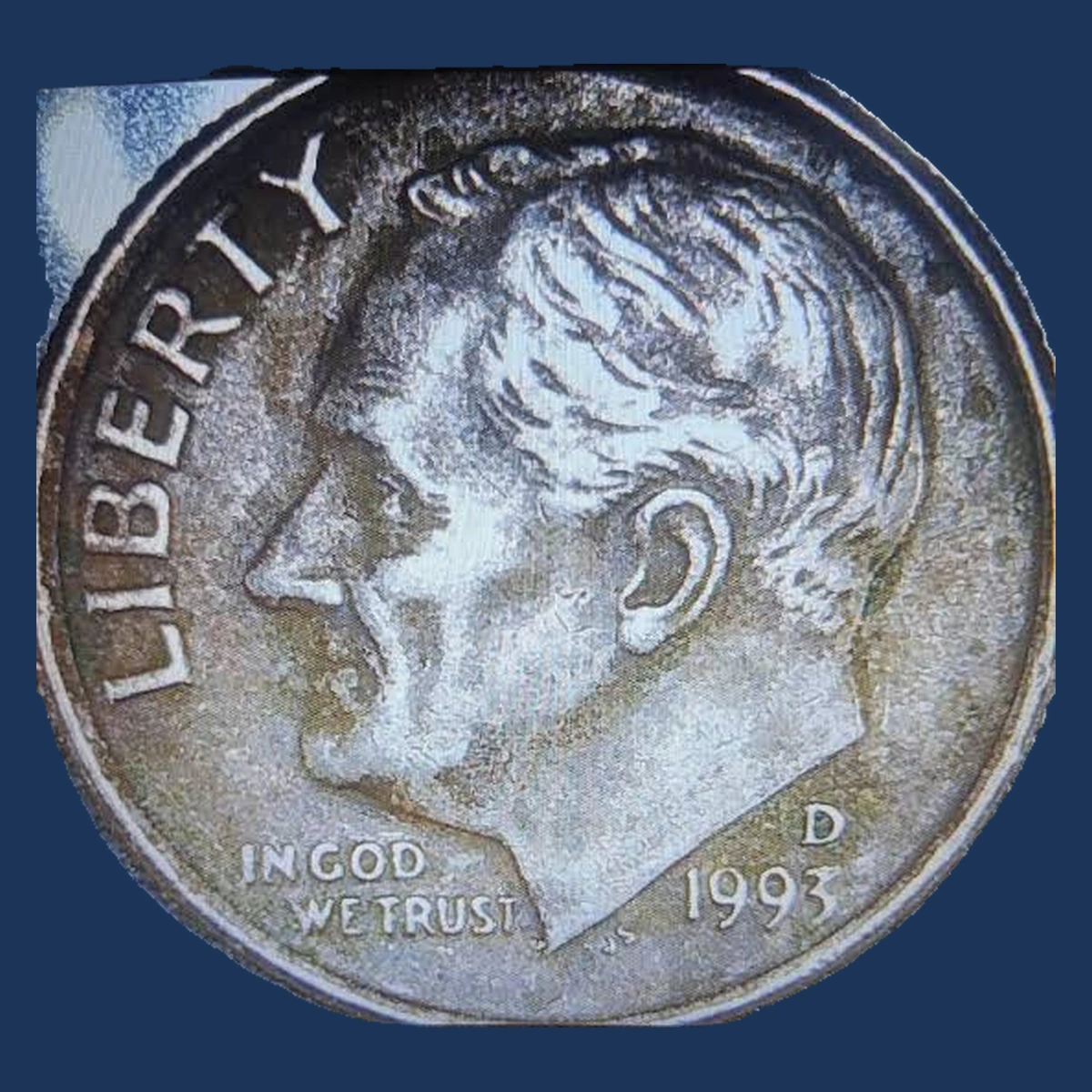
A brown or dark dime can look dramatically different from its bright neighbors. One 1993 report attributes unusual color to annealing, the heating used to soften metal before striking.
Trouble during that process can change the surface before the design is stamped. The process does not simply add shine.
Color alone cannot reveal when the change occurred. Soil, chemicals, later heating, or an added coating can produce similar shades.
This reported example therefore needs more than a matching color. Its original struck surface must support a Mint heating cause rather than later damage.
Estimated Value
A genuine Mint heating error has an estimated range of $20–$200 here. The range applies to an original surface change, not any discolored 1993 dime.
For comparison, an NGC MS66 2005-P dime identified with improper annealing sold for $74 in April 2015. That is a different year, but the same proposed manufacturing problem.
Heavy corrosion can erase the clues needed to identify the cause. A dark appearance by itself does not create an error premium.
How to Identify
Inspect the edge grooves for trapped dirt, crust, or flaking coatings before deciding that the faces changed at the Mint. A 10× magnifier can also reveal pitted metal or smeared detail that needs a different explanation.
A loose ordinary dime should measure about 2.268 grams and 17.91 millimeters on a scale and calipers. A missing layer or added coating may alter those readings, whereas color alone need not change them.
Photograph both faces in neutral light without cleaning the coin, making sure the original struck detail remains visible through the color. A coin-error specialist must examine that surface to distinguish Mint heating trouble from changes that happened later.
3. 1993 Roosevelt Dime Shifted Front and Clash Marks
An uneven rim can make the front look off-center while the back remains better centered. This happens when one steel stamping tool, called a die, sits out of position.
A recorded 1993-P dime also carries clash marks on both faces. Clashing occurs when the tools meet without a metal blank between them and pick up traces of the opposite design.
NGC graded that combined-error coin MS62, an unworn grade that allows noticeable marks. The shift and clashes belong to one specimen.
Another 1993 report describes a doubled rim. That appearance alone does not demonstrate two separate strikes.
Estimated Value
The combined shifted-front and clashed-design dime sold for $63 in April 2021. Comparable genuine 1993 examples are estimated at $10–$250, depending on the shift, visible clash marks, and condition.
A small extra rim without clear transferred design should not automatically receive the combined coin’s price. It may represent only minor misalignment.
The $63 result covers one whole coin with both features. Counting the shift and clashes separately would overstate that single sale.
How to Identify
Place front and back photographs side by side, with the rims fully visible. A shifted front beside a centered back points toward one misplaced tool rather than a displaced blank.
No single clash location or shift angle is required by the recorded description.
Use a 10× magnifier to look for separate traces of the opposite design on both faces. The doubled rim cannot substitute for those clash marks.
Check a loose coin with a scale and calipers against 2.268 grams and 17.91 millimeters. Inspect its grooved edge for flattening caused after it left the Mint.
Match the one-sided displacement first, then identify actual opposite-design traces before calling it the combined error.
4. 1993 Roosevelt Dime Curved Missing Blank Metal
A smooth curved shortage interrupts the outline of this 1993-P dime. Its metal disk, or blank, was incomplete before the design was stamped.
The recorded example weighs 2.18 grams and was graded ANACS AU58, meaning nearly unworn with slight wear. Its missing crescent accounts for the clipped outline.
Weight supports the identification, but a light coin is not automatically a genuine clip. Someone can cut or grind away metal after striking.
The important difference lies around the shortage. A genuine incomplete blank can show a rim and nearby design formed naturally around the missing area.
Estimated Value
For a genuine curved clip like this, use $20–$300 as an estimated range. The size of the shortage, clear date, and surface condition influence where a coin falls.
The 2.18-gram AU58 example appeared at auction in May 2026, but its final price is not used here. A different 1997-P nickel with a twenty-percent clip sold for $124 in March 2025.
That cross-denomination sale provides a broad comparison, not a direct price for this smaller dime clip.
How to Identify
A scale can check the documented example’s 2.18 grams against the normal 2.268 grams, while calipers measure intact spans against 17.91 millimeters. Small weight loss fits a small shortage but cannot establish how the missing metal disappeared.
Follow both ends of the curved opening with a 10× magnifier, checking how the rim formed around the gap. A weak rim opposite the clip can help, although it need not be equally clear on every coin.
Examine the remaining edge grooves for filing and compare nearby letters with the shape of the shortage. The rim ends should show natural formation around missing metal rather than abrupt cuts and tool marks from later removal.
5. 1993 Roosevelt Dime Design Blocked During Striking
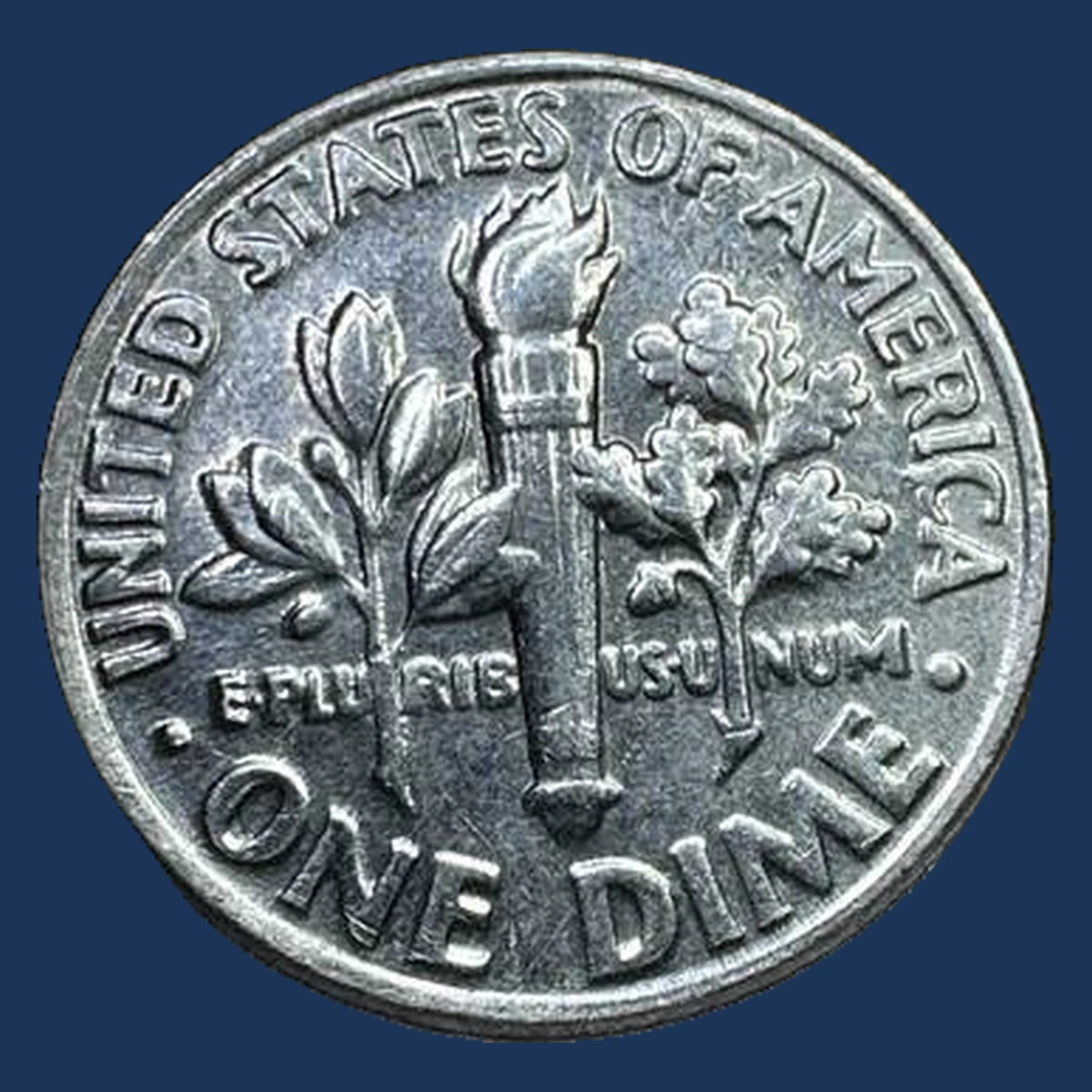
Part of the front design is missing or weak on a dime graded NGC AU55. Its auction title places the year in parentheses, so the full date should not be assumed readable.
Material between the metal disk and stamping tool prevented the normal impression. Collectors call this a struck-through error.
A separate 1993 report shows a weak final 3 and suggests grease blocked the detail. The material and the coin’s mint have not been established.
These reports describe interrupted design, but they need not concern the same specimen. Neither weak lettering nor a partial date proves grease by itself.
Estimated Value
Estimate $10–$350 for genuine 1993 blocked-design errors, from a small missing detail to an obvious affected area. This uses comparable modern Roosevelt striking mistakes rather than an invented sale for the weak 3.
The NGC AU55 example’s April 2026 auction listing does not supply a final price used here. Its opening bid is not treated as a completed sale.
A rubbed-away digit or ordinary wear falls outside this error estimate, even when the date looks similar.
How to Identify
For the weak-3 report, compare the final digit with the earlier numbers and nearby portrait detail. Wear affecting all exposed high points differs from a small area blocked during striking.
The NGC AU55 coin has its year shown as an inferred date; preserve that distinction when matching photographs. Its affected front should not be assigned the weak-3 coin’s mint or exact pattern.
A loose ordinary dime normally reads 2.268 grams and 17.91 millimeters on a scale and calipers. Check its grooved edge for signs of damage as well.
Examine the transition from clear to missing design with a 10× magnifier. Scraping, rough depressions, and chemical attack may reveal later removal instead.
Compare the weak area with undamaged surrounding design rather than identifying the error from a missing numeral alone.
6. 1993 Roosevelt Dime Expanded Strike
An unusually wide dime can retain the whole design inside an expanded edge. A 1993-D example is reported in this broadstrike category.
During normal striking, a surrounding ring controls the coin’s diameter and forms the edge grooves. Without that restraint, metal can spread outward.
The wider outline is more important than a smooth edge by itself. Circulation damage can also flatten the grooves without producing a broadstrike.
A broadstrike differs from an off-center strike that loses part of the design. The reported Denver coin needs its complete faces and edge examined together before that distinction is made.
Estimated Value
A genuine 1993-D broadstrike is estimated at $25–$400. The range allows for how clearly the metal spread, the coin’s condition, and whether all identifying details remain visible.
As a separate comparison, a 1997-P dime combining a broadstrike with an indent sold for $58 in January 2003. That coin had a second feature and is not the reported 1993-D specimen.
A mildly widened edge should not automatically receive the value of a dramatic combined error.
How to Identify
Use calipers in several directions to check for an outline wider than the normal 17.91 millimeters. Then trace both faces to see whether the outer lettering remains on struck metal instead of disappearing beyond a blank crescent.
An expanded coin should also show outward metal spread, which a 10× magnifier can help distinguish from a battered rim. Inspect the edge for reduced grooves and spreading that agrees with the enlarged faces.
A scale can check a loose dime against 2.268 grams, since widening does not itself require missing metal. Retained design inside a genuinely expanded outline is the useful combination; a smooth edge on a normal-width dime is not enough.
7. 1993 Roosevelt Dime Thirty-Percent Off-Center Strike
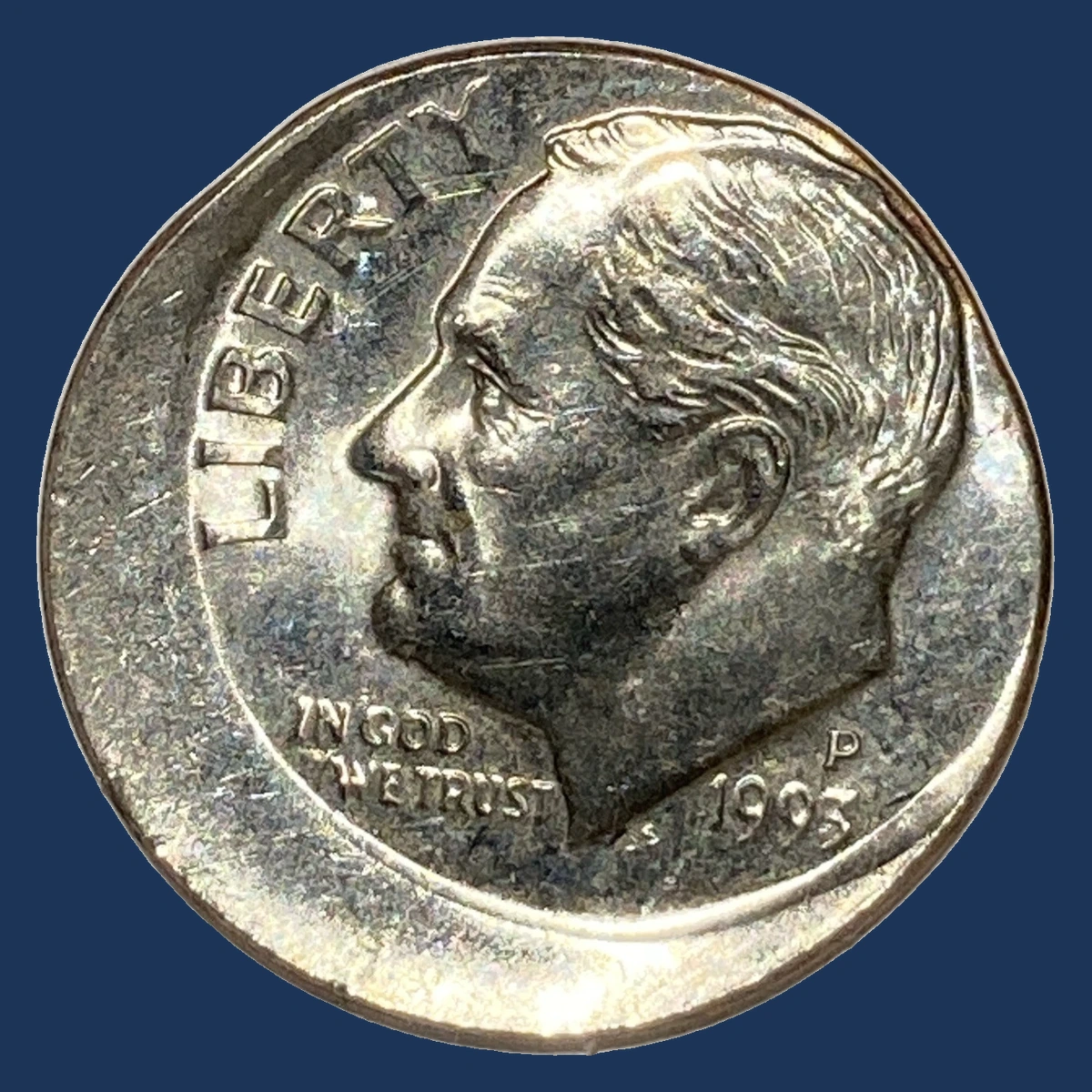
The design sits toward twelve o’clock on a documented 1993-P dime, leaving a large unstruck area. The auction describes the displacement as thirty percent.
ANACS graded this coin MS64, an unworn grade. It appeared with two other off-center dimes from different years.
The metal disk entered the striking position off-center. Both stamping tools then impressed the same displaced disk, leaving part of it without the normal design.
This differs from a front-only shifted tool, where the back can remain centered. It also differs from a clip because the blank area still contains metal.
Estimated Value
The 1993-P example sold within a three-dime lot for $75 in January 2022. That amount belongs to the entire lot and cannot be assigned to this coin alone.
For an individual genuine 1993 off-center dime, estimate $30–$500, depending on displacement, condition, and readable date. The documented thirty-percent example provides the visual comparison.
A retained year and mint help buyers identify what they are purchasing. Much smaller shifts usually need a less dramatic price comparison.
How to Identify
Turn the dime over while keeping track of the unstruck portion. Both designs should belong to the same displaced disk, unlike a front-only tool shift.
For this example, compare the thirty-percent displacement toward twelve o’clock with the ANACS MS64 photographs. Do not borrow the different angles or percentages of the other coins in its auction lot.
Use a 10× magnifier along the boundary between stamped and untouched metal. The blank portion should not show grinding that removed an earlier design.
A scale should show roughly 2.268 grams, while calipers can compare the outline with a normal 17.91-millimeter dime. Examine the edge grooves and confirm that metal remains in the unstruck area rather than being cut away.
8. 1993 Roosevelt Dime Missing Outer Metal Layer
A missing silver-colored outer layer can expose the copper center of an ordinary dime. Its metal normally consists of bonded layers, commonly called clad metal.
One 1993-P report describes a missing back layer and names a PCGS MS63 Red Brown grade. The color words do not independently prove the metal structure.
A separate 1993-D seller description calls a dark coin a missing-layer error. Black color alone does not establish that anything is absent.
The Denver coin’s affected face is not specified. Each specimen needs its exposed metal, edge, and weight checked rather than being identified from color alone.
Estimated Value
Genuine 1993 missing-layer dimes have an estimated range of $100–$750, depending on the affected area and condition. The amount applies to an actual missing outer layer, not staining.
A useful later-year comparison is a 2018-P dime missing its front layer, graded PCGS MS64. It sold for $384 in July 2021.
The 1993-P back-layer report and the dark Denver coin do not inherit that grade or result. Strong surface evidence matters more than a seller’s color description.
How to Identify
Start with weight rather than shade: an absent layer should reduce an ordinary dime’s normal 2.268 grams. Use a scale only for a loose coin, without removing a certified example from its holder.
Inspect the exposed face and its boundary with a 10× magnifier. Copper-colored struck detail differs from a coating sitting over the original surface.
The reported Philadelphia coin concerns the back, while the Denver report gives no face. Keep those identities separate when comparing pictures.
Calipers should check the normal 17.91-millimeter diameter, and the grooved edge should reveal how the layers meet. Reject black color as the deciding clue; look for a physically absent outer layer together with appropriate weight loss.
9. 1993 Roosevelt Dime Struck Again with a 1994 Cent Design
Two years and two denominations share one piece of metal in this striking accident. A finished 1993 dime later received a 1994 Lincoln cent design.
Traces of the dime survived beneath the newer impression. This is a double-denomination error, meaning one coin carries designs from two different coin values.
PCGS graded the recorded piece MS66, a well-preserved unworn grade. The underlying dime’s mint is not specified.
This sequence differs from striking cent tools on an unused dime blank. The earlier Roosevelt design must already have existed for its surviving details to appear beneath Lincoln’s later design.
Estimated Value
The PCGS MS66 example brought $3,120 in June 2024 in Heritage’s auction. An estimated range of $1,500–$4,500 covers comparable genuine examples, depending on preservation and how clearly both designs remain visible.
The price belongs to one coin, even though it carries two denominations and dates. It is not a separate valuation for each design.
A cent design on an unused dime blank requires a different comparison because it lacks the earlier struck Roosevelt details.
How to Identify
Find surviving Roosevelt-dime features before trying to read the newer Lincoln design. A small cent-shaped coin without those earlier details does not establish this two-stage accident.
Use a 10× magnifier to follow where the later impression crosses the earlier design. Check both dates against the documented 1993-dime and 1994-cent sequence.
The starting dime normally weighed 2.268 grams and measured 17.91 millimeters. A scale and calipers can help examine a loose coin, but the later strike may have changed its outline.
Inspect any surviving edge grooves along with the overwritten faces. Do not use a copper color label to assume a cent blank.
The clearest identifying evidence is readable dime detail beneath the later cent impression. Match both designs on the same metal, not merely two overlapping shapes.
Conclusion
Estimated values for these 1993 Roosevelt Dime errors run from $5 to $4,500. The standout is the finished dime that later received a 1994 cent design, while smaller mistakes require closer inspection.
Compare both faces and the edge before judging color or a weak digit. Keep a whole-set bid separate from a single-coin price, and remember that the $75 off-center result covered three coins.