2001 Dime Error List with Pictures

Two dimes can tell one story. A matched 2001-P pair, with repeated strikes on one coin and a mirror impression on the other, sold together for $470.
That pair is among the 2001 Roosevelt Dime errors below. Other examples involve missing blank metal, displaced designs, or a raised cheek patch.
Estimated prices range from $5–$2,500, with pair prices clearly separated from single-coin values. Read on to compare the visible features before choosing a price range.
1. 2001 Roosevelt Dime Raised Cheek Chip
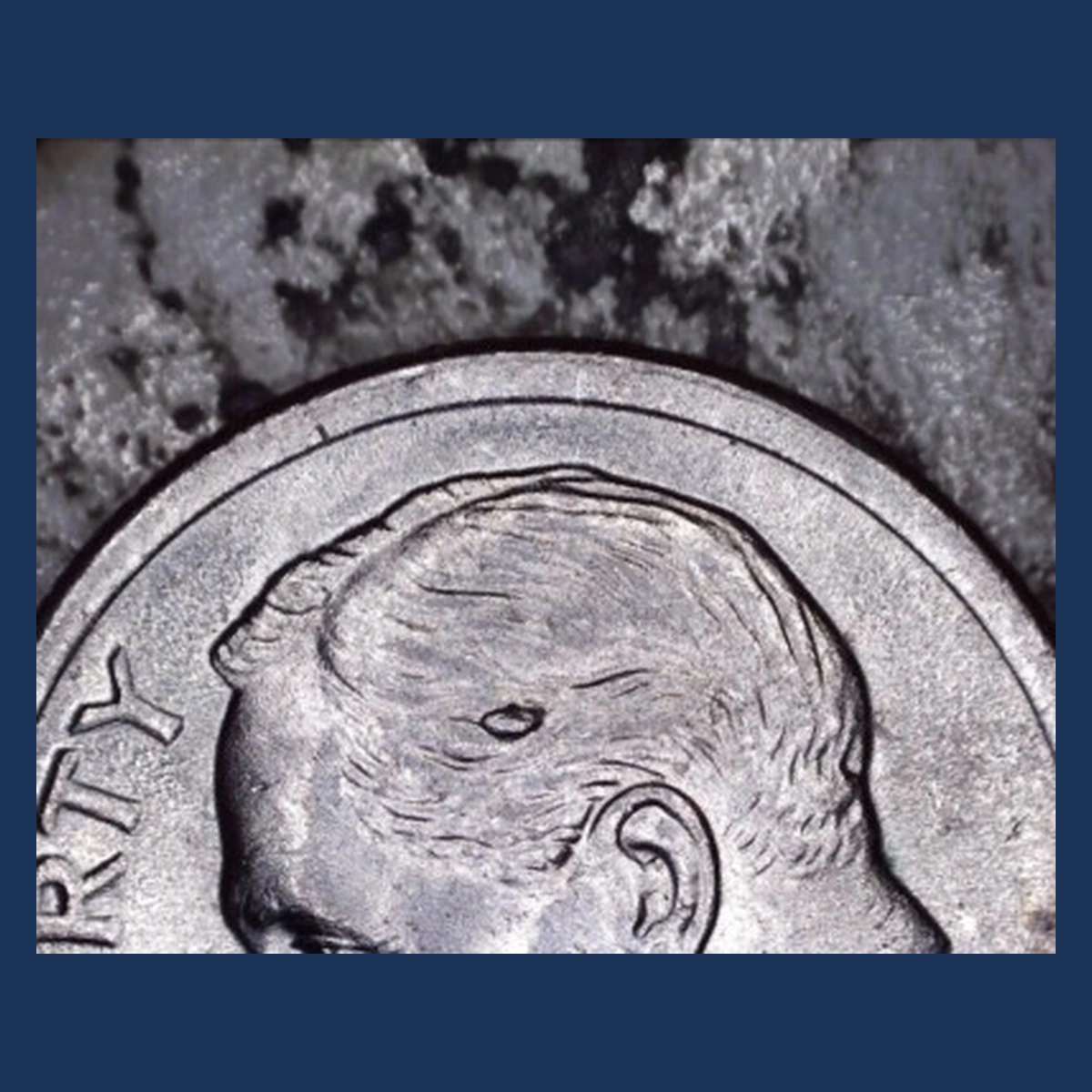
A small raised patch on Roosevelt’s cheek is reported on a 2001-D dime. Its shape fits a chip in the steel tool that stamped the portrait.
When a tiny piece breaks out of that tool, coin metal can fill the opening during striking. The finished coin then carries an extra raised blob.
This is a die chip, even if a general list calls it a crack. A crack usually makes a narrow raised line instead.
The cheek location is the useful starting point. Dirt attached to the portrait can produce a similar first impression.
Estimated Value
Estimate $5–$75 for a modest genuine cheek chip, using small modern Roosevelt tool flaws as a guide. Visibility and the condition of the surrounding portrait affect the price.
This is not an auction result for the reported Denver coin. A tiny irregularity can have little premium even when it formed at the Mint.
A larger rim break is a different comparison. The cheek patch should be valued for its own appearance, not another coin’s more dramatic error.
How to Identify
Angle the light across Roosevelt’s cheek and determine whether the patch rises above the portrait. A 10× magnifier helps separate a solid raised shape from a stain or loose dirt.
Compare the same area with a normal 2001-D dime, keeping their lighting similar. Look for metal continuing naturally into the patch rather than glue or a seam.
Do not scrape the spot to test it. Photograph its outline and nearby portrait details instead.
Check a loose dime with a scale and calipers against 2.268 grams and 17.91 millimeters. Its edge should retain the usual grooves unless a separate problem affects them.
The useful match is an extra raised cheek shape formed as part of the coin, rather than material resting on top.
2. 2001 Roosevelt Dime Peeling at the Neck and Shoulder
A small lifted area near the neck or shoulder can make the portrait look torn. The 2001-P report describes local peeling in this part of the front.
This can occur when a weak region inside the metal separates. Collectors use the term lamination for this kind of flaking or peeling.
The whole outer layer need not come away. A narrow flap can remain attached beside otherwise normal design.
The position separates this report from a general brown-face claim. Scraping, corrosion, and deliberate prying can also tear a coin’s surface, so the break itself needs examination.
Estimated Value
For original local peeling, estimate $10–$150 according to the size and visibility of the feature. The range follows minor Roosevelt metal flaws rather than entire missing outer layers.
The reported Philadelphia coin has no verified sale price attached here. An intact flap with readable design is more useful for comparison than a rough pit alone.
Cleaning or lifting the flap can reduce its appeal. The estimate concerns a naturally separated surface, not fresh damage made to expose more metal.
How to Identify
Find the neck and shoulder before searching the rest of the face. Look for a connected flap or layered break with a 10× magnifier, leaving any attached metal undisturbed.
Follow the stamped portrait across the boundary where possible. A natural separation can preserve design on the lifted portion, while a later gouge cuts through completed detail.
Inspect the surrounding surface for corrosion pits or pry marks, then check the grooved edge for related separation. A loose ordinary dime normally weighs 2.268 grams and measures 17.91 millimeters, checked with a scale and calipers.
A small attached flap may leave those measurements near normal. The quickest useful comparison is the actual neck-and-shoulder break, not the coin’s overall color.
3. 2001 Roosevelt Dime Back Design Shifted to One Side
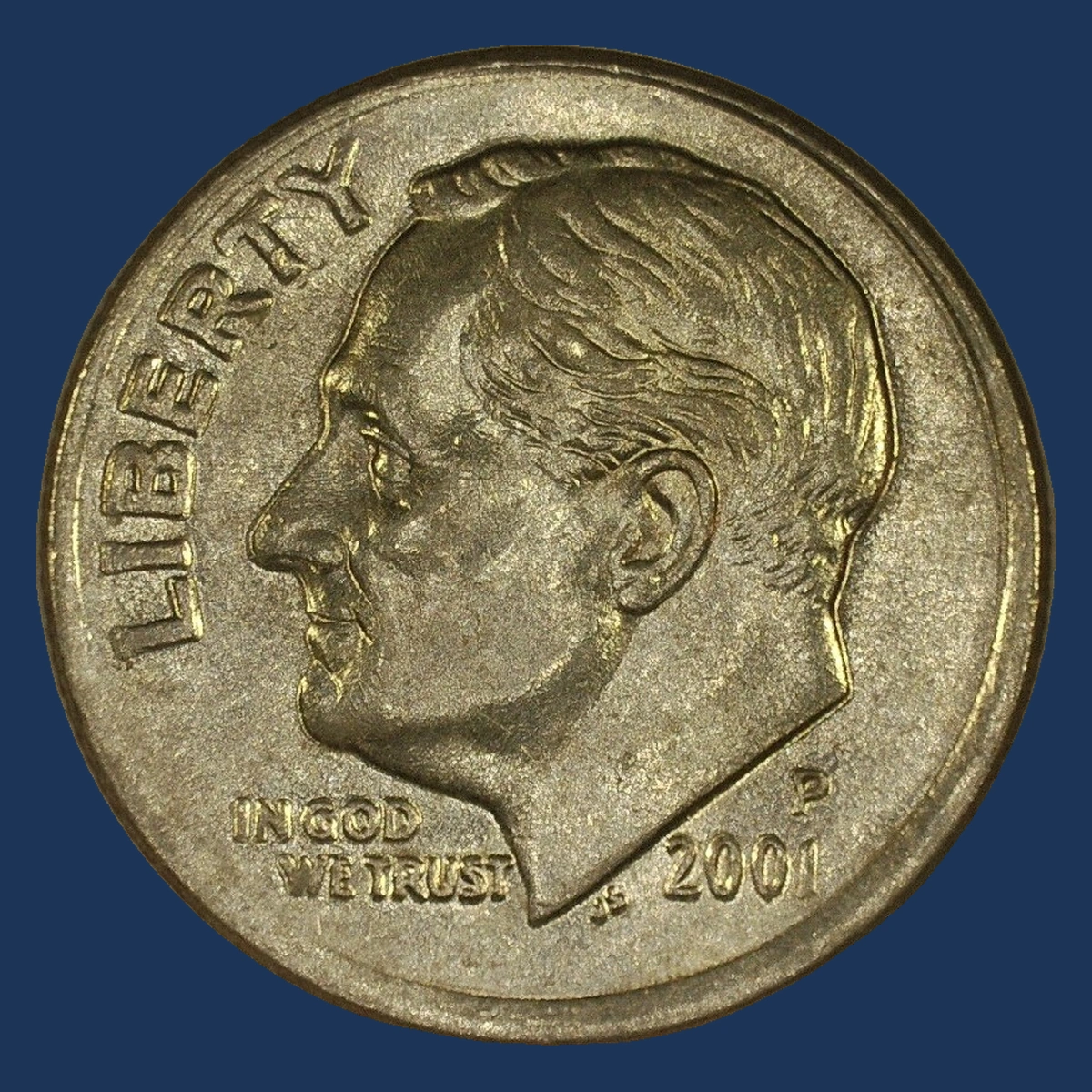
The torch can sit noticeably away from the center while the portrait side remains properly positioned. That combination points to a misaligned die, meaning one stamping tool was out of place.
The 2001-D report describes a substantial shift of the back design. Its approximate twenty-percent figure needs comparison with both faces of the actual coin.
One wide border alone does not establish the error. The opposite face must show how the two tools were positioned.
If both designs miss the same part of the metal, the blank itself may have been off center instead.
Estimated Value
Use an estimated $10–$200 for a genuine one-sided shift, with larger clear examples above minor rim differences. These are working prices based on modern misaligned-tool errors.
The reported percentage is not a documented sale amount. It also should not be treated as the same error as a coin struck off center on both faces.
Compare how much design survives and whether the opposite face is centered. A slightly uneven border can have only a small collector premium.
How to Identify
Keep the front upright and note where its rim sits relative to the portrait and lettering. Then inspect the back without assuming that a wide border proves an off-center strike.
The reported Denver error needs a shifted torch-side design with a substantially centered front. A 10× magnifier can show whether the outer letters approach or cross the rim.
Use a scale and calipers on a loose coin to compare with 2.268 grams and 17.91 millimeters. Inspect the edge grooves for squeezing that could distort the border after striking.
Photographs of both faces are essential here. A centered portrait opposite a displaced back design is the distinction that separates this explanation from a misplaced blank.
4. 2001 Roosevelt Dime Weak Torch Flame and Olive Branch
Part of the flame and olive branch can appear much weaker than neighboring details. The Denver report identifies these areas as having been blocked during striking.
Material between the coin and a steel stamping tool can prevent the design from forming normally. This is called a struck-through error.
The material is not identified for the reported 2001-D coin. Weak details alone do not tell you whether grease or another substance was involved.
Wear also lowers raised parts of the design. An original blocked area should be judged against the strength and surface of the surrounding features.
Estimated Value
An estimated $15–$250 covers a genuine blocked-design error of this kind, depending on its size and clarity. It uses comparable modern weak or interrupted strikes rather than a sale of the reported coin.
A sharply bounded affected area can be more convincing than general softness across the whole back. Original surface texture also helps the comparison.
Wear on the flame and branch is not an extra Mint error. Condition must be assessed before assigning the estimated premium.
How to Identify
Compare the flame and olive branch with the rest of the back, especially nearby lettering. If all high points are similarly worn, normal use may explain the missing detail.
Look through a 10× magnifier for a boundary where the design becomes interrupted. A stain changes color without necessarily changing the depth or shape of the design.
Turn to the front and inspect the grooved edge for damage that affects the whole coin. Weigh a loose example against 2.268 grams and measure it with calipers against 17.91 millimeters.
Those measurements do not identify the blocking material. The direct check is weaker flame-and-branch detail beside well-preserved neighboring features, with an original surface across the affected area.
5. 2001 Roosevelt Dime Double Clip
Two gaps interrupt the outline of the documented 2001-P dime. They were identified as a double clip, meaning parts of the metal disk were absent before it received the design.
The coin weighs 2.09 grams, below the usual dime weight. Its ANACS MS60 Details description indicates unworn detail with a problem preventing a normal straight grade.
The two openings belong to the same coin. Their exact positions should be read from its photographs rather than assigned from a general clip example.
Later cutting can also remove metal. The nearby rim and design help show when the gaps formed.
Estimated Value
Estimate $20–$300 for genuine double clips, with condition and the missing sections’ clarity affecting the result. The documented coin’s Details designation belongs in that comparison.
GreatCollections sold the 2.09-gram example in May 2026, but its public page hides the final amount. The visible $1 opening bid is not its sale price.
This estimate therefore does not assign an auction result to that coin. Two gaps are valued as one complete error coin.
How to Identify
The recorded weight is 2.09 grams, compared with the normal 2.268 grams. Use a scale on a loose candidate, but remember that other clips can remove different amounts of metal.
With calipers, measure intact spans against 17.91 millimeters instead of measuring through a gap. Inspect each opening with a 10× magnifier for naturally formed rim ends.
Check whether nearby letters were stamped around absent metal or sliced away afterward. Look along the remaining grooved edge for filing marks.
The Details label does not identify the surface problem by itself, so inspect the complete coin. Both openings should retain evidence that the shortage existed when the design was struck.
6. 2001 Roosevelt Dime Partial Collar Step
A ridge or step can divide the edge into two levels. It forms when only part of the coin sits within the collar, the ring that restrains metal during striking.
The restrained part can receive normal grooves while the exposed part spreads more freely. This is the partial-collar effect reported for a 2001-P dime.
The step’s position around that particular coin is not specified. A side view of the entire edge is more useful than one photograph of the face.
Rolled edges and pressure from other objects can make similar-looking ridges. Their surfaces must be distinguished from original striking.
Estimated Value
For a genuine partial-collar step, estimate $15–$300, using modern Roosevelt edge errors as a guide. A clear change between the two levels supports a stronger comparison than slight unevenness.
The range is an estimate, not a sale of the reported Philadelphia example. It should not be borrowed from a much wider broadstrike without comparing the shapes.
The whole edge matters. A ridge caused by later rolling or compression does not receive an original Mint-error premium.
How to Identify
Photograph the side at several positions, then arrange those views in order around the edge. This makes a genuine step easier to follow than repeatedly turning a single face photograph.
Under a 10× magnifier, compare the grooved section with the expanded portion. Inspect the transition for original metal flow rather than a lip folded over by pressure.
Calipers can record the largest and smallest widths against the usual 17.91 millimeters. A loose coin should remain close to 2.268 grams on a scale unless another feature changes its weight.
Read the P and 2001 date independently. The edge step itself must show partial restraint during striking, rather than merely a smooth patch where grooves were worn away.
7. 2001 Roosevelt Dime Rotated Back Design
A back design that sits at an unexpected angle can result from a stamping tool turning in the press. Collectors call this a rotated-die error.
The 2001-D report does not give a reliable angle. That angle must be measured by keeping the coin’s position fixed during the flip.
A normal United States coin shows both designs upright when turned top to bottom around a horizontal axis. Turning it like a page uses a different axis and changes the result.
A tilted photograph is not a rotated tool. The relationship between the two faces is what matters.
Estimated Value
Estimate $20–$350 for a clear, genuine rotation, allowing for angle and condition. Very small deviations usually make a weaker comparison than a substantial turn.
A different-denomination example, a 2015-D nickel with a ninety-degree rotation, sold for $79 in October 2021. Its measured angle should not be assigned to the reported 2001-D dime.
The range remains conditional on measuring the actual dime correctly. Rotating a photograph or using the wrong flip direction can create a false impression.
How to Identify
Hold Roosevelt upright, mark the top position in a photograph, then flip the coin top to bottom around a fixed horizontal axis. The torch should be upright on a normal dime; repeat the movement to check that your hand did not introduce a twist.
Use a 10× magnifier to confirm the 2001 date and D, then inspect both faces and the grooved edge for joins. Two attached coins or a loose piece inside a holder can mislead when their relationship is not checked.
For a loose candidate, record weight and diameter with a scale and calipers against 2.268 grams and 17.91 millimeters. The fixed-axis flip establishes the angle, while the normal measurements help check that the coin has not been altered.
8. 2001 Roosevelt Dime Expanded Strike
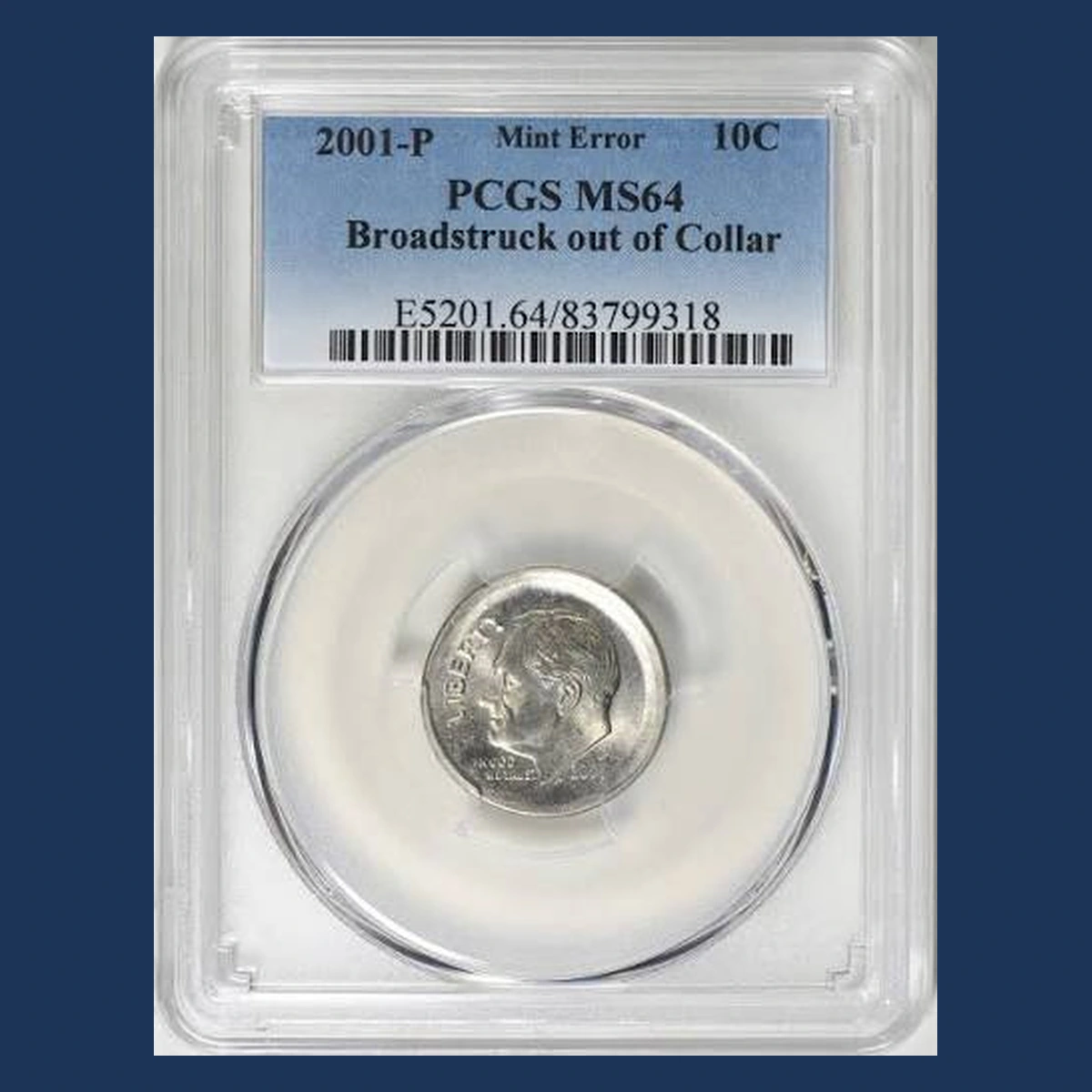
A broadstrike has more metal outside the normal design because the edge was not fully restrained. The coin can look wider, sometimes with a very uneven border.
A professional dealer listed a 2001-D uneven broadstrike. A separate Philadelphia report describes a coin around nineteen millimeters wide.
Those are different reports, so the Philadelphia diameter should not become the Denver coin’s measurement. A normal dime is smaller.
The intended design stays on the available metal in a broadstrike. Missing letters beyond the blank’s edge can instead indicate an off-center strike, while later flattening can also widen a coin.
Estimated Value
Estimate $25–$400 for genuine 2001 broadstrikes, according to expansion, condition, and clarity. Neither the dealer listing nor the separate diameter report supplies a verified sale used here.
A 2000-P dime with broadstriking and repeated strikes sold for $159 in September 2025. That different-year compound error provides context rather than an exact price for a plain broadstrike.
Check each mint and shape separately. A normal coin widened by later pressure does not belong in this range.
How to Identify
A diameter near nineteen millimeters would fit the separately reported Philadelphia example, but size alone cannot identify its cause. Compare a loose candidate with the normal 17.91 millimeters using calipers.
Trace the full outer design on both faces with a 10× magnifier. An expanded border should surround the intended lettering rather than replace a portion that missed the metal.
Inspect the edge for altered grooves and the faces for pressure-flattened details. A scale can check near the ordinary 2.268 grams, since spreading does not require lost metal.
Keep the mint visible when comparing photographs. The key distinction is a complete design within an original expanded outline, rather than a finished coin crushed wider.
9. 2001 Roosevelt Dime Off-Center Strike
An empty crescent beside an incomplete portrait or torch can show where a blank missed the stamping tools. The 2001-P report describes a strike about thirty percent off center.
The blank is the metal disk before it becomes a coin. When it sits off center, both tools strike the same misplaced disk.
The result differs from a tool shifting on only one face. Front and back should agree about the area that missed the strike.
The report does not establish a clock direction. The surviving date and mint letter must also be read from the actual coin.
Estimated Value
Use an estimated $50–$500 for a genuine dated 2001 off-center dime. The thirty-percent report describes a noticeable shift, but preservation and readable identification remain important.
For another-year comparison, a 1977 dime struck ten percent off center sold for $109 in June 2026. That smaller shift does not establish a 2001 sale.
A larger blank area is not an automatic price multiplier. Damage or a lost date can weaken the comparison even when the outline looks dramatic.
How to Identify
Put photographs of both faces beside one another and compare where the design disappears. Both should fit the same portion of the blank missing the strike.
Use a 10× magnifier to examine the bare area for original surface texture. Ground-down letters or scratches across the supposed untouched area suggest later alteration.
Read the surviving 2001 date and P before choosing a dated comparison. A loose coin can still weigh near 2.268 grams on a scale because no metal needs to be removed.
Measure its changed outline with calipers against the normal 17.91 millimeters and inspect the grooved edge. The identifying feature is incomplete design beside genuinely untouched metal on both faces.
10. 2001 Roosevelt Dime Mirror Impression with Clash Marks
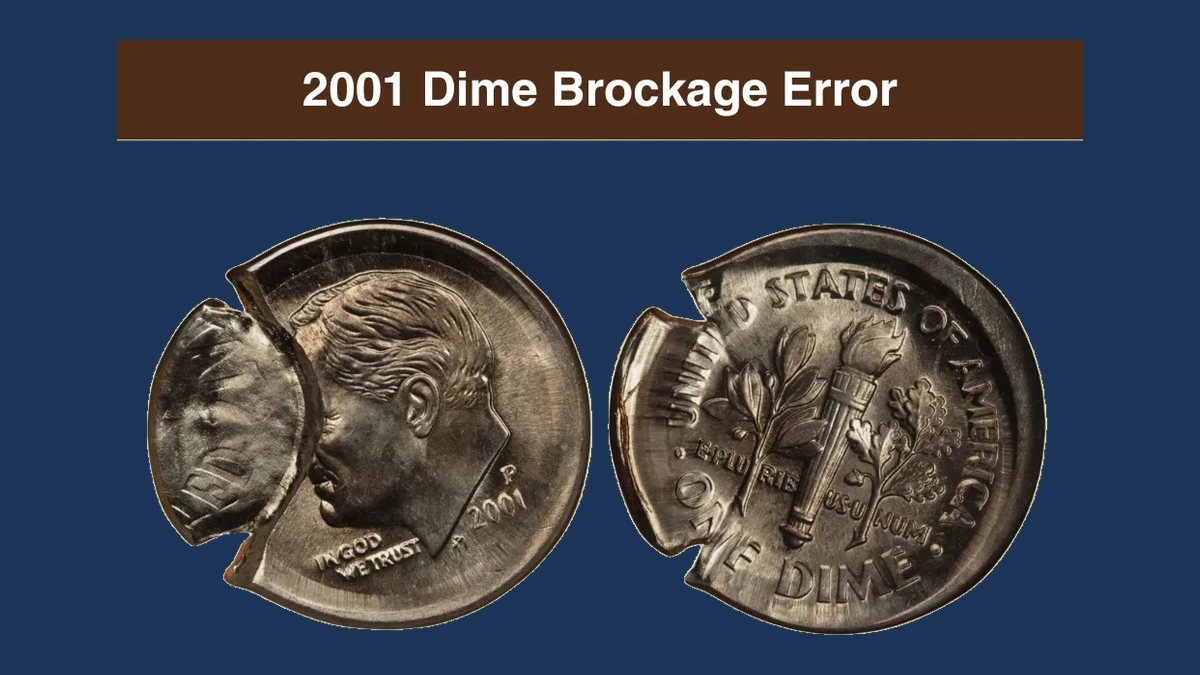
Part of this dime’s front carries a sunken backward impression instead of the normal raised design. Another struck coin pressed its design into the metal, making a brockage.
The documented 2001-P example has about twenty-five percent front brockage and was graded PCGS MS64. It also shows strong clash marks on both faces.
A clash happens when the steel stamping tools meet without a blank between them. Later coins can pick up the resulting faint traces.
The deep mirror impression and the shallower tool traces are different features on one coin. They are not two separate specimens.
Estimated Value
The PCGS MS64 example sold for $79 in November 2014. For comparable genuine partial brockages with original surfaces, estimate $60–$600.
That sale concerns the whole dime, including its clash marks. Adding a separate maximum clash price would count the same coin’s value twice.
The size and clarity of the sunken backward design affect the comparison. A complete mirror impression or a matching two-coin pair is a different purchase from this partial single-coin example.
How to Identify
A backward letter pressed below the surface is the best starting point for the mirror impression, examined with a 10× magnifier. Compare its reversed shape with the normal raised design, rather than treating any deep dent as a brockage.
Next, inspect the shallow clash traces on both faces, keeping them separate from the deeper twenty-five-percent impression on the front. A loose dime normally weighs 2.268 grams and measures 17.91 millimeters, checked with a scale and calipers.
Follow the grooved edge for joins or squeezing, since pressing finished coins together can imitate a mirror impression and damage surrounding details. The original depressed reversed design must match the documented coin before its accompanying shallow traces are assessed.
11. 2001 Roosevelt Dime Missing Outer Layer on a Collector Proof
A copper-colored face can suggest that an outer metal layer is missing. Clad dimes use copper-nickel outer layers bonded to a copper center.
The San Francisco report needs the correct collector-coin identity before that explanation fits. In 2001, S dimes were Proofs, specially made for collectors, rather than ordinary MS issues.
The clad Proof and ninety-percent silver Proof also have different metal structures. A missing clad-layer description cannot simply be applied to the silver version.
Brown color alone does not settle the matter. The exposed surface, edge layers, and weight must support actual missing metal.
Estimated Value
For an authenticated 2001-S clad Proof with a missing outer layer, estimate $100–$750. This is a conditional comparison, not a sale or grade assigned to the conflicting report.
A 2018-P ordinary dime missing its front layer sold for $384 in July 2021. It is a different year and finish, so the Proof needs its own condition comparison.
The silver Proof does not use the same layered structure. Toning or an incorrect MS label cannot establish this error.
How to Identify
Establish the finish and metal before looking at the brown face. A 2001-S coin should be a collector Proof; the normal clad version weighs 2.268 grams and the silver version 2.50 grams.
A scale and calipers can check a loose candidate against the appropriate weight and the usual 17.91-millimeter diameter. Missing metal can reduce weight, but wear or chemical removal can do that too.
Inspect the grooved edge and exposed face with a 10× magnifier. Look for the actual bonded layers, not merely a coating or stain.
Read the original grading description along with the coin. A genuine clad-layer loss needs exposed copper and a matching layer structure on the correct Proof issue.
12. 2001 Roosevelt Dime Split Metal Disk
A thin piece of a dime can result when its metal disk splits within its thickness. One face may retain the design while the separated surface shows a different texture.
The 2001-D report does not establish whether the split happened before or after striking. That timing matters when explaining what appears on the exposed surface.
A small peeling flap is different from a larger separation through the disk. Loss of only one bonded outer layer also needs its own explanation.
Grinding a coin thinner can imitate the low weight. The exposed break must show a natural separation.
Estimated Value
Estimate $100–$1,000 for a genuine split-disk error with a readable 2001-D identity. The range uses comparable modern split-metal errors and depends on the surviving design, thickness, and condition.
It is not a confirmed sale for the reported coin. A piece with little readable design needs a different comparison from a complete identifiable face.
If two matching halves survive, they should be valued as a pair. This report does not establish such a two-piece set.
How to Identify
Photograph the separated surface without brushing or polishing it. Under a 10× magnifier, examine its texture and any surviving design before deciding when the split occurred.
If that surface was struck afterward, it can carry compressed texture or design unlike a break exposed only after striking. Do not assign the timing from weight alone.
Use a scale and calipers on a loose piece to compare with 2.268 grams and 17.91 millimeters. Also record thickness relative to a normal dime.
The remaining edge may preserve part of the normal grooves. Inspect for grinding lines or a perfectly machined cut.
A natural internal separation with genuine surviving coin detail distinguishes a split piece from a dime deliberately made thinner.
13. 2001 Roosevelt Dime Repeated Strikes and the Reported Saddle Shape
Two displaced sets of design can remain when a coin receives another blow after moving in the press. The known 2001-P example has its second strike seventy-five percent off center.
PCGS graded that dime MS64, an unworn grade allowing visible marks. The second image belongs to another strike, not a doubled design built into one tool.
A separate report calls another 2001-P dime a saddle strike. That name requires a raised bridge between strike areas and evidence of the corresponding press layout.
Repeated images alone do not prove that special saddle shape. The side profile is essential.
Estimated Value
The documented double strike sold for $114 in October 2021. Estimate $100–$1,000 for comparable clear repeated-strike examples, depending on movement, surviving design, and condition.
The separate saddle claim needs its bridge-shaped profile established before using a saddle-error comparison. An estimated $250–$1,000 applies conditionally to a genuine example of that type.
These are two different reports. The auctioned double strike’s price and grade should not be transferred to an unidentified coin merely because it has overlapping images.
How to Identify
Trace one complete design as far as it survives, then locate a displaced letter or portrait from the later blow. A 10× magnifier helps distinguish overlapping struck detail from simple flat doubling.
For the separate saddle claim, obtain a side view before accepting the name. A raised bridge between strike areas is needed, not just two images on a flat disk.
A scale can compare a loose coin with the normal 2.268 grams. Calipers record its changed outline against 17.91 millimeters without pressing down any raised part.
Inspect the edge grooves for later bending or squeezing. Two genuine strike areas and an original bridge must agree before the saddle explanation fits.
14. 2001 Roosevelt Dime Two Coins from the Same Striking Accident
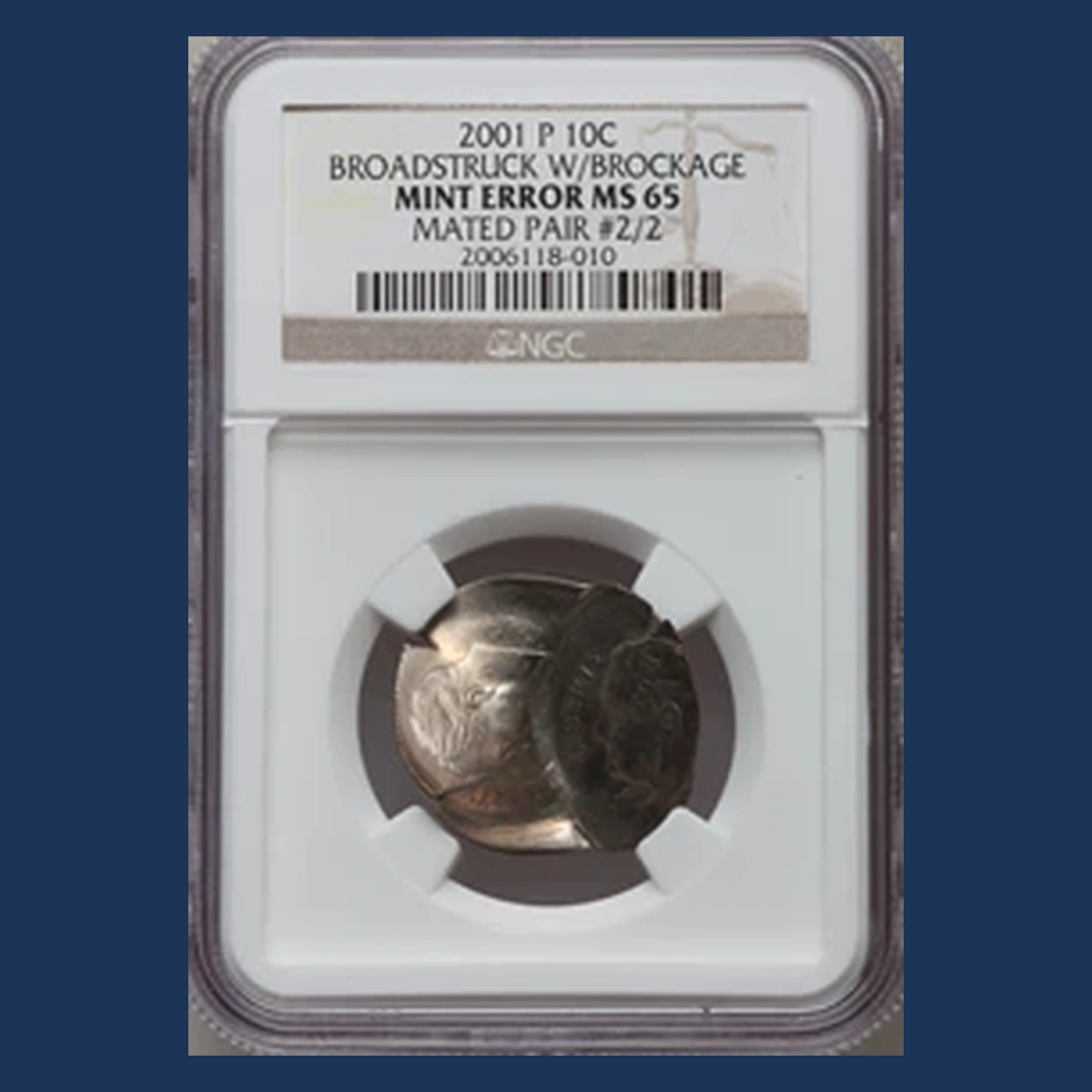
Two separate dimes can preserve opposite sides of one press accident. The documented 2001-P pair includes one coin with repeated strikes and another with an expanded shape and brockage.
Brockage is a sunken backward design transferred from another struck coin. The matching contact features connect these two pieces.
Both were graded NGC MS65, meaning unworn with relatively few marks. They remain two coins rather than two fragments of a broken dime.
The pair is also different from coins stuck together. Its value comes partly from retaining both pieces that explain how the accident happened.
Estimated Value
The complete pair sold for $470 in June 2014. Estimate $350–$1,500 for both coins together, depending on their condition and the clarity of the match.
That amount is not a separate price for each dime. Nor should each visible striking effect receive an added maximum estimate.
A lone repeated strike or an unrelated brockage needs its own comparison. Keeping the matching pieces together preserves the explanation offered by the original pair.
How to Identify
Keep the two pieces separate and compare photographs of the repeatedly struck coin with the expanded coin’s sunken backward impression. A 10× magnifier should reveal matching details where one coin transferred its design to the other.
If already loose, weigh each against 2.268 grams and record each outline with calipers against 17.91 millimeters, rather than measuring the pair together. Inspect all four faces and both grooved edges for damage or features unrelated to their contact.
Do not force the coins together or bend them to improve the fit, because that can damage the evidence of the accident. Corresponding original design transfers connect a genuine pair more convincingly than two similar errors placed beside each other.
15. 2001 Roosevelt Dime Reported Strike on a Cent Blank
A dime design on a copper-colored disk can raise the possibility of a blank intended for a cent. The 2001-P report makes that claim, but the metal and dimensions must establish it.
A modern cent blank is a copper-coated zinc disk, larger and heavier than a regular dime blank. Its behavior in the smaller dime press needs examination.
This is not the same as a Lincoln cent design struck on a dime blank. It is also different from a coin combining mismatched cent and dime tools.
Copper color alone can come from coating, staining, or missing layers.
Estimated Value
After the starting blank is authenticated, use a conditional $300–$2,500 estimate for a genuine 2001-P wrong-blank dime. The identified metal, strike, and condition determine the comparison.
Modern Roosevelt dimes on foreign blanks appear around $1,500–$2,500 in the Mint Error News price guide. These estimates concern different blanks, not a sale of this claimed cent-blank coin.
A cent struck on a dime is the opposite error. Its auction price should not be used as proof of this report.
How to Identify
Begin with measurements rather than color: a modern cent blank starts near 2.50 grams and 19.05 millimeters. A normal dime is 2.268 grams and 17.91 millimeters.
Use a scale and calipers on the actual loose coin, recording any spread or uneven outline. The larger disk’s fit in the dime press needs an explanation consistent with its shape.
Under a 10× magnifier, inspect the edge for coating, exposed zinc, or a lost bonded layer. Normal dime edges have grooves, but grooves alone cannot identify the starting metal.
Confirm a genuine 2001-P dime design on both faces. Professional metal testing should support the claimed copper-coated zinc blank before the cent-blank name is accepted.
Conclusion
A 2001 dime’s extra marks should tell a consistent story across the design, edge, and metal. Two clips, a shifted back, and a backward impression each need different checks.
Estimated values extend from $5 for a small cheek chip to $2,500 for an authenticated wrong blank. The documented matched pair sold for $470 for both coins together.
Keep collector Proof identities separate and leave original surfaces undisturbed while examining a candidate.