2002 Dime Error List with Pictures

What left a bow-tie shape pressed into a dime? For a 2002-D example, a piece of scrap metal got in the way of the strike; a published sales report recorded $818.08.
The range of 2002 dime errors also includes small raised cracks, missing outer metal, and reported folding accidents. Estimated values below span $5–$1,500, with the cause and strength of the error making a large difference.
Keep reading to learn what each feature looks like and which checks help separate it from damage.
1. 2002 Roosevelt Dime Die Cracks
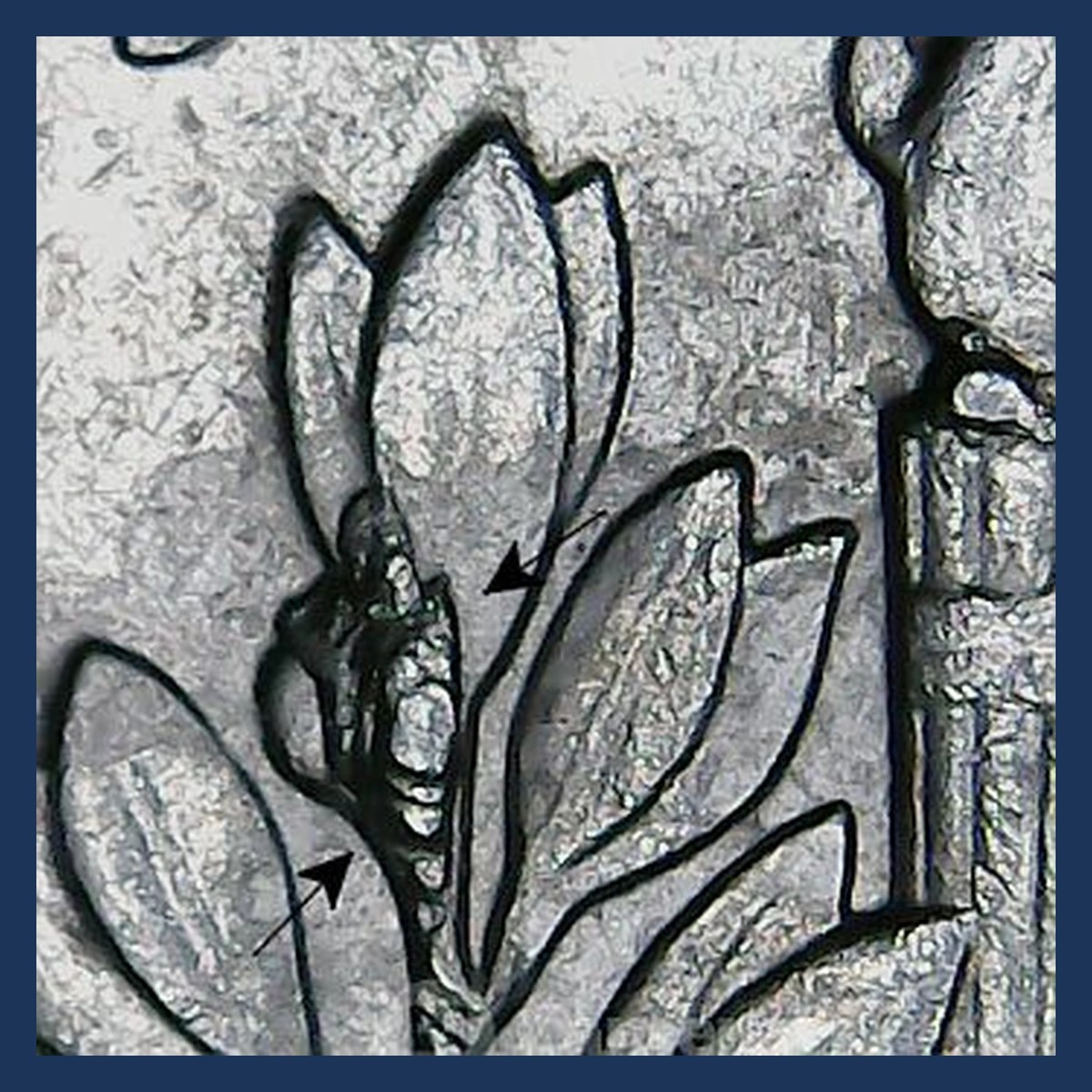
A fine raised line can come from a crack in the tool that stamped the coin. That tool is called a die.
Pressure forces coin metal into the small opening, leaving a raised line when the coin comes out. A scratch made later normally cuts into the surface instead.
The 2002 reports include Philadelphia and Denver die cracks without one established route across the design. A line near the portrait, torch, or lettering therefore needs examination on its own; its location alone does not establish a mint error.
Estimated Value
For ordinary small cracks, estimate $5–$75. A barely visible line on a worn dime usually stays near the low end.
A longer raised line with clear branches can be more interesting to a collector. Sharp surrounding detail makes it easier to show in a photograph.
The premium depends on the crack itself, rather than a high asking price attached to an ordinary scratched coin. Common minor cracks generally do not justify expensive grading on their own.
How to Identify
Light the coin from the side and watch whether the line rises above the surface. A 10× magnifier helps distinguish the raised crest from a groove with pushed-up edges.
Trace the line through the surrounding design. A natural branch or change in width can support a crack, while repeated parallel cuts suggest an abrasive tool.
Before assigning the line to a listed example, photograph the date and P or D. There is no single established crack path for every 2002 dime.
For a loose clad piece, use a scale and calipers to check about 2.268 grams and 17.91 mm. Examine the edge grooves as well; if an impact on that edge leads directly into a cut, investigate damage before calling it a die crack.
2. 2002 Roosevelt Dime Clashed Dies
A faint piece of the torch may seem out of place beside Roosevelt. The opposite situation is a trace of the portrait among the branches on the back.
These can be clash marks. They arise when the two stamping tools hit each other without a blank between them, then pass the resulting marks to later coins.
Philadelphia and general 2002 clash reports describe this kind of opposite-side detail. The marks need to fit the normal relationship between the two designs; an unexplained shadow or scratch is not enough.
Estimated Value
Estimate $15–$100 for a genuine clash with recognizable details. Faint traces that require careful lighting belong toward the lower end.
A clearer outline on a clean, lightly worn or unworn coin is easier to collect and display. Several unrelated scratches do not produce the same appeal.
This range values the visible clash marks. It does not assume that every 2002 dime with a ghostlike shape came from the same pair of damaged tools.
How to Identify
For a loose clad dime, check approximately 2.268 grams and 17.91 mm with a scale and calipers, then inspect the edge grooves. Normal measurements fit a clash because the error changes the tool’s surface rather than the coin’s blank.
Take straight-on pictures of both faces and compare the unexpected outline with the opposite design. Use a 10× magnifier and changing light to check its shape; do not require every clash mark to be sunken.
Try fitting the trace to a specific part of the portrait or torch. If you instead find substantial overlapping letters or a second border, examine the coin for a second strike rather than explaining all opposite-side detail as clashing.
3. 2002 Roosevelt Dime Raised Facial Line from a Gouged Die
A cut in a stamping tool has the opposite effect from a cut in a coin. Metal fills the tool’s groove and leaves a raised line on the finished piece.
The reported 2002-D example has a line across Roosevelt’s face and is described as a die gouge. Its exact starting and ending points are not established by the available description.
A straight line does not identify the cause by itself. A scratch, a thin deposit, and a raised mark from a damaged tool can look similar in a flat photograph.
Estimated Value
A genuine raised facial line has an estimated value of $10–$125. A weak mark on a heavily worn coin is less appealing than a clear line across an unworn portrait.
The year guide describes a high-grade example, but that does not establish a sale price for every similar mark. Grade and the visible feature need separate attention.
Good close photographs are particularly helpful for this type. They let a buyer see whether the line belongs to the struck surface.
How to Identify
Compare the line with ordinary scratches elsewhere on the coin. Under a 10× magnifier, a scratch often has a cut center and displaced metal beside it.
For the reported error, the line itself should stand above the surrounding face. Change the light direction to avoid mistaking a shadow for height.
Record the date and D before comparing another coin with this description. A nearby mark on a Philadelphia dime does not automatically establish the same damaged tool.
For a loose clad coin, check the normal 2.268 grams and 17.91 mm with a scale and calipers, including an edge-groove inspection. Leave any attached material in place rather than scraping it away.
If another example has the same raised line in precisely the same position, compare the surrounding details too.
4. 2002 Roosevelt Dime Misaligned or Tilted Die
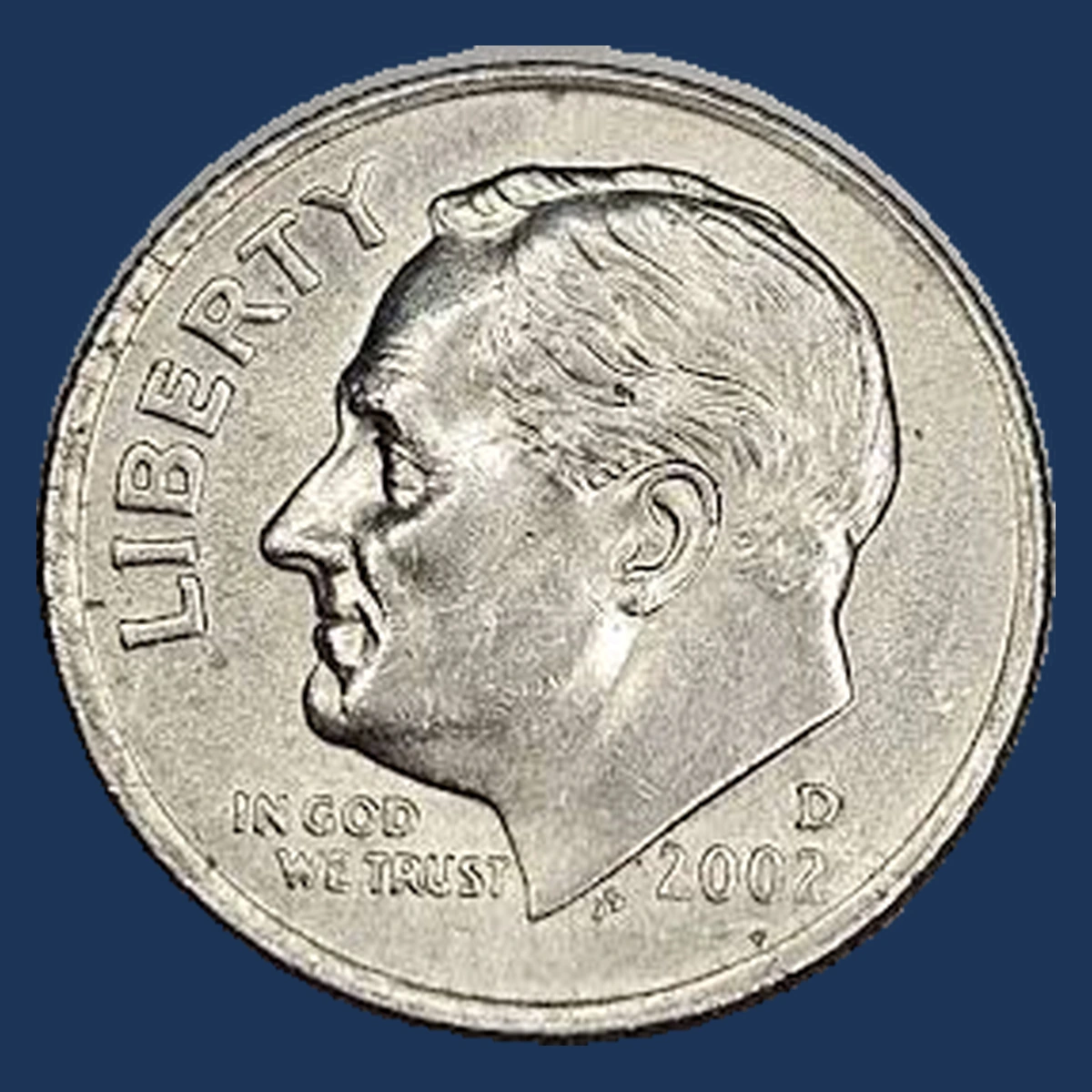
The portrait can sit off to one side even when the coin itself entered the press in the right place. A shifted stamping tool can cause that uneven border.
Tilting is different: one part of the tool comes closer to the blank than another. This can make the strike stronger in one area and weaker elsewhere.
The 2002-P report combines these two descriptions, including an upward front shift and uneven back detail. Its wording does not establish how much design was cut off, so no fixed percentage follows from the report.
Estimated Value
For a genuine visible shift or tilt, estimate $15–$150. A slight uneven border has limited appeal and often receives only a small premium.
A strong difference between the two faces can bring more when the cause is clear. The date and mint letter should remain readable enough to identify the coin.
This estimate depends on the actual displacement and strike pattern. Ordinary wear or a misleading photograph does not receive the same value as a mint-made alignment problem.
How to Identify
A tilted camera can make a normal border look uneven. Start by taking straight-on photographs of both faces at the same scale.
Compare the upper and lower front borders, then locate the design within the back border. One shifted face with a centered opposite face supports a misaligned tool.
For a loose clad coin, use calipers to compare the outline with 17.91 mm and a scale to check 2.268 grams. Include the edge grooves in the photographs.
Now inspect sharp and weak areas with a 10× magnifier if tool tilt is suspected. Wear follows exposed high points and can look different from a section that never formed strongly.
At the date, check whether the design actually ends at the blank’s edge rather than merely approaching a narrow rim.
5. 2002 Roosevelt Dime Double Clipped Planchet
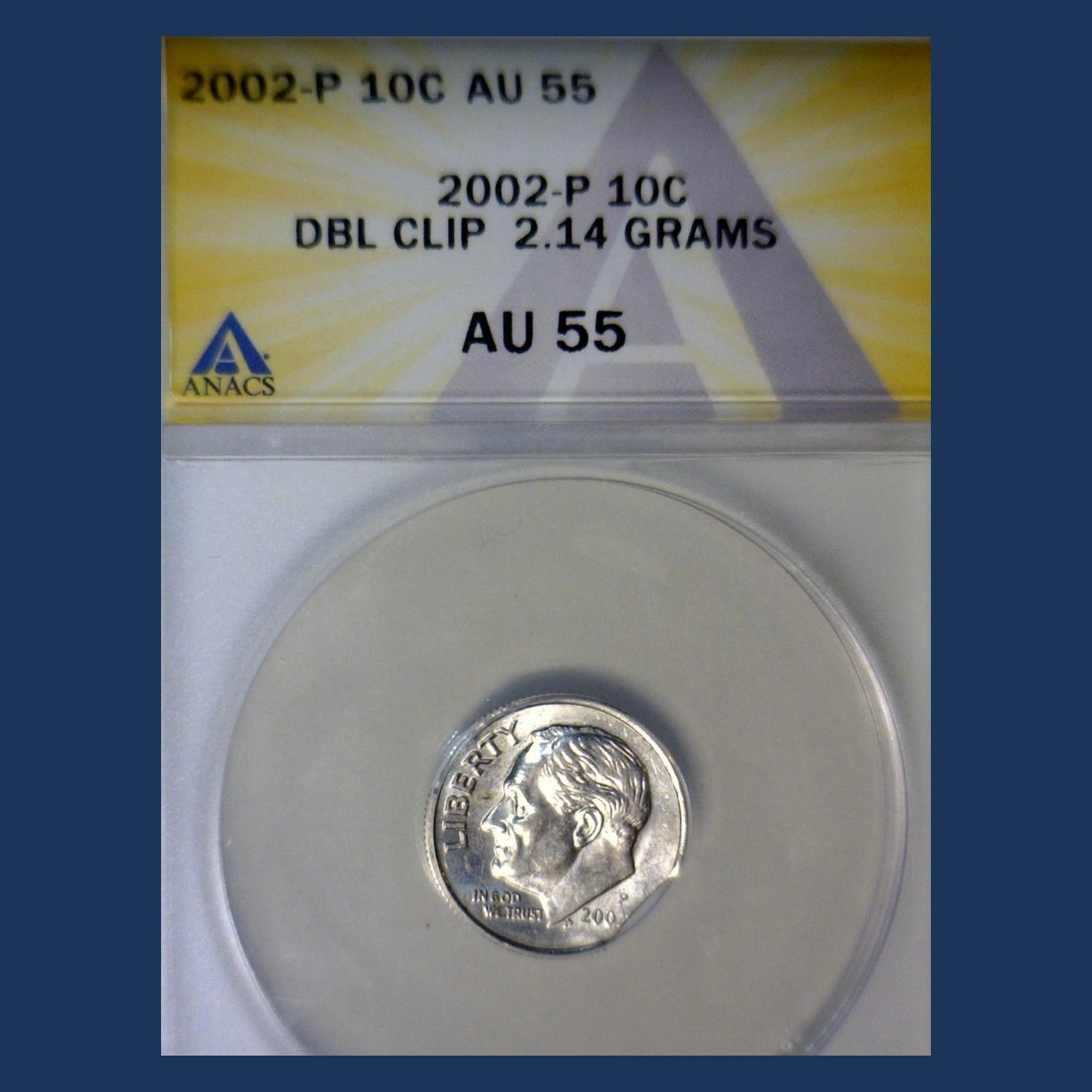
This Philadelphia dime has two missing pieces along its outline. They began as shortages in the blank, the metal disk prepared before the design was struck.
GreatCollections lists the double-clipped 2002-P dime at 2.14 grams. ANACS graded it MS63, meaning unworn with noticeable marks.
The two gaps are part of one coin, not two separate errors to price independently. Their actual shape and position matter more than the broad word “clip,” which can describe several kinds of missing blank metal.
Estimated Value
Estimate $20–$200 for a genuine double-clipped example. Small gaps on an otherwise ordinary coin sit below large, well-defined shortages with a clear date.
The listed coin’s 2.14-gram weight helps describe it, but the amount of missing weight does not directly set the price. Appearance and condition also matter.
Clear rim changes beside both gaps help a buyer understand the error. The estimate applies to the whole coin with both gaps together, rather than pricing each missing piece separately.
How to Identify
A scale is useful here: the listed piece weighs 2.14 grams, compared with 2.268 grams for a normal clad dime. That difference supports missing metal but does not prove how it went missing.
Examine both gaps through a 10× magnifier. Later cutting or filing can leave fresh tool marks, sharp cuts, or metal pushed against the finished design.
Measure the remaining outline with calipers against the normal 17.91 mm diameter. Check surviving edge grooves and inspect the rim opposite each gap for weakness.
Photograph each shortage together with the nearby letters or portrait. Genuine blank shortages can affect how those details form, while a cut made afterward may simply remove an already completed portion of the coin.
6. 2002 Roosevelt Dime Partial Collar Strike
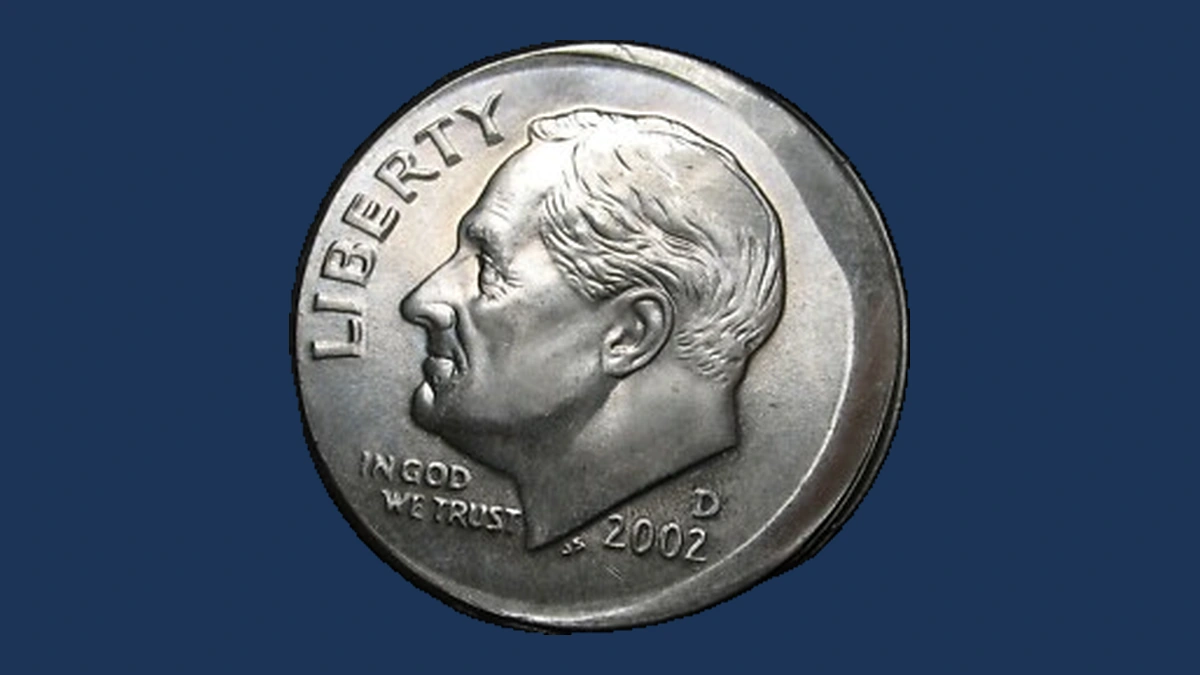
An extra circle on the front does not automatically mean a partial-collar strike. The defining feature is a step along the coin’s edge.
The collar is the restraining ring that sets the coin’s width and forms its edge grooves. If the blank is not fully seated, only one part of its edge stays inside the ring.
The free band can spread farther outward. A 2002-P partial-collar error is reported under the loose name “double rim,” but the edge needs to show this physical difference for that explanation to fit.
Estimated Value
An estimated $30–$250 covers genuine partial-collar strikes. A slight edge step is less striking than a broad, obvious difference between the two bands.
Good side photographs can make this error easier to sell than front-only pictures. The strength of the step matters as much as whether the coin remains unworn.
A doubled-looking border without the edge feature should not receive this valuation. It may have a different cause that requires its own identification and price.
How to Identify
Inspect the edge before the portrait. Use a 10× magnifier while turning the coin gently, keeping it supported so it cannot fall.
On a loose coin, calipers can compare each visible edge band with the usual 17.91 mm diameter. Weigh it against the standard clad 2.268 grams as a separate check for missing metal.
Look for two levels: a confined grooved band and another that expanded beyond it. Follow the step around the coin rather than relying on one flattened patch.
Compare any damaged face border with that patch. A blow on the rim can affect the face and edge together.
Photograph the actual step from the side; a front-only picture of an extra circle does not establish this error.
7. 2002 Roosevelt Dime Broadstrike
A broadstrike spreads outward because the restraining ring did not contain the blank. The result can be wider than a normal dime while still keeping the design complete.
A seller listing describes a 2002-P broadstrike graded ANACS MS65. That grade means an unworn coin with some marks; it does not describe the amount of expansion.
The broad border is different from the blank crescent beside a cut-off off-center design. It also differs from a partial-collar coin, where one edge band remained confined and another band escaped the ring.
Estimated Value
Estimate $35–$300 for an authentic broadstrike. Slight expansion usually brings less than a wide, clean border surrounding a complete design.
A saved seller listing offered a 2002-P ANACS MS65 broadstrike at $55. That was an asking price rather than a recorded sale.
The estimate allows for stronger examples than that description alone establishes. Buyers should judge the actual spread, surface marks, and readable design instead of assuming that every certified broadstrike has the same value.
How to Identify
Check a loose coin with calipers against the usual 17.91 mm diameter and a scale against 2.268 grams. Loss of collar restraint spreads metal rather than automatically removing it.
Follow the design around both faces with a 10× magnifier, including the edge grooves and outer border. If the design remains complete, compare the expanded outline with a normal dime; if letters extend beyond the metal beside a blank crescent, investigate off-center striking.
Flattening a finished coin can also increase its width, so inspect the already struck detail for crushing and tool marks. A narrow grooved edge band below an expanded band calls for a side photograph and a partial-collar comparison before deciding that the entire strike lacked restraint.
8. 2002 Roosevelt Dime Missing Clad Layer
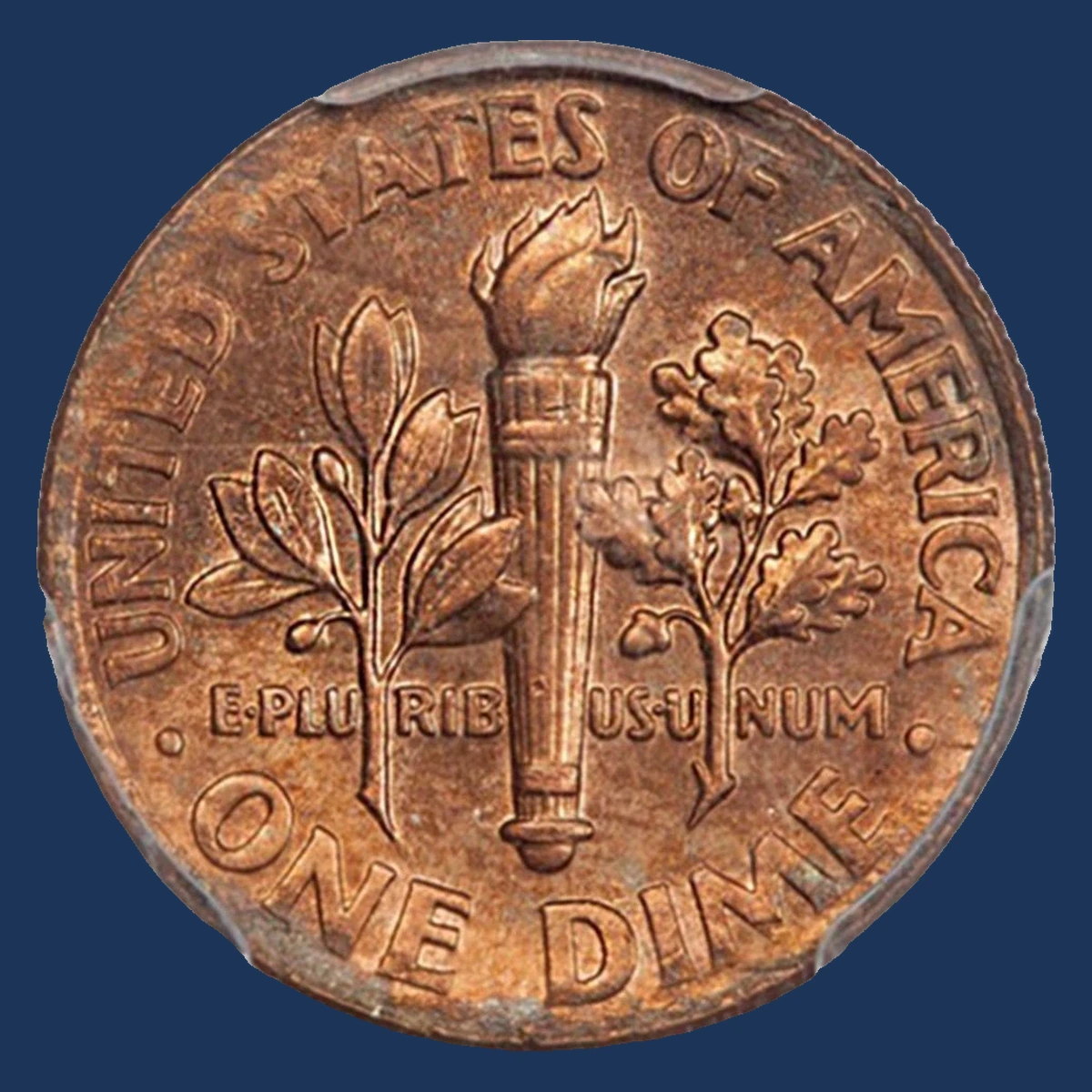
The front of this dime is copper-colored because its outer metal layer is missing. A normal clad dime has pale outer layers bonded to a copper center.
Heritage sold a 2002-P example identified as missing its front layer. The listing records 1.8 grams and NGC MS64, an unworn grade with visible marks.
A separate year-guide description mentions a Denver coin, but that is not this Philadelphia piece. The verified weight and missing side belong to the P example and should not be copied onto every copper-colored 2002 dime.
Estimated Value
Use an estimated $50–$350 for a genuine single missing-layer example. The 1.8-gram Philadelphia coin sold for $55 on October 4, 2016.
A clean, fully exposed copper face with a sharp date can attract more than a spotted or damaged piece. That difference accounts for much of the estimated range.
The historical result is a price for one particular coin. It does not establish the value or missing side of the separate Denver report.
How to Identify
Compare the front and back colors in natural light. For the Philadelphia example, the front exposes copper while the opposite outer layer remains.
Then weigh a loose coin: 1.8 grams is the recorded weight for that specimen, below the normal clad 2.268 grams. Calipers check its width against 17.91 mm.
Use a 10× magnifier at the edge to look at the remaining layer and copper center. Added color may cover the grooves or collect around details without the expected change in metal structure.
Heavy chemical attack can also change color and reduce weight. Inspect the surfaces for pitting or etched details rather than treating a low reading as proof by itself.
A 2002-S silver Proof, made specially for collectors, normally weighs 2.50 grams and needs a different comparison.
9. 2002 Roosevelt Dime Off-Center Strike
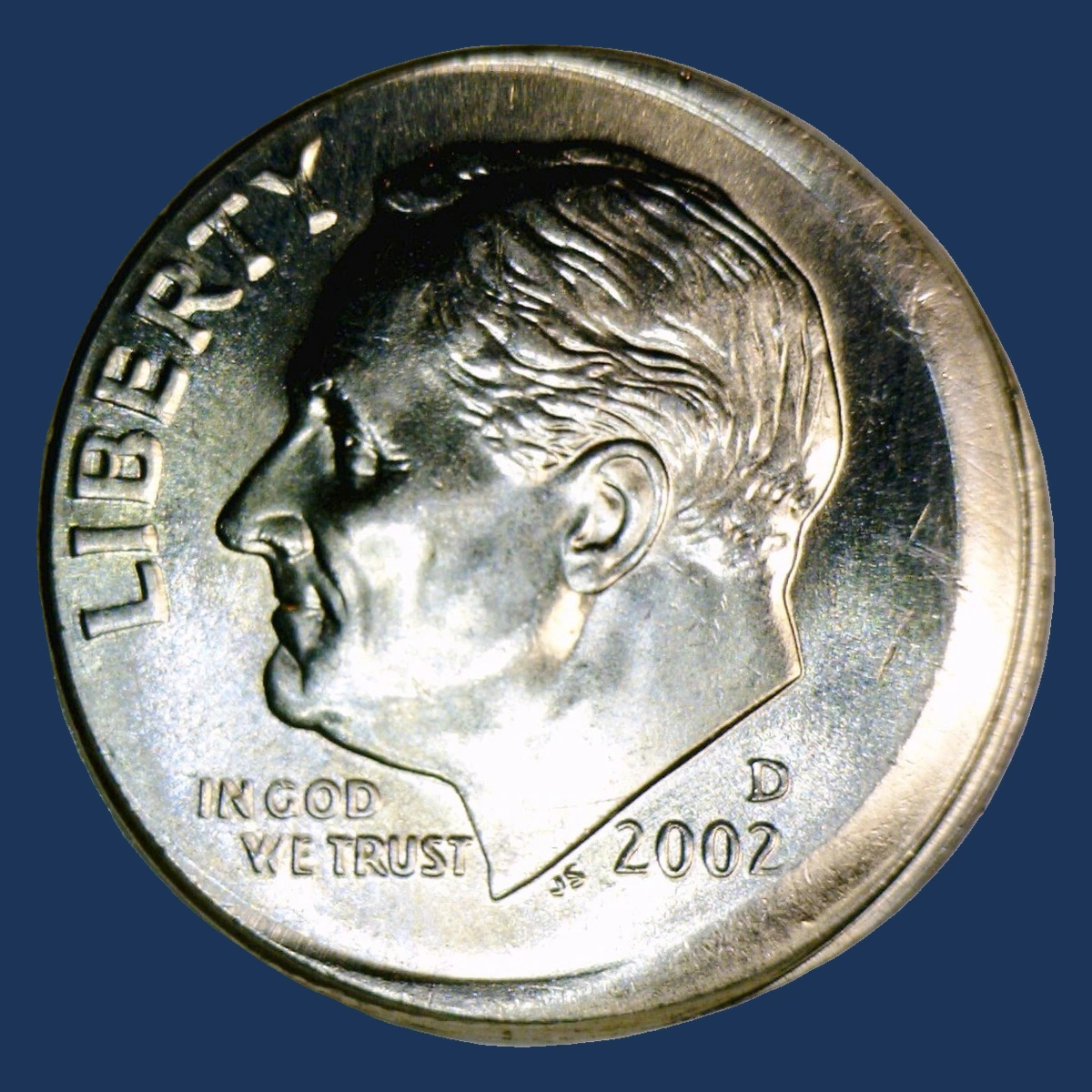
The blank and the stamping tools must line up for the whole design to fit. When the blank is displaced, the strike leaves a bare arc on one side and leaves some design beyond the metal on the other.
That relationship defines an off-center strike. Reports list the error for ordinary 2002 dimes without one verified mint letter, direction, or percentage.
A small uneven rim is not the same thing. Both faces need to show the effect of the displaced blank, rather than just a front design shifted by one poorly aligned tool.
Estimated Value
For genuine examples with a visible date, estimate $40–$600. A small shift sits below a dramatic strike that leaves a large blank arc but keeps the year readable.
A 1977 dime struck about 10% off center sold for $109 in June 2026. That different-year sale offers a comparison for a modest displacement.
The remaining design, marks, and overall shape still affect the price. A large blank area alone does not make a badly damaged coin desirable.
How to Identify
Use whole-coin photographs to compare the front and back before estimating any percentage. The two designs should reflect the same displaced blank.
A centered back paired with an uneven front border suggests a shifted tool instead. A broadstrike may spread the outline while leaving the design complete.
At the blank arc, inspect the transition into the struck area with a 10× magnifier. A smooth region created by grinding away detail can have scratches or an unnatural boundary.
For a loose clad example, weigh it against 2.268 grams and use calipers to compare the blank with the normal 17.91 mm size. Examine the surviving edge grooves too.
Photograph the date within the remaining struck design so the year can be checked alongside the error.
10. 2002 Roosevelt Dime Struck Through Scrap or Other Material
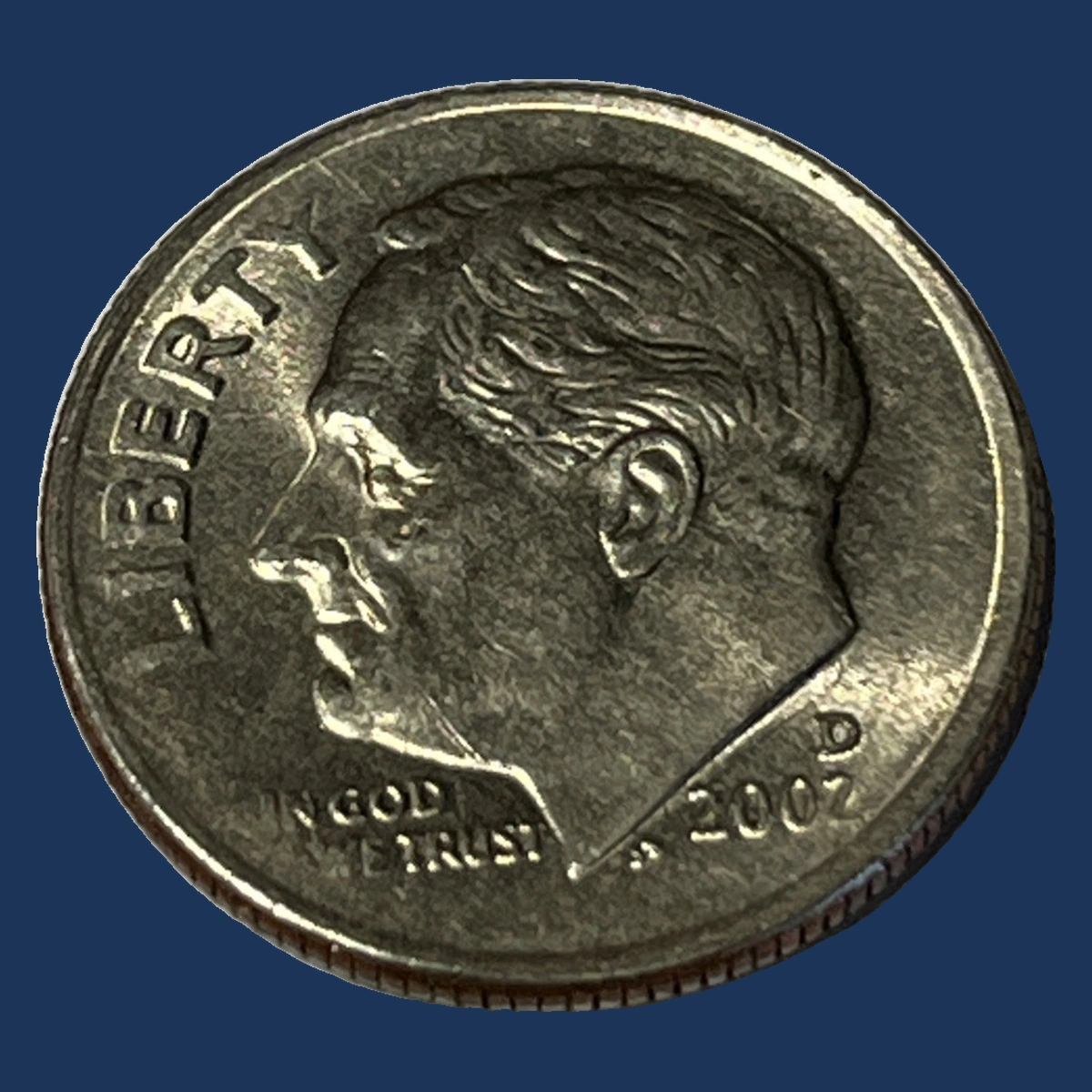
A bow-tie-shaped scrap fragment interrupted the strike on a 2002-D dime. The scrap came between the back stamping tool and the coin, leaving an impression rather than normal design in that area.
Mint Error News records the Denver example with an NGC 66 grade. This describes an unworn coin with relatively few marks.
Other reports describe weak parts of the date and motto on 2002 dimes. Weak letters alone do not identify bow-tie scrap, and those separate reports should not inherit the Denver coin’s particular cause.
Estimated Value
Estimate $15–$900 across minor weak-design errors and strong scrap impressions. A small patch of missing detail usually occupies the low end.
The published sales table records $818.08 for the 2002-D bow-tie scrap impression. Its distinct shape makes it a much stronger example than a barely weak letter.
That reported result values the whole Denver coin. It should not be applied to a different dime merely because part of the second 2, I, or W appears weak.
How to Identify
For a loose ordinary clad dime, check 2.268 grams and 17.91 mm with a scale and calipers. The surface impression should be examined separately from unrelated damage to the edge grooves.
Turn to the back for the documented scrap example. A weak second 2 or weak motto letter on the front is a different reported observation.
Use a 10× magnifier to follow the object-shaped depression where it interrupts the normal back design. A narrow middle and wider ends can support the bow-tie description.
Its exact position needs the coin’s own photograph. Do not assign a generic bow-tie illustration to a specific branch or letter.
For weak lettering alone, compare nearby high points for wear and inspect the surrounding surface. A missing letter cannot identify the material that blocked the strike.
11. 2002 Roosevelt Dime Brockage
Reversed lettering pressed down into a coin can signal a brockage. It happens when an already struck coin remains in the press and impresses its design into the next blank.
The new coin receives a sunken mirror image instead of the normal raised design on that face. A 2002-D brockage is reported in a year guide.
The report does not establish the affected face or how much of it carried the mirror image. Those details should come from the actual coin rather than from a generic illustration of the error.
Estimated Value
For an authenticated brockage, estimate $250–$1,200. A partial or weak mirror image is generally less striking than a clear image covering most of one face.
Readable letters and a visible date help show what happened. Heavy marks can distract from even an impressive impression.
This estimate applies when the mint-made mirror image is established. A 2002-D year-guide description alone does not supply the photographs or original sale needed to assign one specific auction price.
How to Identify
A normal-sized clad coin provides the starting comparison: 2.268 grams, 17.91 mm, and a grooved edge. For a loose suspect coin, record these checks with a scale and calipers without pressing the faces together.
Reverse a photograph of the unexpected lettering to see whether it reads as part of a real coin design. Under a 10× magnifier, check that this image is sunken while the opposite face has a normal struck design.
Examine more than one reversed-looking mark, including where the mirror image meets the surrounding surface. Pressing finished coins together later can imitate a brockage, so an expert should inspect the pressure damage and design relationship before the coin receives a substantial premium.
12. 2002 Roosevelt Dime Folded Planchet Strike
A bent dime is not automatically a mint error. In a foldover strike, the blank folds during the striking accident and the design is pressed into the folded metal.
The 2002-D report describes a distorted portrait and mixed torch-and-branch detail. It places the coin in this unusual folded-strike category rather than merely describing a curved outline.
The sequence is what matters: the metal folded while the design was being made. A coin bent later already had its design, and the bend may stretch or scrape those completed details instead.
Estimated Value
Estimate $300–$1,500 for an authenticated folded-strike example. A pronounced fold with clearly struck detail across the distorted metal can appeal strongly to error collectors.
A smaller fold or a heavily marked surface belongs lower in the range. The design still needs to identify the coin despite its unusual outline.
This is a conditional estimate for a genuine mint-made fold. Ordinary bent dimes and coins altered for jewelry do not receive the same premium.
How to Identify
Do not straighten the coin or press the fold open. Its layered shape and the design across it are the evidence needed for examination.
Photograph the edge of the fold as well as both faces. Use a 10× magnifier to see whether the design was struck into the doubled-over metal or distorted by a later bend.
A scale can compare a loose clad piece with the usual 2.268 grams. Record dimensions with calipers without squeezing it; 17.91 mm is the normal flat-coin diameter, not a required width after folding.
Follow surviving edge grooves into the distorted area and look for plier marks or scraping. A curved outline by itself proves only that the coin is bent; the struck detail must establish the minting sequence.
13. 2002 Roosevelt Dime Flip-Over Double Strike
A coin can remain in the press after its first strike, turn over, and receive another. The second strike then places front design over back design and back design over front design.
The reported 2002-P example has portrait traces under the torch and branch, with back lettering on the portrait side. This is described as a flip-over double strike.
Faint opposite-side shapes also occur with clashed tools, however. A flip-over identification needs evidence of two actual strikes on the coin, not just ghostlike outlines that could have another cause.
Estimated Value
Allow an estimated $300–$1,500 for a genuine flip-over double strike. Clear surviving detail from both strikes is more useful than an indistinct shadow beneath the final design.
A readable date and clean surfaces make the unusual overlap easier to appreciate. Strong displacement can add visual interest when the two strikes remain understandable.
Professional authentication helps establish the order of the strikes. The estimated range rewards a readable overlapping design, not simply the number of unusual marks on either face.
How to Identify
Mark the normal front and back designs on copies of the photographs. Then identify which extra details belong to the opposite face and whether they can form an earlier strike.
Use a 10× magnifier around letters, portrait outlines, and the rim to separate two impressions. The earlier design may be partly flattened by the later blow, but unrelated scratches will not form a coherent coin design.
For a loose clad coin, record weight near 2.268 grams and dimensions against the normal 17.91 mm using a scale and calipers. Examine any disturbed edge grooves.
Compare the result with a clashed coin before deciding. A substantial earlier design beneath the final strike is stronger evidence than a few faint outlines in otherwise empty areas.
14. 2002 Roosevelt Dime Die Cap or Struck-Through-Cap Error
A coin stuck to a stamping tool can become a cap, spreading and curling with repeated blows. That cap can also block later blanks from receiving the normal design.
The cap itself and a later coin struck through it are two different objects. One may have a cup-shaped wall; the other may show soft, distorted detail from the covered tool.
The 2002-P year report mixes these descriptions under a cap label. Both appearances are explained here so a suspected piece can be identified from its own shape and surfaces.
Estimated Value
For a genuine cap, estimate $300–$1,500; a coin struck through a cap has an estimated range of $75–$600. Depth, distortion, and surviving detail affect the price within each group.
A deep, recognizable cup can be more striking than a lightly softened design on a later coin. These ranges concern different objects, so their values are not added together.
The reported 2002-P piece needs that distinction resolved before either estimate is applied to it.
How to Identify
Decide first whether the object is the cap or a coin struck beneath it. A cup-shaped wall belongs to the former; a covered-tool impression on a later blank belongs to the latter.
Weigh a loose clad piece against 2.268 grams and record dimensions gently with calipers against 17.91 mm. Never flatten a cup to obtain those measurements.
Inspect its inside, outside, and surviving edge grooves with a 10× magnifier. Photograph the depth from the side if it has a wall.
For a flatter receiving coin, compare the distorted face with the opposite face. A coin struck through a cap can keep normal detail on the uncovered side.
A single blurred letter also occurs on ordinary weak strikes, so inspect how the softness changes across the whole face.
Conclusion
From small raised cracks to folded or capped pieces, estimated 2002 dime error values range from $5 to $1,500. Start with the feature that is actually visible: a missing layer, an edge step, or overlapping designs.
The $818.08 scrap-impression report and the $55 missing-layer sale concern different coins. Keep those examples separate when comparing a find, and preserve any fold, flap, or unusual surface during examination.