2011 Dime Error List with Pictures

Turn a dime from top to bottom with Roosevelt upright. The torch should finish upright too; a different result may reveal a rotation that one photograph cannot show.
The 2011 dime errors below have estimated whole-coin values of $2–$1,500. For a different-coin comparison, a 1986-P nickel struck through foreign material sold for $204 in June 2023.
Read on to check repeated outlines, missing metal, and unusual rims before judging a dime by its appearance alone.
1. 2011 Roosevelt Dime Repeated Front Design Details
Two rounded edges on a letter can look like a tiny echo of the design. If the repeated shape was already in the stamping tool, collectors call it a doubled die.
A Philadelphia front-doubling example is reported for 2011. The exact pattern needs a matching reference rather than an assumption that every date or portrait feature is doubled.
This differs from striking the same coin twice after it moves. It also differs from a flat shelf created by movement during striking, which can make a letter look wider without showing the same repeated outline.
Estimated Value
A clearly identified minor doubled-front variety has an estimated value of $10–$150. Stronger rounded separation is easier to display than faint thickening that disappears under ordinary light.
Wear can hide the details needed to match the variety. A sharp unworn example may attract more interest, but a high condition grade alone does not prove doubling.
Compare coins with a recognizable repeated pattern and similar wear. Original, undamaged surfaces also help preserve those small details.
How to Identify
Place a normal 2011 dime beside the candidate under the same light, then compare the suspected feature. A rounded second outline or split corner deserves closer attention than a letter that merely looks wider.
With a magnifier, follow the suspected outline through that small area and change the light direction. A moving bright line may be a reflection, while a flat lowered shelf can result from movement during the strike.
Keep the date and P in a photograph of the whole front before taking a close-up. Match the exact feature with a confirmed variety photograph; one doubled-looking digit cannot establish that the portrait and other letters share the same pattern.
2. 2011 Roosevelt Dime Unusual Color from Heat Treatment
Blanks are heated during preparation to make the metal easier to strike. A problem in that treatment can sometimes leave an unusual surface color on the finished coin.
This process is called annealing, and an abnormal-color Denver dime is reported for 2011. The important question is whether the color developed during manufacture.
A dime can also darken in soil, become stained, or be heated after minting. Those changes may look similar in photographs, but they do not establish the same error or show that an outer layer is missing.
Estimated Value
An identified manufacturing-related color error fits an estimated $15–$150 range. Even color with well-preserved original surfaces can be more attractive than a patchy, heavily marked example.
The estimate does not apply automatically to a brown or black dime. Environmental damage and later heating often reduce appeal instead, so the comparison needs evidence that the unusual surface came from the production process while the original coin structure remained intact.
How to Identify
Compare protected recesses with the open surface. Look for whether the color continues naturally around the lettering or sits as streaks and crusty deposits.
Inspect the edge next: a clad dime has bonded layers, with a copper center between pale outer sheets. Intact layers help distinguish unusual surface color from a missing sheet.
Normal weight is about 2.268 grams, but a matching weight cannot tell you when the color formed.
Use photographs under neutral light rather than a strongly yellow lamp. Color casts can exaggerate an ordinary surface.
Preserve the finish for specialist examination instead of polishing it. The remaining original shine and surface texture provide more useful evidence than color alone.
3. 2011 Roosevelt Dime Raised Cracks, Chips, and Rim Breaks
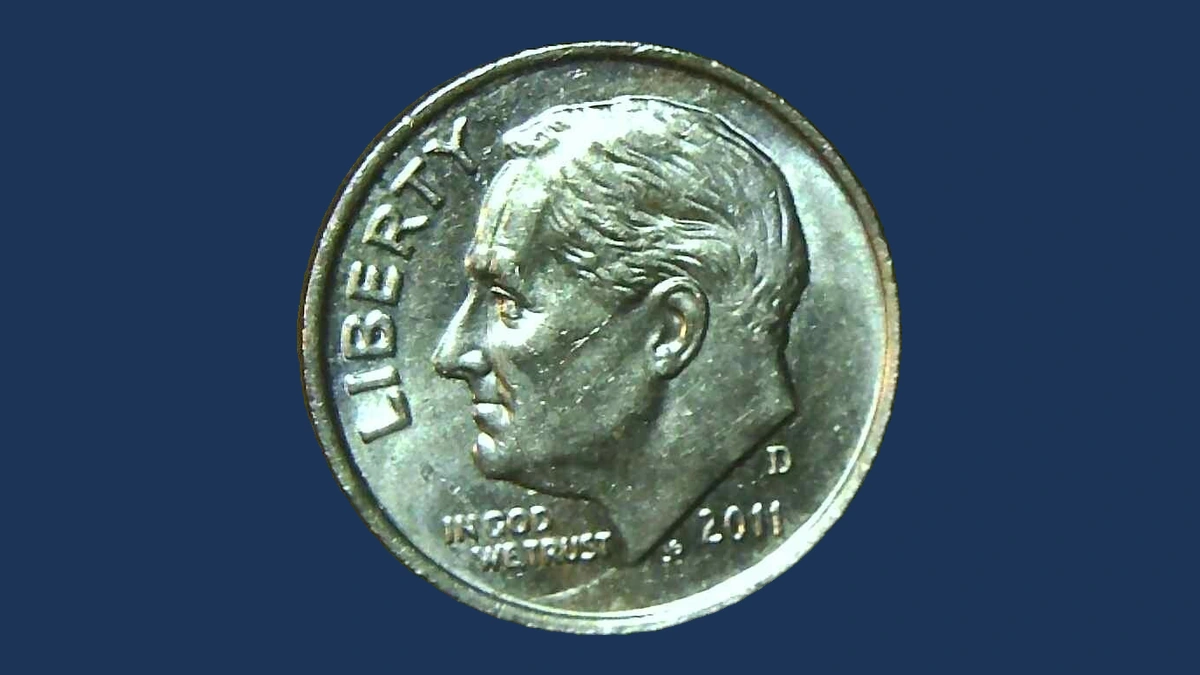
A raised line or lump can be a record of damage to the stamping tool. A crack leaves a thin ridge, while a small missing piece can leave an isolated bump.
A Philadelphia report places a chip near Roosevelt’s eye. A separate Denver example has a larger break connected to the rim, called a cud.
The eye chip and rim break are different shapes on different coins. A cud replaces design where the edge of the tool failed; an internal chip does not need to reach the coin’s border.
Estimated Value
Modest chips and raised cracks have an estimated value of $2–$40. Larger, clearly identified rim-connected breaks can support an estimated $25–$300, depending on their visibility and condition.
The eye-area location can make a small feature easy to find, but does not guarantee a large premium. For a Denver cud, the size and natural connection to the rim matter more than a catalog label attached to an unrelated bump or damaged edge.
How to Identify
Find the outer boundary of the raised feature before giving it a name. Does it end inside the design, or does it join the rim?
On the Philadelphia eye-area report, compare the bump with a normal portrait and check for a nearby impact dent. Pushed metal from a hit can imitate a chip.
For Denver, compare the complete shape with the cataloged rim-break example. Its actual outline is more useful than guessing a position from the general term cud.
Use low side lighting to distinguish raised metal from a cut. Keep the surrounding design in the photograph so the boundary remains easy to follow.
4. 2011 Roosevelt Dime Clipped Blank
A gap can be present before a dime receives its design. It forms when the cutting process produces an incomplete metal disk instead of a full round blank.
Clipped blanks are reported for 2011. The gap may differ in size and shape from one coin to another, so each boundary needs its own close look.
An original gap can change the way nearby metal flows during striking. Cutting an already finished dime produces a different boundary, even if the missing section looks roughly the same from above.
Estimated Value
Genuine clips fit an estimated $15–$300 range for ordinary 2011 dimes. A small gap may bring a modest premium, while a larger clear loss with readable identity can be more appealing.
Clean surfaces and a convincing original boundary matter alongside the amount of missing metal. An unusual outline alone is not enough, and a later saw cut or filed section does not receive the error estimate simply because it removes a large portion.
How to Identify
A low weight only tells you that metal is missing, not when it disappeared. Weigh a loose ordinary dime against the 2.268-gram standard, then inspect both ends of the gap under a magnifier.
Look for the way the rim and lettering formed beside that opening rather than simply measuring how much is absent. Sharp burrs, file marks, or a cut through finished letters suggest later removal.
A weak area opposite the gap can support an original clip, but it is not present on every genuine example. Photograph both faces and preserve the full date and visible mint letter, so the missing section stays connected to the coin you are identifying.
5. 2011 Roosevelt Dime Struck Through Material
A foreign object can stop part of a stamping tool from reaching the blank. The finished dime may keep a depression shaped by that object or an area of interrupted detail.
A Philadelphia example is reported for 2011, with wire mentioned as a possible obstruction. That material needs a recognizable impression before the mark receives a more specific name.
A thin curved hollow is not automatically a wire error. A scratch or later impact can also interrupt the portrait, so the boundary and nearby original details need to explain the difference.
Estimated Value
An identified struck-through area has an estimated value of $20–$400. A clear impression with recognizable shape usually offers more interest than a faint patch that is difficult to separate from wear.
For a different-denomination comparison, a 1986-P nickel with a struck-through error sold for $204 in June 2023. Its result provides context, but the dime’s own impression, original surfaces, and condition must guide the estimate rather than a guessed name for the object.
How to Identify
Leave any attached material undisturbed and photograph the whole affected face before taking a close-up. Its position beside the date, portrait, and clear design can help explain how the obstruction interrupted the strike.
Look across the hollow with low side lighting, checking for sharp cuts or metal pushed up along its sides. Those clues can indicate a later scratch, while a group of rough connected pits may come from corrosion.
Follow a surviving design line toward the mark and note where it stops or changes. A proposed wire impression should have a consistent narrow shape that fits an object caught during striking, not just an unexplained curve in the surface.
6. 2011 Roosevelt Dime Broadstrike with a Wide Border
A Philadelphia broadstrike is reported for this year. The coin’s metal spread beyond its usual outline because the surrounding collar ring did not contain it during striking.
The main design remains on the available metal, though the border can look uneven. The edge may also show missing or incomplete grooves where normal collar contact failed.
This is different from an off-center strike that loses part of the design beyond the blank. It is also different from crushing a finished dime, which can widen the outline while damaging its already formed details.
Estimated Value
Estimate $30–$500 for a genuine 2011 Philadelphia broadstrike. A clearly expanded outline with readable lettering and attractive surfaces can bring more interest than a slight rim irregularity.
The stronger end assumes an obvious original striking error, not simply a smooth edge. Compare the amount of spreading with the condition of the surviving design.
A flattened or filed dime does not qualify for this range merely because it measures wider than normal. Original surfaces help explain what happened.
How to Identify
Trace the outside letters before reaching for a ruler. If the main design stays entirely on the metal, compare the wide border with a broadstrike rather than assuming an off-center error.
Measure a loose coin in several directions against the normal 17.91-millimeter diameter. Metal can spread unevenly, so one measurement may not describe the whole outline.
Examine the edge and nearby letter tops for flattening caused after minting. A ground edge may lose grooves without showing natural outward flow.
Photograph both complete faces and the widest section of the edge. The combination should explain an original expanded strike, rather than relying on size or one smooth rim segment alone.
7. 2011 Roosevelt Dime Rotated Back Design
A dime’s two designs have a normal relationship even though they are on opposite faces. After a top-to-bottom flip from an upright portrait, the torch should also stand upright.
A rotation is reported for a 2011 Denver dime. This concerns the angle of one stamping tool relative to the other, not a sideways shift toward the rim.
The report does not establish an angle to assign to every candidate. A photograph turned on a screen can imitate a rotated design, so both faces must be checked with the same controlled movement.
Estimated Value
An obvious genuine rotation has an estimated value of $20–$600, with the angle and overall condition affecting interest. A small tilt generally offers less visual impact than a major turn.
For comparison, a 2015-D nickel with a ninety-degree rotation sold for $79 in October 2021. That different coin does not establish the angle or price of the 2011 dime; it shows why a dramatic-looking orientation still needs a realistic whole-coin comparison.
How to Identify
Practice with a normal dime first. Hold Roosevelt upright, then flip the coin from top to bottom without letting it spin sideways between your fingers.
The torch should finish upright. Repeat that motion with the candidate and note whether the back leans in the same direction each time.
A transparent holder can keep the coin from turning within your grip.
Use a straight photograph and a protractor to record the actual departure from upright. Include the direction as well as the approximate angle.
Two independently straightened photographs hide the relationship you are trying to test. Keep both views tied to the original position, and do not copy an angle from a different Denver dime.
8. 2011 Roosevelt Dime Missing Outer Layer
The copper center of an ordinary dime can show when a pale outer layer is missing. The change may affect a full face or only part of it.
Reports cover Philadelphia and Denver for 2011. A seller separately describes a Denver coin with its back layer absent, but that description is not an independent grading decision.
A copper-colored stain does not remove a layer. Silver Proofs, specially made collector coins, normally lack the ordinary dime’s copper center, so the coin’s metal needs to be established before treating a different edge color as an error.
Estimated Value
For an identified genuine layer loss, estimate $50–$600. The exposed area, original design, and condition influence how strongly collectors respond.
A seller-described Denver back-layer example was listed at $11.06 when checked, an asking price rather than a verified sale. That ungraded listing should not define the market for authenticated pieces, while its low price also shows why a seller’s missing-layer label alone cannot establish either identity or value.
How to Identify
Check the mint letter and finish before interpreting the edge. An S can belong to a special collector Proof made in clad metal or ninety-percent silver.
The silver version normally weighs 2.50 grams and has no copper-core stripe. That is its intended construction, not evidence of missing metal.
For an ordinary P or D coin, compare the unusual face and edge with a normal layered dime. A missing pale sheet should expose the copper beneath it.
Weigh the loose candidate against the normal 2.268 grams, but remember that grinding or chemical attack can also remove metal.
Inspect the exposed design for scrape lines, corrosion pits, or residue. The struck surface and the remaining layer boundary should support the same explanation.
9. 2011 Roosevelt Dime Off-Center Strike
A Denver off-center dime is reported for 2011. Its blank sat away from the intended position, leaving part of the design outside the available metal.
The unused portion remains as an unstruck area beside the shifted image. Both faces should fit that same misplaced blank.
The report does not establish a particular direction or percentage. Those measurements belong to the actual coin, together with the part of the date that survived.
A normal dime with one uneven rim needs a different check because a single stamping tool may have shifted instead.
Estimated Value
Genuine dated off-center examples fit an estimated $30–$800 range. A modest shift sits nearer the lower end than a large, clear displacement on an attractive coin.
The readable 2011 date helps identify the issue and display the mistake. A larger blank crescent does not automatically overcome heavy scratches, corrosion, or missing identity, so compare the whole coin rather than assigning a price from the estimated off-center percentage by itself.
How to Identify
Look for the natural meeting line between struck design and unstruck metal. Follow it around the coin rather than judging a small crop of the rim.
On the opposite side, intended outer details should run off the metal. Turn the coin over to see whether its other design supports the same displacement.
A complete design inside an expanded border is better compared with a broadstrike. A shift limited to one face may come from a misplaced tool.
Keep the date and Denver letter visible in the photographs when they survive. Inspect the empty area for grinding or hammer marks, which can make a finished surface look artificially blank.
10. 2011 Roosevelt Dime Reported Strike on a Nickel Blank
A dime design struck on a nickel blank would leave a different size relationship from most wrong-blank errors. The nickel disk starts larger and heavier than the blank normally used for a dime.
A 2011 Denver example is reported in year guides. It needs confirmation from the actual metal, measurements, and original strike before being treated as an identified nickel-blank error.
A broadstrike can also create an unusually wide dime, but it spreads the original dime blank. It does not supply the extra metal expected in a five-gram nickel blank.
Estimated Value
If identified as a genuine dime struck on a nickel blank, estimate $300–$1,500. The stronger values depend on a clear dime design and an intact original surface.
The larger disk must also have the metal and weight expected for a nickel blank. A dime flattened into a wider shape does not meet that test.
Readability of the date helps establish the year, while scratches or other damage can reduce the appeal of a genuine example.
How to Identify
Weigh the coin before deciding what its wide outline means. A nickel blank normally starts at 5.00 grams, compared with 2.268 grams for an ordinary dime.
Its starting diameter is about 21.2 millimeters; a dime normally measures 17.91 millimeters. Striking can change the final outline, so compare weight and size together.
Inspect the edge for uniform nickel-alloy metal rather than a clad dime’s copper-centered structure.
Look for an original dime design formed inside the larger disk, with no seam or added border. A flattened dime can grow wider without gaining the expected weight.
Have a specialist assess the intact coin’s metal and strike before assigning the nickel-blank identity.
Conclusion
An estimated $2–$1,500 range covers the 2011 dime errors discussed here. A small raised spot and a coin on the wrong blank deserve very different comparisons.
Begin with the feature itself: follow an extra outline, inspect a missing layer, or test the relationship between both faces. Keep photographs connected to the date and mint letter.
Good original surfaces help explain the mistake, so leave attached metal and unfamiliar deposits undisturbed.