2012 Dime Error List with Pictures

The word TRUST gives you a practical starting point for finding 2012 Roosevelt Dime errors. On one Philadelphia variety, extra outlines sit below the letters.
Other mistakes involve missing metal, spreading edges, or the wrong blank. For a different-year price comparison, a 2018-P missing-layer dime sold for $384.
The 2012 types below have estimated ranges spanning $5–$2,500, depending on the error and condition. Read on to see which features separate an original Mint mistake from later damage.
1. 2012 Roosevelt Dime Peeling Metal
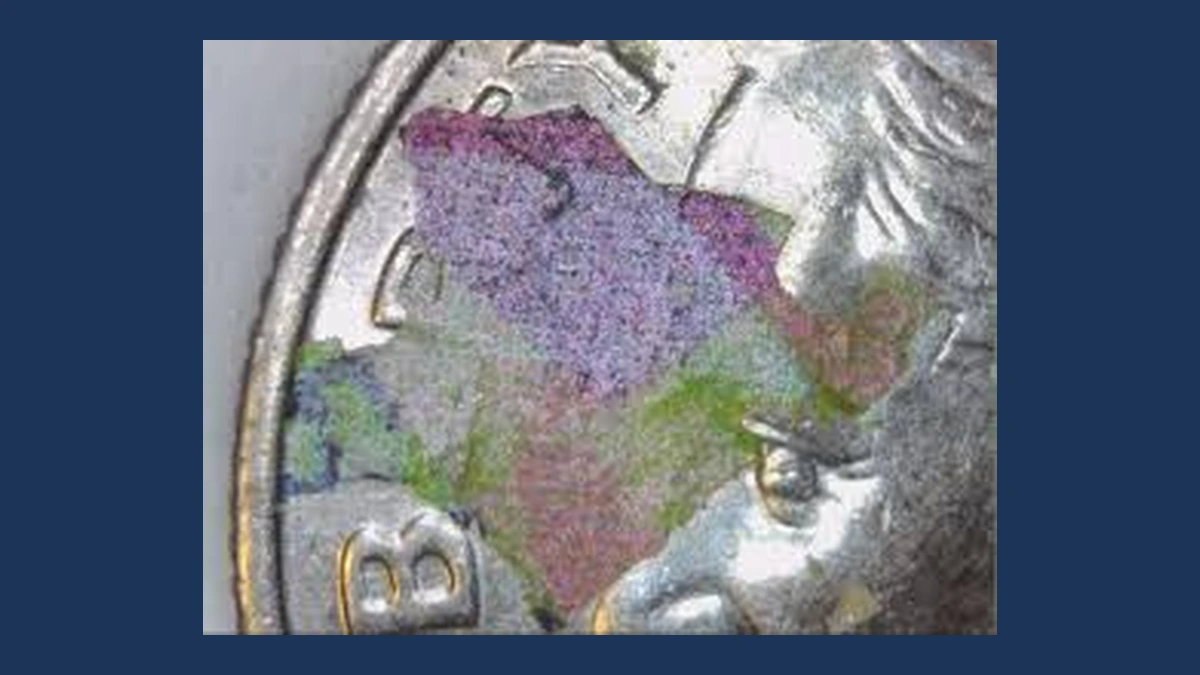
A thin flap lifting from the front of a 2012-D dime can come from a weakness inside the metal. Collectors call this peeling a lamination error.
The metal can separate along that weakness before or after the coin receives its design. A remaining flap may still carry part of the stamped image.
This differs from losing an entire outer layer of the coin. The Denver report describes local peeling on the front, rather than naming a completely copper-colored face.
Corrosion or a sharp tool can also lift metal, so the break’s surface matters.
Estimated Value
For genuine local peeling, estimate $10–$150, using small Roosevelt metal flaws as the comparison. A clear attached flap generally explains the error better than a tiny rough spot.
The estimate is for the whole coin, including its condition. It is not a recorded sale of the reported Denver example.
A larger missing outer layer belongs to a different price comparison. Scraping or prying the flap will not make the original error more valuable.
How to Identify
Leave an attached flap in place. Moving it can break the connection that shows how the surface separated.
Look along the flap’s base with a 10× magnifier, checking for a natural layered break rather than a cut through finished metal. Follow any surviving design from the coin onto the flap.
Compare the surrounding surface with an undamaged 2012-D dime. Widespread pits or bright pry marks point toward damage rather than an original weakness.
For a loose coin, use a scale and calipers against 2.268 grams and 17.91 millimeters. Check the grooves around the edge; a small attached flap may leave the weight near normal.
The clearest clue is stamped detail continuing across an undisturbed peeling boundary.
2. 2012 Roosevelt Dime Faint Opposite-Side Design
A faint extra shape can appear beside the normal design on a 2012-D dime. In a die clash, the two steel stamping tools meet without a blank disk between them.
The collision can transfer parts of one design onto the opposite tool. Coins struck afterward may receive those extra traces.
The Denver report does not give one exact line that every example must show. The useful clue is a recognizable part of the opposite design.
Tool-polishing lines and scratches are different. They do not need to follow Roosevelt or the torch and branches.
Estimated Value
An estimated $10–$200 covers modest, genuine clash marks on a 2012-D dime. The range follows minor Roosevelt clashes, with stronger matching shapes toward the upper end.
This is an estimate, not a sale attached to the reported coin. A lone faint line has less appeal than several connected traces.
Keep condition in the comparison as well. Heavy wear or scratches can hide the transferred design even when the original clash was clear.
How to Identify
Use a picture of the opposite face to decide whether the extra shape belongs to a real design element. Do this before concentrating on the length of a stray line.
A 10× magnifier helps follow connected traces across the background. Rotate the light to separate an actual raised feature from glare or a scratch.
Clashing does not remove the coin’s metal, so a loose example should remain near 2.268 grams and 17.91 millimeters. Check those figures with a scale and calipers, and inspect the normally grooved edge for squeezing.
Keep the D and 2012 date visible in comparison photographs. A matching part of the opposite design is a stronger clue than several unrelated lines.
3. 2012 Roosevelt Dime Clipped Blank
A missing section at the edge may have been absent before the coin was struck. The incomplete metal disk is called a clipped blank or clipped planchet.
Both Philadelphia and Denver examples are reported for 2012. The reports do not establish a specific shape or location for every missing section.
The design near a genuine clip forms around the shortage. A cut made after striking instead removes metal from an already finished coin.
A weak rim can sometimes appear opposite a curved clip. Its absence alone does not rule out an original blank error.
Estimated Value
Use an estimated $15–$300 for genuine 2012 clips, allowing for size, visibility, and condition. Small shortages usually have less visual appeal than clear missing sections.
A different-denomination comparison is a 1997-P nickel with a twenty-percent clip, sold for $124 in March 2025. That price is not a sale of a 2012 dime.
Both mint identity and readable date help the comparison. A neatly cut or filed opening made after striking remains damage.
How to Identify
Check intact spans with calipers before measuring across the missing area. A normal dime is 17.91 millimeters wide, so the gap itself is not a useful diameter measurement.
Weigh a loose coin against the normal 2.268 grams. A substantial shortage should reduce that weight, although a very small clip may cause only a small change.
With a 10× magnifier, inspect where the rim and lettering approach the gap. Look for naturally formed details rather than sharp cuts through finished letters.
Inspect the remaining grooved edge for filing, then look across the coin for possible rim weakness. The opening and nearby design should show that metal was absent when the coin was stamped.
4. 2012 Roosevelt Dime Doubled Designs
TRUST is a useful place to look for the documented 2012-P doubled front design. Extra outlines sit below the normal details, a direction collectors call south.
John Wexler’s description also includes the date, P, designer’s initials, and LIBERTY. The spread weakens from left to right across LIBERTY.
A doubled die means the steel stamping tool already carried the repeated design. It does not mean the coin was struck twice.
A separately listed back-doubling claim has no matched pattern here. The known front features do not establish a second variety on the back.
Estimated Value
Estimate $20–$300 for an identified 2012 doubled design, using minor modern Roosevelt varieties as a guide. Clear separation in TRUST and clean surfaces make stronger examples easier to compare.
The range is a working estimate rather than a documented auction result for this variety. A back example would need its own matching doubled pattern before using it.
Normal thick lettering or flat shelves beside letters do not qualify simply because they look doubled at first glance.
How to Identify
Begin with TRUST, keeping the coin upright and using a 10× magnifier to look below the letters. Then move to the date and P to see whether their extra outlines point the same way.
Across LIBERTY, the documented spread becomes weaker toward the right. A second rounded outline or split letter end is more useful than general thickness.
The reported back claim needs a separate comparison; do not transfer the front’s positions to the torch or branches. Check a loose clad coin with a scale and calipers against 2.268 grams and 17.91 millimeters.
Its edge normally has grooves. For the known front variety, matching the downward spread in TRUST is the quickest starting check.
5. 2012 Roosevelt Dime Smooth Edge at Normal Size
A dime normally has small grooves all around its edge. The reported 2012-D example instead has a smooth edge while remaining close to normal diameter.
That combination is different from a coin that spreads far beyond its usual size. A smooth edge alone does not identify a broadstrike.
The collar is the ring that controls the coin’s edge during striking. An unusual collar action is one possible explanation, but later grinding or rolling can also remove grooves.
The surface around the whole edge must show how the change happened. Size alone cannot settle it.
Estimated Value
For a genuine Mint-made smooth-edge example at normal size, use an estimated $30–$300. This comparison follows modest modern collar errors rather than large expanded broadstrikes.
The range assumes that later grinding, wear, or rolling has been excluded. It is not a recorded sale assigned to the Denver report.
An edge changed after the coin left the Mint does not gain this premium. Original surface texture and a clear explanation of the edge are central to value.
How to Identify
Measure across several directions with calipers, comparing each with the normal 17.91-millimeter diameter. An oversized or oval outline changes the question from a normal-size smooth edge to a possible spreading error.
Next, turn the coin slowly under a 10× magnifier. Look for grinding scratches, a rolled lip, or traces of flattened grooves.
A scale should place a loose normal clad dime near 2.268 grams. Lost weight can support metal removal, but normal weight alone cannot prove a Mint-made error.
Examine the rim on both faces for squeezing and compare the edge with an ordinary dime. An unaltered smooth surface at normal size needs expert examination before the collar explanation is accepted.
6. 2012 Roosevelt Dime Raised Cracks, Chips, and Rim Breaks
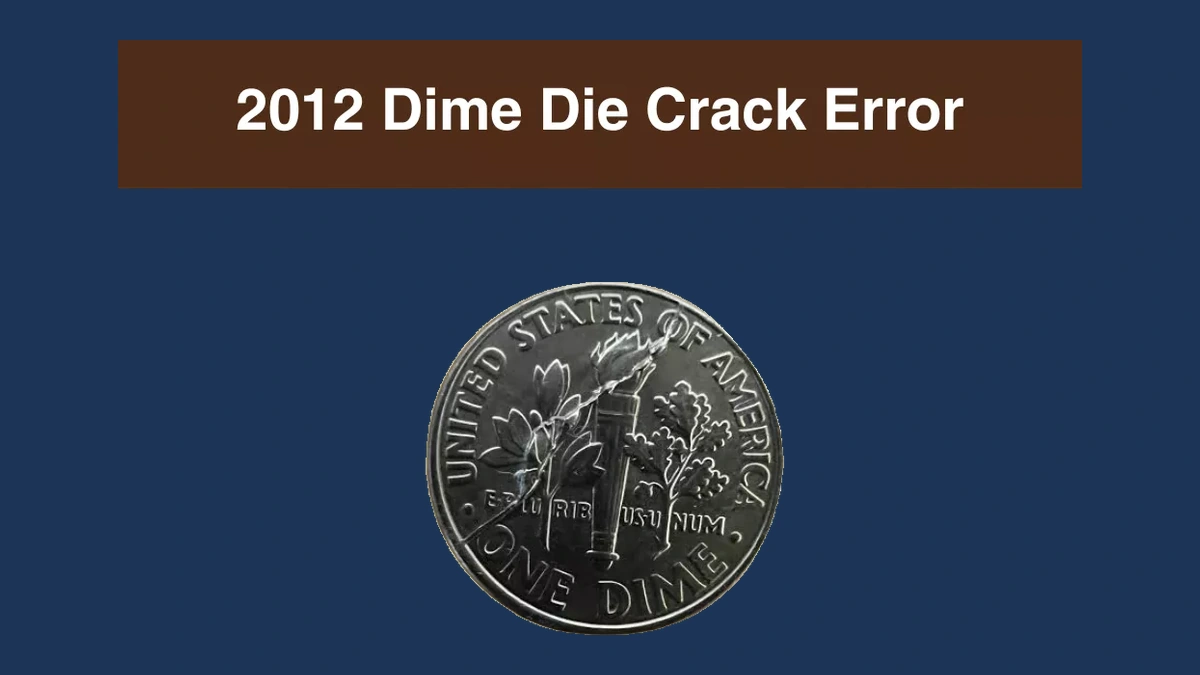
A thin raised line comes from a crack in a stamping tool. If a piece breaks away, the coin can instead receive a raised lump.
The 2012-S collector Proof has a back crack near six-thirty, slightly left of the bottom. It is the layered-metal version, not the ninety-percent silver Proof.
Separate Philadelphia reports describe raised back-rim metal, including neighboring blocks with a V-shaped gap. Another front rim-break report does not establish its mint.
Small internal lumps are called die chips. A larger raised patch joined to the rim is called a cud.
Estimated Value
Estimate $5–$400 across small chips, clear cracks, and stronger rim breaks. The Proof’s preservation and the size of an ordinary coin’s raised patch need separate comparisons.
GreatCollections sold the Proof in August 2012, but its public page hides the final price. The visible $20 starting bid is not its sale amount.
This range therefore remains an estimate for comparable tool damage. Do not add separate chip and crack prices to one coin.
How to Identify
Select the right coin type first: the documented S crack belongs to a collector Proof made from bonded metal layers. That version weighs 2.268 grams; a normal 2012 silver Proof weighs 2.50 grams.
Use a scale and calipers only if the coin is loose, with 17.91 millimeters as the normal diameter for either version. Inspect the grooved edge for later damage.
On the Proof, examine the back near six-thirty with a 10× magnifier. A raised line fits a tool crack, while a scratch cuts into the surface.
For a rim-break example, trace the raised patch to the border instead. The Philadelphia back patterns should not be used to assign a mint to the separate front report.
7. 2012 Roosevelt Dime Design Blocked During Striking
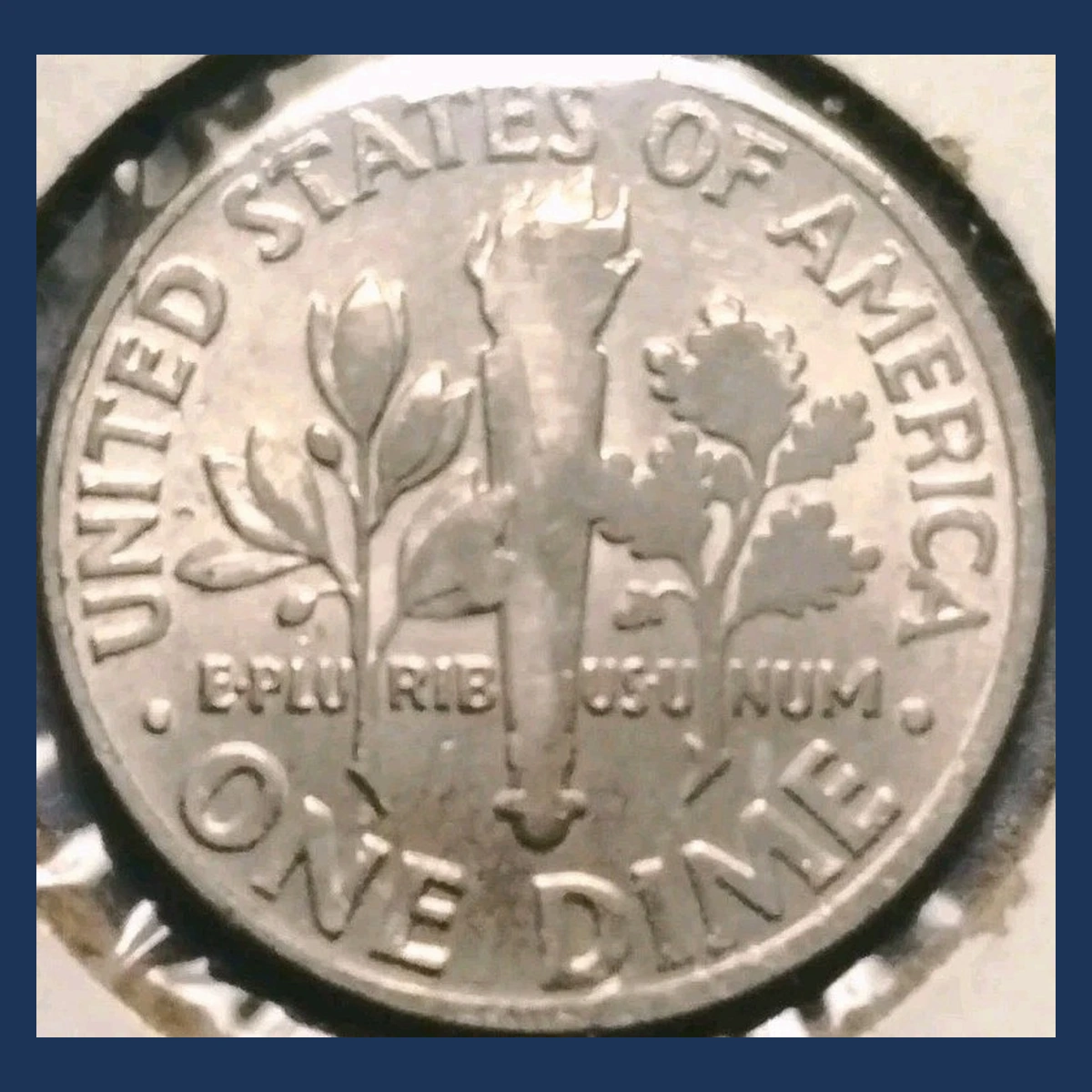
A low patch can interrupt Roosevelt’s face or the surrounding design when something blocks the stamping tool. The coin receives less detail where the material gets in the way.
This is called a struck-through error. The 2012-P report concerns the front and describes an MS62 example, an unworn coin with noticeable marks.
The blocking material and its exact location are not identified. A smooth hollow does not by itself prove grease, cloth, or wire.
The depression must fit something present during the strike. A later scratch or blow can also remove visible detail.
Estimated Value
Allow an estimated $25–$500 for a genuine 2012-P struck-through error. Small weak patches sit below clear impressions that show how the design was blocked.
The range uses comparable modern Roosevelt striking errors, not a verified sale of the reported MS62 coin. Its grade alone cannot establish how dramatic the impression is.
A sharp impression with original surfaces supports a stronger comparison. An ordinary scratch, stain, or later dent should not receive the same estimated premium.
How to Identify
Change the lighting before deciding whether the mark is a stain or a depression. Look for a real change in depth with a 10× magnifier.
Follow the design into the low area, checking whether it becomes blocked or weakened. A later impact often pushes metal outward or cuts across details that were already complete.
Photograph the whole front as well as the hollow. Do not identify the object as cloth or wire unless its impression actually preserves that shape.
For a loose coin, check roughly 2.268 grams on a scale and 17.91 millimeters with calipers. Inspect the grooves around the edge for squeezing.
The decisive feature is design interrupted within an original struck depression, rather than merely discolored metal.
8. 2012 Roosevelt Dime Missing Outer Metal Layer
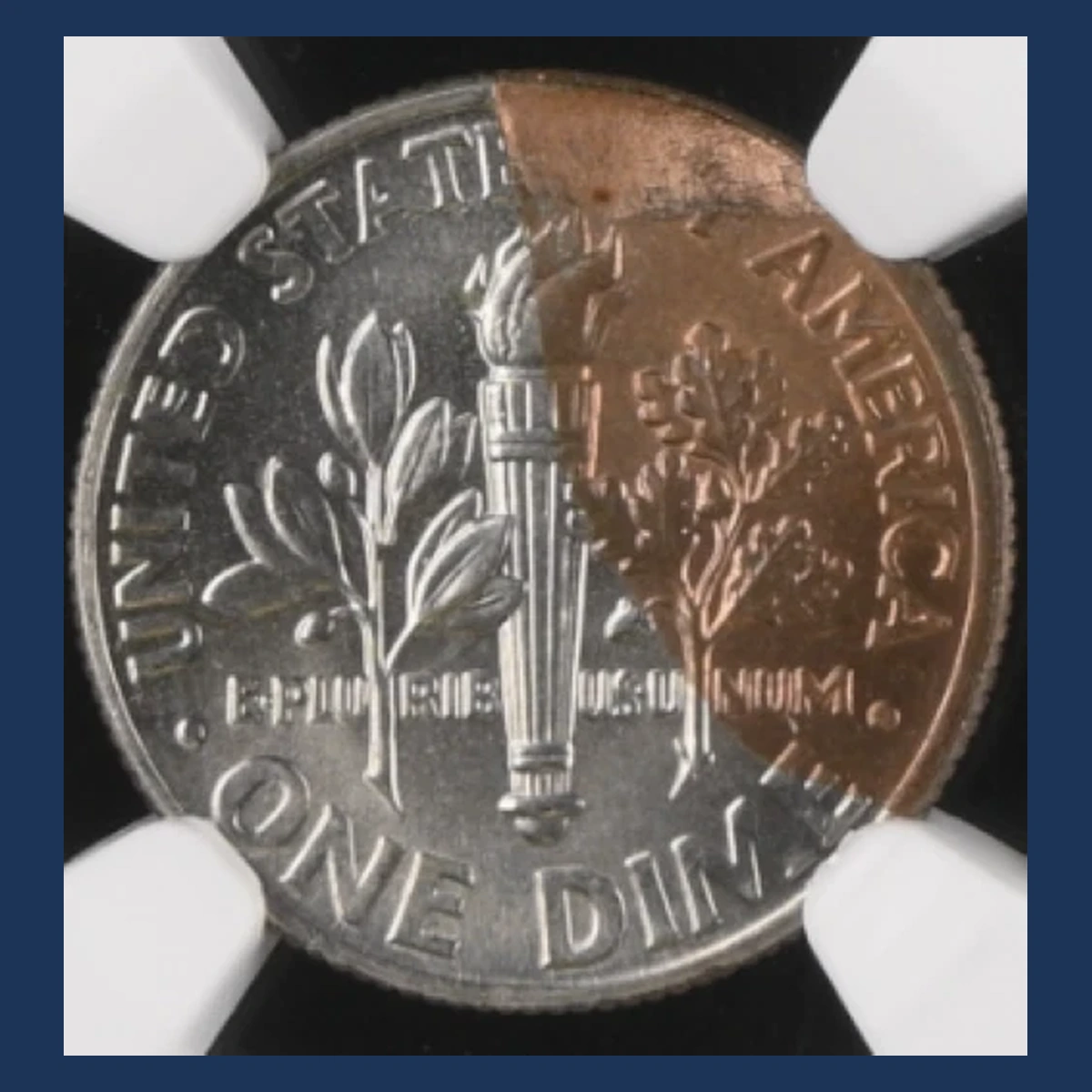
Copper showing through part of a dime can reveal a missing outer layer. Ordinary Roosevelt dimes are clad coins, with copper-nickel outer layers bonded to a copper center.
The 2012-P report includes a partial loss, so the entire face need not be copper-colored. The boundary between exposed copper and remaining outer metal is especially useful.
A small peeling flake is a different form of metal separation. Neither error is established by brown color alone.
The 2012 silver Proof has a different metal structure. It should not be treated as a regular clad dime losing one of these layers.
Estimated Value
A different-year 2018-P dime missing its front outer layer sold for $384 in July 2021. It provides a Roosevelt comparison, not a price for a 2012 coin.
Estimate $50–$600 for genuine partial or larger layer loss, depending on extent and condition. A small exposed patch need not approach the full-layer example.
Compare weight, exposed metal, and original surfaces together. Artificial stripping does not earn the same premium.
How to Identify
Look for a boundary between the silver-colored outer metal and exposed copper before judging the overall color. A brown coating can cover a completely intact layer.
Weigh a loose candidate against 2.268 grams and measure it against 17.91 millimeters with calipers. Partial loss can cause only a small weight change, so there is no single reduced weight for every example.
With a 10× magnifier, inspect the boundary and the grooved edge for the bonded layers. Look for scraping, corrosion pits, or tool marks that suggest later removal.
The reported coin is a P issue, not a silver S Proof. Exposed copper meeting an original layer boundary is the useful first check, followed by the weight and surface evidence.
9. 2012 Roosevelt Dime Off-Center Strike
A bare crescent beside a partly missing design is the familiar sign of an off-center strike. The blank disk was not centered beneath the stamping tools.
The 2012-P report describes an example struck twenty-five percent off center and graded MS63. That grade means unworn, although marks can remain.
The report does not identify a direction around the coin. A large blank area should therefore not be assigned a clock position without seeing that example.
Both faces should agree with the same misplaced disk. A shifted image on only one face can have a different cause.
Estimated Value
For a genuine dated 2012 off-center dime, estimate $50–$750. The surviving date, extent of missing design, and condition all affect the comparison.
A 1977 dime struck ten percent off center sold for $109 in June 2026. It is a different-year and smaller-shift comparison, not the reported 2012-P twenty-five-percent coin.
The upper estimate allows for a clearer dramatic example. A missing date or heavy damage can reduce interest despite a large area of untouched metal.
How to Identify
Compare the front and back before estimating the percentage off center. Both should lose part of their intended design beside an area that never received the strike.
Use a 10× magnifier to read the remaining 2012 date and P, then inspect the bare metal for grinding. Flattened remnants of letters suggest later alteration.
An off-center coin can retain the usual 2.268 grams because the error need not remove metal. Weigh a loose piece and use calipers to compare its changed outline with 17.91 millimeters.
Check the edge grooves and the border between struck and untouched metal. Matching incomplete designs on both faces distinguish this error from one shifted stamping tool.
10. 2012 Roosevelt Dime Expanded Strike with Partial Edge Restraint
A dime can spread outward when the collar does not fully contain it. The collar is the metal ring that controls its diameter and forms the edge grooves.
A professional dealer’s 2012 listing describes an uneven expanded strike with partial collar contact. The edge has a step between the restrained and expanded portions.
This combined effect can look like a tiny railway track from the side. Its two appearances belong to the same striking problem.
A separate Philadelphia broadstrike report also exists. An expanded coin keeps the intended design, unlike a true off-center strike that loses part of it.
Estimated Value
Estimate $40–$1,000 for a clear 2012 broadstrike or the combined partial-collar example. The amount of spreading, visible edge step, and preservation affect the whole-coin price.
For comparison, a 2000-P dime with both broadstriking and repeated strikes sold for $159 in September 2025. That different-year compound error is not a plain 2012 broadstrike sale.
A modest edge step should not automatically receive the top estimate. Nor should two separate prices be added for one combined striking event.
How to Identify
Start from the side, turning the edge under a 10× magnifier to find the change between grooves and expanded smooth metal. A partial collar can leave a step in height rather than simply erase every groove.
Check both faces for a complete design before calling the coin a broadstrike. A smooth edge on a normal-size coin needs a different examination.
Use calipers to compare the outline with the usual 17.91 millimeters and a scale to check near 2.268 grams. Spreading changes the shape without necessarily reducing the weight.
Look for rolled lips or flattened detail that would suggest later pressure. The combination to match is an original edge step beside an expanded but complete design.
11. 2012 Roosevelt Dime Strike on the Wrong Blank
A dime design on the wrong metal disk can have unusual weight, size, or color. The blank is simply the disk before it becomes a coin.
The 2012-D report describes an MS63 wrong-blank error but does not identify which disk was used. It should not automatically be called a cent, nickel, or foreign-coin blank.
Some incorrect blanks leave outer details weak or crowded. A larger disk can behave differently from a smaller one.
An already finished coin carrying another design is a separate possibility. That would require surviving details from the earlier coin, not just unusual metal.
Estimated Value
Use a conditional $250–$2,500 estimate after the wrong blank is identified. The intended disk, readable dime design, and condition determine which part of that range applies.
For context, the Mint Error News price guide lists clad-era Roosevelt dimes on foreign blanks around $1,500–$2,500 across grades. Those are guide estimates, not 2012 auction results.
The Denver report does not establish a foreign blank. A damaged or stripped ordinary dime does not fit this comparison.
How to Identify
Record weight before choosing a name for the blank. A normal 2012 clad dime weighs 2.268 grams, and a modern cent’s standard 2.50 grams is heavier, not lighter.
Use calipers to measure against the dime’s 17.91 millimeters. The actual coin’s measurements are needed; figures for a possible blank are only comparisons.
Examine the edge and outer design with a 10× magnifier. Missing bonded layers, trimming, and added plating can imitate an unusual starting disk.
The normal edge has grooves, but edge shape also depends on the collar used during striking. Metal testing may be needed to identify what the disk was intended to become.
A genuine match must explain the metal, measurements, and naturally struck 2012-D design on the same piece.
Conclusion
TRUST, the edge, and any exposed copper are useful places to begin checking a 2012 dime. Match the visible feature before selecting a price comparison.
Estimated values run from $5 for small raised flaws to $2,500 for an identified wrong blank. Keep ordinary P and D coins separate from S collector Proofs, including the silver version.
A scale, calipers, and clear close-ups can answer more than unusual color alone.