2016 Dime Error List with Pictures

A tiny bump and a missing patch can tell very different stories on a dime. One records damage to the stamping tool; the other may show that something blocked the strike.
This 2016 dime error list covers estimated values of $2–$1,000. Philadelphia and Denver examples include raised defects, displaced designs, and problems with the outer metal layer.
Start with the shape you can see, then use the checks below to decide which explanation fits.
1. 2016 Roosevelt Dime Raised Chips, Cracks, and Rim Breaks
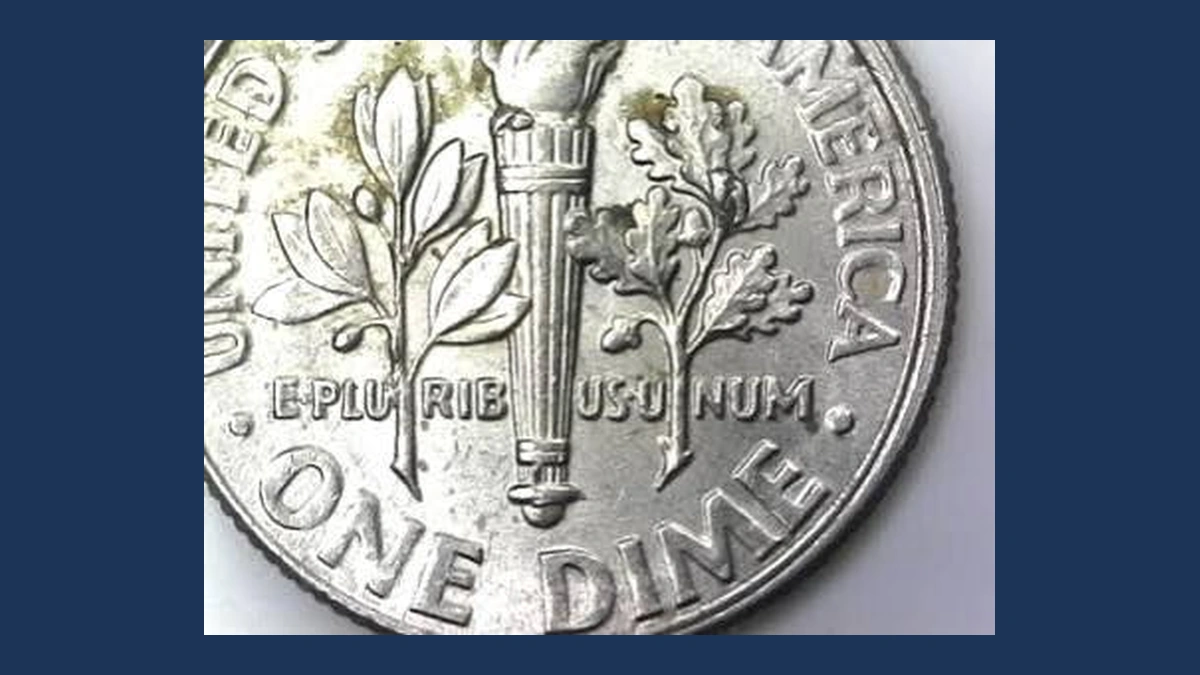
A small raised lump can form when a piece breaks from the steel stamping tool, called a die. Metal fills the gap during striking and becomes an extra bump on the coin.
A Philadelphia example with chips on both faces was graded NGC MS65, an unworn grade. Separate reports describe a raised crack near the torch’s base and a larger break joined to the rim.
Collectors call that rim-connected break a cud. These shapes belong to the same broad family, but one example does not establish the location of every reported defect.
Estimated Value
For small original chips and cracks, estimate $2–$40. A larger, clearly formed rim break can support an estimated $25–$150, depending on its size and the coin’s condition.
These are whole-coin estimates, not a separate charge for each bump. The certified Philadelphia example confirms that chips can occur on both faces, but that fact alone does not place every similarly described dime at the top of the range.
How to Identify
Decide whether the feature is a thin line, an isolated bump, or a rim-connected patch, keeping nearby letters visible as landmarks. The shape points you toward a crack, chip, or cud comparison.
Use side lighting and a magnifier to check whether the mark rises above the surface. A scratch usually cuts into it, while a later impact can leave a dent beside pushed-up metal.
For the reported torch crack, keep the torch’s normal base visible beside the extra line. Match other chips to photographs of the documented Philadelphia example, rather than assuming every small bump belongs in the same spot.
2. 2016 Roosevelt Dime Doubled Date or Torch Details
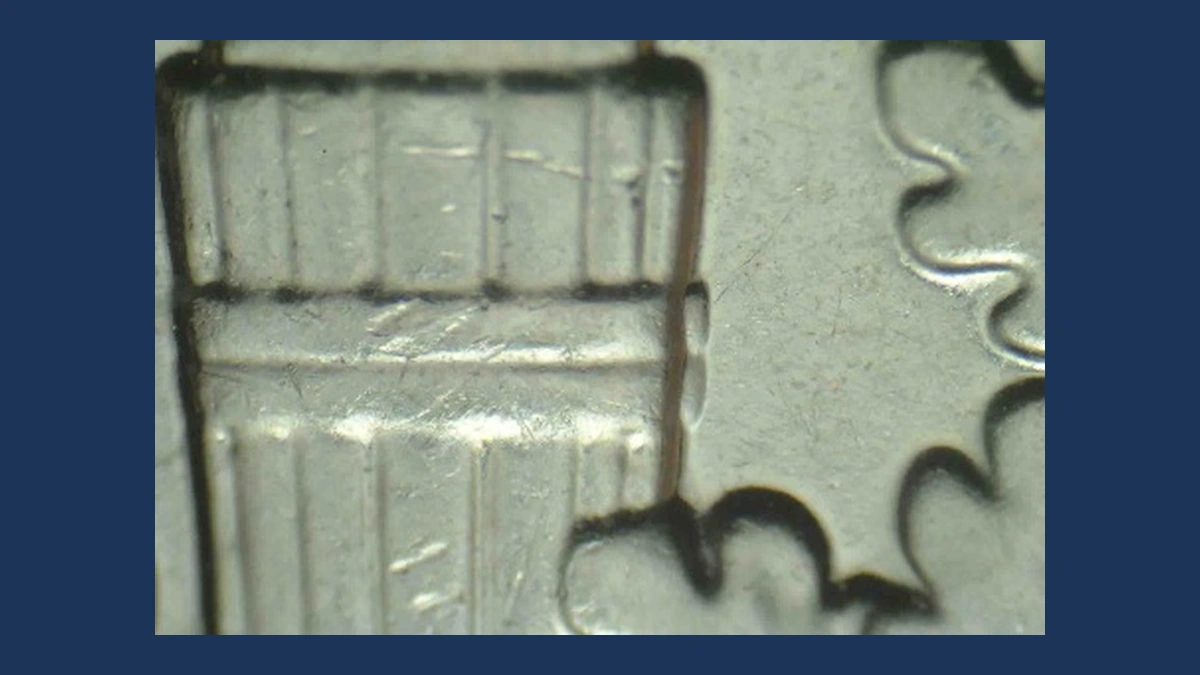
A doubled die carries a repeated detail in the stamping tool itself. Each coin can receive that extra outline in a single strike, without moving between two blows.
Denver reports include front date and mint-letter doubling, plus a separate back pattern near the torch’s upper bands. The two faces need their own reference photographs.
The modern D was part of the tool’s design, rather than a letter punched into each working tool by hand. An extra-looking D therefore does not establish the older error called a repunched mintmark.
Estimated Value
An identified minor doubled design has an estimated value of $10–$150. Clear rounded separation and clean surfaces help, especially when a collector can easily match the feature to a documented pattern.
A flat shelf from movement during striking often adds little or nothing. The estimate applies after the repeated tool detail is identified; a blurry photograph, a thick date, or a bright reflection beside the D is not enough to justify that premium.
How to Identify
Find the date on the front and the torch on the back, then examine the claimed feature with a 10× magnifier. Choose the face that matches the report you are checking.
For the front report, follow the edges of 2016 and the nearby D. Look for a recognizable repeated outline rather than general thickness.
For the back report, compare the upper torch bands and any added shape extending into the flat background beside them.
Turn the light to see whether the extra edge stays rounded and raised. A flat, lowered ledge can come from movement during striking.
Keep those two reported patterns separate. Extra date detail on one dime does not prove that it also has the reported torch-band feature.
3. 2016 Roosevelt Dime Parallel Marks Linked to the Feeding Mechanism
Parallel lines across Roosevelt’s portrait can attract attention because they look too organized to be random. A Denver report links such marks to the press’s feeding mechanism.
That mechanism moves blanks into position. Contact with a stamping tool can leave marks that later appear on coins, while material caught directly during striking creates a different effect.
The reported lines do not establish which process occurred without a clear view of their shape. Scratches added after minting can also run in parallel, so the direction of the lines alone is not a diagnosis.
Estimated Value
Use an estimated $10–$200 for clearly identified mint-made marks of the reported kind. A visible pattern that fits the original strike can draw more interest than faint lines requiring heavy magnification.
The range does not apply to ordinary scratches across a finished dime. Raised tool marks and a direct obstruction impression need different comparisons, so examine the surface before choosing an estimate near the upper end.
How to Identify
Examine the lines across Roosevelt’s portrait with a magnifier under low side lighting. Follow one line onto the flat background and check whether it rises above the coin or cuts into it.
Raised lines copied from a damaged stamping tool should have a repeatable pattern on matching examples. Compare their spacing and path across the portrait, while checking for sharp grooves or pushed-up lips from later scratches.
A depressed patch instead needs an obstruction comparison, without assuming which object made it. Several parallel marks are not enough to identify the feeding mechanism; the way the lines meet the original portrait and surrounding surface must fit that explanation.
4. 2016 Roosevelt Dime Blocked Detail and Struck-Through Depressions
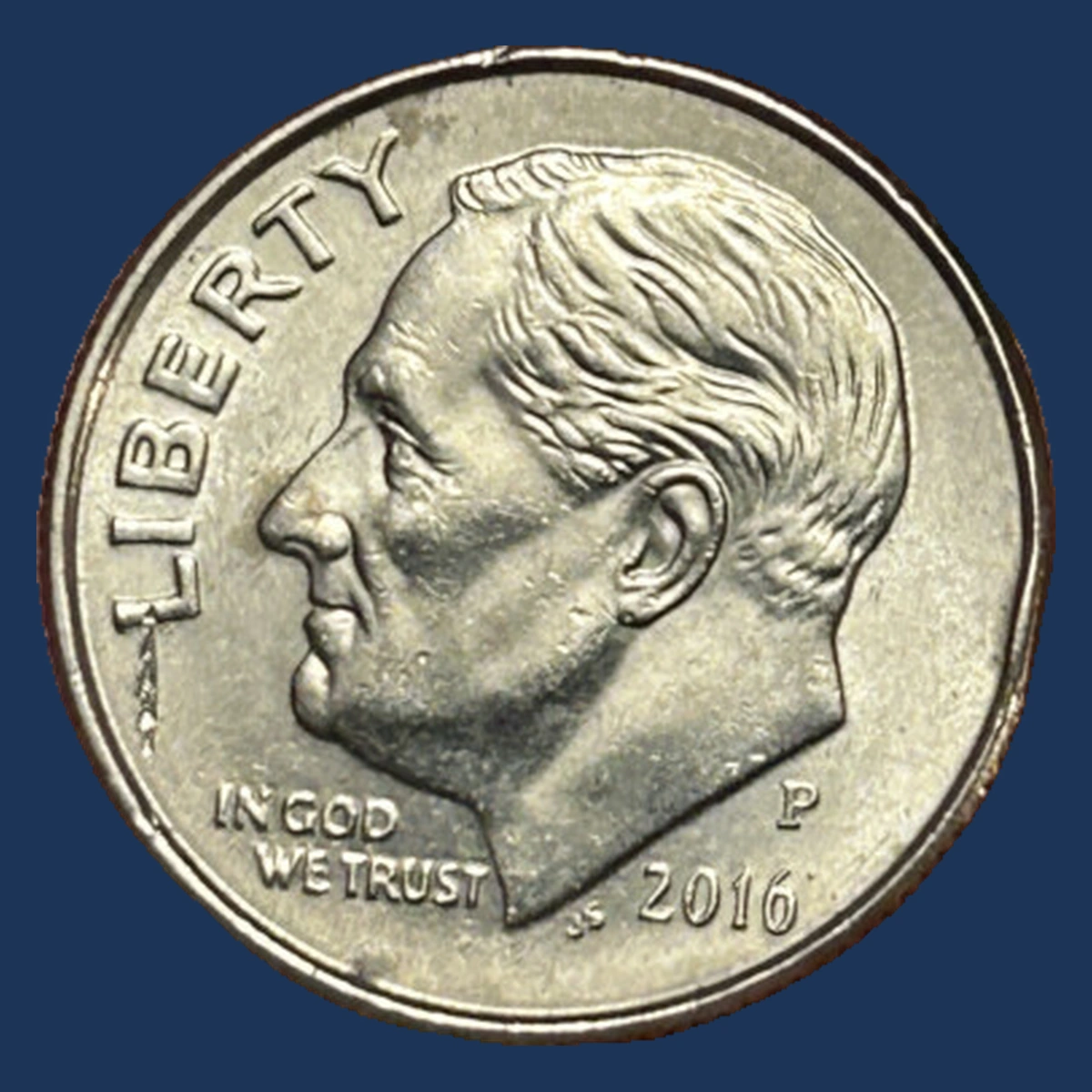
A patch of weak design can form when grease fills small openings in a stamping tool. Solid material between the tool and blank can instead leave a more defined depression.
A Denver report concerns broad weakness on the portrait. A separate Philadelphia coin has two depressions, below the ear and near the bridge of the nose.
In a collector discussion, specialists described the Philadelphia marks as struck-through areas rather than peeling metal. That photograph-based opinion concerns those particular hollows, not every smooth patch on a 2016 dime.
Estimated Value
Minor confirmed grease weakness fits an estimated $5–$40. More distinct original depressions can bring an estimated $20–$300, depending on their appearance and the coin’s condition.
A different-denomination comparison is the 1986-P nickel struck through material that sold for $204 in June 2023. The Philadelphia dime’s two marks should be priced as features of one coin, while a worn or polished portrait does not qualify merely because its detail is weak.
How to Identify
On a Philadelphia candidate, locate the ear and nose, then compare the two hollows with the photographed example discussed by specialists. Their locations help match the example without identifying the material that blocked the strike.
Inspect each hollow’s boundary under changing light. A later hit may push up a sharp lip, while scraping can cut across completed design.
The Denver weakness needs a different check: compare the faded portrait area with nearby sharp details. Broad wear usually affects exposed high points in a different way from one localized blockage.
Leave any remaining material untouched. The visible impression may identify an obstruction without revealing whether it was grease, cloth, or another substance.
5. 2016 Roosevelt Dime Broadstrike with an Expanded Outline
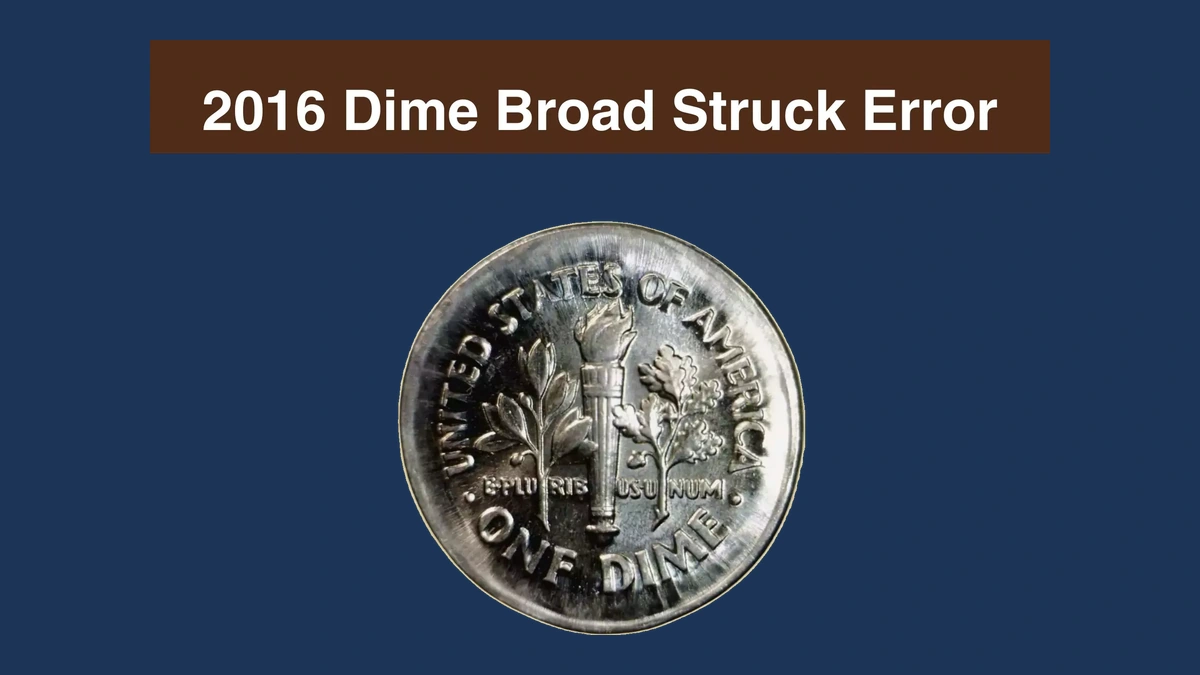
The steel ring around a blank normally controls its size during striking. Without that restraint, the metal can spread outward and produce a broadstrike.
A Philadelphia broadstrike is reported for 2016. Its expanded border needs to be examined together with the outer lettering and the edge.
The main design should remain on the available metal. It can sit unevenly inside the wider outline, so perfect symmetry is not a requirement.
A coin flattened after minting can also become wider. The condition of the portrait and letters helps separate that damage from original metal flow.
Estimated Value
Estimate $30–$500 for a genuine 2016 Philadelphia broadstrike. A bold expanded border on an attractive unworn coin can be more appealing than a slight spread on a marked example.
The highest part of this range calls for a strong visible error, not merely an unusually smooth edge. Judge the complete design and natural expansion together, and avoid applying a broadstrike price to an ordinary dime whose grooves were worn or ground away later.
How to Identify
Set a normal dime beside the candidate and compare their full outlines. The usual diameter is about 17.91 millimeters; calipers can measure the extra spread on a loose coin.
Trace the outer lettering around both faces. A broadstrike retains its main design, even if the border is wider on one side.
Check the edge for natural expansion and the faces for flattened high points or scraped areas. Those signs can reveal later crushing.
A scale can compare a loose clad dime with the normal 2.268-gram weight. Broadstriking spreads that metal rather than automatically removing it.
Keep the entire coin visible in photographs. A close-up showing only a smooth edge cannot establish how the wider shape formed.
6. 2016 Roosevelt Dime Off-Center Strike with an Uneven Collar Edge
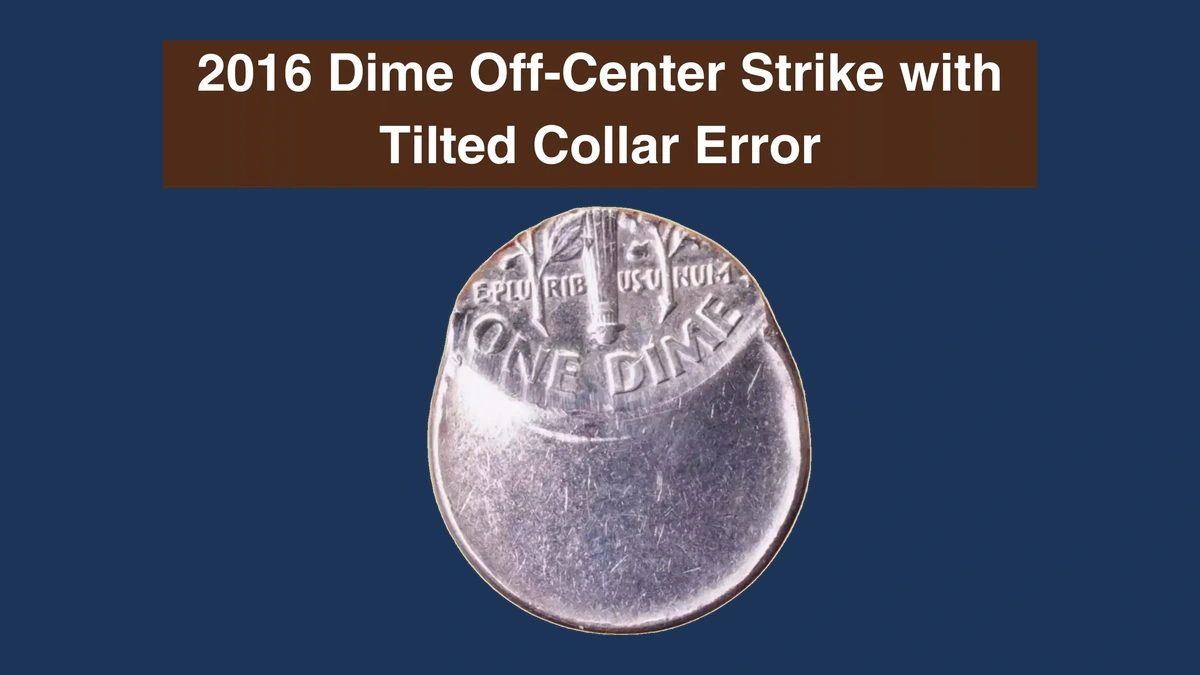
A reported Philadelphia dime combines a displaced design with an uneven edge step. These features can form when a blank sits off center and the surrounding collar ring does not contain it evenly.
The shifted blank leaves part of the design beyond the metal. The collar problem changes how the edge spreads and receives its grooves.
This is one reported combination, not two separate coins. Its direction and amount of displacement need to be read from the actual specimen.
A dented rim alone cannot demonstrate either part of the combination.
Estimated Value
For a genuine example with both features visible, estimate $50–$600. The readable date, amount of displacement, and clarity of the stepped edge influence where the coin falls within that range.
Value the complete coin once rather than adding a full off-center price to a full collar-error price. A slight shift with heavy later damage may attract less interest than a simpler, cleaner mistake whose original shape is easy to understand and display.
How to Identify
Compare both faces first, looking for an unstruck area opposite the missing outer design. Their positions should fit one misplaced blank.
Now view the edge from the side and rotate the coin gently. Look for a step between a grooved portion and metal that spread beyond the collar’s restraint.
The two observations answer different questions. Uneven placement on just one face can indicate a shifted tool, while an edge dent may result from later damage.
Photograph the surviving date, full outline, and edge step together. Do not estimate a precise off-center percentage from a cropped picture, or assume that every smooth section represents the reported collar problem.
7. 2016 Roosevelt Dime Missing Outer Metal Layer
Ordinary 2016 dimes have pale outer layers bonded to a copper center. If one outer layer is absent, the exposed surface can look copper-colored instead of silver-colored.
A Denver missing-layer example is reported, but its affected face needs to be identified on the actual coin. A color change by itself does not show that metal is missing.
Staining, heating, or chemical treatment can create similar colors after minting. The surface, edge structure, and weight need to support the same explanation before the coin receives a missing-layer identification.
Estimated Value
A genuine partial or full missing-layer dime has an estimated value of $50–$600. A broad exposed area with original design generally makes a clearer display than a small, poorly defined patch.
As a different-denomination comparison, a 1986-P quarter missing its front layer sold for $62 in September 2024. That example shows why exposed copper does not automatically mean a huge price; the dime’s own condition and the amount of missing metal still matter.
How to Identify
A brown face needs an edge view before a missing-layer diagnosis makes sense. Through a magnifier, compare the metal layers beside that area with those on an ordinary clad dime.
Weigh a loose candidate on a scale against 2.268 grams, then inspect the exposed design for scraping, residue, or pitting. Grinding and chemical treatment can remove weight too, so original struck detail and a natural layer boundary need to agree.
San Francisco also made 90% silver Proofs, specially made collector coins weighing 2.50 grams. Those normally lack the copper-core stripe, so a plain silver edge on that version cannot prove a missing outer clad layer.
8. 2016 Roosevelt Dime Material Still Attached after Striking
Sometimes material caught between a blank and a stamping tool stays attached afterward. The extra piece and the surrounding impression can preserve evidence of the same strike.
A retained-material error is reported for a 2016 Denver dime. The report does not identify the substance or establish one location to expect on every candidate.
A speck glued onto a finished coin can look unusual without being a mint error. The useful feature is the way the original design and metal formed around the attached piece, rather than the object simply being present.
Estimated Value
For an identified retained-material strike-through, estimate $100–$1,000. The strength of the evidence, size of the visible effect, and condition of the dime all influence the price.
An intact piece with a clear original connection can be more informative than a loose object beside a coin. This conditional estimate does not turn any attached speck into a valuable error, and the material should not receive a specific name or origin without supporting examination.
How to Identify
Leave the attached piece where it is. Pulling, scraping, or probing it can destroy the connection that explains when it became part of the coin.
Take a straight-on photograph with the date and D visible, followed by a low side view of the attachment.
Use a magnifier to examine how nearby lettering or portrait detail meets the material. The original strike should make sense around the obstruction.
Look for glue, surface deposits, or a later dent that could explain the attachment without a minting error.
Photograph the intact boundary closely. A specialist can assess how the coin formed around the piece more effectively than a cleaned hollow beside a loose fragment.
Conclusion
Estimated $2–$1,000 values cover modest raised defects through more dramatic 2016 dime errors. Clear original features and good condition matter more than a striking name.
Photograph both faces before enlarging the unusual area. Use an edge view and weight for possible missing metal, but compare repeated letters by their actual outlines.
Leave attached material in place, and keep the Philadelphia and Denver examples separate when comparing their features.