2018 Dime Error List with Pictures

A 2018-P dime weighing only 1.5 grams sold for $2,160 in July 2023. It was struck on a mostly iron disc instead of normal dime metal.
These 2018 Roosevelt dime errors span estimated whole-coin values of $2–$3,000. Smaller features include raised branch marks, repeated letters, and impressions left by material caught in the press.
Read on to compare the picture, edge, weight, and metal before choosing a price range.
1. 2018 Roosevelt Dime Die Dent (Estimated Up to $15)
An extra raised shape beside a branch can look like another stem. The 2018-P report attributes it to a dent in the die, the steel tool that stamps the coin.
An object pressed into the tool and left a hollow. Later coin metal filled that hollow, creating a raised shape on the back.
This differs from a chip, where steel breaks away, or a doubled design already present on the tool. An extra stem alone does not prove either one.
Compare the added shape with the normal branch before giving it an error name.
Estimated Value
The reported extra stem has an estimated whole-coin range of $5–$15. In the finder’s discussion, an opinion of about $10 was attributed to specialist Mike Diamond.
Other participants questioned how readily a buyer would pay that amount. The exchange is an opinion, not an auction result.
A clear visible feature and useful photographs matter more than extreme enlargement. A tiny mark should not be given a major-error price merely because a close-up makes it look large.
How to Identify
Place a normal back-side photograph beside the coin and find the extra shape in the branch arrangement. Use a magnifier to see whether it rises from the original surface.
A cut or material stuck on afterward has a different boundary. Look for a hollow and pushed-up lip that might show a later impact.
Check the P mintmark, edge grooves, and complete date. Use a scale against 2.268 grams and calipers against 17.91 mm for a normal clad dime.
Clad means outer metal layers surround a copper core. Start by matching an isolated raised shape absent from the normal branch, without assuming a second whole branch was stamped.
2. 2018 Roosevelt Dime Die Cracks and Chips (Estimated Up to $30)
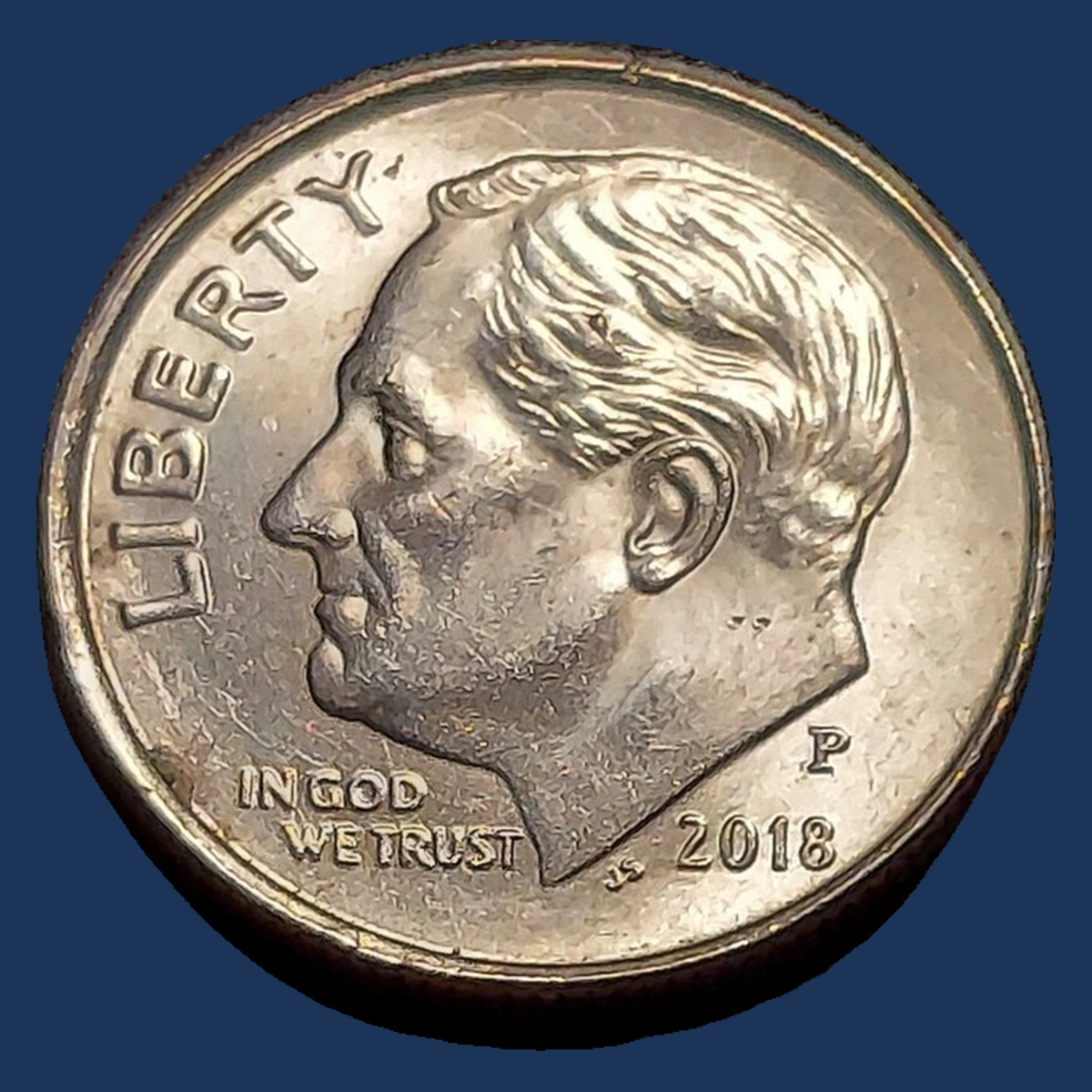
Little raised bumps can appear near the olive and oak branches on the back. The 2018-P reports include these chips along with thin raised crack lines.
A crack opens in the stamping tool and leaves a ridge when coin metal fills it. A small piece breaking from the tool can instead leave a compact mound.
The two shapes are different even though both reflect tool damage. Their appearance should guide the description.
A branch chip is not automatically a cud. A cud requires a larger break that connects the raised area to the rim.
Estimated Value
Estimate $2–$30 for the modest cracks and chips reported here. Small marks tend toward the lower end, while clearer clusters may attract more interest.
This whole-coin range follows the year guide’s minor-error advice, not actual sales assigned to every raised speck. The underlying coin’s condition still matters.
A microscopic chip does not become a major error through a dramatic nickname or enlarged photograph. The feature should be easy to describe and show clearly before expecting a buyer to pay more.
How to Identify
With a magnifier, decide whether the feature is a narrow ridge or a compact raised bump. Follow it into the surrounding design instead of judging one bright edge.
Inspect each branch separately and keep the torch visible for position. An enclosed chip should not be called a cud without a connection to the rim.
A scratch cuts down, while an impact may leave a hollow with metal pushed up beside it. Check for those boundaries.
Use a scale and calipers against 2.268 grams and 17.91 mm, then inspect the edge grooves. For the quickest distinction, confirm a raised feature formed with the picture rather than a cut or attached deposit.
3. 2018 Roosevelt Dime Doubled Die (Estimated Up to $100)
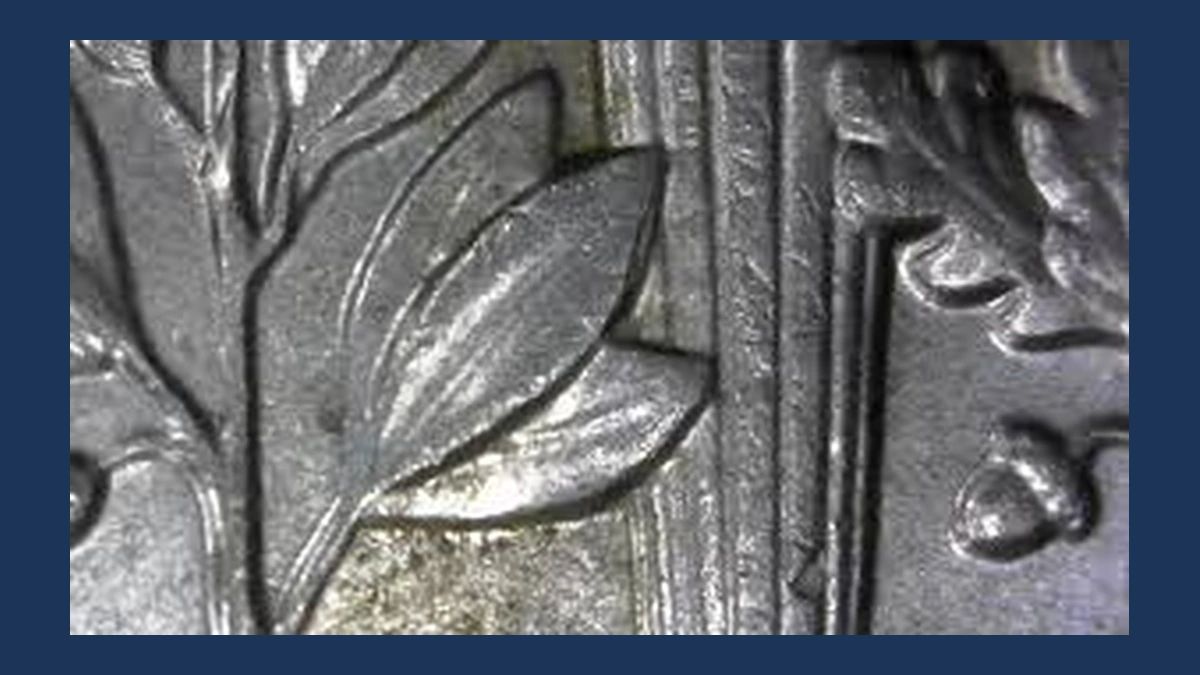
Letters can appear to have another outline beside the main stroke. A true doubled die has that repeated detail already in the steel stamping tool before the coin is struck.
Reports for 2018 involve both faces. Suggested front areas include LIBERTY, the motto, and date, while back-side reports concern the outer wording and denomination.
Denver appears in a minor variety report, but the different pictures should not be combined into one required pattern. Each coin needs its own mint and face identified.
Flat shelves or spreading caused during striking can make normal letters look doubled too.
Estimated Value
Identified minor doubled dies have an estimated whole-coin range of $5–$100. Clearer separation and better surfaces can support the upper part of the range.
The 2018 discussion gives guide values rather than a series of certified auction results. The actual repeated shapes matter more than how many locations a seller lists.
Ordinary flat doubling from the strike should not be valued as a tool variety. Several shelf-like letters do not by themselves establish a doubled die.
How to Identify
Choose the face and mint before comparing the letters. Under a magnifier, match the shape and direction of extra outlines to a confirmed example from the same issue.
Look for repeated rounded detail without the main letter appearing shaved down. A low flat shelf or ragged widening may come from movement or tool wear instead.
Do not combine a front photograph and an unrelated back photograph into one variety. The reported wording only tells you where to look.
Check 2.268 grams on a scale, 17.91 mm with calipers, and the edge grooves. Start by matching the same secondary outline beside the same letters on one confirmed coin.
4. 2018 Roosevelt Dime Struck-Through Error (Estimated Up to $150)
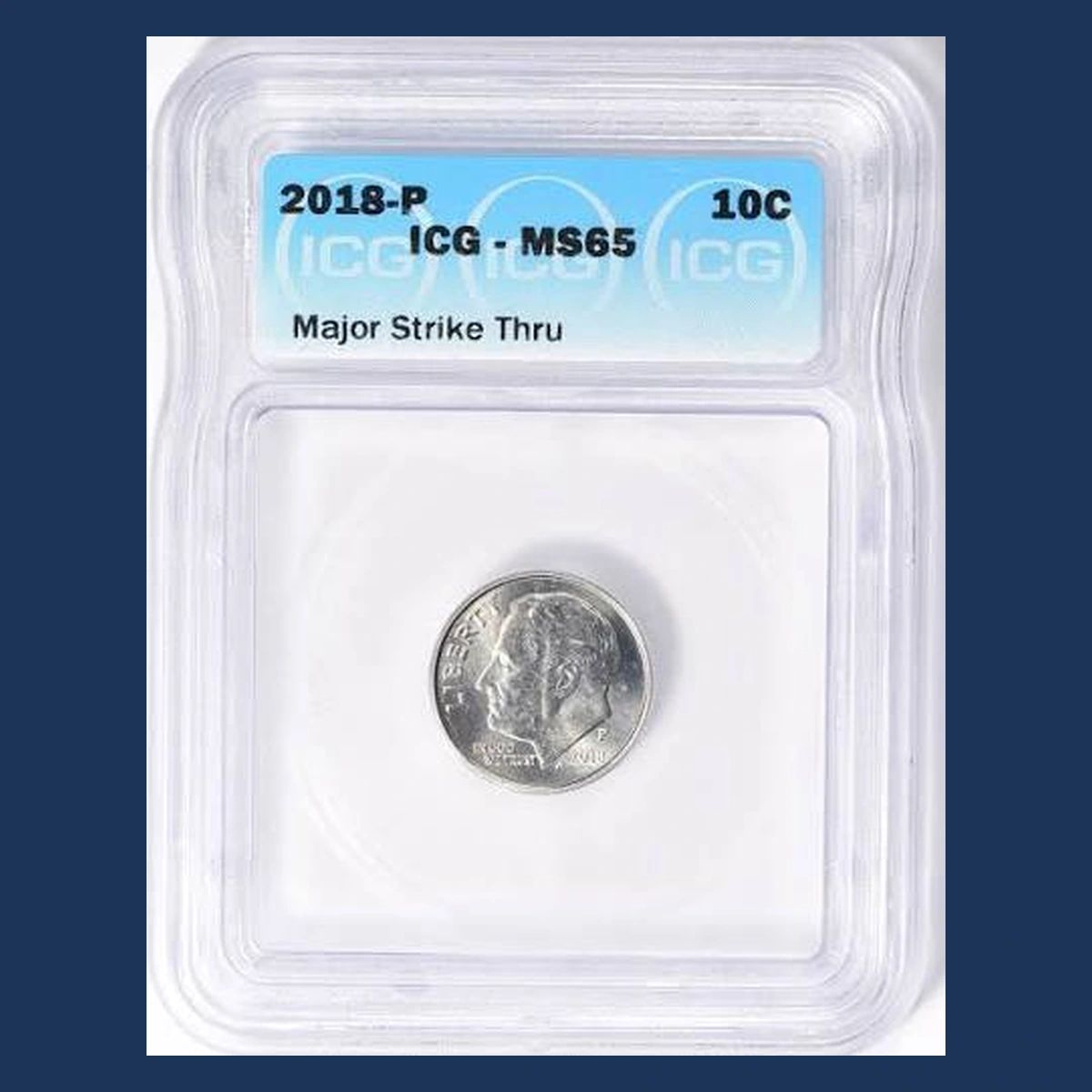
A vertical hollow across Roosevelt’s portrait is one reported example of a strike-through. Material between the coin and the stamping tool prevented the design from forming normally.
The affected area is depressed or weak, rather than an extra raised branch. Its shape may not identify the actual object involved.
A separate Denver seller used the nickname “Smoking Roosevelt.” That name does not establish the same object, position, or coin as the vertical portrait report.
Each impression needs its own examination. A scratch made after the coin left the Mint can also interrupt the portrait.
Estimated Value
Estimate $20–$150 for minor through obvious impressions on normal 2018 clad dimes. The range uses comparable modern striking errors rather than a special price for a seller’s nickname.
A narrow mark on a worn coin generally belongs lower than a clear impression beside sharp original detail. The surrounding surfaces affect the whole-coin value.
Neither the Denver nickname nor the portrait report supplies a verified sale to assign to the other example. No particular retained object is priced here.
How to Identify
For the portrait report, use a magnifier from the top of the head toward the cheek. Follow how the hollow interrupts the picture along that route.
Side lighting can reveal a struck impression without sharp burrs from a later cut. Check nearby detail for scraping or impact damage.
For the Denver candidate, examine the actual mark without assuming the nickname means a wire or any specific object. Use a scale and calipers against 2.268 grams and 17.91 mm.
Inspect the edge grooves for other damage. Begin by matching a pressed impression within otherwise intact striking detail, rather than treating a fresh scratch as a Mint-made interruption.
5. 2018 Roosevelt Dime Broadstrike and Collar Failure (Estimated Up to $300)
A smooth edge raises a question, but it does not automatically prove a broadstrike. A true broadstrike spreads outward because the metal retaining ring, called the collar, failed to limit the coin’s width.
The 2018-P reports include an expanded-strike category and a separate smooth-edge account. A smooth edge at normal size needs a different examination.
Filing, rolling damage, or wear can remove grooves after minting. A broad-looking rim in a photograph can also be misleading.
The complete picture and measurable extra width must agree before the coin is called broadstruck.
Estimated Value
Genuine 2018 broadstrikes have an estimated whole-coin range of $50–$300. The amount of expansion, remaining picture, and surfaces affect the price.
A normal-size coin with a smooth edge does not automatically qualify. It may have a different cause.
A 2000-P NGC MS65 broadstruck and multiply struck dime sold for $159 in September 2025. That is a different-year coin with an additional striking error, so it only gives a limited comparison rather than a 2018 auction result.
How to Identify
Measure several widths with calipers against the normal 17.91 mm. A broadstrike should show outward spread rather than just a smooth edge.
Weigh it on a scale against 2.268 grams. The expanded coin should generally retain its metal unless another defect or later damage removed some.
Use a magnifier around the whole edge to find intact grooves, crushed grooves, filing marks, or naturally spread silver-colored metal. Check that both complete pictures remain present.
Assess a smooth edge at ordinary size separately. For the quickest broadstrike test, pair measurable expansion with a complete design and an edge that was formed during that expanded strike.
6. 2018 Roosevelt Dime Off-Center Strike (Estimated Up to $500)
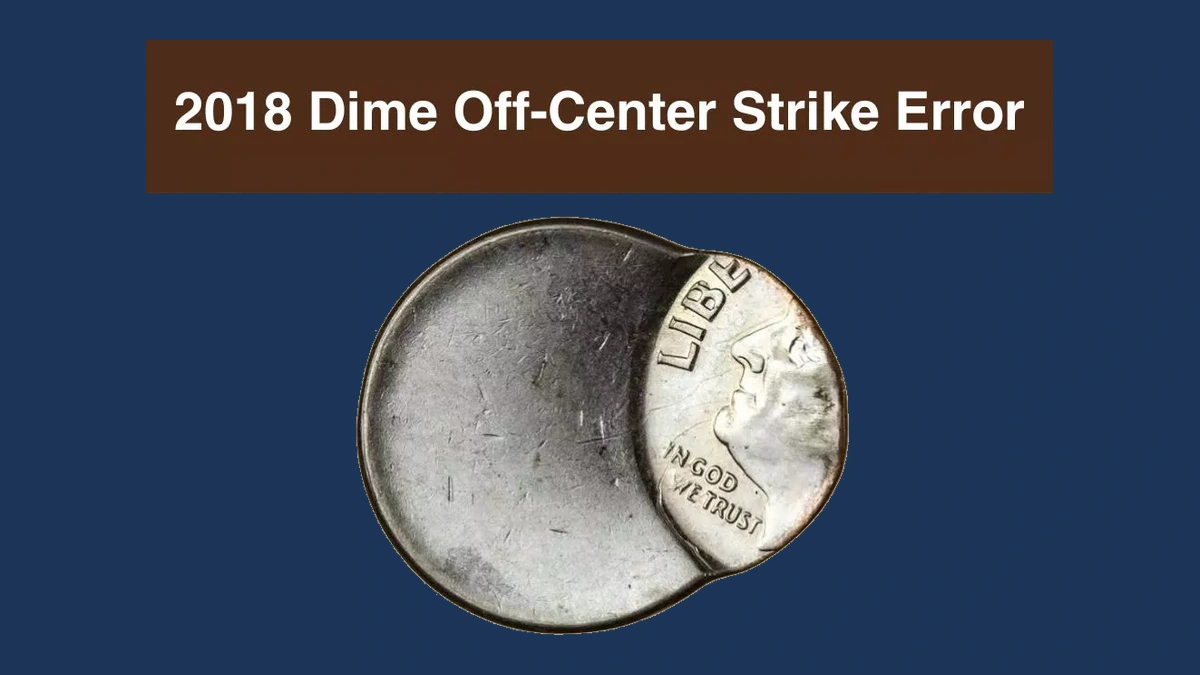
Roosevelt’s portrait may appear shifted right, leaving more border on the left. A report of that appearance does not settle whether the entire metal disc was off-center.
One stamping tool out of alignment can shift only one face. A genuinely misplaced disc affects the pictures on both faces and leaves original unstruck metal.
A separate Philadelphia report concerns the off-center category. Its general illustrations should not assign a 30% shift to the subtly moved portrait.
The back is therefore essential. A wide border on one side alone cannot establish a substantial off-center strike.
Estimated Value
Estimate $15–$500 for genuine offsets from small shifts through stronger readable-date errors. This is a whole-coin comparison range, not a claimed upper-price sale for a dramatic 2018 example.
A 1977 NGC MS64 Full Bands dime struck 10% off-center sold for $109 in June 2026. Full Bands describes clear separation of the back-side bands around the torch.
The different-year result gives context only. A small one-face shift should not be priced as a large two-face off-center strike.
How to Identify
Turn the coin over before estimating the front’s shift. A centered back opposite an uneven front rim points toward one misaligned tool, rather than a displaced disc.
With a magnifier, follow the boundary from struck picture to plain metal. Check for original texture instead of grinding or polishing.
Read the complete 2018 date and surviving mintmark. Use a scale against 2.268 grams and calipers against 17.91 mm, allowing for any changed outline.
Inspect edge grooves where the coin met the retaining ring. The quickest distinction is to compare both faces for the same original unstruck crescent, rather than measure the portrait’s position alone.
7. 2018 Roosevelt Dime Missing Obverse Clad Layer (Estimated Up to $600)
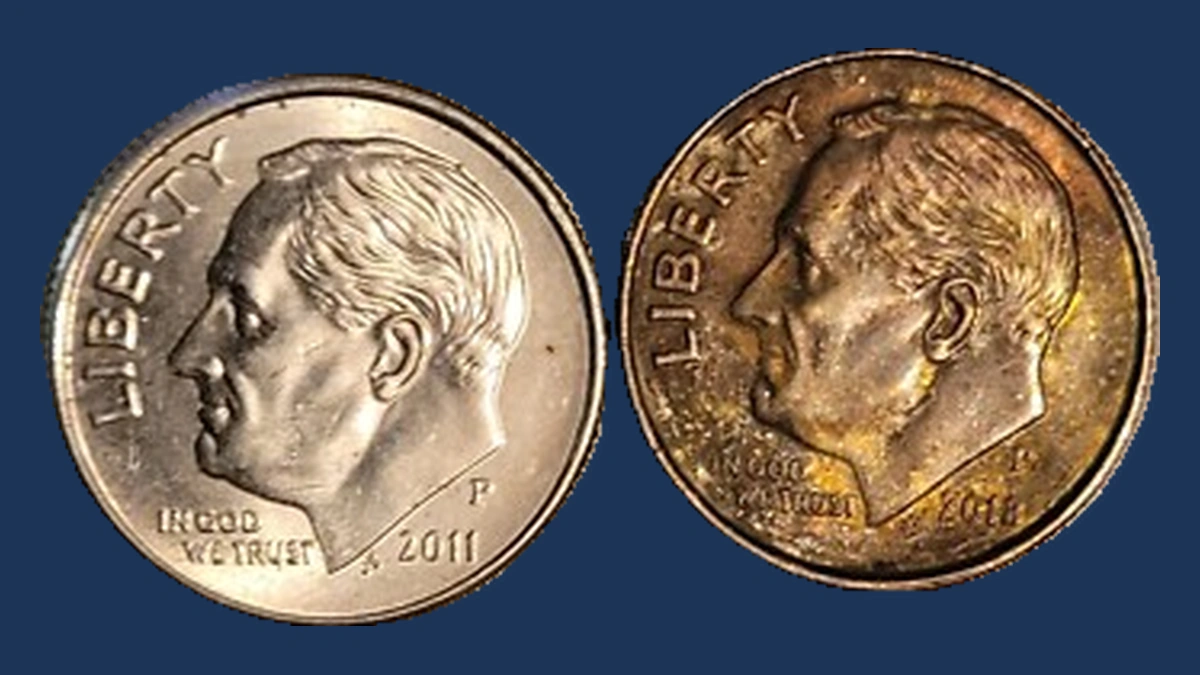
The front can show copper instead of the normal silver-colored outer metal. A documented 2018-P example was graded PCGS MS64 with the front clad layer missing.
A normal dime has copper-nickel outer layers around a copper core. Losing an outer layer exposes that core and can lower the coin’s weight.
The auction description does not assign an exact missing percentage to this 2018 piece. That figure should not be borrowed from another coin.
Brown staining, a coating, or surface removal after minting can imitate the color. The edge and weight need to support the missing-layer explanation.
Estimated Value
The 2018-P PCGS MS64 sold for $384 at Heritage on July 15, 2021. Estimate $100–$600 for comparable identified 2018 examples.
A separate 2019-P PCGS MS61 Full Bands coin missing 80% of its front layer sold for $139 in September 2024. It has a different year, grade, and amount of missing metal.
Compare the extent of loss and original surfaces before using either whole-coin price. The 80% figure does not belong to the 2018 coin.
How to Identify
Compare the copper-colored front with the back and edge under a magnifier. Look for the missing outer layer in the metal structure, not just a change in surface color.
Check for sanding lines, chemical roughness, or a coating. Use a scale against the normal clad weight of 2.268 grams; the loss depends on how much layer is absent.
Calipers should be near 17.91 mm on an undistorted coin. Inspect surviving edge grooves for later alteration.
The 2018-S silver Proofs, specially made collector coins, are different: they contain 90% silver and weigh 2.50 grams. For a quick clad-coin check, compare reduced weight with the exposed copper and missing layer visible at the edge.
8. 2018 Roosevelt Dime Iron Foreign Planchet (Estimated Up to $3,000)
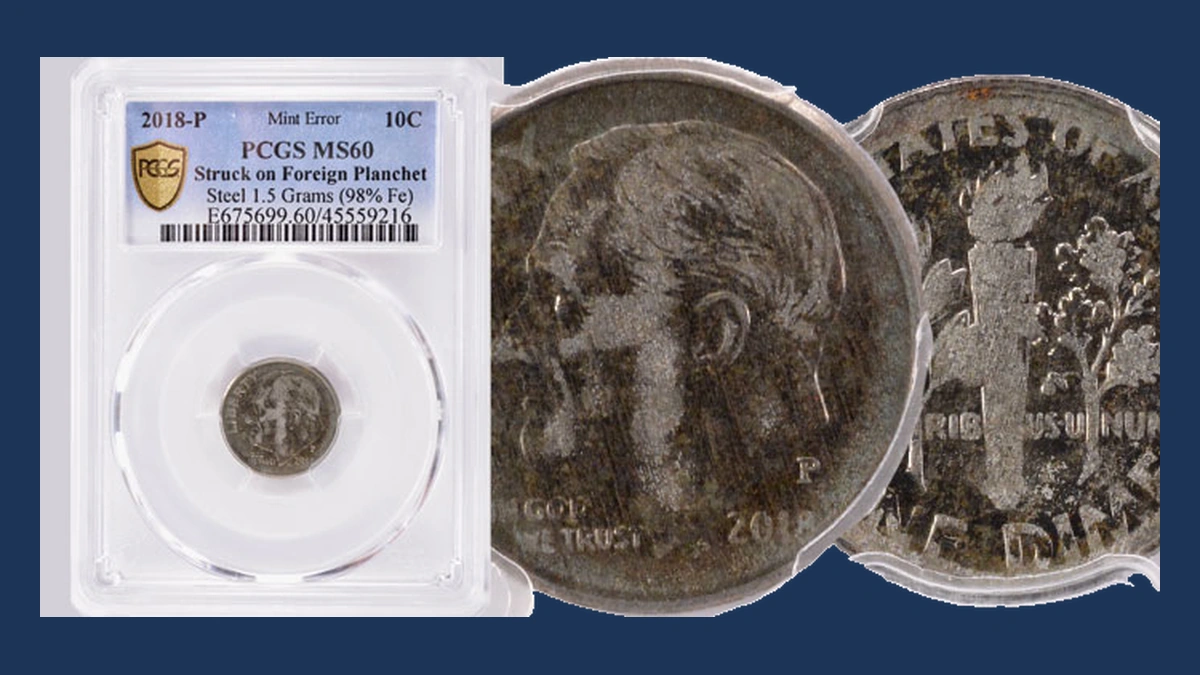
The auctioned 2018-P dime weighs 1.5 grams and contains about 98% iron. Its picture is soft at both the center and the border, unlike a normally struck clad dime.
The wrong metal disc did not behave like ordinary dime material in the press. Its gray and olive-brown color accompanies the unusual weight and composition.
The catalog suggests a disc intended for foreign coinage without naming a country. It records at least four examples, rather than one unique discovery.
Color alone cannot identify this error, since staining, corrosion, or plating can change a normal coin’s appearance.
Estimated Value
Heritage’s PCGS MS60 example sold for $2,160 on July 21, 2023. An estimated $1,500–$3,000 covers similarly identified 2018-P iron-disc errors.
MS60 describes an unworn coin with substantial marks or other limits to its appearance. Condition and presentation can change the price.
The amount values one complete wrong-metal coin. A dark dime or a magnetic response alone does not earn this range before the metal and coin identity are established.
How to Identify
Hold a magnet near the coin without touching it to check for a strong response. Normal clad stock is not magnetic, but plating can complicate the result.
Use a scale next: the recorded example is 1.5 grams, well below the normal 2.268 grams. Measure its actual width with calipers against 17.91 mm without guessing a foreign denomination.
With a magnifier, inspect the edge and any grooves for plating seams or alteration. Confirm the 2018 date, P, and soft central and border detail.
Begin by checking low weight and magnetic response together, then use specialist metal testing to confirm the mostly iron composition.
Conclusion
Estimated whole-coin values for these 2018 dime errors run from $2 to $3,000. The iron-disc sale at $2,160 and missing-layer sale at $384 provide firm examples, while small raised tool marks belong to much lower ranges.
Match the actual feature before using a price. An extra stem, exposed copper, and shifted portrait need different checks, with the correct clad or silver weight used for the coin in hand.