2019 Dime Error List with Pictures

Copper showing through Roosevelt’s face can mean more than a change in color. A 2019-P dime missing about 80% of its front outer layer sold for $139 in September 2024.
This 2019 Dime error list covers estimated values of $5–$1,000, including small tool marks and an unusually expanded coin. The examples concern ordinary copper-core dimes, not the separate .999 silver collector Proofs.
Follow the surface and edge checks below to see which features point to a minting error.
1. 2019 Roosevelt Dime Raised Lines from Scraped Tools
Fine parallel lines can stand above the coin’s surface when the stamping tool itself was scratched. Metal pressed into those tiny tool grooves becomes raised lines on the coin.
A private collection lists a 2019-D dime with marks attributed to the feeding mechanism touching the tool. Separate Philadelphia reports describe heavier lines on the back.
This differs from a feeder scraping a finished coin directly, which can cut into its surface. Polishing the stamping tool can also create fine raised lines.
The pattern needs a match before the feeding mechanism is identified as the cause.
Estimated Value
Estimate $5–$50 for genuine, clearly visible tool-scrape examples. Fine lines often add only a modest premium because they are less dramatic than a displaced strike or missing metal.
The collector’s 2019-D listing does not provide a completed sale. This range is an estimate for the type rather than a transaction attached to that coin.
Ordinary scratches, even when they run in parallel, should not receive the same error premium.
How to Identify
Find out whether the lines rise from the surface or cut into it. Under a 10× magnifier, change the light until the line edges and surrounding metal are visible.
Compare the pattern with the same mint’s reported example; a Denver coin cannot establish the position of marks on a Philadelphia coin. Repeated raised lines may also come from tool polishing.
For a loose ordinary dime, check about 2.268 g on a scale and 17.9 mm with calipers, plus grooves around the edge. To identify tool scrapes, match the raised line pattern on the actual coin rather than relying on parallel scratches alone.
2. 2019 Roosevelt Dime Raised Blister in the Outer Layer
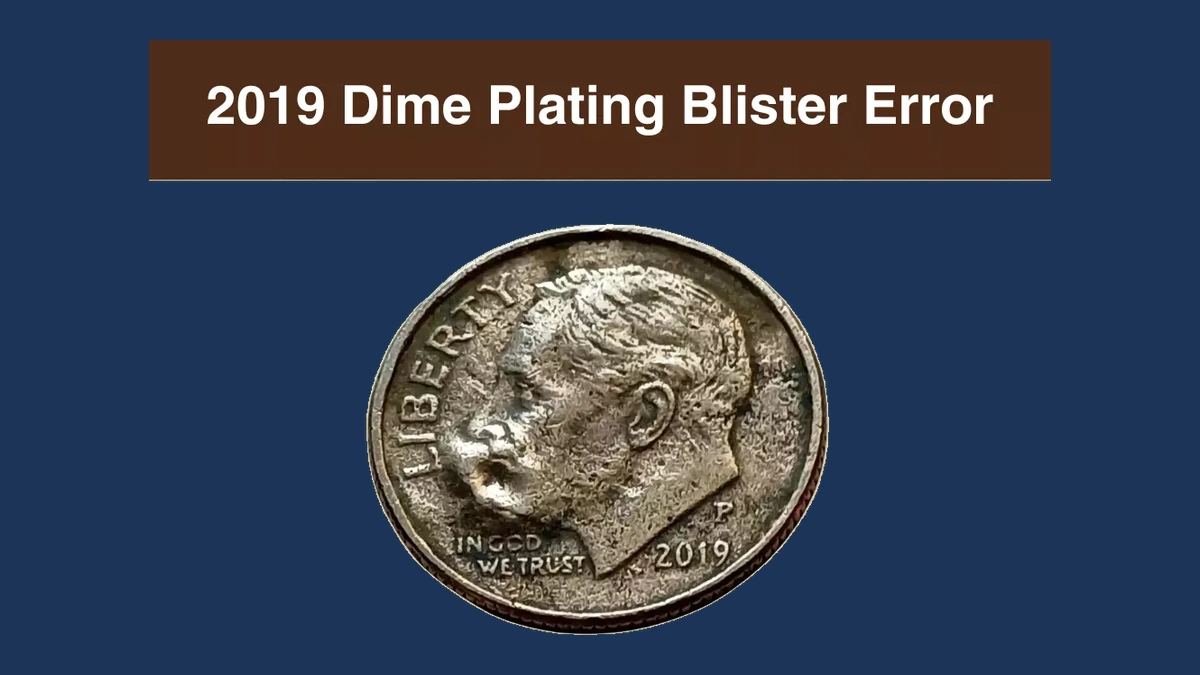
A rounded swelling can lift part of the outer metal layer without removing it. Ordinary dimes are clad coins: two silver-colored layers are bonded to a copper center.
They are not covered with a thin electroplated coating. Calling every bubble a plating error therefore gives the wrong explanation.
A raised portrait area has been reported for 2019, but its origin during manufacture is not established. Heating a finished coin can also separate layers and produce a blister.
The bump’s surface and the surrounding metal matter more than its size or unusual color.
Estimated Value
If examination confirms an original bonding defect, estimate $20–$100 for a visible blister in collectible condition. This is a conditional range, not an authenticated 2019 blister auction result.
A dime heated or otherwise damaged after production does not earn that mint-error premium. The confirmed $139 missing-layer example discussed later is a different result of metal separation, not a blister sale.
Preserved design across the swelling is useful evidence, but it cannot establish the cause alone.
How to Identify
Check the surrounding coin for signs of heating before treating the swelling as a mint defect. Multiple bubbles, distorted metal, or heat-related surface changes require careful examination.
Do not press or puncture the bump. A 10× magnifier and light from the side can show whether the original design continues across it.
Check a loose ordinary dime near 2.268 g on a scale and 17.9 mm with calipers. Examine its normally grooved edge for separation.
Normal weight does not establish when the blister formed. Have the intact swelling examined for original layer separation versus later heat damage before identifying a mint-made blister.
3. 2019 Roosevelt Dime Local Peeling or Flaking Metal
A thin flap or jagged peeled area can interrupt the design on a 2019-D dime. This is reported as lamination, meaning that part of the metal has separated into a layer.
The separation can leave a flap attached or expose the surface beneath it. It is different from assuming that the entire coin split into two pieces.
The Denver report concerns local separation and does not establish a complete split disk. Scraping or deliberately lifting metal after production can create similar-looking damage.
An untouched boundary gives the best chance of telling those causes apart.
Estimated Value
Small genuine flakes fit an estimated $10–$30 range, while larger visible separations can reach approximately $30–$150. The complete estimate is $10–$150, depending on the extent and condition.
This is not a recorded sale of the reported Denver coin. A broad missing-layer error is a related comparison but should not automatically price a small local flake.
An intact flap and clean surrounding design can be more appealing than a rough patch that someone has picked at.
How to Identify
Leave any attached flap where it is. Its connection to the coin can show how the layer separated, and lifting it can destroy that evidence.
Use a 10× magnifier to follow the jagged boundary and check for scraping or pry marks. Compare the nearby design with an undamaged 2019-D dime.
If loose, weigh the coin against the normal 2.268 g and measure about 17.9 mm with calipers. A tiny flake may cause little detectable weight loss.
Inspect the grooves around the edge as well as the face. Look for an irregular layer separation with an undisturbed connection to the original surface, rather than a peeled area surrounded by fresh tool damage.
4. 2019 Roosevelt Dime Transferred Torch or Branch Traces
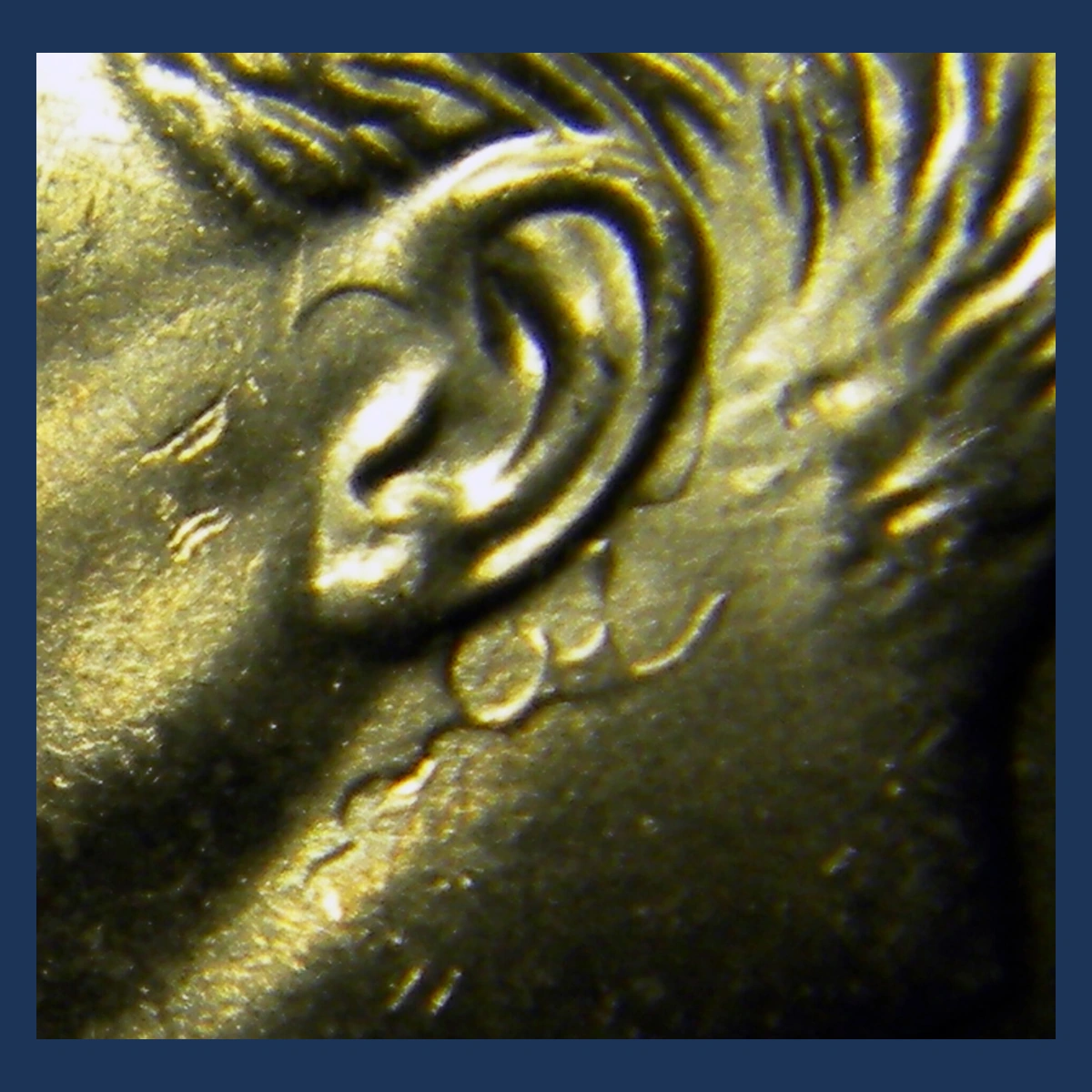
A faint shape near Roosevelt’s neck may resemble a part of the torch or branches on the back. Such traces can appear after the two stamping tools collide with no coin between them.
That event is called a die clash. The collision damages the tools, which can transfer extra shapes to later coins.
The 2019 report concerns marks on both faces, but does not establish a particular mint. One unexplained line should not be called a clash just because it lies near the neck.
The extra shape should relate to the opposite design.
Estimated Value
Genuine clashes with recognizable transferred detail have an estimated $20–$250 range. Faint lines generally sit below bold torch or branch shapes on an attractive coin.
The reported 2019 example has no completed sale used here. This estimate concerns collectible clashes rather than every mark near the portrait.
A deep backward impression made by another coin belongs to a different error type. Ordinary scratches and polishing lines also do not receive a clash premium merely because they overlap.
How to Identify
Photograph the front and back in the same orientation before examining the neck closely. Compare the suspect shape with the torch or branches on the other face, allowing for the tools facing one another.
Use a 10× magnifier to trace the shape beyond a single line. Scratches that end abruptly or cross unrelated areas may have no connection to the opposite design.
A scale and calipers should show near 2.268 g and 17.9 mm on a loose ordinary dime. Check the grooves around the edge for impact damage.
The useful test is whether a recognizable torch or branch contour fits the extra neck-area trace.
5. 2019 Roosevelt Dime Chips, Cracks, and Rim Breaks
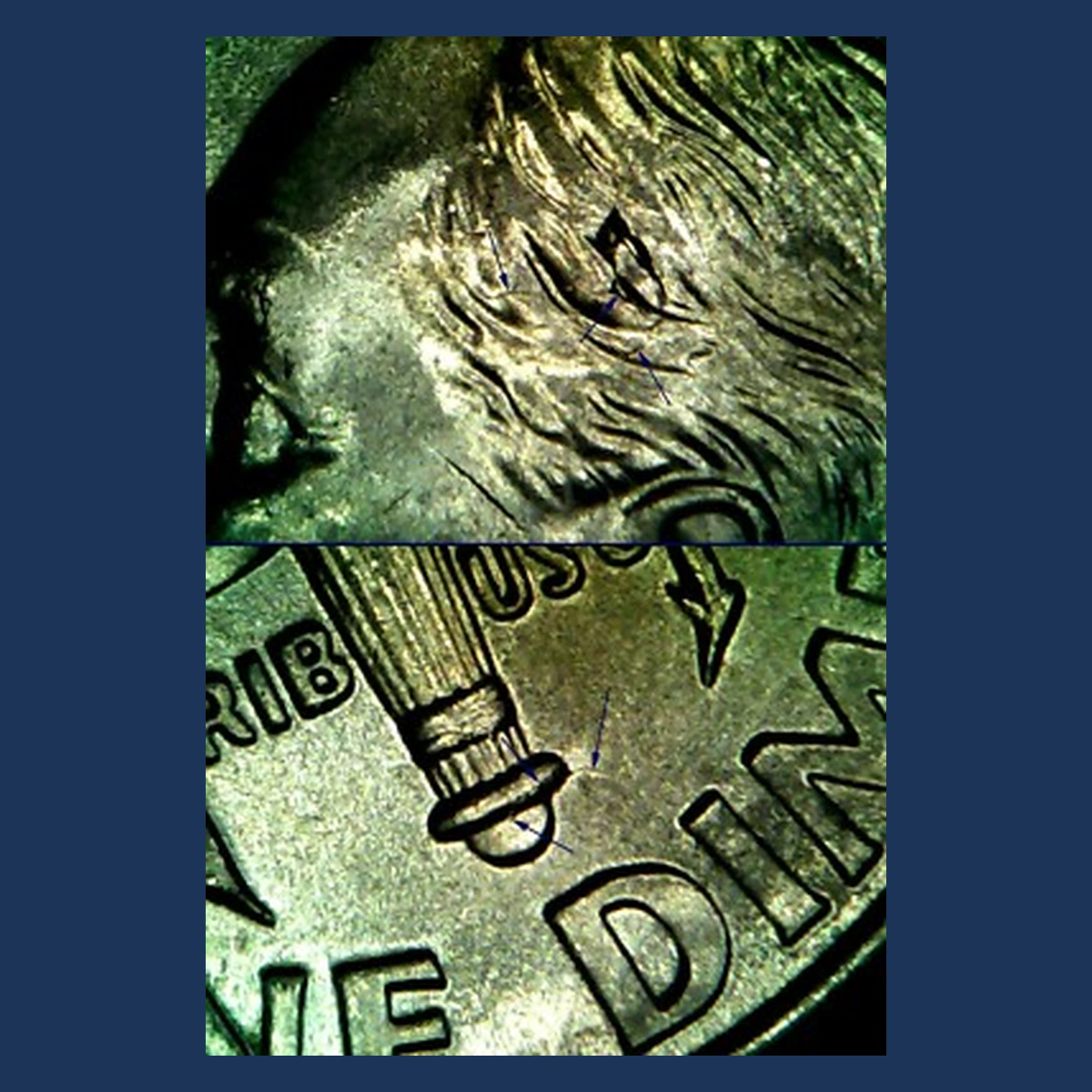
Small raised lumps near Roosevelt’s head or jaw can form when pieces break from the stamping tool. Coin metal fills the missing tool area during the strike.
A narrow tool crack can leave a raised line instead, although the Philadelphia report mainly supports small portrait chips. No fixed crack route follows from that report.
A separate reported feature joins the right front rim near the date. This larger rim-connected break is called a cud.
An isolated bump within the portrait and a patch touching the rim are related tool-damage effects, but they look different.
Estimated Value
Use an estimated $5–$300 across small chips through prominent rim-connected breaks. Tiny portrait lumps sit near the low end, while a strong cud can draw more interest.
The upper value assumes a genuine mint-made patch with attractive surrounding surfaces. It is not a recorded 2019 cud auction price.
A dent can push metal upward, and debris can look like a chip. Neither should gain a tool-break premium until the feature’s origin is established.
How to Identify
Compare the suspected chip with the normal contour of Roosevelt’s head or jaw. With a 10× magnifier, check whether the extra metal rises continuously from the design rather than sitting on it.
For the cud report, follow the right rim toward the date and look for a raised patch connected to that rim. Do not relabel an interior bump as a cud.
Examine the nearby edge for a dent that could have pushed metal onto the face. A loose dime should be around 2.268 g on a scale and 17.9 mm with calipers, with grooves around the edge.
A rim-connected patch that replaces normal detail is the quickest distinction from a small portrait chip.
6. 2019 Roosevelt Dime Reported Doubled Front or Back Design
An extra outline around the olive branch or torch can resemble a repeated back design. A 2019-D report points to those areas, while claims of front doubling lack an established matching pattern.
A doubled die is a steel stamping tool that received a repeated design during its manufacture. Coins struck from it can carry the same extra detail.
Flat ledges from movement during striking are a different effect. Worn tools and overlapping reflections can also make letters look thicker.
The reported back feature and a seller’s front-doubling claim therefore need separate comparisons.
Estimated Value
For genuine, identified doubled designs, estimate $20–$300 according to strength, condition, and demand. This range applies to actual repeated detail rather than a generally thick-looking letter.
The Denver front claim has no established variety match or certified sale used here, so its value remains conditional on identification. The back report likewise does not supply a confirmed auction result.
Flat mechanical doubling usually adds little. A clear photograph of the specific extra feature matters more than a seller’s label.
How to Identify
Locate the D mintmark before comparing the reported back feature. The mintmark identifies Denver; it does not itself prove that another part of the design is doubled.
Under a 10× magnifier, compare the olive branch and torch with an ordinary 2019-D dime. Seek a distinct extra contour, keeping normal overlapping leaves separate.
A front claim needs its own matching photograph rather than proof borrowed from the back.
For a loose dime, use a scale for the normal 2.268 g and calipers for 17.9 mm. Inspect the grooved edge for alteration.
Compare the same tiny contour on independently identified examples; a flat shelf or changing reflection alone does not establish a doubled tool.
7. 2019 Roosevelt Dime Missing Piece of the Original Blank
A missing section can begin before the coin receives its design. If the machine punches a disk from an already empty area of metal strip, the resulting blank is incomplete.
Collectors call this a clipped planchet; a planchet is the metal disk prepared for striking. The later strike can soften the boundary and weaken part of the opposite rim.
A 2019 clip is reported without a firmly identified mint or shape. Curved and straight clips describe possibilities, not proof of several separate 2019 specimens.
A piece cut from a finished coin is damage instead.
Estimated Value
Estimate $20–$300 for genuine 2019 clips with readable dates. Small, worn examples tend to cost less than large clips with clear mint-made boundaries.
As a different-denomination comparison, a 1997-P nickel with a 20% clip brought $124 in March 2025. That sale does not establish the size or price of a 2019 dime clip.
The estimate depends on the missing area and condition. A smooth-looking notch alone should not receive the premium.
How to Identify
Look opposite the missing section before studying the notch itself. A weakened rim there can support a genuine clip, although its absence does not automatically disprove one.
Use a 10× magnifier along the cutout and adjacent design. Check for fresh cutting marks, a raised burr, or filing that could explain missing metal after striking.
Weigh the loose coin on a scale against 2.268 g and measure its remaining full diameter with calipers against 17.9 mm. The intact edge normally has grooves.
The weight should make sense for the amount missing, but a later cut also reduces weight. Examine the notch for strike-softened metal and natural design flow into the boundary.
8. 2019 Roosevelt Dime Reported Smooth Edge
The usual small grooves may be absent from part or all of a dime’s edge. These grooves normally form when the coin expands against a patterned retaining ring during the strike.
A 2019 report describes a smooth edge on a coin close to normal diameter. It does not establish the exact retaining-ring fault.
The report is separate from the known expanded broadstrike. A smooth edge alone cannot prove that both coins share the same cause.
Grinding, rolling, or prolonged wear can also remove grooves after the coin leaves the Mint.
Estimated Value
For a genuine mint-made smooth-edge dime near normal size, estimate $30–$300. That is a conditional estimate for an identified manufacturing error, not a documented 2019 sale.
A ground-down or heavily worn edge does not earn the same premium. The coin must retain enough original surface to show how its edge formed.
The known 2019 broadstrike has a different expanded shape. Its rarity should not automatically be used to price every dime lacking grooves.
How to Identify
Measure the coin before inspecting an isolated smooth patch: normal diameter is 17.9 mm with calipers, and normal weight is 2.268 g on a scale. Reduced size or weight can point to removed metal.
Turn the entire edge under a 10× magnifier, looking for grinding lines, rounded rims, and remaining grooves. Compare both face borders with an ordinary dime to see whether edge work also affected them.
Do not infer a particular retaining-ring failure from one incomplete edge photograph. An unworn smooth edge with original rims and near-normal measurements needs professional examination to distinguish a minting fault from later alteration.
9. 2019 Roosevelt Dime Design Blocked by Material during Striking
A localized depression or missing piece of design can form when material comes between the coin and its stamping tool. The tool then presses through that material rather than contacting the metal normally.
This is called a struck-through error. The obstruction may leave an impression, but its identity cannot always be determined from the coin.
A 2019-P example was graded MS68 FT by NGC and offered by GreatCollections. The description identifies the front face without naming the material.
FT describes well-separated torch details on the back; it is not another error.
Estimated Value
An estimated $20–$500 covers small through strong struck-through features on collectible 2019 dimes. The high end assumes a conspicuous impression and excellent preservation.
GreatCollections sold the MS68 FT example in February 2022, but its completed price is not publicly displayed. No dollar result is assigned to that coin here.
MS68 is a very high unworn grade. Some of its value would therefore belong to preservation, not simply the size of the blocked area.
How to Identify
Compare the affected front area with the surrounding portrait and lettering. A local interruption amid sharp detail is different from general circulation wear across the highest parts.
Use a 10× magnifier to check the depression’s boundary for scraping or metal pushed upward by a later blow. Do not name cloth, wire, or grease unless the impression actually supports it.
A loose ordinary dime should be close to 2.268 g on a scale and 17.9 mm with calipers. Inspect the grooves around the edge for damage extending onto the face.
Keep the untouched boundary in a clear photograph. A localized obstruction impression surrounded by original struck detail is the useful feature to compare.
10. 2019 Roosevelt Dime Partly Missing Front Outer Layer
Much of Roosevelt’s side appears copper-colored while a smaller area retains the usual silver-colored surface. The recorded 2019-P example was described as missing about 80% of its front outer layer.
Ordinary clad dimes have bonded metal layers, with copper inside. Failure of that bond can expose the center when an outer layer separates.
The recorded coin was graded MS61 Full Bands by PCGS. Full Bands refers to separated torch bands on the back, not another missing-layer error.
A brown stain or artificial stripping can imitate the color without having the same mint-made boundary.
Estimated Value
The 80%-missing 2019-P example brought $139 at Heritage on September 16, 2024. Use an estimated $50–$600 for genuine partial through extensive missing-layer errors in collectible condition.
A 2018-P dime missing its front layer, graded MS64, sold for $384 in July 2021. That comparison has a different date and better preservation.
The range does not give every copper-colored dime an error premium. Original surfaces and a convincing layer boundary remain essential.
How to Identify
Weigh a loose suspect coin against the normal 2.268 g first. Loss of an outer layer should reduce weight, although wear or artificial removal can do so too.
With a 10× magnifier, follow the boundary between exposed copper and remaining silver-colored metal. Look for original design detail rather than grinding marks or an etched, eaten-away surface.
Use calipers to compare the diameter with 17.9 mm, and inspect the normally grooved edge. Do not invent an exact missing weight from the stated 80% face area.
The 2019-S silver Proof uses .999 silver and has no comparable copper sandwich to expose.
On an ordinary dime, a natural layer boundary plus appropriate weight loss is more useful than brown color alone.
11. 2019 Roosevelt Dime Design Struck Off Center
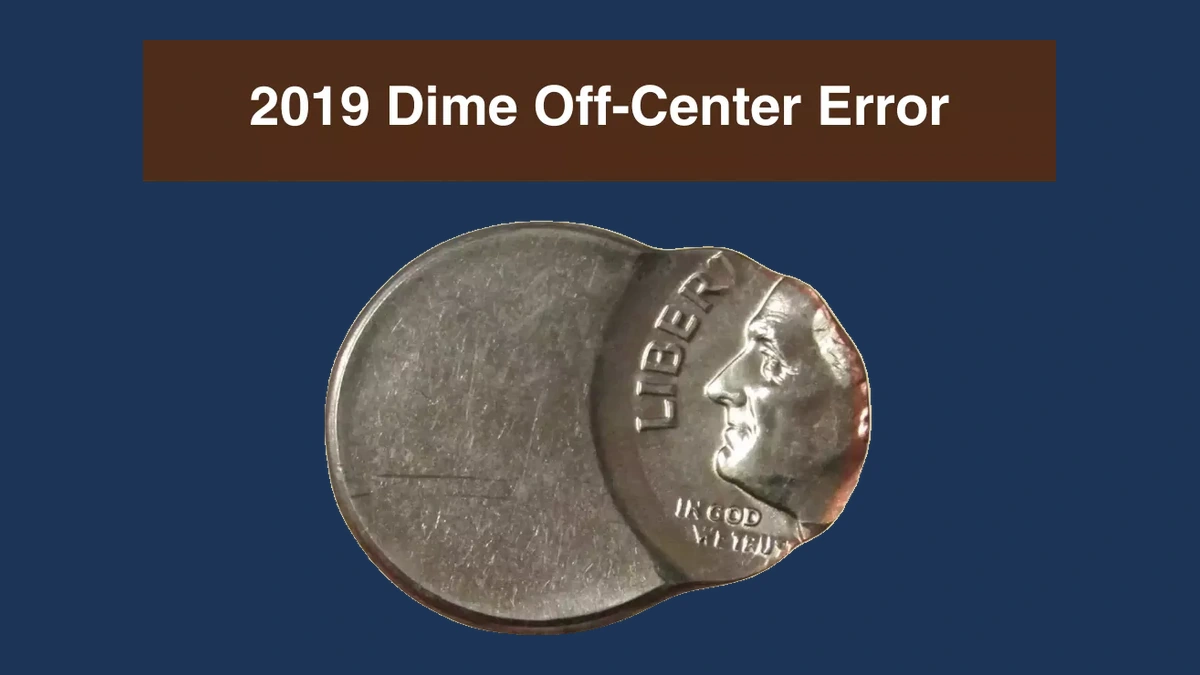
The design can be cut off on one side while a blank crescent remains on the other. This happens when the metal disk sits off center beneath the stamping tools.
A Philadelphia 2019 example is reported at roughly 15% off center. The report does not establish its direction.
Both faces should show the displaced strike. One off-center face paired with a normally centered opposite face may instead involve a misaligned tool.
The blank crescent is still part of the coin, unlike a clip where metal is missing. A readable date is needed to identify it as 2019.
Estimated Value
For a genuine, readable-date 2019 off-center dime, estimate $50–$750. A clear shift with attractive surfaces can bring more than a small, barely visible offset.
A 1977 dime struck 10% off center, graded NGC MS64 Full Bands, sold for $109 in June 2026. That older coin is a useful mechanism comparison, not a price for the reported 2019-P specimen.
The estimate allows for date-specific demand, but it does not guarantee a fixed price per percentage of displacement.
How to Identify
Turn the coin over before deciding that a wide border proves an off-center strike. The design should be displaced on both faces, with unstruck metal beyond it.
Through a 10× magnifier, follow the transition from struck detail into the blank crescent. A later cut can remove design, but cannot create an original unstruck area outside it.
Check the surviving date and P mintmark separately. An undated dime cannot be assigned to 2019 from its general appearance.
A scale normally reads near 2.268 g if no metal is lost. Use calipers against the normal 17.9 mm and inspect the edge grooves.
Match the blank crescent on both faces with the opposite side’s missing design.
12. 2019 Roosevelt Dime Expanded Strike outside the Retaining Ring
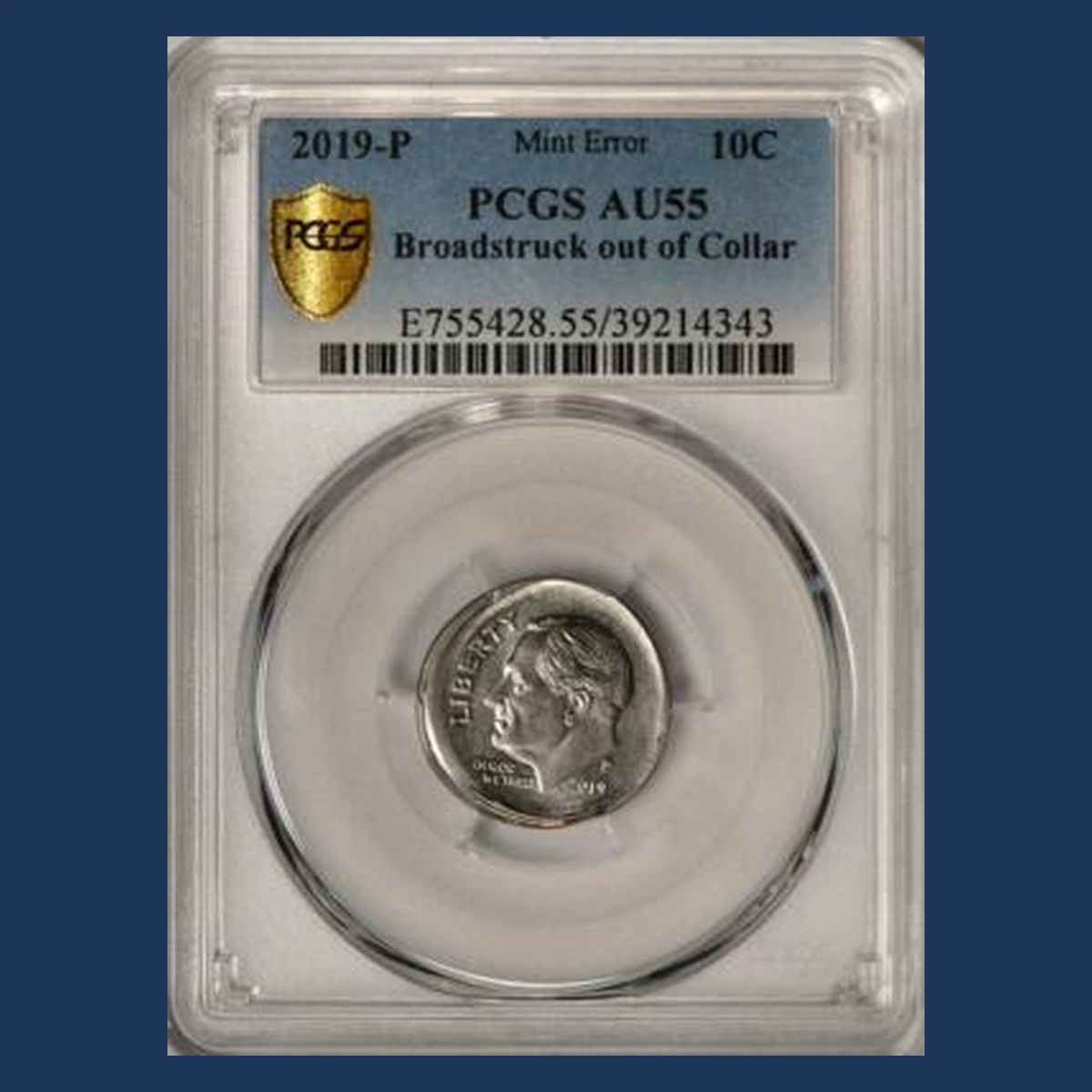
A broad, expanded rim can surround a complete dime design. The metal spread outward because the retaining ring, called the collar, did not contain it during the strike.
This error is called a broadstrike. Unlike an off-center strike, it can keep the full design while becoming wider than normal.
A 2019 example graded PCGS AU55 appears in an error specialist’s illustrated article. The two photographs show opposite sides of one coin, not two separate examples.
Its mint is not established in the description. Flattening a finished dime can also enlarge it, but damages the original struck surfaces.
Estimated Value
Estimate $150–$1,000 for a genuine, clearly expanded 2019 broadstrike with intact designs. The illustrated AU55 coin has no completed sale price used here.
A different-year 2000-P dime, broadstruck and struck several times, brought $159 in September 2025. That MS65 comparison combines two errors and cannot directly price this single broadstrike.
The estimate reflects condition and the difficulty of finding such an expanded recent-date coin, without claiming it is unique.
How to Identify
Lay the coin beside an ordinary dime without pressing either surface. Calipers can show how far its width exceeds the normal 17.9 mm.
Check that the entire design fits inside the expanded metal. Missing outer design would require an off-center explanation instead of a simple broadstrike.
Weigh a loose coin on a scale against 2.268 g; expansion moves metal rather than automatically removing it. A 10× magnifier can reveal flattened lettering or tool marks from later crushing.
Inspect the edge, where normal grooves may be incomplete or absent because the retaining ring did not contain the strike. Full designs surrounded by original outward-spread metal distinguish a broadstrike from a dime merely flattened afterward.
Conclusion
A brown patch, smooth edge, or raised bump each needs a different check. Compare the metal boundary, the full edge, or the shape of the raised feature before choosing an error name.
Estimated values range from $5 to $1,000 for the collectible examples described. The $139 missing-layer sale provides a real 2019 comparison, while the other ranges depend on identification, condition, and how clearly the error appears.