1868 Nickel Error List with Pictures

At 1.97 grams, one 1868 Shield nickel weighed far less than a normal five-cent piece. Its holder identified a three-cent nickel blank, and a published auction report recorded $1,610.
Not all 1868 nickel errors are that dramatic: others appear as extra date strokes or faint shield shapes on the back. Estimated values across the examples below span $20–$8,000.
Compare the visible features first, then use the checks to separate original mistakes from later damage.
1. 1868 Shield Nickel Die Gouge
An unusual raised mark inside the shield can come from a groove cut into the stamping tool. Metal entered that groove during striking and copied its shape onto the nickel.
Collectors call this a die gouge; a die is the steel tool that stamps a coin. The name refers to damage in the tool, not a gouge cut into the finished coin.
The Shield Nickel Varieties catalog records an 1868 example with this feature inside the shield. It is distinct from a repeated shield outline or a crack spreading through the tool.
Estimated Value
A small raised tool mark is usually a modest addition to the coin’s appeal. An estimated $20–$200 suits worn through lightly worn examples where the mark remains visible.
A clear photograph matching the cataloged shield mark is more useful than an elaborate seller’s description. Random damage inside the shield does not deserve the same treatment.
The upper end calls for an attractive coin with a recognizable feature, while heavy wear and surface problems tend to keep prices lower.
How to Identify
A die gouge is a hollow in the tool but a raised mark on the coin, so first establish the surface height. Use a 10× magnifier and light from the side to inspect the mark inside the shield.
Compare the outline with the cataloged example rather than accepting any raised line, since cracked tools produce other shapes. For a loose nickel, a scale and calipers should show roughly 5 grams and 20.5 mm, with a plain edge.
Do not trace the mark with a point or clean around it; that can add scratches to the feature you need to judge. If a photograph hides whether the mark is raised or sunken, request another lighting angle.
2. 1868 Shield Nickel Die Clash
Parts of the shield can appear faintly on the back, where that design does not belong. This happens when the two stamping tools meet without a blank between them.
Contact leaves traces of one design on the opposite tool. Later coins struck from those tools can carry those misplaced outlines alongside their normal design.
The catalog reports shield-design traces in the open areas on the back of an 1868 nickel. These are partial transferred shapes, not a complete extra shield or proof that the coin itself was struck twice.
Estimated Value
An estimated $25–$250 covers worn through lightly worn pieces with recognizable clash traces. Weak fragments that are difficult to connect to the shield may add little to an ordinary coin.
More complete transferred shapes can be appealing when the rest of the surface is clean. Heavy polishing after minting can reduce that appeal rather than improve it.
Judge the back’s visible pattern, not just the number of lines. Several unrelated scratches are not worth more because they look dramatic together.
How to Identify
Put an enlarged picture of the normal shield beside a photo of the coin’s back. Ask whether the faint unwanted shapes could come from contact with that opposite design.
Use a 10× magnifier to follow matching fragments through the open areas. A jumble of random scratches or corrosion pits should not form a consistent part of the shield.
The normal design remains the main impression; the transferred traces sit around it. A complete reversed, sunken design would call for a different explanation.
For a loose coin, use a scale and calipers to check about 5 grams and 20.5 mm, and inspect the plain edge. Return to the pattern match: a specific shield fragment is stronger evidence than a line that merely looks unusual.
3. 1868 Shield Nickel Die Cracks and Cuds
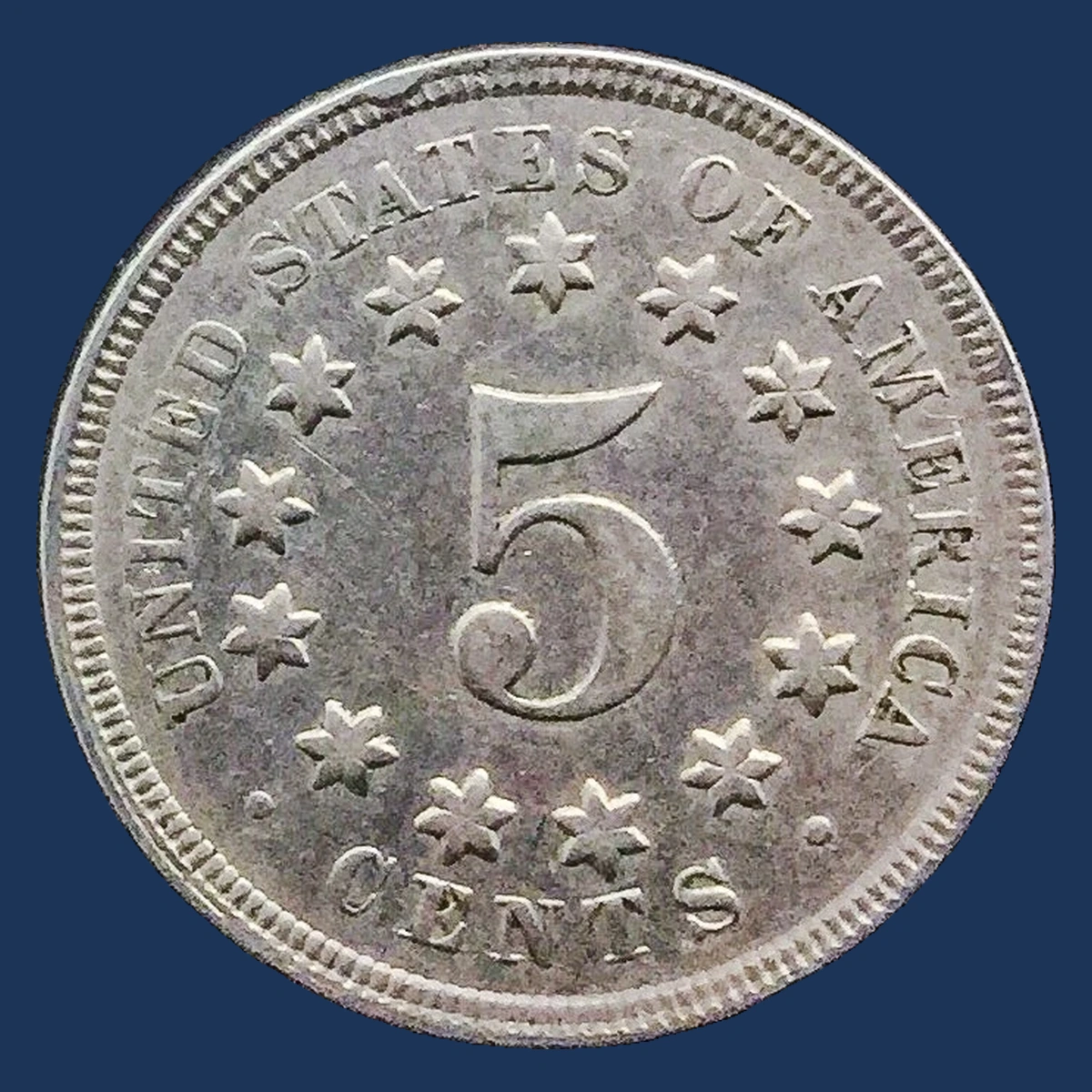
A raised patch joined to the front rim can replace part of the normal design. Collectors call it a cud, caused when a piece breaks away from the edge of the stamping tool.
Metal flows into the missing-tool area, leaving a featureless mound on the coin. A tool that has cracked without losing a large piece instead leaves narrow raised lines.
An 1868 dealer listing describes a front with many such cracks as a shattered die. That description concerns the stamping tool; it does not mean the coin’s metal shattered into pieces.
Estimated Value
A dealer offered a heavily worn shattered-front example at $95. That asking price fits an estimated $20–$500 range for worn cracks through more obvious rim-connected breaks.
A small faint crack can add little to the normal coin value. A larger clear cud is easier to see and may draw stronger interest.
The coin’s remaining surface still matters: corrosion, deep scratches, or a damaged rim can reduce the amount a collector will pay for the complete piece.
How to Identify
Turn the coin edge-on before studying the front’s raised patch. An impact can push metal inward from the plain edge and leave a lump that resembles a cud.
Use a 10× magnifier to inspect the patch’s connection to the rim. An original cud interrupts the design without looking like a fold pushed across it.
Separate narrow crack lines from that broader missing-tool area. They should rise above the surface, even where wear has softened them.
For a loose coin, record its mass and diameter with a scale and calipers against 5 grams and 20.5 mm. A tool defect does not attach another piece of metal to the coin.
Compare several crack paths on a shattered-front example. Sunken scratches crossing the same area must not be counted as branches of those raised lines.
4. 1868 Shield Nickel Lamination and Split Planchet
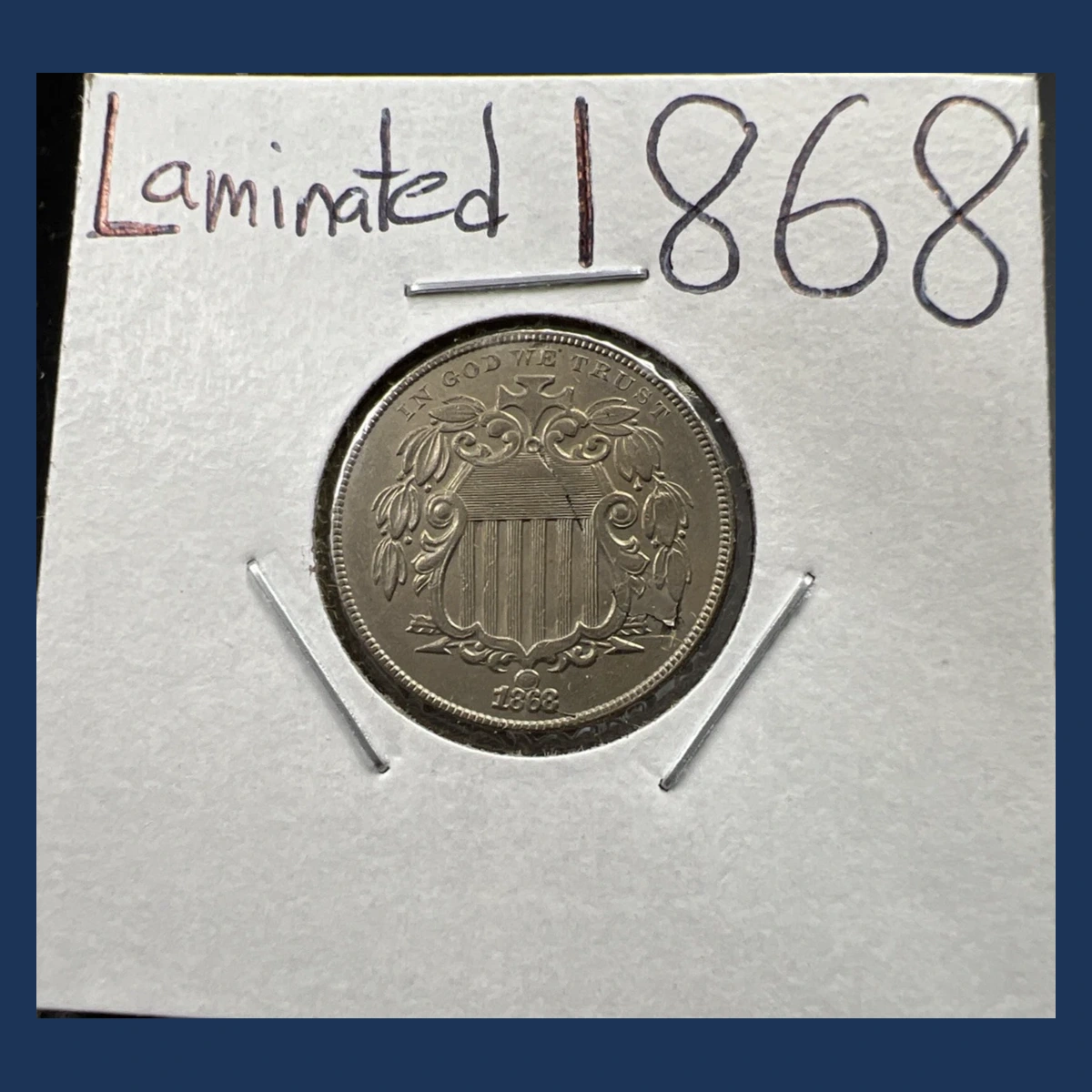
A thin layer can lift from the front, or separate far enough to leave two pieces. Both forms begin with a weakness inside the original metal blank.
GreatCollections listed a PCGS VF25 example with front lamination. Its Reverse of 1868 label identifies the back design, and VF25 describes a worn coin with useful detail remaining.
A separate 1984 catalog describes an 1868 front split with two pieces. The cataloged pair and the later lamination listing are different examples, so their surfaces and condition should be compared separately.
Estimated Value
For small peeling flaws through complete matching split pieces, use an estimated $50–$1,000. The surviving design, size of the separation, and presence of both pieces affect where a coin fits.
The historical two-piece example carried a $30 asking price in 1984. That old offer does not establish today’s value, and the estimate for a matching pair covers both pieces together.
A loose flake with no clear connection to its parent coin has less appeal than a documented original pair.
How to Identify
Leave a lifting layer in place. If two pieces are already separate, protect them individually rather than forcing them together.
Use a 10× magnifier on the inner surfaces and the border of the separation. A natural split can leave rough matching texture; cutting often leaves smooth tracks or a sharply machined recess.
For loose pieces, record each weight on a scale, using 5 grams as the reference for the original whole nickel. A small lamination need not produce a large weight difference.
Compare the surviving outline with the normal 20.5-mm diameter using calipers. Inspect the plain edge for cutting or solder.
The back-design label does not prove a metal flaw. Check the front itself for the lifting layer or matching separation described on the actual coin.
5. 1868 Shield Nickel Repunched and Misplaced Dates
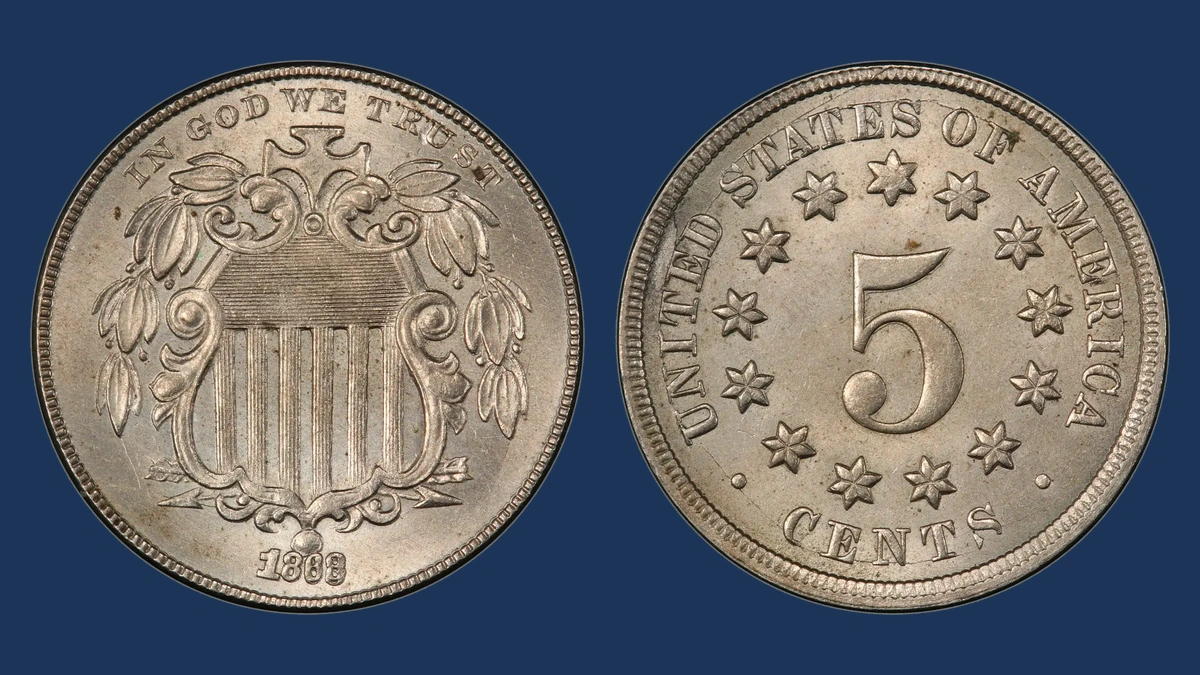
The date can carry extra curved strokes or pieces of straight lines beside its normal numbers. These remain from an earlier punch into the stamping tool that was not fully removed.
For 1868, different examples show earlier number traces above or below the final date. The direction depends on the particular tool rather than the year alone.
Other examples have part of a misplaced 1 near the round ornament at the bottom of the shield. Its small top stroke or upright section appears away from where the final date was intended to sit.
Estimated Value
Clearer earlier digit shapes usually attract more interest than vague thickening around a worn date. Estimate $50–$1,500 for identified ordinary-strike examples from worn condition through attractive unworn pieces.
The exact pattern matters because some misplaced portions are much easier to see than small repeated strokes. Cleaning or corrosion can conceal those details and reduce the value.
If a repunched date accompanies doubled back lettering, price both features as one coin. The descriptions do not represent two values to add together.
How to Identify
Use a full-date close-up first, then a wider view showing the round ornament above it. A tight crop of one extra stroke can hide whether it belongs beside the date or farther away.
With a 10× magnifier, compare each extra curve or upright section with the shape of the number it is said to repeat. Misplaced 1 examples need a match near the ornament, not simply a random line in that area.
For a loose piece, check 5 grams and 20.5 mm with a scale and calipers, plus the plain edge. These are ordinary copper-nickel blanks.
Do not reject a candidate merely because its extra strokes point a different way from another 1868 coin. Choose a photograph of the same date pattern before deciding whether the match is convincing.
6. 1868 Shield Nickel Rotated Dies
A coin can have normal designs on both sides but the wrong relationship between them. After a top-to-bottom flip, the back may face upside down instead of upright.
The error comes from the positions of the two stamping tools. It does not require part of the design to be missing or repeated.
An owner reported an 1868 Shield nickel with 180-degree rotation after receiving a PCGS AU58 grading result. AU58 indicates slight wear; the rotation itself was the owner’s report, not a detail shown in the quoted grading result.
Estimated Value
A clearly demonstrated half-turn rotation can be estimated at $150–$1,800, from worn examples through attractive coins with little wear. The price depends on the complete coin and the strength of the evidence for its alignment.
A 1903 Proof Liberty nickel with 180-degree rotation sold for $1,380 in April 2006. That specially prepared collector coin is a different-year comparison, not an auction record for the reported 1868 piece.
Two photographs separately turned upright cannot establish the premium.
How to Identify
Try the motion with an ordinary United States coin first: hold the front upright and flip it from top to bottom. The back should also finish upright when you use the correct fixed axis.
Repeat without twisting the 1868 coin sideways. The reported 180-degree error would leave the large 5 upside down.
Record a continuous video so the relationship between the faces remains visible. The coin must not turn inside a loose holder during the test.
On a loose example, a scale and calipers should show about 5 grams and 20.5 mm. Examine its plain edge with a 10× magnifier for a join, since two altered pieces can imitate the same alignment without being a Mint rotation error.
7. 1868 Shield Nickel Doubled Dies
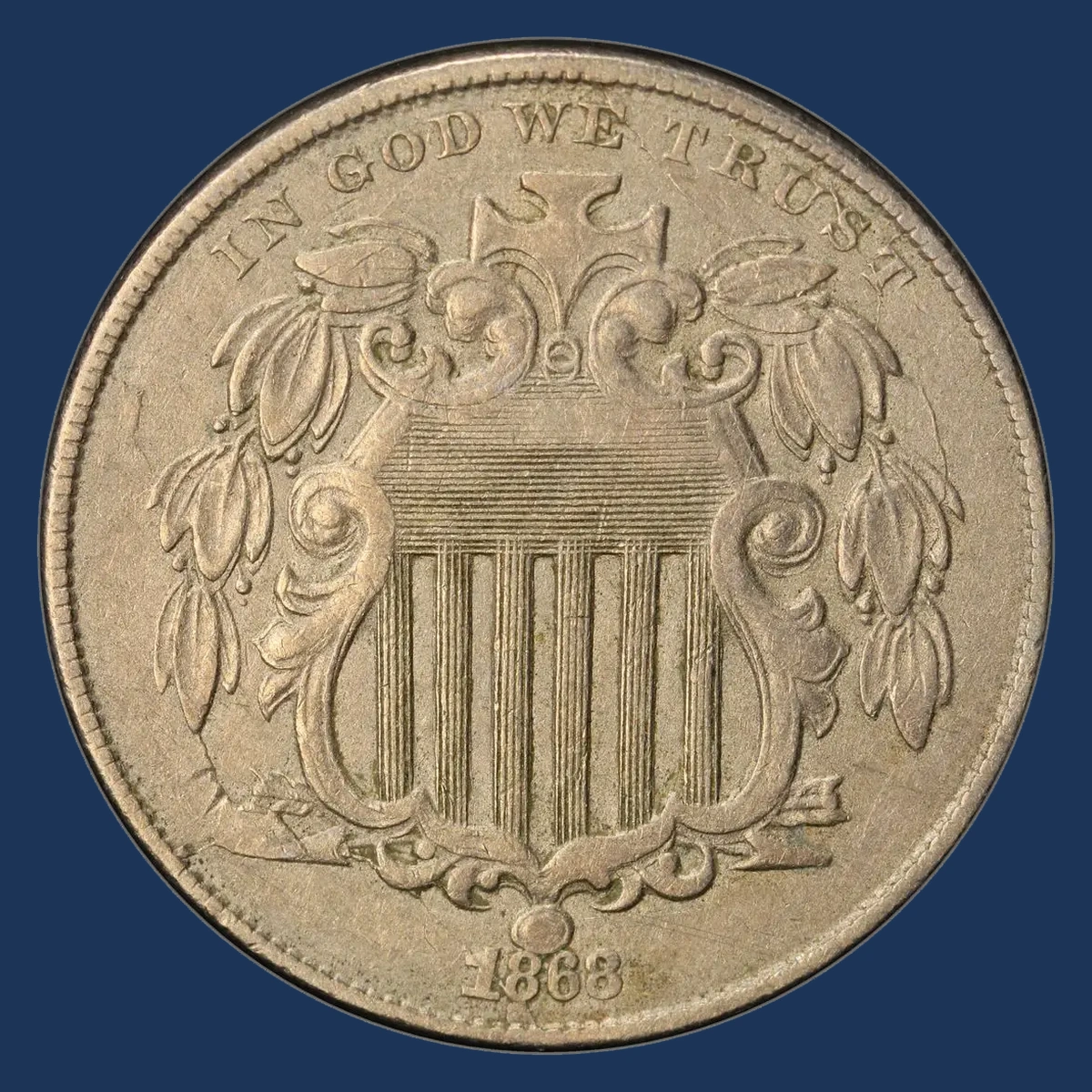
Extra outlines may follow the shield, the motto, or the small ring above the shield. A different 1868 example has doubled lettering on the back.
These shapes were repeated when the design was transferred into a stamping tool. The tool then placed those extra outlines on the coin during an otherwise normal strike.
The back-lettering example also has traces of the date below its normal position. That does not make the date traces part of the back’s doubling, and other doubled-front examples need not share the same extra date strokes.
Estimated Value
An estimated $75–$2,500 covers clearly identified worn examples through attractive unworn doubled varieties. Wide, rounded separation that remains easy to see can be more appealing than a very minor thickening.
A doubled-front 1872 Shield nickel graded MS62 sold for $685 on eBay in April 2024, as recorded by PCGS. That unworn but marked coin provides a different-year comparison.
Match the specific 1868 pattern and condition before using that price. Front and back varieties can appeal to different collectors.
How to Identify
Work on one face at a time instead of expecting every reported doubled area on one coin. Choose the shield, motto, or ring for a front example, and the lettering for the back example.
A loose coin should match the normal 5-gram weight and 20.5-mm diameter on a scale and calipers. Its edge should be plain.
Now use a 10× magnifier to follow the suspected extra outline through several connected parts of the design. Rounded repeated contours differ from the flat ledges that movement during striking can create.
Compare the back design as well as the doubled detail with the reference photo. The two back designs used for 1868 are not themselves errors, and their normal differences should not be mistaken for doubling.
8. 1868 Shield Nickel Off-Center Strike
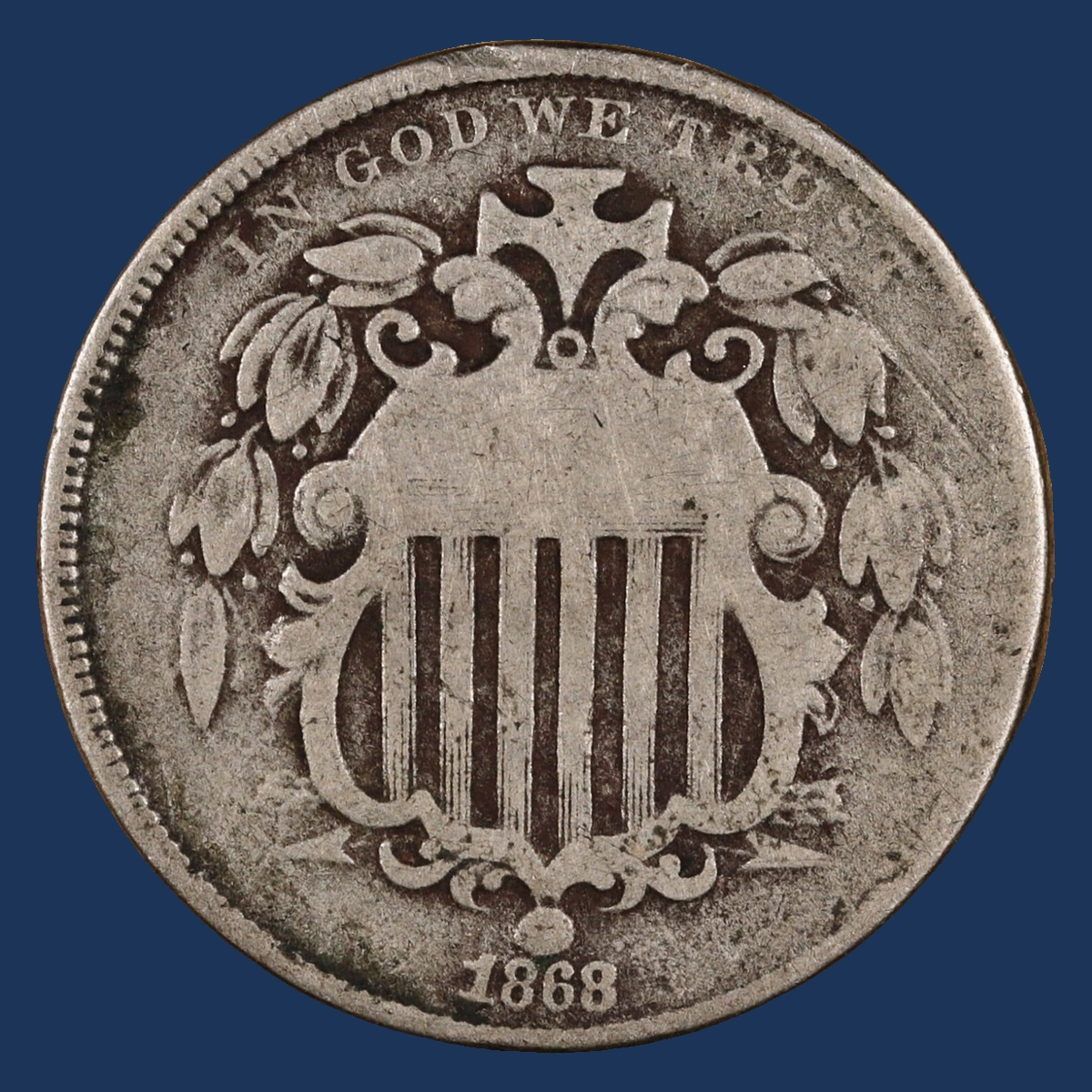
A noticeable part of the design can run beyond the edge when the blank enters the press out of position. The opposite side of the coin then carries metal that received no design.
A published auction report shows an 1868 Shield nickel struck 20% off center. Its PCGS holder describes light wear along with graffiti, meaning marks deliberately scratched into the coin.
The later scratched marks did not cause the original shifted strike. They remain a separate condition problem, so the coin can be a genuine off-center error and still have damage that reduces its appeal.
Estimated Value
The 20% off-center example sold for $1,020 in January 2018, according to Mint Error News’s Heritage auction report. That result includes the effect of its graffiti damage.
An estimated $250–$3,000 covers worn modest shifts through more attractive, larger visible errors. A complete readable date and original blank surface help the price.
A clean coin should not automatically receive the same value as the damaged example. Compare the extent of the missing design and the remaining condition together.
How to Identify
For a loose candidate, check its mass against 5 grams with a scale and measure the outline with calipers. Striking can distort the normal 20.5-mm circle, so an unusual width alone does not prove an off-center strike.
Find untouched blank metal on one side and missing design at the opposite edge, then compare that relationship on both faces. Use a 10× magnifier to inspect the boundary and the original plain edge where it survives.
Only one shifted face may indicate an alignment problem with one tool instead of a displaced blank. Keep later scratches separate from the strike boundary, especially when comparing the documented graffiti example with a cleaner coin offered for sale.
9. 1868 Shield Nickel Struck on a Three-Cent Nickel Planchet
The shield and large 5 can be squeezed onto a blank meant for the smaller three-cent nickel. The design does not fit normally, so outer details can run beyond the available metal.
A published auction report shows an 1868 example labeled as struck on a three-cent nickel planchet, or prepared blank. Its recorded weight is 1.97 grams.
The NCS AU Details label notes environmental damage and edge damage as well as light wear. Those condition problems belong to this specimen and do not turn the original wrong-blank strike into ordinary damage.
Estimated Value
The published Heritage auction result for the damaged 1.97-gram example was $1,610. It gives a concrete comparison for this unusual wrong-blank type.
An estimated $1,000–$8,000 allows for differences between damaged worn pieces and much cleaner, more attractive examples. Clear evidence identifying the smaller blank is essential to that estimate.
The upper end is an estimate for better-preserved coins, not a reported sale of this specimen. Environmental damage and altered edges explain why condition cannot be ignored.
How to Identify
Weigh a loose candidate before drawing conclusions from its smaller outline. The documented specimen is 1.97 grams, compared with 5 grams for a normal Shield nickel.
Use calipers across the widest surviving metal and compare it with the normal 20.5-mm diameter. A smaller blank can spread during striking, so its finished width need not equal the original blank size.
Inspect both faces and the plain edge with a 10× magnifier. A genuine smaller blank should explain the incomplete design, while filing can remove metal without reproducing the original strike pattern.
The three-cent nickel also uses copper-nickel metal, so color alone cannot separate the blanks. Use the combined weight, design fit, edge condition, and specialist identification rather than treating low weight as a complete diagnosis.
Conclusion
A light coin, an extra date stroke, and a shifted design need different explanations. The estimated $20–$8,000 range reflects that variety, as well as large differences in condition.
Keep the two halves of a split example together and preserve any fragile metal. For the remaining types, clear close-ups, a fixed-axis flip where needed, and measurements of a loose coin will help you choose the right comparison.