1887 Nickel Error List with Pictures

Extra outlines on the back can make an 1887 nickel worth a closer look. PCGS lists a doubled-back example that brought $978 in November 2011.
Other 1887 nickel errors have missing metal, shifted designs, or the wrong kind of blank. Estimated values for the examples below range from $10 to $2,500.
Start with the visible difference, then use each section to work out what caused it.
1. 1887 Liberty Nickel Die Cracks and Interior Die Breaks
A thin raised line can join stars that normally stand apart. A die, the steel tool that stamps coins, can crack and leave that line in the coin’s surface.
Reported 1887 examples have cracks through the third to sixth stars on the left. Other cracks join the final 7 to a right-hand star or cross lettering on the back.
A separate raised patch lies between the first 1 and the base of Liberty’s portrait. This is an interior break; a cud is a larger broken-tool mark that reaches the coin’s rim.
Estimated Value
For worn coins with these smaller tool defects, allow an estimated $10–$200. This is a whole-coin estimate, not an amount to add to the nickel’s ordinary value.
A short faint line may add little, especially when wear makes it hard to see. A clear raised patch or a longer connected crack offers more visual interest.
An unusually well-preserved coin can cost more because of its condition, even when its crack is quite small.
How to Identify
Light the coin from the side and look at the first 1 through a 10× magnifier. The reported interior break sits above it, below the portrait’s base; follow its outline before calling it a rim-connected cud.
Next, count the stars upward from the lower left to find the third through sixth stars. A crack should stand above the surface, while a scratch usually cuts into it.
For a loose coin, use a scale and calipers to compare its weight and diameter with 5 grams and 21.2 mm. Inspect the plain edge for damage that might explain a nearby mark.
Check the final 7 and the back’s lettering separately. These are different reported crack paths, so one coin need not show them all.
2. 1887 Liberty Nickel Repunched Date
The first three digits of 1887 can carry tiny extra pieces of the same numbers. They come from a date punched into the stamping tool more than once in slightly different positions.
The Liberty nickel variety book describes traces below the first 1’s small upper stroke and base. It also records traces above both 8s.
That example has extra outlines on the back as well. The two features can share one coin, but they arose from different steps in preparing its stamping tools.
Estimated Value
An estimated $20–$300 suits worn through lightly worn examples with a clear repunched date. Strong remaining digit shapes matter more than a seller’s dramatic name for the variety.
Wear can erase the small extra strokes, leaving little extra value. Cleaner surfaces and a readable match to the photographed date support the upper part of this range.
When the same coin also has a tripled back, compare its total price as one coin rather than adding two separate estimates.
How to Identify
First confirm the large V and the word CENTS on the back. The well-known 1887/6 three-cent nickel is not this five-cent piece.
Compare an enlarged date photo with the book’s example. Use a 10× magnifier to inspect below the first 1, then above each 8; the extra strokes should belong to those numbers.
Flat ledges along several digits can come from movement during striking instead. Rounded remnants in the stated positions are more useful than a general impression that the date looks thick.
A normal loose five-cent piece measures 21.2 mm with calipers and weighs about 5 grams on a scale. Its plain edge should show no filing; after checking that, turn to the back to see whether the companion tripled letters are present.
3. 1887 Liberty Nickel Lamination
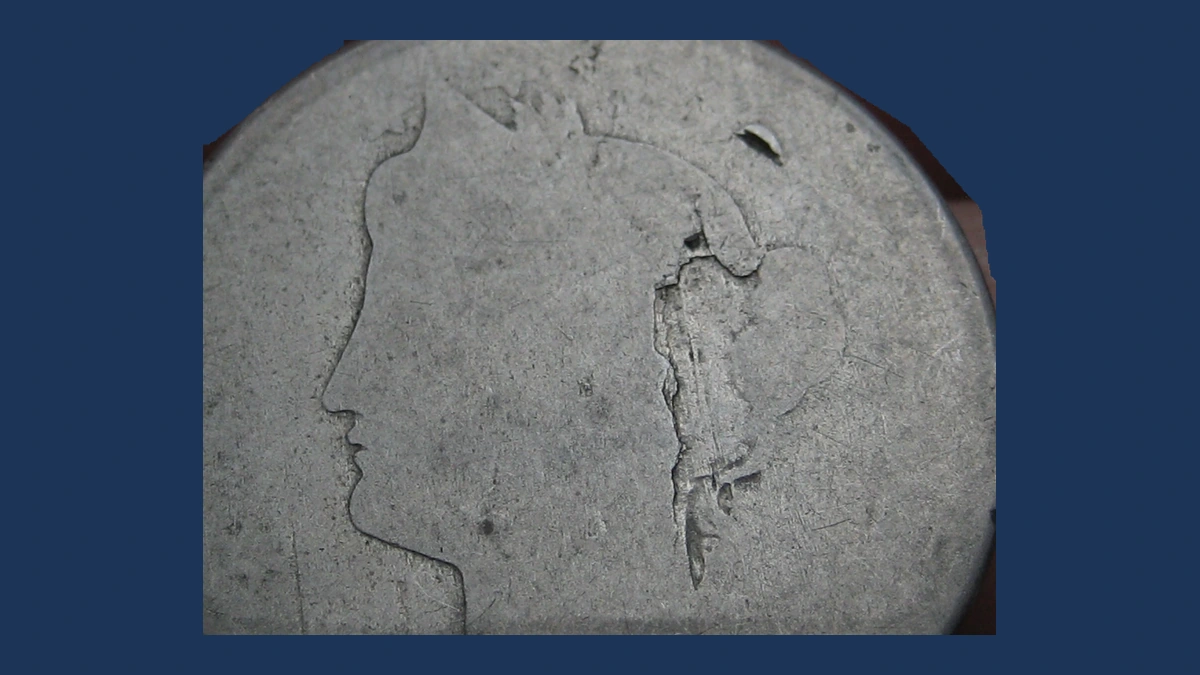
Metal can lift in a thin flap or leave a shallow rough patch where a layer has peeled away. Collectors call this lamination, a separation within the coin’s original metal.
A seller reported an 1887 nickel with both lamination and a repunched date. The listing described an ANACS EF45 coin, a grade indicating light wear.
The peeling metal is separate from the extra date strokes. Its exact position is not specified, so identification starts with the lifted layer itself rather than a particular letter or side of the coin.
Estimated Value
Small genuine peeling flaws on worn examples fit an estimated $20–$400 range. A 1911 Liberty nickel with lamination sold for $51 in January 2023, offering a different-year comparison.
Broad visible separation on an otherwise attractive coin can draw more interest than a tiny flake near the edge. Heavy corrosion or scraping has the opposite effect.
The 1887 seller’s repunched-date description may also affect the whole coin’s price; the two features should be judged together.
How to Identify
Leave any loose flap untouched. Lifting it can break away the metal that explains how the flaw formed.
With a 10× magnifier, look along the boundary where a thin surface layer separates from the metal beneath. Side lighting can reveal a shallow opening, while a deep fresh gouge often shows displaced metal at its sides.
For a loose coin, note its weight on a scale before comparing it with the normal 5 grams. Lost metal can lower that reading, but low weight alone does not identify peeling.
Measure the diameter against 21.2 mm with calipers and check the plain edge for grinding. When buying from photos, request a close view of the actual separation; a title mentioning lamination does not show whether the surface is peeling or merely scratched.
4. 1887 Liberty Nickel Double Clipped Planchet
Two missing portions of the edge can begin before the design is struck. The machine that cuts round blanks can cut across areas where metal has already been removed.
GreatCollections listed an 1887 double-clip example weighing 4.81 grams. Its ANACS VF30 grade describes a worn coin with many details remaining.
That weight is slightly below the normal 5 grams. The two gaps belong to one blank-making mistake, and neither gap needs to match the other in size or outline to be genuine.
Estimated Value
A useful estimate for a worn 1887 double clip is $75–$500. Two clearly visible original gaps and an intact date make a more appealing example than small edge losses hidden by wear.
For comparison, a cleaned 1911 Liberty nickel with two curved clips was offered at $195. That was a dealer’s asking price for a different year, not an 1887 auction result.
Unaltered edges help the price; filing or added cuts can remove the error premium entirely.
How to Identify
The recorded 4.81-gram weight is a useful starting point, but it is only 0.19 gram below normal. A scale reading cannot distinguish an original clip from metal removed later.
Examine both missing areas through a 10× magnifier and compare the nearby rims. Original clips can leave weakened rims opposite the gaps, while filed areas may carry parallel tool marks.
Use calipers across the widest surviving part of a loose coin; the normal diameter is 21.2 mm. Do not measure through a gap and mistake the shortened span for the original blank size.
The undamaged edge should be plain. Ask for edge-on photos of both gaps so you can judge the cut surfaces, rather than relying only on the shape seen from the front.
5. 1887 Liberty Nickel Off-Center Strike
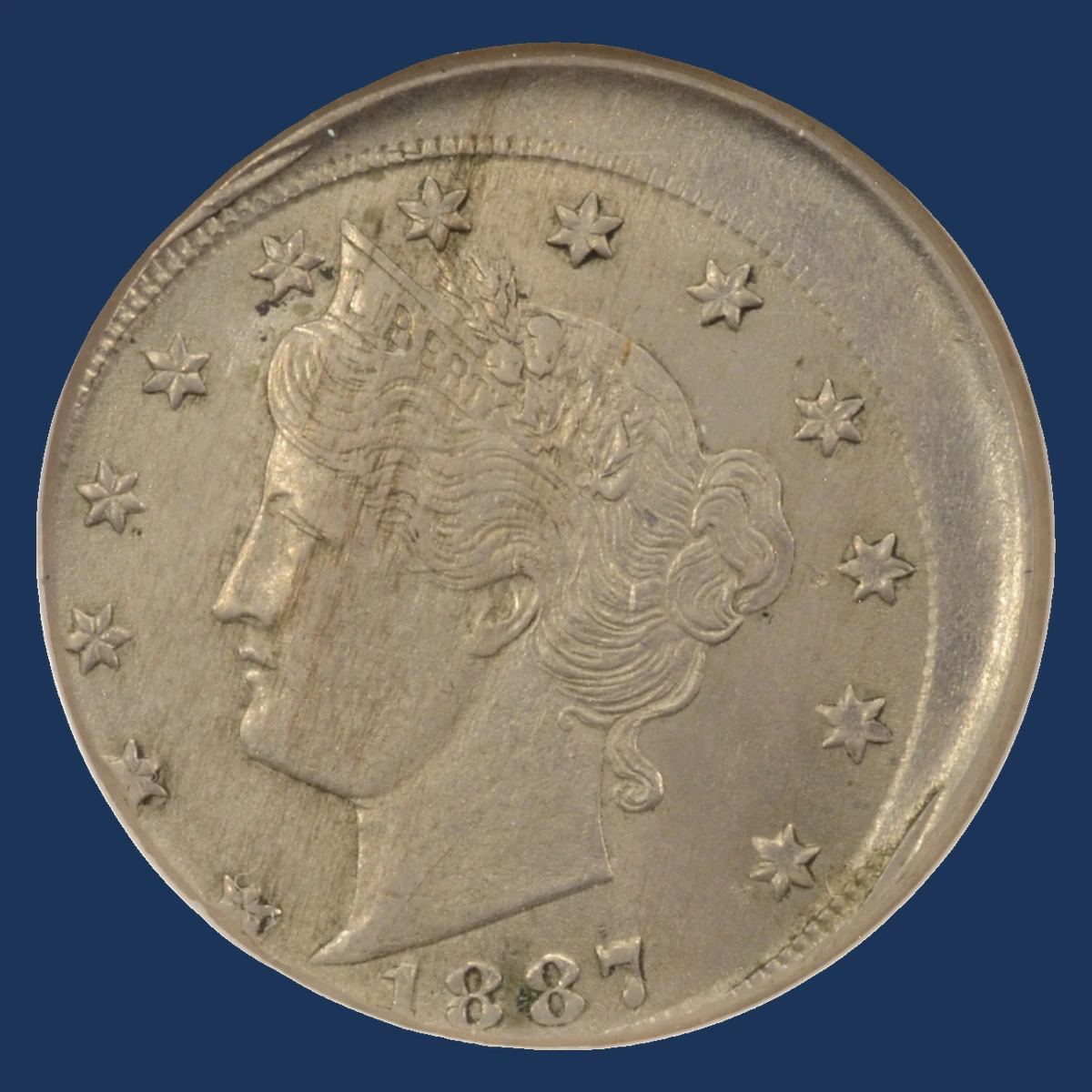
The design can run off one edge while leaving blank metal on the opposite side. This happens when the metal blank is not centered between the stamping tools.
An 1887 PCGS VF35 example has a 5% shift, while another graded PCGS XF40 has a 15% shift. Both grades describe worn coins, with XF40 retaining finer detail.
A historical catalog also shows an unworn example displaced 10% toward six o’clock. These are separate pieces; the downward direction on that coin does not describe every off-center 1887 nickel.
Estimated Value
Expect an estimated $150–$1,000 for modest off-center examples, depending on wear and the visible shift. A readable date and undamaged blank area help explain differences within that range.
The unworn 10% example carried a $175 asking price in a 1979 catalog. That old offer illustrates the type, rather than setting today’s value.
A 5% shift on a worn piece generally has less visual impact than a clean 15% example with clear missing design.
How to Identify
Set the coin beside a normal nickel and compare the outermost stars and lettering on both faces. Missing design plus untouched blank metal is the important combination; an uneven border alone is not enough.
A normal blank starts at 5 grams and 21.2 mm. For a loose example, record scale and caliper readings, allowing for a shape changed by the strike.
Use a 10× magnifier to inspect the boundary of the blank area and the plain edge. Flattened letters or scrape lines can show that someone removed design after minting.
The historical 10% example points toward six o’clock, or the bottom of the front. For another coin, follow its own missing design and blank area instead of expecting that same direction.
6. 1887 Liberty Nickel Doubled and Tripled Dies
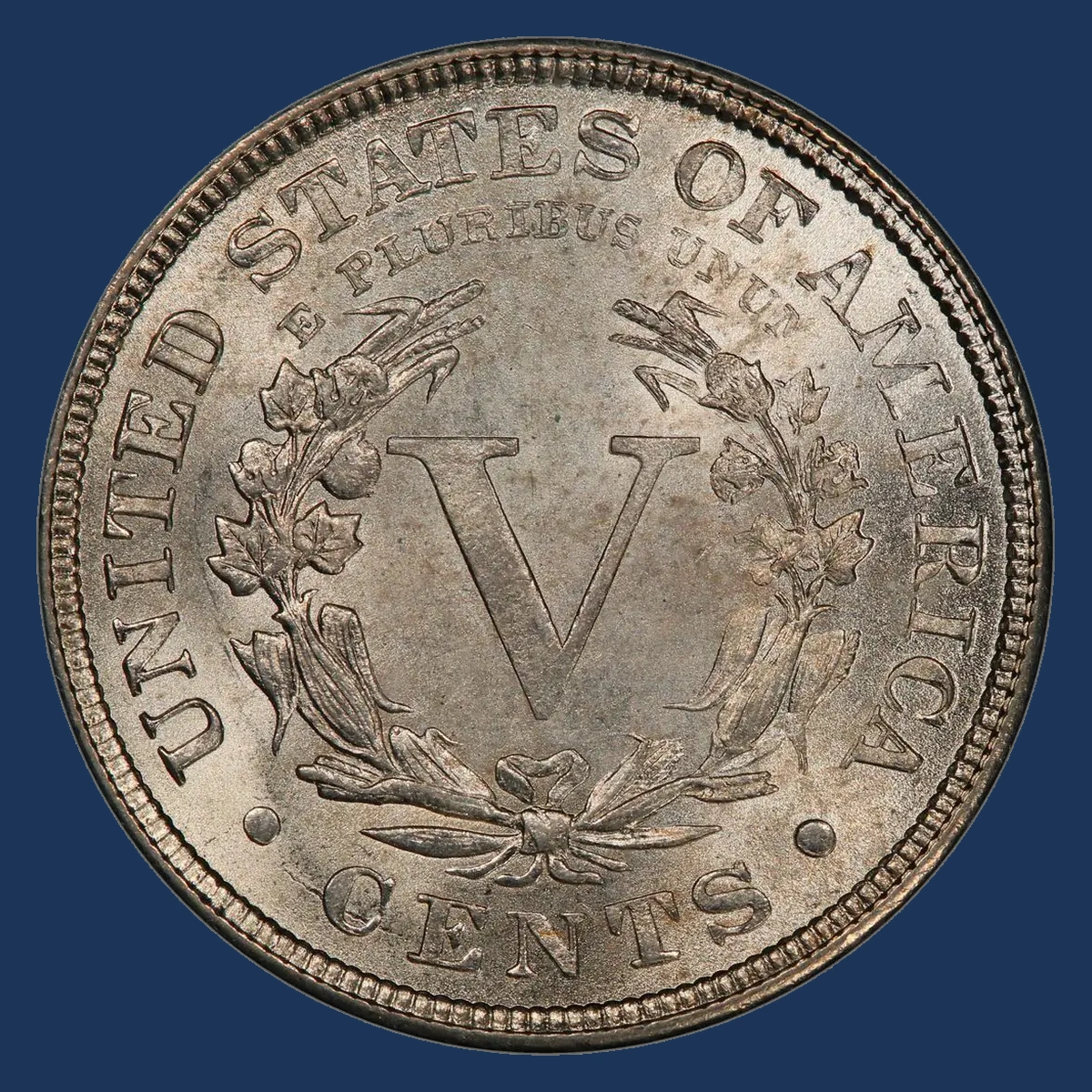
Some 1887 nickels show extra raised outlines in the back’s lettering or right-hand wreath. A doubled die carries those extra shapes in the stamping tool before it touches the coin.
One recognized version is called FS-801, a catalog number used to identify the design. The variety book also describes a tripled back with extra outlines at AM in AMERICA.
Look for repeated letter shapes, not just thick edges. Different versions can emphasize different areas, so the tripled AM example should not automatically be treated as the FS-801 coin.
Estimated Value
PCGS records an FS-801 sale at $978 in November 2011. The MS63 grade means the coin was unworn but had noticeable marks.
An estimated $75–$1,500 covers worn examples with clear extra outlines through more attractive unworn pieces. The catalog identity and visibility of the extra letters both affect the price.
That FS-801 result does not price every tripled-back nickel. A different pattern needs comparison with examples showing the same letter shapes.
How to Identify
The separate tripled-back example is best checked at AM in AMERICA with a 10× magnifier. For FS-801, compare photos of that specific variety rather than borrowing the tripled coin’s letter pattern.
Other reported doubled areas include the outer lettering, E PLURIBUS UNUM, and the right-hand wreath. Look for rounded extra outlines; a flat shelf beside a letter can instead come from movement during striking.
Normal measurements do not prove doubled lettering. A loose example should still be checked with a scale and calipers against 5 grams and 21.2 mm, with a plain edge.
Return to a sharply lit letter close-up before buying. Several matching extra contours are more persuasive than one thick letter blurred by wear.
7. 1887 Liberty Nickel Wrong Planchet
An 1887 nickel can carry the right design on the wrong metal blank. The mistake occurs when a blank intended for another coin enters the nickel press.
Heritage cataloged one worn example as struck on a Colombian five-centavos blank. Its design was displaced toward seven o’clock and spread outward without normal edge restraint.
Another ANACS VF20 example was described simply as struck on a wrong blank. The country named for the first coin does not establish the origin of the second, even though both carry an 1887 nickel design.
Estimated Value
The ANACS VF20 example sold for $630 in December 2024 at Heritage Auctions. VF20 means a worn coin with moderate remaining detail.
An estimated $500–$2,500 allows for differences in blank type, condition, and how clearly the unusual strike shows. A firmly identified foreign blank can appeal differently from a piece labeled only wrong planchet.
The wider strike on the Colombian-blank example belongs to that one coin; it is not a separate price to add.
How to Identify
Start with measurements instead of color. For a loose coin, use a scale and calipers, then compare the results with the normal 5 grams and 21.2 mm.
A normal nickel contains 75% copper and 25% nickel. A large difference calls for specialist examination, including a non-destructive metal test.
Inspect the plain edge and both faces with a 10× magnifier for filing or plating. Wear or a changed surface color cannot identify a foreign blank.
The Colombian-blank example has an outwardly spread strike displaced toward seven o’clock. That appearance is not required on every wrong-blank piece.
Ask for measurements tied to the actual coin and read its grading label. The general weight printed on a nickel catalog page is not a measurement of that unusual blank.
Conclusion
An extra letter outline and a missing piece of metal tell very different stories. The estimated $10–$2,500 range here covers both small tool defects and unusual wrong-blank coins.
Check the denomination before comparing prices: an 1887 three-cent nickel is a different coin. For a five-cent piece, clear photos of both faces and the edge help connect the visible mistake with the right example.