1896 Nickel Error List with Pictures

A tiny split at the bottom of the V appears on an 1896 Proof nickel with a reported $4,000 auction result. That price reflects an exceptionally preserved collector coin, not a $4,000 reward for a small flaw.
This 1896 nickel error list covers estimated whole-coin values of $20–$25,000, including a dramatic nickel that formed a deep cap.
Read on to compare subtle date marks with missing design, unusual metal, and that remarkable shape.
1. 1896 Liberty Nickel Possible Die Crack or Break
A raised, uneven line could come from a crack in a stamping tool. Coin metal can enter that opening and form a ridge where no ridge belongs in the normal design.
If a larger piece of the tool breaks away, the result can be a broader lump. The general mechanism is familiar, but the 1896 claim still needs a matching specimen.
The available year guide describes what such damage can produce without identifying an actual 1896 nickel’s mark. A random line cannot turn that possibility into an established example.
Estimated Value
For a correctly identified 1896 crack or small break, use a conditional estimate of $20–$300. Visibility, grade, and the size of the raised feature would guide the final comparison.
No auction result for a verified example is assigned to this report. The estimate applies only after the mark is shown to be mint-made.
A scratch, corrosion ridge, or added blob does not earn a crack premium simply because the year is collectible.
How to Identify
Check whether the line stands above the surface or cuts down into it. Low side lighting and a 10× magnifier make that distinction easier to see.
For a larger raised area, look for a natural connection to the coin rather than a seam around added metal. A rim-connected lump needs to be distinguished from an isolated spot within the design.
Use a scale and calipers on a loose coin against 5.00 grams and 21.21 millimeters. These normal measurements cannot establish a crack, but they help screen major alterations.
Photograph the complete 1896 date along with the feature. A clearly raised line on the actual dated nickel is the necessary starting evidence, rather than a similar mark on another denomination.
2. 1896 Liberty Nickel Repunched Date
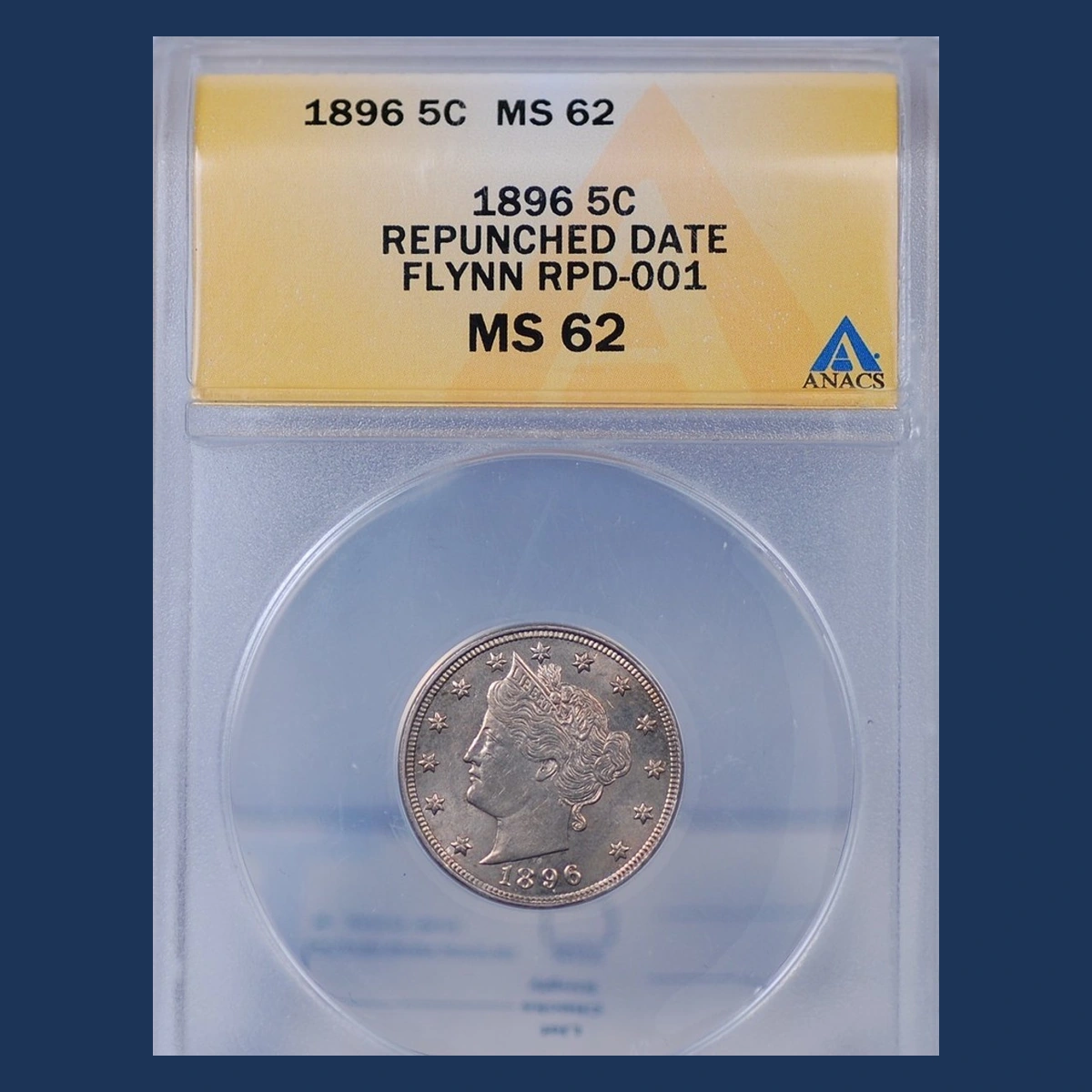
Small extra strokes beside a date digit can survive from an earlier punch impression. The punch moved slightly while workers added the date to the steel stamping tool, or die.
A dealer lists an 1896 Liberty nickel graded ANACS MS62 with the label Flynn RPD-001. MS62 means an unworn coin with noticeable marks, while RPD identifies a repunched date.
The listing establishes a named variety but does not describe each extra stroke’s direction. A similar catalog number on an 1896 dime or cent refers to a different coin.
Those other designs cannot supply this nickel’s exact details.
Estimated Value
Estimate $75–$600 for identifiable 1896 repunched-date nickels across circulated and lower unworn grades. Preservation accounts for part of the price, and clear extra punching helps establish the variety.
The ANACS MS62 dealer listing provides an example, but no completed sale amount is used here. An older holder or a catalog label alone does not set a fixed premium.
The visible date pattern must match before that variety estimate applies.
How to Identify
Compare the whole 1896 date with a confirmed Liberty nickel bearing the Flynn RPD-001 label. Begin at the digit shapes rather than assuming a direction from a similarly numbered dime or cent variety.
Under a 10× magnifier, look for repeated portions of a numeral that remain distinct as you change the light. Flat ledges, scratches, or rounded wear can create misleading extra edges without a second punch position.
A loose nickel should be near 5.00 grams and 21.21 millimeters when checked with a scale and calipers. Keep the full date in the close-up, so any extra strokes can be matched to their original digits instead of judged as isolated bumps.
3. 1896 Liberty Nickel Broadstrike
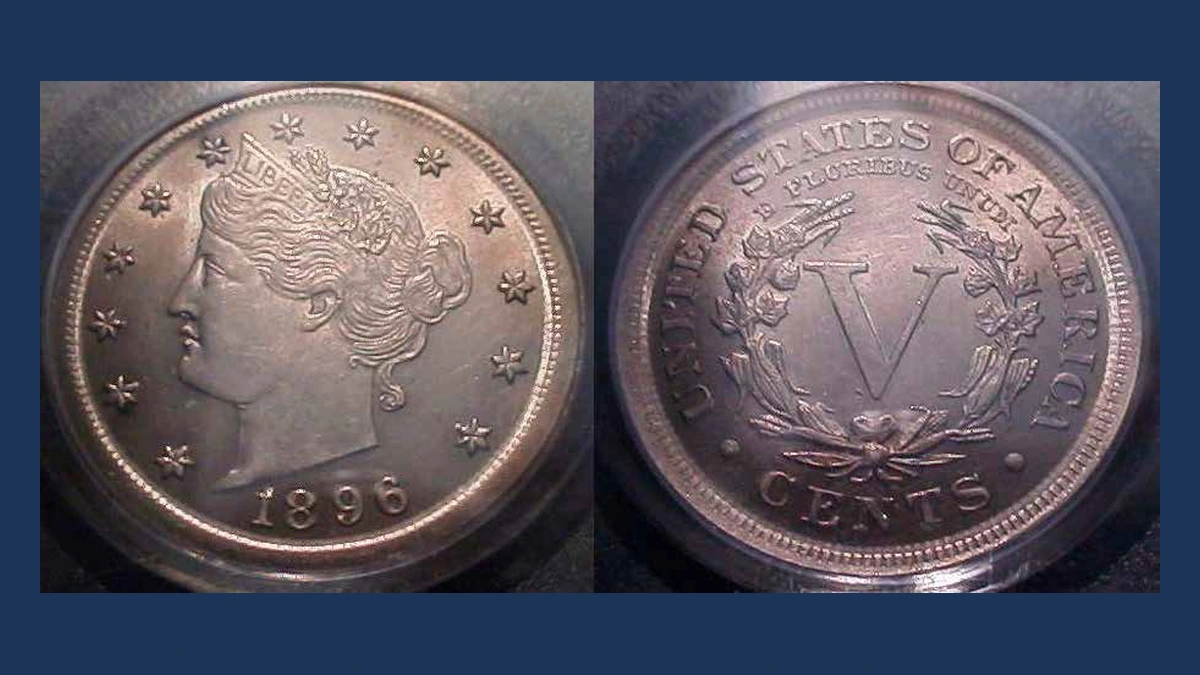
The border can spread beyond its normal size while the main design remains complete. This happens when the ring surrounding the blank fails to restrain the metal during striking.
That ring is called the collar. Without its full support, the nickel can grow wider or develop an uneven outer margin.
Dealer catalogs in Mint Error News list an 1896 broadstrike graded PCGS MS60. The grade describes an unworn coin with conspicuous marks or other limitations in appearance.
The repeated catalog listings do not establish several different surviving examples. A normal plain edge alone also does not identify a broadstrike.
Estimated Value
Use an estimated $150–$800 for confirmed 1896 broadstrikes, depending on condition and the strength of the expanded outline. The cataloged MS60 coin has no realized price assigned here.
For a different-year comparison, a scratched 1900 broadstrike appears in Coin World’s auction table at $150. Its condition problem helps explain why a genuine expanded strike can still bring a modest amount.
A cleaner, clearer 1896 example may appeal more, but later hammering is not equivalent.
How to Identify
Compare the outer lettering with the available metal before looking at the width. A broadstrike can retain the whole intended design inside a wider margin.
Measure a loose coin in several directions with calipers against the normal 21.21 millimeters. Weigh it against 5.00 grams to check that expansion has not been confused with missing metal.
Use a 10× magnifier to inspect Liberty and the reverse V for later flattening. A hammered coin may be wide but also show crushed detail or impact marks.
The edge should be examined from the side. Nickels normally have no grooves, so that feature tells you little.
An original struck design surrounded by naturally spread metal is the useful distinction from a coin flattened after leaving the Mint.
4. 1896 Liberty Nickel Off-Center Strike
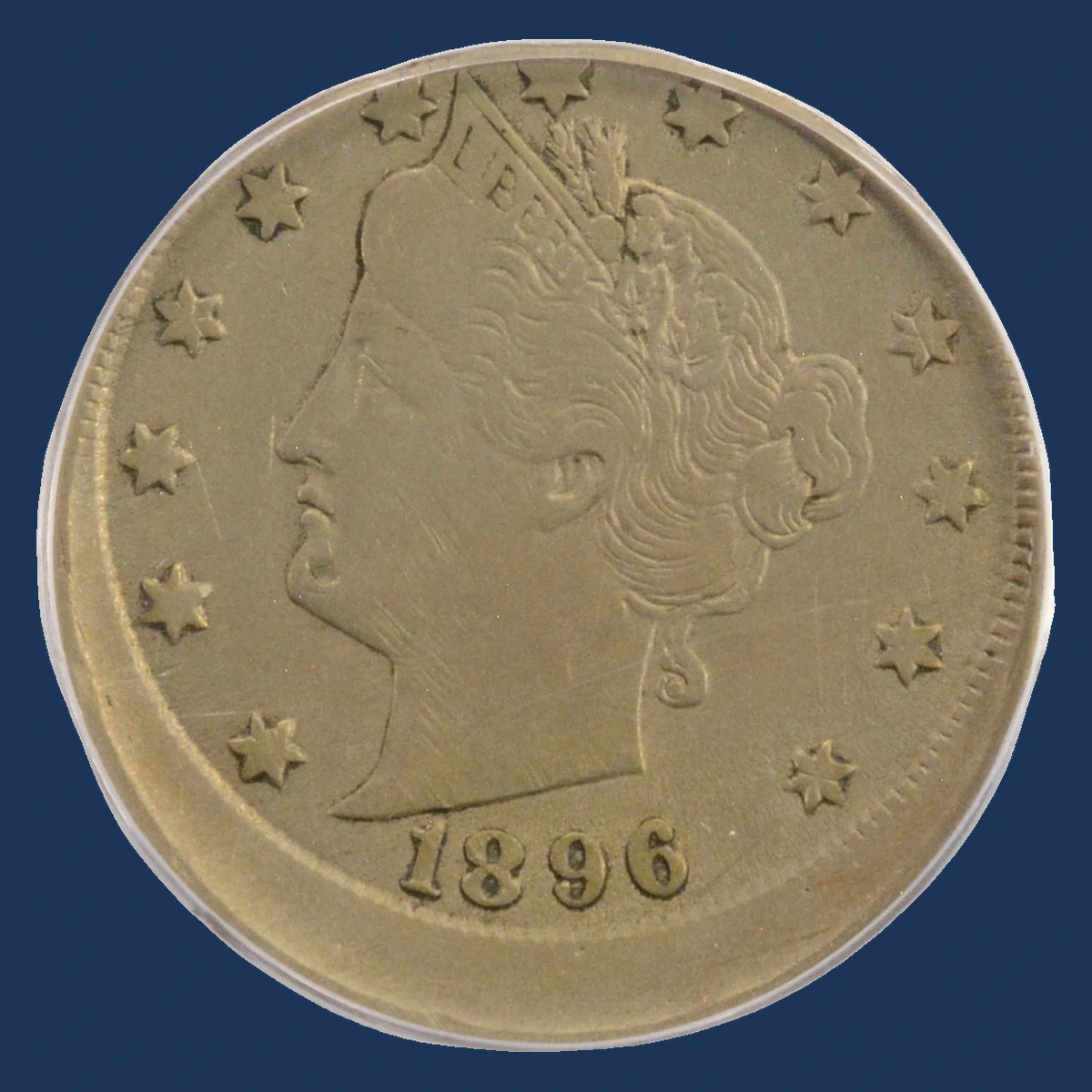
Part of the design can miss the blank when it enters the press too far to one side. The other part receives the strike, leaving bare metal beside a cropped image.
Catalogs describe an 1896 PCGS AU50 example about twelve percent off center toward the upper edge. AU50 indicates light circulation wear.
One listing gives 12:30 and another gives 1 o’clock, so their small directional difference does not prove separate coins. A further report concerns a twenty-five-percent example toward 12 o’clock, graded PCGS MS61.
That unworn coin is a separate comparison with a larger shift.
Estimated Value
Estimate $250–$1,800 for genuine dated 1896 off-center nickels across the reported condition levels. A preserved date and natural surfaces support stronger collector interest.
The AU50 twelve-percent example appears in an older catalog with a $550 minimum bid. That threshold does not establish what anyone finally paid.
The MS61 twenty-five-percent report has no separate sale amount assigned here. Its larger displacement should be weighed alongside its better preservation, rather than used as a price multiplier.
How to Identify
Find the date before deciding that an off-center Liberty nickel is an 1896. Photograph the entire front so the year stays connected to the blank portion and remaining design.
Compare the back for the same overall displacement, then use a 10× magnifier to inspect the struck-to-blank boundary. A single uneven rim or an area ground smooth after minting is not enough.
For loose coins, a scale can check near 5.00 grams and calipers can compare the outline with the normal 21.21 millimeters. The described twelve-percent coin belongs near the upper direction; the separate twenty-five-percent example needs its own matching photographs rather than the other coin’s grade or angle.
5. 1896 Liberty Nickel Struck on a Cent Blank
The nickel’s design looks different on the smaller brown disk prepared for a cent. Some outer detail cannot fit, and the thinner blank may not fill parts of the stamping tools completely.
A documented 1896 example is graded PCGS AU53, meaning lightly worn with much detail remaining. Its catalog describes a centered design with slight weakness at the forehead curl and left corn ear.
The cent blank is copper alloy rather than the nickel’s usual copper-nickel mixture. Its brown color alone does not prove the error, since plating can also change a normal nickel’s appearance.
Estimated Value
For an identified 1896 nickel on a cent blank, estimate $1,500–$5,000. The documented AU53 has no individual realized price assigned here.
A useful different-year comparison is a 1904 cent-blank nickel graded PCGS MS62 Brown that sold for $3,525 in April 2013. That coin was unworn, so it should not set an automatic price for the lightly worn 1896.
Readable date detail, original color, and freedom from damage all affect demand.
How to Identify
Use a scale before relying on color. A contemporary cent blank normally starts near 3.11 grams, compared with 5.00 grams for a nickel; the catalog does not state this specimen’s actual measured weight.
Calipers can compare a loose example with a cent blank’s starting 19.05 millimeters and the nickel’s 21.21 millimeters. Allow for some spreading during the larger strike.
Inspect the border and edge through a 10× magnifier for trimming or a coating. A genuine smaller blank should show a shortage of space consistent with the larger nickel design.
Match the 1896 date and centered design on the same coin. The weak forehead curl and left corn ear help compare the recorded example, but those weaknesses alone do not prove a cent blank.
6. 1896 Liberty Nickel Fine Lamination on a Proof
A very fine split lies at the base of the large V on a cataloged 1896 Proof. A Proof is a specially made collector coin, and this example received the exceptionally high PCGS grade PR67+.
Heritage described the flaw as a hair-thin lamination, meaning a separation in the metal. It is small enough to coexist with otherwise highly preserved surfaces.
The coin’s JD-1 label identifies its pair of stamping tools. It does not mean every coin struck by that pair has this split.
A cleaning line or hair impression can resemble such a delicate feature.
Estimated Value
NumisBids reports a $4,000 result for the PR67+ coin in Heritage’s February–March 2025 sale. That reported figure is not used here as a confirmed total including fees.
Estimate $2,500–$6,000 for a similarly preserved 1896 Proof with such a minor flaw. Most of its value comes from the date, collector-strike quality, and exceptional condition.
A fine lamination is not a reason to add thousands of dollars to an ordinary circulated nickel.
How to Identify
Locate the base of the V in a clear reverse photograph. Keep the grading holder closed and examine that small area with a 10× magnifier or a sharp enlarged image.
Compare the line under different lighting angles. A split boundary in the metal should be distinguished from a cleaning scratch or a thread-like impression made during striking.
The normal weight is 5.00 grams and diameter 21.21 millimeters, but a flaw this fine would not meaningfully change either. Use recorded measurements for a sealed coin rather than removing it for a scale or calipers.
The specific cataloged split is the feature to match. The JD-1 label and bright Proof surfaces alone do not establish that a different coin has the same lamination.
7. 1896 Liberty Nickel Flipover Double Strike and Deep Die Cap
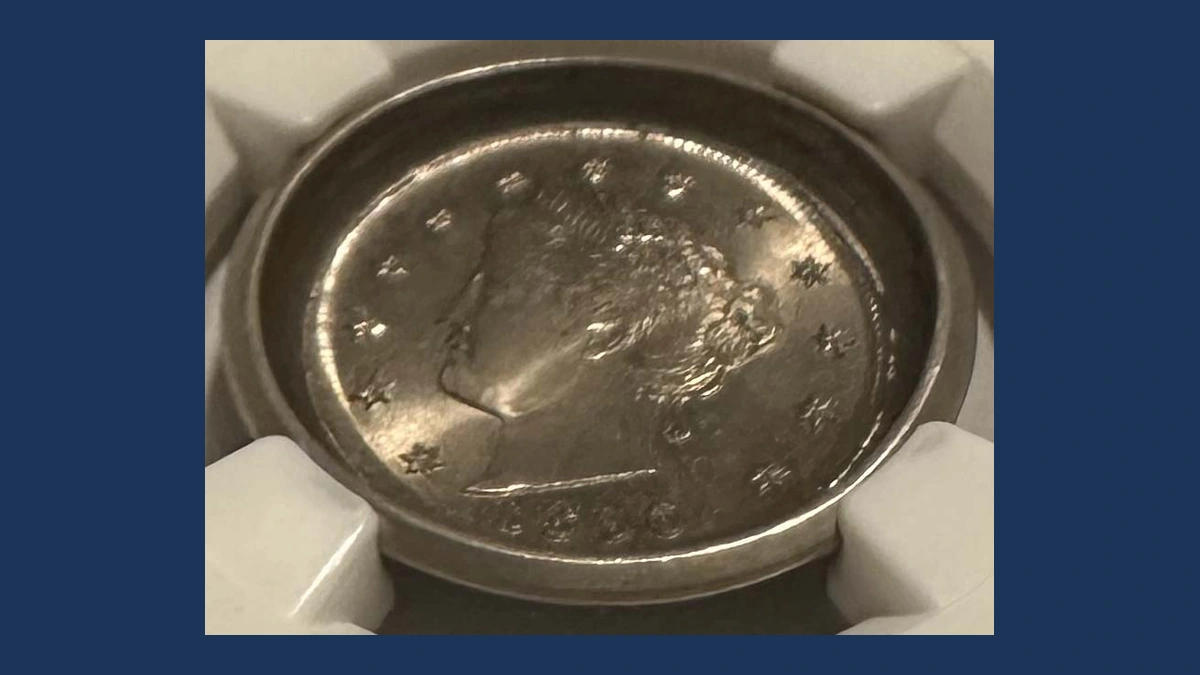
The date bends around the side of a deep, cup-shaped nickel. Before taking that form, this 1896 coin was struck, flipped over, and struck again inside the size-controlling ring.
It then stuck to the front stamping tool and gradually wrapped around it during further strikes. A coin attached this way is called a die cap.
Mike Byers describes the NGC MS66 example, an unworn coin with very few marks. Its earlier flip left a mixture of front and back design traces.
The deep cap and flipover strike therefore belong to one remarkable piece.
Estimated Value
For this type of deep 1896 cap with a preceding flipover strike, estimate $10,000–$25,000. This is a specialist estimate, not a reported sale of the illustrated MS66 coin.
The published account describes its exceptional depth and preservation but gives no realized price. Demand can depend heavily on the small pool of buyers for major errors.
The two stages should be valued together, rather than assigning one full price to each.
How to Identify
View the coin from the side before studying the overlapping designs. Its deep wall and the 1896 date wrapped onto that wall are central to the reported example.
With a 10× magnifier, compare the remaining front and back traces with the published photographs. They explain the flip that happened before the coin became attached to the tool.
Do not press on the cap or attempt to flatten it. A later artificial cup can have tool marks and deformation that fail to match the original strike sequence.
A normal nickel starts at 5.00 grams and 21.21 millimeters, but this cap’s shape is heavily changed. Use recorded measurements for a sealed example instead of forcing calipers or a scale around it.
The date on the deep wall and mixed earlier designs must agree on the same piece.
Conclusion
Estimated values across these 1896 nickel errors run from $20 to $25,000. The deep cap and wrong-cent-blank coin need very different comparisons from a small repunched date.
Remember that the reported $4,000 Proof result prices a finely preserved coin with a minor flaw, not the flaw alone. Keep the date visible in photographs and compare the complete shape before deciding which error your nickel might carry.