1901 Nickel Error List with Pictures

A brown 1901 nickel can be more than a discolored coin. One example struck on a cent blank sold for $8,625 in January 2005.
Star tips and the bottom of its date extend beyond the smaller metal disk. This 1901 nickel error list covers estimated values of $20–$10,000.
Read on for the small date marks, thin split pieces, and unusual striking patterns that separate these errors.
1. 1901 Liberty Head Nickel Peeling Surface Metal
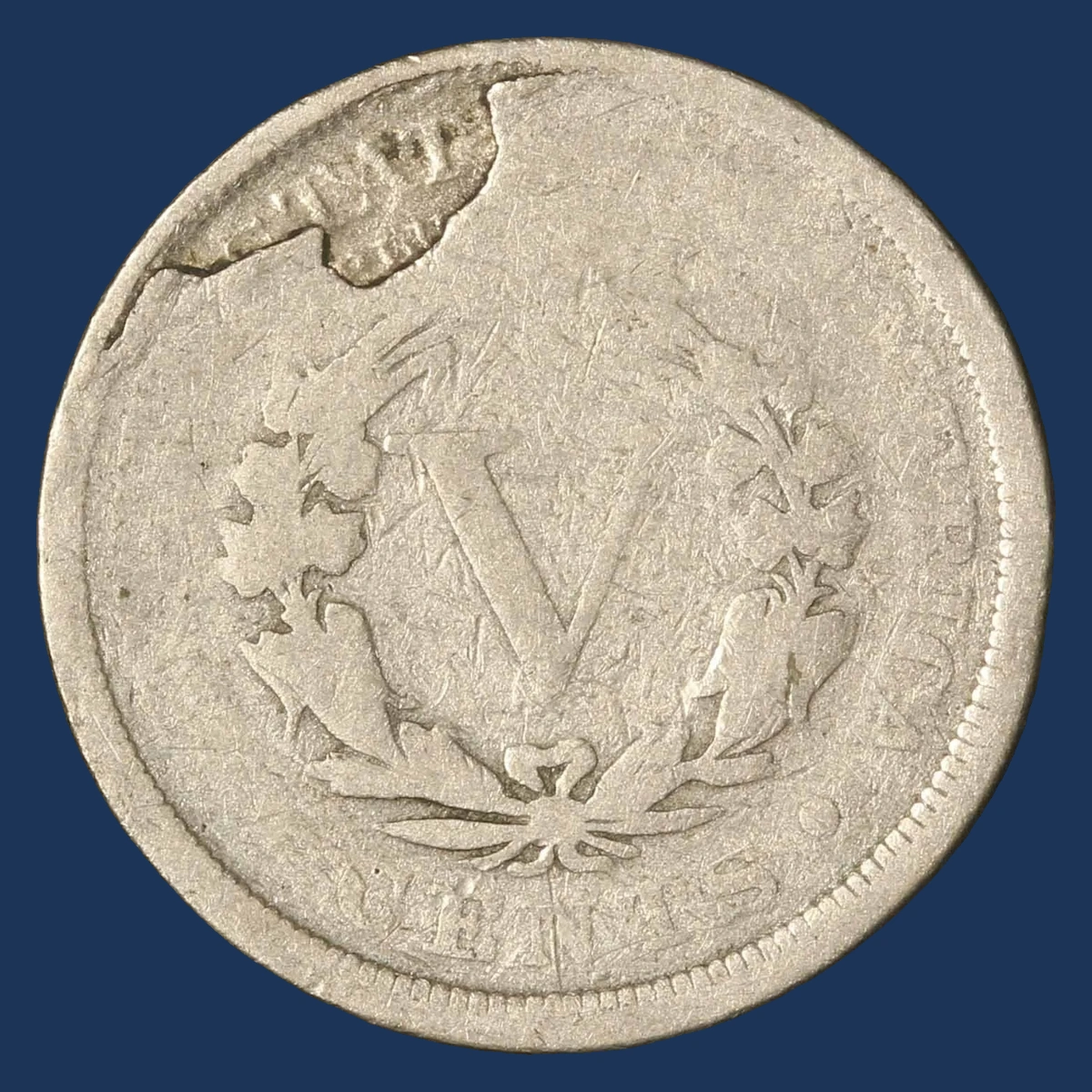
A thin strip that lifts from the surface can reveal a weakness within the metal blank. Collectors call this a lamination flaw.
The blank is the plain metal disk that receives the design. A local separation can leave a flap attached or allow a small piece to fall away.
Peeling is reported for 1901 Liberty Head nickels, without a fixed location on a particular certified coin. The flaw should therefore be judged from the actual layered opening, rather than expecting every example to cross Liberty’s face or the date.
Estimated Value
Estimate $20–$200 for genuine local peeling, with small worn flaws near the lower end. A clearly visible attached strip can be more interesting than a shallow rough patch.
These estimates concern the complete nickel. Condition, visibility, and the amount of design preserved all influence the price.
A large missing area does not always bring more money. Losing the date or important portrait details can make an otherwise dramatic flaw less appealing.
How to Identify
Protect an attached strip before handling the coin further. Photograph it under low side lighting, and never test the opening with a pin or fingernail.
A 10× magnifier should reveal a thin layer separating from the surrounding metal. Follow that opening toward its attached end; a gouge instead cuts into finished detail and may pile metal beside it.
A missing flake can lower the reading on a scale from the normal 5 grams, while an attached flap may leave it unchanged. Calipers can compare an undamaged span with 21.2 millimeters, but the natural layer boundary matters more than an isolated low weight or a rough patch.
2. 1901 Liberty Head Nickel Repunched Date
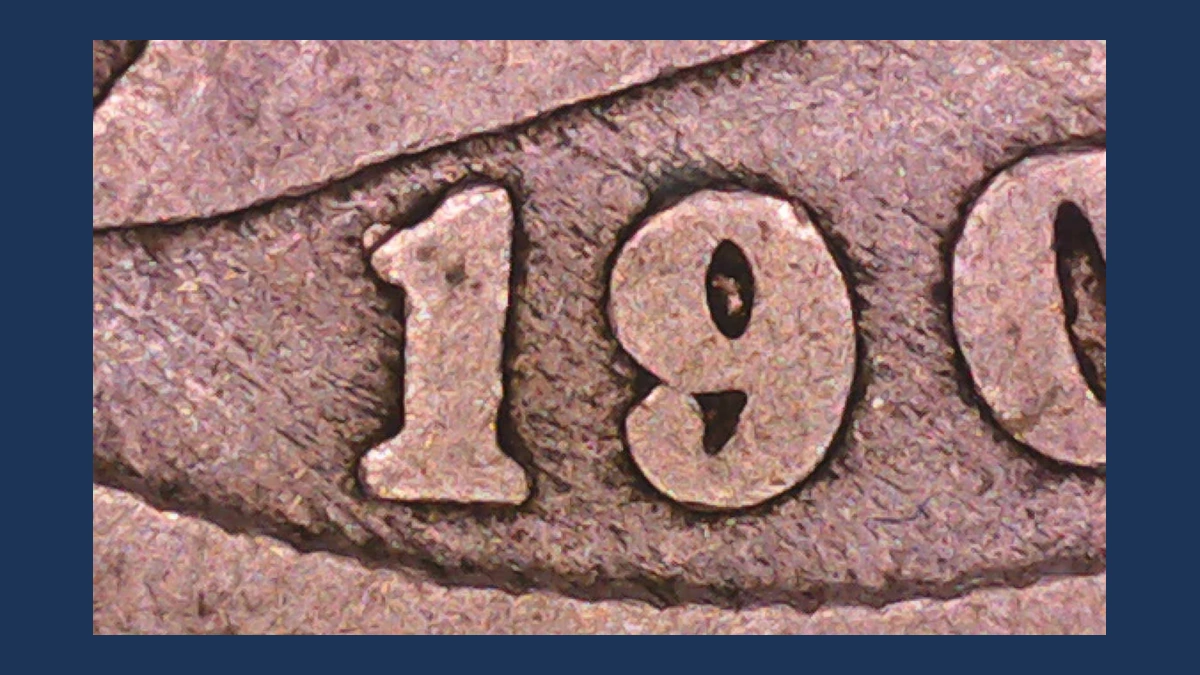
An extra curved stroke beside a date digit can be a remnant of an earlier punch impression. The date was punched again into the die, the steel stamping tool, in a slightly different position.
The Flynn–Van Note reference lists six 1901 patterns. Different examples show remnants below or above digits, rather than one shared outline around the whole date.
One pattern has extra traces beneath the 9 and 0. Another leaves a small trace left of the 9’s base, so the exact position matters when comparing different coins.
Estimated Value
For an identified repunched date, estimate $25–$500 across worn examples and attractive unworn coins. The upper part favors clear, well-matched extra strokes that remain easy to photograph.
The date pattern and the coin’s overall preservation both matter. An ordinary high-grade nickel can already carry value, so the entire price should not be attributed to one tiny line.
Scratches, heavy wear, or flat striking shelves can obscure the pattern and weaken a comparison with a clearly identified example.
How to Identify
Frame the complete date in one close-up before studying individual digits. Keep that photograph beside the Flynn–Van Note illustrated reference to match the position of each small mark.
A 10× magnifier can show extra strokes below the 9 and 0, or around the bases of the two 1s. Other patterns place traces above a digit.
Use one reference photograph at a time. Combining marks from several different coins would create a pattern that the reference does not show.
For a loose nickel, a scale and calipers should show roughly 5 grams and 21.2 millimeters. Inspect the plain edge for alteration.
At the date, look for rounded original remnants rather than scratches or low, flat shelves.
3. 1901 Liberty Head Nickel Split Blank and Detached Front Piece
A blank can separate into thinner disks along a weakness inside its metal. Whether that happens before or after striking changes the surfaces left behind.
One 1901 example was struck on a split blank and graded PCGS MS63, meaning unworn with visible marks. Its auction title calls it a 48% split, without providing a measured weight.
A different auction catalog lists a detached front piece graded PCGS F12, showing substantial wear. Its portrait side and inner separation surface should be compared as a different object, rather than the missing partner of the MS63 coin.
Estimated Value
The MS63 split-blank coin sold for $258.50 in January 2015. Estimate $150–$600 for comparable thin struck pieces, depending on their preservation and the clarity of the error.
A genuine detached front piece can be estimated at $100–$900. A readable date and an undisturbed inner surface help explain its identity.
Those ranges describe separate objects. A surviving fragment should not be priced as a complete matching pair unless both original pieces are actually present.
How to Identify
Lay photographs of both faces side by side. A blank that split before striking can receive a design on each side, while a later detached piece exposes an inner surface.
The ordinary complete nickel weighs 5 grams and measures 21.2 millimeters. Use a scale and calipers to record the loose piece, without converting the catalog’s 48% wording into an assumed exact weight.
Look along its thin edge through a 10× magnifier for saw grooves or grinding that could imitate a natural separation. Do not bend the metal.
For the F12 front piece, identify the date and portrait first. Its opposite face should then be examined as an exposed interior, rather than searched for as the partner of the separate MS63 coin.
4. 1901 Liberty Head Nickel Off-Center Strike
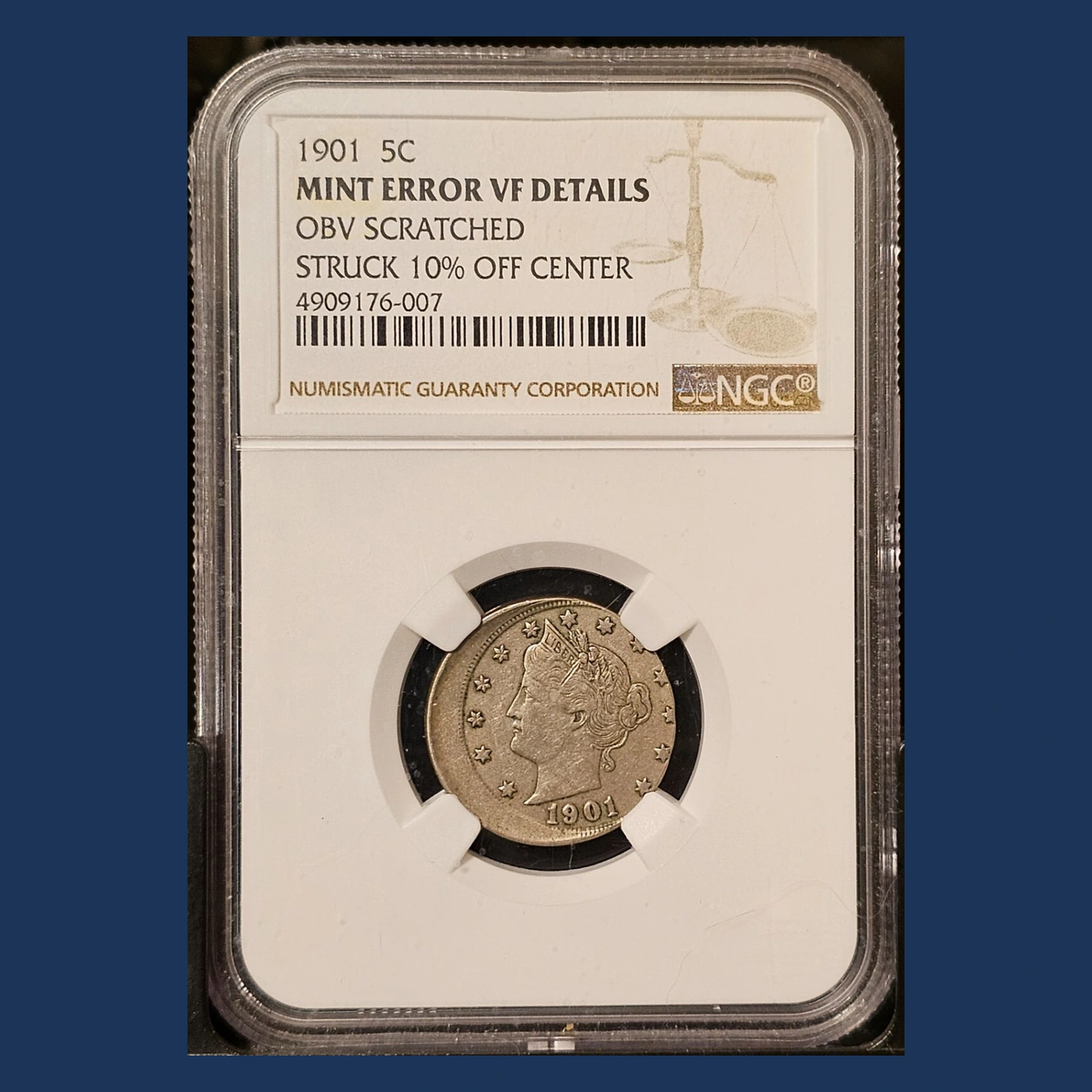
An untouched crescent next to the struck design can show that the blank entered the press out of position. Part of the intended image fell beyond the metal on the opposite side.
A 1901 Liberty Head nickel is listed as 10% off center in PCGS AU58, meaning only slight wear. Another example appears in a collector’s record with an NGC damage designation.
Those are separate coins, and the second coin’s damage is not a further minting error. The visible displacement should be checked on both faces rather than inferred from one uneven rim.
Estimated Value
A genuine dated 1901 off-center nickel has an estimated range of $100–$1,500. Mild shifts on worn coins generally fit below attractive examples with an obvious blank crescent and a clear date.
The 10% description measures the displacement, not the coin’s condition. Readable lettering and original surfaces remain useful when comparing different examples.
Later damage can reduce the price even when the original error is genuine. The damaged collector example should therefore be assessed separately from the lightly worn AU58 piece.
How to Identify
Locate enough of the date to read 1901 before judging the size of the blank crescent. No mint letter is normal on a nickel of this year.
A scale can check a loose example near 5 grams, because an off-center strike need not remove metal. Use calipers to record its outline against the ordinary 21.2-millimeter diameter.
With a 10× magnifier, inspect where the design meets the untouched part of the blank. Filing removes metal and leaves a worked edge instead of the original surface.
Turn the coin over and compare the second design’s position. Both designs must miss part of the same misplaced blank; a narrow rim on only one face does not show that.
5. 1901 Liberty Head Nickel Repeated Strike with a Flip Between Blows
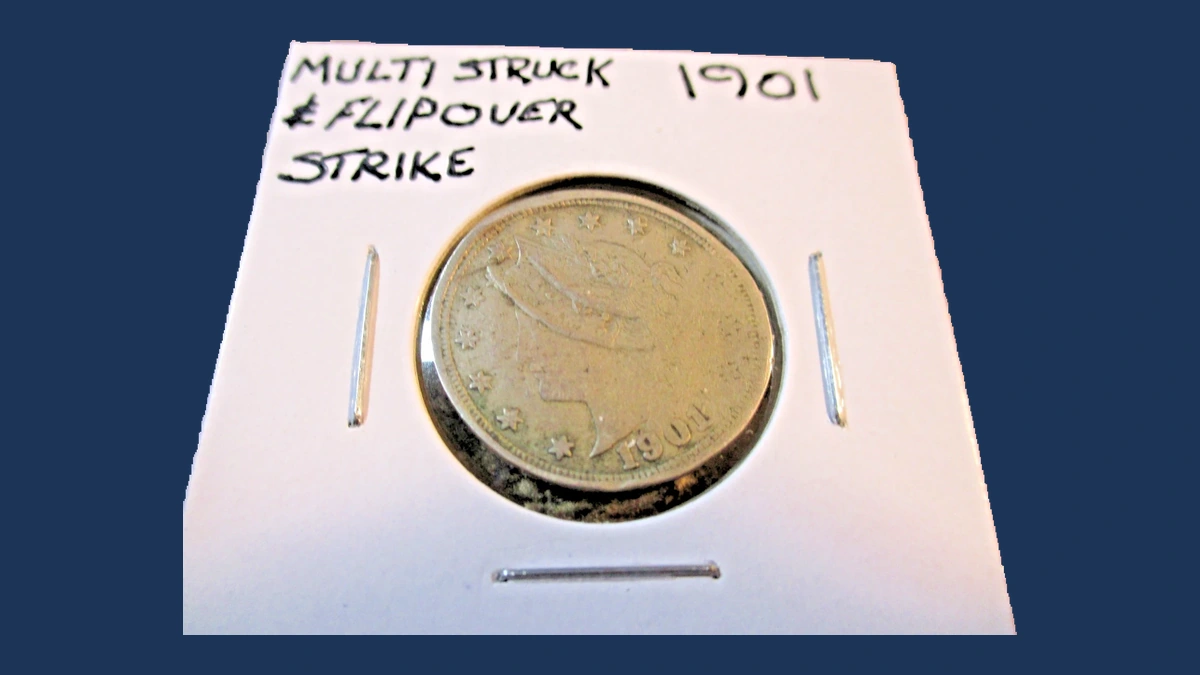
A coin can turn over between blows and receive the opposite design across an earlier impression. Parts of Liberty’s portrait and the wreath-and-V side may then overlap on the same face.
A marketplace title reports a 1901 nickel with multiple strikes and a flip. It does not establish an independently graded specimen, a specific number of blows, or their direction.
The claim needs actual overlapping struck designs. Pressing two finished coins together later can leave misleading marks, and small doubled date digits do not demonstrate that the whole coin turned over in the press.
Estimated Value
For a confirmed 1901 repeated strike with a genuine flip, estimate $500–$5,000. The range compares similar early-nickel striking errors and depends on how clearly the sequence can be followed.
A readable date, recognizable parts of both designs, and original surfaces support stronger interest. Heavy wear or confused overlap can make an unusual coin harder to explain.
The estimate applies after identifying the striking event. An impressive seller title or a high asking price cannot replace the physical evidence.
How to Identify
Choose a recognizable portrait feature and a recognizable wreath or V detail on the claimed overlapping face. Photograph their positions before trying to count the blows.
Under a 10× magnifier, trace how a later raised design crosses and flattens earlier detail. Then inspect the other face for changes that fit the same flip.
A sunken backward impression can instead come from contact with another finished coin. The actual raised and recessed shapes must fit the proposed sequence.
A loose complete nickel should remain near 5 grams on a scale, though its shape may spread beyond 21.2 millimeters. Use calipers and inspect the plain edge for crushing, keeping a certified example sealed.
Count only impressions you can follow across the coin.
6. 1901 Liberty Head Nickel Struck on a Cent or Silver Dime Blank
The nickel design can overrun a smaller blank intended for another coin. A brown cent-blank example has cropped star tips and a partly cut-off date base.
That coin was graded PCGS MS63 Brown, an unworn grade. A separate PCGS AU58 cent-blank nickel shows slight wear.
The silver-dime blank example is a different coin, graded NGC AU53 with a recorded weight of 2.5 grams. Its label reports 87% silver and 13% copper, rather than the usual 90% silver dime alloy.
The blank’s metal and size must be checked together, since color alone can mislead.
Estimated Value
The brown MS63 cent-blank nickel sold for $8,625 in January 2005. Estimate $2,000–$10,000 for genuine cent-blank examples across different condition and design placement.
The AU53 dime-blank coin brought $6,325 in August 2011. A comparable authenticated silver-blank example has an estimated range of $3,000–$10,000.
These prices belong to separate whole coins. Readable dates and original surfaces support stronger values, while unattractive damage or barely visible peripheral details can reduce collector interest.
How to Identify
A scale and calipers help separate these candidates from a normal 5-gram, 21.2-millimeter nickel. A contemporary cent blank starts near 3.11 grams and 19.05 millimeters; those are standards, not measurements of every cent-blank error.
The documented silver example actually weighs 2.5 grams. A normal dime blank is about 17.9 millimeters wide, although striking can spread either smaller blank.
Examine the cropped design and edge under a 10× magnifier. A coating may change color, and grinding can reduce size without producing a wrong-blank strike.
The illustrated silver example carries its own alloy figures. Have the metal checked without scratching it, and keep the original certification with the coin.
Conclusion
Estimated values run from $20–$10,000, but each physical feature needs the right comparison. Small date remnants, a thin separated piece, and a nickel design on silver are very different finds.
Leave peeling metal attached and preserve the labels on unusual blanks. When a coin shows repeated designs, follow their overlap on both faces before naming the error or comparing it with a high-priced example.