1909 Nickel Error List with Pictures

A missing piece of metal and a missing piece of design can look similar at first. On a 1909 V nickel, the edge often explains which one you are seeing.
The 1909 Liberty Head nickel errors below have estimated whole-coin values of $25–$3,500. These reported types range from small raised cracks to separate strike impressions, with condition and clear identification affecting the price.
Use the close-up clues to compare your coin before choosing an error name.
1. 1909 Liberty Head Nickel Peeling Metal Within the Blank
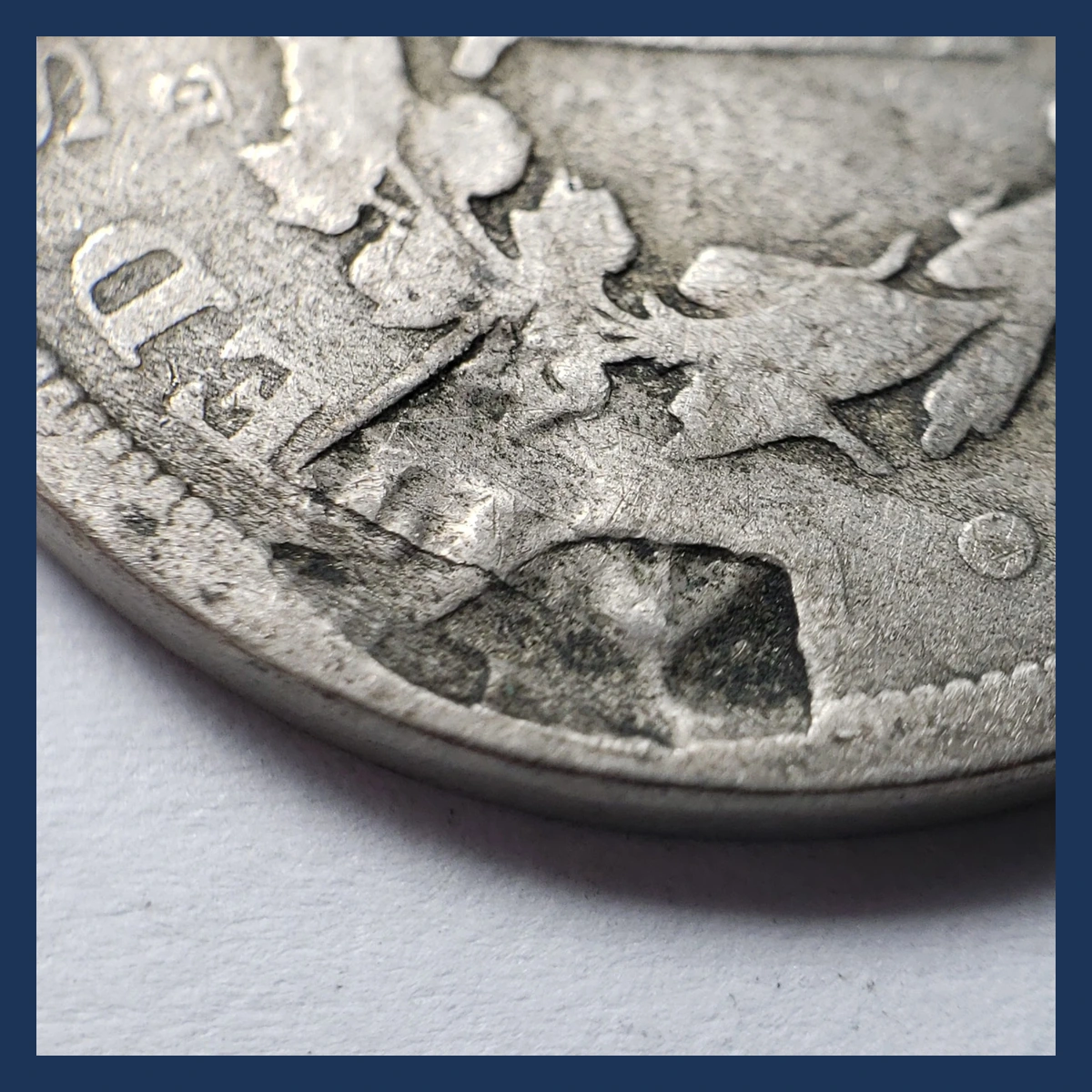
A small strip of metal can lift from the surface while the rest of the nickel remains intact. This is called a lamination, a separation caused by weakness within the original metal.
The 1909 nickel is a solid mixture of copper and nickel. It does not have a deliberately added outer layer like a modern dime.
The year guide includes laminations without locating a particular flap on a certified example. A shallow natural separation belongs in this category; it does not automatically mean that the entire coin split into two halves.
Estimated Value
Use an estimated $50–$500 for a genuine lamination, following the year guide’s range. The upper portion suits larger visible flaws on better-preserved coins rather than a tiny rough patch.
An attached flap can make the defect easier to understand, but its surrounding surface should remain original. Prying, scraping, or cleaning can lower the value.
The estimate covers the whole nickel. An especially high-grade coin may owe much of its price to condition rather than peeling metal alone.
How to Identify
Protect any attached strip before inspecting it. Do not lift it with a fingernail or press it flat for a photograph.
Look into the opening with a 10× magnifier and follow where the thin strip joins the intact coin. A scratch cuts into the surface instead of separating an original layer within it.
An attached flap may leave the weight near the normal 5 grams on a scale. A missing piece can reduce that reading.
Use calipers across an intact span to compare with 21.2 millimeters, then examine the plain edge. Keep a graded coin sealed in its holder.
The thin opening beneath an original flap is the clearest visible clue to this local separation.
2. 1909 Liberty Head Nickel Raised Cracks and Small Lumps
A narrow line standing above the surface can come from a crack in the die, the steel stamping tool. Coin metal enters that opening as the press strikes the blank.
If a small piece of the tool breaks away, metal can instead fill a wider opening and form a lump. Collectors call that a die chip.
Both are listed for 1909, without one exact path or chip position defining the year. A small interior lump should not be called a large rim break simply because both involve a damaged tool.
Estimated Value
Estimate $25–$100 for small genuine cracks or chips, with major clearly visible tool breaks reaching about $100–$750. The year guide’s higher figures concern stronger breaks rather than every fine line.
A raised feature beside readable detail is easier to show than a faint mark hidden by wear. Clean, undamaged surfaces also help.
Prices apply to the complete coin. Several tiny chips do not become several independent coins’ worth of added value.
How to Identify
Tilt the coin under a lamp before magnifying the mark. A raised line casts a different shadow from a cut, although metal pushed up beside a scratch can be misleading.
A loose complete nickel should remain close to 5 grams and 21.2 millimeters on a scale and calipers. A broken stamping tool changes the coin’s surface without removing metal from the blank.
Trace the feature with a 10× magnifier, including its ends and any connection to the plain edge. A nearby rim dent may explain a raised patch as later damage.
Look for a ridge or lump rising from the original surface without a neighboring gouge, glue, or added metal.
3. 1909 Liberty Head Nickel A Wider Coin with Its Design Intact
All the lettering can remain visible while the coin spreads beyond its normal outline. This is a broadstrike, made when the collar fails to contain the blank during the blow.
The collar is the ring that controls the coin’s width. Without its full support, metal can spread unevenly and leave a wider border on one side.
The 1909 listing describes the type without establishing a particular measured specimen. A complete design within the spread metal is the useful clue, and an ordinary nickel’s naturally smooth edge is not an error by itself.
Estimated Value
The estimated range is $75–$800 for genuine broadstrikes of differing strength and condition. A small amount of spreading on a worn coin belongs below a broad, attractive unworn example.
The complete portrait, stars, and back lettering give buyers more to compare than width alone. Later flattening can make a coin wide while spoiling those details.
This range concerns ordinary circulation coins. Specially made Proof collector coins require a separate comparison of their finish and actual error.
How to Identify
Measure a loose candidate in several directions with calipers and compare it with the normal 21.2 millimeters. An uneven broadstrike may not form a perfect enlarged circle.
Weigh it against 5 grams. Spreading changes the outline but does not require a piece of metal to disappear.
Follow the outer letters and stars on both faces under a magnifier. The design should remain on the metal, even beside the narrowest part of an uneven border.
Inspect the plain edge for crushing or filing. A hammered coin can spread too, but flattened lettering and impact marks may reveal what happened.
The complete design and original expanded border should explain each other. A smooth edge alone cannot distinguish this error from a normal nickel.
4. 1909 Liberty Head Nickel A Design Interrupted by Trapped Material
A patch of design can disappear where material blocked the stamping tool. A trapped object may leave a sunken shape, while material filling a recessed letter can make that letter weak.
This is a struck-through error. The object does not have to remain attached for its impression to survive.
The 1909 year listing supplies the category rather than a particular object, face, or clock position. Those details should come from the actual coin, and a blank-looking patch should not be called cloth or wire without a recognizable shape or texture.
Estimated Value
Allow an estimated $100–$1,000 for a genuine example, with the stronger prices reserved for large, clear impressions on attractive coins. A small weak letter should be judged more modestly than a distinct object-shaped depression.
Original nearby detail helps demonstrate that the affected area formed during striking. Deep dents added later can look dramatic but do not justify the same range.
Any object still attached needs its own identification before an additional retained-material premium is considered.
How to Identify
Compare the unaffected letters nearest the weak area with letters farther away. Even wear across the coin offers a different explanation from one isolated interruption.
Use a 10× magnifier to follow the depression’s boundary and inspect its texture. Scraping lines or a sharp impact rim can indicate later damage.
On a loose intact nickel, a scale and calipers should show roughly 5 grams and 21.2 millimeters. A pressed impression can move metal without removing enough to cause a large weight change.
Check the opposite face and plain edge for bending or hammer marks. Describe only the visible impression, keeping an empty hollow separate from any object that actually remains on the coin.
5. 1909 Liberty Head Nickel A Piece Missing Before Striking
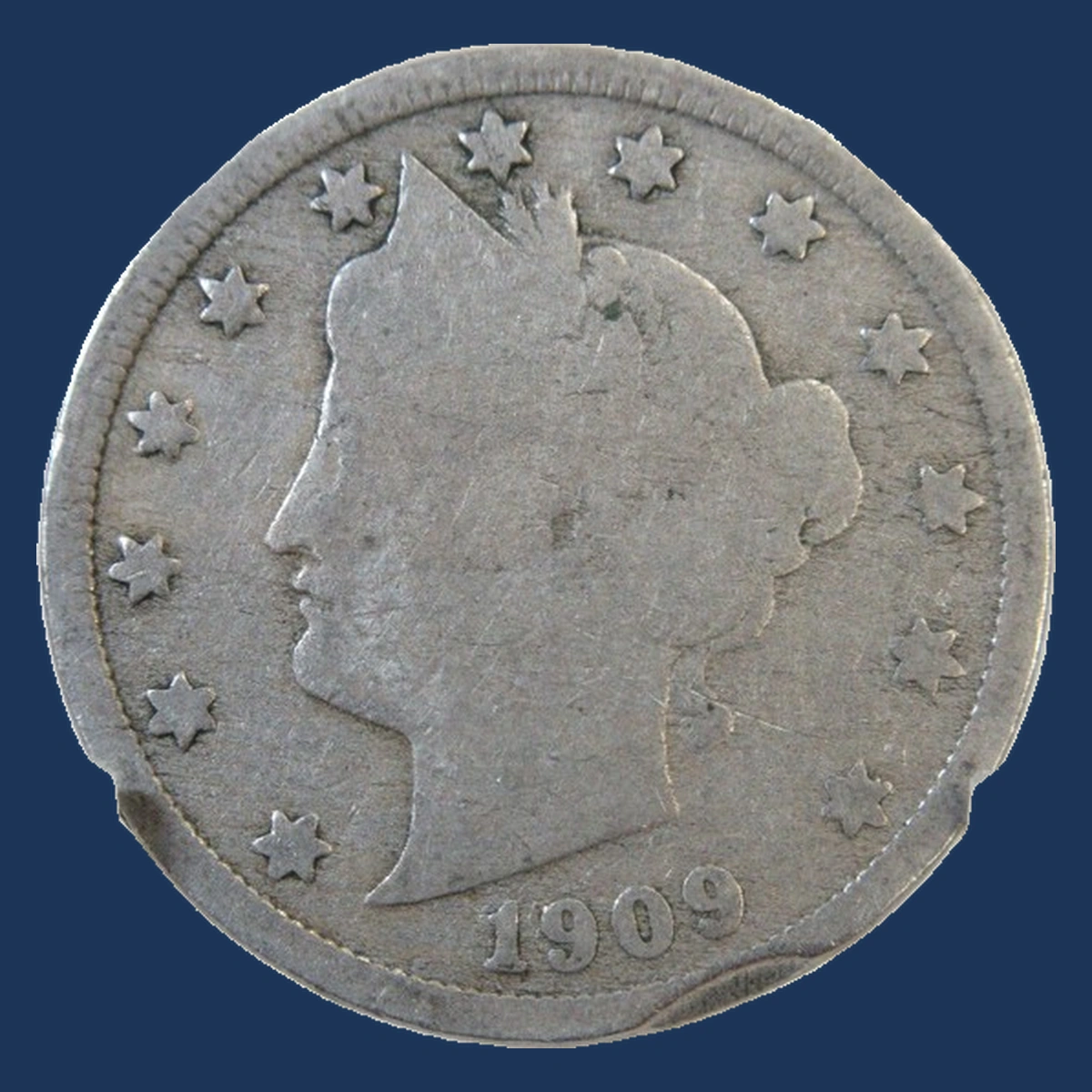
A gap can begin in the blank before the coin receives its design. The blank-cutting machine may overlap an earlier hole or reach the edge of the metal strip.
The surviving metal is then struck with part of its normal outline missing. Design beside the gap can flow toward the opening, and the opposite rim may be weaker.
Clipped blanks appear in the 1909 guide, but it does not identify a single certified shape or percentage. Curved and straight missing sections must each be checked for evidence that they preceded the strike.
Estimated Value
Use an estimated $100–$1,250 for clearly identified clips, with the size of the gap and the coin’s condition affecting its place. Small worn examples should not inherit the price of a dramatic, well-preserved piece.
A readable date helps keep the coin useful to a year collector. Original metal at the gap’s ends also strengthens the comparison.
The range is for mint-made incomplete blanks. A later cut or a corroded edge does not earn that error premium.
How to Identify
A scale is useful before judging the missing shape: compare a loose coin with the full nickel’s 5 grams. Use calipers across an intact direction against 21.2 millimeters, allowing for any spreading during the strike.
Now examine both ends of the gap with a 10× magnifier. Look for original design flowing toward the opening rather than saw marks, fresh shearing, or a cut through finished letters.
Follow the plain edge away from the gap and inspect the opposite rim for weakness. That weakness can support a clip when present, but its absence alone should not decide the diagnosis; the missing boundary must fit a blank incomplete before striking.
6. 1909 Liberty Head Nickel A Blank Crescent Beside Missing Design
A crescent of untouched metal can sit beside a design that runs off the opposite edge. The blank was partly outside the stamping area when the press closed.
This is an off-center strike, one of the categories in the 1909 guide. A useful example needs a readable date and matching displacement on both faces.
The listing does not establish one percentage or direction for this year. An uneven border with every letter still present may instead be a broadstrike, while a shift limited to one face may involve a misplaced stamping tool.
Estimated Value
Estimate $100–$1,500 for genuine examples, using the year guide’s range as a starting comparison. A clear date, attractive remaining design, and undamaged blank crescent support stronger prices.
A larger shift is not automatically better if it removes the year or leaves little recognizable design. Small original shifts can still appeal to a specialist.
The amount concerns the complete coin. An unidentified date should not be priced as a confirmed 1909 simply because nearby design resembles it.
How to Identify
Read all four date digits with a magnifier before estimating the shift. Do not supply a missing numeral from the shape of the portrait alone.
Turn the coin over and find the corresponding unstruck area. Both designs should show that the same blank was displaced.
Look closely at the transition between struck and untouched metal. Grinding may leave scratches or reduce thickness where an original unstruck crescent should remain.
A loose full blank normally starts near 5 grams and 21.2 millimeters, checked with a scale and calipers. Striking can change its outline without removing metal.
Inspect the plain edge and compare both faces together. Matching blank areas beside cut-off design are more useful than an uneven rim on a single photograph.
7. 1909 Liberty Head Nickel Two Separate Design Impressions
A second strike can leave another date, portrait fragment, or section of lettering away from the first. The coin shifted after one blow and received another impression.
Parts of the later design may flatten or overlap the earlier one. A complete second portrait is not required, but the surviving details must fit an additional strike.
The 1909 guide lists double strikes without mapping a particular example’s sequence. A small ledge beside one letter does not establish two blows, and normal repeated aligned blows used for Proof coins are a different situation.
Estimated Value
For an authenticated ordinary 1909 double strike, allow an estimated $200–$3,500. The upper range needs clear separated impressions, recognizable dates or design, and strong preservation.
Faint overlap or heavy later damage makes the sequence harder to read and generally lowers appeal. Two clear strike areas are more informative than an isolated doubled-looking number.
The estimate covers one coin with two impressions. It should not be calculated by doubling the price of an ordinary nickel of the same grade.
How to Identify
Photograph both faces and locate a repeated date digit, letter, or portrait edge with a 10× magnifier. Follow the nearby details to see whether they belong to the same displaced design, rather than several unrelated lines.
A loose coin should weigh near 5 grams on a scale, since an extra blow does not add metal. Calipers can record any spreading beyond the usual 21.2 millimeter diameter, and the plain edge should be checked for later crushing.
Pressing finished coins together can leave sunken, backward impressions that differ from a second strike by the original tools. Trace the repeated raised design through the overlap to find where the later impression flattened the earlier one.
Conclusion
The estimated $25–$3,500 range covers very different reported 1909 nickel errors. A fine raised crack is a modest feature, while a clearly repeated strike can draw much stronger interest.
Look for the evidence that fits the name: missing metal, an original impression, or design that moved beyond the blank. Keep both faces and the plain edge in view, and compare condition as carefully as the error itself.