1912 Nickel Error List with Pictures

Even a well-worn 1912-S nickel can carry a valuable mistake. A broadstruck example graded Fine 12 sold for $630 at Heritage in March 2021.
The 1912 nickel error list below spans estimated whole-coin values of $20–$5,000. The mint letter matters, especially for the scarce San Francisco issue.
Follow the photos and checks to tell missing metal, extra raised lines, and shifted designs apart.
1. 1912 Liberty Nickel Reported Doubled Die Obverse
A second rounded edge on a date digit can point to a doubled design on the stamping tool. Collectors call the tool a die and the front side the obverse.
A 1912 year guide reports minor doubling in the date. It does not establish a particular mint, digit, direction, or widely recognized catalog number.
The claim therefore needs a matching coin before it can support a named variety. A flat ledge beside a number may instead come from movement during striking.
Thicker numbers alone do not settle the question.
Estimated Value
For a verified minor 1912 doubled die, use an estimated $25–$200. This conditional range assumes the coin really carries repeated design detail from the stamping tool.
No certified 1912 example with a matching sale is priced here. A clear pair of rounded outlines would be more persuasive than a faint thickening seen only under harsh light.
Ordinary mechanical doubling or damage does not earn the same premium merely because the date looks unusual.
How to Identify
Photograph all four date digits through a 10× magnifier. Move the light, rather than changing the coin’s position, to see whether an apparent second edge is only a shadow.
Rounded separation can support a doubled design; a low, flat shelf often points elsewhere. Check for the same pattern on another correctly identified 1912 coin before accepting a variety name.
A scale and calipers can screen a loose coin against 5.00 grams and 21.21 millimeters. Those measurements cannot tell a doubled tool from movement during the strike.
Keep the mintmark area in a separate full reverse photograph. The useful date comparison is the same repeated shape on the same digits, not simply two coins with thick numbers.
2. 1912 Liberty Nickel Clipped Blank
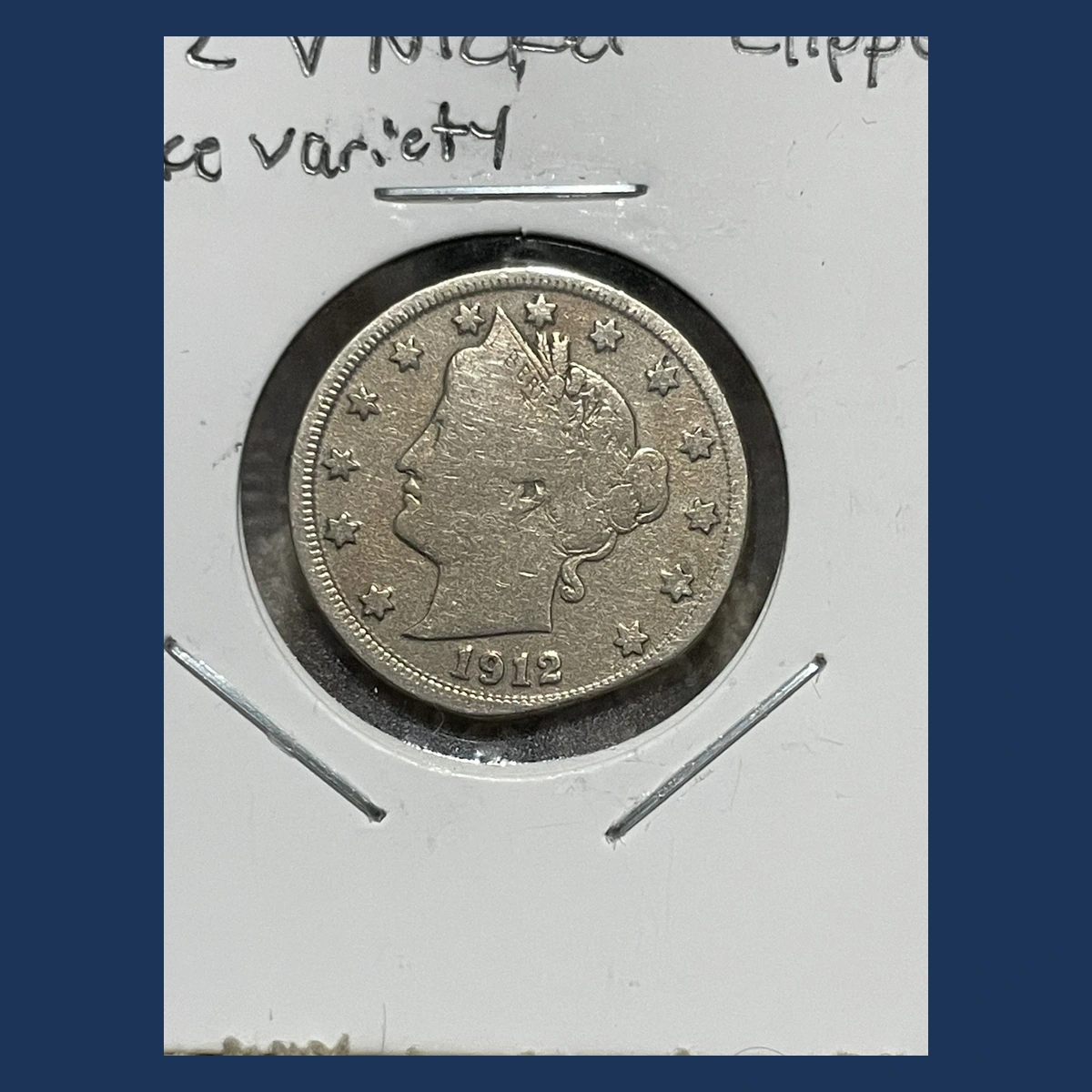
Part of the metal was already missing when the design reached this blank. A misplaced punch can overlap an earlier hole in the metal strip and leave an incomplete disk.
The stamping tools then squeeze the design around that gap. This sequence creates a clipped blank, also called a clipped planchet.
GreatCollections lists a Philadelphia example as a disk clip, graded ANACS MS62. That means an unworn coin with noticeable marks.
Denver clips also appear in year guides, but the Philadelphia listing does not prove the identity of those separate reports.
Estimated Value
A practical estimate for 1912 Philadelphia or Denver clips is $50–$350. The missing portion, natural rim shape, grade, and mint influence the amount.
The Philadelphia MS62 listing establishes an example, but no realized price is assigned to it here. An attractive unworn coin can sit above a heavily circulated piece with the same-sized gap.
A later cut in a finished coin has no comparable error premium.
How to Identify
Study the gap under a 10× magnifier before relying on the rim across from it. Metal should flow toward the missing section without saw marks or fresh burrs.
Now turn the coin halfway around. A weak rim opposite the gap can support a genuine clip, but its absence does not automatically prove later cutting.
Weigh a loose coin against the normal 5.00 grams. A very small missing piece may be hard to detect with a basic scale.
Use calipers across the intact portion to compare it with the usual 21.21-millimeter diameter. Keep the instrument away from a fragile edge.
Photograph the rim at both ends of the gap, where the natural transition is easiest to compare with an artificial cut.
3. 1912 Liberty Nickel Die Cracks and Cuds
A line running above the coin’s surface comes from a different process than a scratch. Metal can enter a crack in the stamping tool and become a raised line.
A larger missing piece at the tool’s edge can leave a broad lump joined to the coin’s rim. This is called a cud.
The year reports describe fine cracks on Philadelphia nickels and cuds without a specified mint. They do not establish one fixed path through the portrait or lettering.
A lump inside the design, away from the rim, is not automatically a cud.
Estimated Value
Estimate $20–$500 for confirmed 1912 cracks and rim breaks on ordinary circulated examples. Thin lines generally bring less than a large, clear cud that interrupts the design.
The guide reports do not supply a specific completed sale for either feature. These figures describe whole coins, so a stronger grade or scarcer mint can change the result.
A bump caused by solder, glue, or a rim blow should not receive a mint-error premium.
How to Identify
Run a side light along the suspected line while viewing it through a 10× magnifier. The line should stand up, whereas a scratch usually cuts down into the surface.
If the feature is a broad lump, trace its boundary until it meets the rim. A cud replaces part of the intended design because the corresponding part of the tool was missing.
Check the back as well: the opposite area may be weak where metal flowed into the break. Do not require a particular clock position, since the 1912 reports give none.
A loose nickel normally measures 21.21 millimeters with calipers and weighs 5.00 grams on a scale. Added material may look unlike the surrounding alloy; a natural rim connection is the essential view for a cud.
4. 1912 Liberty Nickel Struck Through Material
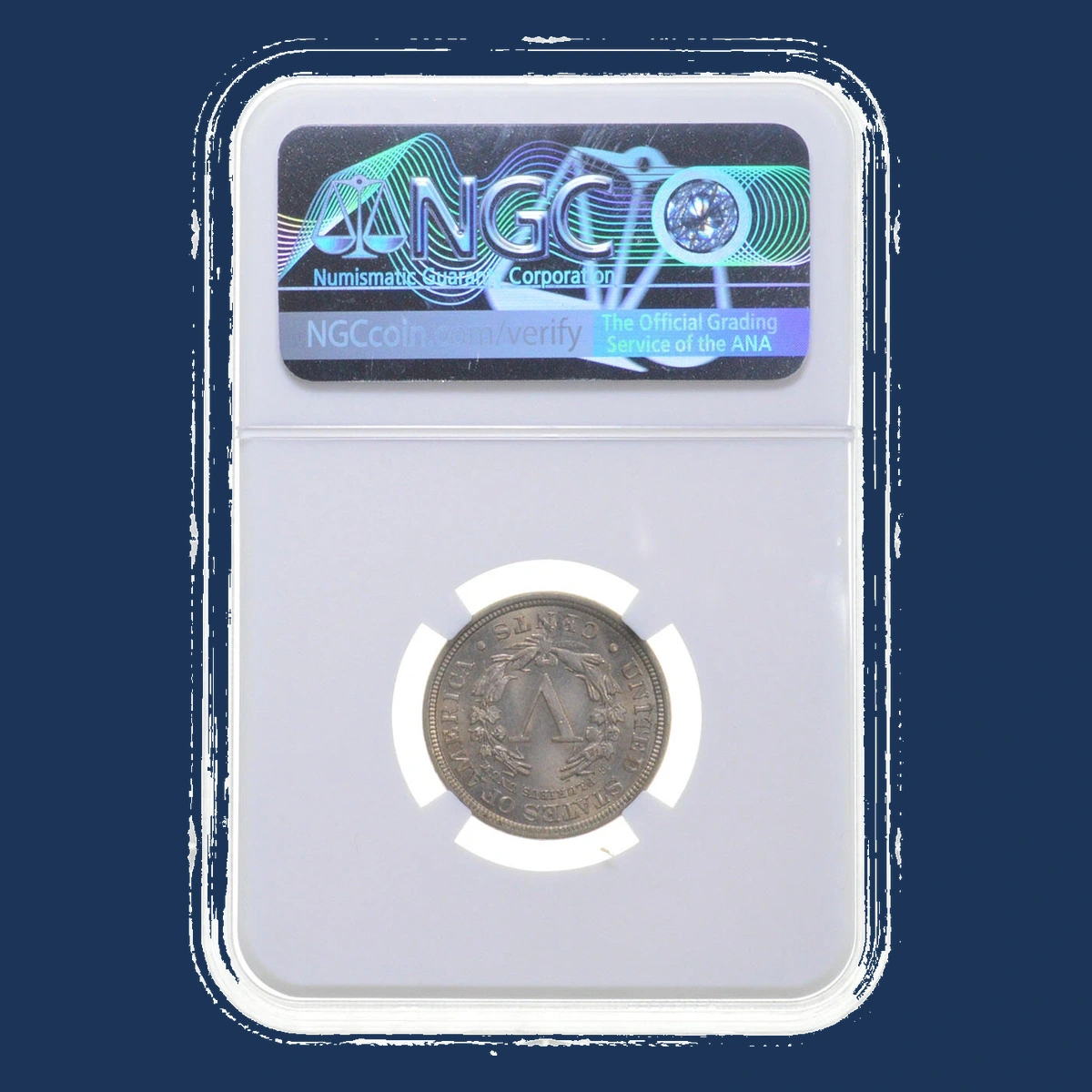
A patch of detail can disappear while the nearby design remains readable. Material between the blank and the stamping tool may block that small area during striking.
Grease is one possible obstruction, but an empty-looking patch does not identify the material by itself. Other debris can also leave an interruption.
The year guides describe affected portrait areas and reverse lettering. A separate report concerns a cleaned 1912-S with a strike-through.
Cleaning is a later condition problem that can coexist with a genuine error; it does not explain how the original obstruction formed.
Estimated Value
For ordinary 1912 strike-throughs, estimate $40–$600, with the affected area and overall condition guiding the price. Scarce mint issues or unusually strong examples can fall outside that broad range.
One year guide reports about $70 for a cleaned 1912-S, without a primary auction record used here. Treat that as a reported result for a problem coin, not a general price for intact San Francisco nickels.
How to Identify
Look at the highest parts of the portrait first. If those and the surrounding letters are all flattened, ordinary wear may account for the weak patch.
A local interruption deserves closer inspection with a 10× magnifier. Compare its boundary with the sharper neighboring design and check for scraping or metal pushed up by a later blow.
Do not rub the patch to make it clearer. Fine cleaning lines can conceal the surface clues that help separate an obstruction from damage.
For a loose coin, check its weight with a scale and its diameter with calipers: the standards are 5.00 grams and 21.21 millimeters. Clear nearby detail beside a locally blocked area is more useful than brightness or color alone.
5. 1912 Liberty Nickel Off-Center Strike
A strip of empty metal beside a cropped design shows where the blank missed the stamping tools. The design was struck off center because the blank entered the press out of position.
Older dealer catalogs identify separate Philadelphia and Denver 1912 examples. The Philadelphia coin is described as ten percent off center toward 4 o’clock.
The Denver example is also ten percent off center, but toward 9 o’clock. These directions describe those two coins, not every off-center nickel from either mint.
Neither listing establishes a San Francisco example.
Estimated Value
Allow an estimated $150–$1,000 for dated 1912 off-center nickels across circulated and stronger examples. A readable year and a clear area of missing design make comparison easier.
The reprinted 1984 dealer catalog asked $175 for the Denver ten-percent example, described as VF/XF, or moderately to lightly worn. That old asking price is not a recent auction result and should not be treated as today’s fixed value.
How to Identify
Place photographs of the two faces side by side. A shifted blank normally leaves cropped design and a blank area on both faces; a single uneven border needs another explanation.
Find 1912 before assigning the year. Then inspect the small mintmark area on the back, near the lower left of CENTS.
If that part of the design missed the blank, an absent letter does not prove Philadelphia. Use a 10× magnifier to check the transition from struck to untouched metal.
A loose coin should retain about 5.00 grams on a scale unless metal is also missing. Calipers may show uneven spreading beyond the usual 21.21-millimeter outline; the paired photographs reveal whether both designs shifted together.
6. 1912 Liberty Nickel Broadstrike
The lettering can remain on the coin even when its outer shape spreads too far. A broadstrike happens when the blank is not properly held by the ring that controls its diameter.
Pressure pushes metal outward instead of keeping the edge within its normal size. Unlike an off-center strike, a broadstrike can preserve the full intended design.
Heritage sold a 1912-S example from the Don Bonser collection graded NGC Fine 12. It had substantial circulation wear, but the expanded strike remained identifiable.
The catalog does not give its measured diameter.
Estimated Value
The 1912-S Fine 12 broadstrike sold for $630 at Heritage on March 8, 2021. Its worn grade did not prevent a strong whole-coin price.
For broadly comparable circulated San Francisco examples, estimate $400–$1,500. More detail and a clearer expanded edge can support higher interest.
The S mintmark itself adds value, so the $630 result is not the amount a broadstrike automatically adds to another nickel.
How to Identify
Measure across several directions with calipers, taking care not to scratch the coin. Compare the widest parts with a normal 21.21-millimeter Liberty nickel rather than judging from an enlarged photograph.
Weigh a loose example against 5.00 grams. A hammered coin can also become wider, so the measurements must agree with how the design and edge look.
Under a 10× magnifier, check whether the main design remains present within naturally spread metal. Flattened lettering, impact marks, or a battered rim can point to later damage.
For the reported coin, confirm the S near the lower left of CENTS. An expanded border surrounding the surviving design is the useful comparison, rather than a cropped design beside a large blank crescent.
7. 1912 Liberty Nickel Lamination
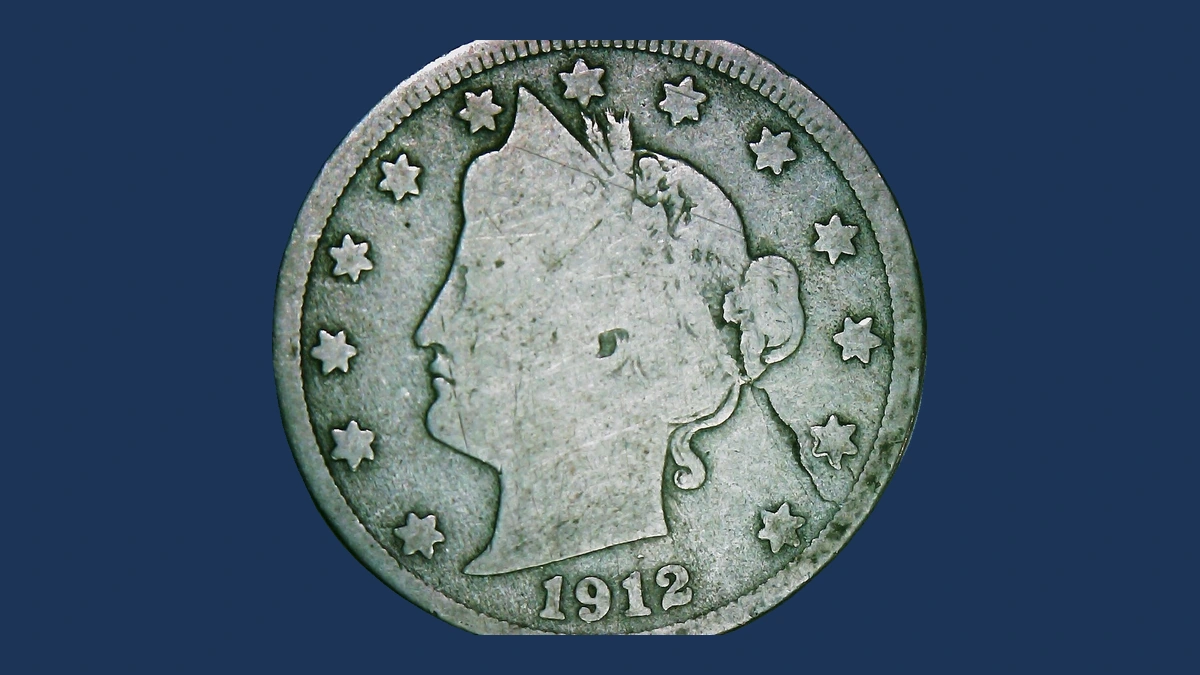
A thin piece can remain attached while the metal beneath it begins to split. On one cataloged 1912-S, that small flaw sits at the tip of the right wreath branch.
The coin was graded NGC MS64, meaning unworn with some visible marks. Its auction description calls the lamination faint and still attached.
Lamination means a separation within the blank’s metal. The nickel is a solid copper-nickel alloy, not a layered modern clad coin.
Year guides also report Philadelphia and Denver examples, but those do not share the San Francisco coin’s exact wreath location.
Estimated Value
Estimated values span $30–$5,000 when worn Philadelphia or Denver laminations and better-preserved San Francisco coins are considered together. Most of that broad spread comes from the coin’s mint and grade.
The cataloged 1912-S MS64 has no realized price assigned here. Its faint attached flake is not a reason to treat the full value of a scarce, unworn S-mint nickel as an error premium.
Extensive peeling can also reduce ordinary collectors’ interest.
How to Identify
On the reported San Francisco example, find the tip of the right-hand wreath branch and inspect it through a 10× magnifier. A thin edge still joined to the coin can reveal the peeling metal without any need to touch it.
A loose intact nickel normally weighs 5.00 grams on a scale and measures 21.21 millimeters with calipers. Such a small attached flake may change neither measurement, so normal size and weight do not rule it out.
Compare the lifted boundary with a solid raised line from a cracked stamping tool, which does not form a peeling layer. For a sealed coin, use a close-up photograph of the wreath tip and leave the holder closed.
Conclusion
Estimated values for these 1912 nickel errors range from $20 to $5,000, with mint and condition making a large difference. The $630 broadstrike shows that a worn coin can still interest error collectors.
Photograph the date, the small mintmark area, and the entire unusual feature. Leave attached flakes in place.
An extra date outline needs a different test from a missing edge or an expanded coin.